
If your oven starts smoking the moment you turn it on, your brain goes straight to worst-case scenario. I get it. The first time it happened to me, I killed the power and stood there staring at the stove like it might bite.
The good news is that most smoking ovens are not “the oven is dying” problems. Most of the time, it’s just something on or inside the oven burning off. A thorough cleaning and a quick check of a few parts usually solves it.

First, make it safe
Before we troubleshoot, treat oven smoke like a real hazard. Often it’s burnt-on grease, but you do not want to gamble with a potential electrical short or an actual grease fire.
- Turn the oven off.
- If you see flames: keep the door closed, turn the oven off, and call emergency services if the fire does not die down quickly. If you have to use an extinguisher, use an ABC extinguisher (or Class K if you have one for cooking oils). Aim through a small opening only. Do not open the door fully and stop if the fire grows. Never throw water on an oven fire.
- If it’s only smoke: crack a window, run the range hood, and keep kids and pets out of the kitchen. (Especially birds, which are very sensitive to fumes.)
- If smoke is heavy or you smell “hot plastic” or wiring: shut off power at the breaker and call for service.
Quick sniff test: burnt food or grease smells like burnt food. Electrical issues often smell sharp, chemical, or like melting plastic. If anything seems electrical, stop here.
What color is the smoke?
- White or light gray smoke: commonly leftover oven cleaner residue, moisture, or normal burn-off in a brand new oven.
- Bluish smoke: typically grease or oil vaporizing.
- Dark gray or black smoke: heavier grease buildup, food debris on the bottom, or something like plastic packaging accidentally left inside.
Color is not a perfect diagnosis. Lighting, airflow, and what is burning can all change what you see. Use it as a clue, not a verdict.
Most common causes
1) Food spills and grease buildup
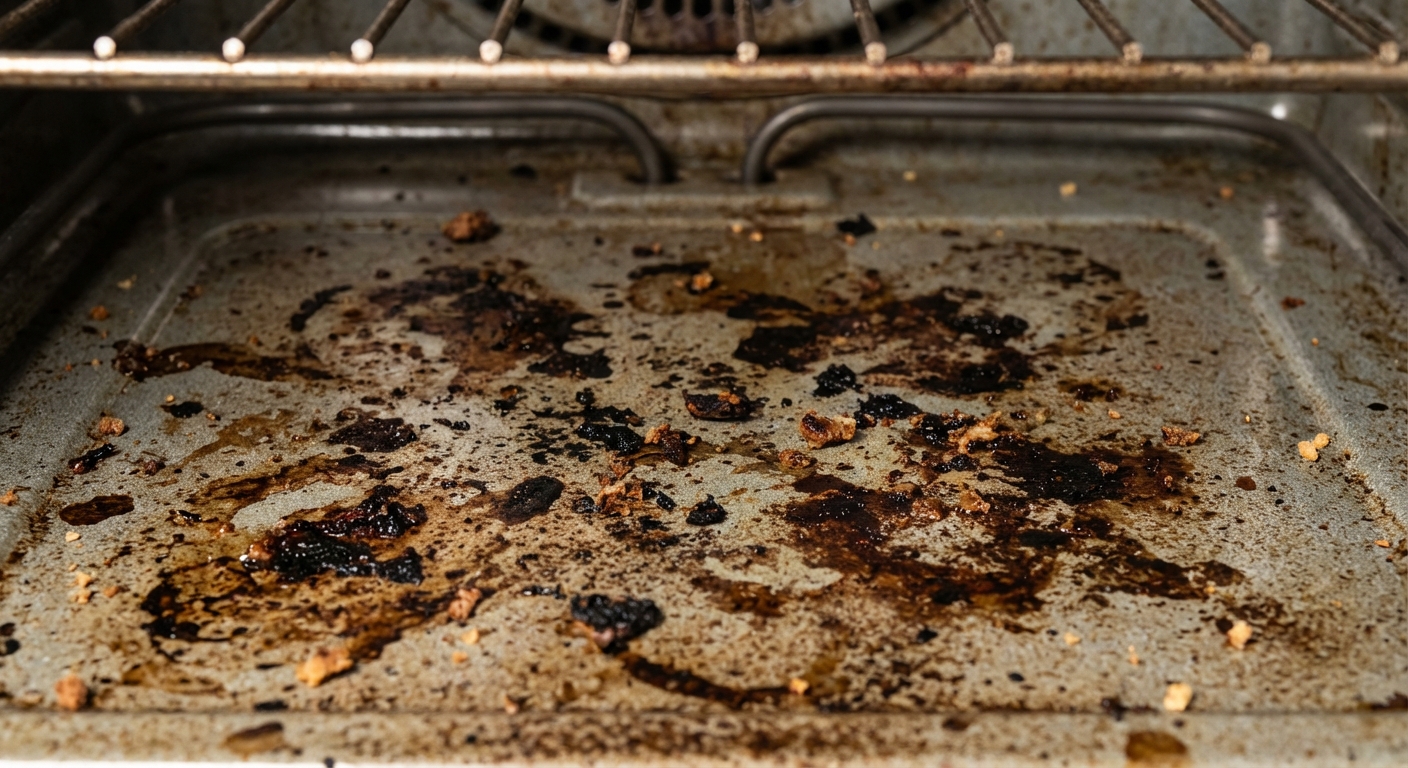
Spills that missed the rack or bubbled over a casserole dish can sit on the oven floor and bake into carbon. Once the oven heats up, that residue smolders and smokes.
Where to check:
- Oven bottom panel and corners
- Under the lower heating element (electric)
- On rack edges and rack supports
- Inside the door lip and gasket area
- Any drip trays or catch pans your model uses (some ranges hide these under the oven or below the cooktop)
2) Brand new oven burn-off
New ovens often smoke a little during the first heat-up. That’s manufacturing oils, protective coatings, and insulation binders curing. It usually looks like a light haze and smells a bit “factory.”
What’s normal:
- Light smoke or odor for 30 to 90 minutes
- It improves quickly with ventilation
- No sparking, no loud buzzing, no repeated heavy smoke on later uses
Important: manufacturer instructions vary. If your manual gives a specific temp or time, follow that first.
What’s not normal: thick smoke that fills the kitchen, smoke that happens every time after a few uses, or a strong melting-plastic odor.
3) Oven cleaner residue
If you used a strong chemical oven cleaner recently, any residue you did not fully rinse can smoke when the oven heats. This is very commonly white smoke, and it can sting your eyes.
I learned this the hard way once. I thought I rinsed “enough.” I did not.
Where it hides:
- Along the door edges
- In corners and seams
- Under the bottom panel (some models)
4) Self-clean cycle smoke
The self-clean button deserves its own warning label. Self-clean runs the oven at extremely high temps. That can create a lot of smoke if there is grease buildup, and it is also why appliance techs often recommend skipping it. It can trip a thermal fuse, warp parts, or in worst cases ignite heavy grease.
What to expect if you use it:
- Strong odor and possible smoke, especially in a dirty oven
- Smoke alarms going off even when nothing is “wrong”
- A hot oven that stays locked for a long time
When to avoid it: if the oven is very greasy, you have poor ventilation, your smoke alarms are extra sensitive, or you have birds in the home. If you ever see flames, turn the oven off and treat it as a real fire hazard.
If you do use self-clean: follow your manual exactly. Many manufacturers recommend removing racks (they can discolor or warp), ventilating aggressively, and wiping out loose crumbs first so they do not immediately burn.
5) Faulty heating element (electric ovens)
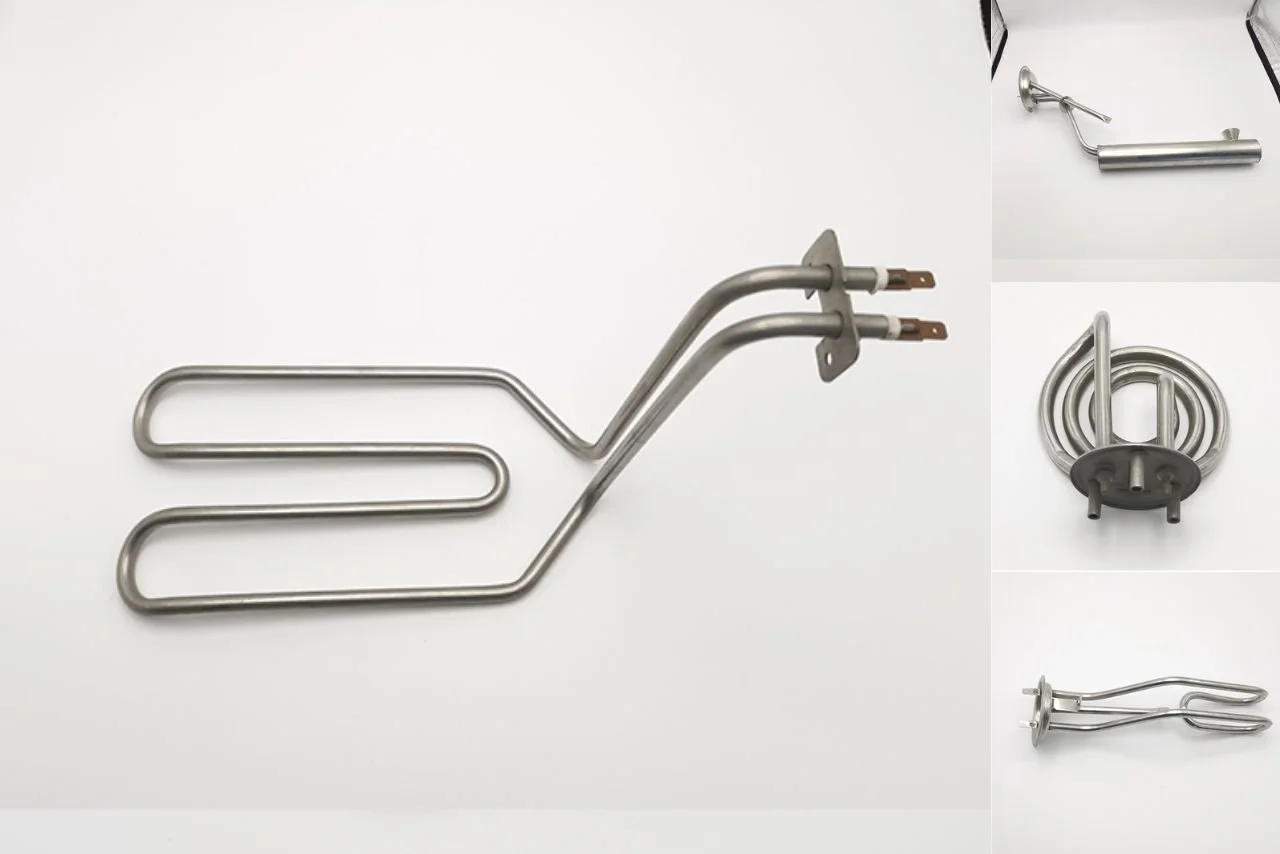
A failing bake or broil element can develop blisters, cracks, or a spot that overheats. That can burn off residue, scorch nearby food debris, or in rare cases cause arcing.
Signs the element is the problem:
- Visible bulges, blisters, or cracks in the element
- Sparks or bright flashes while heating
- A persistent burning smell even after cleaning
- Uneven heating paired with smoke from one area
6) Incorrect cookware or something melting
Not all pans belong in the oven. Some nonstick coatings, low-quality sheet pans, plastic handles, or “microwave safe” items can smoke at higher temps.
Common offenders:
- Plastic lids, plastic utensils, or packaging accidentally left inside
- Nonstick pans not rated for your baking temperature
- Cookie sheets coated with old cooking spray buildup (it polymerizes and smokes)
- Foil touching the heating element or blocking vents
Tip: Look for an oven-safe temperature rating stamped on the pan or listed by the manufacturer.
7) Broiling splatter (very common)
Broiling is basically controlled chaos. Fat drips onto hot metal, it smokes fast, and your kitchen smells like you set something on fire even when dinner is fine.
To reduce broiler smoke:
- Trim excess fat from meats
- Use a proper broiler pan so drippings land below the food
- Do not line areas with foil unless your manual explicitly allows it (foil in the wrong place can block airflow or trap grease)
- Clean the broiler area and any drip tray after messy broils
Step-by-step cleaning
If you’re not sure what’s causing the smoke, a thorough cleaning is the best first fix. Here’s my no-drama method.
Supplies
- Dish soap
- Baking soda
- White vinegar (optional but helpful)
- Microfiber cloths or non-scratch scrub pads
- Plastic scraper or old plastic spatula
- Rubber gloves
- Trash bag for debris
1) Let it cool completely
Warm residue smears. Cold residue scrapes. Wait until the oven is fully cool.
2) Remove racks and soak them
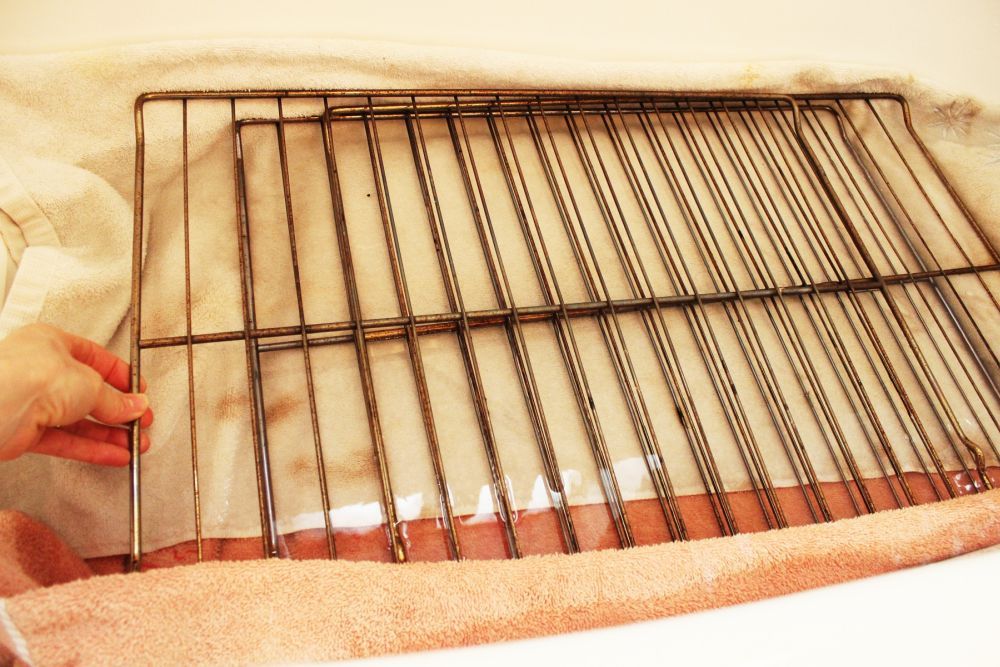
Pull the racks and soak them in hot water with dish soap. If they’re really grimy, add 1 cup of vinegar or a sprinkle of baking soda.
Note: if your oven has a self-clean feature and you plan to use it, check your manual about racks. Many brands say to remove them first.
3) Vacuum or scoop loose debris
Crumbs and carbon bits can smoke instantly when the oven heats. Vacuum with a hose attachment or gently scoop debris into a trash bag.
4) Use a baking soda paste on baked-on spots
Mix baking soda with a little water to make a spreadable paste. Coat the oven floor and greasy areas. Let it sit 30 minutes, or overnight for heavy buildup.
5) Scrub, then wipe clean
Use a non-scratch pad and a plastic scraper for stubborn spots. Wipe with warm, soapy water until you’re no longer picking up gray or brown residue.
Caution: avoid abrasive pads that can scratch enamel or specialty interior coatings. Gentle and persistent wins here.
6) Neutralize with vinegar (optional)
Spritz vinegar on remaining baking soda residue. It will fizz, which helps lift grime. Wipe again with clean water.
7) Clean door edges and the gasket
Grease loves the door lip. Wipe around the door frame and gently clean the gasket. Do not soak the gasket. Just wipe it.
8) Dry, reassemble, and test heat
Put everything back, then run the oven at 350°F for 10 to 15 minutes with a window open and the hood fan on. If it still smokes, you’ve narrowed it down to cleaner residue, cookware, broiler splatter, self-clean fallout, or a component issue.
If you used oven cleaner
If your oven smokes after using a commercial oven cleaner, the fix is usually simple but a bit tedious: remove every trace of residue.
- Wipe the interior with warm water and dish soap.
- Rinse with clean water, changing it often.
- Wipe again with a 50/50 mix of vinegar and water.
- Let the door stay open for an hour to air out.
- Run the oven at 300 to 350°F for 15 minutes with ventilation.
Important: Never mix cleaners (especially anything containing bleach and ammonia). If you’re not sure what was used, stick to soap and water and rinse thoroughly.
New oven burn-in
If your oven is new (or you just replaced major parts), plan a proper first heat cycle. It’s normal for it to smell and lightly smoke.
- Remove all packaging, twist ties, cardboard, manuals, and any plastic film.
- Wipe down the oven interior with a damp cloth and a drop of dish soap, then wipe with clean water.
- Ventilate: open a window and run the range hood fan.
- Run the oven empty at 400 to 450°F for 30 to 60 minutes, or whatever your manual specifies.
- Let it cool completely.
After the burn-in, the “new oven smell” should be much lighter or gone.
When to replace an element
On an electric oven, the heating element is a common wear item and one of the more DIY-friendly repairs if you’re comfortable with basic safety.
Replace the bake or broil element if:
- It has visible cracks, holes, or blisters.
- It sparks or arcs when running.
- It won’t heat consistently and cleaning didn’t solve the smoke.
- You see a burned spot on the element and smoke always starts there.
Safety note: Turn off power at the breaker before touching an element. If you’re not sure which breaker feeds the range, stop and call an appliance tech.
Call a pro: if you see scorched wiring, the terminal block looks burnt, the breaker trips, or smoke seems to come from behind panels rather than the oven cavity.
Gas oven notes
Gas ovens can smoke for the same basic reasons (grease, spills, cleaner residue, wrong cookware), but pay extra attention to anything that suggests an incomplete burn or poor airflow.
Call for service if you notice:
- A strong gas smell that doesn’t go away
- Sooty black residue around the burner area
- Yellow, lazy flames (when you can safely observe them)
- Headaches or nausea in the kitchen (possible carbon monoxide risk)
If you suspect carbon monoxide, leave the area and ventilate. If symptoms are significant or you feel unsafe, call emergency services. A working CO alarm near sleeping areas is a smart upgrade for any home with gas appliances.
Also make sure the oven vents are not blocked and that foil is not covering the bottom in a way your manufacturer warns against.
Troubleshooting checklist
- Smoke on first heat after a messy bake: clean spills and crumbs on the bottom, racks, and corners.
- Smoke during broiling: clean splatter, use a broiler pan, trim fat, and check the broil element area.
- White smoke after cleaning: rinse cleaner residue repeatedly, then do a short test heat.
- Smoke during or after self-clean: expect odor, ventilate, and avoid self-clean on heavy grease. If it keeps smoking on normal bakes afterward, clean out ash and residues thoroughly.
- Smoke every time, even after cleaning: inspect heating elements, check for melted items, and consider service.
- Smoke plus sparking or breaker trips: shut off power and call a pro.
FAQ
Is it safe to use an oven that’s smoking?
If it’s light smoke from known residue and you’re actively ventilating, usually yes for a short test run. If smoke is heavy, recurring, or smells electrical, stop and investigate before cooking.
Why does my oven smoke at 450°F but not at 350°F?
High heat pushes oils and residue past their smoke point. That often points to grease buildup, cooking spray film on a pan, or cleaner residue that only burns off at higher temps.
Can a dirty oven set off the smoke alarm?
Absolutely. A thin layer of grease can smoke long before you see visible smoke. Cleaning the oven floor, corners, and racks usually fixes it.
Should I use the self-clean feature?
If you ask ten appliance techs, many will tell you they avoid it unless the oven is only lightly dirty. Self-clean can create intense smoke and heat stress. If you do use it, follow your manual, ventilate well, and never run it when the oven is greasy enough that you can see or feel heavy buildup.
My rule of thumb
If your oven smoked once right after a spill, after broiling, or after using oven cleaner, it’s probably a cleaning issue. If it smokes every time and you’ve cleaned it thoroughly, start inspecting elements and cookware, and do not ignore sparking, breaker trips, or hot-plastic smells.
That “I should probably look into this” feeling is your homeowner instincts working. Listen to it.

About Marcus Vance
Content Creator @ Grit & Home
Marcus Vance is a lifelong DIY enthusiast and self-taught home renovator who has spent the last decade transforming a dilapidated 1970s ranch into his family's dream home. He specializes in budget-friendly carpentry, room-by-room renovations, and demystifying power tools for beginners. Through his writing, Marcus shares practical tutorials and hard-learned lessons to help homeowners tackle their own projects with confidence.