
🚨 In a DIY emergency or rush?
Skip the details and jump straight to our 30-second cheat sheet for the most crucial info.
Pellet stoves are awesome when they are dialed in. Push a button, get steady heat. But when one refuses to start, or it starts and then quits like it got bored, the failure is usually not “mystery draft” like a wood stove. It is most commonly a fuel feed issue, an airflow issue, or a safety sensor doing its job. Less often, it is an electrical or hardware failure like a bad igniter, motor, capacitor, control board, or a loose connection.
I am going to walk you through the fixes I try first, in the same order I use on my own stove when it acts up. The goal is simple: rule out the easy stuff fast, clean what actually matters, and avoid unsafe guesswork.
Safety first
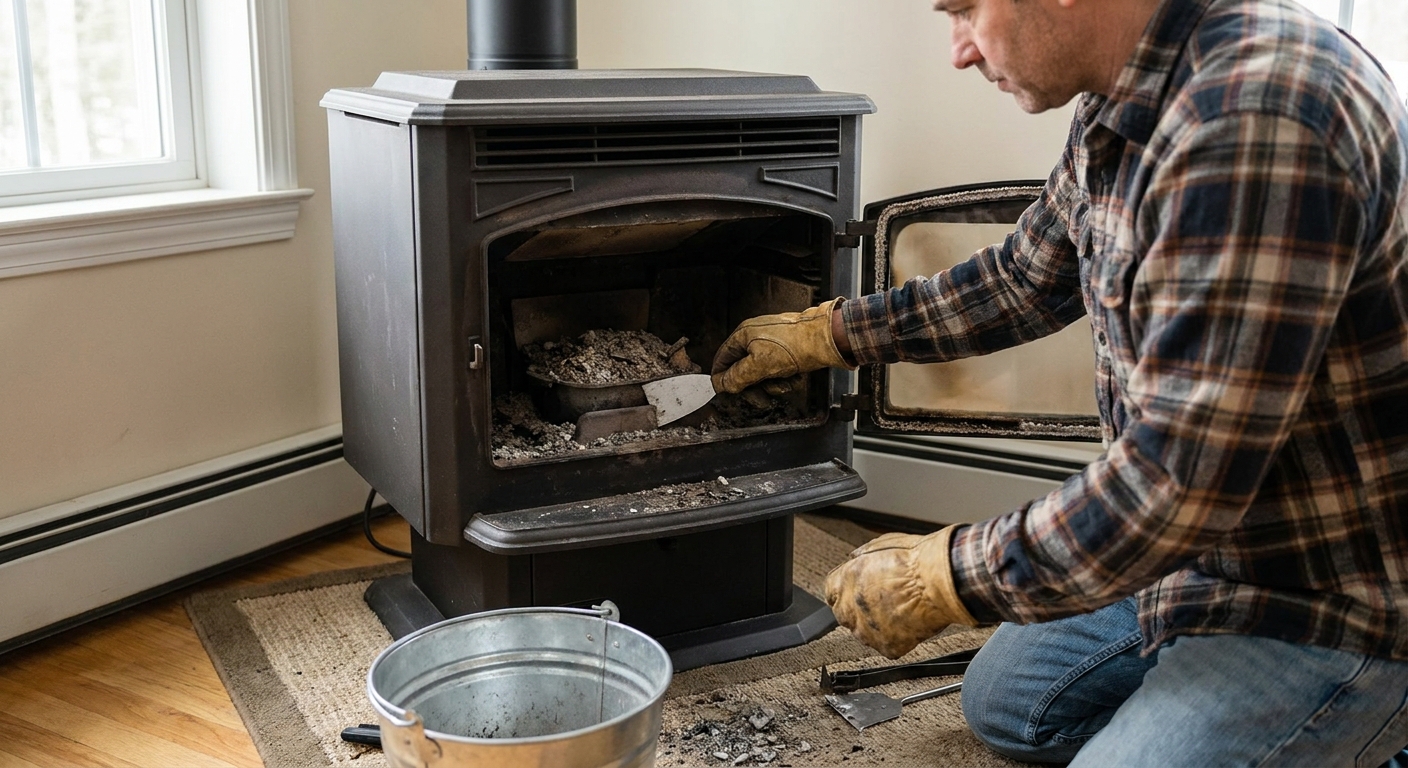
- Let the stove cool completely. No hot embers, no warm burn pot. If it just failed mid-cycle, give it time.
- Unplug the stove before cleaning or opening panels. Many pellet stoves can start a feed cycle or a fan automatically when powered.
- Use an ash-rated vacuum or an ash separator. Fine ash can pass through standard filters, blow back into the room, and be hard on a regular shop vac. Only vacuum when everything is cold.
- If you smell smoke in the room or see soot streaking at joints, stop. Do not keep “testing” starts. You may have a venting leak or blockage.
- If your CO alarm ever chirps or alarms, treat it as real. Ventilate, shut down, and address venting before anything else.
How it decides to start
A pellet stove is basically a controlled system: it feeds pellets (auger), lights them (igniter), and manages air (combustion blower and sometimes a convection fan). Safety switches and sensors are watching the whole time. Most shutdowns happen because the stove is not proving a safe, stable burn.
Common “proof” checks include:
- Vacuum or pressure switch confirming exhaust flow
- Proof-of-fire sensor confirming the fire actually caught
- High-limit switch preventing overheating
- Door or hopper lid switch making sure everything is sealed
That is why a stove can look like it is trying, then quit. It is not being dramatic. It is protecting your house.
Basics first
1) Power and settings
- Outlet power: Try a lamp in the outlet. Check for a loose plug, a loose outlet, or a tripped GFCI.
- Surge protector: If you use one, make sure it is not tripped. Some cheap strips cause voltage drop.
- Stove fuse or reset: Many stoves have an onboard fuse (sometimes on the control board) or a small resettable breaker. Check your manual for location and rating, and replace only with the correct type.
- Thermostat mode: If you run on a wall thermostat, make sure it is calling for heat. If unsure, temporarily switch the stove to manual mode (per your manual) to eliminate the thermostat as a variable.
- Thermostat jumper test (manual-dependent): Some stoves can be tested by jumpering the thermostat terminals to simulate a call for heat. Do this only if your manual describes the procedure.
- Timer and eco settings: Some modes purposely shut the stove down when the room hits setpoint. Make sure you are not chasing normal behavior.
2) Error lights and codes
Do not ignore the blinking light pattern or code. It is often the fastest shortcut to the real problem. Jot down the exact code and the sequence (for example: “3 blinks, pause, repeat”). Then check your manual’s troubleshooting chart. Different brands use different meanings.
If you do not have the manual, search your stove model plus the code. Keep the search specific like: “Harman XXV 3 blinks” or “Englander 25-PDVC E3”.
3) Quick wiring glance
If the stove is acting intermittent, it can be as simple as a loose spade connector. With the stove unplugged and cool, look for obviously loose connectors on the control board, switches, and motors. If you see melted insulation, scorched connectors, or damaged wiring, stop and call a pro.
Fuel and feed issues
If a pellet stove will not start, or it starts then dies within 5 to 15 minutes, the stove often is not getting a consistent pile of fuel in the burn pot.
1) Hopper level and bridging
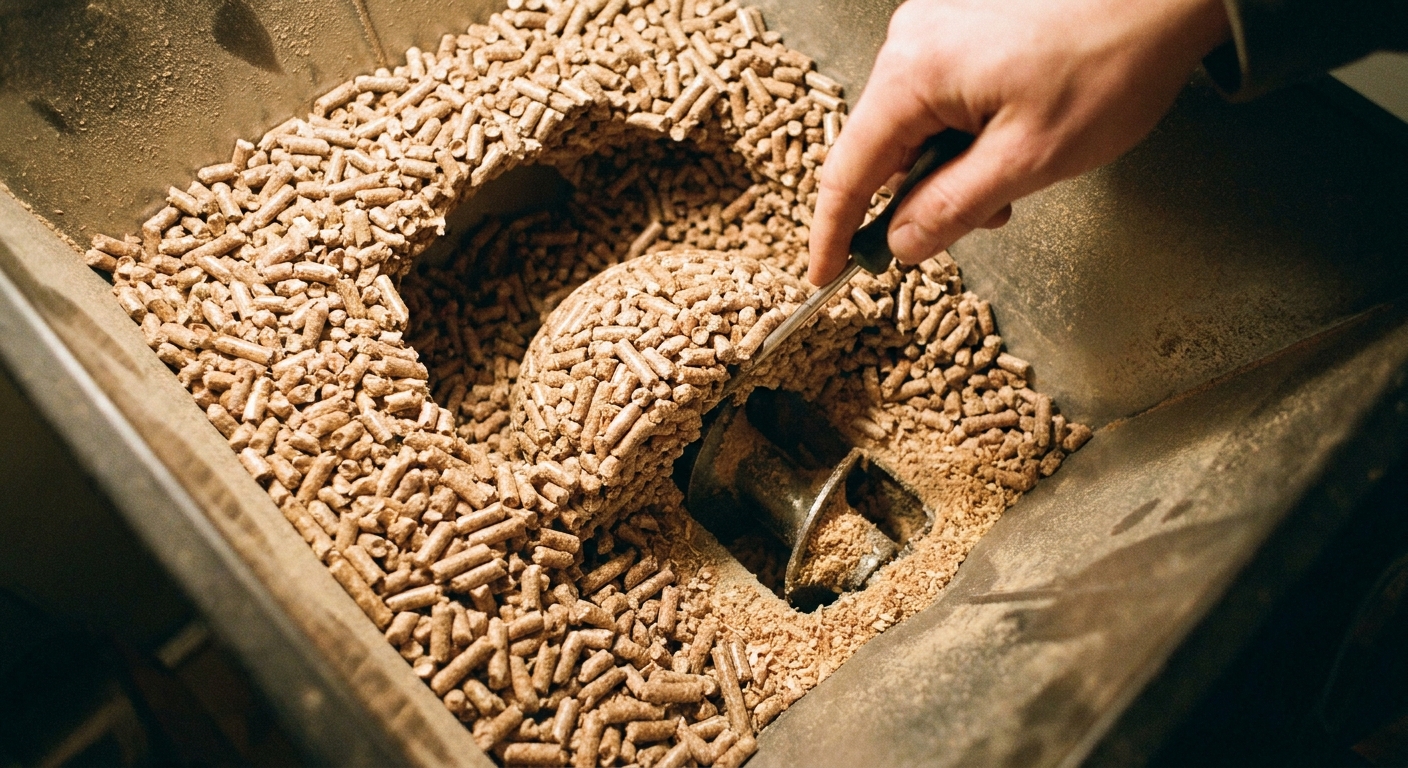
Yes, even if you “filled it recently.” Pellets can form a tunnel and stop sliding toward the auger. This is called bridging. It is more common with long pellets, dusty pellets, or a hopper with a rough interior.
- Open the hopper and stir pellets by hand with a glove or a scoop (stove unplugged).
- Look for a hollowed-out crater over the auger intake.
- Break up clumps and vacuum excess fines (sawdust and dust) from the hopper bottom.
2) Pellet quality
Not all pellets burn the same. The stuff that causes headaches:
- High moisture pellets that swell and crumble
- Excess fines (sawdust) that pack into the auger area
- Batch-to-batch differences that change feed and heat output depending on your settings
Quick test: grab a handful. If they snap cleanly and feel dry, good sign. If they crush easily, feel spongy, or you see a lot of dust, that batch can cause problems.
If you can, try a small bag of a known good brand before you start tearing your stove apart.
3) Auger not feeding
Symptoms of an auger issue:
- Stove turns on, fans run, but no pellets drop
- You hear a humming or grinding near the auger motor
- Pellets drop for a bit, then stop, then the stove shuts down
What to try first:
- Unplug the stove.
- Remove pellets from the hopper so you can see down to the auger intake area.
- Vacuum fines around the auger throat.
- Check for swollen pellets or a hard-packed wad near the intake.
If your stove has an auger access panel, remove it and look for obvious obstructions. On many models, clearing a jam involves removing the auger motor and turning the auger by hand. That is very model-specific, so use your manual and do not force parts. A bent auger or stripped gearbox gets expensive fast.
Burn pot and firebox
If your stove starts, drops pellets, then shuts off, a dirty burn pot is a prime suspect. The stove needs good airflow through the burn pot holes to keep the fire hot enough to “prove” and stay stable.
What to look for
- Hard crust (clinkers) blocking holes
- A lazy orange flame that looks like it is suffocating
- Pellets piling up instead of burning down
- Black glass quickly after start
Clean it properly
- Remove the burn pot (if your model allows) and scrape all carbon from the bottom and sides.
- Clear every air hole. I use a small pick or nail. Do not enlarge holes, just open them.
- Vacuum the burn pot cradle area and ash traps in the firebox.
- Check the igniter area if it is exposed. Ash buildup can insulate the igniter and make starts weak.
My rule: if you can scrape off a hard carbon lip around the rim, like a baked-on crust, the burn pot was dirty enough to cause trouble.
Airflow and venting
Pellet stoves are forced-draft appliances. That means they rely on the combustion blower and a clear exhaust path. If the stove cannot move enough air, the vacuum switch may open and shut the stove down.
1) Easy restrictions
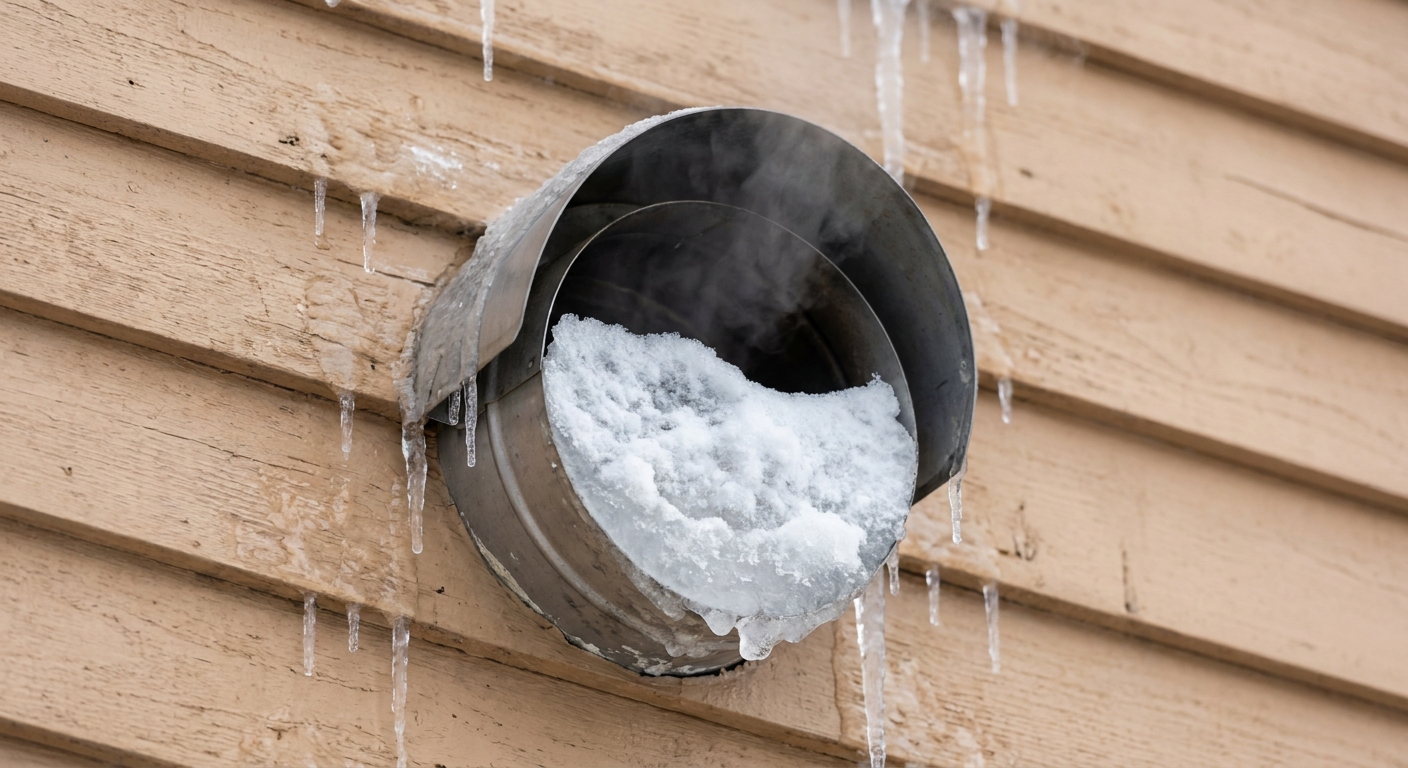
- Air intake: Make sure the outside air kit intake hood is not blocked by snow, leaves, or a critter nest.
- Door gasket: A bad seal can mess with the pressure balance. If you can pull a dollar bill out easily with the door closed, the gasket may be tired.
- Ash pan: Make sure it is fully seated. A slightly unlatched ash pan can trigger vacuum issues on some stoves.
- Hopper lid: Some units have a safety switch. If the lid is not fully closed, it may stop feed.
- Door switch (some models): If your stove uses a door switch, a misaligned or failing switch can mimic a gasket problem.
2) Clean the hidden exhaust path
This is the part many people skip because it is not as obvious as the burn pot. But pellet stoves have internal passages that fill with fly ash. When those get restricted, you get lazy flames, soot, and shutdowns.
- Heat exchanger tubes: Scrape or brush them if your stove has a built-in rod or handle.
- Ash traps and clean-out ports: Open and vacuum them.
- Combustion blower housing: Some models allow access to vacuum the impeller area. An ash-caked impeller moves less air.
If you do not know where the clean-outs are, look up your model plus “cleaning procedure.” A 5-minute video can save you an hour of guessing.
3) Brush the vent pipe
Pellet vent accumulates fine ash that can narrow the pipe over time, especially with long horizontal runs, multiple elbows, or lower-quality pellets.
- With the stove cool and unplugged, remove the clean-out tee cap if you have one.
- Use a proper pellet vent brush sized to your pipe.
- Vacuum the tee and any accessible sections.
Big red flag: If you find chunky soot, sticky or tar-like deposits, or you are seeing smoke leaks, stop and consider calling a pro. Pellet vent is often mostly dry ash, but darker soot can happen with certain pellets and settings. Sticky deposits, strong smoke smell, and visible leakage are the bigger concern.
Igniter issues
If pellets drop into the burn pot but you never get ignition, you are looking at one of three things: the igniter is weak or dead, airflow is wrong, or the burn pot is too dirty to light reliably.
Quick checks
- Watch startup: Do you hear the combustion blower? Do pellets feed? If neither happens, you are back to power, safety switches, or the control board.
- Look for igniter heat: On many stoves you can see the igniter area glow faintly after a minute or two. If it never warms, the igniter or its wiring may be the issue.
- Try a manual light once (only if your manual allows it). If it runs fine after you manually light it, that often points to an igniter problem, but it can also point to marginal ignition airflow, restricted exhaust, or poor pellets.
Igniters are wear parts. If yours is original and the stove has a few seasons on it, replacement is not unusual.
Switches and sensors
When a pellet stove shuts down quickly, a safety device is often saying “conditions are not right.” Two common culprits:
1) Vacuum (pressure) switch
If the stove cannot prove negative pressure in the firebox or exhaust, it may stop feeding pellets and shut down. Causes include:
- Blocked venting or intake
- Dirty combustion blower or internal passages
- Door, ash pan, or hopper lid not sealed
- Cracked or loose vacuum hose to the switch
Check that the small rubber hose is attached firmly and not brittle or split.
2) Proof-of-fire sensor
This sensor tells the control board that the fire actually caught. If it never reaches temperature, the stove may feed a little, then shut down.
- If the burn pot is clean and pellets are feeding, but it still shuts down at the same point, this sensor is worth investigating.
- Sometimes the sensor is fine but the stove is not getting hot enough due to restricted airflow.
Do not bypass safety switches. If a switch is tripping, treat it as a clue, not an obstacle.
Safe relight
If your stove failed a start, do not just keep hammering the ON button. You can overfill the burn pot with pellets, then get a smoky flare-up when it finally ignites.
Do this instead
- Shut it down properly and let the fans complete their cool-down cycle if possible.
- Unplug and cool if it is acting erratic.
- Empty the burn pot if there is a pile of unburned pellets. Put them in a metal bucket.
- Clean the burn pot holes quickly, even if you already did earlier.
- Restart and watch the first 10 minutes. You are looking for a bright, active flame and steady feed.
Manual lighting (only if allowed)
Use only an approved gel fire starter made for pellet stoves, and only the amount the manual recommends. Never use gasoline, brake cleaner, or random household flammables. Those are not “DIY bold.” They are how people get hurt.
What a healthy startup looks like
- Combustion blower starts first
- Igniter heats
- Pellets begin feeding and you get small flame
- Flame grows brighter and more active, not lazy and smoky
- After proof-of-fire, the stove transitions to normal run
If yours gets to one of these steps and stops every time, that is your breadcrumb trail. Focus your effort there.
Maintenance timing
Follow your manual, but as a practical baseline (and assuming average pellets), this is the cadence that keeps most stoves happy:
- Daily or every 1 to 2 bags: scrape burn pot, make sure holes are open, quick ash vacuum in the firebox if needed
- Weekly: empty ash pan, clean glass, brush heat exchanger (if your model has a scraper rod)
- Monthly: clean ash traps and internal clean-out ports, check door and ash pan gasket seal
- Seasonally: brush and vacuum venting, deep clean combustion blower area (as your manual allows), inspect gaskets and the vacuum hose
Low-quality pellets, long vent runs, and shoulder-season smoldering usually mean you clean more often, not less.
When to call a pro
I am all for homeowner troubleshooting, but I also know when I am crossing into “risk and guesswork.” Call a qualified pellet tech if:
- You have smoke smell indoors, visible soot leaks, or CO alarm concerns
- The stove trips breakers or shows signs of electrical damage
- You suspect a control board, wiring issue, motor, capacitor, or repeated error codes after cleaning
- You need to disassemble the auger and you are not confident with the process
- Your installation may be the issue (vent length, too many elbows, termination location, or outside air problems) and you want it verified
A good service visit often includes a deep clean of the entire exhaust path and combustion blower. If you have never had that done, it can feel like a different stove afterward.
Quick order
- Confirm power, thermostat call, fuse, and error code
- Check hopper level, bridging, and pellet quality
- Clean burn pot thoroughly and clear all holes
- Clean ash traps and heat exchanger area
- Check intake and vent termination for blockage
- Brush and vacuum venting if overdue
- If it feeds but will not light, suspect igniter or ignition airflow
- If it lights then shuts down, suspect dirty exhaust path, a sealing issue, or a sensor proof problem
Work methodically. Pellet stoves reward organized troubleshooting, and they punish random knob-twisting.
The 30-Second Cheat Sheet
Essential takeaways for: Pellet Stove Won’t Start or Keeps Shutting Off? Fixes to Try First
Most common quick fixes
- Clean the burn pot until every hole is open. A clogged burn pot causes weak ignition, lazy flames, pellet piling, and shutdowns.
- Stir the hopper and vacuum fines (sawdust and dust). Pellet bridging and sawdust can starve the auger.
- Check outside intake and exhaust termination. Snow, leaves, and nests can trip the vacuum switch and stop feed.
- Clean internal ash traps and the vent tee. Restricted exhaust flow is a top cause of “starts then shuts off.”
- Check the stove’s fuse (if equipped). Many stoves have an onboard fuse or small resettable breaker. Follow your manual.
If it feeds pellets but never lights
- Try a full burn pot clean again, then restart and watch the first 10 minutes.
- If it still will not ignite, suspect the igniter (wear part), but also consider low ignition airflow, restricted exhaust, or poor pellets.
- Manual light only if your manual allows it, using an approved gel starter only.
If it lights then shuts down
- Think airflow proof. Check door and ash pan seal, intake, venting, and vacuum switch hose.
- Heavy ash in internal passages or venting can prevent the stove from proving draft and staying lit.
- If the room (convection) fan is not moving air, some stoves can hit a high-limit and shut down.
Safe reset and relight
- Do not keep hitting ON after failed starts. You can overfill the burn pot.
- Shut down, cool, remove excess unburned pellets, clean burn pot holes, then restart.
Call a pro if
- You smell smoke indoors, see soot leaks, or have any CO alarm concerns.
- You suspect control board, motor, capacitor, or wiring problems, or the same error code returns after cleaning.
💡 Tip: Scroll up to read the full article for detailed, step-by-step instructions.
⬆️ Back to top
About Marcus Vance
Content Creator @ Grit & Home
Marcus Vance is a lifelong DIY enthusiast and self-taught home renovator who has spent the last decade transforming a dilapidated 1970s ranch into his family's dream home. He specializes in budget-friendly carpentry, room-by-room renovations, and demystifying power tools for beginners. Through his writing, Marcus shares practical tutorials and hard-learned lessons to help homeowners tackle their own projects with confidence.