
🚨 In a DIY emergency or rush?
Skip the details and jump straight to our 30-second cheat sheet for the most crucial info.
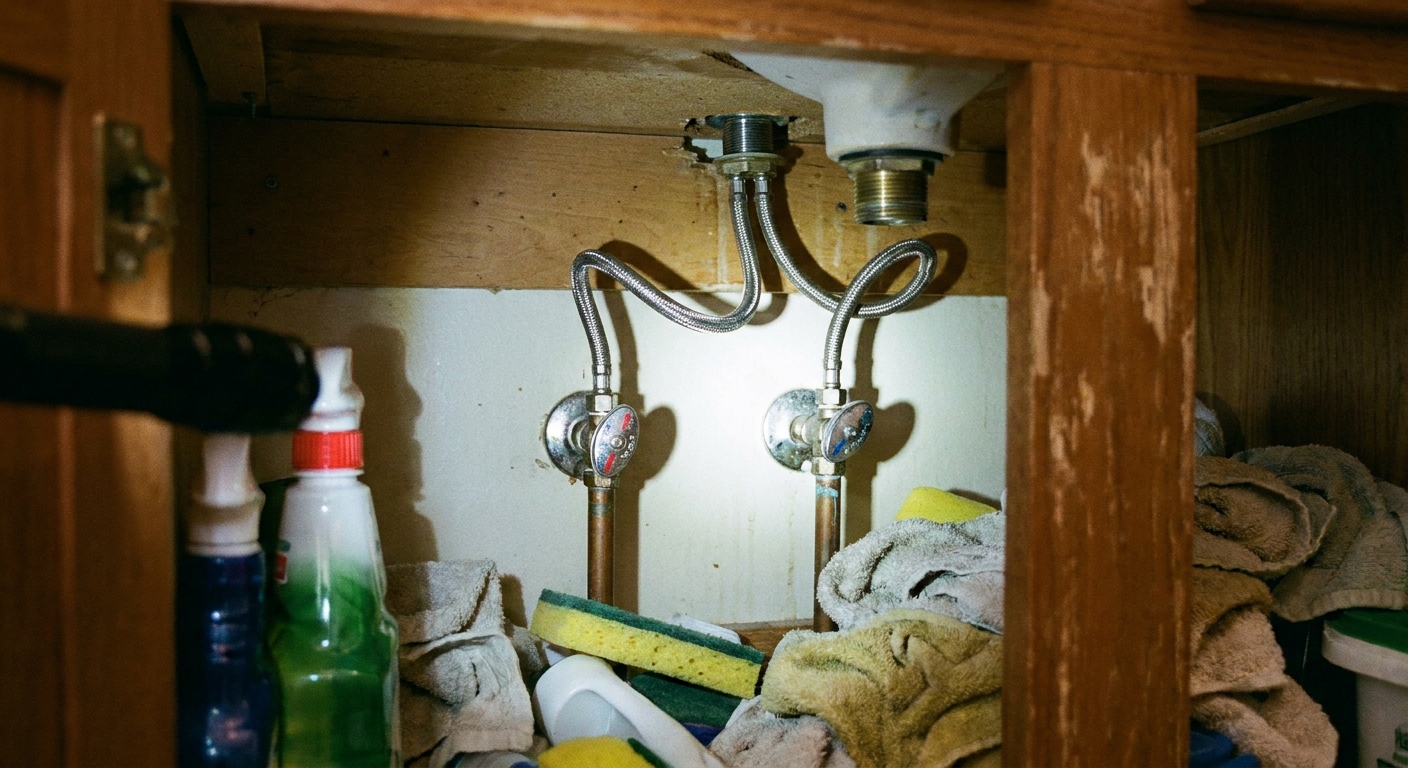
The first time I heard a high pitched whistle in our 1970s ranch, I assumed it was “old pipes being old.” Turns out, it was a half closed shutoff valve under the sink that had been bumped during a cabinet cleanout. When water is flowing and you get a squeal, whistle, or chirp, you are usually dealing with a restriction or a part vibrating in the stream, not a shock problem.
This guide walks you through a simple, no-guesswork way to find where that restriction lives and what to do about it.
Quick summary: what causes whistling pipes?
A whistle that happens only while the faucet is running is most often one of these:
- Partly closed shutoff (stop) valve under the sink or behind a toilet
- Clogged faucet aerator or a bit of debris in the faucet screen
- Worn faucet cartridge (single handle) or worn washer (some two handle styles)
- Failing pressure reducing valve (PRV) at the main water entry, especially if multiple fixtures whistle
- Loose or damaged supply line or connector that vibrates under flow
Less common but real: a partially closed or failing main shutoff valve, a sticking check valve or backflow preventer, or a restriction at a whole-house filter or water softener bypass.
If the noise happens after you shut the water off and you hear a bang, that is a different problem. This article stays focused on the whistle that happens during flow.
Safety first: when to stop and call a plumber
Most whistling diagnoses are DIY friendly, but pause and get help if:
- You cannot locate a working main shutoff.
- You see any active leaking at a valve, faucet body, PRV, or near the water heater.
- The whistle is paired with violent vibration of exposed piping.
- Your water pressure seems extreme (fixtures spray harshly, hoses burst, frequent leaking at supply lines).
- You are on a well system and are not comfortable servicing the tank, filters, or pressure controls.
The 10 minute diagnosis (start here)
The goal is to answer one question: is the whistle local to one fixture, or is it a house-wide pressure or main restriction issue?
Step 1: Figure out how “big” the problem is
- Only one faucet whistles: suspect the aerator, cartridge, or that fixture’s shutoff valves.
- Several faucets whistle (especially on cold): suspect the PRV, a partially closed main valve, or a shared restriction like a filter or softener.
- Whistle shows up when any high flow fixture runs (tub fill, washing machine): suspect PRV, main valve, filter restriction, or a vibrating supply connector.
Step 2: Pinpoint where the sound comes from
This is the sneaky part. Sound travels well through framing, copper, and even PEX.
- Open the faucet just enough to make the whistle.
- Walk the house and listen near under-sink cabinets, basement ceiling runs, the utility room, and where the main line enters.
- If you have a helper, have them slowly change the faucet flow from low to high while you listen. A restriction often whistles hardest at a certain “sweet spot.”
Step 3: Do the easy, free fixes first
In order, because it is the least invasive:
- Remove and clean the aerator.
- Confirm the fixture shutoffs are fully open.
- Flush debris from the faucet.
Fix 1: Clean the faucet aerator (most common)
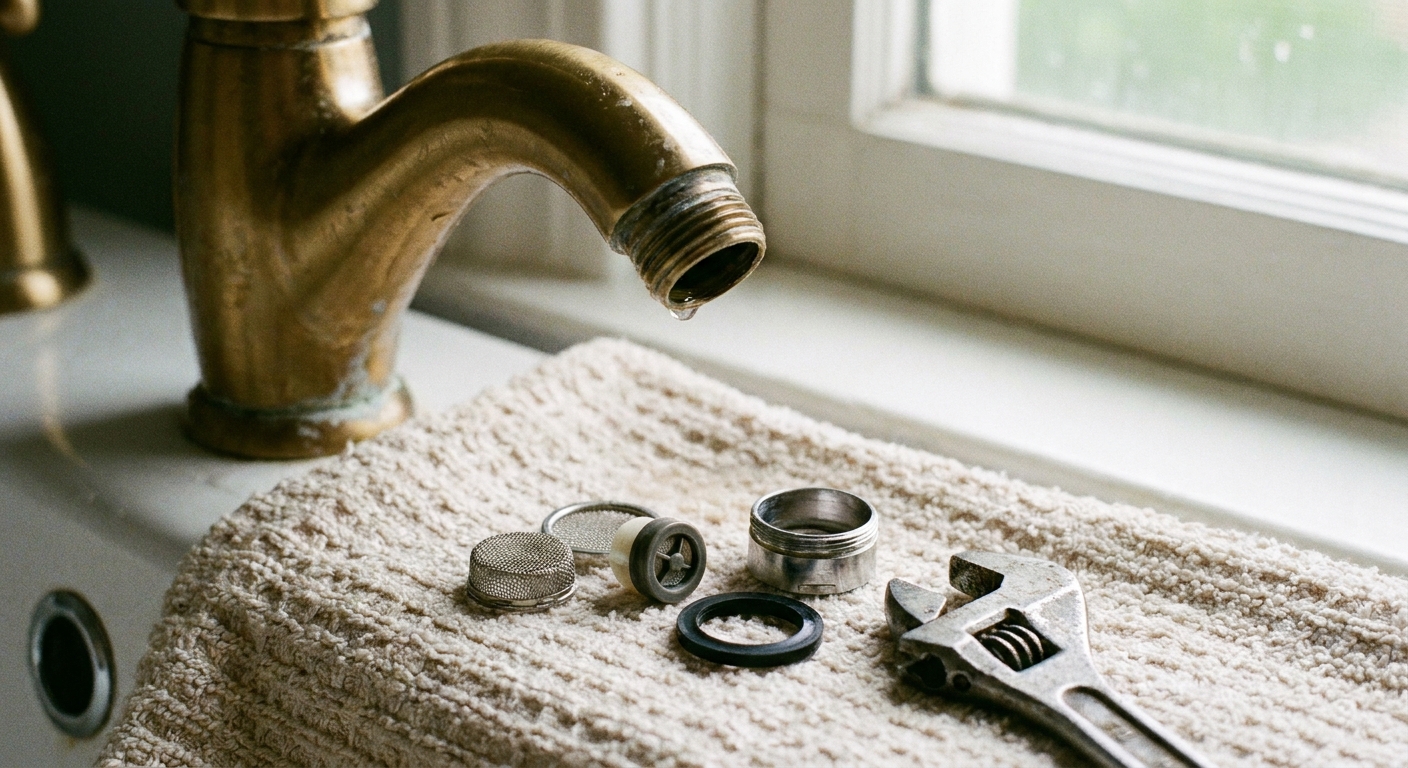
If the whistle is at a sink faucet, start with the aerator. Mineral buildup and grit can turn that little screen into a tiny whistle mouthpiece.
What to do
- Plug the drain so you do not lose parts.
- Unscrew the aerator (by hand or with a rag and pliers).
- Rinse and scrub the screen. If there is scale, soak the aerator in white vinegar for 30 to 60 minutes, then rinse.
- Run the faucet briefly with the aerator off to flush debris (aim into a bucket).
- Reinstall and test.
Tip: If your faucet has a pull down head, the screen may be inside the spray head or behind a small collar. Check the manual or look for a threaded cap.
Fix 2: Make sure the shutoff valves are fully open
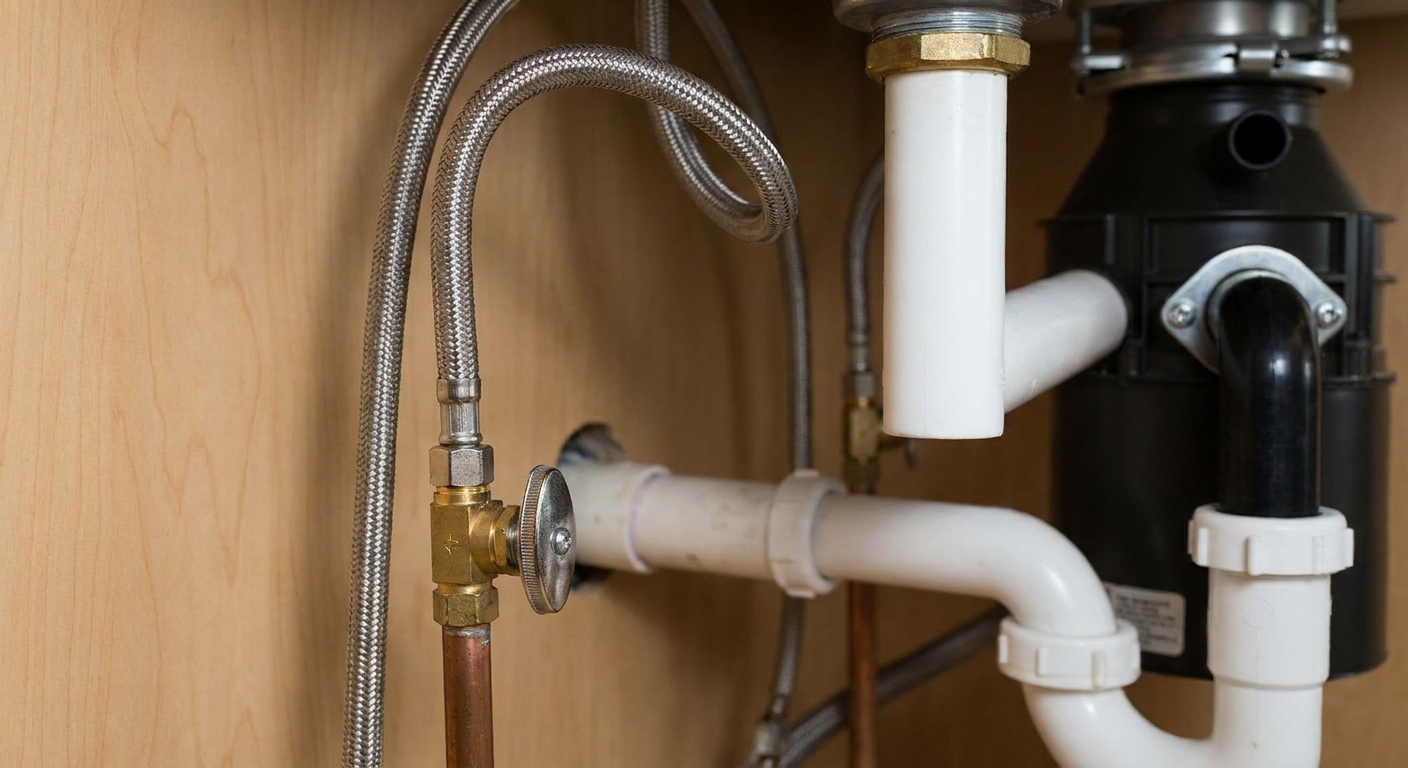
A slightly closed stop valve can whistle like a tiny flute when water squeezes past the washer or internal gate. This is especially common after cleaning under a sink or after a toilet repair.
How to check
- For multi turn valves: turn counterclockwise until it stops gently. Do not force it.
- For quarter turn valves: the handle should be parallel with the water line when fully open.
If the valve is stiff
Do not muscle it until it snaps. Try a gentle back and forth motion. If it weeps water at the stem when you move it, plan to replace the valve or have a plumber handle it.
Fix 3: Flush debris out of the faucet or supply
After a water shutoff, main work, or even a city water event, small bits of grit can lodge in a cartridge, diverter, or screen and whistle under flow.
Option A (safest): aerator-off flush
- Remove the aerator.
- Aim the faucet into a bucket.
- Turn the faucet on for 10 to 20 seconds on hot, then cold, to push debris out.
Option B (more direct): flush the shutoff and supply line
- Turn off the hot and cold shutoff valves under the sink.
- Put a towel and a shallow pan under the supply connections.
- Disconnect the supply line from the faucet and point the open end of the line into a bucket.
- Slowly crack open the shutoff for 1 to 2 seconds to flush, then close it again. Keep the line aimed into the bucket so it does not spray the cabinet.
- Reconnect, open valves fully, and test.
If you are uncomfortable disconnecting supply lines, stick to Option A and move on to the cartridge check next.
Fix 4: Replace a worn faucet cartridge (single-handle faucets)
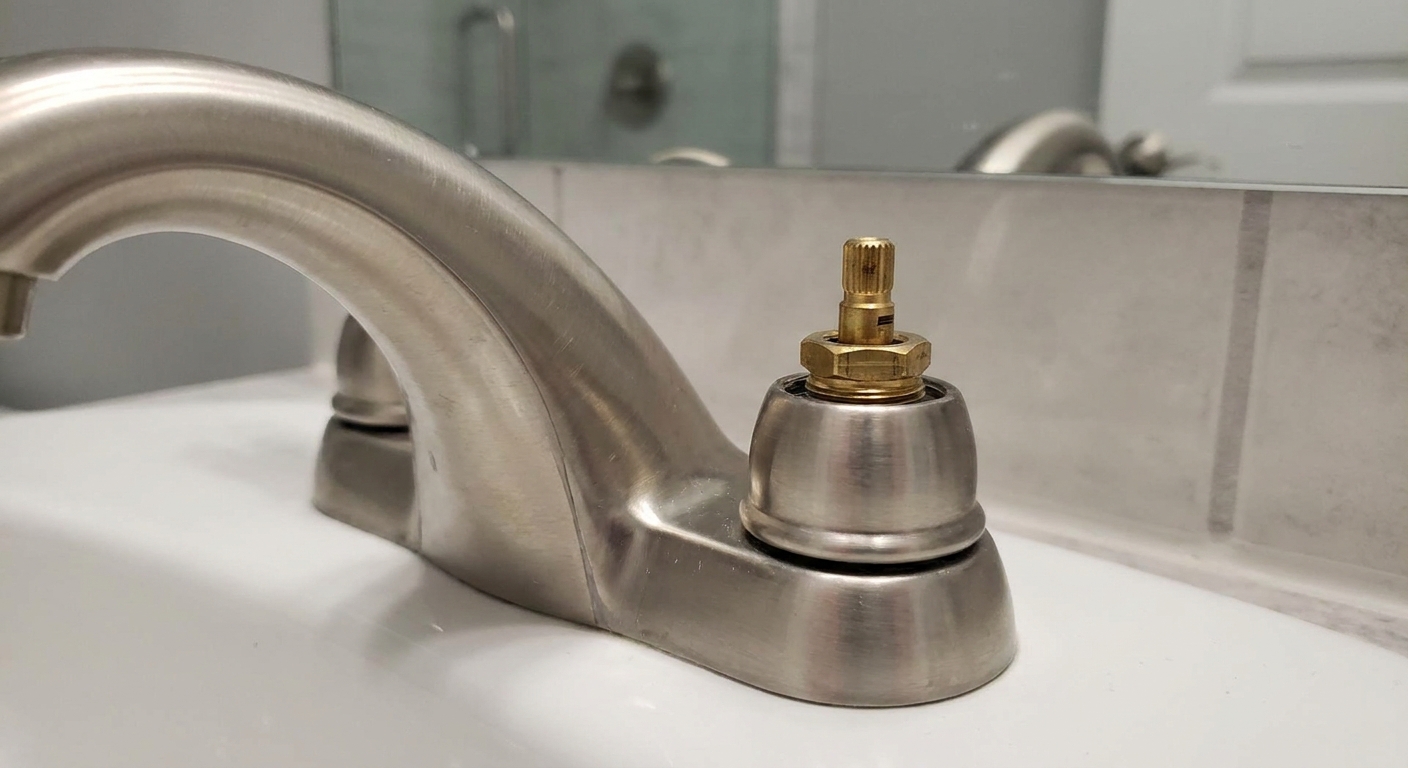
If the whistle is strongest right at the faucet body and cleaning the aerator did nothing, the cartridge is a prime suspect. Inside, rubber seals and plastic parts wear and start vibrating as water passes.
What you need
- Screwdrivers or hex key (depends on faucet)
- Adjustable wrench or channel locks
- Replacement cartridge specific to your faucet brand and model
- Silicone plumber's grease (optional, only if the manufacturer allows it)
Basic steps
- Shut off the hot and cold stops under the sink.
- Open the faucet to relieve pressure.
- Remove the handle and trim.
- Pull the cartridge (some have a retaining clip, others a nut).
- Install the new cartridge in the same orientation.
- Reassemble, turn water on slowly, and test at different flow rates.
My thrifty advice: Bring the old cartridge to the hardware store. “Close enough” parts are how you end up making two trips and still hearing the whistle.
Fix 5: Check your PRV if multiple fixtures whistle
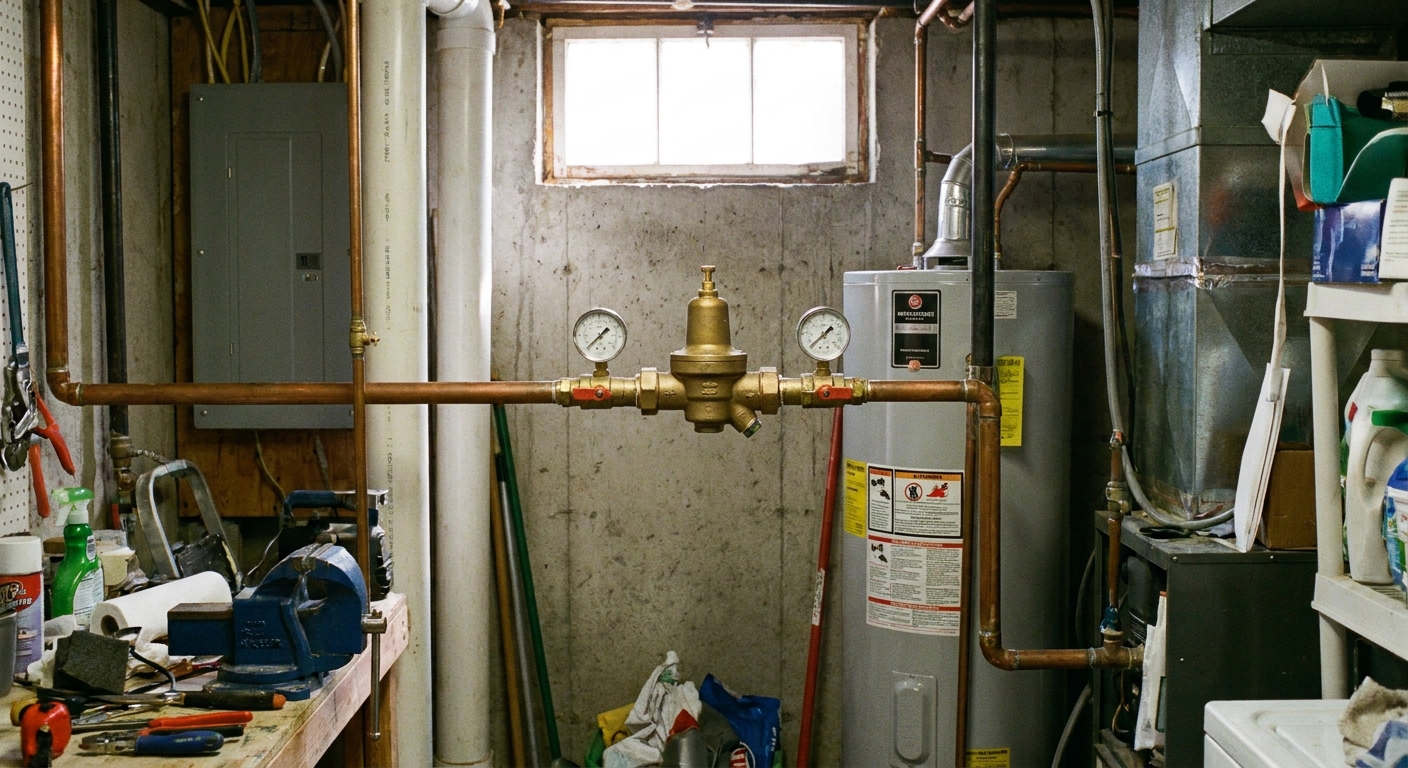
If you hear whistling at more than one faucet, especially if it seems to come from near where the water line enters the house, the PRV deserves attention. A PRV that is failing can chatter or whistle as it tries to regulate pressure.
How to tell if the PRV is involved
- The noise is not tied to one faucet. Several fixtures can trigger it.
- You hear the sound near the PRV location when someone runs water.
- Water pressure seems inconsistent or higher than it used to be.
What you can DIY safely
- Locate it: typically on the main line after the shutoff, sometimes near the water meter (in some homes it is outside).
- Inspect for leaks and corrosion: any moisture is a red flag.
- Test your pressure with a gauge: screw a gauge onto a hose bib. Many homes commonly run around 40 to 60 psi, and 80 psi is a widely used upper limit for residential systems, but local code and layouts vary. If your static pressure is high or swings a lot, that points back to PRV issues.
Important: Sometimes a PRV just has debris in it or needs a minor adjustment, but a PRV that whistles repeatedly is often telling you the internals are wearing out. Replacing one involves working on the main line. If you are not comfortable shutting off the main, cutting pipe, or dealing with a stuck shutoff, call a plumber for replacement.
One more wrinkle: If the whistle shows up alongside odd pressure swings when a water heater runs, thermal expansion can make symptoms worse. That is another good reason to bring in a pro if the PRV area is where the sound lives.
Fix 6: Look for a vibrating supply line or loose connection
Sometimes the “whistle” is actually a high frequency vibration. Braided supply lines can buzz against the cabinet wall. Copper can sing if a clip is loose. Even a slightly loose washer inside a connector can squeal.
What to check
- While the faucet is running, gently touch the supply lines (carefully). If the sound changes or stops, you found the vibrating part.
- Make sure supply lines are not pressing hard against the cabinet or each other.
- Check that the shutoffs and supply nuts are snug, but do not overtighten.
If you find a line buzzing against wood, a small piece of foam pipe insulation or a felt pad as a separator can quiet it down.
Common add-ons people miss
If a toilet is the one whistling
Toilets are notorious for squeals and whistles, and it can fool you into thinking “the pipes” are making the noise somewhere else.
- If the sound happens during refills, suspect the fill valve inside the tank or a partly closed angle stop behind the toilet.
- Try opening the toilet shutoff fully and flushing again.
- If it still whistles, a new fill valve is a cheap, quick swap for most toilets.
If your main shutoff is older
An older gate style main shutoff can restrict flow even when it looks “open,” especially if it has not been exercised in years. That restriction can create noise and pressure weirdness across the house.
- If you suspect the main, do not force it. A broken main shutoff is a bad day.
- If the whistle seems loudest near the meter or main entry, a plumber can confirm whether the main valve is the culprit and replace it with a ball valve if needed.
If you are on a well
On well systems, whistling can come from the usual suspects (aerators, stops, cartridges), but also from equipment on the supply side.
- Check sediment filters or spin-down filters for clogging.
- If you have a softener, confirm the bypass valve is fully open and seated.
- If pressure swings a lot, a check valve or pressure tank issue may be involved.
If any of that sounds unfamiliar, it is worth calling a well pro rather than learning the hard way with a flooded utility room.
Why a whistle happens (the plain-English version)
Water moving through a pipe is usually quiet until it gets forced through a tight spot. That tight spot can be mineral buildup, a partly closed valve, or a worn part. When the stream pinches down, velocity increases and the part can vibrate, which creates the whistle you hear. That is why the sound often changes with flow and disappears when you turn the faucet off.
Common scenarios and what they mean
Kitchen faucet whistles only on cold
- Most likely: clogged aerator or a bit of debris in the cold side cartridge or stop valve.
Bathroom faucet whistles at medium flow, but not full blast
- Most likely: partly closed stop valve or a cartridge that vibrates at a certain flow rate.
Multiple faucets started whistling after city work or a shutoff
- Most likely: debris in aerators and cartridges, or a PRV that got pushed over the edge by the pressure event.
Whistle is loud near where the main line enters
- Most likely: PRV, main shutoff not fully open, or a restriction at a filter or softener bypass.
FAQ
Is whistling dangerous?
Usually it is not an emergency, but it is a sign something is restricting flow or vibrating. Left alone, the underlying issue can worsen, and if the cause is high pressure it can shorten the life of supply lines, valves, and appliances.
Will a water hammer arrestor fix a whistle?
Not typically. Arrestors help with banging after quick shutoff. A whistle while running is more about restriction or vibration.
Could it be the water heater?
Whistling from the water heater itself is a separate troubleshooting path. In this article, we are focusing on whistling that tracks with a faucet running and points to restriction at the fixture, stops, PRV, or main supply components.
What if only hot water causes the whistle?
Start at the hot side shutoff under the sink and the faucet cartridge. If the sound seems to come from the utility area, the hot side can also be influenced by a mixing valve, recirculation check valve, or system specific components, and that is a good moment to bring in a pro if you cannot pinpoint it.
My go-to order of operations
If you want the fastest path with the fewest headaches, here is the order I use:
- Clean aerator and flush with aerator off
- Open under-sink shutoffs fully
- Listen and locate the sound source during flow
- Replace the faucet cartridge if it is a single fixture issue
- Check PRV and household pressure if multiple fixtures are involved
- If it still does it, widen the net to main shutoff, filters or softener bypass, and check valves
Work from the fixture outward. Most whistles are solved without opening walls or touching the main line.
The 30-Second Cheat Sheet
Essential takeaways for: Pipes Whistle When the Faucet Is On?
Likely causes (whistle only while water runs)
- Partly closed shutoff (stop) valve under the sink or behind a toilet
- Clogged aerator or debris in the faucet
- Worn faucet cartridge (single-handle) or washer (some two-handle faucets)
- Failing pressure-reducing valve (PRV) if multiple fixtures whistle
- Vibrating supply line touching a cabinet or pipe
- Less common: partially closed main shutoff, sticking check valve/backflow device, water softener or filter restriction
Fast checks in order
- Unscrew and clean the aerator (vinegar soak for scale)
- Make sure hot and cold shutoff valves are fully open
- Flush the faucet briefly with the aerator removed
- If it is still whistling, replace the faucet cartridge
- If more than one fixture whistles, test house pressure and suspect the PRV or main shutoff
When to call a pro
- You see leaking at the PRV, main shutoff, or any supply connection
- You cannot safely shut off the main water
- Pressure seems extreme or inconsistent across the house
- PRV replacement is needed and you are not comfortable working on the main line
💡 Tip: Scroll up to read the full article for detailed, step-by-step instructions.
⬆️ Back to top
About Grit
Content Creator @ Grit & Home
Grit is Grit & Home’s little blue clay courier, delivering big questions about the place you call home. Expect practical ideas, a raised eyebrow, and a satchel full of curiosity.