
🚨 In a DIY emergency or rush?
Skip the details and jump straight to our 30-second cheat sheet for the most crucial info.
When a portable generator refuses to start, it usually is not “mysteriously broken.” Most no-starts come down to a short list: questionable fuel, the wrong choke sequence, low-oil shutdown, no spark, no air, or something that happened during storage. This checklist walks you through the same order I use in my garage because it starts with the easiest, highest-odds fixes and only then moves into the more hands-on stuff.
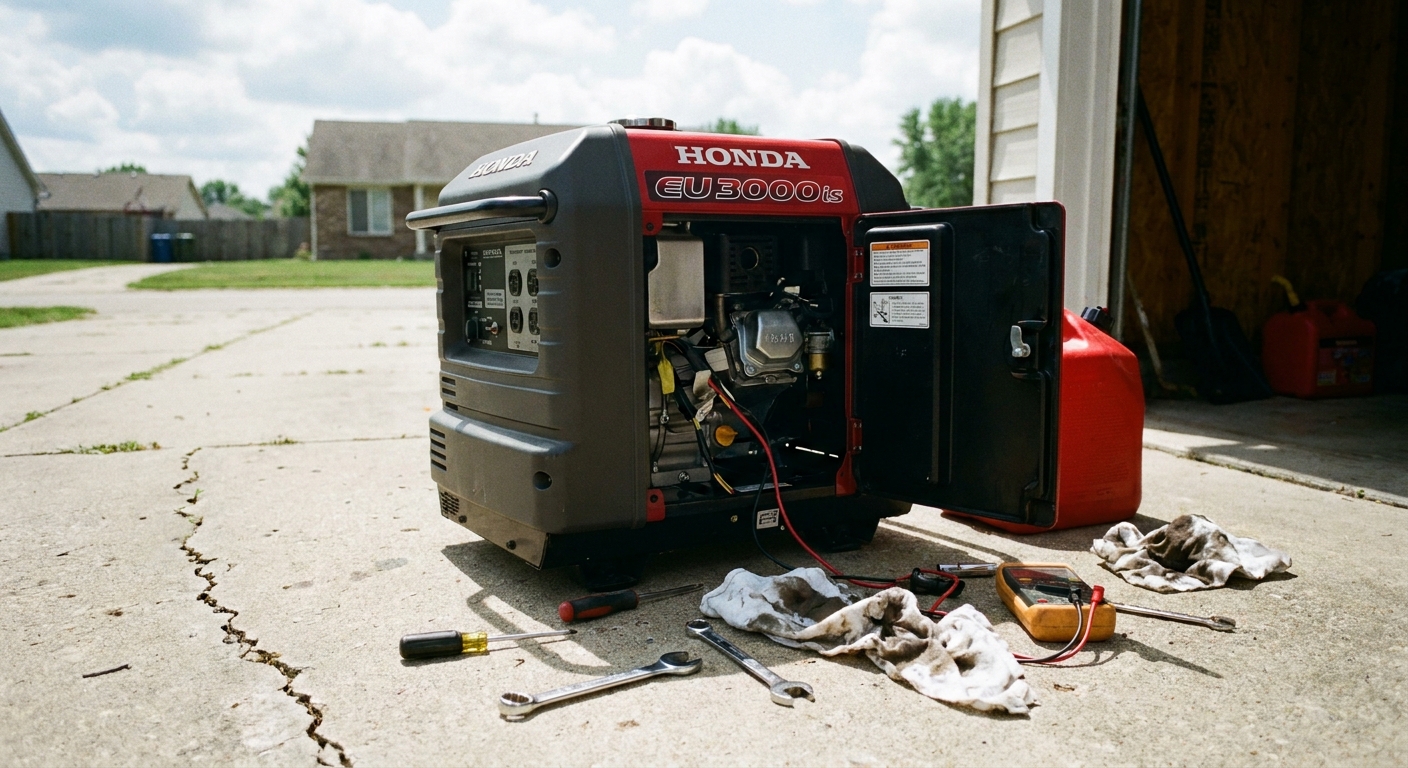
Before you touch anything: Move it outdoors into open air, shut the fuel valve off, and let the engine cool for a few minutes.
Safety first (30 seconds that matters)
- Carbon monoxide: Run generators outside only, well away from doors, windows, garage doors, soffit vents, and crawlspace vents. If you feel headache or nausea, shut it down and get fresh air.
- Shock and backfeed: Never plug a generator into a wall outlet. If you want to power circuits, use a properly installed transfer switch or inlet with interlock.
- Fire risk: Let the unit cool before refueling. Wipe spilled fuel and keep it off the muffler.
Tools and supplies (keep it simple)
- Fresh gasoline (or the fuel your model uses)
- Clean rag and a flashlight
- Spark plug socket and gap tool (or a cheap feeler gauge)
- A known-good spark plug (optional but handy)
- Small funnel, drain pan, and a cup to catch old fuel
- New air filter (if yours is dirty or oil-soaked)
- Small wire brush (helpful for a spark arrestor screen)
Step-by-step troubleshooting (in the right order)
Step 1: Set it up to start (switches, fuel, battery)
- Move it outdoors: Open air only, and farther from the house than you think you need.
- Disconnect all loads: Start with nothing plugged in.
- Engine switch: Set to ON or RUN.
- Fuel valve/petcock: Set to ON.
- Fuel selector (dual fuel): Make sure it is on the fuel you actually have connected.
- Spark plug boot: Press it onto the plug firmly until it feels fully seated. It often gets knocked loose during storage or transport.
- Battery models: If it has electric start, check battery connections are tight and not corroded. If it cranks slowly, charge the battery and try recoil start if your model has one.
- GFCI reset: Some inverter generators have a reset that can confuse troubleshooting. Reset it if present, but remember: a tripped outlet usually does not prevent the engine from starting. If your panel shows a fault state, check your manual.
- Manual reality check: Choke positions and oil-check method vary by model. Use your manual for the exact lever positions and dipstick procedure.
Step 2: Use the correct choke sequence (this trips people up all the time)
Most cold engines need choke. Most warm engines do not. The “won’t start” story I hear most often is someone choking a warm engine or forgetting to open the choke after it fires.
- Cold start (first start of the day): Choke ON, pull or crank until it fires, then move choke toward OFF in stages as it smooths out.
- Warm restart (ran in last 5 to 15 minutes): Choke OFF, or only half choke for the first pull if it feels stubborn.
- If it smells like gas or the plug is wet: You likely flooded it. Set choke OFF and pull several times to clear it.
Step 3: Check fuel quality (not just fuel level)
Gasoline can start causing problems in 1 to 3 months, sooner with ethanol blends, heat, and vented storage. A generator that ran fine last season can act dead this season with a tank that “looks full.” Follow your fuel supplier and stabilizer guidance, but when in doubt, go fresh.
- How old is the fuel? If you do not know, treat it as suspect. If it is last year’s gas, drain it.
- Smell test: Fresh gas has a sharp smell. Stale gas smells sour or like varnish.
- Quick fix: Turn the fuel valve OFF, drain the tank and carb bowl (if accessible), then refill with fresh fuel. Dispose of old gas properly.
- Dual fuel models: If you run propane, switch to propane to isolate a gasoline and carburetor issue.
- Fuel cap vent (easy test): If it starts then dies, loosen the fuel cap briefly. A blocked cap vent can create vacuum and starve the carb.
Step 4: Oil level and low-oil shutdown
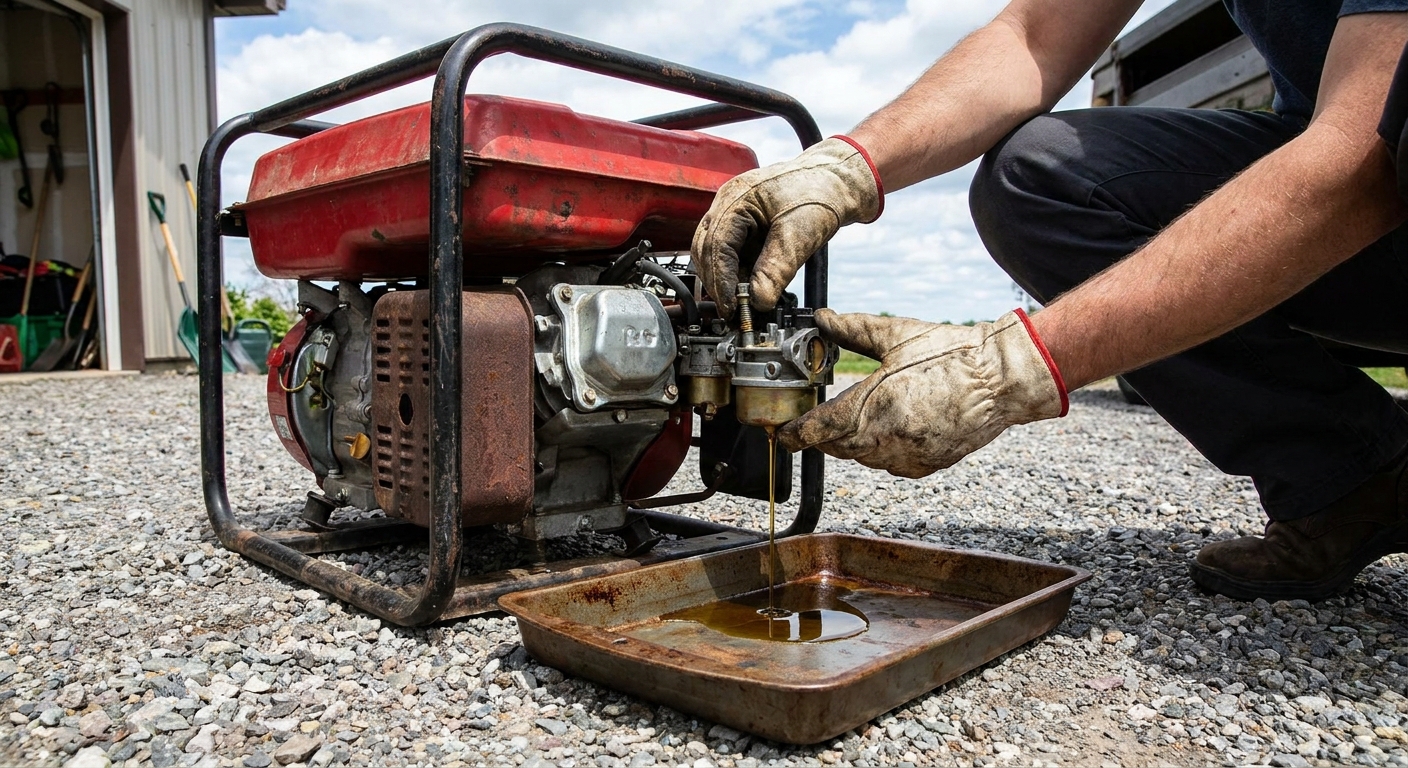
Many portable generators have a low-oil level switch and shutdown circuit that prevents starting. The frustrating part is you can be barely low and it still refuses to fire.
- Place the generator on level ground.
- Check oil per your manual. Some units check with the dipstick screwed in, others check with it resting on the threads.
- Top off to the correct level, but do not overfill.
- If you recently changed oil, confirm you used the right viscosity (common is SAE 10W-30, but follow your manual).
Step 5: Airflow and air filter
Engines need air. A clogged filter can make starting hard, and an oil-soaked foam filter can make it almost impossible.
- Pull the air filter cover and inspect the filter.
- Paper filter: Replace if dirty. Tapping it on the driveway is not a real cleaning method.
- Foam filter: If it is saturated with oil, wash and re-oil lightly, or replace.
- Make sure the airbox is not packed with debris or insect nests (it happens).
Step 6: Spark check (simple and decisive)
If you have fuel and air, spark is next. This sounds intimidating, but it is one of the most straightforward checks.
- Re-check that the spark plug boot is fully seated.
- Remove the spark plug boot and spark plug.
- Inspect the plug: heavy black soot, a wet tip, or a damaged electrode means it is time to replace it.
- Confirm the gap matches your manual.
- If you have an inline spark tester, use it. If not, the easiest beginner move is to install a new plug and try starting.
Note: If you do a visual spark test, ground the plug threads against clean engine metal and keep your fingers clear of the metal part of the plug. Keep the plug away from the spark plug hole and any spilled fuel. Gas vapors plus spark is a bad combo.
Step 7: Starts then stalls, surges, or only runs on choke (carb clues)
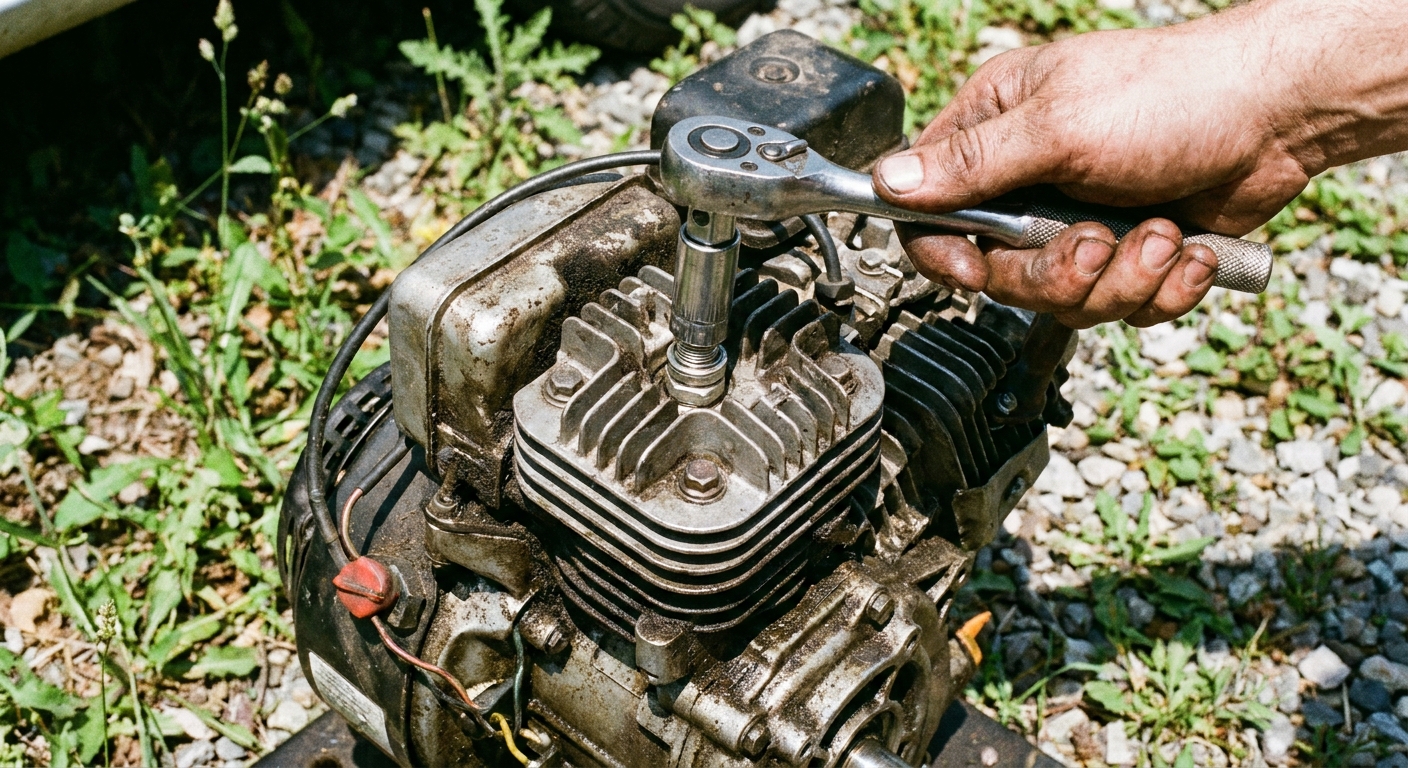
If the generator starts for a second and dies, surges, or only runs on choke, you are usually looking at a fuel delivery issue through the carburetor, often from storage.
- Try fresh fuel first if you have not already.
- Look for a carb bowl drain screw. Turn the fuel valve OFF, then drain the bowl into a container. This can remove water and varnish-laced fuel.
- Tap the side of the carb bowl gently with a screwdriver handle. A stuck float needle can sometimes free up.
- If it still will not run, you may need a carb clean or rebuild. If that feels like a leap, it is a good point to call a small-engine shop.
Step 8: Exhaust and “hidden” shutoffs
- Spark arrestor screen: Many generators have a small screen at the muffler outlet. Carbon buildup or an insect nest can create exhaust back-pressure and cause no-start or start-and-stall. Remove it (once cool), brush it clean, and reinstall.
- CO shutoff feature: Some newer generators have a carbon monoxide sensor that will shut the unit down, or prevent restart, if CO builds up around the unit. If you tried running it near a garage or close to the house, move it farther out and try again. Some models require a reset period or a reset button, so check your manual.
- Overload light (inverter generators): If an overload light is on, disconnect all loads, reset, then start with nothing plugged in.
- Bad extension cords: Not usually a start issue, but a shorted cord can trip protection right after starting. Start with no cords attached.
If it still will not even cough
If you have fresh fuel, correct choke, good spark, clean air, and it still will not even try to fire, you may be out of the “common fixes” zone.
- Compression issues: Stuck valves, valve lash out of spec, or a worn engine can cause a true no-start.
- Sheared flywheel key: If it backfired hard or the recoil kicked back, ignition timing can be off.
This is where a small-engine shop can test compression and diagnose deeper issues quickly.
Storage mistakes that cause most “first outage of the year” failures
- Storing with fuel in the carb: The carb bowl evaporates and leaves varnish that clogs tiny passages.
- No stabilizer: If you must store gas in the tank, stabilizer helps, but it is not magic for old fuel.
- Never exercising the generator: Run it 15 to 20 minutes every month or two with a small load. It keeps seals happy and helps you catch problems before a storm does.
- Leaving the fuel valve ON during storage: This can allow fuel to seep and gum up the carb.
If you want the simplest “future you will thank you” routine: shut the fuel valve, run the generator until it dies, then change oil at the interval your manual recommends.
Power cord and load basics (keep it safe and stable)
- Use outdoor-rated extension cords sized for the load. Thin cords cause voltage drop and heat.
- Start the generator with nothing plugged in, then add loads one at a time.
- Skip “daisy chaining” power strips. Plug critical items in directly when possible.
- If you are powering a fridge or freezer, listen for the compressor start. If the generator bogs hard, you may be undersized or overloading.
When to stop DIYing and get help
I am all for learning as you go, but there are a few times I put the wrench down:
- You smell raw fuel that will not go away, see fuel dripping, or suspect a leak.
- The recoil starter will not pull or the engine feels seized.
- Electrical burning smell, melted wiring, or repeated tripping with no load connected.
- You worked through fuel, oil level, air, and spark basics and still have a no-start. At that point, a shop can test compression and diagnose deeper issues faster.
My go-to checklist
- Outdoors, level ground, cooled down
- Nothing plugged in
- Switch ON, fuel valve ON, correct fuel selected
- Spark plug boot fully seated
- Correct choke for cold vs warm
- Fresh fuel, drain old fuel if questionable
- Oil at proper level (low-oil shutdown is picky)
- Clean air filter
- Clean spark arrestor screen if equipped
- New or known-good spark plug
If you work this order, you fix the common stuff fast and avoid tearing into the carburetor when the real problem was simply stale gas and a low oil level.
The 30-Second Cheat Sheet
Essential takeaways for: Portable Generator Won’t Start? Troubleshooting Checklist
Do this in order (most fixes happen in the first 5 minutes)
- Move it outdoors into open air. No garage, no porch, and not near open doors or windows.
- Start with nothing plugged in. Add loads one at a time after it is running smoothly.
- Switch ON + fuel valve ON. (Sounds obvious. Still gets people.)
- Press the spark plug boot on firmly. It gets bumped loose more often than you would think.
- Choke correctly: Cold engine = choke ON to start, then ease to OFF. Warm engine = choke OFF.
- Suspect the fuel. If the gas is old, drain tank and carb bowl, refill with fresh fuel.
- Check oil on level ground. Top off to spec. Low-oil shutdown can prevent starting even when “close.”
- Check the air filter. Replace if dirty or oil-soaked.
- Check the spark arrestor screen. Carbon buildup or a bug nest can make it start and stall.
- Replace the spark plug. Cheapest, quickest way to rule out a weak plug.
Fast clues
- Fires then dies: Often stale fuel, a clogged carb, or a blocked fuel cap vent. Try loosening the cap briefly to test.
- Strong gas smell / wet plug: Likely flooded. Choke OFF, pull several times to clear.
- Runs only on choke: Fuel delivery issue through the carb, usually from storage.
Two safety rules to remember
- CO: Run outside, far from openings. If you feel sick, shut it down and get fresh air.
- Backfeed: Never plug into a wall outlet. Use a transfer switch or inlet with interlock.
💡 Tip: Scroll up to read the full article for detailed, step-by-step instructions.
⬆️ Back to top
About Marcus Vance
Content Creator @ Grit & Home
Marcus Vance is a lifelong DIY enthusiast and self-taught home renovator who has spent the last decade transforming a dilapidated 1970s ranch into his family's dream home. He specializes in budget-friendly carpentry, room-by-room renovations, and demystifying power tools for beginners. Through his writing, Marcus shares practical tutorials and hard-learned lessons to help homeowners tackle their own projects with confidence.