
🚨 In a DIY emergency or rush?
Skip the details and jump straight to our 30-second cheat sheet for the most crucial info.
If your portable humidifier powers on but it is not misting, you are not alone. I have had units “run” for an hour with zero output, only to find it was something simple like the tank not seated flat or a thin ring of mineral scale choking the works.
Below is the order I use in my own house: quick stuff first, then cleaning, then the parts that actually fail. Take it step by step and you will usually get output back without buying a new unit.
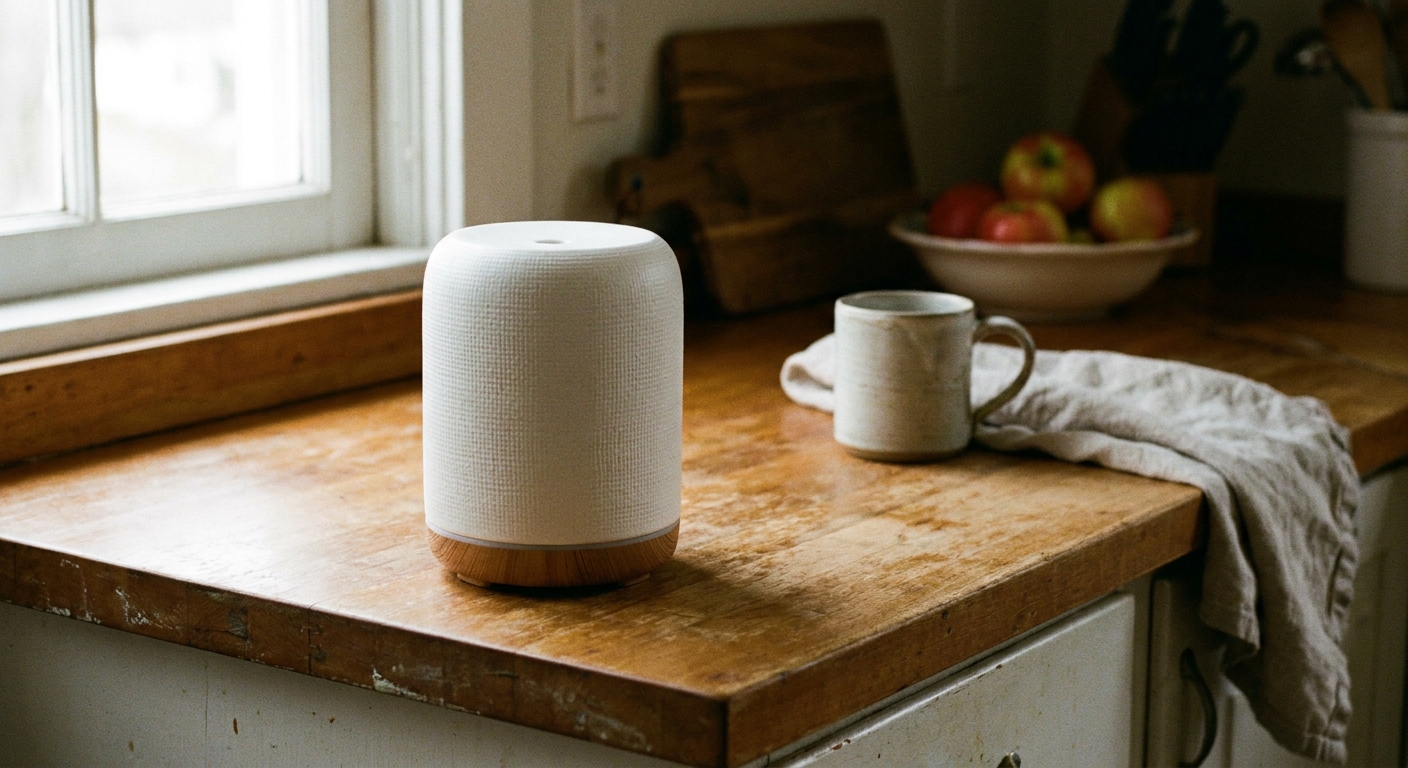
Safety and a quick reset
- Unplug it before you touch the base, fan area, or any internal parts.
- Dump the tank and remove any filter or wick so you can see what is going on.
- Avoid fumes: if you clean with vinegar or a manufacturer-approved descaler, do it in a ventilated area and rinse thoroughly so you are not breathing leftovers.
- Reset (works on some models): unplug for 2 minutes, then plug directly into a wall outlet (not a power strip) and try again.
That reset sounds too easy, but some digital units latch into a “tank empty” or “humidity reached” state and only recover after power is fully removed.
Start here: is it actually trying to run?
Check the obvious power issues
- Outlet test: plug in a lamp to confirm the outlet is live.
- Cord and plug: look for kinks, heat damage, or a loose plug fit.
- GFCI: bathrooms and some bedrooms are on GFCI circuits. Reset the GFCI if it tripped.
- Settings: some units will “power on” but be set to low mist or auto with near-zero output.
Confirm the symptom: no mist vs. weak mist
- No mist at all: often tank seating, a sensor, a safety float, a dead fan, or a scaled ultrasonic disk.
- Weak mist: often mineral buildup, clogged wick, a dirty intake filter, or (on some models) very cold water reducing output.
Tank and seating problems
Make sure the tank is seated and venting
These units can be picky about tank alignment. If the tank is slightly crooked, the valve might not open or the base might not fill correctly.
- Reseat the tank: remove it, wipe the mating surfaces dry, then set it down firmly and squarely.
- Listen for the “glug”: after seating, you should often hear water move into the base reservoir.
- Check the cap gasket: a twisted or missing gasket can cause air leaks and poor water flow.
- Look for a blocked vent hole: some caps have a tiny vent that can clog with scale.
Test the tank valve (quick sink test)
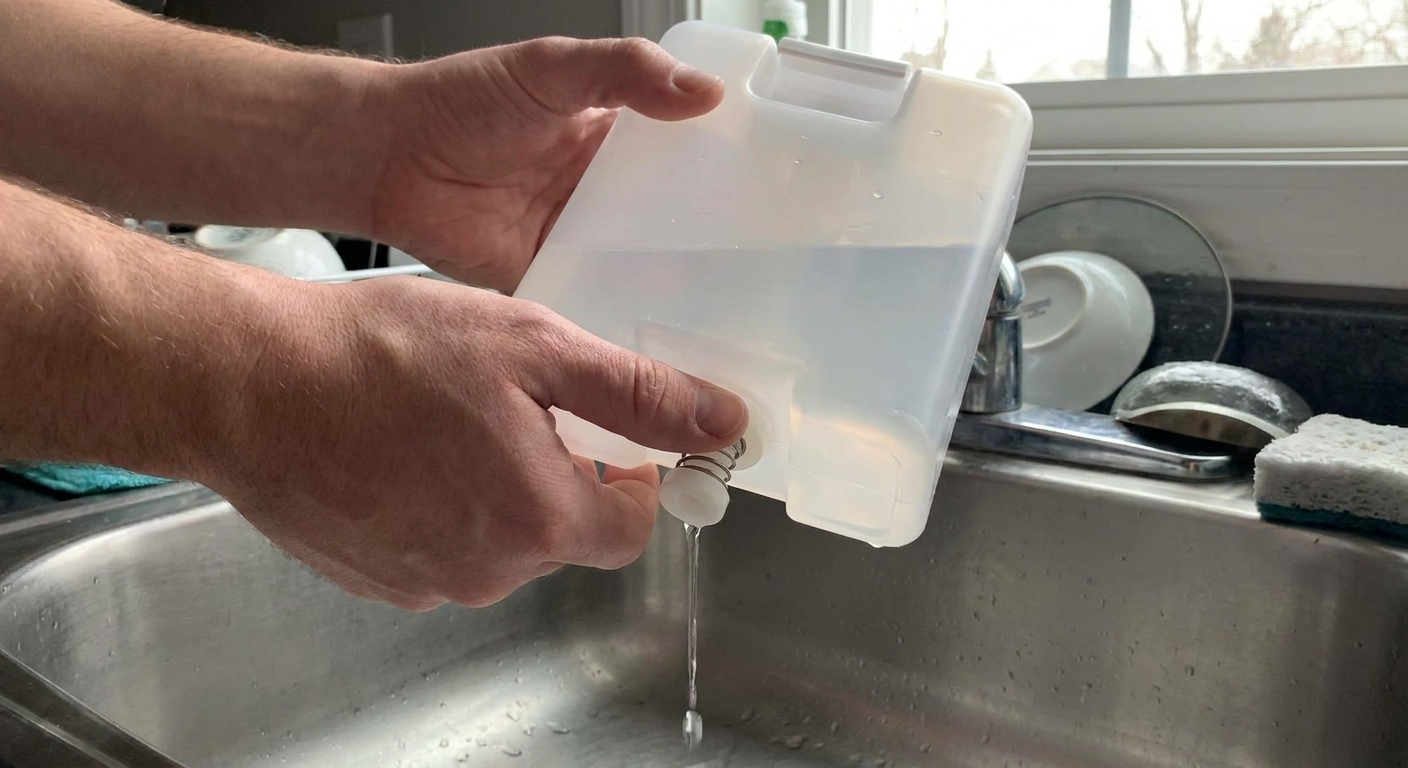
Over the sink, press the spring-loaded valve pin on the tank (usually in the center of the tank cap). Water should flow freely and stop cleanly when you let go.
- If it does not flow, the valve is stuck or clogged.
- If it dribbles weakly, you likely have mineral scale in the cap/valve area.
Know your type
The fix depends on what is inside the unit. Here is the quick way to tell.
- Ultrasonic (cool mist): usually quiet, often has a visible mist plume. Inside the base there is a small round metal disk (the ultrasonic transducer).
- Evaporative (cool mist): uses a wick/filter and a fan. You may feel air moving but you will not see much “mist.”
- Warm mist: heats water and may produce steam. It often has a heating element and more safety shutoffs.
Ultrasonic: fix a scaled mist disk
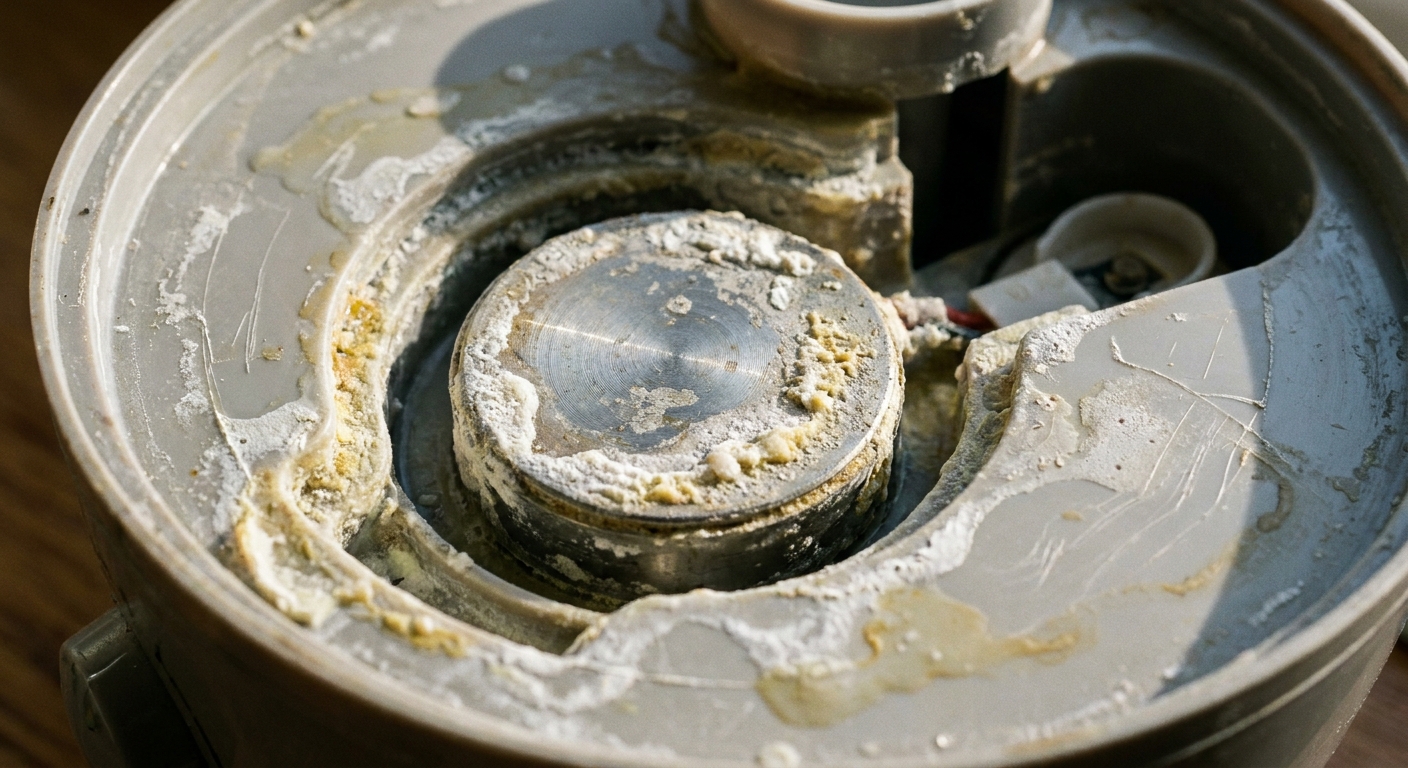
If your ultrasonic unit powers on but produces no visible mist, a very common culprit is a transducer disk coated with mineral scale. Hard water can crust that disk fast.
Clean the ultrasonic disk
- Unplug the unit and remove the tank.
- Locate the round metal disk in the base reservoir.
- If your manual allows it, add enough white vinegar to cover the disk. Let it sit 15 to 30 minutes.
- Use a cotton swab or soft cloth to wipe the disk. Do not scrape with metal tools.
- Rinse thoroughly and wipe dry.
DIY mistake I made once: I used a stiff brush “just to speed it up” and nicked the coating on a disk. The humidifier never misted right again. Soft cloth only.
Quick diagnostic: is the disk doing anything?
This is not required, but it can help you tell “disk problem” from “water supply or airflow problem.”
- With the humidifier assembled, filled, and running, look through the base reservoir area (if visible) for ripples near the disk.
- Some units also make a faint high-pitched tone when the transducer is active.
- Do not touch the water or reach inside while it is plugged in.
Check for water where it should not be
Ultrasonic units have air channels and electronics in the base. If the unit was overfilled or carried while full, water can migrate where it should not be.
- Turn the unit off, unplug it, and let it dry out for a full day.
- Do not run it while it is wet inside. That can finish off a control board.
Evaporative: fix a clogged wick
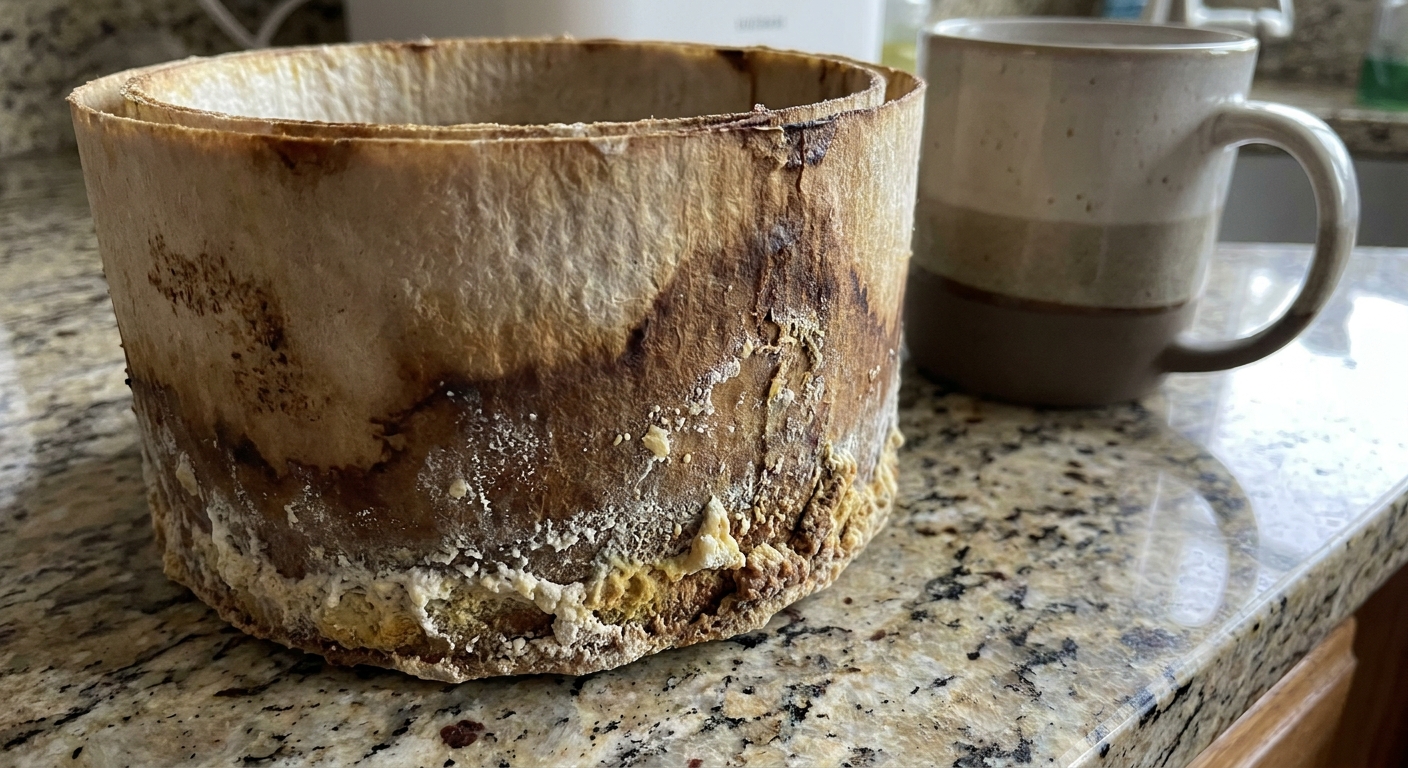
Evaporative units are the ones that fool people. You often will not see mist, because the fan is pushing humidified air, not spraying droplets. But if humidity is not rising and the wick is crusty, output drops hard.
Inspect the wick/filter
- White crust or stiffness: mineral scale is blocking absorption.
- Musty smell or discoloration: time to replace, not clean.
- Incorrect install: the wick must sit in the water path correctly to stay wet.
Replace vs. clean
Most evaporative wicks are designed to be replaced, not revived. A light vinegar soak can help in a pinch (if the manual allows), but once the pores are mineral-packed, you are basically trying to make a sponge out of a rock.
- If the wick is 1 to 3 months old and lightly crusted, try a vinegar soak (check your manual first).
- If it is older, smelly, or warped, replace it.
Warm mist: steam problems
Warm mist humidifiers do not have a transducer disk. They rely on a heating element to make steam, so mineral scale and safety shutoffs are the usual story when they “run” but do not put out much.
Descale the heating area
- Unplug and cool fully before doing anything. Some models stay hot longer than you think.
- Look for white crust on the heating element or heating chamber.
- Clean only using methods approved by your manufacturer. Many warm mist models allow a vinegar soak in the heating chamber, but not all do.
- Rinse very thoroughly so you are not steaming cleaning residues into the room.
Other warm mist gotchas
- Warm-up time: steam output can take several minutes to ramp up after a cold start.
- Cool-down delays: after refilling or a temperature safety trip, some units pause and restart later.
- Repeated shutoffs: if it keeps tripping, smells hot, or the cord gets warm, stop using it and replace it.
Fan and airflow issues
Both evaporative and many ultrasonic units rely on a fan to move air. If the fan is not spinning, output will be weak or nonexistent even if everything else is fine.
Quick airflow checks
- Feel for airflow at the outlet while it is running.
- Check intake grilles for lint, pet hair, or being jammed against a wall.
- Clean the intake: vacuum dust from vents. Some models have a small foam filter you can rinse and fully dry.
If the fan hums but does not spin
That can be a seized fan, debris in the blades, or a failing motor. If you are comfortable removing a few screws, you can sometimes clear hair or dust clumps. If the motor smells hot or the fan still will not turn freely by hand (with the unit unplugged), replacement often makes more sense.
Mineral scale and white dust
Hard water causes two big issues:
- Scale buildup on disks, valves, and internal surfaces that kills output.
- White dust on furniture from ultrasonic units atomizing minerals.
What to do about hard water
- Use distilled water for ultrasonic humidifiers when possible.
- Consider a demineralization cartridge if your model supports it.
- Increase cleaning frequency if you have well water or very hard municipal water.
Auto mode and sensors
Many humidifiers stop output in auto mode when they think the room is “done.” The tricky part is that the sensor is often close to the mist outlet, so it reads a pocket of humid air and shuts down early.
Try these workarounds
- Switch from Auto to a manual mist level for testing.
- Move the unit to a spot with better circulation, not tucked in a corner.
- Raise it off the floor onto a small table so the sensor reads room air better.
- Give it distance from curtains, walls, and bedding that can trap humid air.
Rule of thumb: 30 to 50 percent indoor RH is a good target for many homes. The “best” number depends on your climate and comfort, and pushing too high in winter can cause window condensation and mold risk.
Float switches and low-water shutoffs
Lots of units have a little float or lever that tells the humidifier it has water. If that float sticks, the humidifier acts empty even when the tank is full.
- With the unit unplugged, locate the small float in the base reservoir area.
- Gently move it up and down. It should move freely.
- Clean slime or scale around the float with a soft cloth and vinegar solution (if allowed), then rinse.
Essential oils and additives
A lot of “portable” humidifiers are sold alongside aroma diffusers, so people naturally try essential oils. The problem is that many humidifiers are not built for oils. Oils can swell plastics, leave sticky residue, and coat the transducer area, which can look exactly like a no-mist failure.
- If your manual does not explicitly allow oils, stop using them in the unit.
- Do not add vapor rubs, medications, or fragrances unless the manufacturer says it is designed for it.
- If you already did, do a full clean and rinse, and expect that some units never fully recover if plastics were damaged.
Deep clean and sanitize
If troubleshooting is not obvious, do a proper clean. Most “dead” humidifiers I see are just dirty inside. Also, a neglected tank can grow slime fast, and you do not want that getting into your air.
Weekly clean (10 minutes)
- Empty the tank and base daily or every couple of days if you run it constantly.
- Once a week, if your manual allows it, add a splash of white vinegar to the base, let it sit 15 minutes, then wipe and rinse.
- Wipe the tank interior with vinegar solution, rinse well, and air dry fully.
Monthly descale (or more with hard water)
- Soak scale-prone parts in vinegar (or manufacturer-approved descaler) until deposits soften.
- Use a soft brush or cloth to remove loosened scale.
- Rinse thoroughly to keep smells and residues out of the air.
Use only approved cleaners
Only use cleaning agents your manual allows. You do not want to aerosolize residues into your living room. Vinegar is one of the safest commonly recommended household options for mineral scale, if your manufacturer permits it, and mild soap and water works for general grime.
When replacement beats repair
I love fixing things, but these units live a rough life. Warm water, minerals, and constant moisture take their toll.
- Cracked tank: replacement tank costs sometimes approach the price of a new unit.
- Electronics failure: no response to buttons, random shutdowns, or burning smell.
- Fan motor failure: especially if it is noisy, seized, or overheating.
- Chronic scaling: if you cannot realistically switch to distilled water and you are descaling constantly, a different type of humidifier might fit better.
If your unit is a few years old and you need multiple parts, buying a new one often saves money and frustration.
Placement tips
- Place it on a water-resistant surface at least a couple feet off the floor when possible.
- Keep the outlet away from walls to prevent damp spots and peeling paint.
- Do not aim mist directly at wood furniture, guitars, or electronics.
- Leave a few inches of clearance around intake vents so the fan can breathe.
Quick troubleshooting flow
- Wall outlet and settings check, then reset (helps on some models).
- Reseat tank, inspect gasket and vents, test the tank valve for flow.
- Identify type: ultrasonic disk vs. evaporative wick vs. warm mist heater.
- Clean: descale disk/heater (if allowed) or replace wick, then clean base and vents.
- Check airflow and fan operation.
- Try manual mode to rule out sensor behavior.
- If still dead: suspect fan motor, control board, or internal sensor, and consider replacement.
FAQ
Why is my humidifier running but not producing mist?
Most often it is a tank that is not seated correctly, mineral scale on an ultrasonic disk, or a clogged/expired wick on evaporative models. Less common causes include a stuck float switch, a dead fan, auto mode stopping output early, or (for warm mist units) scale on the heating element.
Can I use vinegar to clean my humidifier?
White vinegar is a common, effective descaler for mineral buildup, but not every manufacturer recommends it for every model. Follow your manual, rinse thoroughly, and let parts fully dry before putting the unit back into service.
Is it normal to not see mist?
On evaporative humidifiers, yes. You usually will not see a visible plume. You should still feel airflow and see room humidity climb over time on a separate hygrometer.
What is the white dust around my humidifier?
That is typically minerals from hard water, especially with ultrasonic models. Switching to distilled water or using a demineralization cartridge helps.
The 30-Second Cheat Sheet
Essential takeaways for: Portable Humidifier Not Misting? Fixes to Try
Fast checks (in order)
- Reset: unplug 2 minutes, plug into a wall outlet, switch to manual high output.
- Tank seating: reseat the tank squarely, confirm water “glugs” into the base, check the cap gasket and any tiny vent holes.
- Tank valve test: press the spring valve over a sink. It should flow freely.
- Auto mode: switch to manual to rule out a sensor shutting it down early.
If it is ultrasonic (cool mist with a visible plume)
- Descale the transducer disk: if allowed by your manual, soak with white vinegar 15 to 30 minutes, wipe with a cotton swab, rinse well.
- Quick “is it vibrating?” check: with the unit assembled and running, look for ripples at the disk area (do not touch water while plugged in).
- Hard water fix: use distilled water to reduce scale and white dust.
If it is evaporative (wick + fan, usually no visible mist)
- Check the wick: if it is crusty, stiff, smelly, or discolored, replace it.
- Confirm airflow: feel for air at the outlet and clean lint off intake vents.
If it is warm mist (steam)
- Descale the heating area: mineral scale can reduce steam output. Clean only with methods allowed by the manual.
- Cool-down delays: some models pause after refills or overheating, then restart.
- Safety trip: if it repeatedly shuts off or smells hot, stop using it and consider replacement.
Common “mystery” causes
- Fan issue: no airflow means little or no humidification.
- Float stuck: unit thinks it is empty. Clean scale around the float.
- Essential oils: if your unit is not rated for oils, residues can clog parts and damage plastics.
When to replace instead of repair
- Cracked tank, burning smell, dead buttons, overheating fan motor, or repeated failures after cleaning.
- If you need multiple parts and the unit is a few years old, replacement is usually cheaper.
💡 Tip: Scroll up to read the full article for detailed, step-by-step instructions.
⬆️ Back to top
About Marcus Vance
Content Creator @ Grit & Home
Marcus Vance is a lifelong DIY enthusiast and self-taught home renovator who has spent the last decade transforming a dilapidated 1970s ranch into his family's dream home. He specializes in budget-friendly carpentry, room-by-room renovations, and demystifying power tools for beginners. Through his writing, Marcus shares practical tutorials and hard-learned lessons to help homeowners tackle their own projects with confidence.