
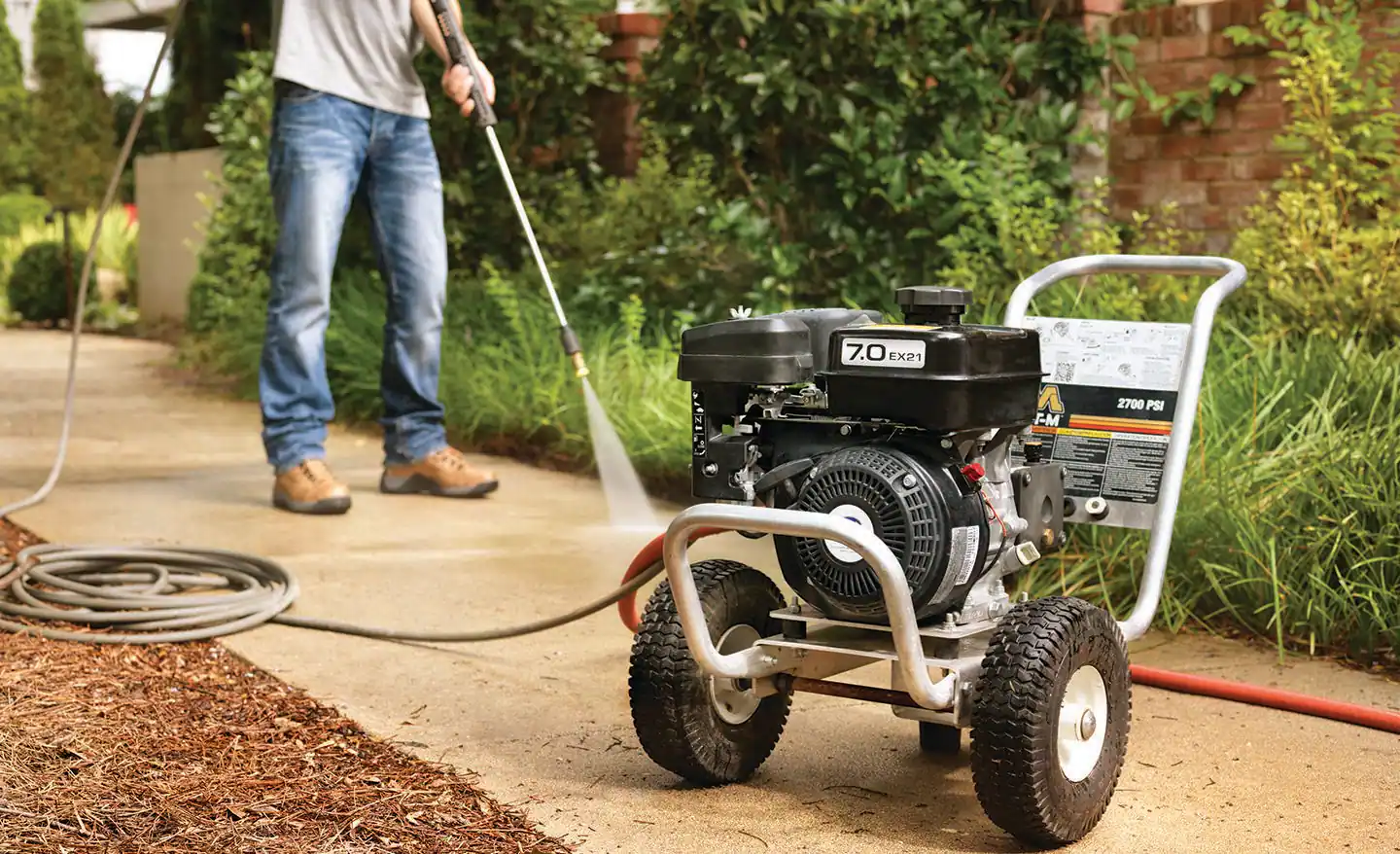
If your pressure washer will not start, you are usually one or two simple checks away from the fix. The trick is to troubleshoot in a smart order so you do not create new problems while chasing the old one.
I am going to split this into gas and electric units. Find your type, follow the steps top to bottom, and stop as soon as you find the issue. That is how you save time and parts.
Quick note: pressure washer designs vary. If your unit has a key switch, battery start (rare), fuel shutoff solenoid, or other model-specific controls, your manual gets the final say.
Safety first
- Turn the unit off and let the pump cool if it was running.
- Relieve pressure safely: keep the supply water on, squeeze the spray gun trigger until pressure drops, then shut the water off.
- Disconnect power: unplug electric units, and pull the spark plug boot on gas units before hands-on checks.
- Do not run the pump dry. Always have water flowing before you start the motor.
Quick identify
- Gas pressure washer: has a small engine, a gas tank, and usually a recoil pull starter.
- Electric pressure washer: plugs into an outlet, often has a reset button on the plug or cord, and may hum when switched on.
Gas pressure washer will not start
Most gas no-starts are fuel related, spark related, or caused by safety shutoffs like the low-oil sensor. Start with the easy external checks first.
1) Basics: switches, choke, fuel valve
- Engine switch is set to ON.
- Fuel valve is open (if your engine has one).
- Choke: for a cold engine, set choke to CLOSED. For a warm engine, set it to OPEN or half-choke.
- Throttle (if equipped) is set to FAST or RUN.
- Ignition key or safety interlock (if equipped): confirm it is present and set correctly.
My most common “facepalm” moment is trying to start a warm engine with the choke fully closed. It floods fast.
2) Fresh fuel check
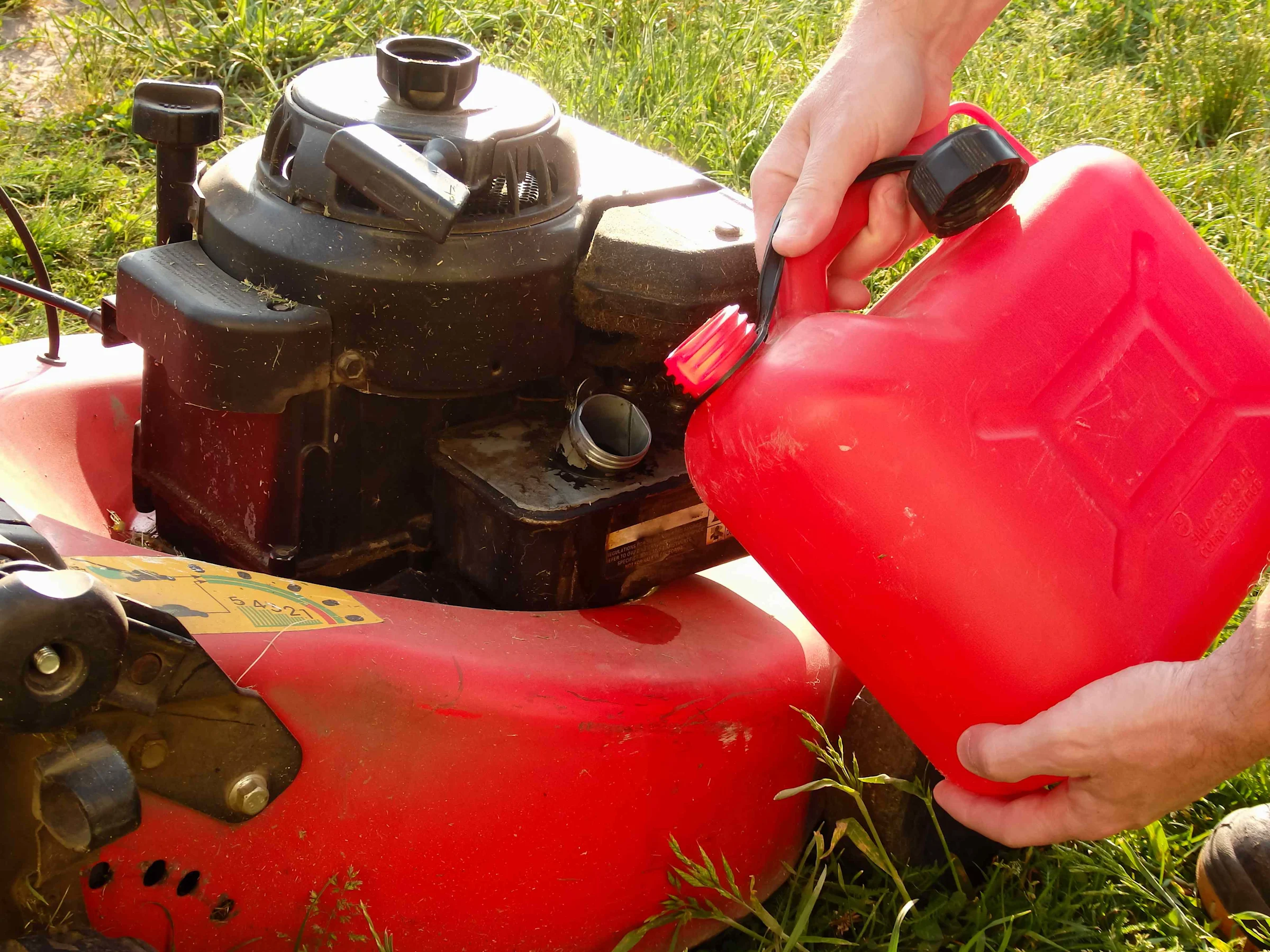
Old gas is one of the most common small engine problems. If the washer sat for a month or more (often 30 to 90 days) with ethanol fuel, the carburetor can start to varnish or gum up, especially in heat and humidity.
- Make sure the tank has fuel.
- If the gas smells sour or looks dark, drain it and refill with fresh fuel.
- If you have it, use fuel stabilizer for seasonal storage.
3) Fuel cap vent
A clogged fuel cap vent can create vacuum in the tank and starve the engine.
- Loosen the gas cap slightly and try starting.
- If it runs better with the cap loose, clean or replace the cap (do not run permanently with a loose cap).
4) Oil level (low-oil shutdown)
Many pressure washer engines have a low-oil sensor that prevents starting when oil is low. Even if the engine looks fine, it may be doing exactly what it was designed to do.
- Set the washer on level ground.
- Check the dipstick and fill to the proper mark with the correct oil weight from your manual.
- If you recently changed oil, confirm you did not underfill.
5) Water supply and trapped air
This will not usually stop the engine from starting, but it can make the unit act “wrong” and it can damage the pump if you keep trying.
- Connect the garden hose and turn water on fully.
- Leave the high-pressure hose connected unless your manual specifically recommends disconnecting it for priming.
- Squeeze the spray gun trigger until you get a steady stream of water with no sputtering.
6) Spark plug and spark test
A fouled plug can stop a healthy engine dead.
- Remove the spark plug and check the tip.
- Dry, light tan is generally good.
- Wet with fuel suggests flooding. Let it dry, open the choke, and try again.
- Black and sooty suggests running too rich or a dirty air filter.
- If in doubt, replace it. Spark plugs are cheap insurance.
- If you want to be sure, use an inline spark tester or (carefully) ground the plug threads to bare metal on the engine and pull the cord. You should see a strong blue spark.
7) Air filter and intake
- Remove and inspect the air filter.
- If it is packed with dust or oil-soaked, clean or replace it.
- Make sure nothing is blocking the intake housing.
8) Hard to pull start or stalls when you release the trigger
If the rope is hard to pull or the engine bogs right when you let off the trigger, think pressure and load.
- With water on, squeeze the trigger for 10 to 20 seconds to relieve pressure.
- Try starting with the spray gun trigger held open. Some units start easier this way because it reduces load.
- If the engine becomes very hard to pull after you release the trigger, suspect a sticky unloader valve or trapped pressure in the pump.
If the rope will not pull at all, stop. That can be severe pump binding, pressure lock, or an engine problem (rare but serious). Forcing it can break the starter or cause damage. This is a good point to call a small engine shop.
9) Carburetor issues (sat all winter)
If you have fresh fuel, confirmed spark, and it still will not run, the carburetor may be gummed up.
- Quick test: remove the air filter and spray a small amount of carb cleaner into the intake (follow product directions).
- If it fires briefly and dies, fuel delivery is the likely problem.
- Next steps are cleaning the carburetor bowl and jets, or replacing the carburetor on some models.
Caution: avoid overdoing sprays and avoid using starting fluid heavily unless the manufacturer allows it. Follow the label, and keep overspray off hot parts.
Budget tip: on many homeowner-grade washers, a replacement carb is sometimes cheaper than the time it takes to clean a badly varnished one.
Electric pressure washer will not start
Electric units usually fail to start because of power supply issues, a tripped GFCI, an overheated motor, or a water flow issue that prevents a flow or pressure switch from engaging (varies by model).
1) Outlet, breaker, extension cord
- Plug directly into a known-good outlet if possible.
- Check your breaker panel for a tripped breaker.
- Avoid lightweight extension cords. If you must use one, use a heavy-gauge outdoor-rated cord sized for the washer’s amperage and length. Low voltage from long cords can cause hard starting, humming, and thermal trips.
2) Reset the GFCI
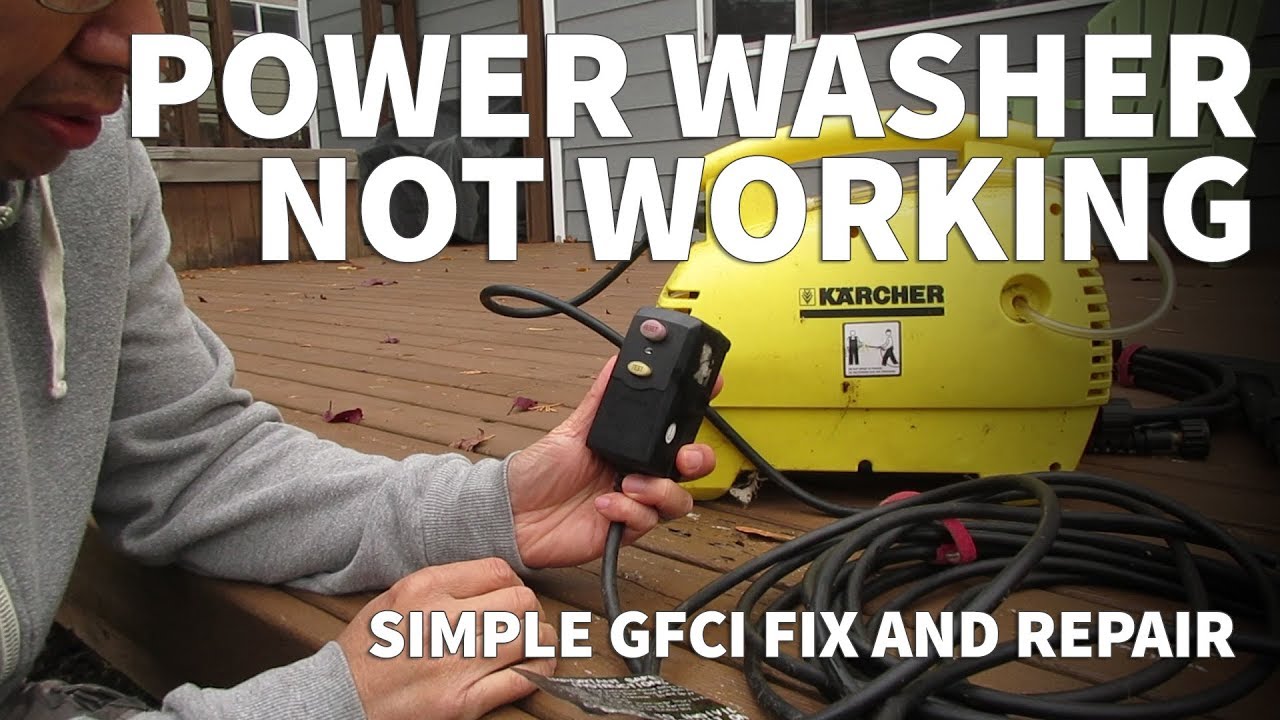
Many electric pressure washers have a GFCI in the plug. If it trips, the washer looks dead.
- Press RESET on the plug.
- If it will not reset, try a different outlet (preferably a different circuit).
- If it resets then immediately trips, suspect moisture in the connection, a damaged cord, or an internal fault.
3) Water flow and air bleed
Electric washers often use a flow switch or pressure switch. If water is not flowing correctly, the motor may not start or it may cycle strangely.
- Turn the spigot on fully.
- Use a hose that is not kinked and a clean hose washer screen if your unit has one.
- Disconnect the nozzle tip and squeeze the trigger to confirm strong flow.
- Bleed air: keep the trigger squeezed until water runs smoothly.
Some models also prefer (or require) starting with the trigger pulled so water is already moving.
4) Thermal shutdown
If the washer ran recently and then stopped, it may be protecting itself.
- Turn it off and unplug it.
- Let it sit 20 to 30 minutes in the shade.
- Check for blocked vents and clean debris from the housing.
5) Switch, total stop, and bypass issues
On electric units, start with the common control points: the trigger gun, the pressure or flow switch, and any “total stop system” behavior. Some pumps also have a bypass or unloader-style valve.
- Try starting with the trigger held open (water flowing).
- Remove and clean the inlet screen filter.
- Make sure the spray gun and hose connections are tight and not leaking air.
If the unit hums but will not start, unplug it immediately. That can indicate a capacitor or motor issue and repeated attempts can damage it.
Fast symptom checklist
It does nothing
- Gas: engine switch off, fuel valve closed, missing key or safety interlock issue, low oil sensor triggered.
- Electric: dead outlet, tripped breaker, GFCI tripped, bad extension cord, low voltage.
It starts then dies
- Gas: choke set wrong, dirty carb, clogged fuel cap vent, fouled plug.
- Electric: overheating, low water flow triggering protection, pressure or flow switch not engaging.
It is hard to pull start
- Gas: pressure trapped in pump or a sticky unloader valve.
- Gas (stop point): if the rope will not pull at all, stop and service it.
When to stop DIY
- You smell burning plastic, see smoke, or the electric unit hums without starting.
- The pump leaks oil or water from the housing seams.
- The unloader valve or pump head needs disassembly and you are not confident with tiny springs, seals, and torque specs.
- You have tried fresh fuel, confirmed spark, proper oil level, and it still will not fire.
A good small-engine shop can usually diagnose a no-start quickly, and it is often cheaper than buying parts at random.
Prevent the next no-start
- Use fresh fuel and stabilize gas before storage.
- Run the unit dry of detergent by flushing clean water through after using soap.
- Bleed pressure after each session: shut the unit off, keep water on briefly, squeeze the trigger to drop pressure, then shut off water.
- Winterize the pump if you live where it freezes, using pump saver or proper drain procedures.
- Store with the hose and cord protected so fittings do not get crushed or kinked.
My go-to order
When a pressure washer will not start, I always go in this order:
- Power or fuel (outlet and GFCI for electric, fresh gas for gas).
- Safety shutoffs (oil level on gas).
- Water supply (full flow, no kinks, bleed air).
- Spark and air (spark test and spark plug, air filter on gas).
- Pressure management (unloader or bypass issues, or flow or pressure switch symptoms depending on model).
Work that list top to bottom, and you will solve most no-starts without buying anything you do not need.

About Marcus Vance
Content Creator @ Grit & Home
Marcus Vance is a lifelong DIY enthusiast and self-taught home renovator who has spent the last decade transforming a dilapidated 1970s ranch into his family's dream home. He specializes in budget-friendly carpentry, room-by-room renovations, and demystifying power tools for beginners. Through his writing, Marcus shares practical tutorials and hard-learned lessons to help homeowners tackle their own projects with confidence.