
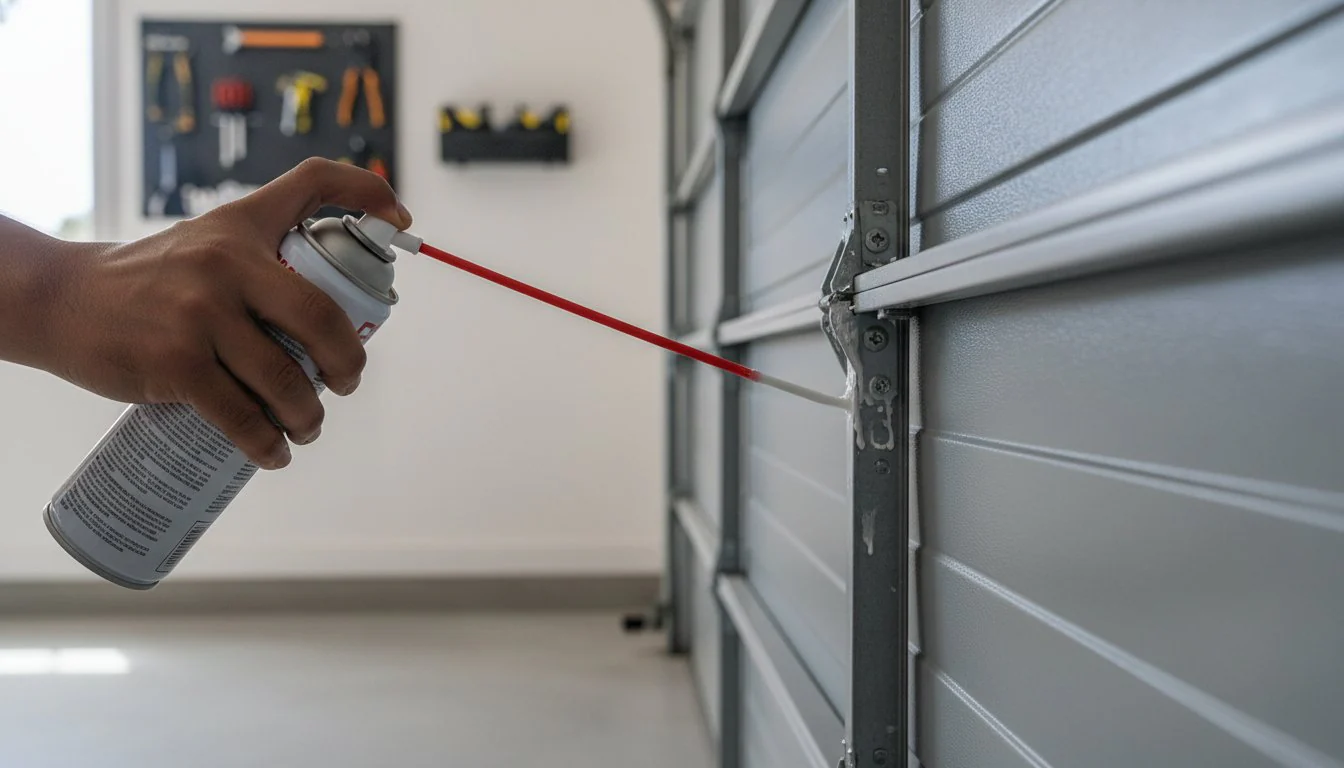
Why garage doors get loud
If your garage door has started squeaking, grinding, or rattling, you are usually hearing friction or looseness. A typical door has dozens of moving contact points. When those points dry out, collect grit, or work loose over time, the sound is the door telling you it needs attention.
The good news is that a careful clean-and-lube fixes a big percentage of “noisy door” complaints. The even better news is you can do it without touching the dangerous parts.
Safety first (read this before you touch anything)
- Start with the door fully closed. A closed door is the most stable position for inspecting, cleaning, and applying lubricant.
- Unplug the opener or switch off the breaker to it. You do not want anyone hitting a remote while your fingers are near a hinge.
- You will cycle the door later. After lubricating, you will run the door to work the lube in. Keep hands, sleeves, and hair away from hinges and roller pinch points while it moves.
- Keep hands off the spring system adjustments. Do not loosen set screws, center brackets, or winding cones. High spring tension can cause serious injury.
- Use a stable step ladder and wear eye protection. Old lubricant can drip and grit can fall.
- If a cable looks frayed or is off the drum, stop and call a pro. Cables and drums are not a DIY learning area.
What you will need
- Garage door lubricant (silicone or PTFE-based, or a dedicated garage door spray). A straw nozzle helps with precision.
- White lithium spray (optional) for metal-to-metal pivot points if recommended by the door manufacturer.
- Rags or shop towels.
- Mild degreaser or isopropyl alcohol (optional) for gunked-up hinges and roller stems.
- Socket set or wrench for snugging loose hinge and bracket bolts (no spring hardware).
- Vacuum or soft brush for knocking down cobwebs and grit.
Skip WD-40 as your main lubricant. It is a decent cleaner and water displacer, but it does not stay put like a real garage door lube.
Cleaner note: If you use any degreaser, spray it onto a rag first when possible. Avoid overspray on nylon rollers, paint, weatherstripping, and plastic covers.
Where to lubricate (and how)
Think “moving joints,” not “everything metal.” Your goal is to lubricate contact points, then wipe off excess so it does not become a dust magnet.
1) Rollers (the wheel assemblies)
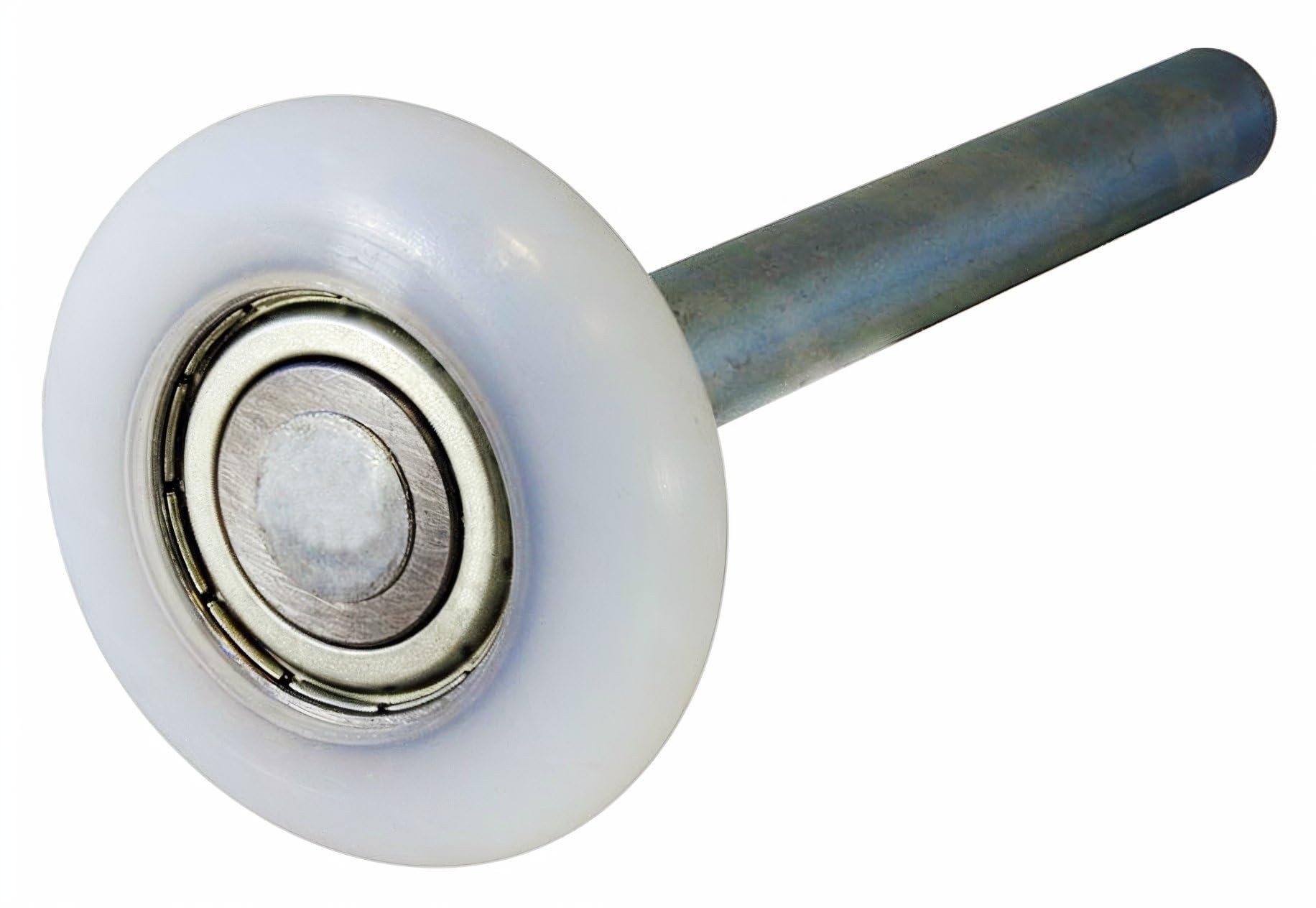
Rollers are one of the biggest noise sources. What you do depends on the roller type.
- Steel rollers with bearings: Spray lubricant into the bearing area where the wheel meets the stem, not on the tire surface. Spin the roller by hand if you can, then wipe excess.
- Nylon rollers with bearings: Lubricate the bearings only. Do not soak the nylon wheel itself.
- Sealed rollers: If the bearings are sealed, lubricant may not do much. If they are noisy, wobbly, binding, or have flat spots, replacement is usually the real fix.
2) Hinges (between door sections)
Spray a small amount on the hinge pivot points where the hinge barrels rotate. Then cycle the door a couple of times later to work it in.
Quick check: If you see an elongated hole, cracked hinge, or a hinge that is bending, that is a hardware issue, not a lubrication issue.
3) End bearing plates and center bearing (torsion spring doors)
If your door uses a torsion spring above the door opening, there are bearings that support the torsion tube. A dry bearing can squeal.
- Apply a light spray to the bearing areas at both ends of the torsion tube.
- If there is a center bearing, apply a light spray there too.
Important: You are lubricating the bearing surfaces only. Do not loosen brackets or touch set screws on the torsion hardware.
4) Opener rail (chain or screw drive)
Noise sometimes comes from the opener, not the door.
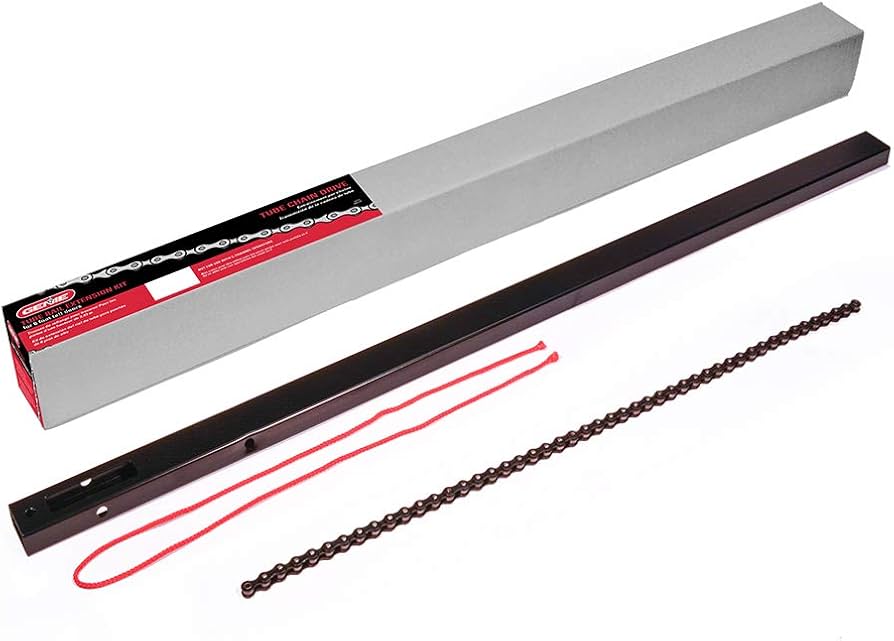
- Chain drive: This is model-specific. Some manuals recommend a light coat of garage door lube on the chain, others say do not lubricate it at all. Check your opener manual first. If lubrication is recommended, apply it sparingly and wipe excess so it does not fling black specks onto your ceiling.
- Screw drive: Use the lubricant specified by the opener manufacturer, often a low-temperature grease. Many modern screw drives are “lubricated for life,” so check your manual.
- Belt drive: Generally do not lubricate the belt. If it is noisy, look for a loose mounting point or worn pulley, not dryness.
What not to lubricate
Garage door tracks
This surprises people. The tracks are guides, not friction points. Lubricating tracks can create a gritty paste that makes rollers ride rougher.
Instead, clean the tracks with a rag. If you see heavy gunk, use a mild cleaner, wipe dry, and leave them dry.
Photo-eyes and controls
Do not spray lubricant near the safety sensors (photo-eyes), opener controls, or limit switches. Wipe dust away with a dry cloth instead.
Plastic parts that are not bearings
Spraying random plastic covers and weather seals just attracts dirt and can degrade certain materials over time. Lubricate bearings and pivots only.
Torsion springs (usually not needed)
You will see advice online to “spray the torsion spring.” A light mist can reduce spring noise on some doors, but it is usually not necessary for most squeaks and it can make a mess.
- Never touch the winding cones, set screws, or center bracket.
- If your spring is loudly “twanging” or popping, lubricant is not the first step. That can indicate binding, misalignment, or a spring nearing the end of its cycle life.
Step-by-step: quiet the door in 20 to 30 minutes
Disconnect power. Unplug the opener or turn off its breaker.
Do a quick visual inspection. Look for loose hinge screws, missing bolts, frayed cables, and bent tracks. If something is clearly damaged, pause the DIY and plan the repair first.
Clean contact areas. Wipe roller stems, hinge pivots, and any gunky spots. You do not need them spotless, just free of thick grime. Avoid spraying cleaners directly onto nylon rollers, paint, and weather seals.
Lubricate rollers. A short burst into each bearing. Wipe drips.
Lubricate hinges. One short burst at each pivot point. Wipe drips.
Lubricate bearings on the torsion tube. Light spray only. Do not touch adjustment hardware.
Check the opener rail per your manual. Lubricate only if the manufacturer recommends it for your drive type.
Tighten hardware carefully. Snug loose hinge bolts and track bracket bolts. Do not crank them down like lug nuts. Skip anything attached to the spring system.
Restore power and test. Stand clear of hinges and rollers and run the door one full cycle. Listen. Then run it again. Many lubes quiet more after the second pass.
Match the sound to the likely cause
Squeaking like a rusty swing
- Most likely: dry rollers, hinge pivots, or dry bearings
- Try first: targeted lubrication and wipe-down
Grinding or scraping
- Most likely: roller not rolling, worn bearing, bent track, or debris in the track
- Try first: clean tracks, inspect rollers for binding, check for a bent section of track
- Call a pro if: track is bent badly or a roller is coming out of the track
Rattling or clanking
- Most likely: loose hinge bolts, loose track brackets, worn rollers, or a loose opener mounting point
- Try first: snug hardware (not spring hardware), check opener mounting lag screws into framing
Popping or loud bang
- Most likely: spring binding, door sections shifting, or in the worst case a spring breaking
- Do this: stop using the door if you suspect a spring issue. If you see a gap in the torsion spring, it is broken and needs service.
Hum from the opener but the door barely moves
- Most likely: failing opener capacitor, stripped gears, or a door that is too heavy due to spring problems
- Do this: stop. Forcing it can burn up the opener. Test door balance (below) and consider service.
Two quick checks that prevent bigger problems
Door balance test
Start with the door closed. Pull the emergency release cord to disconnect the opener. With a firm grip, lift the door manually to about waist to halfway height and hold it there. Keep fingers away from section joints and hinges.
- If it stays put or moves slightly, springs are likely in the ballpark.
- If it drops fast or feels extremely heavy, the door is not properly counterbalanced. That is a spring or cable system issue. Reconnect the opener and call a pro.
Do not do this test if you suspect a broken spring or see a cable issue. Stop and schedule service.
Photo-eye and reverse test
After any maintenance, confirm the safety sensors work and that the door reverses on contact per your opener’s instructions. Quiet is nice, but safe is non-negotiable.
How often to lubricate
For most homes, twice a year is a good rhythm: once before winter and once in spring. If you use your garage as the main entry, live in a dusty area, or have a door that faces wind-driven rain, bump that to every 3 to 4 months.
I keep a can of garage door lube on the same shelf as my furnace filters. When I change one, I remember the other.
When to stop DIY and call for service
- Frayed, slack, or off-track cables
- A visible gap in a torsion spring, or a door that suddenly feels much heavier
- Track damage that changes the roller path
- Door panels that are cracked, delaminating, or shifting
- Opener grinding, smoking smell, or repeated reversing with no obstruction
- Noise persists after lubrication and tightening, especially a consistent grind at one spot
If you want the “thrifty homeowner” rule I use: lubrication is for friction, tightening is for rattles, and anything involving spring tension is for a trained tech.
My most common mistake
The first time I tried to quiet our old 1970s door, I sprayed lubricant everywhere, including the tracks. It got quieter for about a week. Then it got worse because the tracks turned into a grime magnet and the rollers started crunching through dirt like sandpaper.
Now I keep it simple: clean the track, lube the bearings and pivots, wipe the excess. Quiet door, clean ceiling, no mystery black specks.
Quick FAQ
Can I use grease instead of spray lubricant?
For most homeowners, a spray garage door lubricant is cleaner and easier to apply precisely. Grease can work in specific places, but it is easier to overdo and attract dirt.
Is silicone spray safe for nylon rollers?
Silicone or PTFE-based garage door lube is commonly used around nylon rollers, but aim for the bearing and avoid soaking the nylon wheel. When in doubt, use a product labeled for garage doors.
Why is it louder in cold weather?
Cold thickens lubricants and can shrink materials slightly, which changes clearances. A fall lubrication and a quick bolt check often make a noticeable difference.

About Marcus Vance
Content Creator @ Grit & Home
Marcus Vance is a lifelong DIY enthusiast and self-taught home renovator who has spent the last decade transforming a dilapidated 1970s ranch into his family's dream home. He specializes in budget-friendly carpentry, room-by-room renovations, and demystifying power tools for beginners. Through his writing, Marcus shares practical tutorials and hard-learned lessons to help homeowners tackle their own projects with confidence.