
First, a quick reality check
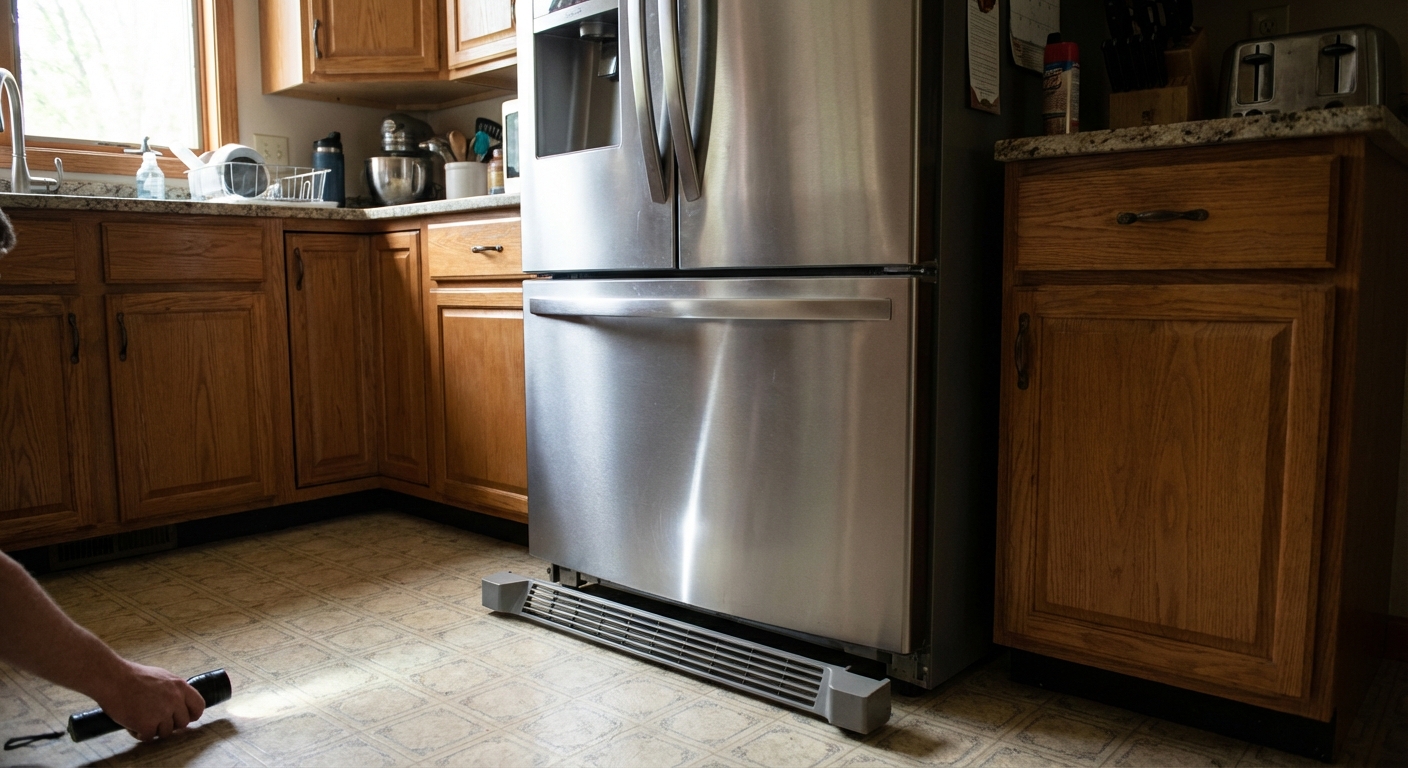
Refrigerators make a normal amount of sound. Compressors run, fans move air, defrost heaters do their thing, and ice makers can be surprisingly chatty. What you are looking for is a new noise, a louder noise, or a noise that comes with a symptom like warmer temps, frost buildup, or water on the floor.
I have learned this the hard way: the fastest path to a fix is to identify what the noise sounds like and where it comes from. Do that first, and you will avoid replacing parts that were not the problem.
Safety and tools (keep it simple)
- Unplug the fridge before removing covers or reaching near fans or wiring.
- Wear work gloves. Sheet metal edges behind panels can be razor sharp.
- Use a flashlight and a vacuum with a crevice tool.
- A 1/4-inch nut driver fits many (not all) refrigerator panels. Some models use Phillips or Torx, so grab a couple basic drivers.
- If you are melting ice, use a hair dryer on low and keep it moving. Keep it away from standing water and plastic liners, and never use a heat gun. Never chip ice with a knife.
Diagnostic flowchart
Stand in front of the fridge and listen. Then crouch and listen near the floor grille. Finally, open the freezer and listen inside. Use this flow to narrow it down.
1) Is it a rattling or vibrating noise?
- Mostly at the floor or back
- Likely: Leveling or something touching the cabinet
- Also check: Condenser fan hitting debris
- If it happens briefly during water fill: Water inlet valve or water line vibration
- Mostly inside the freezer
- Likely: Evaporator fan or Ice buildup
- If you have an ice maker: Ice maker or auger motor
2) Is it a buzzing or loud humming noise?
- From the bottom or back area
- Likely: Condenser fan, dirty coils, or compressor strain
- If it lasts 3 to 10 seconds and happens when the ice maker fills: Water inlet valve
- From inside the freezer
- Likely: Evaporator fan or ice rubbing the fan shroud
- If it coincides with dispensing ice: Auger motor or ice clump
3) Is it clicking (repeating every few minutes)?
- Click, then the fridge tries to start, then click again
- Likely: Compressor start issue (start relay or capacitor) or compressor wear
- Occasional clicks only
- Often normal: controls cycling, a damper (air diffuser) moving, a defrost timer on some models, or the ice maker water valve on some units
- Clicking or grinding in the freezer near the ice bin
- Likely: Ice maker module or auger
4) Does the noise change when you open the freezer door?
- Yes, it stops or changes: likely evaporator fan (many pause with the door switch).
- No change: more likely condenser fan, compressor, leveling, or water inlet valve (if timed with water fill).
5) Do you hear hissing, sizzling, or popping?
- Often normal: a defrost cycle melting ice on the heater can make sizzling, hissing, or popping sounds as water hits warm metal and refreezes elsewhere.
Cause 1: Condenser fan and coils
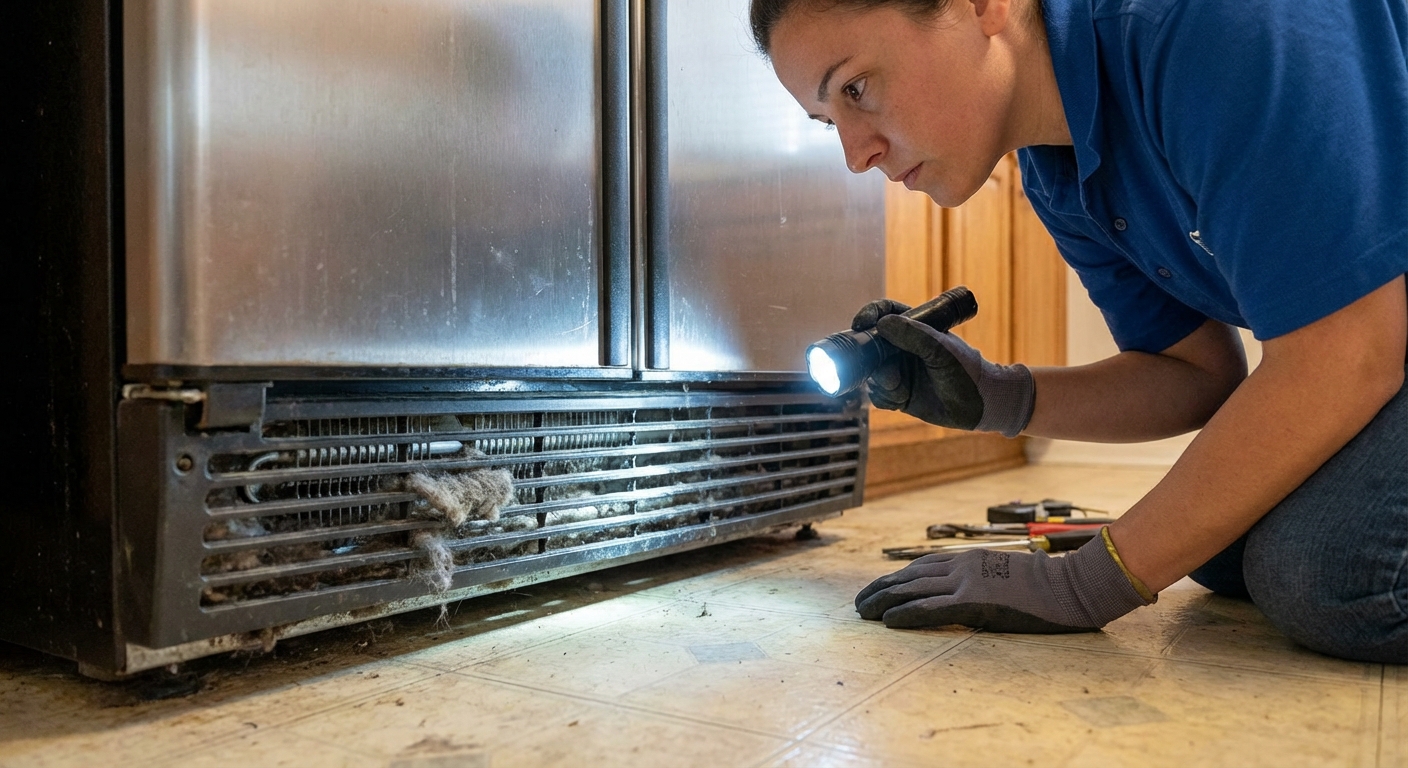
If the noise is loudest near the floor grille or behind the fridge, the condenser area is my first stop. On many models, a fan down there cools the compressor and blows air across the condenser coils. Dust, pet hair, or a stray twist tie can turn a normal whoosh into an annoying buzz.
What it sounds like
- Buzzing or rattling from the bottom or back
- A deeper humming that gets louder over time
- Noise that changes when you gently pull the fridge away from the wall
Fix
- Unplug the refrigerator.
- Remove the rear lower access panel (usually a few screws).
- Vacuum coils and the fan area. A soft brush helps loosen packed dust.
- Spin the fan blade by hand. It should move freely and not wobble.
- Look for anything that could be touching the blade: wires, insulation, debris.
When to replace the condenser fan
Replace the fan motor if the blade drags, the motor shaft is loose, or it squeals even after cleaning. If you are unsure, a short video of the sound can help you compare patterns (grinding, squeal, wobble) to typical failure symptoms, but do not treat sound alone as a perfect diagnosis.
Cause 2: Evaporator fan
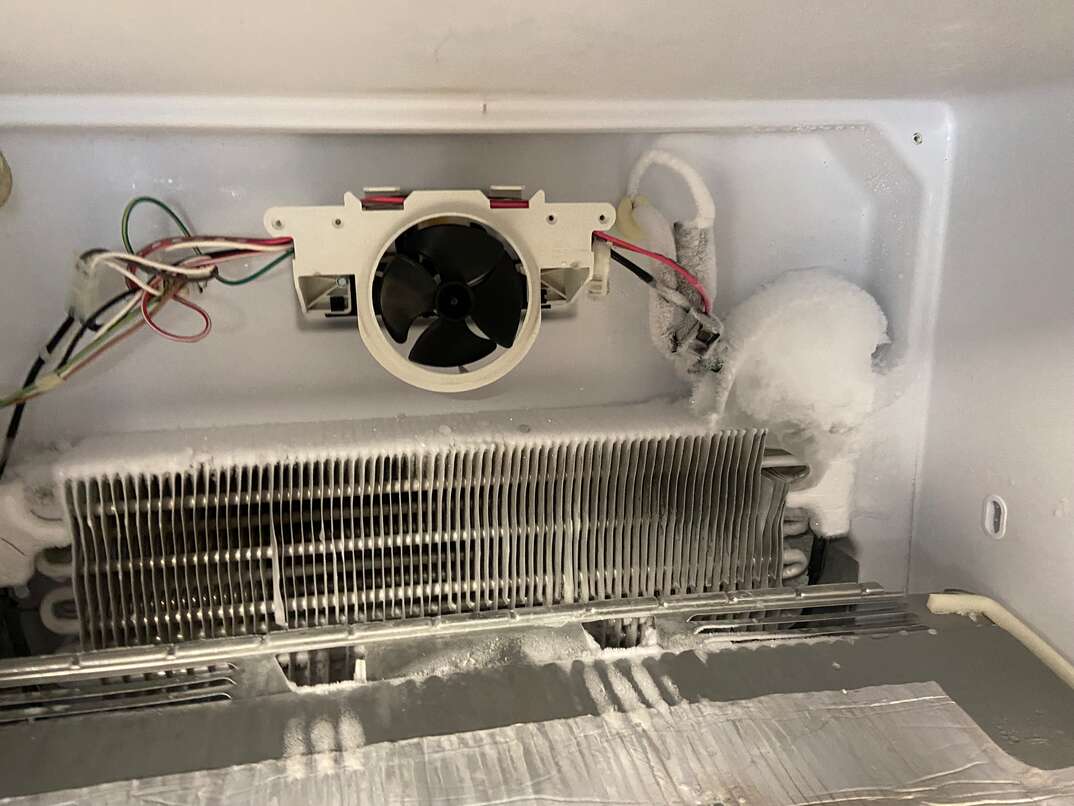
The evaporator fan lives behind the back panel in the freezer. Its job is to move cold air through the freezer and into the fridge section. When it gets noisy, it is usually either worn bearings or the blade hitting frost.
What it sounds like
- High-pitched whirring, chirping, or a plastic-on-plastic tick
- Noise seems to come from inside the freezer, especially the back wall
- Noise changes or stops when you open the freezer door (door switch)
Quick tests
- Door switch test: Open the freezer. Press the door switch closed with your finger. If the fan starts and the noise shows up, you are in the right neighborhood.
- Frost clue: If there is heavy frost on the back freezer panel, jump to ice buildup first.
Fix
- Unplug the fridge.
- Empty the freezer enough to remove the rear interior panel.
- Inspect the fan blade for cracks and rub marks.
- If the blade is intact but the motor feels rough when turned by hand, plan on replacing the evaporator fan motor.
Cause 3: Ice maker or water inlet valve
If your fridge has an ice maker or a water dispenser, this is a very common noise source that gets overlooked. Two usual suspects: the ice maker itself (gears, motor, jammed cubes) and the water inlet valve (the part that buzzes while it briefly opens to fill the ice maker).
What it sounds like
- Loud buzzing for a few seconds, usually from the back lower area: often the water inlet valve during a fill
- Clicking, grinding, or clunking inside the freezer near the ice bin: often an ice maker cycle or a jam
- Buzzing or rat-a-tat vibration that happens only when water is dispensing or ice is being made: could be a water line vibrating against the cabinet
Easy isolation test
- Turn off the ice maker (switch, arm, or setting) for 12 to 24 hours.
- If the noise stops, you just narrowed it down without buying a part you did not need.
What to check
- Ice jam: Pull the ice bin and look for clumped cubes. Dump it, dry it, and start fresh.
- Fill tube freeze-up: If the ice maker is not filling and you see an icy plug at the fill tube, thaw it gently with a hair dryer on low (keep it moving).
- Water inlet valve buzz: A failing valve can buzz loudly. Low water pressure or a partially clogged filter can also make a valve louder than normal.
- Quick filter check: If your filter is overdue, replace it. If the buzzing changes right after a filter swap, that is a clue you are dealing with water flow issues.
- Water line vibration: Make sure the fridge is not pinching the water line and that the line is not tapping the back panel when water runs.
Cause 4: Compressor or start relay
The compressor is the heart of the cooling system. A steady, low hum during normal run time is fine. What I do not like is a pattern where you hear a click, then a strained hum for a few seconds, then another click as it shuts down. That can mean the compressor is struggling to start, often due to a bad start relay or capacitor, or a compressor that is wearing out.
One modern wrinkle: some newer fridges use inverter or variable-speed compressors. They can run longer at lower speeds and change pitch as they ramp up and down. That is not automatically a problem. Focus on what is new for your fridge and whether cooling performance has changed.
What it sounds like
- Repeated clicking every few minutes
- Click followed by a louder hum or buzz, then it stops
- Sometimes paired with poor cooling
Fixes you can try (in order)
- Clean coils and verify airflow first. A compressor can run louder when it is overheating due to dust-clogged coils.
- Verify the condenser fan runs (if your model has one). A dead condenser fan can make the compressor overheat and click off.
- Check the start relay (often mounted on the side of the compressor under the rear panel). If it rattles when shaken or looks scorched, it is a common failure point.
When to call a pro
If the start relay tests good or replacing it does not help, compressor replacement involves sealed refrigeration work and is usually pro territory. At that point, compare repair cost to the age of the fridge. If it is 10 to 15 years old, replacement can be the more sensible option.
Cause 5: Ice buildup
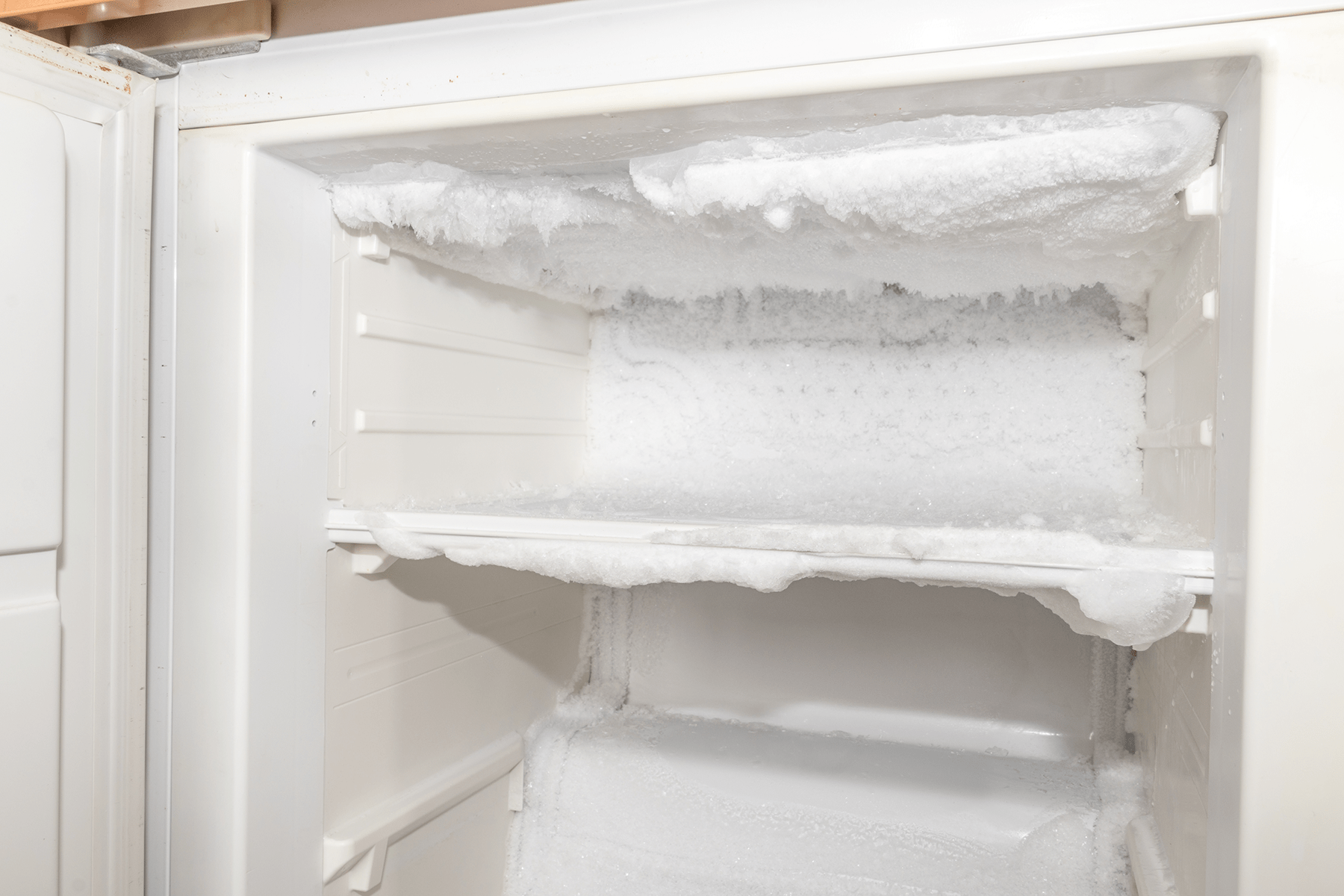
Ice buildup is the sneaky one. The fridge might still cool, but the evaporator fan starts clipping frost. You will hear scraping, ticking, or a thumping sound that comes and goes as the fan speed changes.
What it sounds like
- Scraping or ticking from the back of the freezer
- Noise gets worse after the door has been opened a lot
- Sometimes accompanied by warmer fridge temps because airflow is blocked
Common reasons ice builds up
- Door not sealing (worn gasket, food package holding the door open)
- Frequent door opening or humid room air
- Defrost system issue (heater, thermostat, control board), especially if frost is heavy and returns quickly
Fix
- Move food to a cooler, another fridge, or a large cooler with ice.
- Unplug the refrigerator.
- Leave freezer door open to thaw, or speed it up with a hair dryer on low, kept moving.
- Dry everything, reassemble, and restart.
- Check the door gasket: close a dollar bill in the door and pull. If it slides out easily, the seal may be weak in that spot.
Heads up: If the scraping noise disappears after a full defrost but returns within a week or two, you are likely dealing with a defrost component failure. That is fixable, but it usually takes model-specific troubleshooting.
Bonus: Leveling and vibration
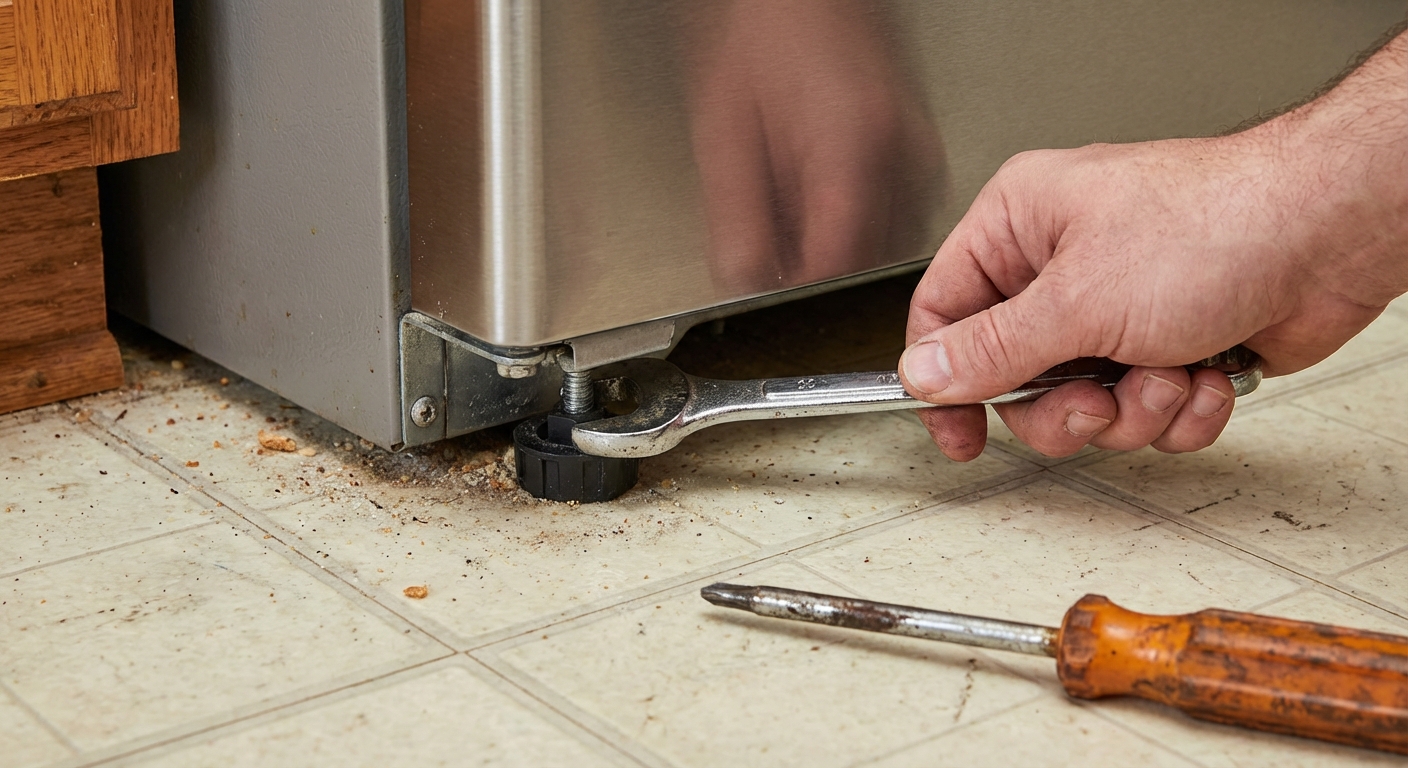
This is the cheapest fix and one of the most common. If the refrigerator is slightly twisted or rocking, the compressor vibrations turn into a rattle. Sometimes it is not the fridge at all. It is a pan, a backsplash, or a cabinet side panel that the fridge is touching.
What it sounds like
- Rattle or buzz that gets worse when the compressor runs
- Noise changes when you press on the side of the fridge
- Noise started after moving the fridge or remodeling the floor
Fix
- Pull the fridge out a few inches and make sure it is not touching the wall, a pipe, or cabinetry.
- Check for rocking by placing a hand on the top corner and gently pushing.
- Adjust the front leveling feet so the fridge sits solidly. Many manufacturers recommend the front slightly higher so doors close on their own, but check your manual if you want to be precise.
- Make sure the drain pan (if accessible) is seated correctly and not vibrating.
Noise cheat sheet
- Buzzing from bottom or back: clean condenser coils, check condenser fan, check for vibration against wall. If it happens briefly during ice maker fill, suspect the water inlet valve.
- Whirring or chirping in freezer: evaporator fan rubbing ice or worn fan motor.
- Clicking over and over: start relay or capacitor, compressor trouble, or on some fridges an ice maker that is jammed and keeps trying.
- Rattling only when running: leveling feet, drain pan, loose rear panel screws.
- Scraping or ticking with frost present: ice buildup and possible defrost issue.
- Sizzling or popping now and then: often normal defrost sounds.
When it is urgent
Most noises are annoying, not dangerous. But unplug the fridge and investigate sooner if you notice any of the following:
- Burning smell or visible smoke
- Power cord or outlet feels hot
- Repeated clicking with little or no cooling
- Compressor housing is too hot to keep your hand on and it is cycling off and on (especially with poor cooling)
- Water pooling near electrical components under the unit
My thrifty troubleshooting rule
Start with the free stuff: cleaning, clearing, and leveling. If the noise is still there, then you are justified moving on to parts like a fan motor, a start relay, or a water inlet valve. That order has saved me a lot of money and a lot of “well, I guess I own this part now” moments.
Quick FAQ
Is a humming refrigerator normal?
A light hum during cooling cycles is normal. A loud hum that is new, paired with heat and poor airflow at the back, or paired with clicking is worth checking coils and fans first.
Why does my fridge make noise only at night?
Your house is quieter at night, and many fridges run longer cycles then. It can also be when an automatic defrost cycle runs (sizzling, popping) or when the ice maker refills.
Can I run my refrigerator with the back panel off?
For a brief, supervised diagnostic listen, yes. Keep hands clear, keep pets and kids away, and do not leave it that way long-term because airflow and safety shielding matter.
How do I know if it is the ice maker?
Turn the ice maker off for 12 to 24 hours. If the noise stops, you have your answer and can focus on the ice maker, fill tube, water valve, or ice bin.

About Marcus Vance
Content Creator @ Grit & Home
Marcus Vance is a lifelong DIY enthusiast and self-taught home renovator who has spent the last decade transforming a dilapidated 1970s ranch into his family's dream home. He specializes in budget-friendly carpentry, room-by-room renovations, and demystifying power tools for beginners. Through his writing, Marcus shares practical tutorials and hard-learned lessons to help homeowners tackle their own projects with confidence.