
A refrigerator is supposed to run in cycles. It cools, hits the set temperature, then takes a break. So when you notice a steady hum all day and night, it usually means the fridge is struggling to shed heat, or it is constantly being asked to cool more than it should.
The good news is that a constantly running fridge is often caused by simple maintenance issues you can fix in an hour. The not-so-good news is that ignoring it can shorten compressor life and quietly bump up your electric bill.
First: is it really running nonstop?
Before you tear into anything, confirm what you are hearing and seeing. Also note that some newer inverter and variable-speed fridges run longer at lower power by design. If temperatures are stable and the sound is a steady, quiet hum, “always on” may be normal for your model.
- New fridge? After delivery, a fridge can run 24 to 48 hours while it stabilizes (especially after transport, door opening, or warm room temps).
- Big grocery load? Stuffing it with warm food will keep it running for hours.
- Hot room? Garages and kitchens that are 80°F+ make fridges work overtime.
- Features turned on? Modes like Power Cool, Super Freeze, and heavy ice maker use can increase runtime.
- Listen closely. The evaporator fan (inside) and condenser fan (back/bottom on many models) can run even when the compressor cycles.
- Better compressor check: Listen near the rear bottom for the deeper compressor sound and feel for a gentle vibration there. (Cabinet warmth can also be normal on some models due to built-in heat loops, so it is not a perfect indicator.) If you want a clearer answer, a plug-in energy monitor can show when wattage rises and falls.
If the compressor truly never turns off for 6 to 8+ hours under normal conditions (no new install, no huge warm load, no special modes) and temps are still borderline, work through the causes below in order. They go from most common and DIY-friendly to “call a pro.”
Energy cost: what nonstop running can do
When a fridge cannot cycle off, it is basically stuck in “catch up” mode. Exact costs vary by size, age, and efficiency, but here is a practical way to think about it:
- Many full-size refrigerators average roughly 1 to 2 kWh per day depending on size, age, and ENERGY STAR rating (older units can be higher).
- If it runs nearly nonstop, usage can climb significantly, especially on older units or those with dirty coils.
- At $0.16 per kWh, an extra 1 kWh per day is about $5 per month. An extra 3 kWh per day is about $14 per month.
The bigger concern is wear and tear. Even though some inverter models are designed to run longer, a fridge that is constantly struggling to reach temperature is still putting extra stress on expensive components.
Cause #1: Dirty condenser coils
Your fridge removes heat through condenser coils, usually under the unit or on the back. When those coils are packed with dust and pet hair, the fridge cannot shed heat efficiently. Result: long run times, warmer temps, and sometimes a hot-to-the-touch cabinet side.
Signs it is the coils
- The fridge runs constantly but almost keeps up
- Cabinet sides feel warmer than normal (with the note above that some warmth can be normal)
- You have pets, or it has been more than 6 to 12 months since coil cleaning
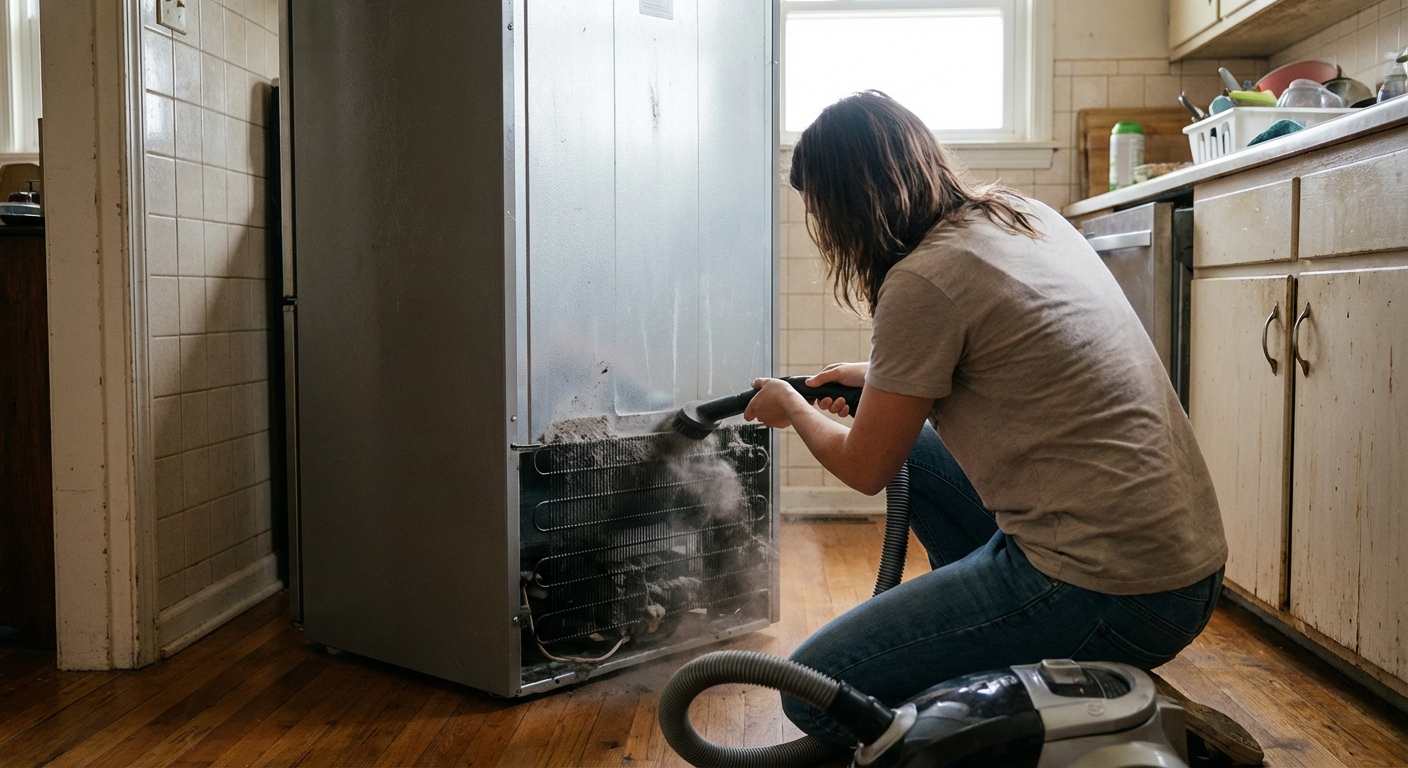
Fix: Clean the coils and fan area
Tools: vacuum with crevice tool, coil brush (cheap), flashlight
- Unplug the fridge or switch off power at the breaker. Safety first.
- Access the coils. Many have a front toe-kick grille. Others need the rear lower panel removed.
- Brush loose dust off the coils and around the condenser fan (if your model has one).
- Vacuum everything you loosened up. Go slow. You want airflow, not perfection.
- Plug it back in and give it a few hours. You should notice shorter run times by the next day.
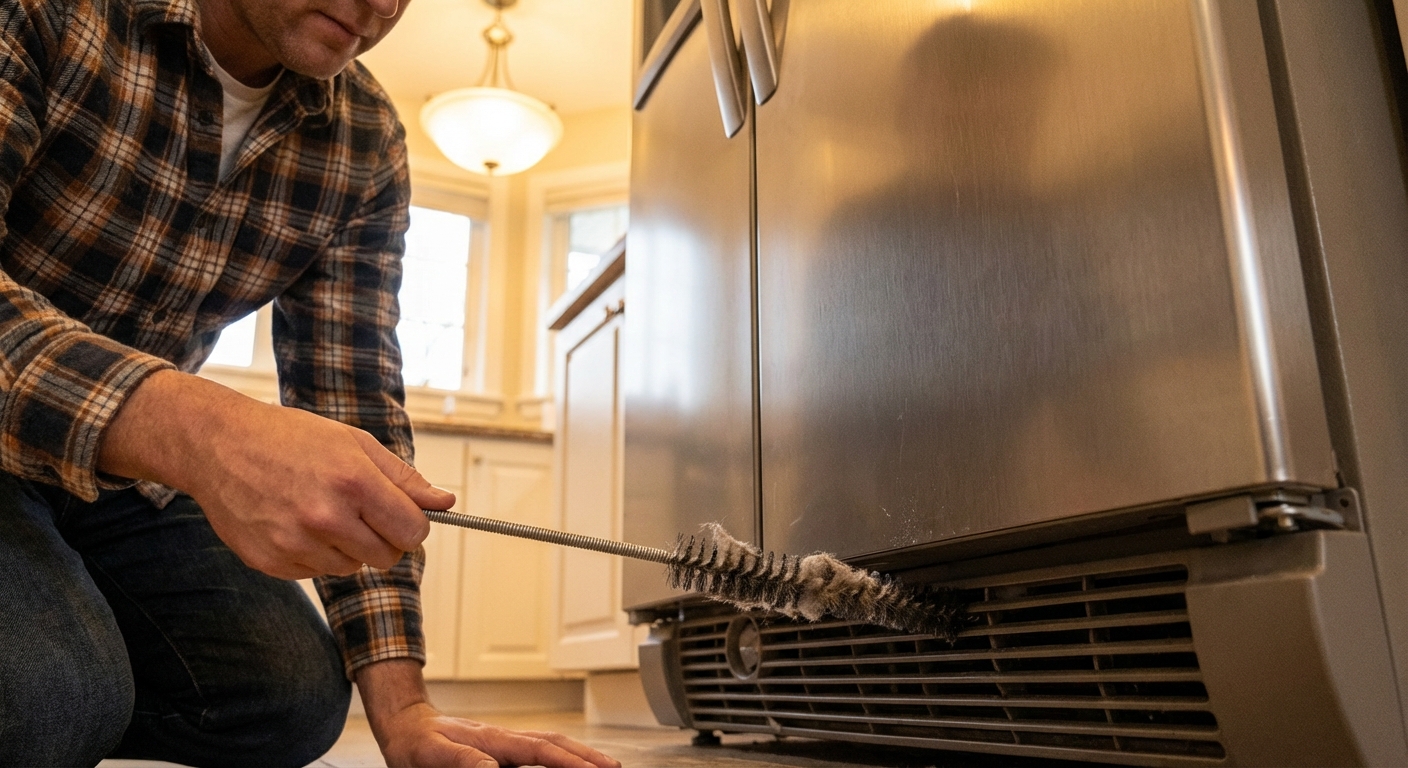
Marcus note: The first time I cleaned my coils I expected a light dusting. What I found looked like a felt blanket. My fridge ran quieter the same day.
Cause #2: Leaky door gaskets
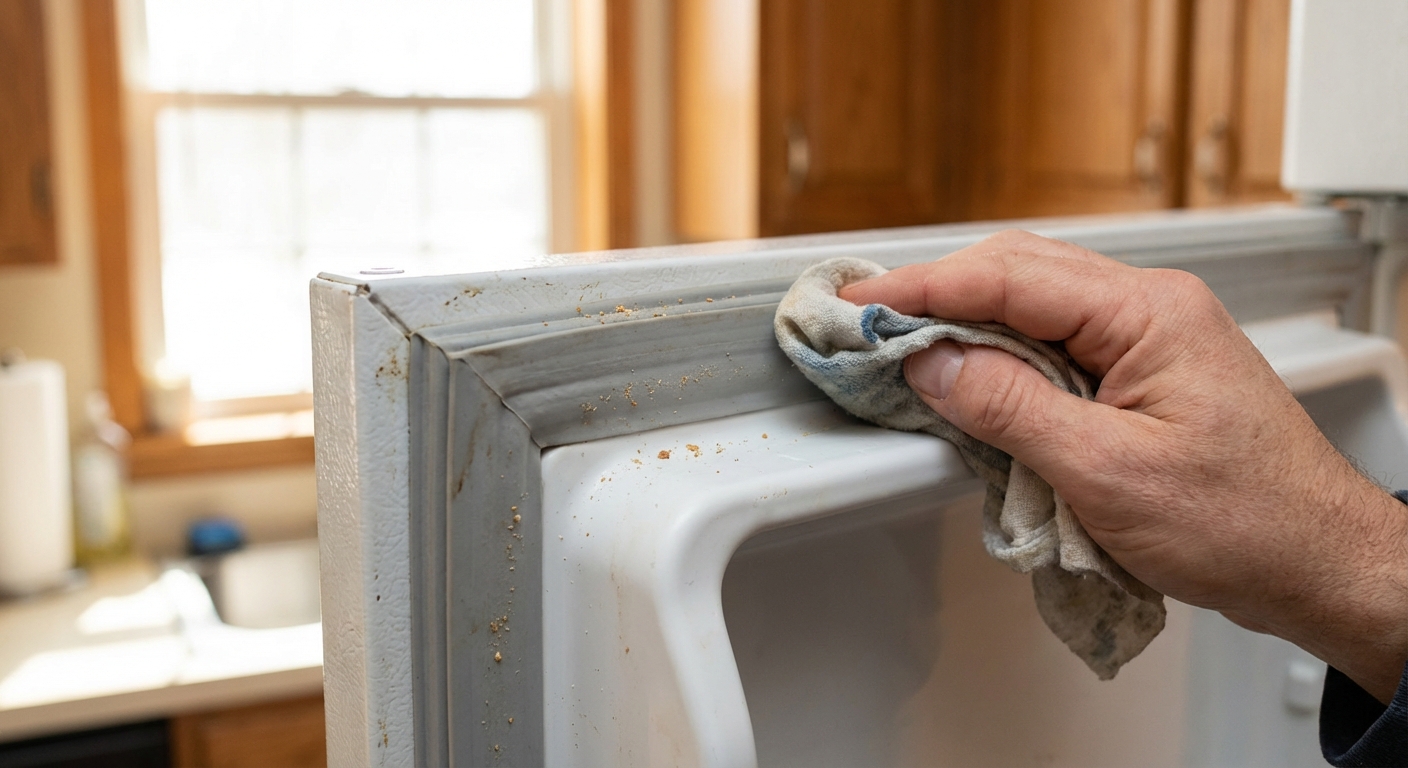
If the door seal is torn, warped, or just grimy, warm room air sneaks in. Your fridge senses the temperature rise and keeps the compressor running to compensate. This is especially common on the fridge side of a side-by-side, or on bottom-freezer units where the door gets tugged open a lot.
Quick checks
- Dollar bill test: Close a dollar bill in the door. If it slides out easily, the seal is weak in that spot.
- Look for gaps: Use a flashlight and inspect the gasket all the way around.
- Feel for suction: A healthy gasket grabs slightly when you pull the door open.
Fix: Clean, warm, or replace the gasket
- Clean it first. Warm soapy water and a rag, then dry. Grease and crumbs can prevent sealing.
- Soften a warped gasket. Use a hair dryer on low to gently warm the gasket, then press it into shape. Do not overheat.
- Replace if torn or hardened. Search your model number and order the correct gasket. Many are held in by screws under the inner lip or simply press into a channel.
Do not skip this: Make sure the fridge is level. In many kitchens, you want the front feet adjusted slightly higher than the rear so gravity helps the doors self-close and keeps the seals snug.
Cause #3: Poor airflow and tight clearances
If your fridge is shoved tight to the wall, packed into a too-tight cabinet opening, or has a blocked toe-kick grille, it can trap heat. That makes the compressor run longer because the fridge cannot get rid of warmth efficiently.
Signs it is airflow
- The space behind or above the fridge feels hot and stagnant
- The toe-kick grille is dusty or blocked
- Run time improves when you pull the fridge out a few inches
Fix: Give it room to breathe
- Check the manual for clearance requirements (different designs vent differently).
- Pull it out a bit if it is tight to the wall and confirm the toe-kick grille is not blocked.
- Do not block interior vents with food containers. Air needs pathways to circulate.
Marcus note: This one is sneaky. You can clean coils perfectly and still lose the battle if the fridge is boxed in with nowhere for heat to go.
Cause #4: Condenser fan problems
On many models, a condenser fan pulls air across the condenser coils and compressor area. If the fan is dirty, jammed, or failed, heat builds up fast. The compressor may run constantly, get very hot, and cooling performance can drop.
Signs it is the condenser fan
- Loud rattling, grinding, or buzzing from the back/bottom
- Fan blade not spinning when the compressor is running
- Compressor area is unusually hot
Fix: Clean and confirm the fan spins
- Unplug the fridge.
- Access the rear lower panel (common on many models) and look for lint and pet hair around the fan.
- Clean debris and gently spin the blade by hand to confirm it moves freely.
- If it will not spin freely or never runs when it should, the motor may be failing. At that point, a service call or a model-specific DIY replacement is the next step.
Cause #5: Thermostat or sensor issues
If the fridge “thinks” it is still warm, it will keep calling for cooling. Depending on the unit, this could be a mechanical thermostat, a thermistor (sensor), or the control board interpreting bad readings.
Signs it is a control or sensor problem
- Compressor runs nonstop and the fridge gets too cold (food freezing in the fresh-food section)
- Temperature display seems off from reality
- Temps swing wildly with no change in how you use the fridge
Fix: Verify temps, then inspect the sensor area
- Measure actual temperature. Put a fridge thermometer in a glass of water on the middle shelf for 24 hours. Aim for about 37°F to 40°F in the fridge and 0°F in the freezer.
- Check settings. If it is set to the coldest setting, back it off and monitor for a day.
- Inspect vents and sensor area. If food is blocking airflow near the sensor, it can cause bad readings. Keep some breathing room around interior vents.
- If temps are wrong and it will not cycle, the thermistor or thermostat may need replacement. Many are DIYable with a screwdriver, but match parts by model number.
Tip: If you are comfortable with a multimeter, many thermistors can be tested by checking resistance at a known temperature. The exact values vary, so use your service manual or the part’s spec chart.
Cause #6: Low refrigerant or sealed-system trouble
Refrigerators do not “use up” refrigerant. If it is low, there is usually a leak somewhere in the sealed system. When refrigerant is low, the compressor may run constantly because it cannot move enough heat to reach the set temperature.
Signs of low refrigerant
- Fridge runs constantly and still does not cool well
- Freezer may be weak and ice cream is soft
- Frost pattern looks odd (for example, frost only on a small section of the evaporator coil)
- You may hear the compressor running with little improvement in temps
Fix: Call an appliance tech
Sealed-system work requires specialized tools and, in many places, licensed refrigerant handling. The tech will typically:
- Confirm the leak and locate it
- Repair the leak if possible
- Evacuate the system (vacuum)
- Recharge with the correct refrigerant
If the fridge is older, ask for a repair estimate up front. In some cases, sealed-system repairs approach replacement cost.
Cause #7: Defrost system failure
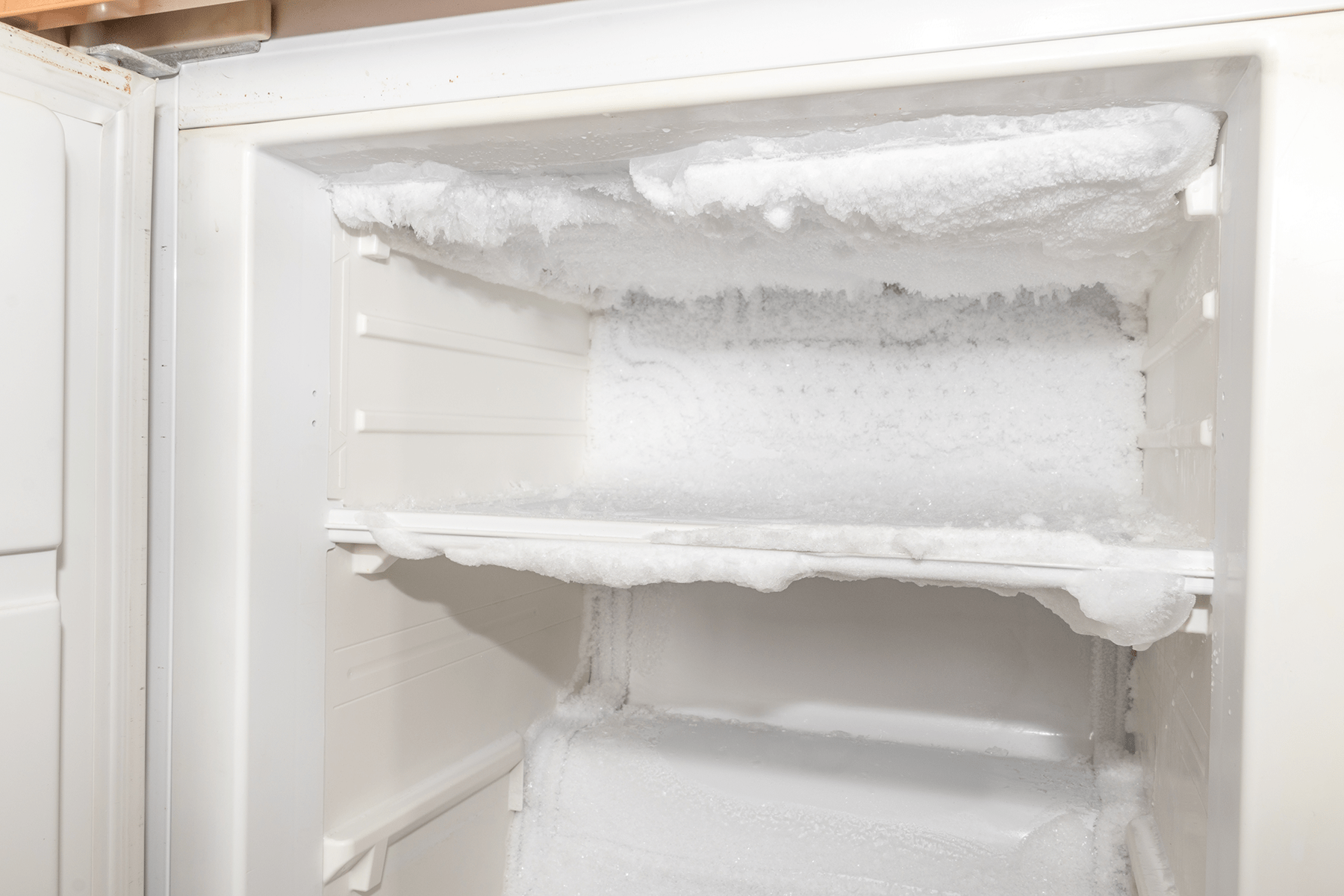
Most modern fridges are frost-free, meaning they periodically defrost the evaporator coil so air can move through it. If the defrost heater, defrost thermostat, adaptive defrost control, or control board fails, frost can build up into a solid blanket of ice. Airflow drops, cooling gets weak, and the compressor runs nearly nonstop trying to keep up.
Signs of a defrost problem
- Freezer back wall has a thick layer of frost or ice
- Fridge section is warm but freezer seems “kind of cold”
- Airflow from vents is weak
- You notice water pooling when the ice partially melts
Fix: Confirm frost, then troubleshoot parts
- Unplug the fridge.
- Check the freezer’s rear interior panel. If it is frosted over, there is a good chance the evaporator coil behind it is iced up.
- Do a temporary manual defrost. Move food to a cooler, leave doors open, and let it thaw. Use towels for meltwater. Do not chip ice with sharp tools.
- After it runs normally again for a short time, suspect a failed defrost component. Common DIY replacements include the defrost heater and defrost thermostat, but you need your model number to identify the correct parts.
Marcus note: I learned the hard way that “it is still cold in the freezer” does not mean the defrost system is fine. If airflow is blocked by ice, the freezer can feel cold near the coil while the fridge side slowly warms up.
Fast checklist: what to do today
- Clean condenser coils (big payoff, low effort)
- Confirm airflow and clearance (toe-kick grille, space behind unit)
- Check door gaskets with the dollar bill test
- Confirm real temps with a thermometer, not guesses
- Look for freezer frost buildup behind the rear panel
- If cooling is weak and nothing else fits, call a pro to assess sealed-system refrigerant issues
When to stop DIY and call service
I love a good weekend fix, but there are times when a service call saves money and food.
- The fridge is above 40°F after basic coil cleaning and gasket checks
- You suspect refrigerant/sealed-system trouble
- There’s a burning smell, tripped breakers, or repeated clicking from the compressor area
- The compressor is scorching hot and the fridge never cools properly
Quick food safety note: If your fridge has been above 40°F for 2+ hours, follow standard food safety guidance and when in doubt, throw it out.
If you do call a tech, tell them: the model number, how long it has been running nonstop, your measured temps (fridge and freezer), and whether you see frost buildup. That short list helps them diagnose faster.
FAQ
Is it normal for my refrigerator to run all the time?
It can run a lot during hot weather, after loading groceries, or right after installation. Some newer inverter models also run longer at low power. But if temps are not stable or the compressor truly never cycles off for long stretches under normal use, something is usually reducing efficiency, most commonly dirty coils, poor airflow clearance, or a bad door seal.
How long should a fridge compressor run per hour?
It depends on the model, room temperature, and how often the doors open. Many non-inverter fridges might run roughly 30% to 80% of the time, then rest. Inverter compressors can run longer (sometimes most of the day) at a lower speed. The key clue is whether the fridge can hold target temps and whether it ever eases off under normal conditions.
Will cleaning condenser coils really make that much difference?
Yes. Airflow over the coils is how the fridge dumps heat. A thick layer of dust acts like insulation and can absolutely lead to long run times and higher energy use.
What temperatures should I set my fridge and freezer to?
A good target is 37°F to 40°F in the refrigerator compartment and 0°F in the freezer. Use a thermometer to confirm, because some dials and displays drift over time.
One last thrifty tip
If your fridge is running constantly, treat it like a warning light, not background noise. Start with coils, airflow clearance, and gaskets. Those fixes solve a big chunk of nonstop-run complaints, and they cost next to nothing. If it still will not cycle, you have already done the easy work before deciding on a repair or replacement.

About Marcus Vance
Content Creator @ Grit & Home
Marcus Vance is a lifelong DIY enthusiast and self-taught home renovator who has spent the last decade transforming a dilapidated 1970s ranch into his family's dream home. He specializes in budget-friendly carpentry, room-by-room renovations, and demystifying power tools for beginners. Through his writing, Marcus shares practical tutorials and hard-learned lessons to help homeowners tackle their own projects with confidence.