
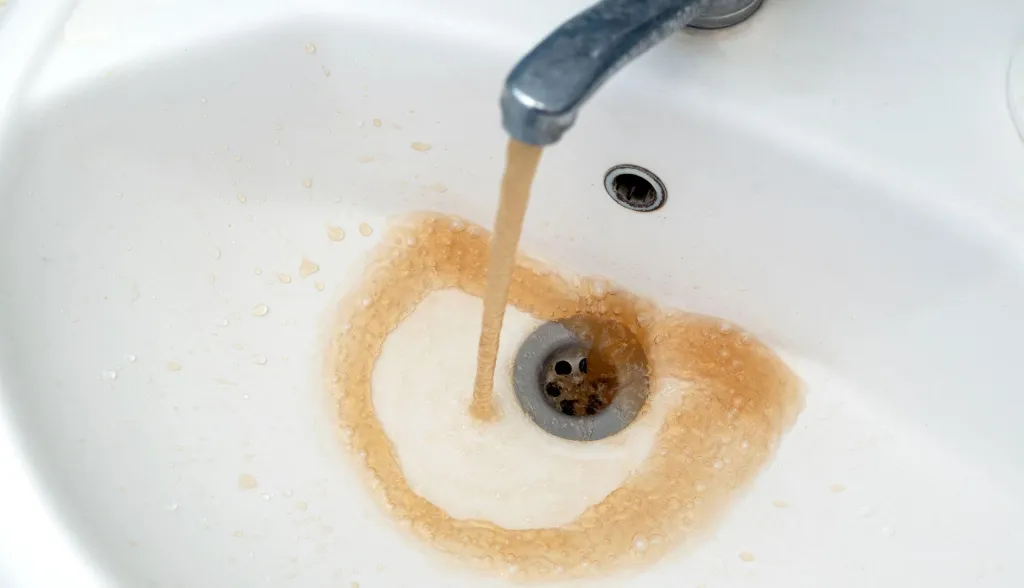
Brown or rusty water can stop you in your tracks, especially when it shows up out of nowhere. The good news is that many “brown water” episodes are temporary and fixable with a simple flush. The trick is figuring out where the discoloration is coming from so you do not waste time, clog fixtures, or (with electric water heaters) risk damaging heating elements by restoring power before the tank is fully refilled.
I have dealt with this more than once in my 1970s ranch renovation. Sometimes it was harmless stirred-up sediment after work on the street. Other times, it pointed to older galvanized lines that were quietly flaking from the inside. Let’s walk through the likely causes, a quick way to diagnose it, and the safest fixes.
Quick check: Is it really rust?
“Brown” can come from a few different things. This quick read can save you time:
- Reddish-brown: often iron rust from pipes, the water heater, or the water main.
- Yellow-tan: often fine sediment or disturbed mineral particles.
- Black or dark brown specks: can be manganese, deteriorating rubber washer bits, or heavy sediment.
- Rotten egg smell: usually a sulfur-related issue, not “rust” (common on some wells).
If discoloration persists, do not guess. Call your water utility (city water) or consider a basic water test (well water). In older homes, consider testing for lead if you have an older service line or recent plumbing work disturbed the system.
First: Hot water, cold water, or both?
This one check narrows your problem fast. Grab a white mug or bowl so you can see the color clearly.
- Only hot water is brown: very often a water heater sediment or rust issue.
- Only cold water is brown: commonly municipal disturbance, service line sediment (the pipe from the street to your house), or well equipment and filtration issues.
- Both hot and cold are brown: think main supply, corroded piping, or a major sediment disturbance.
Also check multiple faucets. If one faucet is affected and others are clear, the culprit may be that fixture or a short stretch of pipe feeding it.
Common causes of rusty or brown water
1) Sediment disturbance (often temporary)
Any sudden change in flow can loosen mineral sediment and rust particles that were sitting quietly in the bottom of pipes.
- Hydrant flushing in your neighborhood
- A nearby water main break or repair
- Construction vibration near buried lines
- Your own home: a shutoff valve being turned off and on
Clue: The water is discolored for a short window, then improves steadily as you run it.
2) Older galvanized steel pipes (common, but not universal)
In many areas, homes built before the mid-1970s may have galvanized supply lines somewhere in the system. In other places, copper became common earlier, and galvanized can also show up later due to additions, repairs, or mixed-material plumbing. Over time, galvanized pipe can corrode internally, narrow the pipe, and shed rusty flakes. This is not just a water color issue, it can also cause low flow at fixtures.
- Clues: Brown water that comes and goes, visible rust on exposed threaded pipe, frequent aerator clogging, or chronically low pressure at certain fixtures.
- Typical pattern: Worse after the water sits overnight or after you return from a trip.
3) Water heater rust, sediment, or a worn anode rod
If brown water appears only on hot, your water heater is the first place to look. Sediment builds up in the tank, and steel components can rust when protection is compromised. The sacrificial anode rod is designed to corrode instead of the tank. When it is depleted, the tank starts paying the price.
- Clues: Hot water looks tea-colored, pops or rumbles from the heater, inconsistent hot water volume, or the issue started as the heater aged (often in the 6 to 12+ year range, depending on water quality and maintenance).
- Note: On some systems, a failing dip tube can also stir sediment and send particles into hot lines.
4) Municipal work or seasonal changes (city water)
Even if your house plumbing is perfect, you can still get brown water when the water utility changes flow patterns. When demand spikes or valves are operated, deposits in distribution mains can break loose and move downstream.
Clue: Neighbors see the same issue at the same time.
5) Well water scenarios (iron, sediment, filtration, or well conditions)
On a private well, brown water often means iron and sediment are getting past your filtration, or your well is pulling up more sediment than usual.
- Clues: Discoloration is worst after heavy rain, after the well runs a long time (laundry day), or your filter housings are filling up unusually fast.
- Possible culprits: Clogged spin-down filter, exhausted cartridge media, disturbed well-bottom sediment, worn or damaged well screen, low water level, changes in the surrounding formation, or a softener/filter that needs service. A pump problem is less commonly the direct cause, but surging and short cycling can stir up sediment and make the symptom worse.
What to do right now
Step 1: Avoid hot water until you compare hot vs. cold
If you suspect the water heater, do not run a bunch of hot water until you do the quick hot-versus-cold check. The big safety risk, especially on electric heaters, is restoring power when the tank is empty or partially empty, which can burn out heating elements. We want a controlled approach.
Step 2: Figure out if it is your house or the supply
- Fill one clear glass from cold at the kitchen sink.
- Fill another from hot at the same faucet.
- If you have a basement or utility sink close to where the water enters, test there too.
Quick read: If the utility sink near the main is clear but an upstairs faucet is brown, you may be looking at localized pipe corrosion or debris trapped at that fixture.
Step 3: Call the right people (when it points outside)
- City water: Call your water utility and ask if they are flushing hydrants, repairing a main, or if there are any advisories.
- Well water: If this is new or worsening, consider a basic test (iron, manganese, turbidity, and bacteria if you have other red flags).
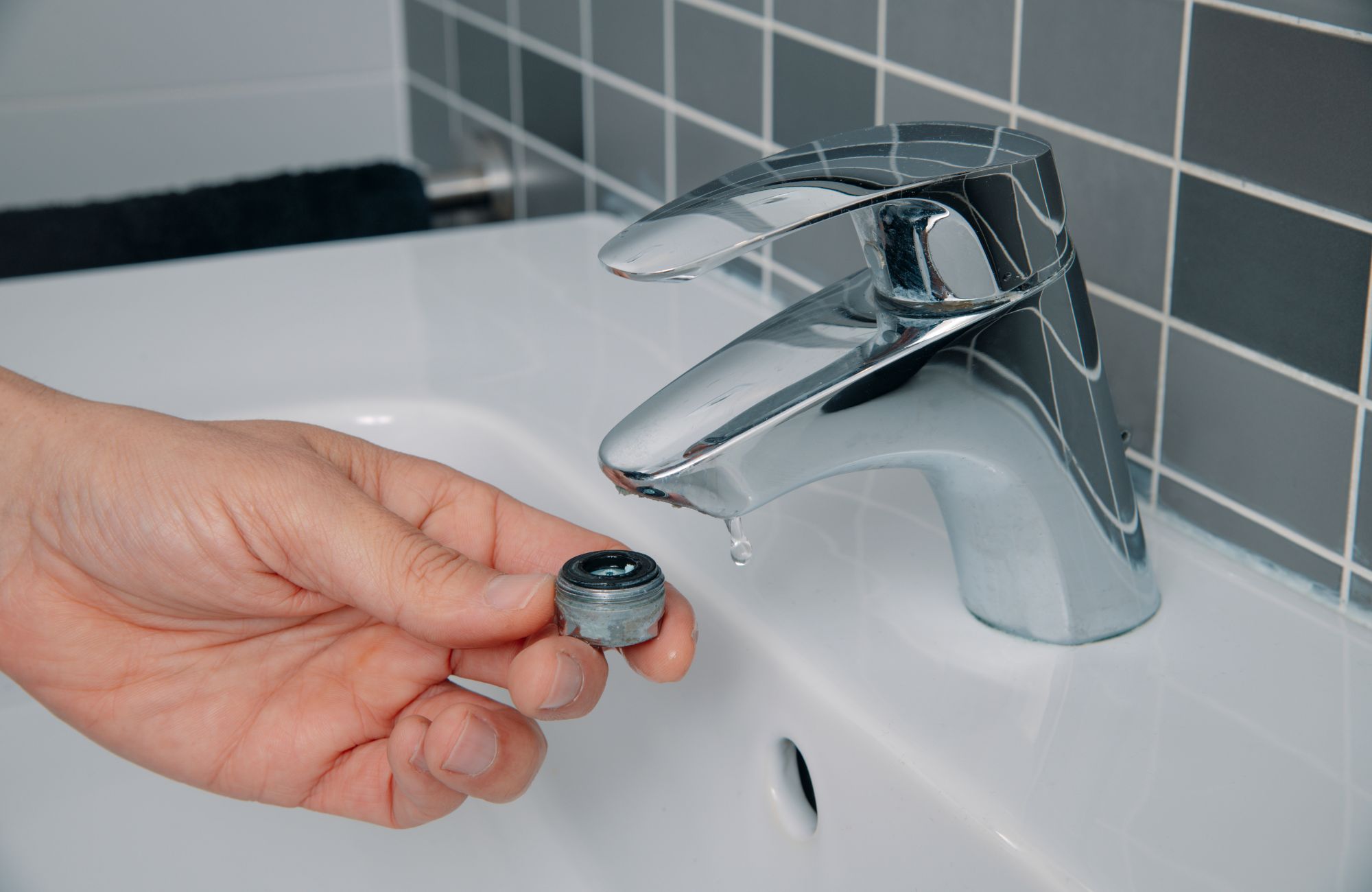
Step 4: Clean the faucet aerators (and showerheads)
This does not solve the root cause, but it prevents “false alarms.” A rusty aerator can keep spitting brown grit even after the water clears.
- Unscrew the aerator and rinse the screen.
- Soak mineral buildup in plain white vinegar for 30 to 60 minutes.
- Flush the faucet for 30 seconds with the aerator removed, then reinstall.
Flush sequences to try
Sequence A: City water, hot and cold are brown
Goal: pull sediment out of the service line and your home plumbing without clogging delicate faucet parts.
- Pick the lowest, biggest-flow outlet in the house, usually a basement utility sink or an outdoor hose bib.
- Remove any hose nozzle or sprayer so it cannot clog.
- Run cold water full blast for 10 to 20 minutes.
- Check every 5 minutes by filling a white container. Stop when it runs clear.
- After the cold is clear, turn on a couple of cold faucets inside for 1 to 2 minutes each to clear branch lines.
Note: Some utilities recommend opening more than one tap to clear lines faster. If you keep seeing discoloration or you are clogging aerators, try flushing one high-flow outlet at a time first, then finish with the smaller fixtures.
Tip: If flushing outside, do not dump large volumes right next to the foundation. Aim for a safe drain point such as a driveway or storm drain where allowed.
Sequence B: Only hot water is brown
Goal: reduce sediment and rust in the tank and hot lines.
- Run hot water at a single tub spout for 2 to 3 minutes. Tub spouts have no aerator and are less likely to clog.
- If it improves but does not fully clear, plan a controlled tank flush.
For a typical tank water heater flush:
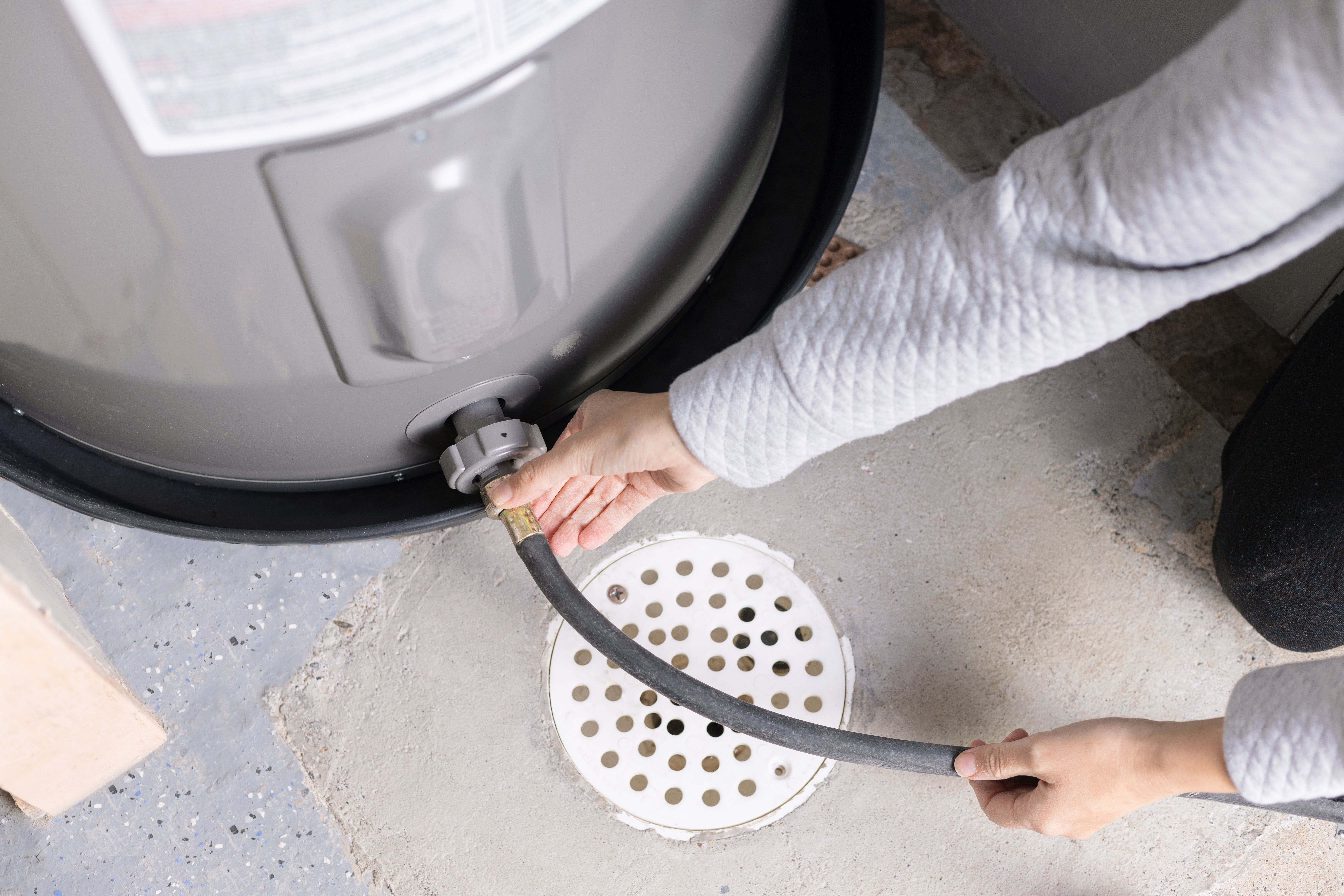
- Turn the heater to OFF (gas control to pilot or off, electric breaker off). Let it cool if possible.
- Close the cold water supply to the heater.
- Connect a garden hose to the drain valve and run it to a floor drain or outside.
- Open a hot faucet somewhere in the house to relieve pressure.
- Open the drain valve and drain several gallons until the water runs clearer.
- Do a short “rinse”: open the cold supply briefly for 20 to 30 seconds, then drain again.
- Repeat until the discharge looks significantly clearer.
- Close the drain, open cold supply fully, purge air at a hot faucet until steady flow, then restore power or gas.
Important: If your drain valve is old and crusty, it may not reseal. If you are unsure, this is a smart moment to call a plumber and have the valve replaced while they are there.
Sequence C: Well water, brown after rain or heavy use
Goal: protect your plumbing and appliances while you figure out why sediment is getting through.
- Check and service your spin-down or sediment prefilter first, if you have one.
- Replace cartridge filters that are loaded up. A half-clogged filter can shed trapped debris in chunks when flow changes.
- If you have a water softener and you are getting heavy sediment, consider temporarily bypassing it to avoid fouling the resin bed, then service the prefilter and flush first.
- Flush cold water at a hose bib for 5 to 10 minutes, then re-check filter housings.
Filters, appliances, and what not to do
Protect your gear while the water is dirty
- Pause laundry: sediment can stain whites and clog washer inlet screens.
- Skip the dishwasher: grit can damage pumps and leave residue on dishes.
- Avoid drinking it until it clears and you are confident in the source. If it does not clear, contact your utility (city) or test (well).
Whole-house vs. point-of-use filters
- A whole-house sediment filter helps protect water heaters, washing machines, and fixtures from particulate rust and sand.
- A sink filter can improve taste and clarity at one faucet, but it does not protect your pipes and appliances.
Reality check: Filters are great for sediment, but they are not a permanent bandage for failing galvanized lines. If your pipes are shedding rust internally, filtration can buy time, not solve the underlying corrosion.
When to call a plumber
I love a good DIY fix, but brown water has a few scenarios where professional help is the safer and cheaper move long-term.
- Brown water lasts more than 24 to 48 hours despite flushing, and neighbors are not experiencing it.
- Only hot water is brown and your water heater is older, making noise, leaking, or the drain valve will not operate cleanly.
- Visible pipe corrosion on galvanized supply lines, recurring aerator clogs, or pressure that keeps getting worse.
- Brown water plus metallic taste that persists, especially if you have young kids or anyone on medical restrictions.
- Any signs of a leak: wet spots, water marks, or a sudden jump in water use.
If you are on a private well, also call for service if you see:
- Gritty water that clogs filters rapidly after you replace them.
- Pump short cycling or sputtering faucets, which can indicate a pressure tank issue or well condition that is stirring sediment.
How to keep it from coming back
For older homes
- Identify any galvanized pipe sections and plan a replacement path. In many houses, it is a mix of copper, galvanized, and newer repairs.
- If you are remodeling, replace suspect sections while walls are open. That is how I have tackled it room by room without blowing the budget.
For water heaters
- Flush the tank on a schedule that matches your water hardness, often once a year for many homes.
- Have the anode rod checked every few years, sooner if your water is aggressive or you see early rust.
For well systems
- Keep spare sediment cartridges on hand and write the change date on the filter housing with a marker.
- Test your well water periodically for iron and sediment related indicators so changes do not sneak up on you.
If you want the simplest next step, do this: determine whether it is hot-only, cold-only, or both, then flush at the biggest, lowest outlet first. That one move solves a surprising number of “brown water” scares.

About Marcus Vance
Content Creator @ Grit & Home
Marcus Vance is a lifelong DIY enthusiast and self-taught home renovator who has spent the last decade transforming a dilapidated 1970s ranch into his family's dream home. He specializes in budget-friendly carpentry, room-by-room renovations, and demystifying power tools for beginners. Through his writing, Marcus shares practical tutorials and hard-learned lessons to help homeowners tackle their own projects with confidence.