
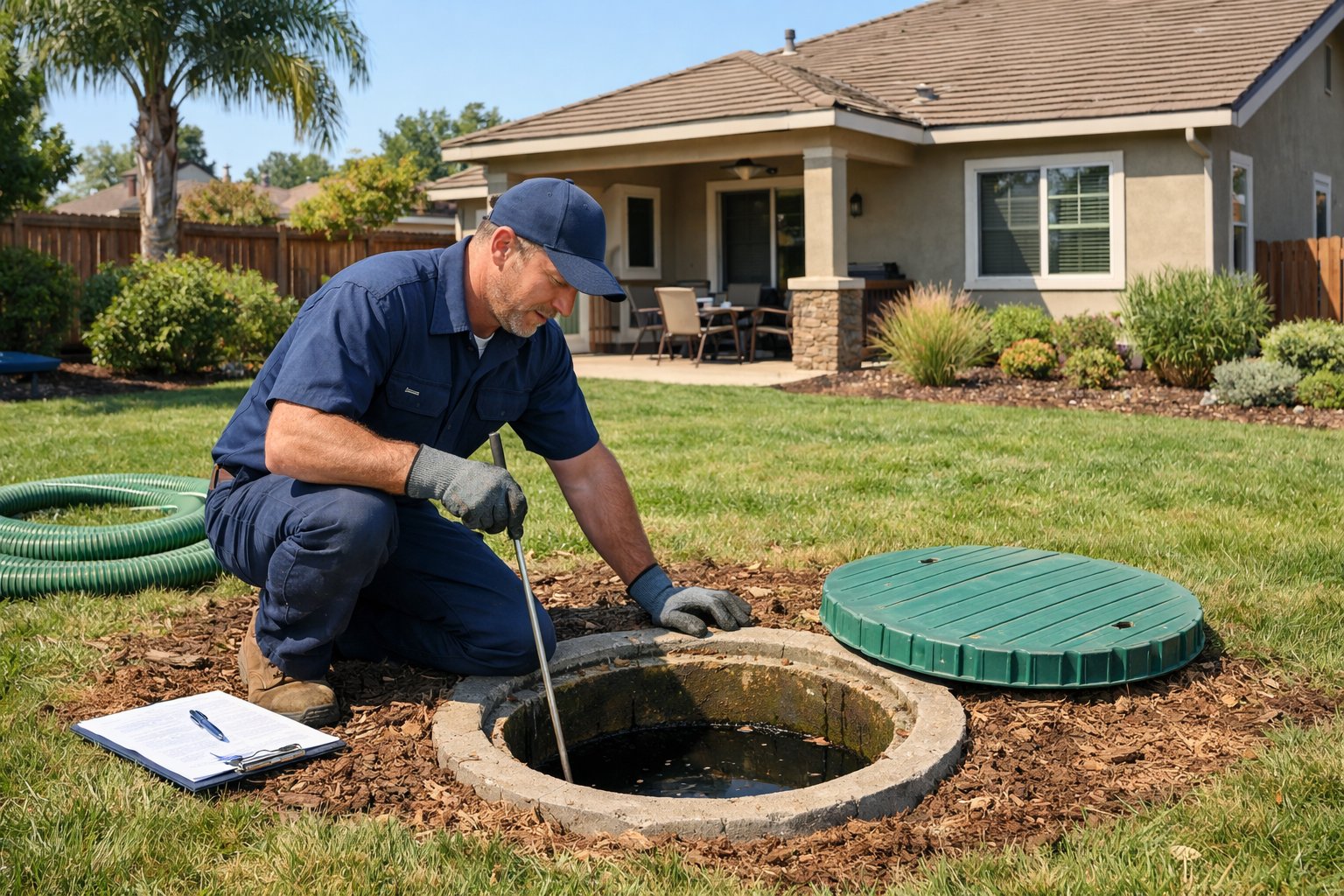
A rotten egg or sewage smell outside can put your stomach in a knot fast. I have been there, doing that slow walk around the yard thinking, Please do not let this be a big dig-up. The good news is that many outdoor odor problems have simple causes: wind pushing vent odors down, a dry trap inside the house that drifts outdoors near doors or windows, recent rain, or a loose lid.
This page walks you through safe, exterior-only checks to help you narrow down what is going on. You will also see the clear “stop and call a pro” triggers, because septic gases and wastewater are nothing to play around with.
Quick note: Septic systems vary (gravity, pump, mound, aerobic). The steps below are meant to be broadly helpful without asking you to open anything.
Safety first (quick but important)
- Keep your distance. Do not lean over openings, lids, or any pipe that could vent gas.
- No flames or sparks. Septic gases can be flammable in certain concentrations.
- Keep kids and pets away from the tank area and drain field while you investigate.
- Do not open the tank. Homeowner checking should stay above ground. Opening a septic tank is a job for trained techs with the right gear.
- If you feel dizzy, nauseated, or get a headache, move to fresh air immediately and stop troubleshooting.
Important: A “rotten egg” smell can also be a natural gas or propane leak (mercaptan). If you suspect gas, leave the area and contact your utility provider or emergency services.
Step 1: Pinpoint the odor zone
Your first job is to narrow the smell down to one of these general areas. That alone helps a lot when you call for service.
Do a slow walk, upwind to downwind
- Start on the upwind side of the house and walk slowly toward the downwind side.
- Pause at corners, near bushes, and near any pipe terminations. Odors can pool in sheltered spots.
- Note where the smell is strongest: near the roofline or eaves, near an inspection cover, over the drain field, or near the tank lids.
Mark your “hot spot”
If it is clearly strongest in one place, set a small marker a few feet away (a landscape flag or a stick) so you can come back to it. This is surprisingly helpful when you are comparing areas.
Step 2: Check common exterior odor sources (no digging)
1) Roof vent stack issues
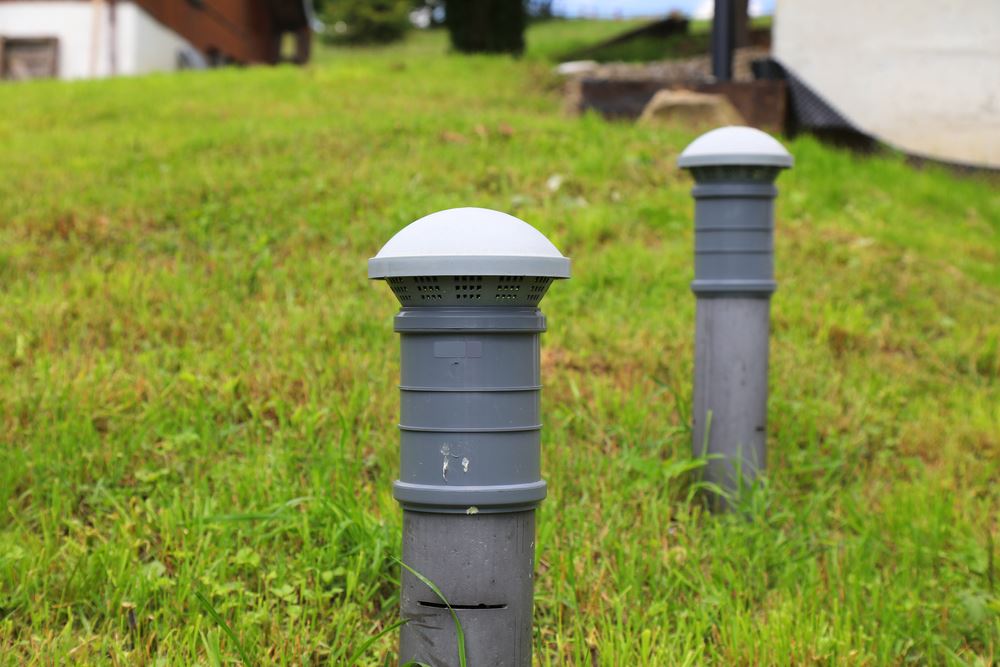
Your plumbing vent stack is designed to send sewer gases up and away. When it is partially blocked or when wind patterns push the odor down, you can smell it outside, often near the eaves, upper windows, or a patio.
- What it smells like: A “sewer gas” odor that is worse with certain wind directions, near the house, not necessarily over the septic area.
- What to look for from the ground: A vent pipe that looks damaged, cracked, or missing a section.
- Weather clue: Certain wind directions can push odor down into outdoor living areas.
Do not climb the roof if you are not comfortable and equipped. A plumber can check for clogs (leaves, nests) and confirm the vent setup meets local requirements.
2) Septic cover and riser lid problems
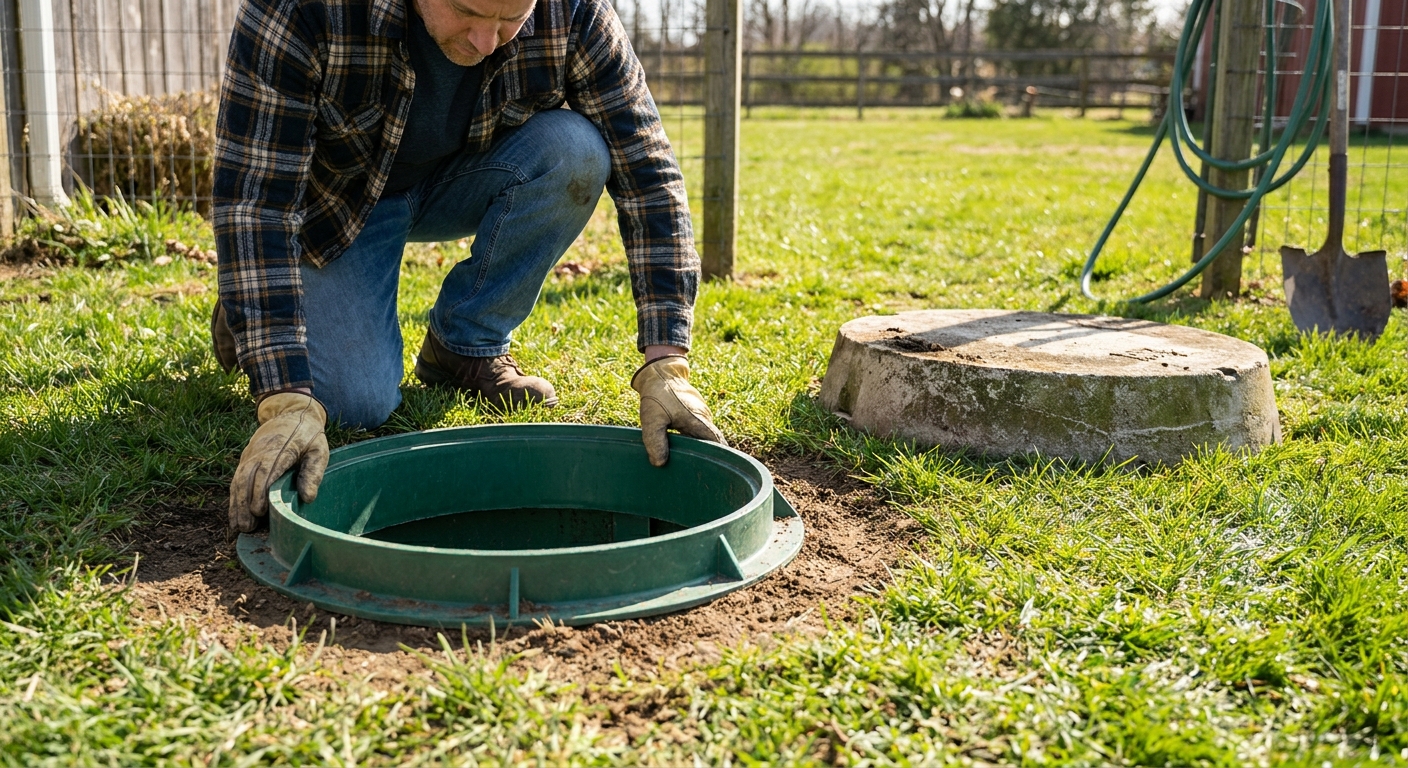
Many systems have a protective cover over the tank access risers, sometimes called a doghouse, riser cover, or inspection cover. Odor can escape if a riser lid is loose, a gasket is missing, or the cover is damaged.
- What it smells like: Strongest right around the access area, and fades quickly as you walk away.
- What to look for: A lid sitting crooked, visible gaps, broken screws, cracked plastic, or a cover that does not sit down flat.
- Easy, safe check: Gently press on the cover or lid area with your hand to see if it rocks. Do not remove anything.
If it seems loose, call a septic company. They can reseat the lid, replace gaskets, or repair risers. This is a common fix and usually far less dramatic than people fear.
3) Effluent filter or outlet baffle trouble (usually comes with other symptoms)
Some tanks have an effluent filter at the outlet. When it clogs, you may notice slower drains inside and sometimes odors outside. This is not a DIY clean-out unless you have training and the right protective gear.
- What it smells like: Odor may be near the tank area, sometimes after heavy water use.
- Other clues: Gurgling drains, slow toilets, or backups.
4) Yard cleanouts and exposed pipe ends
Some properties have a sewer cleanout cap outside. If it is cracked, loose, or missing, it can vent odor right at nose level.
- Where to look: Near the foundation, along the line to the tank, or near the driveway edge.
- What to look for: A white PVC or black ABS pipe sticking up with a threaded cap. Check from a distance for damage or missing caps.
If you are not sure what you are looking at, snap a photo first and show it to a plumber or septic tech before you start twisting things open. If the cap is missing and it is clearly a cleanout, replacing it is usually simple.
5) False positives (it happens)
Not every awful outdoor smell is septic. If the odor seems localized near landscaping, crawlspace vents, or a shed line, keep “dead animal” or rotting organic debris on your list. It can be very convincing.
Step 3: Factor in weather and seasonal patterns
Odors that show up “out of nowhere” are often tied to conditions outside, not sudden septic failure.
After heavy rain or snowmelt
- Saturated soil can slow how quickly effluent disperses in the drain field.
- Standing water can carry odor across the yard, making the source feel “everywhere.”
During drought or long dry spells
- Soil can harden and reduce absorption.
- Dry traps inside the home can allow sewer gas, and you might notice it outside near doors or windows if the air is moving that way.
First warm days of spring
- Warming soil and changing groundwater levels can make existing odors more noticeable.
- Vegetation changes can shift airflow and where odors linger.
If odor is only present right after weather changes and fades within a day or two, that points more toward ventilation and soil conditions than a catastrophic failure. Still, keep an eye on drain performance and yard wet spots.
Step 4: Check for drain field saturation signals
Your drain field should not smell like sewage on a normal day. If the strongest odor is over the field, treat that as a meaningful clue.

What to look for (from the surface)
- Spongy ground or unusually lush, bright green strips of grass.
- Wet spots or puddling when it has not rained recently.
- Odor that intensifies after running laundry, showers, or the dishwasher.
Quick homeowner habits check (no tools needed)
- Think about any recent high water use: guests, multiple loads of laundry, long showers.
- Consider whether you have been sending grease, wipes, or “flushable” products down the drain. Those can contribute to clogs and overload.
- If you have a sump pump or roof downspouts discharging near the field, note it. Extra clean water can still saturate the soil.
If you suspect saturation, reduce water usage for 24 to 48 hours and see if conditions improve. This is a triage step, not a “fix” for a failing drain field. If the yard stays wet or the smell stays strong, it is time to escalate.
How this differs from water heater sulfur odor
Here is a common curveball: sometimes a rotten egg smell is not septic at all. It can be a water heater issue, especially in homes on well water. Certain bacteria can react with the anode rod and produce a sulfur smell.
Water heater odor clues
- Smell is strongest indoors at faucets or in the shower.
- It shows up with hot water, not cold.
- The odor might be more “sulfur” than “sewage.”
Septic odor clues
- Smell is outdoors near the tank, lids, venting, or drain field.
- It may worsen after heavy water use or wet weather.
- It smells more like sewage than just sulfur.
If you only smell it when you run hot water, start your troubleshooting at the water heater, not the yard.
When to stop and call a pro
Here are my clear “do not mess with this” lines. If any of these are true, call a licensed septic professional or plumber.
- Any wastewater backup in sinks, tubs, or toilets.
- Septic alarm sounding (if you have a pump tank system).
- Persistent wet spots or surfacing sewage in the yard.
- Odor is strong and constant for more than 48 hours, especially in dry weather.
- Gurgling drains or multiple fixtures draining slowly.
- You find a damaged lid, riser, or open cleanout that cannot be secured safely.
- Anyone feels lightheaded or unwell near the suspected area.
When you call, tell them: where the smell is strongest (tank area vs drain field vs near the house), recent rain, and whether indoor drains are acting normal. That short summary can speed up the diagnosis.
What a pro may do (so you know what to expect)
- Inspect riser lids, gaskets, and covers for leaks.
- Check inlet and outlet baffles and the effluent filter (if equipped).
- Evaluate pump tank components, floats, and alarms (on pump systems).
- Run a vent evaluation, sometimes including a smoke test, if sewer gas is suspected around the home.
- Assess drain field loading and look for signs of surfacing effluent.
How to reduce repeat odors
- Spread out laundry across the week instead of running many loads in one day.
- Keep roof water away from the drain field with downspout extensions where appropriate.
- Know your tank access locations and keep them visible. Buried lids make quick service harder and more expensive.
- Pump on a real schedule based on household size and tank capacity, not just when something goes wrong.
- Skip wipes and grease, even the ones labeled flushable.
I am all for DIY. Septic systems are one of those areas where the best DIY move is often smart observation, good notes, and calling the right pro before a small issue becomes a yard-wide mess.
Quick recap
- Locate the odor zone first: roofline, tank lids, covers, cleanouts, or drain field.
- Weather matters. Rain, thaw, and wind can make a mild issue suddenly noticeable.
- Drain field smells plus wet ground is a serious clue.
- Hot-water-only rotten egg odor often points to the water heater, not septic.
- Backups, alarms, surfacing effluent, or persistent odor are your call-now triggers.

About Marcus Vance
Content Creator @ Grit & Home
Marcus Vance is a lifelong DIY enthusiast and self-taught home renovator who has spent the last decade transforming a dilapidated 1970s ranch into his family's dream home. He specializes in budget-friendly carpentry, room-by-room renovations, and demystifying power tools for beginners. Through his writing, Marcus shares practical tutorials and hard-learned lessons to help homeowners tackle their own projects with confidence.