
🚨 In a DIY emergency or rush?
Skip the details and jump straight to our 30-second cheat sheet for the most crucial info.
If your laundry room suddenly smells like sewer gas or a musty basement, you are not imagining it. Laundry areas are a perfect storm of drains, hidden traps, humidity, and sometimes a floor drain that never sees water. The good news is most causes are fixable with a bucket, a flashlight, and a little patience.
Below is my neighbor-over-the-fence approach: start with a quick sniff-test decision tree, then work through the most common culprits in the order that solves the most problems with the least effort.
First: Safety notes for gas-like odors
Let’s get the serious stuff out of the way before you start poking around.
- If the smell is very strong, eye-watering, or you feel dizzy: open windows, leave the room, and get fresh air. Strong sewer odors can signal potentially hazardous gases, and you should treat symptoms seriously.
- If you smell rotten eggs near a gas dryer, gas line, or water heater: treat it as a possible natural gas leak. Do not flip switches or use flames. Leave the house and call your gas utility or emergency line.
- Never mix bleach and ammonia cleaners. That creates chloramine gas, which can be dangerous and is sometimes mistaken for a plumbing odor.
- Use gloves and a mask if you will clean a slimy standpipe or mildew-covered gasket.
Quick sniff-test decision tree
You do not need fancy tools to narrow this down. Use your nose, timing, and a few quick checks.
Step 1: What does it smell like?
- Rotten eggs or sewage: could be sewer gas. If the smell is near a gas appliance or gas piping, treat it as a possible natural gas leak first (see safety notes above).
- Damp towels, wet cardboard, earthy funk: likely mildew from humidity, washer gasket, pump filter (on some machines), or lint and soap residue.
- Hot, sharp chemical odor after cleaning: likely cleaning product fumes, not plumbing.
Step 2: When is it worst?
- Worst after the washer drains (or during spin/drain): look at the washer standpipe, drain hose placement and air gap, and venting.
- Worst after a long dry spell or rarely used room: suspect a dry P-trap in a floor drain or utility sink, or a trap primer that is not feeding water.
- Comes and goes with weather or other fixtures draining: suspect venting or siphoning.
- Constant, strongest near a pump basin or sealed crock: suspect ejector pump seal, vent, or check valve problems.
Step 3: Where is it strongest?
- At the floor drain: trap is dry, gunked up, or not properly sealed.
- At the standpipe box behind the washer: standpipe biofilm, siphoning, or an air-gap issue.
- At the washer door or detergent drawer: gasket, drum, dispenser, or pump filter odor.
- Near a sealed pit or basin (often in basements): ejector pump cover, vent, or check valve issues.
If you want the shortest path, start with floor drains and utility sinks first. A dry trap is one of the most common and easiest fixes.
Cause #1: Dry P-trap in a floor drain or utility sink
A P-trap is that U-shaped section of plumbing designed to hold water. That water is a seal that blocks sewer gases from coming back into your house. In many laundry rooms, the floor drain might only see water when something leaks or you mop, so it can evaporate and break the seal.
How to check
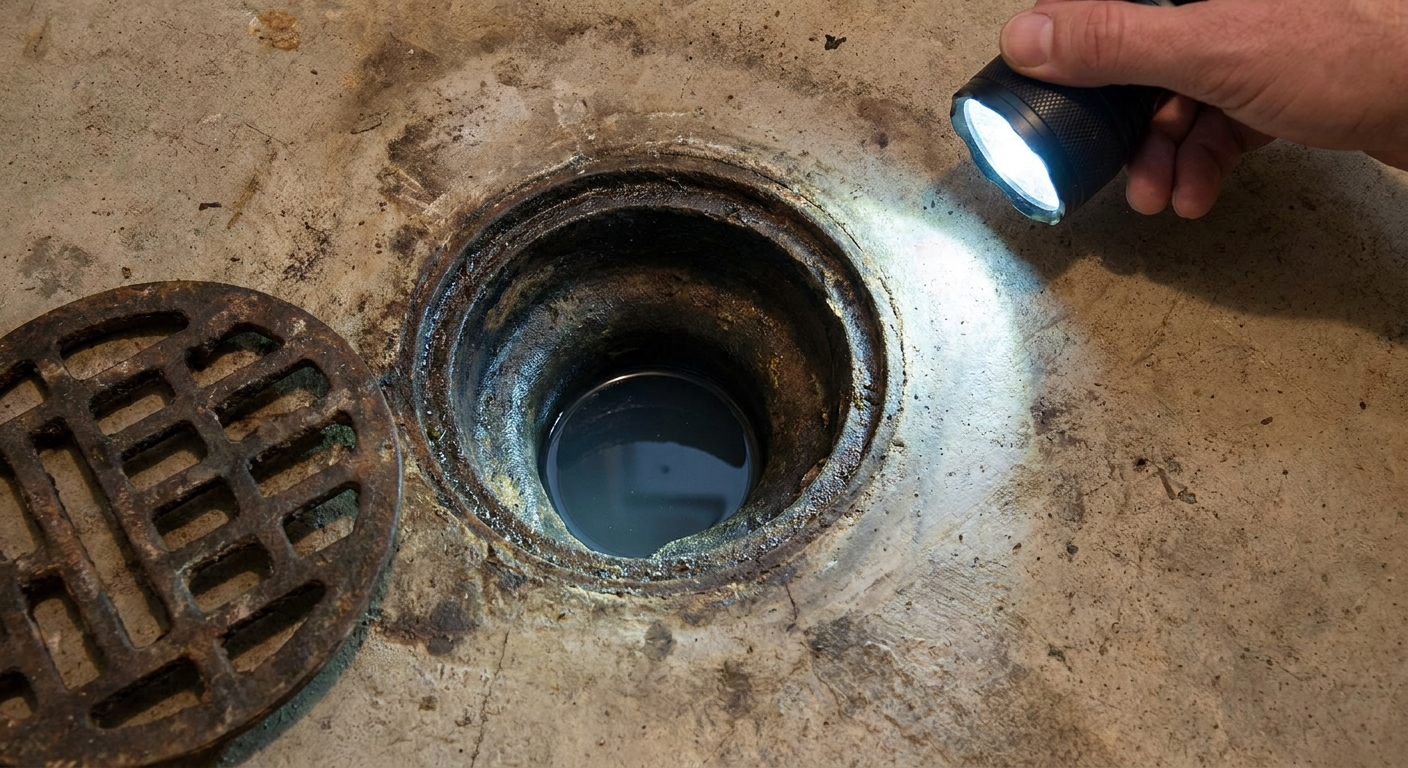
- Remove the floor drain grate.
- Shine a flashlight down. If you see dry pipe and no standing water, the trap is likely dry.
- Do the same for a utility sink that is rarely used.
Fix
- Pour water into the drain: Start with 2 to 4 cups, then sniff again after a minute.
- Slow evaporation (optional): Add 1 to 2 teaspoons of mineral oil after the water. The oil floats on top and slows evaporation. Use a small amount. If you have a septic system or have been told not to add anything to drains, skip the oil and move to the alternatives below.
- Alternatives: If the drain goes dry often, ask a plumber about a trap primer (a small line that automatically adds water to the trap) or a trap-seal device designed for floor drains.
- If the smell returns quickly: the trap may be getting siphoned or the drain may be damaged or untrapped. Jump to Cause #3 and Cause #5.
My hard-learned lesson: I once chased a “sewer” smell for two weekends only to find a completely dry floor drain trap behind a laundry basket. It was a 30-second fix that felt very humbling.
Cause #2: Gunk and biofilm in the washer standpipe
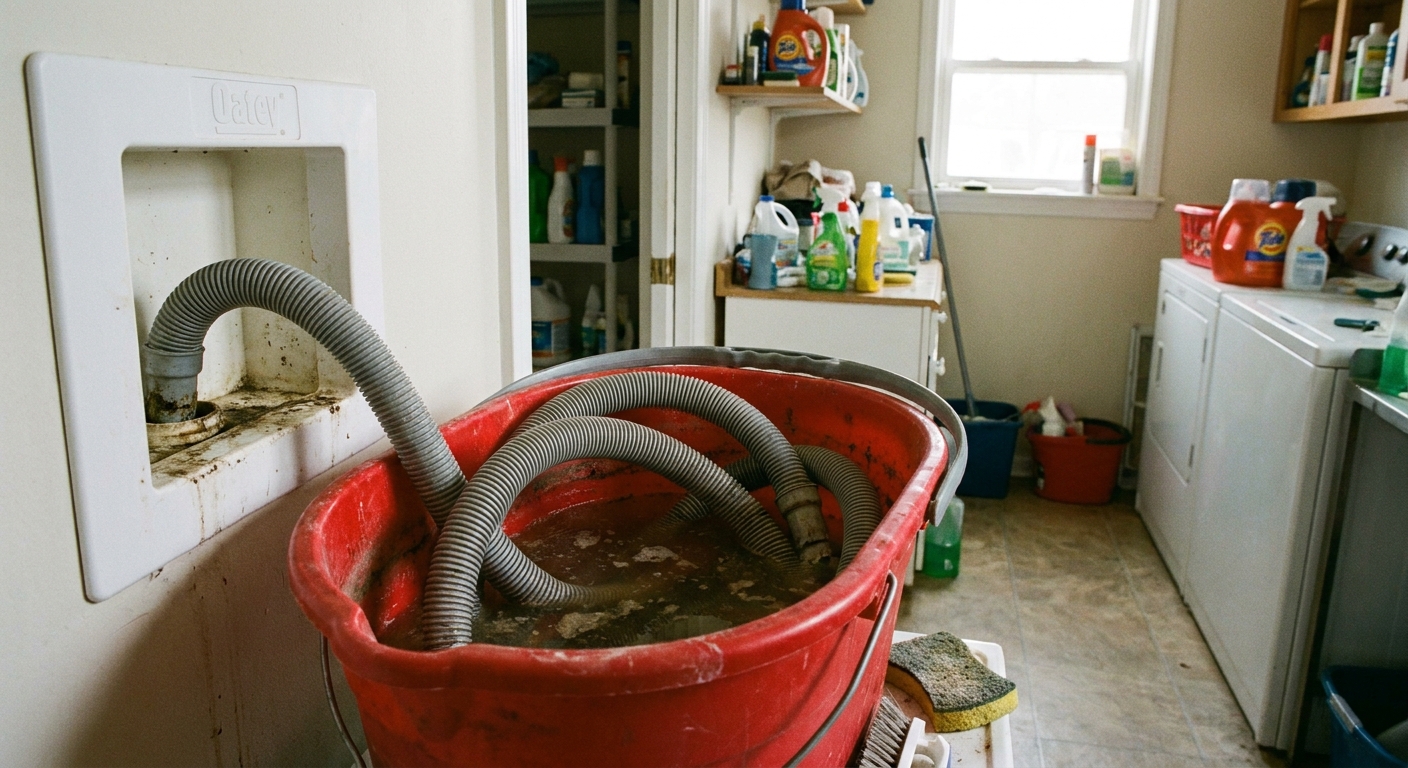
The standpipe is the vertical pipe the washer drains into. Even if it has a proper trap, it can develop a slimy layer of detergent residue, lint, and bacteria. That layer can smell like sewer even when the plumbing is technically fine.
Signs it is the standpipe
- Odor is strongest at the washer drain box.
- Smell flares up right after the washer pumps out.
- You see slow draining, bubbling, or occasional overflow.
Fix: clean the standpipe safely
- Unplug the washer.
- Pull the drain hose out of the standpipe and set it in a bucket.
- Scrub what you can reach: A long bottle brush works well for the top section.
- Flush with very hot water: Use hot tap water or very hot (not boiling) water, poured slowly. Avoid boiling water if you have PVC piping or older joints you do not trust.
- Use an enzyme drain cleaner if biofilm is stubborn. I prefer enzyme products for this because they target the slime without harsh fumes.
Avoid: dumping a bunch of caustic drain opener in a standpipe. It can damage older plumbing, and it is rough on septic systems.
Cause #3: Trap siphoning or venting problems
This is the classic “it smells like sewer but only sometimes” problem. When water rushes down a drain line, it needs air behind it. The plumbing vent supplies that air. If the vent is blocked, undersized, or missing, the draining water can pull water out of the trap, breaking the seal and letting sewer gas in.
Common clues
- Gurgling sounds from the standpipe or nearby sink when the washer drains.
- Odor appears after draining, then fades.
- Other fixtures (like a nearby toilet) affect the smell.
DIY checks
- Drain hose placement: Confirm the washer drain hose is not shoved too deep into the standpipe. It should not be airtight. Do not tape or seal the top of the standpipe.
- Standpipe basics: If your setup looks odd (very short standpipe, awkward angles, frequent overflow), it may be out of spec for modern washers. A plumber can confirm correct height and trap configuration.
- Look for obvious leaks: If you can access the trap under the standpipe (sometimes behind a wall panel), look for a loose cleanout plug or a cracked fitting.
Two common vent-related culprits
- Blocked roof vent: leaves, nests, and debris can cause siphoning symptoms.
- Failed AAV (air admittance valve): some homes use an AAV instead of a traditional vent in certain locations. When an AAV fails, odors can leak or drains can act weird. Replacement is usually straightforward, but you want the right part and placement.
If you suspect a vent problem and the smell is consistent, it is worth calling a plumber. Venting mistakes are common in older remodels, and they can be tricky to troubleshoot without a smoke test or proper access.
Cause #4: Washer mildew and hidden stink spots
Front-load washers are efficient, but the door gasket can trap moisture, lint, and soap residue. That makes a musty smell that can fill the laundry room, especially after warm loads.
Signs it is the washer itself
- Smell is strongest inside the washer door or on the rubber gasket.
- Clothes sometimes come out with a sour smell.
- You see black spots or slime around the gasket folds.
Fix: a simple deodorizing routine
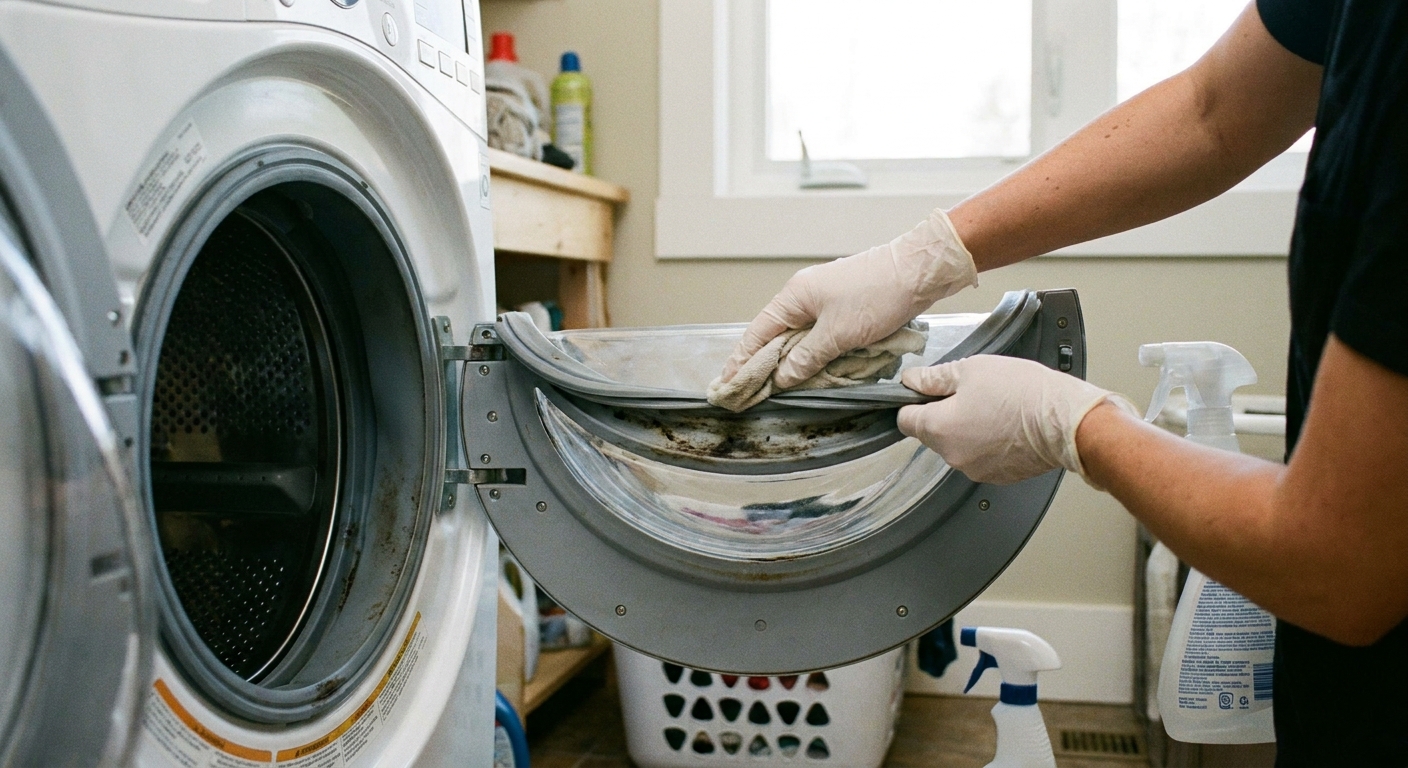
- Wipe the gasket: Pull back the folds and wipe with a microfiber cloth and a mild cleaner.
- Clean the detergent drawer: Remove it, wash with hot soapy water, and scrub the siphon ports.
- Run a hot cleaning cycle: Use a washer cleaning tablet or follow your manufacturer’s instructions.
- Check the pump filter (if your washer has one): Many front-loaders have a small access door and filter that can collect lint, hair, and funky water. Follow your manual, put down towels, and be ready for a bit of water.
- Leave the door cracked open between washes to let the drum dry.
- Cut back on too much detergent: Over-soaping is a big contributor to that slimy buildup.
Cause #5: Trap has water but still smells
If the trap has water but the area still smells like sewer, you might be dealing with buildup, a damaged trap, a missing trap, or a dry trap that is refilling intermittently without fully solving the root cause.
What to look for
- Sludge: Lint and dirt can rot in the trap and smell awful.
- Cracked or shifted drain body: More common in older concrete slabs or after settling.
- Trap primer not working: Some floor drains are designed with a primer line that adds small amounts of water automatically (often fed from a nearby sink or a cold-water line). If it is clogged or disconnected, the trap can go dry more often than you think.
Fix
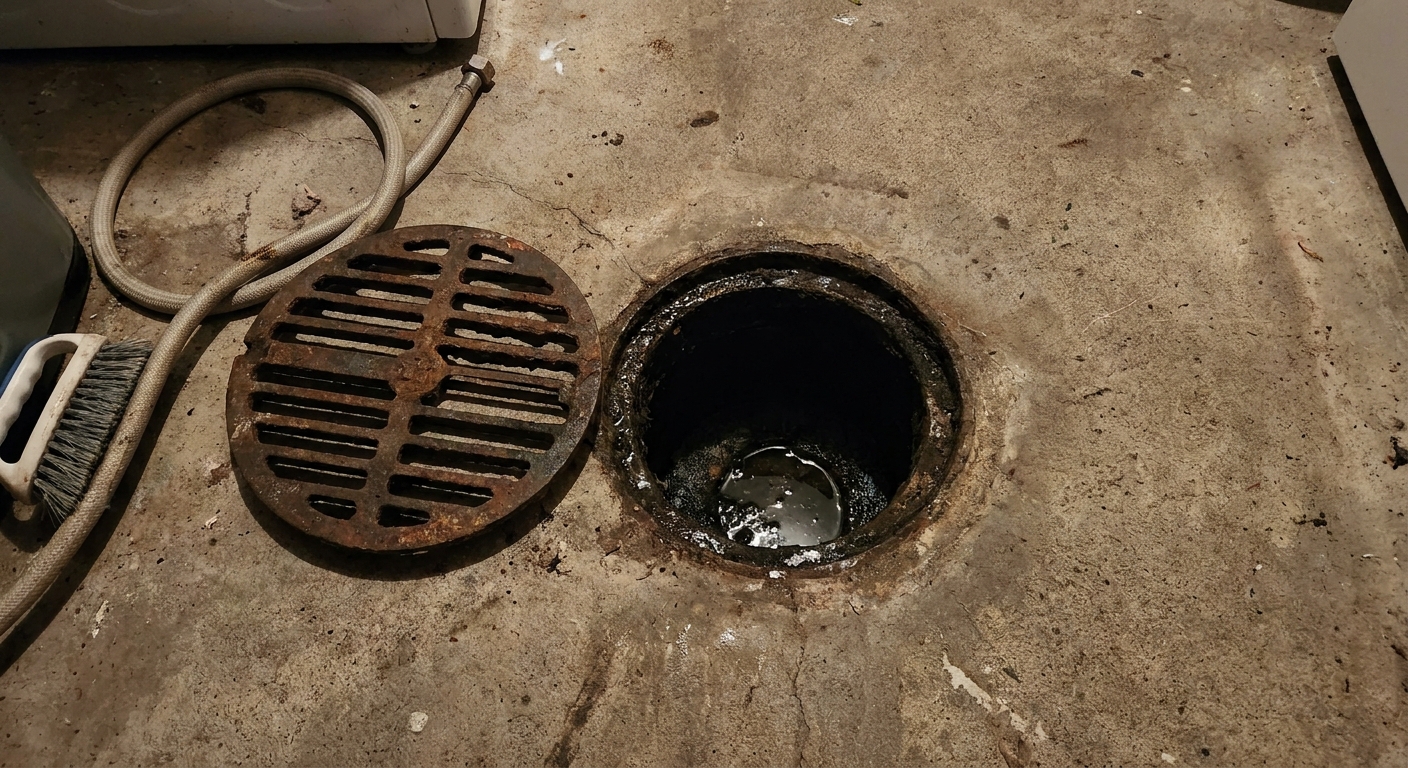
- Clean the drain: Remove the grate and scrub what you can reach. Flush with hot water.
- Try an enzyme cleaner to break down organic gunk.
- If you suspect damage, missing trap, or primer issues: call a plumber. A floor drain without a functioning trap will keep stinking no matter how much you clean.
Cause #6: Ejector pump odors
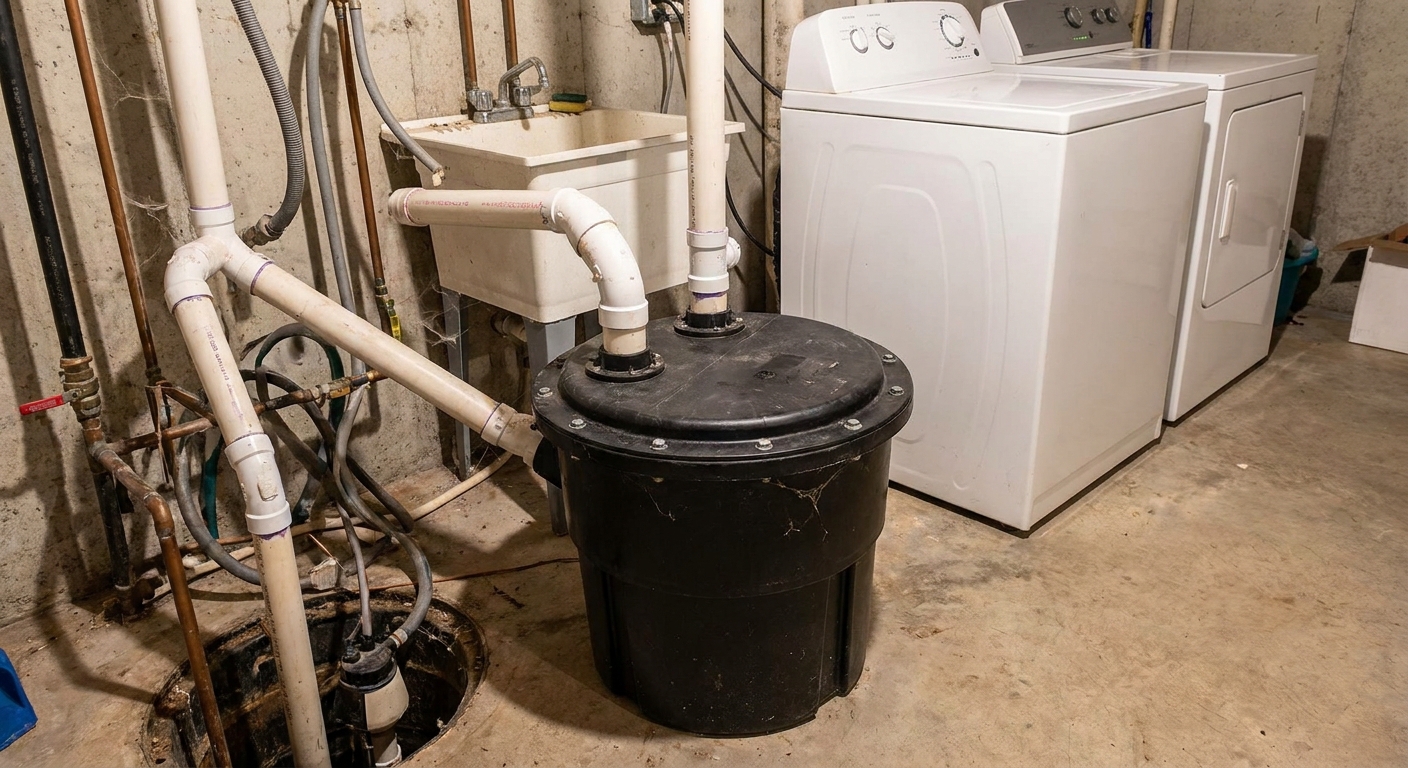
Some laundry rooms, especially in basements, drain into an ejector pump basin that lifts wastewater up to the main sewer line. These systems should be sealed and vented. When something is off, odors can leak out.
Common odor sources
- Loose or cracked basin lid seal (rubber gasket deteriorated or bolts loose).
- Vent pipe problems (blocked vent or improper connection).
- Failed or missing check valve causing waste to fall back and stagnate.
- Infrequent use letting solids sit and smell stronger than usual.
What you can do
- Do not open the basin casually. Sewer gas and bacteria are real concerns, and you can also disturb wiring or floats.
- Check the obvious from the outside: look for loose bolts, cracked lid, or a missing gasket.
- Listen for cycling: if the pump runs more than usual, that can point to a check valve issue, float issue, undersized basin, or unexpected inflow.
Call a plumber if you suspect the ejector is the source. This is one of those areas where a careful pro visit can prevent a messy, expensive situation.
Cause #7: Bigger drain or sewer problems
If you have any of the following, zoom out beyond the laundry room. Your home may have a partial blockage or sewer line issue that is pushing odor back through the nearest low point.
Red flags
- Multiple drains are slow at the same time.
- Toilet bubbles when the washer drains.
- Floor drain backs up or you see water around it.
- Odor is strongest when you run lots of water (shower plus laundry).
Best next step
This is where a professional drain cleaning and camera inspection earns its keep. A main line problem can escalate quickly, and the laundry room is often just where you smell it first.
Prevention
- Pour water into rarely used drains monthly. If your floor drain dries out quickly, consider a trap primer or trap-seal device.
- Run a washer cleaning cycle every 4 to 8 weeks, especially with a front-loader.
- Ventilate: use the exhaust fan or crack a window after laundry days.
- Use less detergent and go easy on fabric softener, which can coat the machine and drain lines.
- Keep the standpipe area clear so you notice drips, gurgles, or overflow early.
When to call a pro
I’m all for sweat equity, but sewer gas smells are not a point of pride project if you are in over your head. Call a plumber if:
- The smell returns within a day or two after you refill traps.
- You hear persistent gurgling or see traps losing water repeatedly.
- Multiple fixtures are slow or you see any backup.
- You suspect an ejector pump, vent stack blockage, failed AAV, trap primer problem, or a damaged floor drain trap.
In the meantime, keep the room ventilated and avoid running the washer if draining triggers a strong odor or causes bubbling in nearby fixtures.
The 30-Second Cheat Sheet
Essential takeaways for: Sewer Gas or Musty Smell in Your Laundry Room? Causes and Fixes
Fast diagnosis (sniff-test)
- Rotten eggs or sewage: could be sewer gas. If the odor is near a gas dryer, gas line, or water heater, treat it as a possible natural gas leak and follow the gas safety steps first. Otherwise suspect dry P-trap, standpipe trap siphoning, venting issue, or ejector pump/sewer line problem.
- Musty or damp towel smell: suspect washer gasket, detergent drawer, drum mildew, pump filter (if your washer has one), or humidity.
- Worst after washer drains: focus on standpipe, drain hose depth and air gap, standpipe height, and venting.
- Worst after room sits unused: focus on floor drain or utility sink trap drying out (or a trap primer not doing its job).
Top 3 fixes most homeowners can do today
- Refill the floor drain trap: pour 2 to 4 cups of water in. If it dries out often, add 1 to 2 teaspoons of mineral oil to slow evaporation (use a small amount, and skip this if your plumber or septic provider advises against it). Alternative: ask about a trap-seal device or trap primer.
- Clean the washer standpipe opening: pull the drain hose, scrub the top section, and flush with very hot (not boiling) water. Use an enzyme drain cleaner for slimy buildup.
- De-mildew the washer: wipe the door gasket folds, wash the detergent drawer, and run a hot cleaning cycle. Leave the door cracked open between loads.
Do this if you suspect venting or siphoning
- If the standpipe or nearby sink gurgles when the washer drains, or the smell appears right after draining, venting may be the issue.
- Quick check: make sure the washer drain hose is not shoved deep into the standpipe and not sealed or taped airtight. It should have an air gap.
- Likely plumber call: blocked roof vent, incorrect trap setup, failed AAV (air admittance valve), or missing vent.
Ejector pump or main sewer red flags
- Odor strongest near a sealed pump basin, or the basin lid looks loose or cracked.
- Multiple drains slow, toilet bubbles when washer drains, or any backup at a floor drain.
- These are good reasons to call a plumber and consider a camera inspection.
Safety
- If the odor is intense or makes you feel dizzy, ventilate and leave the room.
- If you suspect natural gas near a gas dryer or gas line, do not flip switches. Leave and call your gas utility.
- Never mix bleach and ammonia cleaners.
💡 Tip: Scroll up to read the full article for detailed, step-by-step instructions.
⬆️ Back to top
About Marcus Vance
Content Creator @ Grit & Home
Marcus Vance is a lifelong DIY enthusiast and self-taught home renovator who has spent the last decade transforming a dilapidated 1970s ranch into his family's dream home. He specializes in budget-friendly carpentry, room-by-room renovations, and demystifying power tools for beginners. Through his writing, Marcus shares practical tutorials and hard-learned lessons to help homeowners tackle their own projects with confidence.