
🚨 In a DIY emergency or rush?
Skip the details and jump straight to our 30-second cheat sheet for the most crucial info.
A stinky shower drain is one of those problems that feels gross and mysterious, right up until you learn what’s actually happening under the floor. The good news is most shower odors come from a short list of causes, and you can usually narrow it down in one evening with a couple basic tools.
I have lived through this in my own 1970s ranch, where “one weird smell” turned out to be three different issues in three different bathrooms over the years. Let’s sort yours out the organized way: identify the odor source, clean safely in the right order, then troubleshoot the plumbing if the smell keeps coming back.
What that smell usually means
Most shower drain smells fall into one of these buckets. Pick the description that matches your situation best, then jump to the fix sections below.
- Sewer gas, rotten egg, or “city sewer” smell: often a dry P-trap , a missing or incorrect trap (yes, it happens), or a venting problem.
- Musty, sour, “wet towel” smell: usually biofilm (slimy buildup) inside the drain and trap.
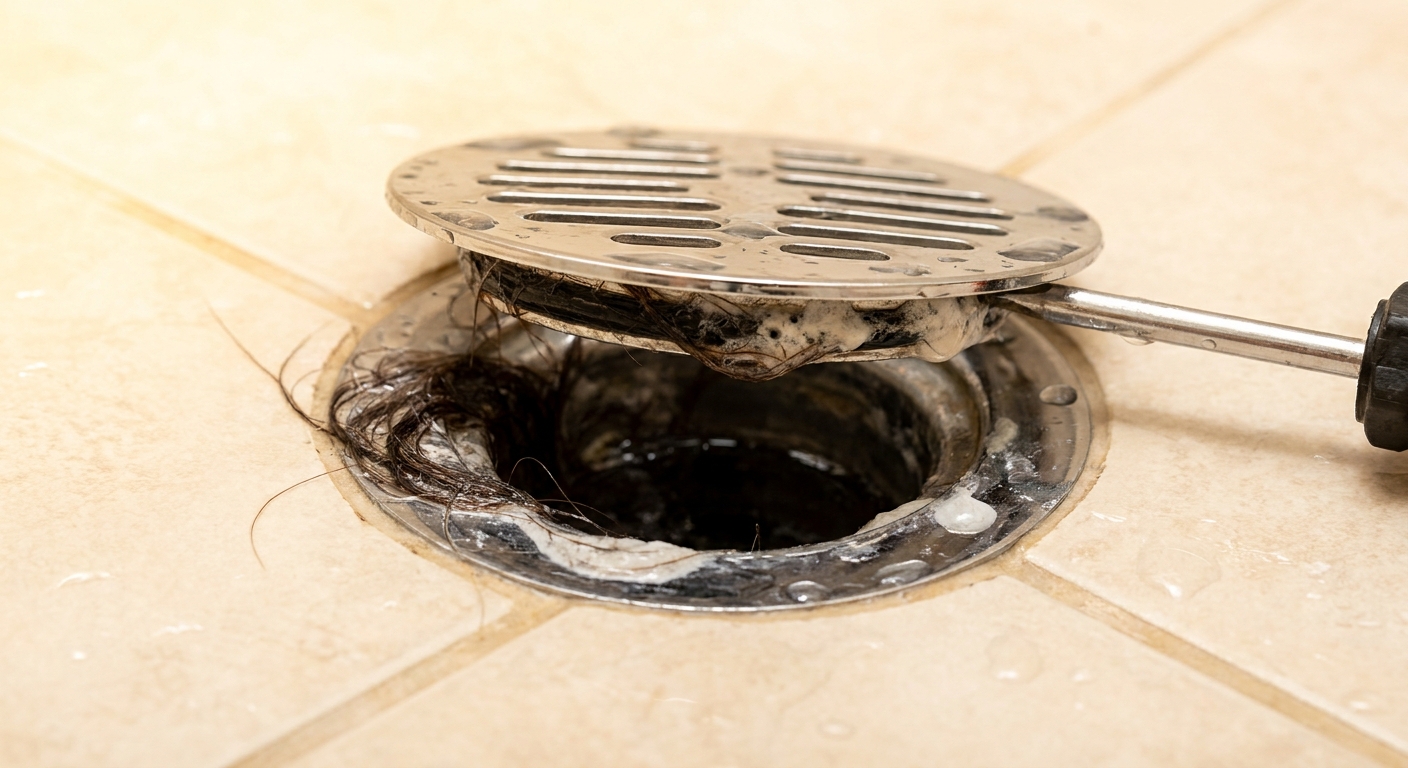
- Old shampoo, funky locker room smell that gets worse after showers: commonly hair and soap scum collecting and rotting.
- Smell comes and goes, worse when another fixture is used: can point to shared waste-line issues or trap siphoning.
- Gnats or tiny flies near the drain: likely drain flies breeding in biofilm.
5 main causes (and how to tell)
Think of this as a simple funnel: first rule out a dry trap, then remove the easy gunk, then treat buildup, and only then chase bigger plumbing issues like venting or shared-line problems.
1) The P-trap dried out (or isn’t right)
Your shower drain typically has a P-trap, a curved section of pipe that holds water. That water seal blocks sewer gas from coming back into the bathroom. If the shower hasn’t been used in a while, the water can evaporate and the smell can roll right in. In some older or DIY setups, you can also run into nonstandard traps (like drum traps), poorly sloped piping, or even a missing trap, which can make odors much more persistent.
Quick signs:
- The smell is strongest when the shower has not been used for days or weeks.
- The odor improves quickly after you run water for 30 to 60 seconds.
- Other drains in the bathroom smell fine.
2) Biofilm buildup (very common)
Biofilm is the slimy layer that forms when soap, skin oils, shampoo, and dirt build up inside the drain and trap. It can smell sour or swampy and it feeds drain flies.
Quick signs:
- Musty odor that returns within a day or two of “just pouring something down.”
- Gunk on the underside of the drain cover.
- Drain flies or tiny larvae.
3) Hair and soap scum clog (even partial clogs stink)
You do not need a fully blocked drain to get a smell. A partial clog slows water enough that the pipe stays coated and oxygen-poor, which makes that funk build faster.
Quick signs:
- Water drains slower than it used to.
- You hear gurgling or see the water “pulsing” as it drains.
- Smell is worse right after a shower.
4) Venting issues (or a siphoned trap)
Your plumbing vent system brings air into the drain lines so water can flow without sucking the traps dry. If a vent is blocked or poorly designed, the shower trap can get siphoned when you drain a tub, flush a toilet, or run a sink. Result: sewer gas smell that keeps returning.
Quick signs:
- Smell appears after flushing or draining a nearby fixture.
- Gurgling in the shower drain when another fixture runs.
- Trap seems to “lose” its water seal frequently.
5) The odor is coming from past the shower trap
Sometimes the shower is innocent. A smell can travel through a shared branch line, especially if another fixture has a dry trap, a blocked vent, or a buildup farther down the line.
Quick signs:
- Multiple drains smell (shower plus sink, or shower plus floor drain).
- Odor is strongest when the bathroom is warm and closed up.
- Cleaning the shower drain helps for a day, then the smell returns unchanged.
Bonus: It’s not the drain at all
Occasionally, the smell you blame on the drain is actually coming from nearby surfaces that stay damp. If the odor is more “musty room” than “stinky drain,” check:
- Grout or caulk around the drain (mildew loves that ring).
- Tub overflow (for tub and shower combos, the overflow can collect gunk and smell when the tub runs).
- Tiled shower pan/weep holes (a chronically damp shower floor can smell earthy or sour, even when the drain is clean).
Safe fix order
If you only follow one part of this article, follow this order. It’s the fastest path that avoids damaging finishes, harming pipes, or creating dangerous fumes.
Step 1: Confirm the trap has water
Run the shower for 60 seconds. Then wait 5 minutes and smell near the drain.
- If the smell disappears: you likely had a dry P-trap. Skip down to Fix: P-trap dry-out.
- If the smell stays: keep going.
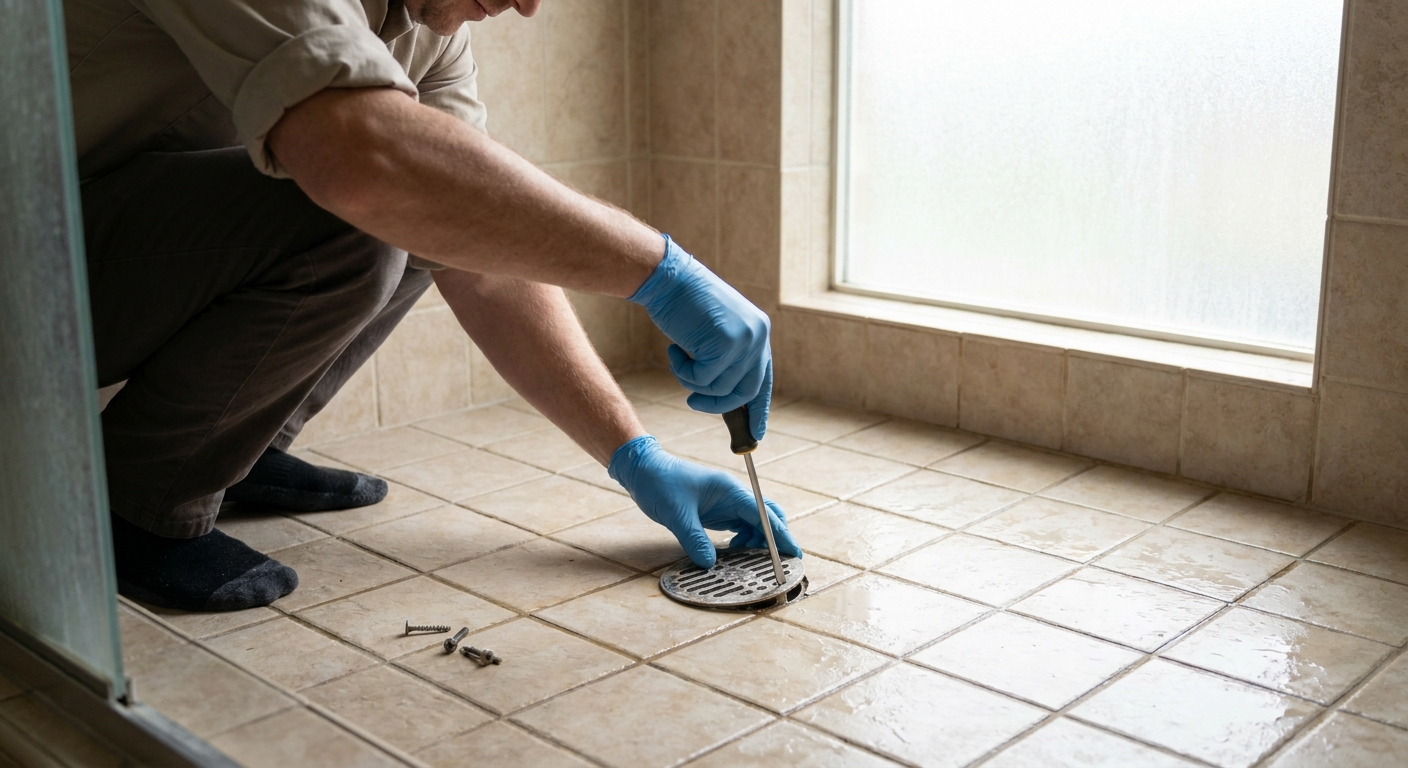
Step 2: Pull the drain cover and clean what you can reach
This is the “90 percent of the problem” step for most homes. Put on gloves, remove the cover, and pull out hair and sludge.
- Use a plastic drain tool (zip-it style) or a bent coat hanger.
- Wipe the underside of the cover and the first few inches of the drain throat.
- Bag the gunk and toss it. Do not rinse it deeper into the line.
Step 3: Scrub biofilm, then flush with hot water
Biofilm sticks. Pouring a product down the drain without scrubbing often gives you a “smells better for one day” result.
- Use a long, narrow brush (bottle brush or small drain brush).
- Scrub the drain throat and any areas you can access comfortably. Do not force tools past tight turns.
- Flush with hot water for 1 to 2 minutes. Hot, not boiling, especially if you have PVC or older adhesives.
Step 4: Use an enzyme cleaner overnight (optional but effective)
Enzyme or bacterial drain cleaners work slowly and are great for the organic funk that causes odors. Follow the label, and give it time.
- Use at night so it sits 6 to 8 hours.
- Flush with warm water in the morning.
- Repeat for 2 to 3 nights if the smell is stubborn.
Step 5: Only then consider a mechanical clear-out
If draining is slow or the smell returns fast, you likely still have hair and soap buildup in the trap or branch line.
- Try a small hand snake (1/4 inch) gently .
- Avoid forcing the snake aggressively in fiberglass or acrylic shower bases where you can scratch finishes.
- If you have a tiled shower, still be careful. You are aiming for the clog, not “winning a fight.”
Quick safety notes
- Hot water can scald. Keep kids out of the bathroom and use caution.
- Avoid boiling water in most modern drains (especially PVC). Hot tap water is usually plenty for flushing after scrubbing.
What not to mix
I am thrifty, but I do not “kitchen chemistry” drains anymore. A bad mix can produce toxic gas or boil up and splash. Use one method, flush, and give it time.
- Do not mix bleach with vinegar or any acid. That can produce chlorine gas.
- Do not mix bleach with ammonia (including some bathroom cleaners). Also can produce toxic fumes.
- Do not mix different drain openers (lye-based and acid-based products). Unpredictable reactions are common.
- Avoid routine use of harsh chemical openers in older plumbing. They can damage some pipes and rubber seals, and they are dangerous if you later need to snake the drain.
If you already poured something down there and it did not work, flush thoroughly with plenty of water before switching to a different product.
Fixes by cause
Fix: P-trap dry-out
- Run the shower for 60 seconds weekly in rarely used bathrooms.
- Optional: Add 1 to 2 tablespoons of mineral oil after running water. It floats on top and can slow evaporation. Keep it to a small amount, and reserve it for seldom-used drains.
- If this happens often, a plumber can install a trap primer (a device that automatically adds water to keep the trap sealed).
Fix: Biofilm and drain flies
- Remove the cover and scrub the drain throat and sides.
- Use an enzyme cleaner for several nights in a row.
- Keep the bathroom fan running during and after showers to reduce moisture, which helps discourage flies.
Fix: Hair clog and soap scum
- Physically remove hair first. Tools beat chemicals here.
- Snake gently if slow draining continues.
- Install a hair catcher that sits over the drain. Cheap, not glamorous, wildly effective.
Fix: Venting or trap siphoning
This is where DIY gets more “diagnostic.” A blocked vent (leaves, a bird nest) or a venting layout issue can cause recurring sewer gas.
- Listen for gurgling when you flush the toilet or drain a tub.
- Check other fixtures: does a sink trap smell too?
- If you are comfortable on a roof, vent checks are sometimes possible, but roof work is a real fall hazard. Have someone spot you, use stable footing, and do not attempt this in wet or windy conditions.
- If you try clearing a vent, go gently. Avoid high water pressure, and stop immediately if you suspect a backup. If any of this feels sketchy, call a plumber. It is money well spent.
Fix: Shared waste-line odor
If the smell seems to be “in the bathroom air” more than “at the shower drain,” widen the search.
- Run water in every fixture in that bathroom: sink, tub, shower, toilet. Fill all traps.
- If there is a floor drain (common in basements), pour water into it too.
- Check for a loose toilet flange seal if the smell is strongest near the toilet base.
Septic vs. municipal note
If you are on a septic system, odors can be more noticeable when the system is stressed (heavy rain, a full tank, or a clog in the line to the tank). The same drain and vent basics still apply, but recurring whole-house sewer odor can be a “call a pro” moment sooner rather than later.
When the odor points past the shower trap
Here are the red flags that tell me the problem is likely not just “a dirty shower drain.”
- The smell returns within hours of thorough cleaning and enzyme treatment.
- Multiple drains smell in the same bathroom or adjacent rooms.
- Gurgling and bubbling happen regularly when other fixtures drain.
- Water level in the trap keeps dropping (siphoning).
- Odor is strongest after rain or windy days (can point to venting issues).
- You get sewer smell plus slow drains across more than one fixture (possible main line restriction) .
A simple self-check that helps: if the smell is strongest only when water runs, suspect siphoning, venting, or a disturbed trap seal. If it is strongest when the bathroom has been closed up and warm, suspect dry traps, biofilm, or a musty surface issue around the shower.
If you hit two or more of those red flags, shift from cleaning to diagnosis and consider a plumber, especially if you suspect venting or a main line issue.
Quick prevention habits
- Use a hair catcher and empty it every couple showers.
- Monthly hot water flush: run hot tap water for 2 minutes as light maintenance. It will not fix an existing clog, but it can help reduce gunk over time.
- Quarterly deep clean: pull the cover, scrub, and rinse.
- Run the fan: less humidity, less funk, fewer flies.
- For guest baths: run water weekly to keep the trap sealed.
That last one sounds too simple, but a dried-out trap is one of the most common causes of “mystery sewer smell” in houses with a rarely used bathroom.
When to call a pro
I am all about DIY, but I am also a big believer in calling a pro when the problem is beyond the shower itself. Consider bringing in a plumber if:
- The smell is strong, constant, and clearly like sewer gas after you have confirmed water in the trap.
- You have recurring gurgling, bubbling, or trap siphoning.
- More than one fixture is slow or smelly (possible branch or main line issue).
- You suspect a cracked drain line, failed vent, or leaking trap under the shower (especially on a second floor).
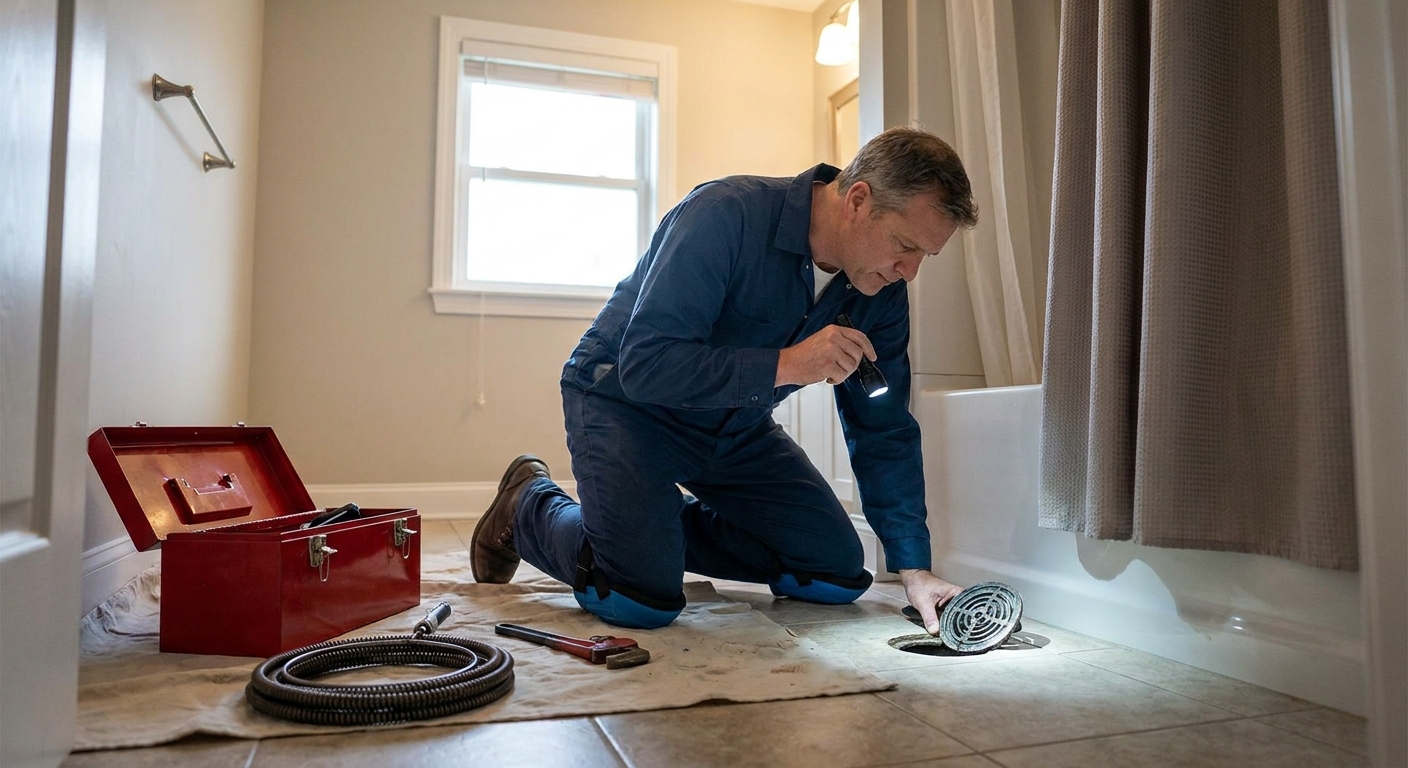
A good plumber can check venting, run a camera if needed, and save you from chasing odors with cleaners for weeks.
The 30-Second Cheat Sheet
Essential takeaways for: Shower Drain Smells Bad? Causes and Fixes
Fast diagnosis
- Smells after days of not using the shower: likely a dry P-trap.
- Musty or sour smell: usually biofilm .
- Worse after showers + slow drain: hair and soap scum clog.
- Smell shows up when toilet flushes or sink drains: venting issue or trap siphoning.
- Multiple drains smell: odor may be past the shower trap (shared line, vent, or main line).
Safe fix order
- Run water 60 seconds to refill the trap.
- Remove drain cover and pull hair and gunk.
- Scrub the drain throat with a brush, then flush hot water 1 to 2 minutes.
- Use an enzyme cleaner overnight for 2 to 3 nights if needed.
- Snake gently if slow draining continues.
Do not mix these
- Bleach + vinegar (or any acid)
- Bleach + ammonia
- Different drain openers (acid and lye types)
When it’s probably not the shower drain itself
- Odor returns within hours of deep cleaning
- Gurgling or bubbling when other fixtures run
- More than one fixture is slow or smelly
Quick prevention
- Use a hair catcher
- Quarterly: pull cover and scrub
- Guest bath: run water weekly (or add a tablespoon of mineral oil after filling the trap)
💡 Tip: Scroll up to read the full article for detailed, step-by-step instructions.
⬆️ Back to top
About Marcus Vance
Content Creator @ Grit & Home
Marcus Vance is a lifelong DIY enthusiast and self-taught home renovator who has spent the last decade transforming a dilapidated 1970s ranch into his family's dream home. He specializes in budget-friendly carpentry, room-by-room renovations, and demystifying power tools for beginners. Through his writing, Marcus shares practical tutorials and hard-learned lessons to help homeowners tackle their own projects with confidence.