
🚨 In a DIY emergency or rush?
Skip the details and jump straight to our 30-second cheat sheet for the most crucial info.
Nothing kills a good shower faster than that sudden arctic blast. The frustrating part is that the cause is not always your water heater. In a lot of homes, the shower valve itself is the “brain” controlling temperature, and it can misbehave even when every sink in the house is perfectly steady.
Below is my go-to troubleshooting order. It starts with the quickest, least invasive checks, then moves toward the most common repair: replacing a shower cartridge. I will also point out the red-flag situations where turning up the water heater is the wrong move because it increases scald risk.
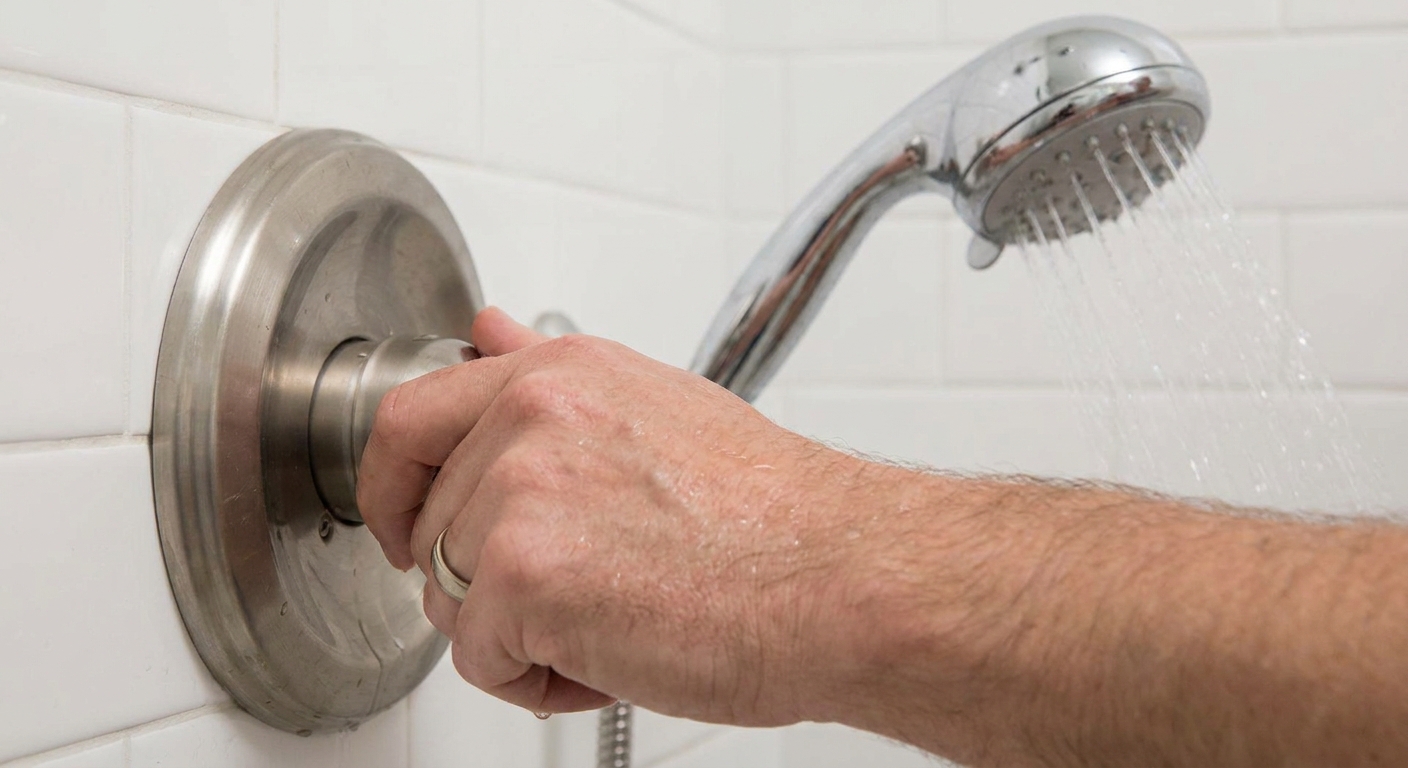
Start here: a 3-minute checklist
This is how you figure out if the problem is “the shower” or “the whole hot water system.”
1) Compare shower vs sinks
- If the shower fluctuates but sinks stay steady, suspect the shower mixing valve, cartridge, pressure-balance parts (on some valves this is a separate balancing spool), or a local restriction like partially closed valve stops or a clogged showerhead screen.
- If multiple fixtures go hot then lukewarm, suspect the water heater (tank dip tube, thermostat, burner or elements, or tankless flow and capacity limits) or a cross-connection that is blending cold into hot.
2) Try hot-only, then add cold
On a single-handle shower, turn to full hot and leave it there for a minute.
- If it still goes lukewarm on “full hot”, the valve may be limiting hot water (anti-scald limit set low), the cartridge may be bypassing, a stop may be partially closed, or you may have a cross-connection bleeding cold into hot somewhere.
- If full hot is stable, but it swings when you blend in cold, that often points to pressure-balance behavior, a worn cartridge, or supply pressure changes. It is a strong clue, not a verdict.
3) Recreate it on purpose
While someone is in the shower, run a nearby fixture.
- Flush a toilet.
- Turn on a bathroom sink cold tap.
- Start the washing machine on cold fill.
If the shower instantly gets too hot or too cold when something else runs, you are commonly dealing with a pressure-balance valve reacting to pressure changes, or a worn cartridge that cannot compensate smoothly. (Supply pressure issues like a failing PRV or well pump cycling can look similar, so keep that in mind.)
4) Note the pattern: instant vs delayed
- Instant change (within a second or two) often points to the shower valve, pressure swings, a restriction on one side, or a cross-connection.
- Delayed change (30 seconds to a few minutes) often points to the heater running out of truly hot water, tank stratification, a broken dip tube, or tankless modulation limits.
How the shower holds temp
Most modern showers have an anti-scald feature built into the valve. That is a good thing. But it also means there are more moving parts that can stick, wear out, or clog.
Pressure-balance valves (most common)
A pressure-balance valve tries to keep the hot-to-cold ratio steady when someone uses water elsewhere. Depending on brand, the balancing action may be built into the cartridge or handled by a separate serviceable part (often called a balancing spool).
Common symptoms:
- Someone flushes a toilet and your shower suddenly changes temperature.
- You get brief hot spikes or cold dips even though the handle setting stays the same.
- The handle feels rough or inconsistent.
Thermostatic mixing valves (less common)
Thermostatic valves sense temperature and modulate hot and cold to hold a set temperature. When they fail or get scaled up, they can hunt, overshoot, or starve the hot side.
Common symptoms:
- The temperature waves up and down in a repeating cycle.
- It takes forever to get hot, then it suddenly gets too hot.
- Other fixtures might be fine.
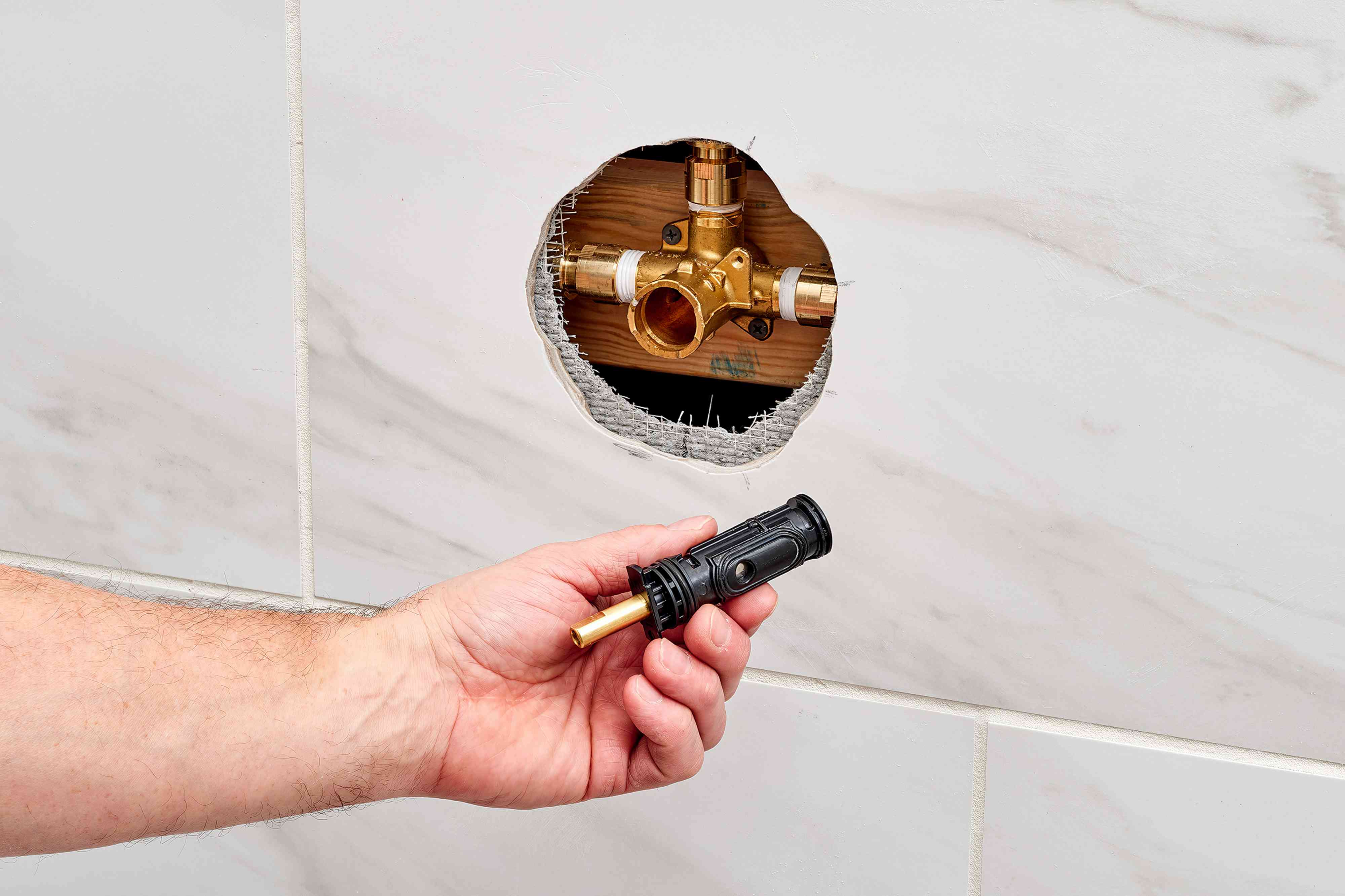
Cause 1: Worn cartridge
If your sinks are steady and only the shower is acting up, this is the first place I look. Shower cartridges are basically wear items. Rubber seals age, springs get weak, and mineral scale builds up.
Try this first
- Clean the shower head and screen. Reduced flow can change how a tankless heater or a thermostatic valve behaves. Unscrew the shower head and rinse the inlet screen.
- Check the valve stops. Some shower valves have small screwdriver stops behind the trim. If one is partially closed, you can get weird temperature behavior and weak flow.
- Cycle the handle through the full range a few times with water off. If it feels gritty or sticky, that is a clue.
Best DIY fix: replace the cartridge
This is usually a 60 to 120 minute job for a beginner, assuming you can shut off water and remove trim without cracking tile.
- Turn off water to the shower (either a dedicated stop, the house main, or the valve stops if present).
- Remove handle and trim.
- Pull the cartridge (a puller tool is sometimes required).
- Inspect for torn seals, swelling, debris, or hard white scale.
- Install the exact replacement part. Match brand and model whenever possible.
Thrifty tip: Take the old cartridge to the hardware store. It is the quickest way to avoid buying “close enough” parts that do not actually fit.
Identify-your-valve tip: Snap a photo of the trim and handle, then another photo with the trim plate off. Many brands stamp a model family on the valve body or cartridge. Those two photos save a lot of guesswork at the parts counter.
My hard-learned lesson: Do not reef on the trim screws or valve body. If you crack tile or strip the valve mounting, a simple cartridge job can turn into a wall repair.
Note on balancing spools: On some pressure-balance valves, you can service a separate balancing spool. On others, the balancing function is integrated into the cartridge, so “cartridge replacement” is the fix either way.
Cause 2: Anti-scald stop set low
If your shower never gets truly hot, but the sink right next to it does, your shower’s anti-scald limit may be set conservatively.
Many single-handle valves have a plastic limit ring behind the handle that physically prevents turning to full hot.
What to do
- Remove the handle.
- Adjust the limit stop slightly toward hotter.
- Reinstall and test.
Safety note: Adjust in small steps. You are increasing the maximum possible hot water at that shower. If kids or older adults use the bathroom, be extra cautious.
Cause 3: Cross-connection
A cross-connection is when hot and cold water mix somewhere they should not, often through a failing single-handle faucet, a shower valve, or a recirculation setup without proper check valves. That can make a shower go lukewarm even though the heater is doing its job.
Clues
- Hot water at a sink never gets very hot, even though the heater is set correctly.
- With the water heater turned off, you still get warmish water at the hot tap after a while.
- Temperature behavior is weird across the house, not just one bathroom.
Quick DIY clue test
This is a simple clue-finder, not a perfect diagnosis.
- Turn off the cold supply to the water heater (or shut the house cold and then reopen only hot side where possible).
- Open a hot faucet somewhere.
- A brief spurt can be normal as pressure equalizes. Sustained flow suggests cold is feeding into hot somewhere through a cross-connection. System layouts vary, so treat this as a strong hint, not absolute proof.
Common culprits include single-handle bathroom faucets with worn cartridges, a utility sink faucet, a shower valve with a failing cartridge, or a recirc loop missing check valves.
When to call a pro: If you suspect a cross-connection and cannot isolate it quickly, a plumber can locate it faster with shutoff testing and sometimes a thermal camera.
Cause 4: Supply pressure issues
Sometimes the shower valve is fine, but the water supply is not steady. These problems can mimic a bad cartridge because the valve is constantly reacting to pressure swings.
Common pressure culprits
- Failing PRV (pressure reducing valve): Pressure creeps up, drops, or hunts. You may notice it at multiple fixtures, not just the shower.
- Well pump cycling: If you are on a well, a short-cycling pump or waterlogged pressure tank can cause rhythmic pressure waves that show up as temperature waves in the shower.
- Partially closed main or fixture stops: A half-closed stop on the hot or cold side can make the mix unstable and reduce flow.
- Clogged filters or softener issues: Whole-house filters can restrict flow as they load up, changing pressure behavior in the house.
If you suspect supply pressure problems, it is worth checking house pressure with a simple gauge. If pressure is out of spec or unstable, that is often a plumber job because it can affect appliances and leak risk.
If it is the whole house: heater causes
If multiple fixtures lose heat faster than they used to, you are probably chasing a water heater issue. Here are the big ones that match “hot for a bit, then cold.”
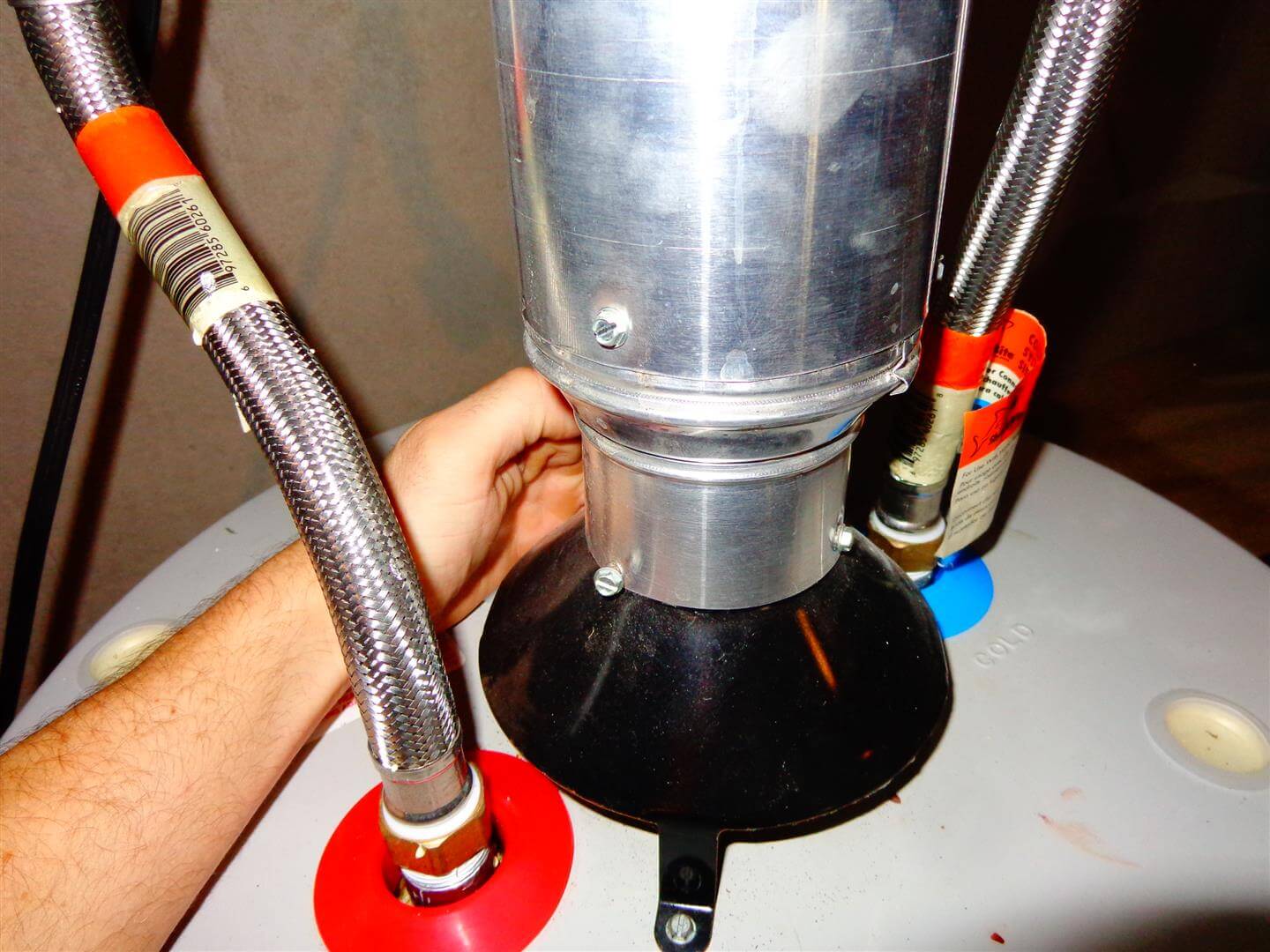
Tank heater: broken dip tube
In a standard tank heater, cold water should enter through a dip tube that sends it to the bottom of the tank. If that tube cracks or disintegrates, incoming cold water can dump near the top and quickly mix with your hottest water.
Clues:
- Hot water runs out much sooner than before.
- Temperature drops are more of a gradual cool-down than instant swings.
- You may find little white plastic bits in faucet aerators or shower screens.
Dip tube replacement is doable for a confident DIYer, but it involves shutting down the heater, draining, and opening plumbing connections on top of the tank. If the heater is older or heavily corroded, this can turn into “replace the heater” territory.
Tank heater: thermostat or element issues
Electric tank: A failed upper or lower element can cause limited hot water or lukewarm recovery. Often you get some hot water, then it tapers off quickly.
Gas tank: A burner or control issue can cause slow recovery, so you get a hot start and then you outrun the heater.
Gas heater: venting or drafting problems
If a gas heater cannot draft properly, it may short-cycle or shut down, which feels like unpredictable hot water. Drafting issues are a safety concern because they can involve combustion gases.
Red flags:
- Burner frequently shuts off unexpectedly.
- Sooting around the draft hood.
- Condensation, rust streaks, or a hot, stuffy utility area.
If you suspect a venting issue, I would stop troubleshooting and call a pro.
Tankless: flow and cold slugs
Tankless units are great, but they are picky. They need enough flow to “wake up” and enough burner capacity to maintain your target temperature at that flow rate.
Common reasons a shower goes cold
- Flow is too low. A low-flow shower head, clogged screen, or other restriction can drop below the heater’s minimum activation flow. In some systems, a pressure-balance valve reacting to pressure changes can contribute by reducing flow further.
- Unit is hitting its limit. In winter, incoming water is colder. The unit may not be able to raise temperature enough at your chosen flow rate, so it chases temperature.
- Scale buildup. Heat exchangers need periodic descaling in many areas. Scale can cause unstable temperatures.
- Brief cold slug between hot bursts. Some people experience a short cold shot between hot draws (often called a “hot water sandwich”), especially with certain plumbing layouts, recirculation setups, or very short on and off uses.
Fixes to try first
- Clean the shower head screen and any inline filters.
- Temporarily remove the shower head and test flow (aim into a bucket).
- Check and clean the tankless inlet screen filter (follow manufacturer instructions).
- If you have hard water and have not flushed the unit in a year or two, plan a descaling flush.
Practical tip: Many tankless systems behave best when you set the unit to a safe, usable delivery temperature and minimize cold mixing at the shower. Less mixing often equals fewer swings.
Should you turn up the heater?
Sometimes a small adjustment is appropriate, but it is not a cure for fluctuations and it can create a scald hazard.
Safe temperature basics
- Many homes aim around 120 F to reduce scald risk and save energy. Always follow local codes and your heater manufacturer’s guidance.
- Going hotter can help with some hot-water-quantity complaints, but scald risk rises quickly, especially for children and older adults.
- There is also a real hygiene tradeoff in some homes. Some people store water hotter and use a thermostatic mixing valve to deliver safer water to fixtures. If you are considering big temperature changes, it is worth a quick call to a plumber.
Rule I use at my house: If the problem is that the shower changes temperature, I troubleshoot the valve and heater function first. I do not crank the tank hotter as a band-aid.
When turning it up is a bad idea
- You already experience brief hot spikes.
- Your shower valve’s anti-scald feature seems unreliable.
- Anyone in the home has reduced mobility or sensation.
Call a pro: safety triggers
I love a good DIY win, but some scenarios are not worth the risk.
- Scalding events: If the shower unpredictably goes very hot, fix it before anyone uses it again. A plumber can quickly assess the valve and mixing setup.
- Gas venting concerns: Any suspected drafting or combustion problem is a pro job.
- No shutoffs or seized shutoffs: If you cannot reliably shut water off to the shower, it is easy to turn a cartridge swap into a flood.
- Old, corroded plumbing: If removing a cartridge risks snapping old fittings behind the wall, that is a good time to get help.
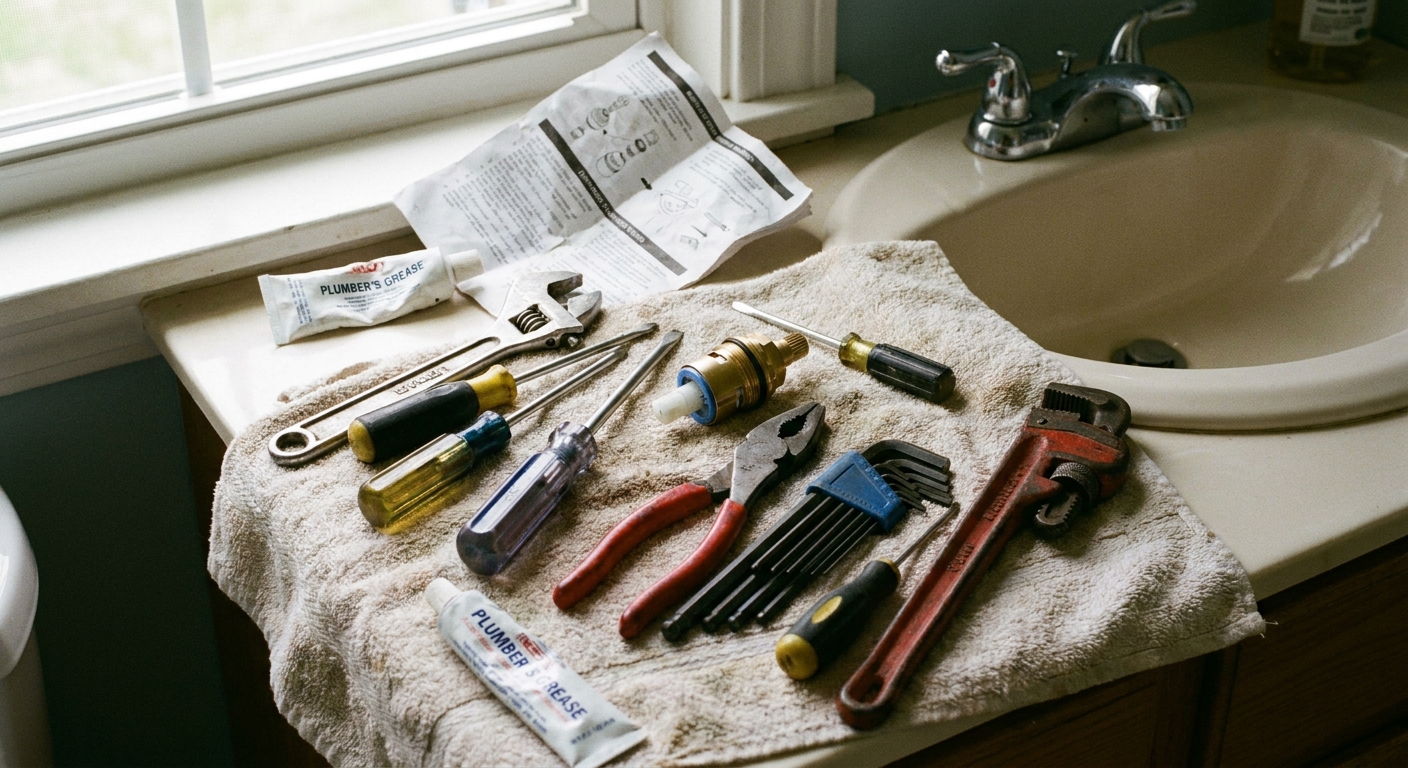
Tools and parts
If you are going after a cartridge, a few basics keep the job clean and calm.
- Allen keys or screwdriver set for the handle
- Utility knife (to score caulk around trim)
- Needle-nose pliers (for retaining clips)
- Cartridge puller tool (brand-specific sometimes)
- Silicone grease approved for plumbing
- Replacement cartridge and O-rings (exact match)
Bottom line
If your shower goes hot then cold, do not assume the water heater is dying. First, compare it to your sinks. If the rest of the house is stable, you are usually looking at a shower valve cartridge, a restriction (stops or screens), or pressure-balance parts that are sticking or worn. If multiple fixtures lose heat quickly, then you are into water heater territory like dip tubes, recovery issues, tankless flow limits, or a cross-connection.
And if you are seeing sudden hot spikes, treat it like a safety issue, not an annoyance. Nobody should have to brace for a scalding surprise just to rinse shampoo out.
The 30-Second Cheat Sheet
Essential takeaways for: Shower Water Goes Cold or Fluctuates: Fixes to Try First
Fast diagnosis (2 minutes)
- Only the shower fluctuates: most likely a worn shower cartridge, pressure-balance parts (often a balancing spool on some valves), a restricted stop or screen, or the anti-scald limit stop set too low.
- Multiple fixtures go hot then cold: suspect the water heater (tank dip tube, thermostat or element, burner recovery), tankless flow and capacity limits, or a cross-connection mixing cold into hot.
Quick isolation checklist
- Compare shower vs bathroom sink temperature stability.
- Test shower on full hot for 60 seconds.
- Flush a toilet or run a cold tap while someone showers. Instant change often points to pressure-balance behavior or a worn cartridge.
- Note timing: instant change often equals valve or pressure, delayed change often equals heater volume, recovery, or tankless modulation.
Most common fixes to try first
- Clean shower head inlet screen and remove mineral buildup.
- Verify shower valve stops (if present) are fully open.
- Adjust the shower’s anti-scald limit stop slightly hotter (small steps).
- Replace the shower cartridge (and serviceable balancing spool if your valve uses one).
Cross-connection clues
- Hot water never gets fully hot at multiple fixtures.
- Hot line seems warm even when the heater is off.
- With the heater cold supply off, hot taps still flow more than a brief spurt.
Tank heater quick clues
- Broken dip tube: hot water runs out fast, gradual cool-down, possible white plastic bits in aerators.
- Gas drafting issues: short-cycling, soot, rust streaks, unusual heat or odors near heater. Call a pro.
Tankless quick clues
- Low flow can drop below activation minimum and cause cold slugs.
- Winter incoming water can exceed unit capacity at your shower’s flow rate.
- Some setups have a brief cold slug between hot bursts (often called a “hot water sandwich”).
- Clean inlet filter and consider descaling if you have hard water.
Water heater temperature safety
- Aim around 120 F for many homes (common scald-reduction guidance). Follow local code and manufacturer recommendations.
- Do not “solve” fluctuation by cranking the heater hotter. It increases scald risk, especially if your shower valve is unstable.
- If you need higher storage temps for capacity or hygiene reasons, consider a thermostatic mixing valve at the heater outlet for safer delivery temps.
Call a pro if
- The shower has sudden hot spikes or anyone was nearly scalded.
- You suspect gas venting or drafting problems.
- You cannot reliably shut off water to the shower.
💡 Tip: Scroll up to read the full article for detailed, step-by-step instructions.
⬆️ Back to top
About Marcus Vance
Content Creator @ Grit & Home
Marcus Vance is a lifelong DIY enthusiast and self-taught home renovator who has spent the last decade transforming a dilapidated 1970s ranch into his family's dream home. He specializes in budget-friendly carpentry, room-by-room renovations, and demystifying power tools for beginners. Through his writing, Marcus shares practical tutorials and hard-learned lessons to help homeowners tackle their own projects with confidence.