
🚨 In a DIY emergency or rush?
Skip the details and jump straight to our 30-second cheat sheet for the most crucial info.
Skunk smell inside a house is one of those problems that feels personal, like the walls are judging you. The good news is that it is usually solvable with two tracks running in parallel: neutralizing what is in the air and hunting down the source. If you only do one, the stink comes right back.
I have dealt with this on our old ranch house, and I learned the hard way that masking sprays and “odor bombs” just make your living room smell like skunk-scented perfume. The fix is chemistry, airflow, and a little detective work.
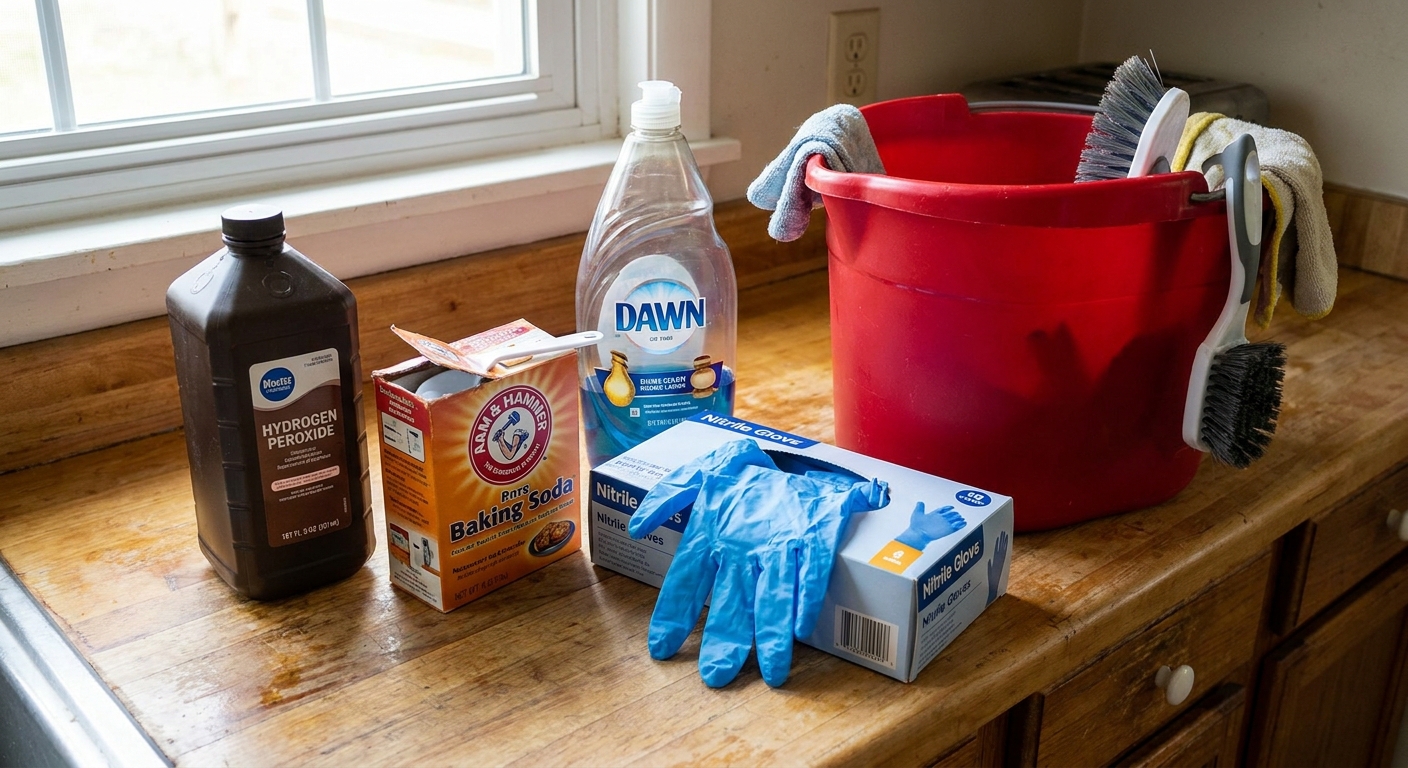
First: Make it safe and stop the spread
Before you scrub anything, protect your lungs and keep the odor from getting pulled deeper into your home.
Quick safety checklist
- Ventilate: Open windows on opposite sides of the house if weather allows.
- Pause the HVAC fan: Set your system to “off” so it does not distribute odor through ducts.
- Protect yourself: Wear nitrile gloves and old clothes. If you are sensitive, add an N95-style mask.
- Keep chemicals separate: Never mix cleaners. For skunk odor, chlorine bleach is usually not recommended.
What not to do (common mistakes)
- Do not run the furnace fan “to air it out.” You can contaminate ducts and filters.
- Do not use ozone generators in occupied spaces. Ozone is a lung irritant, and agencies like the EPA caution against using ozone air cleaners in spaces where people or pets breathe.
- Do not soak upholstered furniture with water-heavy solutions. You can trade skunk smell for mildew.
Was a pet sprayed, or is a skunk under the house?
This is the fork in the road. The cleanup approach changes depending on whether the odor is on something (a dog, shoes, a jacket) or coming from somewhere (crawlspace, vent, attic, wall cavity).
Signs a pet or person was sprayed
- The smell is strongest on a specific animal, person, or item.
- You can “track” it: entryway, hallway, then fading as you move away.
- It flares up when the pet gets wet or warms up (skunk oils re-release).
Signs a skunk may be under the structure or near an intake
- Odor is strongest near floor registers, basement stairs, or a specific wall.
- Smell is worse at night or early morning.
- It comes and goes without anyone moving around.
- You notice it most when the HVAC cycles (even briefly).
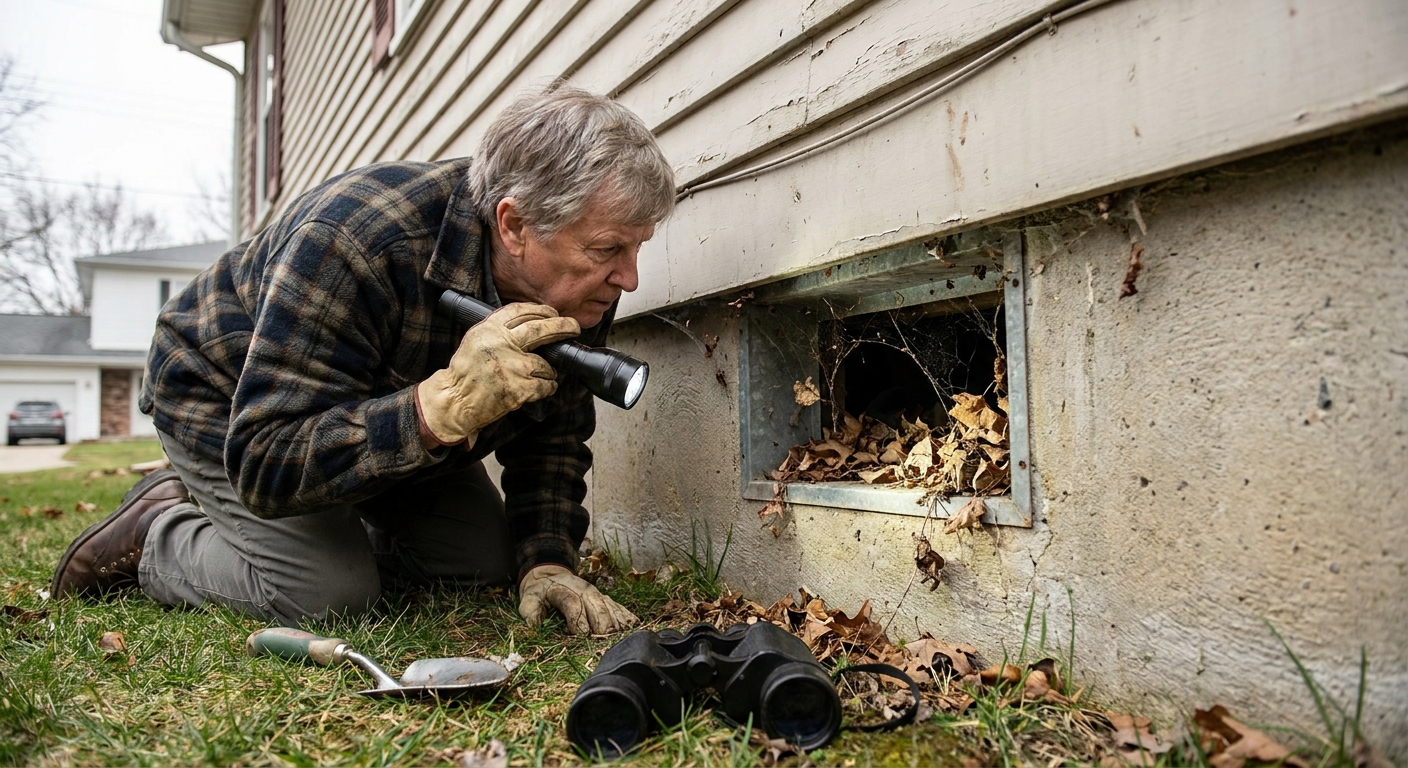
Find the source: a structured walkthrough
When you are stressed, you bounce around and miss obvious clues. Here is the order I use because it is quick and logical.
Step 1: Check the HVAC system
- Replace the HVAC filter immediately. Bag the old one before carrying it through the house.
- Inspect the return air area. If the smell is strongest near the return grille, odor is being pulled through the system.
- Check fresh air intakes (if you have them). Some systems pull outdoor air in. A skunk near that intake can stink up the house fast.
DIY note: If the smell got into ducts, you can often improve it with a filter change plus thorough cleaning of the source. Full duct cleaning is sometimes helpful, but it is not always necessary unless odor was circulated for days.
Step 2: Walk the perimeter outside
Skunk odor indoors is often an outdoor problem in disguise.
- Sniff near crawlspace vents, soffit vents, and dryer/bath fan exhaust.
- Look for fresh digging near the foundation, decks, sheds, and AC pad.
- Check window wells and low spots where an animal might shelter.
Step 3: Crawlspace and basement checks
If you have a crawlspace, this is ground zero for “mystery skunk smell.”
- Use a bright flashlight and look for disturbed insulation, droppings, or a musky “den” smell.
- Check the rim joist area for gaps where plumbing or wiring enters.
- Look for dead animal risk. A skunk can be hit, injured, or trapped and die under a structure. That requires different remediation.
If you suspect a live skunk under the house: back out and avoid cornering it. This is one situation where calling wildlife control is usually the fastest, safest move.
Step 4: Soft goods and “odor sponges”
Even after the source is gone, porous materials can hold onto odor.
- Entry rugs, couch arms, throw blankets, dog beds
- Coats hung near the door
- Backpacks, sports gear, fabric storage bins
Neutralize the smell: what actually works indoors
Skunk spray is oil-based and loaded with sulfur compounds. You need a solution that chemically changes those compounds, not just covers them up.
The common DIY recipe (for hard surfaces and some fabrics)
This is the widely shared peroxide recipe often credited to Paul Krebaum and commonly referenced by vets and groomers for skunk odor. It also works on many non-delicate household surfaces.
- 1 quart (4 cups) 3% hydrogen peroxide
- 1/4 cup baking soda
- 1 teaspoon liquid dish soap (degreasing type works well)
How to use it safely:
- Mix in an open bucket right before use. Do not cap it in a container, as it can build pressure.
- Spot test first on painted surfaces, finished wood, and fabrics. Peroxide can lighten some dyes and finishes.
- Do not combine it with other cleaners (especially vinegar, ammonia, or bleach).
- Avoid using it on delicate materials (wool, silk, leather, suede) unless a pro tells you it is safe.
- Apply, let sit 5 to 10 minutes, then wipe and rinse with clean water.
Where I use this mix: sealed tile, vinyl flooring, washable walls, plastic baseboards, garage floors, exterior entry steps, and washable pet crates.
For laundry and washable textiles
- Wash as soon as possible.
- Add an enzyme laundry booster or an oxygen bleach (not chlorine bleach) if the fabric allows it.
- Air dry first. Do not bake odor into fabric in the dryer until you are sure it is gone.
For upholstery and carpets (without over-wetting)
Upholstery and carpet are tricky because the odor can sit in the fibers and the padding.
- Start dry: Sprinkle baking soda, work it in gently, let it sit a few hours, then vacuum thoroughly. This helps a little, but it is not the main event.
- Then go light and targeted: Use a skunk-specific enzymatic cleaner made for soft surfaces, following the label.
- Use a wet-dry vac if you can to pull moisture back out. The goal is to neutralize and extract, not soak.
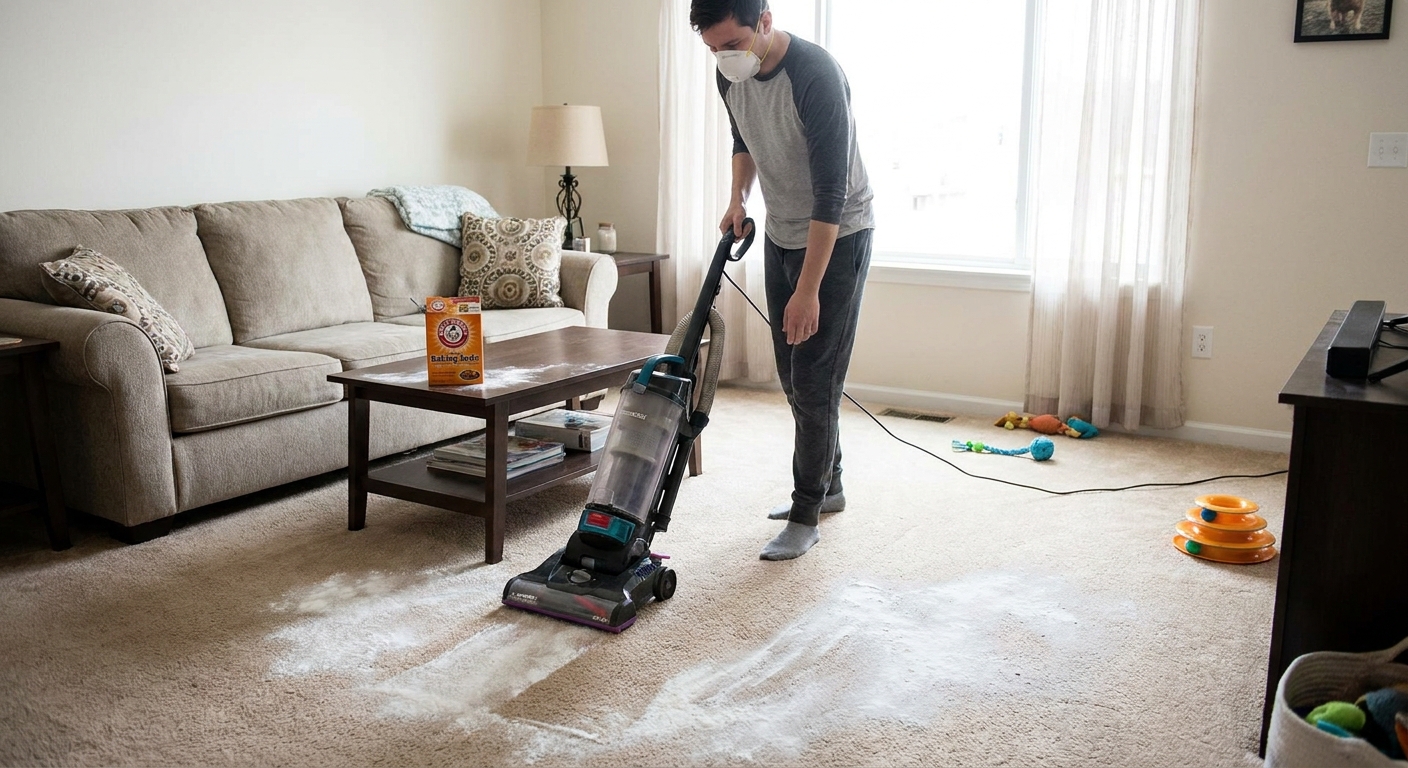
Air management that helps (no gimmicks)
You cannot “spray” the air clean forever, but you can absolutely make the house easier to live in while you work the problem.
- Activated carbon: If you have a HEPA air purifier with a carbon (charcoal) layer, run it continuously in the worst room.
- Frequent filter changes: If odor was heavy, change the HVAC filter again in 3 to 7 days. Filters can load up fast.
- Cross-ventilation: A box fan in one window blowing out, with a window cracked on the opposite side, can speed the purge.
Room-by-room: where skunk odor hides
Entryway and mudroom
- Clean hard floors and baseboards with the peroxide mix (spot test first).
- Wash door mats and runners, or replace if they are cheap and heavily contaminated.
- Wipe down doorknobs, light switches, and the lower portion of the door where pets brush by.
HVAC registers and returns
- Remove registers and wash with hot soapy water.
- Vacuum inside the boot (the duct section right below the register) with a hose attachment.
- Replace the filter again in 3 to 7 days if the smell was strong.
Bathrooms and laundry room
Skunk smell sometimes enters via vents or gets trapped by humidity.
- Check the bathroom fan exhaust outside for a nearby skunk hangout.
- Run the fan during and after cleaning to keep moisture down.
Crawlspace access and basement corners
- Check weatherstripping and door seals on crawlspace access panels.
- Look for gaps around sill plates and penetrations that need sealing after the animal issue is handled.
Kitchen pantry and fridge area (if the odor was intense)
- Check exposed foods and porous packaging (paper, cardboard). Strong odors can cling.
- Wipe exterior fridge seals and nearby cabinets if the entryway and kitchen are connected.
If you suspect a skunk under the house (or in a wall)
Here is the reality: if a skunk is denning under your home, odor removal will not stick until the animal is out and entry points are addressed.
What you can do right now
- Confirm without confrontation: Use your nose outside near vents and the foundation. Look for digging and tracks.
- Limit air movement: Keep the HVAC fan off and close interior doors to isolate areas.
- Do not block exits blindly: Trapping an animal inside can escalate odor and damage.
After removal: sealing and prevention (high level)
Once you are confident the skunk is gone, prevention is the next step. This article is focused on indoor odor, but generally you are looking at basics like repairing foundation vent screens, closing gaps with hardware cloth, and reducing attractants outdoors. If you want the yard-side checklist, check our skunk deterrence content on Grit & Home.
Quick pet containment (so you do not re-contaminate the house)
- If your dog was sprayed, bathe and rinse outside first if you can, then towel dry before coming back in.
- Keep the pet in an easy-clean area (laundry room, mudroom, or crate with washable bedding) until the smell is under control.
- Wash collars, harnesses, and leashes. They hold skunk oil like a grudge.
When to call a professional remediation company
I am all for DIY, but there are a few red flags where a pro is worth every penny.
Call for help if:
- You suspect a dead animal in a wall, attic, or crawlspace.
- The smell has been circulated through HVAC for multiple days and you cannot isolate it.
- You see soaked insulation, heavy contamination, or evidence of a den under living space.
- Anyone in the home has asthma or respiratory sensitivity and symptoms are flaring.
What pros typically do: source removal, insulation replacement where needed, controlled cleaning, HEPA air scrubbing, targeted deodorization, and sometimes duct cleaning.
Frequently asked questions
How long does skunk smell last in a house?
If the source is removed and you clean properly, you can often get major improvement in 24 to 72 hours. If skunk oils soaked into carpet padding, HVAC, or insulation, it can linger for weeks without deeper remediation.
Does vinegar neutralize skunk smell?
Vinegar can help with some odors, but skunk spray responds best to oxidizing solutions (like hydrogen peroxide mixes) and enzymatic products designed for sulfur compounds. Vinegar also adds its own strong smell, which can be a deal-breaker indoors.
Why does the smell come back when it rains or the heat turns on?
Humidity and warmth can re-activate skunk oils trapped in fabric, carpet, or dust. That is a clue you still have contaminated soft goods or an ongoing source near an intake, vent, or crawlspace.
A calm game plan
- Ventilate with cross-breeze and isolate rooms with doors.
- Change the HVAC filter and clean registers and the duct boot.
- Figure out pet vs structure using the odor pattern.
- Clean hard surfaces with the peroxide mix (spot test).
- Handle soft goods with laundry, baking soda, and enzyme cleaners.
- If you suspect a den, prioritize safe removal and sealing before chasing the smell.
Skunk odor is brutal, but it is not permanent. Approach it like any home project: isolate, diagnose, fix the root cause, then clean what is left behind. You have got this.
The 30-Second Cheat Sheet
Essential takeaways for: Skunk Smell in Your House? Neutralize It and Find the Source
Do this first (5 minutes)
- Open a few windows for cross-ventilation.
- Turn off the HVAC fan so you do not spread odor through ducts.
- Put on nitrile gloves and change into old clothes.
Figure out the source fast
- Pet sprayed: strongest on the animal or a few items, odor “tracks” from the door inward.
- Possible den under house: strongest near floor registers, basement stairs, crawlspace vents, or a single wall, and comes and goes.
Best DIY neutralizer (spot test first)
Mix fresh in an open bucket:
- 1 quart (4 cups) 3% hydrogen peroxide
- 1/4 cup baking soda
- 1 teaspoon liquid dish soap
Apply to washable hard surfaces, let sit 5 to 10 minutes, then wipe and rinse. Do not store it in a closed container.
Soft goods quick plan
- Wash textiles ASAP, use oxygen bleach or enzyme laundry booster if safe for fabric.
- Air dry first. Do not use the dryer until odor is gone.
- For carpet/upholstery: baking soda + vacuum, then a skunk-specific enzymatic cleaner used lightly.
Air and HVAC essentials
- Replace the HVAC filter immediately.
- Run a HEPA air purifier with activated carbon if you have one.
- Wash registers and vacuum inside the duct boot.
- Replace the filter again in 3 to 7 days if odor was heavy.
When to call a pro
- Dead animal suspected in wall/attic/crawlspace
- Insulation is contaminated or damp
- Odor was circulated through HVAC for days
- Health sensitivities are involved
💡 Tip: Scroll up to read the full article for detailed, step-by-step instructions.
⬆️ Back to top
About Marcus Vance
Content Creator @ Grit & Home
Marcus Vance is a lifelong DIY enthusiast and self-taught home renovator who has spent the last decade transforming a dilapidated 1970s ranch into his family's dream home. He specializes in budget-friendly carpentry, room-by-room renovations, and demystifying power tools for beginners. Through his writing, Marcus shares practical tutorials and hard-learned lessons to help homeowners tackle their own projects with confidence.