
🚨 In a DIY emergency or rush?
Skip the details and jump straight to our 30-second cheat sheet for the most crucial info.
If your sliding patio screen door suddenly takes two hands and a bad attitude to open, you are not alone. Screen doors are light, which makes them feel like they should glide forever. But the reality is the tiny rollers carry all the abuse: grit in the track, bent frames, sun-baked lubricant that turns into tar, and years of nudging the door closed with a hip while carrying groceries.
The good news is that most “sticking” screen doors are fixable in many cases in about an hour with basic tools. In my house, this is one of those weekend wins that feels way bigger than it is: the door rolls like new, the frame stops rattling, and you stop dreading using your own patio.
Quick note: This guide is for the common bottom-rolling style screen door. Some models are top-hung (supported from above) and the removal and adjustment steps can be different.
Quick diagnosis
Before you start taking anything apart, do a 60-second check so you fix the right problem.
- Door feels rough or crunchy while rolling: usually dirt, sand, pet hair, or hardened lubricant in the bottom track (and sometimes the top track).
- Door drags on the track or feels heavy: rollers are worn, seized, or adjusted too low. Sometimes the frame is slightly tweaked.
- Door rolls fine but catches or won’t latch: alignment issue, bent latch side, or rollers are uneven.
- Screen is torn or loose: that is a screen spline and mesh issue, not a roller issue. A torn screen will not make the door hard to slide unless the frame is bent.
My rule of thumb: If the door is hard to move even with the latch open and nobody is touching the screen mesh, you are dealing with track and roller hardware.
One more gotcha: Many patio setups have multiple channels. Make sure you are cleaning the screen door channel, not the glass door track next to it.
Tools and supplies
- Vacuum with crevice tool
- Stiff nylon brush or old toothbrush
- Rags or paper towels
- Mild degreaser or dish soap and warm water
- Flathead screwdriver and Phillips screwdriver
- Putty knife (helpful for packed gunk)
- Silicone spray or dry PTFE spray (the non-gumming kind)
- Replacement rollers if needed (bring the old ones to match)
- Work gloves and safety glasses
- A blanket or cardboard to lay the door on
Avoid: WD-40 as your final lubricant. It is handy as a cleaner or water-displacer, but in dirty tracks it often attracts grit and turns into sticky buildup. For longer-lasting results, use dry PTFE or silicone.
Remove the screen door safely
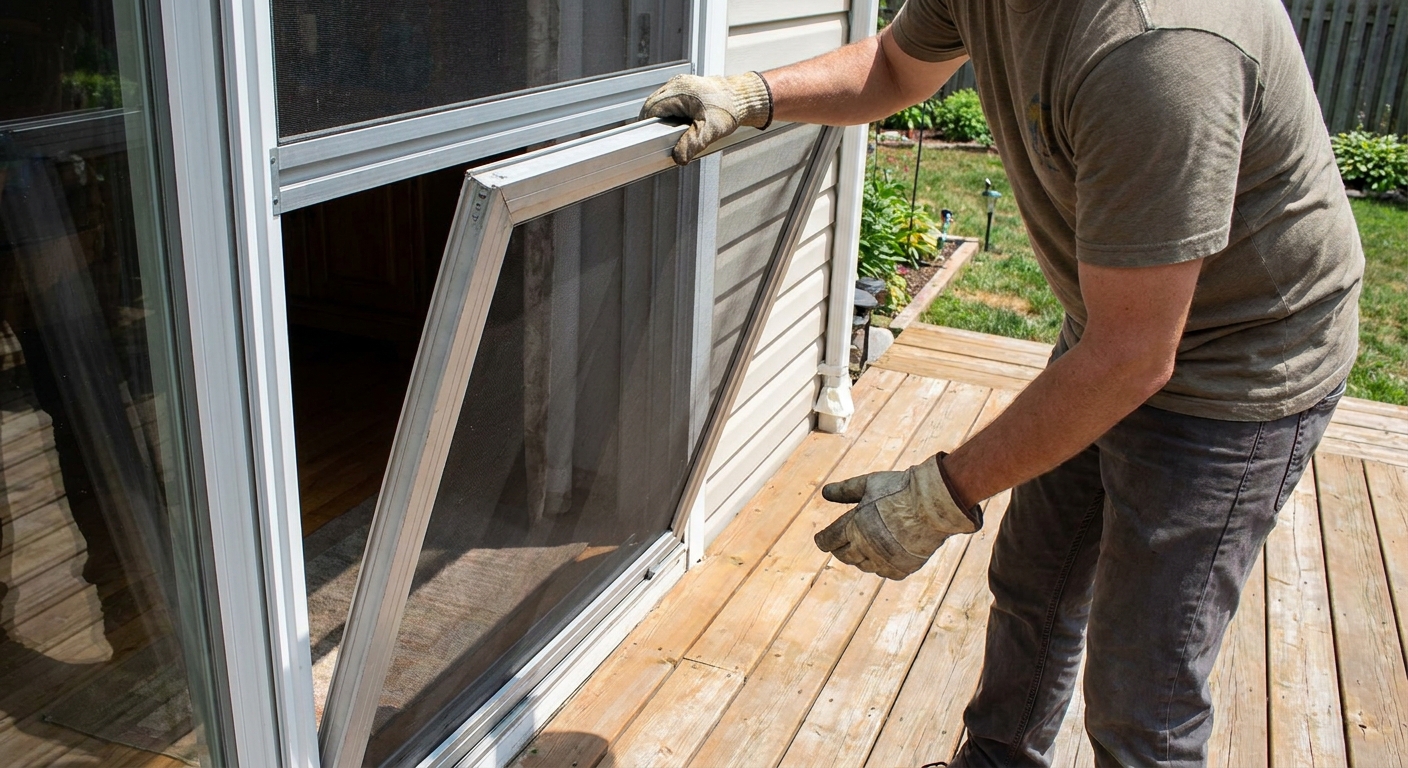
Screen door frames are easy to tweak. The trick is to lift the door up into the top track, then swing the bottom out. If your door is tall or wide, having a helper makes this much less awkward.
Step 0: Check for anti-lift stops
Some doors have anti-lift blocks, small brackets, or head stop screws in the top track that prevent the door from being lifted out. If you see them, loosen or remove them first.
Step 1: Find the roller adjustment screws
Look along the bottom edge on both ends, usually near the corners on the inside face of the frame. Many screen doors have small plastic plugs covering the adjustment holes.
- Direction varies by manufacturer. Turn the screw and watch what happens.
- Retract the roller: the door will sit lower in the track (helps you lift it out).
- Extend the roller: the door will sit higher in the track (helps it roll instead of dragging).
- Your goal for removal is to retract both rollers so the door clears the bottom lip of the track.
Step 2: Lift and pull out
- Open the door a few inches.
- Grip both sides near the middle.
- Lift the door up into the top channel as far as it will go.
- Pull the bottom edge toward you and out of the track.
- Then drop the door down and away from the top track.
Thrifty tip from my own mistakes: Do not pry the frame out with a screwdriver. One little twist can bow the aluminum and you will spend the rest of the day “adjusting” a door that used to be straight.
Lay the door flat on a blanket or cardboard so you do not rack the frame while you work on it.
Clean the tracks
If you only spray lubricant over dirty tracks, you get a temporary improvement followed by a sticky paste. The best fix is boring: remove the grit and the old gummed-up lubricant.
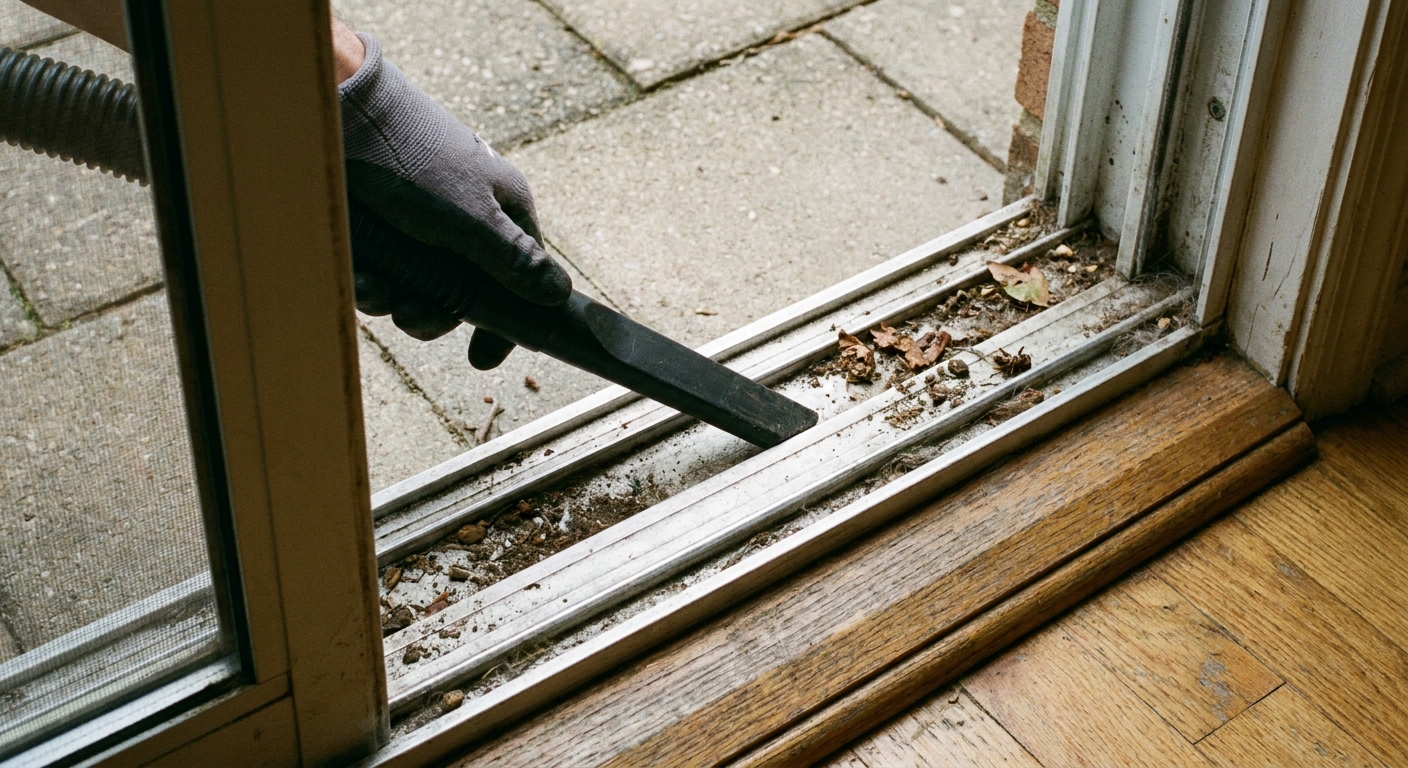
Step 1: Vacuum first
Use the crevice tool and get everything you can: sand, dead bugs, leaves, pet hair, and the little rocks that sound like popcorn when the rollers hit them.
Step 2: Scrape packed debris
Use a putty knife or flat plastic scraper to lift out packed gunk in the corners. Be gentle so you do not gouge the aluminum.
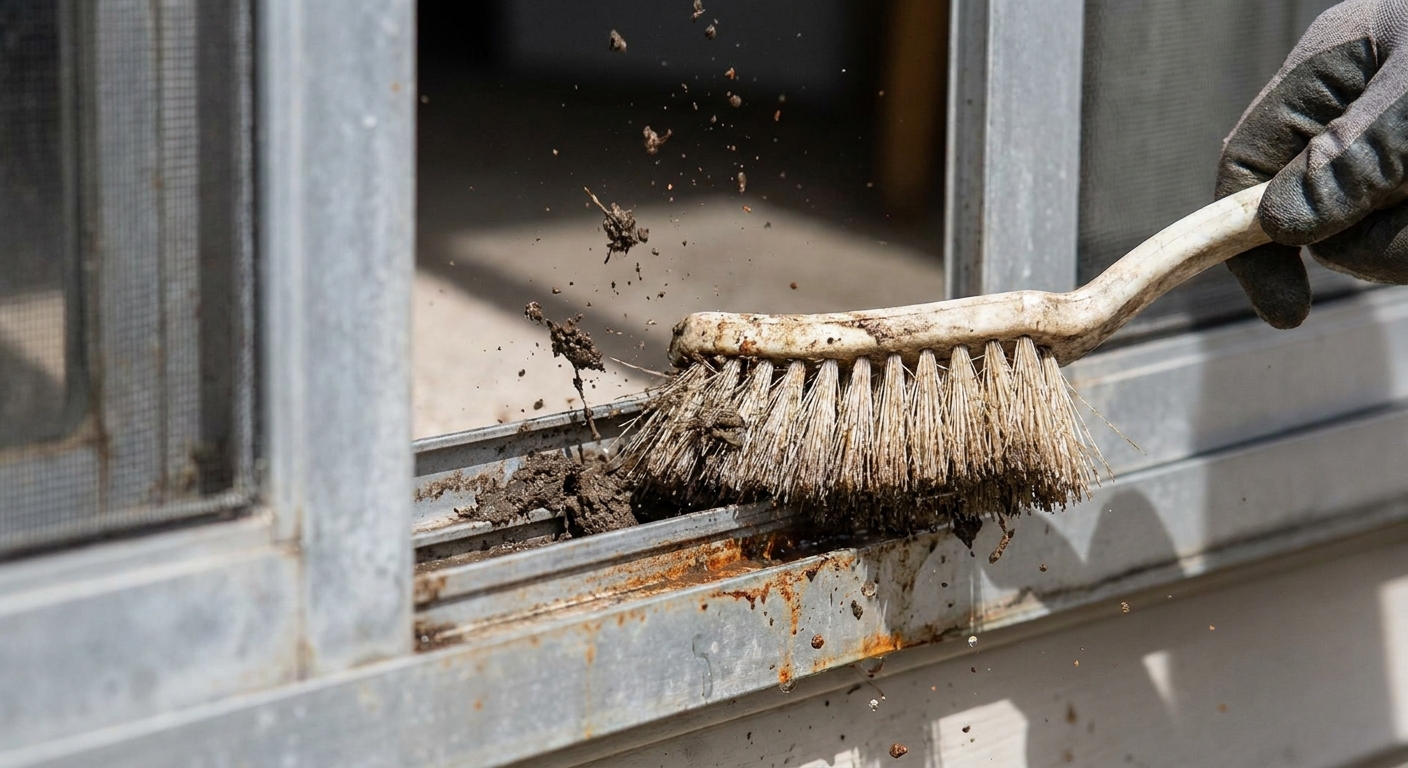
Step 3: Scrub with a mild degreaser
Mix dish soap and warm water or use a mild degreaser on a rag. Scrub the track until your rag stops coming up black.
- For stubborn, waxy buildup: let the cleaner sit for a couple minutes, then scrub again.
- Rinse with a damp rag and dry thoroughly.
Do not skip the top track
With the door off, run the vacuum and a damp rag through the top channel. Cobwebs, dead bugs, and gritty dust up there can cause drag and make the door feel like it is rubbing.
Watch for damage: If the track is dented inward or has a sharp burr, rollers will keep catching. Small burrs can sometimes be smoothed carefully with fine sandpaper. Major dents usually mean track repair or replacement.
Clean the door itself
With the door off, flip it gently and look at the bottom rail. This is where you usually find the real culprit: hair wrapped around the wheel, corrosion, or a wheel that no longer spins.
What to look for
- Hair and string wrapped around the axle: cut and pull it off.
- Flat-spotted wheel: looks worn on one side and will thump as it rolls.
- Wobbly wheel: axle is loose or the wheel is cracked.
- Wheel does not spin: seized bearing or corroded axle. Replace it.
If the roller is intact, cleaning it can buy you time. But if the wheel is chewed up or seized, replacement is the real fix.
Adjust the rollers
Before you replace parts, reinstall the door and try a proper adjustment. Many sticky doors are simply adjusted too low, so the frame drags.
Reinstall the door
- Set the top of the door into the upper track.
- Lift up, swing the bottom in, then lower it into the bottom track.
Dial it in
- Adjust one side a few turns, then the other.
- Your goal: the door is level, rolls smoothly, and the latch lines up without forcing it.
- If the door rubs the jamb on one end, raise that end slightly.
Beginner-friendly target: You want the rollers carrying the weight, not the bottom rail dragging, but you also do not want the rollers extended so far that the door can pop out of the track easily.
Replace rollers if needed
If adjustment and cleaning do not fix the problem, worn rollers are next. Rollers are cheap. The trick is buying the right ones.
Common roller styles
Screen door rollers vary by manufacturer, but most fall into a few recognizable styles. Bring the old roller assembly to the hardware store or take clear photos with a tape measure.
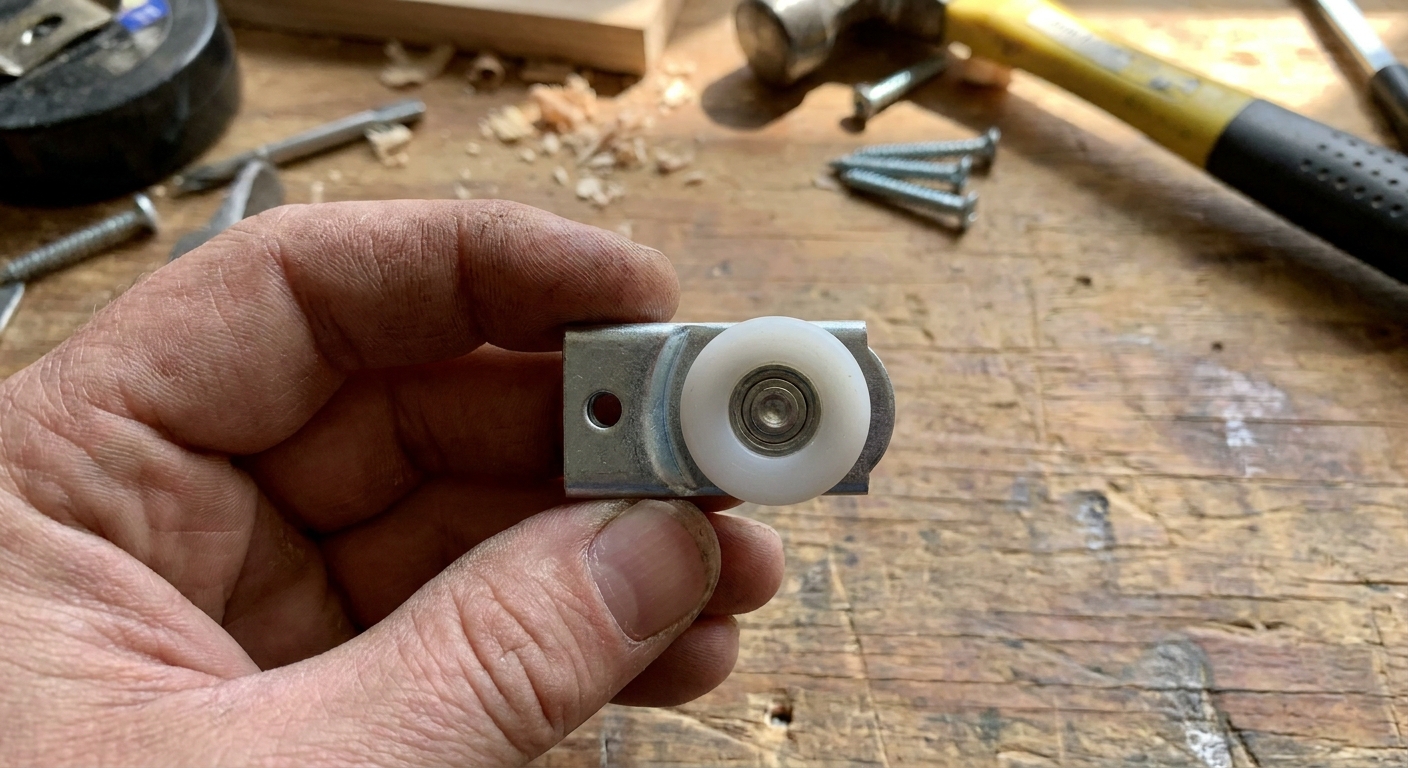
- Single wheel corner roller: one nylon or steel wheel in a small metal housing that screws into the corner.
- Tandem wheel roller: two wheels side-by-side for heavier or taller doors, less common on basic screens.
- Spring-loaded roller: the wheel pops down on a spring, then you fine-tune with the adjustment screw.
Matching tips
- Match by wheel diameter, housing shape, and screw hole location.
- Nylon is common and quiet. Steel can roll nicely on some tracks but may rust. In sandy or coastal areas, stainless hardware or sealed bearings is a worthwhile upgrade.
How to swap them
- Remove the door and lay it on a flat surface.
- Locate the roller housing at the bottom corners.
- Remove the screws holding the assembly, then slide it out.
- Install the new roller assembly in the same orientation.
- Start both sides with the rollers partially retracted so you can reinstall the door easily.
- Reinstall the door and adjust until it glides and latches.
Lubricants that will not gum up
After everything is clean and adjusted, a light lubricant helps, especially in dusty areas or coastal environments where grit and corrosion show up fast. The key word is light. You are not packing a wheel bearing.
Best options
- Dry PTFE spray: leaves a slick film that does not stay wet and attract as much dust.
- Silicone spray (non-petroleum): good general option for tracks and rollers, also less likely to turn into sticky sludge.
Avoid
- Grease: too thick, traps grit, turns the track into sandpaper paste.
- Oil-heavy sprays as a final lube: they often collect dirt fast in a doorway.
How to apply
- Spray onto a rag first, then wipe the track lightly.
- Open and close the door a few times.
- Wipe away any visible wet residue.
If it still sticks
Door rolls better off the track
This usually means the track is bent or the rollers are too low. Check for dents along the run where it sticks. Adjust rollers up slightly and test.
Door keeps popping off
Rollers may be adjusted too high, or the top guide is missing or worn. I once chased this for an hour before realizing a tiny top guide was cracked and letting the door wobble. Lower the rollers slightly and make sure the top track is clean so the door seats fully.
Door is smooth but will not latch
That is alignment. Adjust one roller up or down a turn at a time until the latch meets the keeper cleanly. If the keeper is adjustable, loosen and reposition it.
Frame looks bowed
If the door was forced out at some point, the aluminum can bend. Minor tweaks can sometimes be corrected by careful adjustment and ensuring the rollers share the load evenly. A severely bent frame may need replacement.
Success checklist
- Door glides with one hand (often one finger on a good day)
- No grinding or crunchy feeling
- Even gap to the jamb and the door looks level
- Latch closes without lifting, slamming, or forcing
Simple maintenance routine
- Vacuum the bottom track during regular house cleaning, especially after windy days.
- Wipe the track with a damp rag every month or two.
- Give the top track a quick pass occasionally too, especially if you see webs and debris.
- Reapply a light dry PTFE or silicone film once or twice a year after cleaning.
- If you have pets, check the rollers for hair wrap a couple times per season.
This is one of those tiny habits that protects the rollers, the track, and your patience.
The 30-Second Cheat Sheet
Essential takeaways for: Sliding Patio Screen Door Won’t Slide Smoothly? Clean Tracks and Replace Rollers
Most common cause
Grit and hardened old lubricant in the bottom track, plus worn or misadjusted rollers.
Fast fix order (do this in sequence)
- Vacuum the bottom track with a crevice tool.
- Wipe and vacuum the top track too while the door is off (cobwebs, dead bugs, and grit up there can cause drag).
- Scrub the aluminum track with warm soapy water or mild degreaser, then dry.
- Remove the screen door by retracting rollers, lifting into the top track, and swinging the bottom out.
- Clean the rollers and remove hair wrap and debris.
- Reinstall and adjust rollers until the door is level, glides easily, and latches without force.
- If it still drags or feels crunchy, replace both bottom rollers (they are cheap and fail as a pair).
Heads up
These steps apply to most standard bottom-rolling screen doors. A few models are top-hung and adjust differently.
How to remove the door safely
Retract both roller adjustment screws first, then lift the door up into the top channel and pull the bottom toward you. Check for anti-lift blocks or head stop screws in the top track and loosen/remove them if present. Do not pry on the frame.
Roller replacement tips
- Match by wheel diameter, roller housing shape, and screw hole placement.
- Bring the old roller assembly to the store or take photos with a tape measure.
- Nylon wheels are common and quiet. Steel or stainless wheels and sealed bearings can be worth it in sandy or coastal areas.
Best lubricants (won’t gum up)
- Dry PTFE spray
- Silicone spray
Apply lightly. Spray on a rag, wipe the track, cycle the door, then wipe off excess.
Avoid
- Grease in the track
- Oil-heavy sprays as the final lubricant (they often attract dirt in tracks)
When it’s not a roller problem
A torn screen mesh is a separate repair. If the door rolls fine but the screen is ripped or sagging, you likely need new mesh and spline, not new rollers.
💡 Tip: Scroll up to read the full article for detailed, step-by-step instructions.
⬆️ Back to top
About Marcus Vance
Content Creator @ Grit & Home
Marcus Vance is a lifelong DIY enthusiast and self-taught home renovator who has spent the last decade transforming a dilapidated 1970s ranch into his family's dream home. He specializes in budget-friendly carpentry, room-by-room renovations, and demystifying power tools for beginners. Through his writing, Marcus shares practical tutorials and hard-learned lessons to help homeowners tackle their own projects with confidence.