
🚨 In a DIY emergency or rush?
Skip the details and jump straight to our 30-second cheat sheet for the most crucial info.
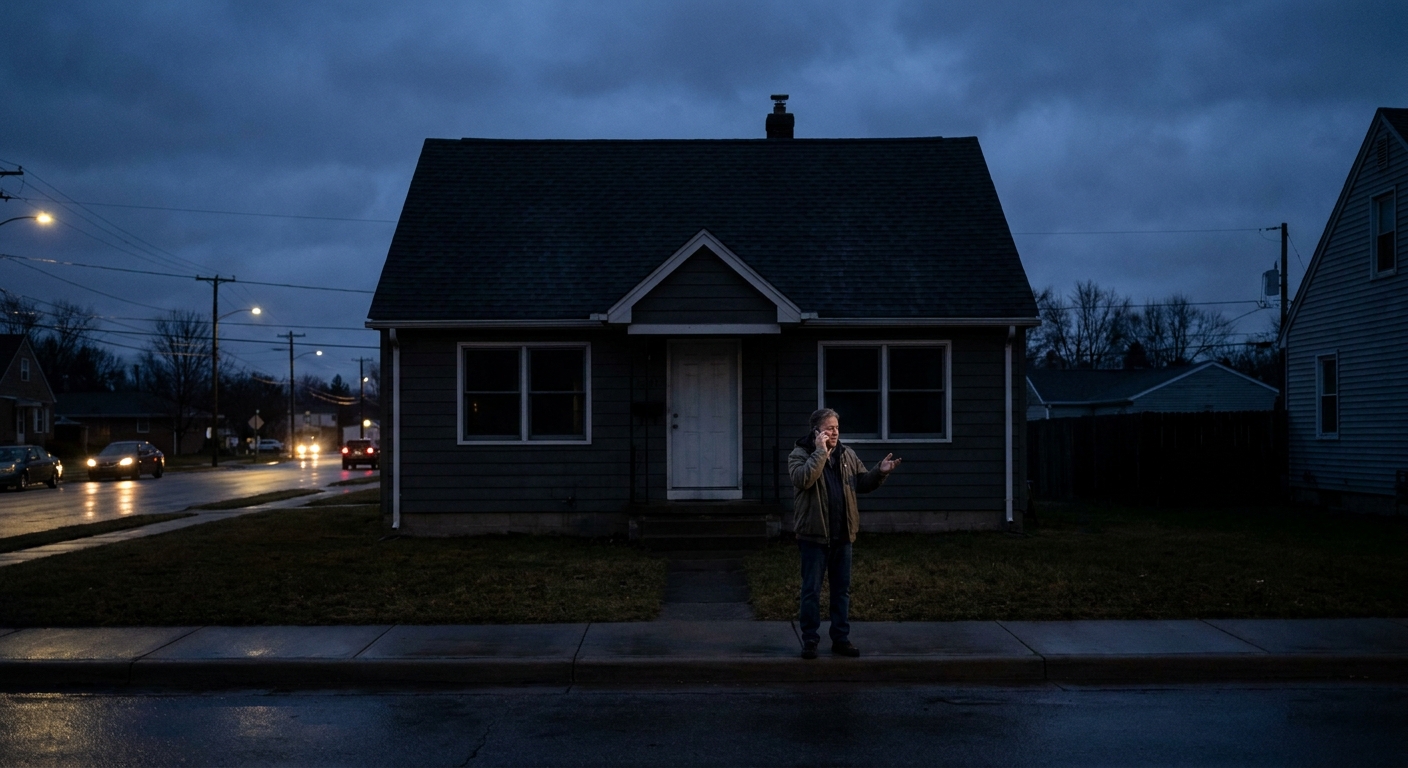
First, take the smell seriously
Natural gas and propane are odorized with a rotten egg or sulfur smell on purpose. If you catch that odor inside your home, treat it as a potential gas leak. Even a small leak can become dangerous if gas builds up and finds an ignition source.
I love a good DIY fix, but this is one of those moments where the safest move is fast, calm action and letting the pros and your utility do their job.
Emergency steps (do these in order)
1) Get everyone out, right now
- Evacuate people and pets.
- Leave the door unlocked if you can do it without delaying your exit.
- Move a safe distance away, ideally across the street or farther.
2) Do not create a spark or flame
This part surprises people, so I will be blunt. If you suspect gas, avoid anything that could ignite it.
- Do not flip light switches on or off.
- Do not use a garage door opener.
- Do not light candles, use lighters, or smoke.
- Do not start a car in an attached garage.
- Do not use a cell phone or a landline phone inside the house. Wait until you are outside and away from the building to dial.
3) Call for help from outside
- From outdoors and away from the building, call your gas utility emergency number.
- If you cannot reach the utility quickly, call 911 (or your local emergency number).
- If you live in a multi-unit building, notify the property manager once you are safely outside.
4) Leave the door behind you as you exit
If you are already at the exit, letting the door stay open behind you can help a bit. Do not delay to open windows or additional doors. Your goal is to leave, not troubleshoot.
What not to do while waiting
Once you are outside and have made the call, the safest thing you can do is keep the scene stable.
- Do not go back inside for keys, shoes, or your tool bag.
- Do not try to “sniff out” the leak room-by-room.
- Do not operate breakers, switches, thermostats, or exhaust fans.
- Do not assume it is “just the stove” and try to keep living normally.
- Do not let anyone re-enter until the utility or fire department says it is safe.
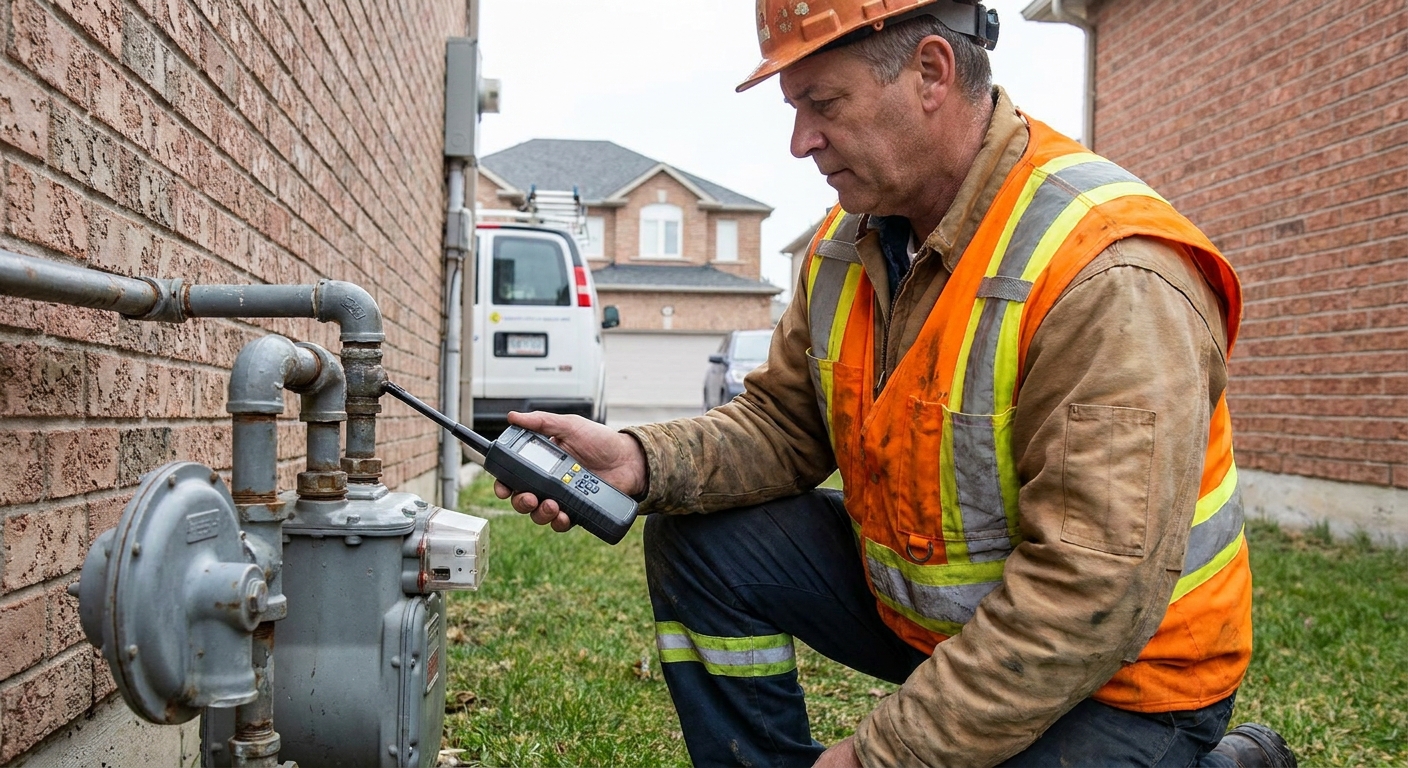
Natural gas vs propane: where it builds up
This is one of the most important practical differences for homeowners.
- Natural gas is lighter than air, so it tends to rise and collect in higher areas like upper rooms, ceilings, and attics.
- Propane is heavier than air, so it can sink and pool near the floor, in low spots, and in basements or crawlspaces.
Either way, treat any indoor gas smell as urgent and get out first.
If someone feels sick or you suspect carbon monoxide
Natural gas and propane leaks are different from carbon monoxide, but the two can overlap if an appliance is burning fuel poorly.
- If anyone has headache, dizziness, nausea, confusion, or shortness of breath, call emergency services and seek medical attention.
- If your carbon monoxide alarm is sounding, evacuate and call emergency services from outside, even if you do not smell gas.
Bottom line: symptoms plus any fuel-burning equipment is not a “wait and see” situation.
Common places gas leaks start
After the immediate danger is handled, it helps to understand where leaks commonly come from. These are the usual suspects I have seen in real homes, especially older ones like my 1970s ranch.
Stove and oven
- Burner left slightly on (no flame)
- Loose flex connector behind the range
- Worn valve or damaged fitting
Water heater
- Loose union or connector at the control valve
- Draft issues that cause strange odors near the burner area
- Old shutoff valve that no longer seals well
Furnace or boiler
- Leaking gas valve or sediment trap connections
- Cracked or loose fittings on black iron pipe runs
- Problems at startup that point to service needs
Dryer (gas models)
- Flex line kinked or rubbing the back of the machine
- Loose flare fitting
Fireplace, space heater, or outdoor lines
- Valve issues at the key shutoff
- Damage to lines from landscaping, settling, or corrosion
Propane tanks and regulators (propane homes)
- Regulator vent problems
- Loose connections at the tank or first-stage regulator
- Damaged copper line or fittings
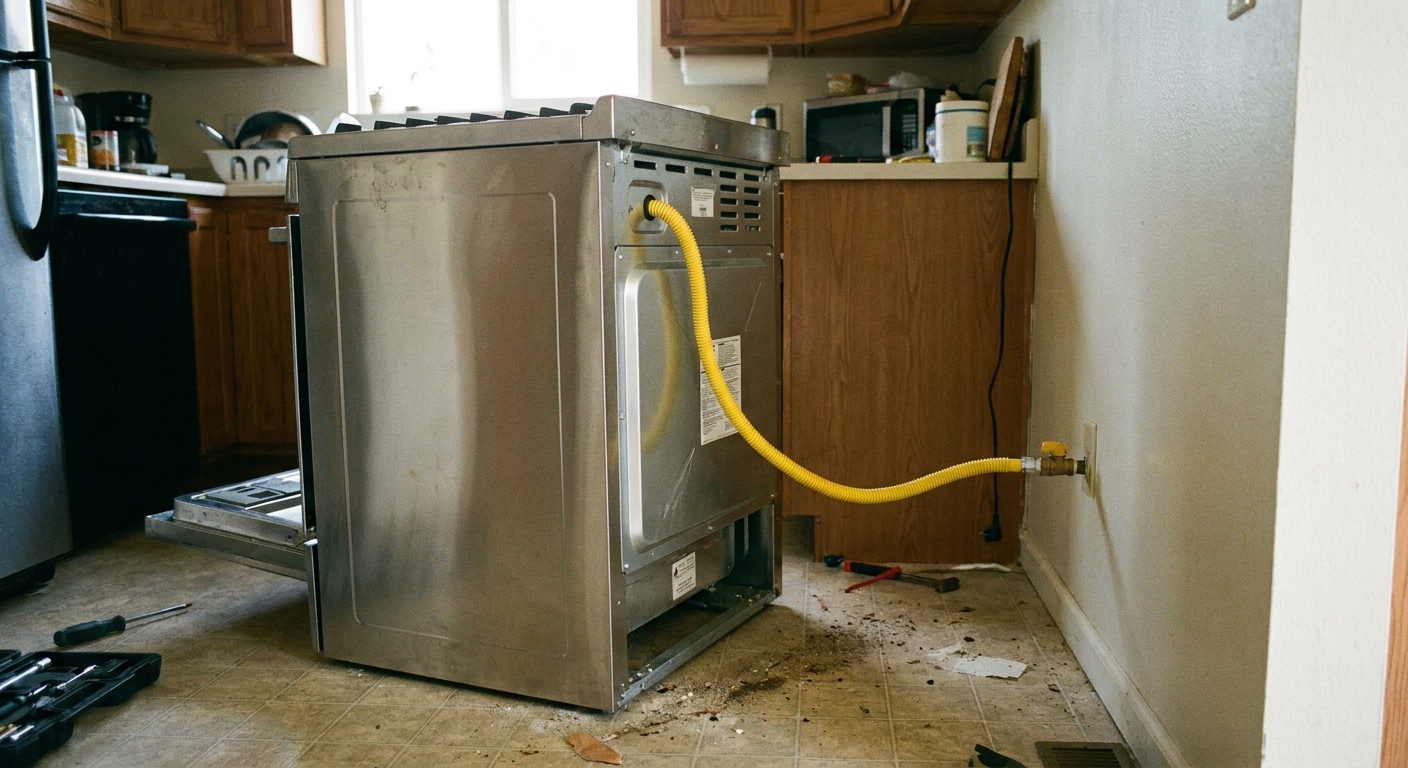
Can you shut off the gas yourself?
Sometimes yes, but only if it is immediately accessible and you can do it on the way out without delaying evacuation.
Appliance shutoff (behind a stove or near a water heater)
If you can reach the appliance shutoff valve safely and quickly, turning it a quarter turn to the off position can reduce flow. But do not crawl behind appliances if the smell is strong. Do not move a stove if you suspect the flex line is leaking.
Main gas shutoff at the meter (natural gas)
Main shutoff valves are typically outside near the meter. Many require a wrench to turn. If you are trained and have the right tool, you can shut it off. If you are not sure, wait for the utility. Also note: in many areas, once the main is shut off, only the utility can legally turn it back on after safety checks.
My rule: if shutting it off is not a 10-second decision with zero doubt, skip it and focus on getting out and calling.
After you are cleared to go back in
Once the utility or fire department has cleared the immediate hazard, you may be told the leak is on the “customer side” of the meter or at an appliance. That usually means you need a licensed plumber or HVAC tech. Still, there are a few safe, basic checks you can do only after clearance and only if you feel comfortable.
Do a quick visual inspection
- Look for a kinked, crushed, or rubbing flex connector.
- Check that appliance shutoff valves are fully off or fully on, not stuck in between.
- Look for corrosion or soot around appliance burner areas (a service clue, not a DIY fix).
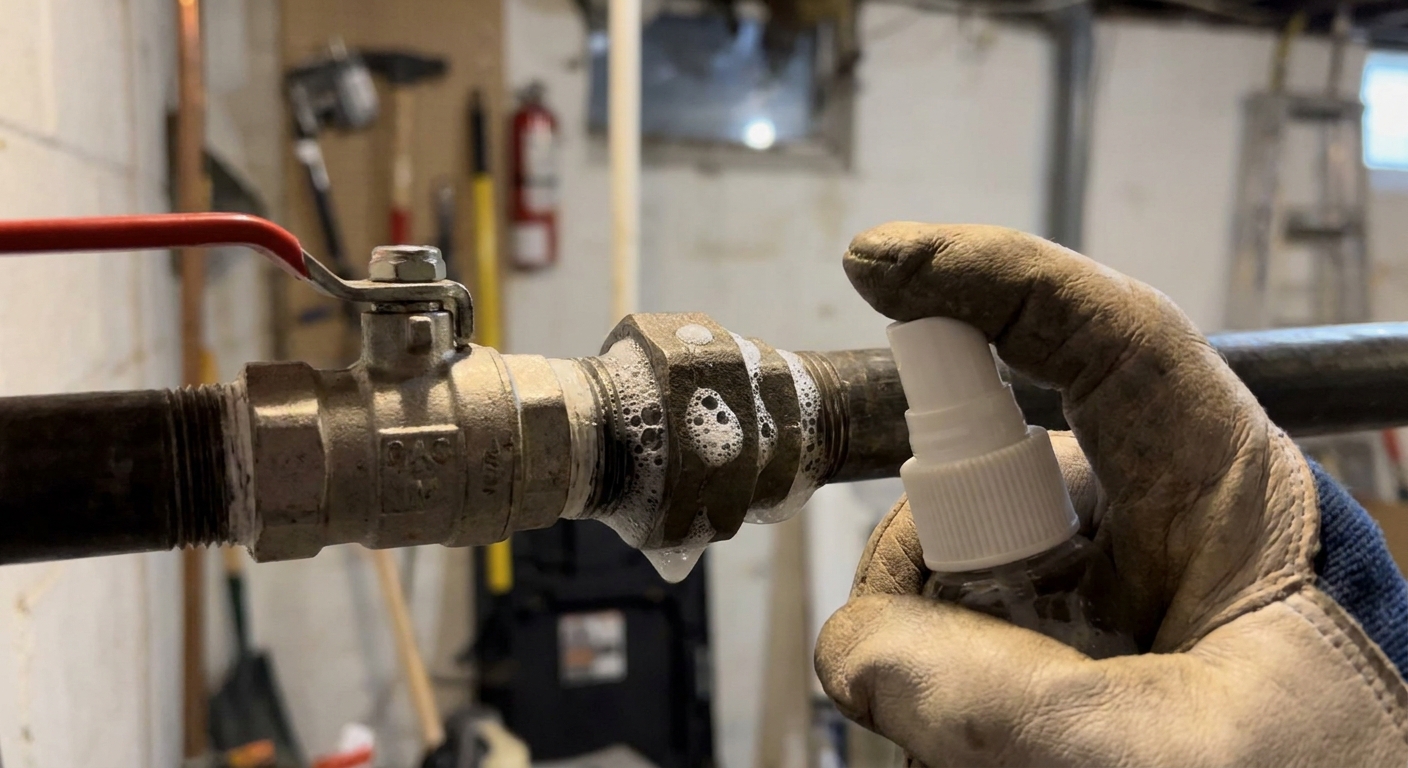
Use a soap-and-water bubble test
With the area ventilated and no ignition sources, you can apply a soapy water solution to an accessible fitting and watch for growing bubbles. If you see bubbles, turn the gas back off and call a pro. Do not do this on hot surfaces, inside burners, or in places you cannot reach safely.
Skip “leak detector” gadgets that replace proper testing. If you are getting bubbles or odor, you already have enough information to call for repair.
When a pro must handle the repair
These are not “maybe” situations. Bring in a licensed plumber, HVAC technician, or your propane provider.
- The utility tags the appliance or shuts off service until repairs are made.
- The leak is in black iron pipe, inside walls, under floors, or in the attic.
- You suspect a bad gas valve, regulator, or control module.
- The smell returns after you thought it was resolved.
- Any sign of scorching, soot, or damaged venting on a furnace or water heater.
Gas work is heavily code-driven for good reason. A small mistake can become a big one fast.
How to prevent the next scare
- Install and maintain CO alarms outside sleeping areas and on each level.
- Replace old appliance connectors when appliances are moved or upgraded, using the correct listed connector.
- Do not store flammables near furnaces and water heaters.
- Schedule routine service for your furnace and check venting on fuel-burning appliances.
- Teach the household plan: get out, no switches, call from outside.
Quick answers
What does a gas leak smell like?
Often like rotten eggs or sulfur. Some people describe it as “skunky.” If you smell it indoors, act immediately.
What if I only smell gas for a second?
It can still indicate a real issue, especially near appliances at startup. If it is inside the home and noticeable, treat it as urgent and call.
Should I open windows?
Do not delay evacuation to ventilate. If a door ends up open as you leave, fine. Otherwise, get out and call from outside.
Can I relight pilot lights myself?
Only after the utility has cleared the home and you have the manufacturer instructions. If you are unsure, schedule a service call.
The 30-Second Cheat Sheet
Essential takeaways for: Smell Gas in Your House? What to Do Right Now
If you smell natural gas or propane inside
- Get everyone out immediately, including pets.
- Do not flip switches, use garage door openers, light matches, smoke, or use anything that can spark.
- Do not use a cell phone or landline inside. Wait until you are outside and away from the home to call.
- From outside and away from the house, call your gas utility emergency line. If you cannot reach them fast, call 911.
- Do not re-enter until the utility or fire department says it is safe.
While you wait
- Keep others away from the home.
- Do not start vehicles in an attached garage.
- If anyone feels sick (headache, dizziness, nausea, confusion), call emergency services and seek medical care.
How gas behaves indoors
- Natural gas is lighter than air and tends to rise and collect higher up.
- Propane is heavier than air and can sink and pool in low spots like basements, crawlspaces, and near floors.
Common leak sources
- Stove or oven valves and flex connectors
- Water heater control valve and fittings
- Furnace gas valve, pipe fittings, or sediment trap connections
- Dryer flex connector
- Propane regulator or tank connections (propane homes)
After you are cleared to go back in
- If the utility says the leak is on your side, schedule a licensed plumber or HVAC tech.
- You can do a visual check for kinked or damaged connectors.
- Only after clearance, you can do a careful soap bubble test on accessible fittings. If you see bubbles, shut off gas and call a pro.
💡 Tip: Scroll up to read the full article for detailed, step-by-step instructions.
⬆️ Back to top
About Marcus Vance
Content Creator @ Grit & Home
Marcus Vance is a lifelong DIY enthusiast and self-taught home renovator who has spent the last decade transforming a dilapidated 1970s ranch into his family's dream home. He specializes in budget-friendly carpentry, room-by-room renovations, and demystifying power tools for beginners. Through his writing, Marcus shares practical tutorials and hard-learned lessons to help homeowners tackle their own projects with confidence.