
If a smoke detector is chirping every 30 to 60 seconds, it is usually trying to tell you something simple: the battery is low, the unit is reaching end-of-life, or something is interfering with the sensor or power. On many models, you can fix it quickly with a fresh battery, a vacuum, and a clear process. If yours turns out to be the exception, the steps below will still help you pinpoint why.
I have been there at 2 a.m. with a step stool and a flashlight, trying to figure out which alarm is yelling at me. Use the flow below and you will narrow it down quickly without guessing.
Chirping vs. beeping
Most alarms make a few very different kinds of noise, and the pattern matters. The tricky part is that codes vary by manufacturer, so treat these as common rules, not universal ones.
- Chirp: a quick, single “peep” every so often. This is commonly low battery, end-of-life, or a trouble condition (sensor, power, or wiring).
- Alarm pattern: loud beeping in a repeating pattern. This can mean smoke, CO (if combo unit), or an urgent fault.
Safety first: If you smell smoke, see haze, or anyone has symptoms like headache, dizziness, nausea, or confusion, do not troubleshoot. Get everyone outside and call emergency services. Remember that CO can be odorless, and many combo alarms have their own CO patterns (often different from smoke).
Check the code (fastest answer)
If you want the most definitive answer fast, look up your unit’s exact beep or chirp code:
- Check the back label (you may need to twist the alarm off the bracket).
- Look for a printed chart, a QR code, or a model number you can search.
- Check the manual for LED colors and flash patterns.
This matters because “chirp every 45 seconds” or “3 chirps every minute” can mean different things across brands and combo units.
Quick silence and test flow
Work through these steps in order. This prevents the common mistake of swapping batteries in the wrong unit or ignoring an end-of-life warning.
Step 1: Find the noisy unit
- Stand under each detector and listen. A chirp can echo in hallways and make the wrong detector seem guilty.
- Look for an LED indicator. Many units flash a light pattern that matches the chirp.
- What you are looking for: often a steady periodic flash is normal, while a different color (sometimes amber/yellow) or a faster or grouped flash can indicate trouble. The exact meaning depends on the model.
Step 2: Use Hush if you need a minute
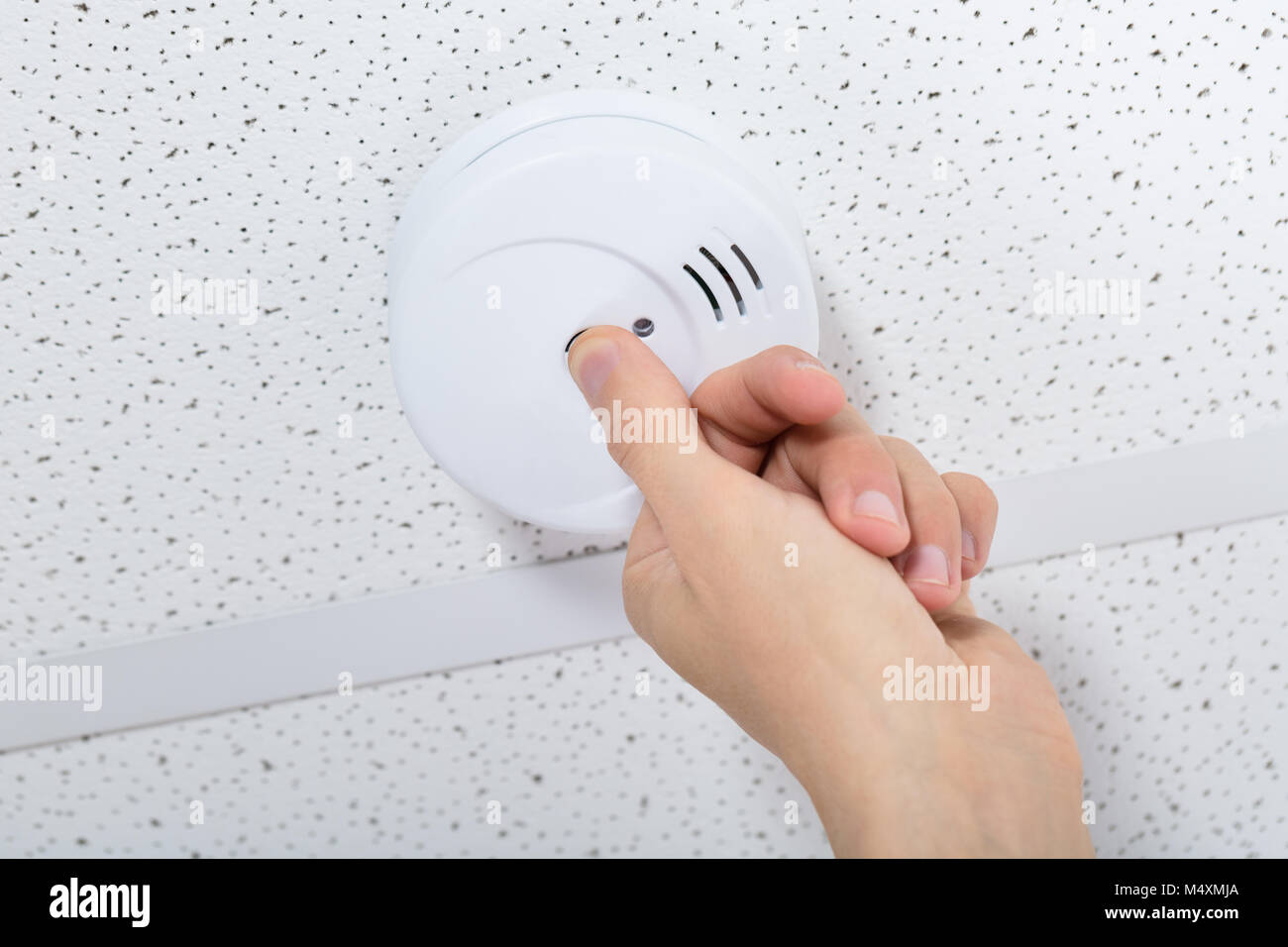
- Press Hush/Silence (or the combined Test/Hush button) if the noise is making it hard to work.
- Important: Hush is mainly designed for nuisance smoke alarms (like cooking or steam). On many models it will not permanently silence a low-battery or end-of-life chirp. At best, it may quiet it briefly.
Step 3: Replace the battery the right way
- Use a brand-new battery, not one from the junk drawer.
- Match the type exactly (AA, AAA, 9V, lithium pack). Do not force a different style.
- Check orientation and make sure the battery door fully latches.
Pro tip from my own mistake: A half-latched battery door can chirp even with a fresh battery because the alarm thinks the battery is missing.
Step 4: Test after reseating
- Press Test. A healthy alarm should sound loudly.
- If the unit will not test, or it is very old, skip ahead to the replacement section.
Step 5: Reset (if your model recommends it)
Some detectors can keep a “low battery” or “trouble” state until you clear residual power, but reset steps are manufacturer-specific. If your manual recommends a reset, this is the common approach:
- Battery-only unit: remove the battery, hold Test for 15 to 20 seconds, reinstall the battery, then test again.
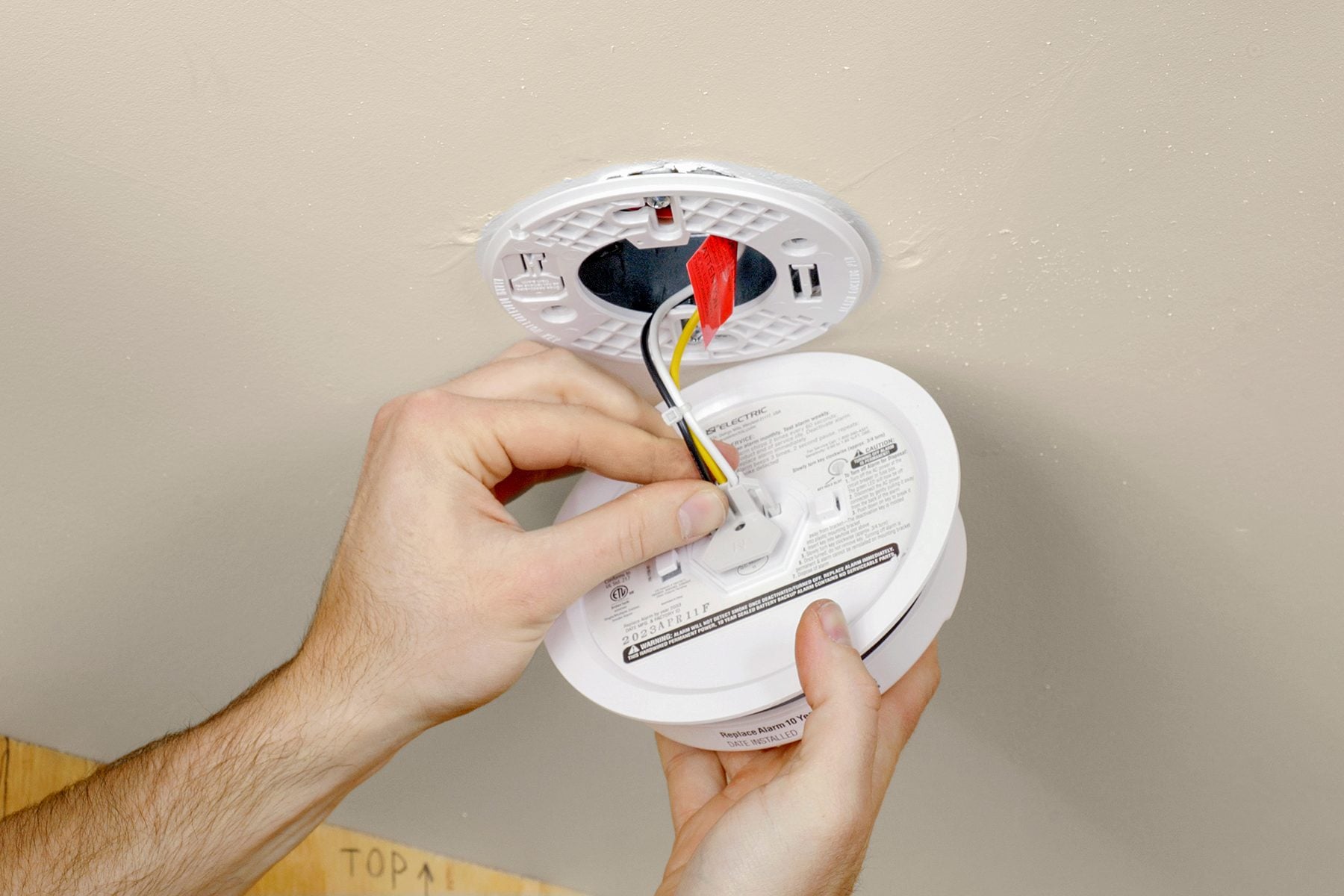
- Hardwired with battery backup: turn off the breaker that feeds the alarms, remove the detector from the bracket, unplug the connector, remove the backup battery, hold Test for 15 to 20 seconds, reconnect everything, restore power, then test.
If you are not comfortable at the breaker panel, stop and call an electrician. Never work on wiring with power on.
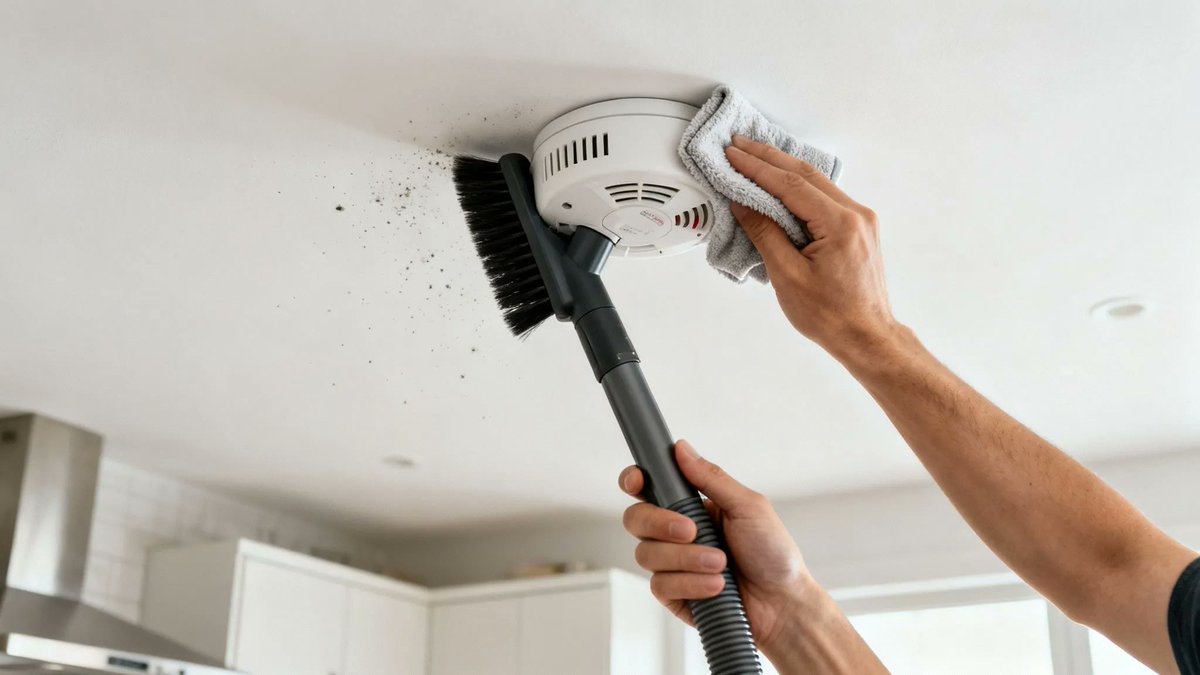
Step 6: Clean for dust and bugs
Dust, sanding residue, and tiny bugs can cause false chirps or trouble signals. This is common after renovations.
- Vacuum the outside vents using a soft brush attachment.
- Blow out vents with canned air in short bursts.
- Wipe the exterior with a dry microfiber cloth.
Avoid spraying cleaners or paint near alarms. Aerosols can coat sensors.
Low battery vs end-of-life
This is the big fork in the road. A fresh battery fixes one. The other means the alarm has timed out and needs replacement.
Low battery signs
- Intermittent chirp, commonly around every 30 to 60 seconds (but the timing varies by model).
- Often happens at night when temperatures drop and battery voltage dips.
- Stops after installing a fresh battery and, on some models, a reset.
End-of-life signs
- Chirp pattern continues even with a new battery.
- Some alarms use a distinct cadence (for example, multiple chirps in a row every minute), but the exact pattern varies.
- Manufacture date is typically around 10 years ago for smoke alarms, but you should always check the label. Combo units may have different replacement timelines, and CO sensors are often shorter (commonly 5 to 7 years).
Why replacement matters: Smoke alarm sensors become less reliable as they age. The chirp is not a sales gimmick. It is a safety timer.
If your alarm is past its replacement age per the label, swap it. Do not keep feeding it batteries.
Hardwired alarms that chirp
Hardwired alarms are great, but they can be confusing because you have two power sources: household power and a backup battery.
Common causes
- Backup battery is low or missing. Even though the alarm is hardwired, it still needs a healthy backup battery.
- Loose wiring connector at the back of the unit.
- Loss of AC power from a tripped breaker, switched circuit, or electrical issue. Some models chirp for an AC power fault.
What to do
- Replace the backup battery first, then test.
- Confirm the connector is firmly seated.
- Check the breaker labeled smoke alarms (or the circuit that feeds them). If it trips repeatedly, call an electrician.
Safety warning: If you see damaged insulation, scorch marks, or smell electrical burning, leave power off and call a pro.
Interconnected alarms and echo confusion
In many homes, alarms are interconnected so if one senses smoke, they all sound. The annoying side effect is that a chirp can echo and make it seem like multiple units are chirping.
Also, in some interconnected systems, a trouble condition in one unit can affect the network. In many others, the trouble chirp is local to the problem alarm. Either way, the goal is the same: find the one unit that is actually unhappy.
How to diagnose
- Start with the alarm showing the unusual LED pattern or chirping most consistently up close.
- Replace the battery in that unit, then test and follow any reset steps in the manual.
- If the chirp persists, check the manufacture date. One expired unit in a group of same-age alarms is a very common culprit.
If you still cannot find it
Do a controlled process:
- Label each alarm location (Hallway, Master, Basement, etc.).
- Work one unit at a time: battery, latch, test, then wait a couple minutes.
- If the units are all near end-of-life age, replace them as a group so they match and age together.
Mixing brands on an interconnected system is a common headache. When possible, replace with the same brand and a model line listed as compatible with your existing wiring harness.
Other causes
Project dust and seasonal grime
If you recently sanded drywall, cut wood, or had contractors in and out, clean the alarm thoroughly. Fine dust loves to live in sensor vents.
Humidity, steam, and temperature swings
- Bathrooms, near kitchens, and near attic access points are common problem spots.
- Relocate alarms if they are too close to a shower or cooking area, following local code and manufacturer spacing rules.
Wrong battery type or a weak new battery
Some alarms are picky about battery chemistry. If a brand-new battery still chirps, try a different new battery from a reputable brand, then test again.
Combo smoke and CO alarms
Combination units can chirp for CO sensor end-of-life even if the smoke sensor seems fine. If the unit is giving a repeating alarm pattern and anyone feels unwell, treat it as potentially serious and get outside. Then check the back label or manual for the exact meaning of that pattern.
When to replace the detector
Replace the whole unit if:
- It is at or past the replacement age on the label. Many smoke alarms are designed for 10 years, but always verify for your model. Combo units may be shorter.
- It chirps after a new battery and any manufacturer-recommended reset.
- It will not test properly.
- The case is yellowed, cracked, or contaminated by paint or heavy dust.
If you are replacing one hardwired alarm in an interconnected system, consider replacing all units of similar age. You will save yourself a lot of midnight ladder trips later.
If you are shopping anyway, consider a photoelectric or dual-sensor smoke alarm where appropriate, and follow local code for placement and type.
Smoke detector chirping FAQ
Why does it chirp mostly at night?
Battery voltage can dip slightly in cooler temperatures. Nighttime often reveals a borderline battery first.
My smoke detector has a sealed 10-year battery and it is chirping. Now what?
Sealed-battery models are designed to be replaced when they chirp end-of-life or fault. You can try the hush button to buy time on some models, but you will need a new unit soon.
Can I just remove the battery to stop the noise?
Temporarily, yes. Safely, no. If you must silence it while you go buy a replacement, leave a note on your door or keys so you do not forget to reinstall or replace it. A disabled smoke alarm is a real risk.
How many smoke detectors should I have?
Rules vary by location, but a common standard is inside each bedroom, outside sleeping areas, and on every level of the home. When in doubt, follow your local building code and the manufacturer instructions.
My 2 a.m. checklist
- Confirm there is no smoke or CO danger. If anyone feels sick, get outside.
- Find the exact unit chirping (do not trust the echo).
- Install a fresh battery and latch the door.
- Test the unit.
- If the manual recommends it, reset (battery out, hold test, restore power).
- Vacuum the vents.
- Check the date and the back label codes. If it is old, replace it.
If you work through that list and it still chirps, it is usually a failing unit, a model-specific trouble code, or a compatibility issue on an interconnected system. At that point, replacement or a call to an electrician is the smart move.

About Marcus Vance
Content Creator @ Grit & Home
Marcus Vance is a lifelong DIY enthusiast and self-taught home renovator who has spent the last decade transforming a dilapidated 1970s ranch into his family's dream home. He specializes in budget-friendly carpentry, room-by-room renovations, and demystifying power tools for beginners. Through his writing, Marcus shares practical tutorials and hard-learned lessons to help homeowners tackle their own projects with confidence.