
🚨 In a DIY emergency or rush?
Skip the details and jump straight to our 30-second cheat sheet for the most crucial info.
If your snow blower won’t start, don’t panic and don’t start buying parts yet. Most no-start problems come down to a handful of basics: stale fuel, the choke not set right, a flooded engine from too much priming, a dirty spark plug, or a carburetor that’s gummed up after sitting.
I’ve been there. The first winter in our fixer-upper I yanked the cord until my shoulder hurt, convinced the machine was “dead.” Turns out the fuel was last season’s and the safety key wasn’t fully seated. Five minutes later it fired right up and I learned a lesson I keep re-learning in DIY: start with the simple stuff.
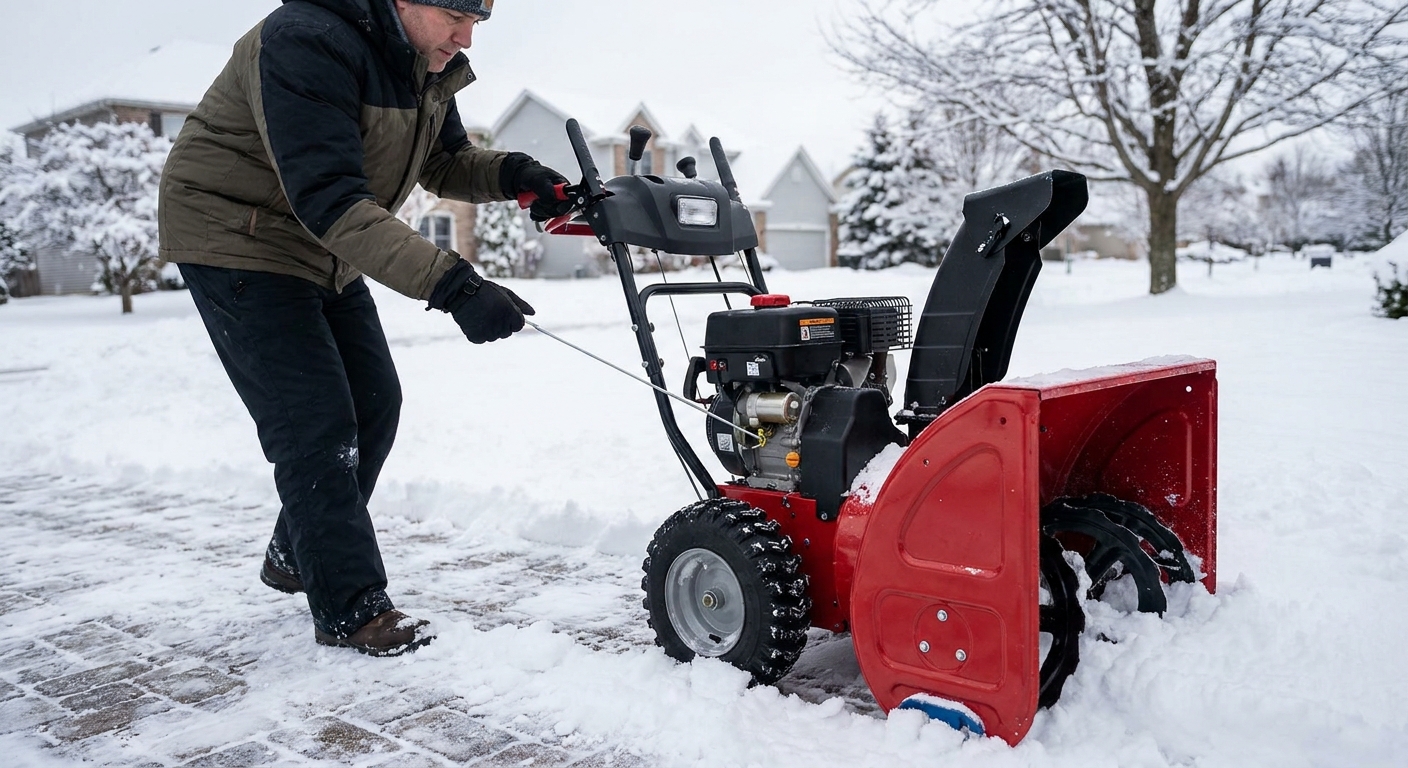
Work through this checklist in order. It’s organized to go from fastest, most common fixes to the slightly messier ones.
Safety first (30 seconds)
Snow blowers are small engines with big consequences. Before you poke around:
- Turn the engine off and let it cool if it has been running.
- Remove the ignition key and keep it in your pocket.
- Work in a well-ventilated area and keep sparks and flames away from fuel.
- Disconnect the spark plug wire if you’ll be working near moving parts.
- Never clear the auger by hand. Use the clean-out tool if your machine has one.
Quick diagnosis (pick your path)
- It won’t fire at all: start with key, switch, oil level, fresh fuel, then spark.
- It fires for a second then dies: often fuel delivery (fuel cap vent, carb, stale fuel).
- It runs only on choke: classic carb or fuel restriction symptom.
Quick checklist: the most common “won’t start” culprits
1) Check the oil level
This is quick and it matters. Some snow blowers have a low-oil shutoff that can prevent starting (or make it start and die). Even without a sensor, running low is a fast way to ruin an engine.
- Park on a level surface and check the dipstick per your manual.
- Top off with the recommended oil if needed.
2) Is the safety key fully inserted?
This gets more people than you’d think. Many snow blowers will crank but never spark if the key is missing or only half-seated.
- Push the key in firmly.
- If the key is cracked or bent, replace it. They are cheap and model-specific.
3) Is the fuel valve on (if equipped)?
Some machines have a fuel shutoff valve under the tank or along the fuel line. If it’s perpendicular to the line, it’s usually off.
4) Are you using fresh fuel?
Stale gas is one of the most common reasons seasonal equipment won’t start. Depending on how it’s stored (temperature swings, vented cans, ethanol blends), gas can start to go stale in as little as 30 to 60 days, and it often causes real trouble within 1 to 3 months.
- If the fuel is from last winter, drain it (tank and carb bowl if you can) and refill with fresh fuel.
- If you can, use ethanol-free fuel for small engines.
- If you must use E10, add a fuel stabilizer when you buy the gas, not after it has been sitting for months.
My rule: If I can’t remember when I filled the can, it’s old.
5) Is the on/off switch in the right position?
Sounds obvious, but in winter gloves and low light make fools of us all. Confirm the switch, knob, or toggle is set to ON and the throttle (if separate) is set to FAST for starting.
Starting steps (choke and primer)
Different brands vary, but most snow blowers want the same basics for a cold start: choke on, prime a few times, then choke off gradually once it catches.
Cold start
- Throttle: Set to FAST (or RUN if that’s what yours says).
- Choke: Set to FULL CHOKE.
- Primer: Press 2 to 3 times. If it’s extremely cold, you might need 4, but start conservative.
- Pull start: Pull the cord with a smooth, strong pull. Don’t “machine-gun” short pulls.
- Once it fires, move the choke toward HALF for 10 to 30 seconds, then to RUN/OFF choke as it warms.
If you think you flooded it
Flooded means there’s too much fuel in the cylinder, so the spark can’t light it.
- Set choke to OFF (or RUN).
- Do not prime.
- Pull start 5 to 10 times.
- Optional (more aggressive): Remove the spark plug, keep the plug wire disconnected (ignition disabled), and pull the cord a few times to clear excess fuel from the cylinder. Dry the plug, reinstall, then try again with no choke and no prime.
- If it starts and sputters, ease it back to life with a little choke, then off again.
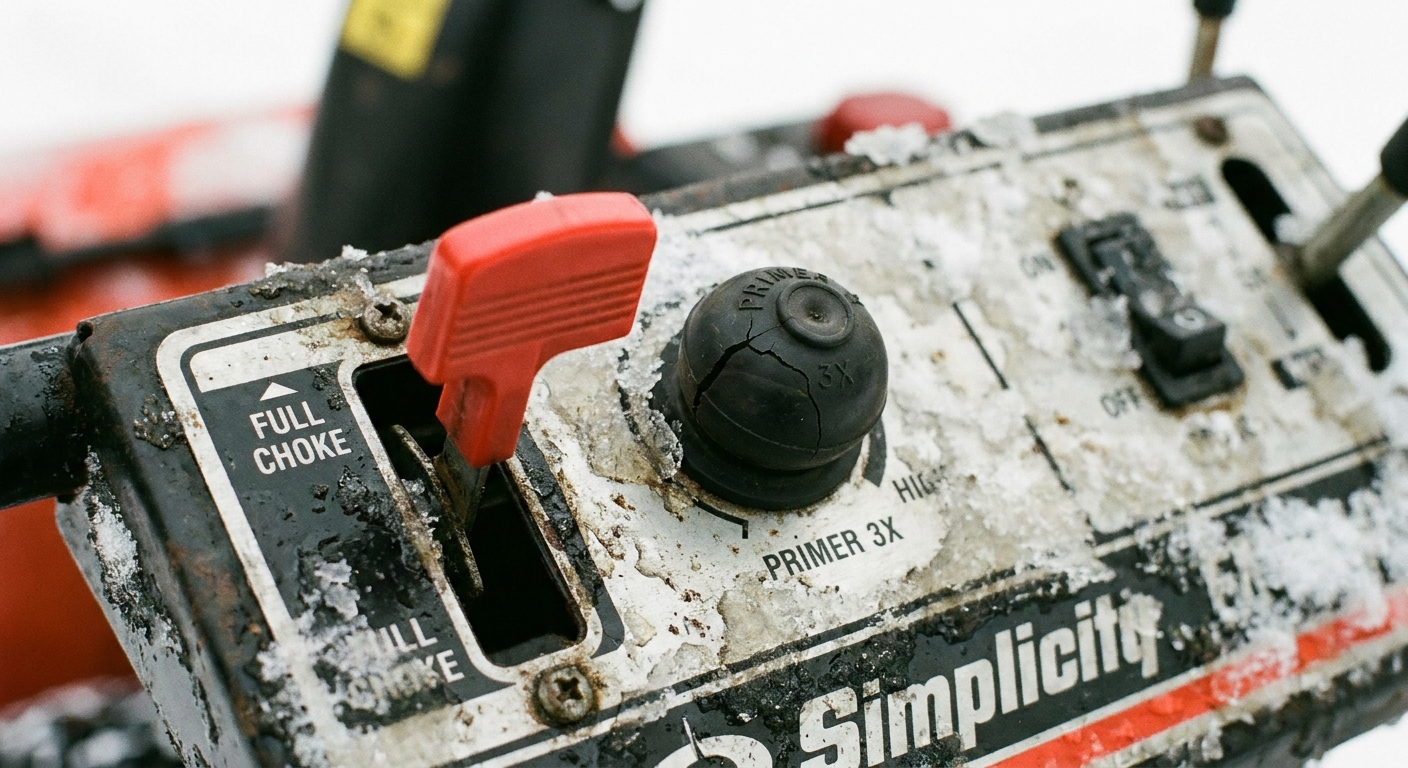
Primer bulb not working?
If the primer bulb is cracked or never gets firm, the fuel line could be leaking or the bulb itself is failing. That can make cold starts miserable. Replacement bulbs and fuel lines are usually inexpensive, but if you smell strong fuel or see wetness, fix leaks before trying again.
Spark plug checks
If fuel and starting procedure look right, your next fastest win is the spark plug.
What to look for
- Loose plug wire: Make sure the boot clicks on securely.
- Wet plug: You likely flooded it. Dry the plug, wait a few minutes, and try the “no choke, no prime” method above.
- Black and sooty: Running rich. Plug may still spark, but it’s a warning sign.
- Cracked insulator or worn electrode: Replace it.
How to test for spark (quick check)
This is the fastest way to confirm you have ignition. Do this in a well-ventilated area and keep fuel vapors away.
- Remove the spark plug and reconnect it to the plug wire boot.
- Hold the plug so the threads touch bare metal on the engine (clean, unpainted metal). This grounds it.
- Pull the recoil starter (or crank with electric start) while watching the plug gap.
- Look for a bright blue spark. Weak or no spark points to a plug issue first, then coil or kill-switch wiring.
If you are not comfortable doing this, skip it and just replace the plug first. It’s a cheap, common fix.
Quick plug refresh
- Remove the plug with the correct socket.
- Clean light deposits with a wire brush.
- Check the gap using the spec in your manual (or the sticker on the machine, if it has one).
- If you’re unsure, replace the plug. It’s a low-cost part and a common cure.
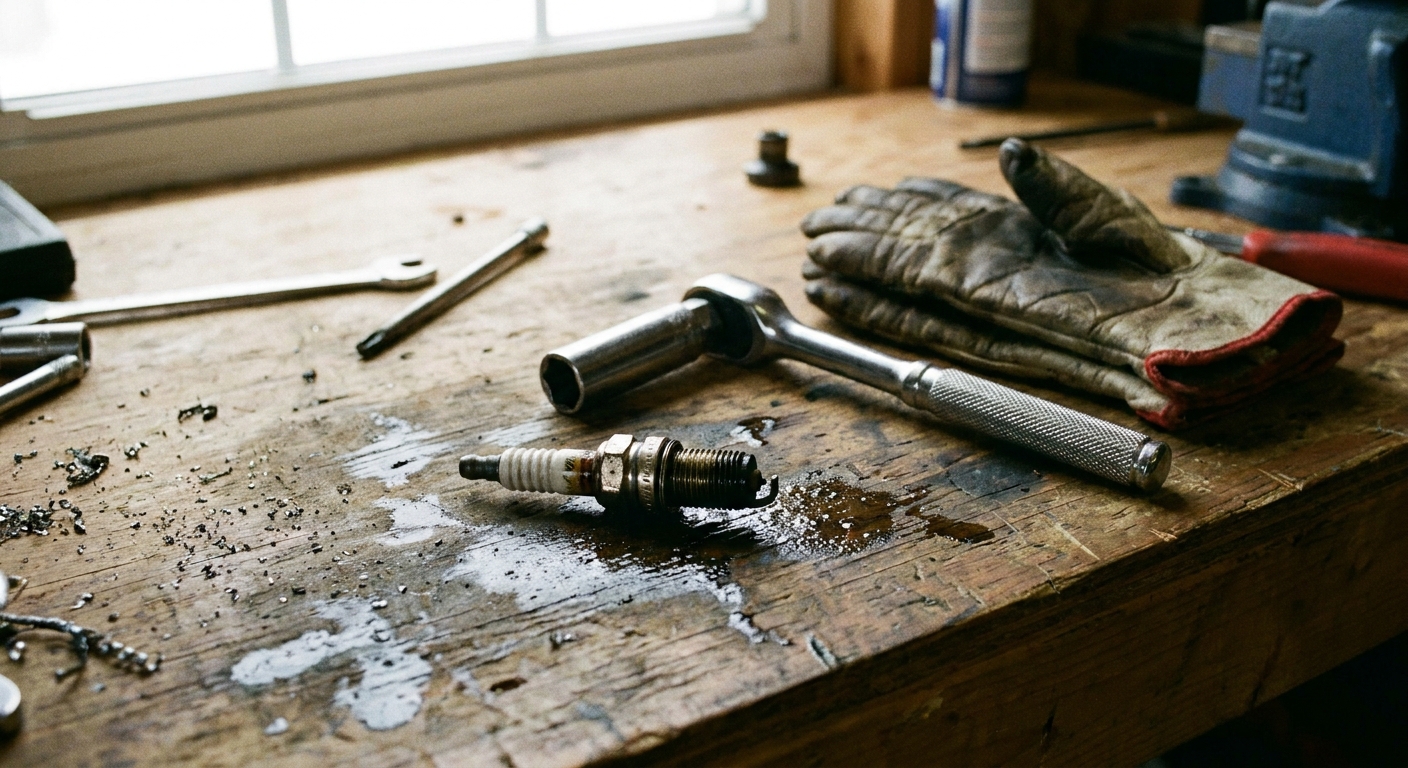
Tip from the school of hard knocks: Don’t over-tighten the plug. Snug plus a small additional turn is usually plenty, especially in an aluminum engine head.
Carb basics (after it sits)
If your snow blower ran fine last season and now refuses to start, the carburetor is often the reason. Old fuel leaves varnish that clogs tiny passages and jets.
Easy carb-related things to try first
- If you have not already drained and refilled, start there, then try a small-engine fuel system cleaner.
- Tap-test: With the key removed and engine off, lightly tap the carburetor bowl with a screwdriver handle. Sometimes a stuck float needle frees up. Tap lightly so you don’t crack anything.
- Check the bowl nut (on some models): Some carb bowls use a bowl bolt that also meters fuel through tiny holes. If those holes clog, the engine may not get fuel.
Signs you’re dealing with a carb issue
- Engine fires for a second, then dies.
- It only runs with choke fully on.
- It won’t start at all, but the plug looks dry (no fuel getting in).
Reality check: Carb cleaning can be DIY-friendly, but it’s also where tiny parts and gaskets like to misbehave. If you’re not comfortable, it’s a smart place to call in service.
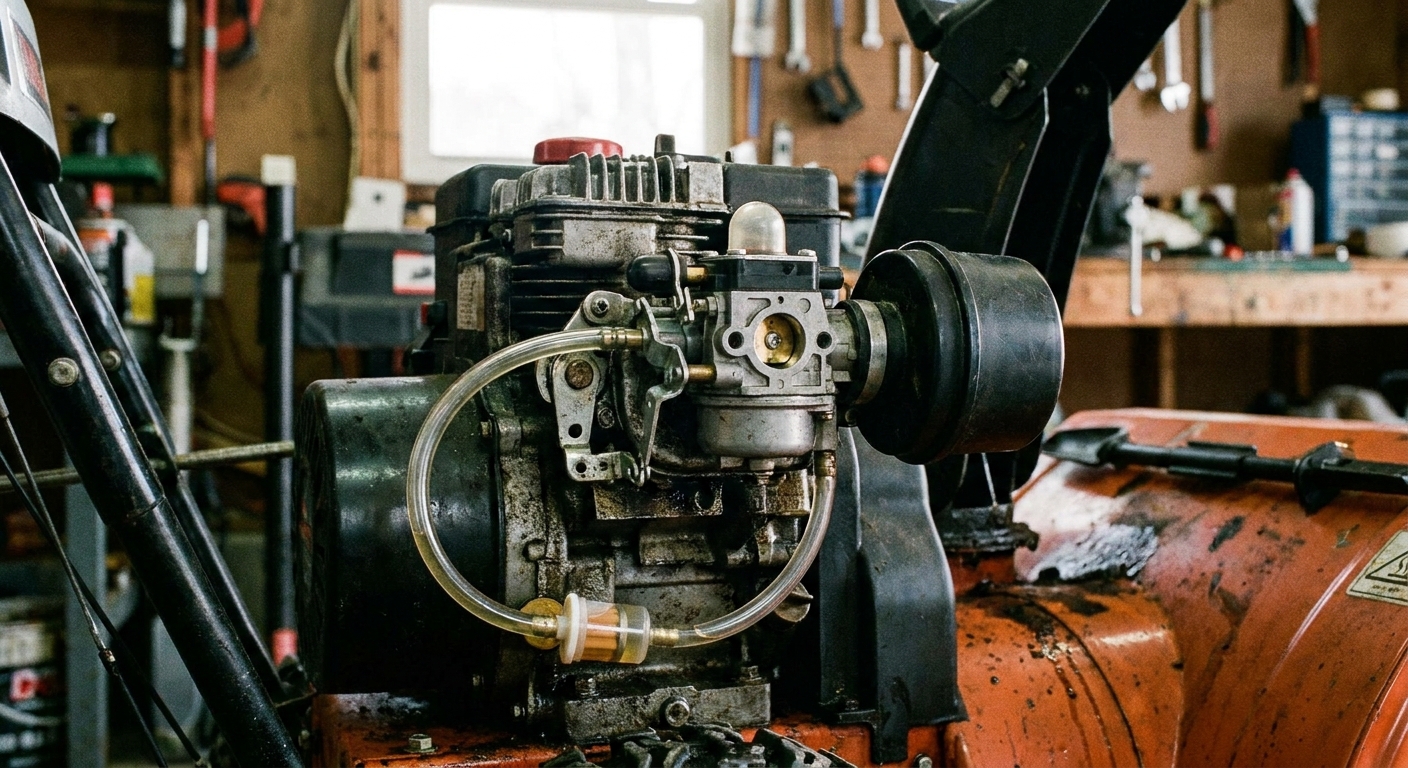
Fuel cap vent (tiny part, big clue)
If it starts and dies or surges, a blocked fuel cap vent can be the culprit. The tank needs to breathe.
- Try loosening the fuel cap for a moment, then attempt a start.
- If it runs better with the cap loose, clean or replace the cap (follow your model’s guidance).
Electric start checks
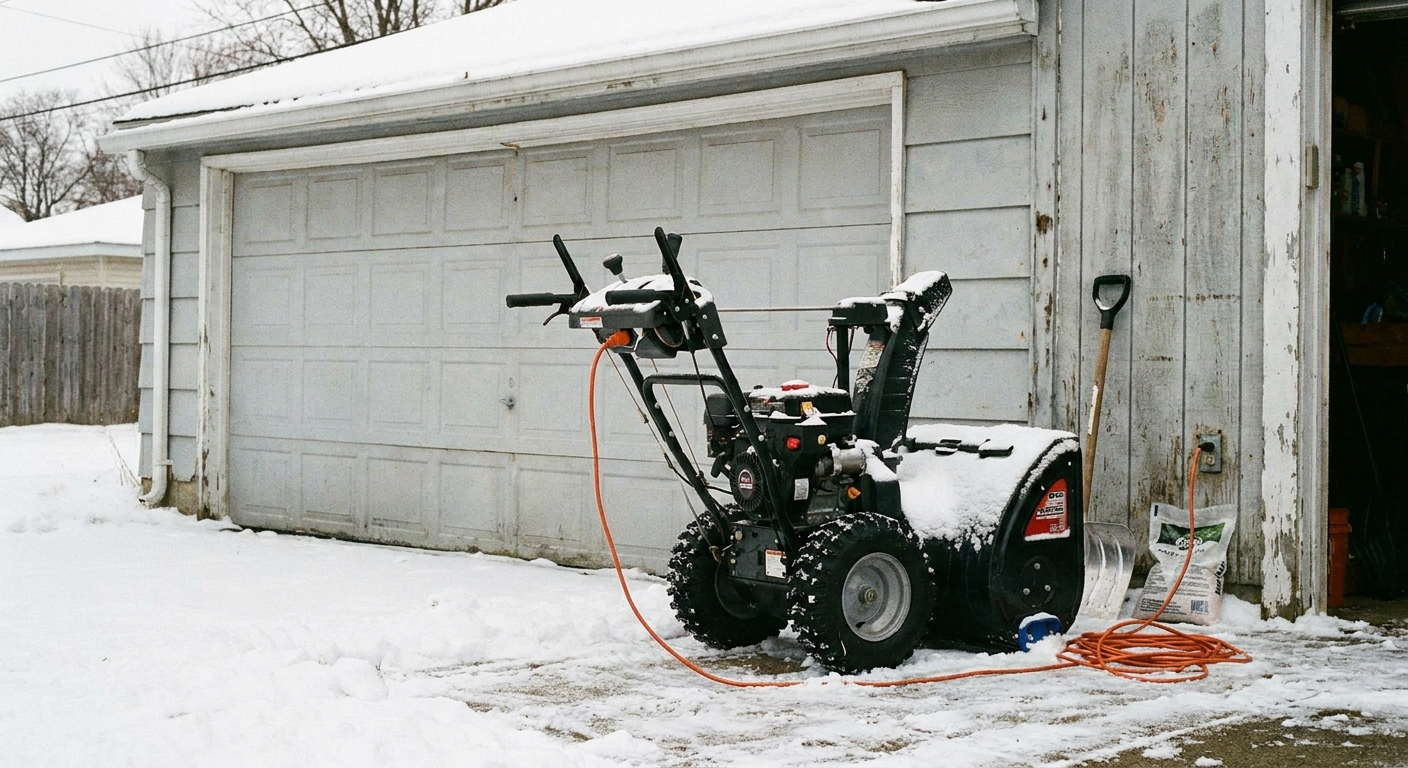
If your snow blower has an electric starter, it can still fail to start for two different reasons: the starter is not turning the engine over, or the engine turns over but won’t fire.
If the starter does nothing
- Confirm the extension cord is good and rated for outdoor use.
- Use a heavy-gauge cord to reduce voltage drop (often 14/3 for shorter runs, 12/3 for longer runs).
- Try a different outlet (GFCI outlets can trip).
- Make sure the starter button is actually being pressed with the key inserted.
- If you hear a click but no crank, you may have a bad starter, relay, or internal wiring issue.
If it cranks but won’t start
That’s usually not an electric start problem. Go back to fuel, choke, primer, spark plug, and carb checks.
Air, intake, and ice
Snow conditions can create weird problems you don’t see with summer equipment.
Clear packed snow and ice
- Brush off the engine area and controls.
- Make sure the recoil starter housing is not packed with snow or ice. If it is, the cord may not retract properly or may feel “stuck.”
- Check that the auger and impeller area is clear and not jammed. This is mainly for safety and to prevent binding. A jam is not usually the reason it will not start, but it can create dangerous surprises once it does.
Check for blocked intake or muffler area
Some models use a winterized intake setup rather than a typical foam air filter, but the idea is the same: the engine needs air. If vents are iced over or the muffler area is packed with snow, it can struggle to start or run rough.
Two-stroke note (if you have one)
Most modern snow blowers are 4-stroke, but if yours is 2-stroke it will need gas mixed with 2-cycle oil at the correct ratio. Straight gas in a 2-stroke can cause damage fast. If you are not sure which you have, check the cap, manual, or engine label.
When to schedule service
I’m all for DIY, but there’s a point where a shop visit saves money and frustration.
Consider professional service if:
- You’ve tried fresh fuel, correct choke and prime steps, confirmed spark (or installed a new plug), and it still won’t even pop.
- Fuel is leaking, you smell gas strongly, or the carburetor is overflowing.
- The recoil starter is stuck or the engine feels seized (cord will not pull).
- It starts but surges badly, backfires repeatedly, or won’t stay running without choke.
- You suspect ignition module issues or internal engine problems.
What to tell the shop
- Make, model, and engine size.
- Whether it cranks and whether it ever fires.
- How old the fuel was and whether it had stabilizer.
- What you already replaced or tested (spark plug, drained fuel, cleaned carb, etc.).
Prevent this next winter
Five minutes in spring saves an hour in the first big storm.
- Run the engine dry or shut off the fuel valve and let it stall.
- Add stabilizer to the last can of the season if you plan to store fuel.
- Change the oil if your manual recommends it at season end.
- Inspect the spark plug and replace if it’s questionable.
- Store it with a full tank of ethanol-free fuel plus stabilizer, or an empty tank, depending on manufacturer guidance.
A full tank can reduce condensation in the tank. An empty tank (and especially an empty carb) reduces varnish problems. If you only do one thing: don’t leave last season’s fuel sitting in the carburetor.
The 30-Second Cheat Sheet
Essential takeaways for: Snow Blower Won’t Start? Checklist to Try First
Start here (fastest fixes)
- Oil level: Check it first. Low oil can trigger a shutoff on some models.
- Safety key: Fully inserted and not cracked.
- On/off and throttle: Switch ON, throttle FAST.
- Fuel valve: ON (if your model has one).
- Fresh gas: Drain old fuel and refill with fresh fuel. Old gas is one of the top causes.
Cold start sequence
- Choke FULL
- Prime 2 to 3 times
- Pull with smooth full strokes
- After it fires: choke to HALF briefly, then to RUN
If you flooded it
- Choke OFF
- No priming
- Pull 5 to 10 times
- Optional: remove and dry the plug, then pull a few times to clear the cylinder (ignition disabled)
Spark plug quick check
- Plug wire tight
- Test for spark (ground plug threads to engine metal and pull cord)
- Replace the plug if it’s old, cracked, heavily fouled, or questionable
Carburetor clues
- Starts then dies, or only runs on choke: likely carb gummed up from sitting
- Try fresh fuel and cleaner first, then consider carb cleaning/service
Electric start basics
- No crank: try a different outlet/cord, check GFCI (use a heavy-gauge outdoor cord)
- Cranks but won’t start: treat it like a normal no-start (fuel, choke, spark)
Call for service if
- Fuel leaks, strong gas smell, or carb overflowing
- Recoil won’t pull or engine seems seized
- No start after fresh fuel + correct start steps + confirmed spark/new plug
💡 Tip: Scroll up to read the full article for detailed, step-by-step instructions.
⬆️ Back to top
About Marcus Vance
Content Creator @ Grit & Home
Marcus Vance is a lifelong DIY enthusiast and self-taught home renovator who has spent the last decade transforming a dilapidated 1970s ranch into his family's dream home. He specializes in budget-friendly carpentry, room-by-room renovations, and demystifying power tools for beginners. Through his writing, Marcus shares practical tutorials and hard-learned lessons to help homeowners tackle their own projects with confidence.