
🚨 In a DIY emergency or rush?
Skip the details and jump straight to our 30-second cheat sheet for the most crucial info.
Small courier. Big home questions.
When the snow finally clocks out and your lawn looks like it spent winter face down in a damp sleeping bag, you are not alone. Those weird circles, the matted grass, the pale crusty fuzz that shows up right at melt time often point to snow mold, not “my lawn is doomed forever.”
Let’s sort the suspects, fix what can be fixed with a rake, and only bring out the heavy tools if you truly need them.
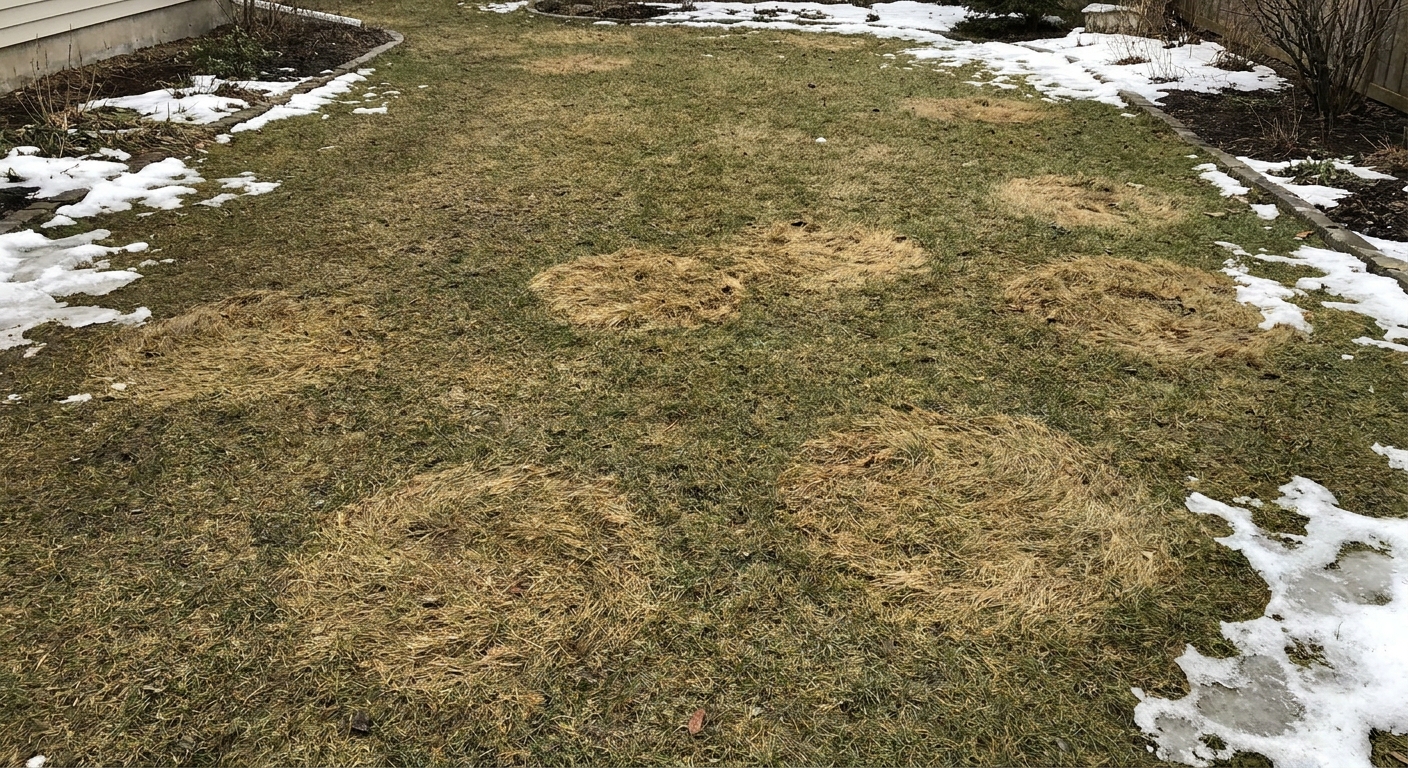
First: what snow mold looks like
Snow mold is a turf disease caused by a few different cold-weather fungi that develop under long-lasting snow cover, especially when snow sits on unfrozen ground. It usually reveals itself as the snow recedes, because the conditions that hid it also helped it spread: cool temperatures, high moisture, and low airflow.
This is mainly a cool-season grass issue (Kentucky bluegrass, perennial ryegrass, fescues). If you have a warm-season lawn, spring circles can still happen, but winter damage is more often tied to dormancy stress, ice cover, traffic, or poor drainage than classic snow mold.
The giveaway sign
Matted, flattened grass in roughly circular patches. The grass often looks pressed down like someone set a heavy bucket on it for weeks. The color can be straw-tan, bleached, grayish, or pinkish depending on the organism involved and how long it has been exposed.
- Patch size: commonly a few inches to a couple feet across, sometimes larger if snow lingered.
- Texture: matted and slick, sometimes with a faint crust or cottony growth early on.
- Location clues: shaded areas, along driveways where snow piled up, where leaves were left, and anywhere air circulation was limited.
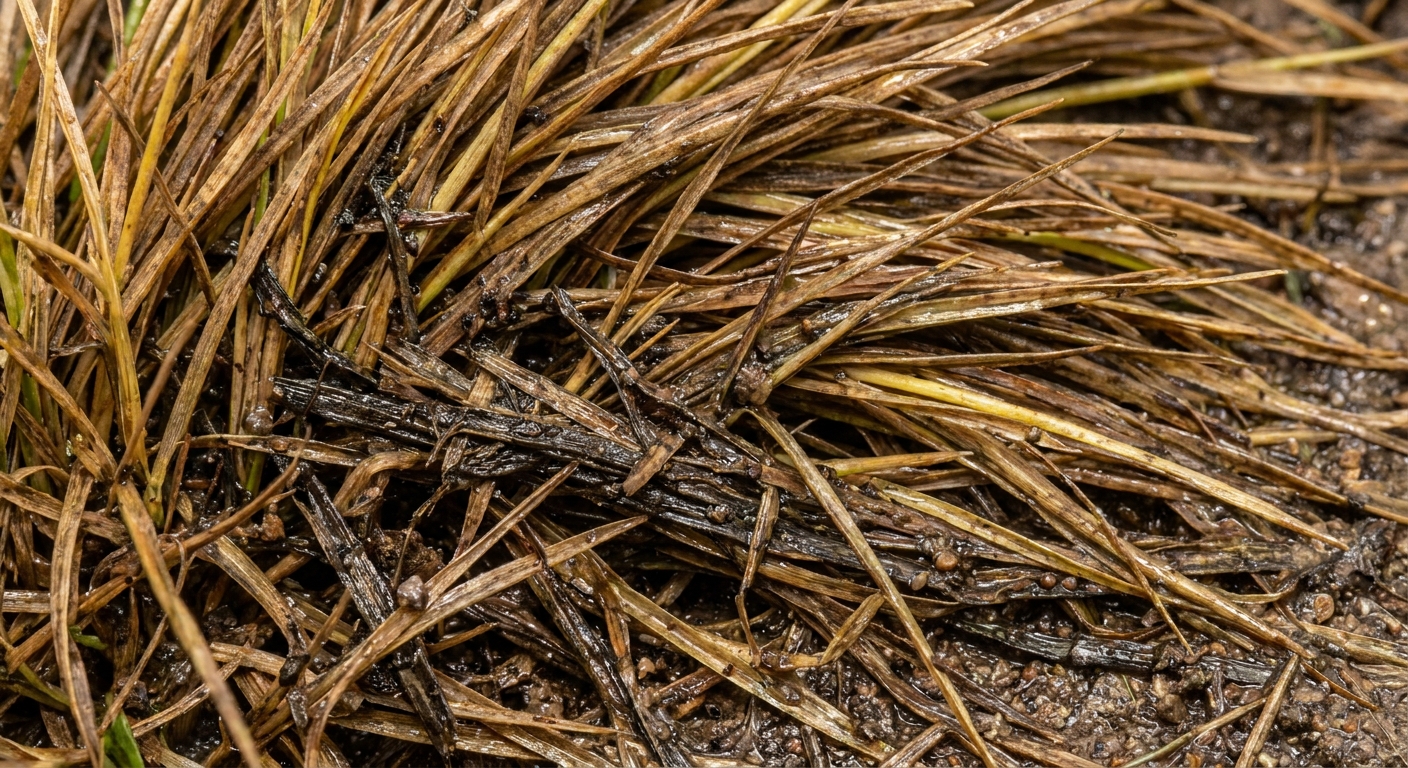
Gray vs pink snow mold
Homeowners usually run into two common categories: what people call gray snow mold (often tied to Typhula species) and pink snow mold (often tied to Microdochium nivale). There are other fungi and lookalikes, but these two cover most backyard “why does my lawn look like this?” spring conversations.
Gray snow mold (usually less serious)
- Color: whitish to gray fuzz when wet, then tan or straw-colored patches as it dries
- Grass survival: usually damages blades more than crowns, so turf often rebounds with spring growth (severe cases can still thin grass)
- When you see it: right at melt, especially after long snow cover
Pink snow mold (more likely to thin turf)
- Color: pink, salmon, or reddish tones in the moldy growth or at patch edges, sometimes subtle
- Grass survival: more likely to damage crowns and lower stems, so thin or bare spots are more common
- When you see it: at melt and during cool, wet spring weather
If you can only remember one thing: gray snow mold is usually cosmetic and temporary. pink snow mold is the one more likely to leave you with real patch repair.
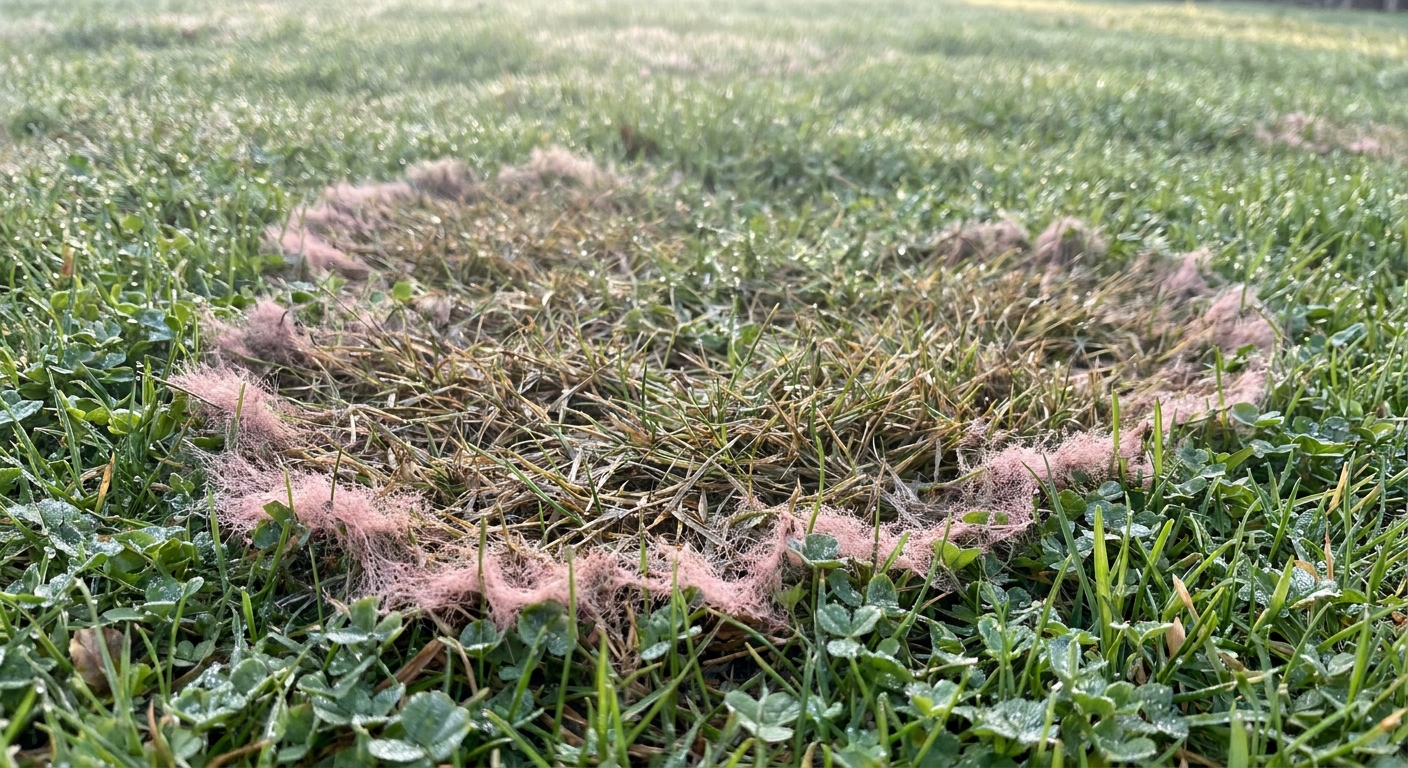
Snow mold vs brown patch
Brown patch is a different disease with different timing. It usually flares during warm, humid weather, especially with night watering and heavy nitrogen. Snow mold shows up during snow melt and cool, wet conditions.
One nuance: depending on your region, brown patch can also show up in late spring or early fall when nights are warm and humidity stays high. It is not strictly a “summer only” problem.
Use these clues
- Timing: snow mold appears as snow recedes or in early spring cool spells. Brown patch tracks warm, humid stretches.
- Texture: snow mold often looks matted. Brown patch tends to look like irregular brown areas without that pressed-down “pancaked” look.
- Pattern: snow mold commonly forms circles or rings. Brown patch often forms larger, irregular patches.
- Growth at edges: snow mold may show light gray or pink fungal growth. Brown patch may show a “smoke ring” edge in humid conditions, but not the classic melt-time fuzz.
If it is early spring, circular, and matted, snow mold is the better bet.
What to do right away
The best first move is boring and effective: dry it out and fluff it up. Snow mold thrives in stagnant moisture and trapped grass blades.
Step 1: Wait for firm ground
Do not stomp around on soggy turf. If your shoes sink or you can pull up turf easily, give it a little time. Walking on soft ground compacts soil and tears crowns.
Step 2: Gently rake matted areas
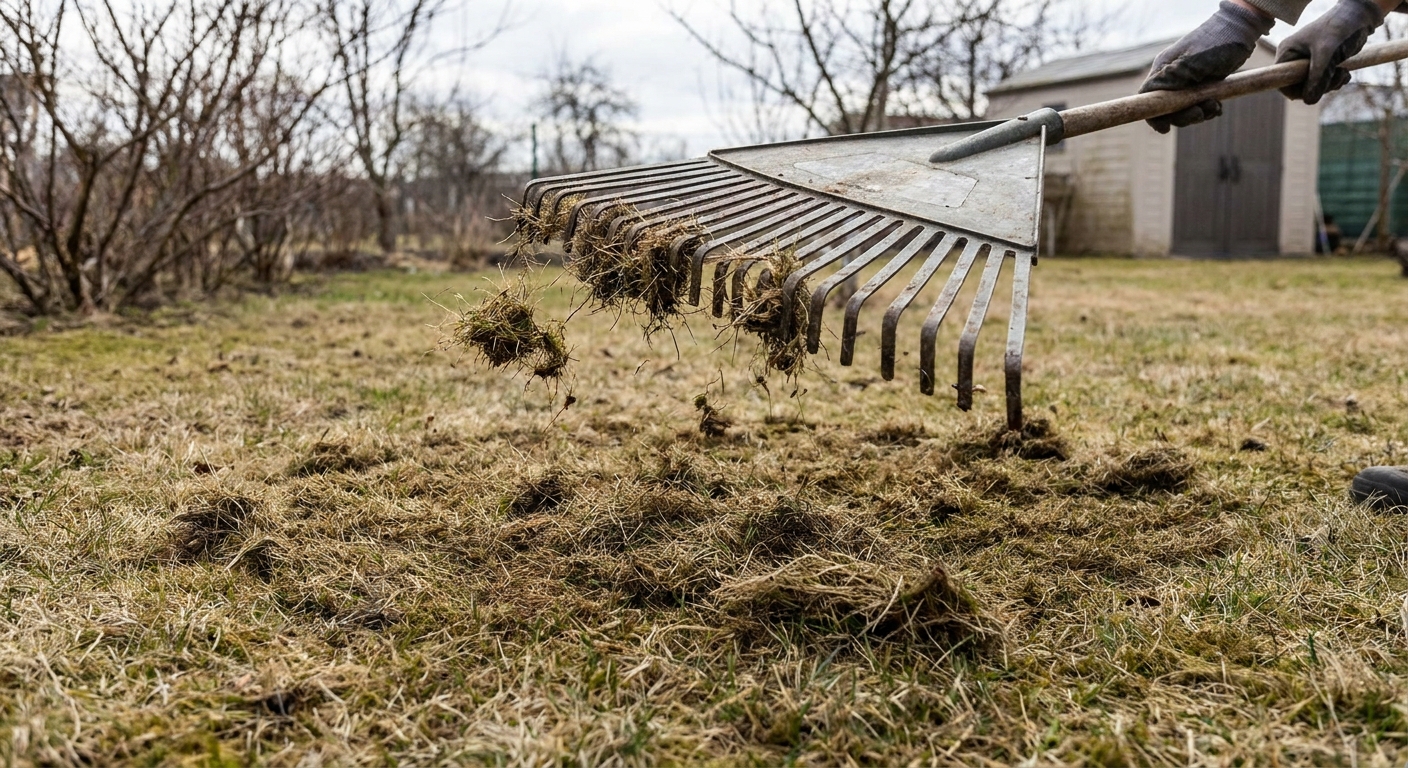
Use a leaf rake or lawn rake and lightly lift the flattened grass so air and sunlight can reach it. You are not trying to excavate. You are trying to separate blades and speed drying.
- Rake in multiple directions with light pressure.
- Remove snow mold crust, dead leaf litter, and any leftover thatch clumps sitting on top.
- Bag heavy debris if it is thick enough to shade grass.
Is fungicide worth it?
Most of the time, for a typical home lawn, no, not after the snow has melted.
Why fungicide disappoints in spring
- Timing: curative control is limited. The infection happened under the snow.
- Recovery: gray snow mold often grows out on its own once conditions dry and turf starts actively growing.
- Target: fungicides work best as a preventive application in late fall in areas with a history of severe snow mold.
When fungicide can make sense
- You have a repeating, severe problem every year, especially with pink snow mold.
- The affected area is high value turf where appearance matters and you are willing to follow label directions carefully.
- You can correctly identify the issue and apply at the right time in fall, not as a panic purchase in spring.
Important: if you choose any pesticide product, follow the label exactly. The label is the law, and it will specify turf types, rates, personal protective equipment, and reapplication limits.
Dead or just ugly?
Snow mold can make grass look toasted even when it is still alive. The key is the crown, the growing point near the soil surface.
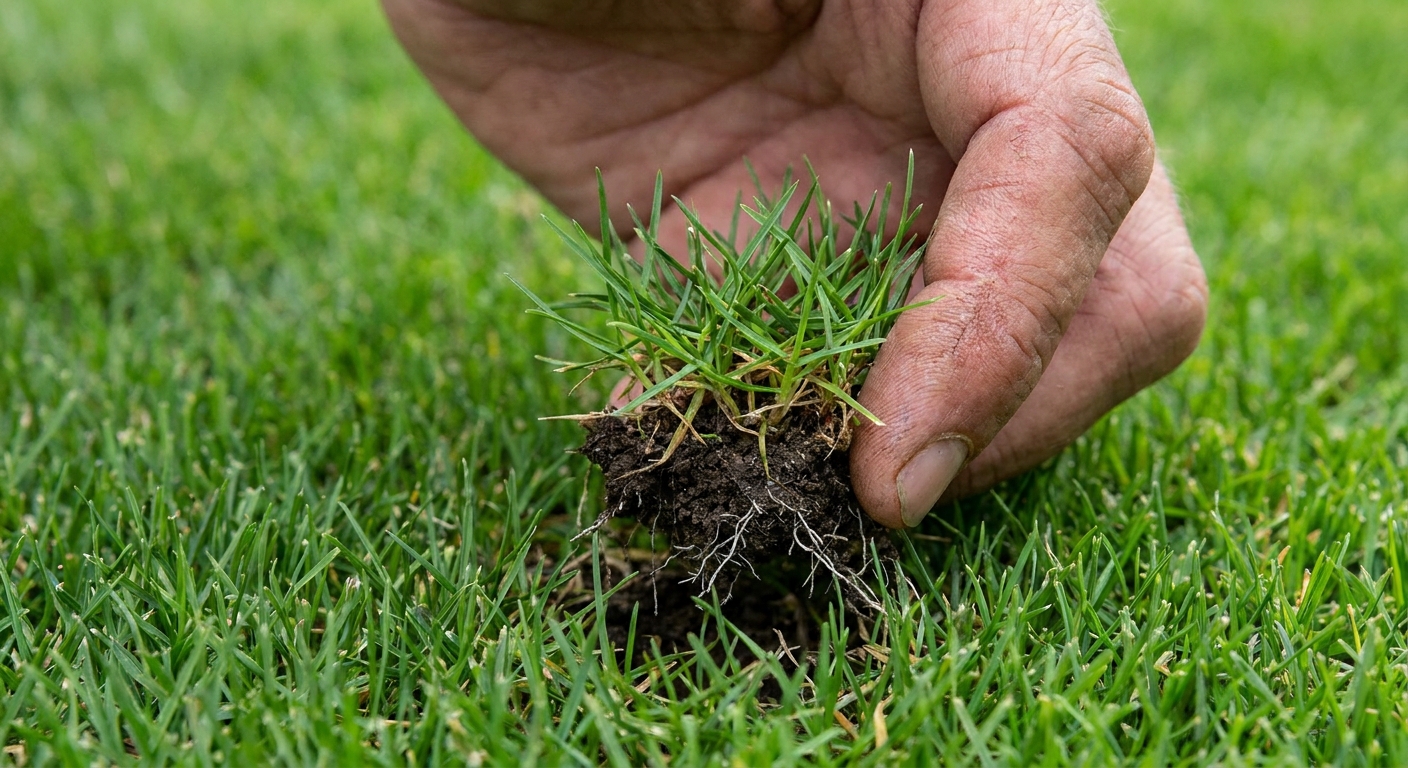
The tug test
- Grab a small pinch of grass in the center of a patch and gently pull.
- If it resists, it is likely still rooted and alive.
- If it pulls out easily with little resistance and you see little or no roots, that spot may be dead.
Check the crown
Part the grass down to the soil. If the crown tissue is whitish and firm, it is often alive. If it is brown, mushy, or rotted, recovery is less likely.
Give it a beat
If your lawn is cool-season grass (like Kentucky bluegrass, perennial ryegrass, or fescue), it may take a couple of weeks of warmer days to show new growth. Do not reseed the minute you see circles unless you confirm death.
Repair only dead patches
Once you have raked, dried things out, and confirmed what is actually dead, you can switch from diagnosis mode to rehab mode.
If you confirm true dead spots, patch repair is usually faster and cheaper than doing everything.
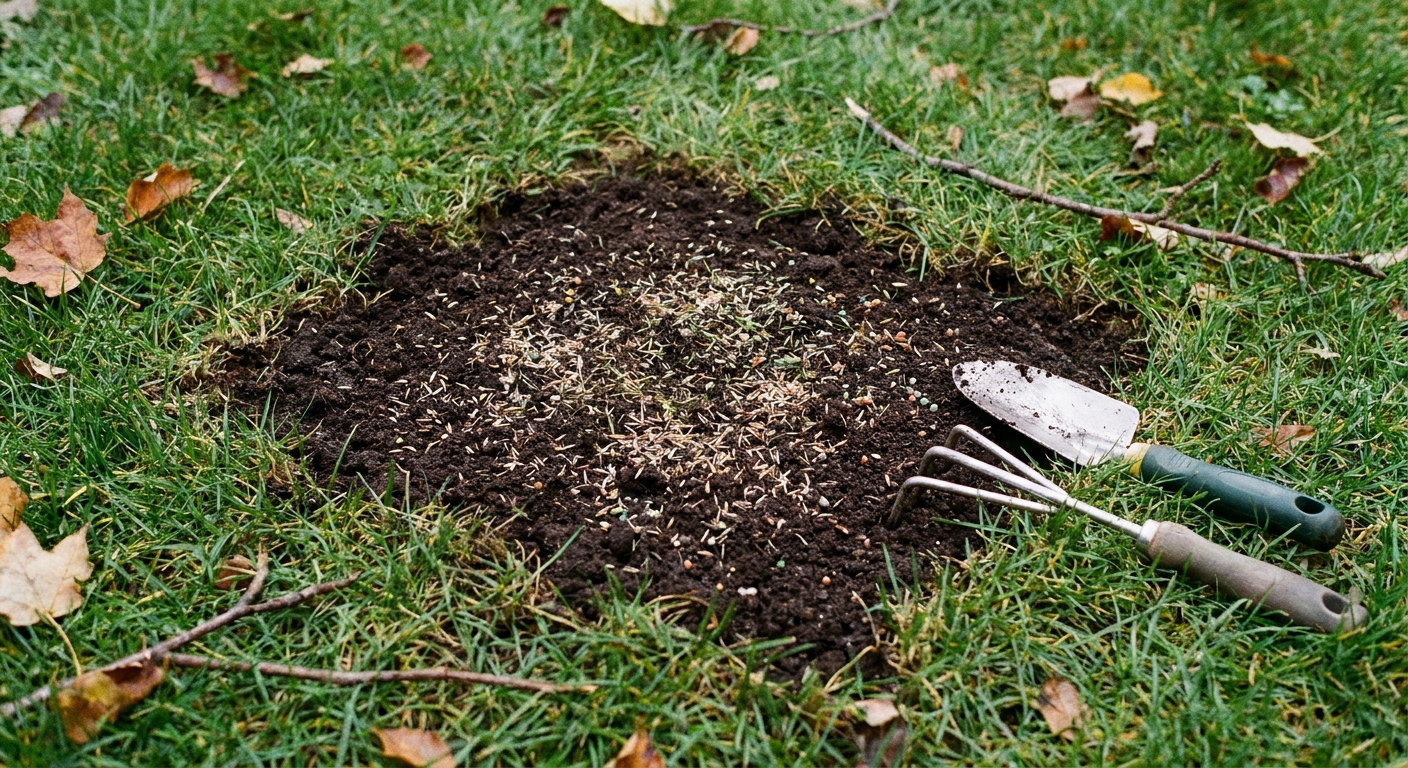
Step 1: Clean up the patch
- Rake out dead material down to the soil surface.
- If the area is muddy or compacted, lightly loosen the top 1 to 2 inches of soil with a hand cultivator.
Step 2: Add a thin soil layer if needed
If you created low spots by removing dead turf, add a light topdressing of screened topsoil or a soil and compost blend. Keep it thin so surrounding grass is not buried.
Step 3: Seed the patch
- Choose a seed mix that matches your lawn type and sun conditions.
- Scatter seed evenly, then lightly rake so seed has soil contact.
- Press seed in with your foot or a tamper for good contact.
Step 4: Cover and water
- Cover lightly with straw or a seed mulch product to reduce drying and washout.
- Water lightly and frequently until germination, then transition to deeper, less frequent watering.
Step 5: Timing note
Spring patching works, but for many cool-season lawns fall is the easiest time to seed because weeds are calmer and weather is less extreme. If you seed in spring, stay on top of watering, and use a starter fertilizer only if it makes sense for your lawn and you can follow the label rate.
Step 6: Mow high and be patient
Keep mowing height on the higher side for your grass type. Taller blades help the plant recover and shade out weeds.
Mistakes that make it worse
- Piling snow in the same place all winter: repeated snowbanks increase moisture and time under cover.
- Leaving a thick layer of leaves in fall: leaves trap moisture and smother grass under snow.
- Cutting grass too short before winter: very short turf is stressed, but very tall turf mats down. Aim for a sensible final mow for your grass type and region.
- Heavy fall nitrogen late in the season: tender growth going into winter can be more vulnerable.
- Overwatering during cool weather: in early spring, water only if the lawn actually needs it.
Preventing snow mold next winter
Snow mold prevention is mostly about reducing the cozy, damp blanket effect.
- Keep fall leaves off the lawn: mulch mow small amounts or rake and remove heavy layers.
- Do a final mow: avoid going into winter with very tall, floppy grass that will mat.
- Limit thatch: thick thatch holds moisture. If your lawn has a thatch problem, address it during the proper season for your grass type.
- Consider core aeration if compaction is an issue: better drainage and airflow help over the long haul (timing depends on grass type).
- Avoid late-season heavy nitrogen: follow a fertilizer schedule appropriate to your region and turf.
- Avoid heavy evening irrigation in late fall: if you are still watering, aim earlier in the day so blades dry before night.
- Break up snow piles when possible: where safe and practical, spread out huge piles so they melt sooner.
FAQ
Will snow mold go away on its own?
Often, yes. Especially with gray snow mold, raking to lift the mat and letting the lawn dry and grow is usually enough.
Is snow mold harmful to pets or kids?
It is still mold, so treat it with basic caution. Keep kids and pets out of heavy, actively moldy patches until you have raked them out and the area dries. Wash hands after yard work. If someone in your home is immunocompromised or has significant allergies or asthma, it is wise to be extra careful and check with a clinician for individualized advice.
Can I just fertilize to green it up?
A light, appropriate feeding in spring can help recovery, but do not use fertilizer as a substitute for cleanup and airflow. Overdoing nitrogen can create other disease problems.
Should I dethatch in early spring?
Light raking to lift matted grass is great. Aggressive dethatching is a bigger stress. Save major dethatching for the best season for your grass type, unless your local extension guidance says otherwise.
The 30-Second Cheat Sheet
Essential takeaways for: Snow Mold in Your Lawn After Snow Melt
What those circles probably are
- Snow mold shows up right as snow melts, often in circular, matted patches.
- Brown patch is usually tied to warm, humid stretches and does not typically look so pressed down.
Gray vs pink snow mold
- Gray snow mold: gray-white fuzz when wet, then tan. Usually grows out once conditions dry.
- Pink snow mold: pink or salmon tones, more likely to damage crowns and leave thin or bare spots.
Do this first
- Wait until the lawn is not soggy.
- Gently rake patches to lift matted grass and increase airflow.
- Remove leaf litter and clumps that keep areas wet.
Is fungicide worth it?
- Usually no in spring. Snow mold infection happened under the snow.
- Consider fungicide only if you get severe, recurring snow mold and can apply preventively in fall per label directions.
Repair only dead areas
- Do a tug test. If grass resists, it may recover.
- If it pulls out easily and crowns look rotten, rake out dead turf, loosen soil, reseed, lightly cover, and keep evenly moist until germination.
Prevent it next winter
- Clean up leaves in fall.
- Do a sensible final mow so grass is not overly tall and floppy.
- Reduce thick thatch over time.
- Avoid late, heavy nitrogen applications.
💡 Tip: Scroll up to read the full article for detailed, step-by-step instructions.
⬆️ Back to top
About Grit
Content Creator @ Grit & Home
Grit is Grit & Home’s little blue clay courier, delivering big questions about the place you call home. Expect practical ideas, a raised eyebrow, and a satchel full of curiosity.