
🚨 In a DIY emergency or rush?
Skip the details and jump straight to our 30-second cheat sheet for the most crucial info.
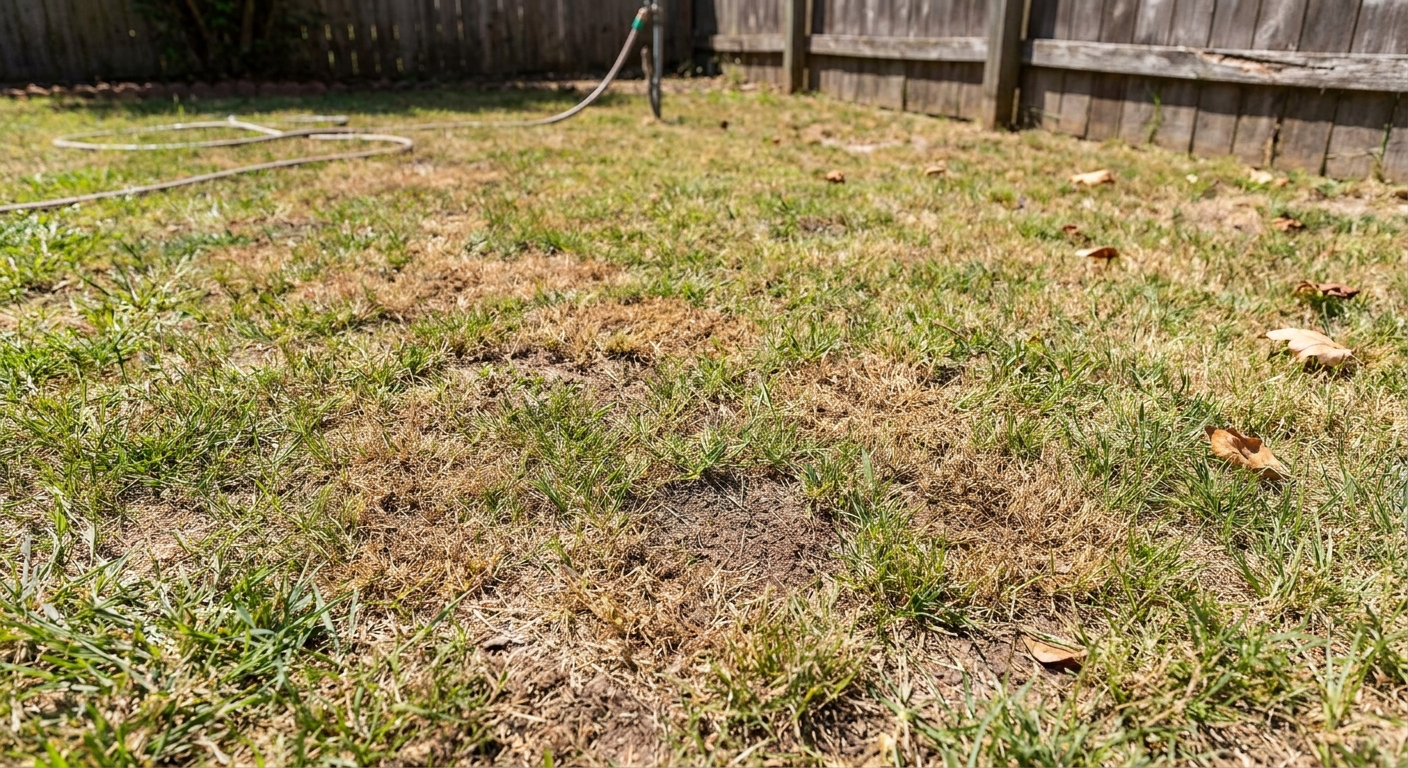
If your lawn has patchy brown spots that seem to spread quickly, sod webworms are a prime suspect. They are sneaky because the damage can look a lot like drought stress, fungus, or even grub feeding. The good news: you can often confirm them in about 5 to 10 minutes with a simple drench test, then pick the least expensive fix that actually matches the life stage you are dealing with.
What they are
Sod webworms are the caterpillar stage of small lawn moths. The moths themselves are easy to miss. They flutter up when you walk through the grass at dusk and look like tiny tan or gray triangles.
The real damage comes from the larvae (caterpillars). They hide in the thatch layer and feed mostly at night, chewing and scraping grass blades. That feeding creates:
- Small, irregular brown patches that can merge into larger areas
- Chewed, notched, or “windowpane” blades (the tissue looks scraped or skeletonized)
- Green pellet-like droppings (frass) in the thatch near feeding sites, and sometimes light silk webbing
Webworms are most active in warm weather. In many areas, damage peaks in mid to late summer, often after a stretch of hot, dry days. In plenty of regions there are multiple generations, which is why the problem can pop up again later even if it seemed “gone.”
Is it webworms or something else?
Here is how I sort it out in the yard before I spend a dime on treatment.
Sod webworm damage
- Patch shape: irregular and “moth-eaten,” not a perfect circle
- Grass blades: chewed, notched, or scraped, often with green frass in the thatch
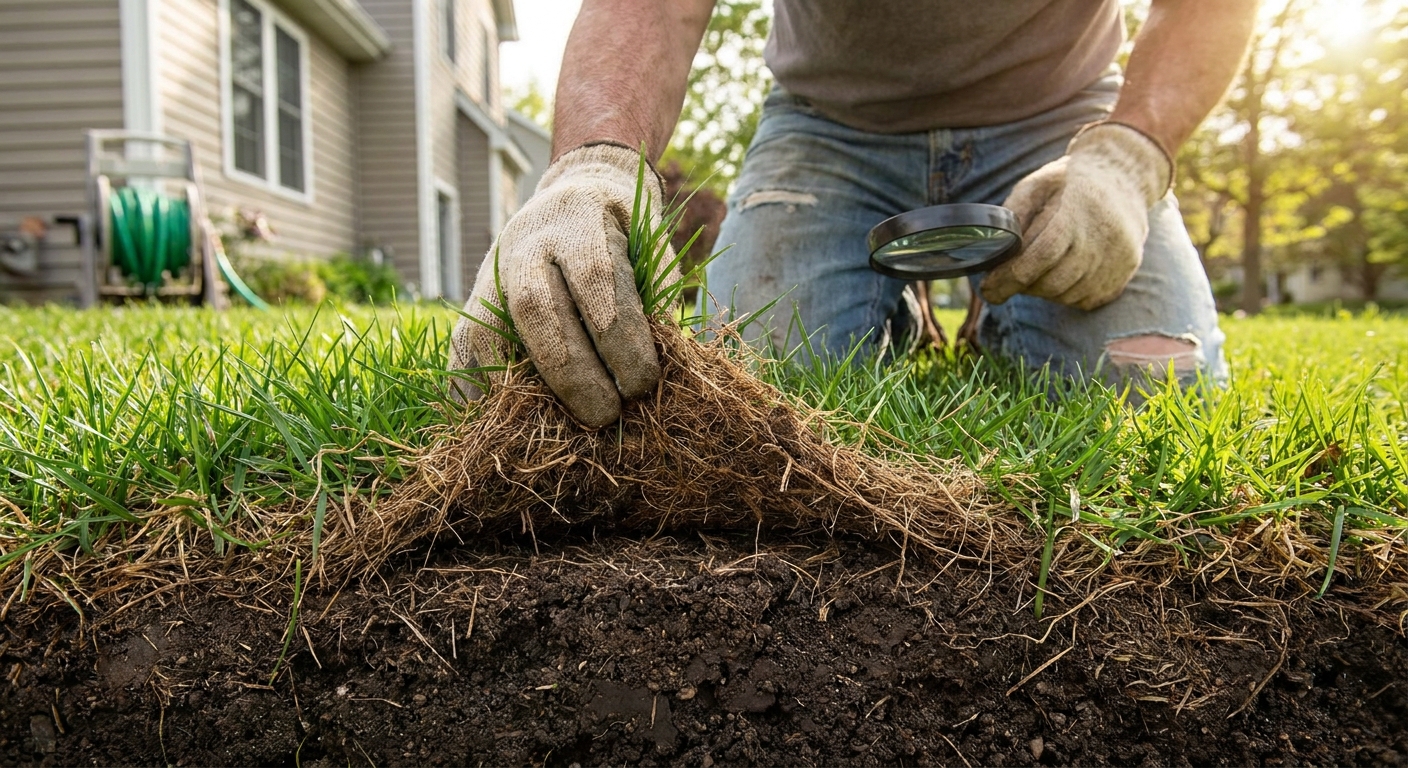
- Roots: turf usually stays anchored (it looks awful up top, but it does not peel up like carpet)
- Timing: often flares in warm weather, especially in stressed lawns
- Wildlife clue: birds pecking the lawn in the morning can be hunting larvae
Drought stress
- Overall look: larger areas go dull bluish-gray first, then tan
- Footprint test: footprints linger because the blades do not spring back
- Recovery: improves within a week or two of consistent deep watering
Fungal disease
- Pattern: can form rings or defined patches (brown patch may show a faint “smoke ring” early morning)
- Leaf symptoms: spots or lesions on blades (dollar spot often shows distinct lesions on individual blades)
- Conditions: often follows humid nights, heavy dew, and frequent watering
Grub damage
- Patch behavior: turf feels loose and can peel up like a carpet
- Where the damage is: roots are eaten, so plants fail even if blades look mostly intact at first
- What you find: C-shaped white grubs in the soil when you cut and lift a flap
My rule: if the roots still seem anchored but the blades look chewed and you see frass in the thatch, I suspect webworms. If it peels up easily, I suspect grubs.
The drench test
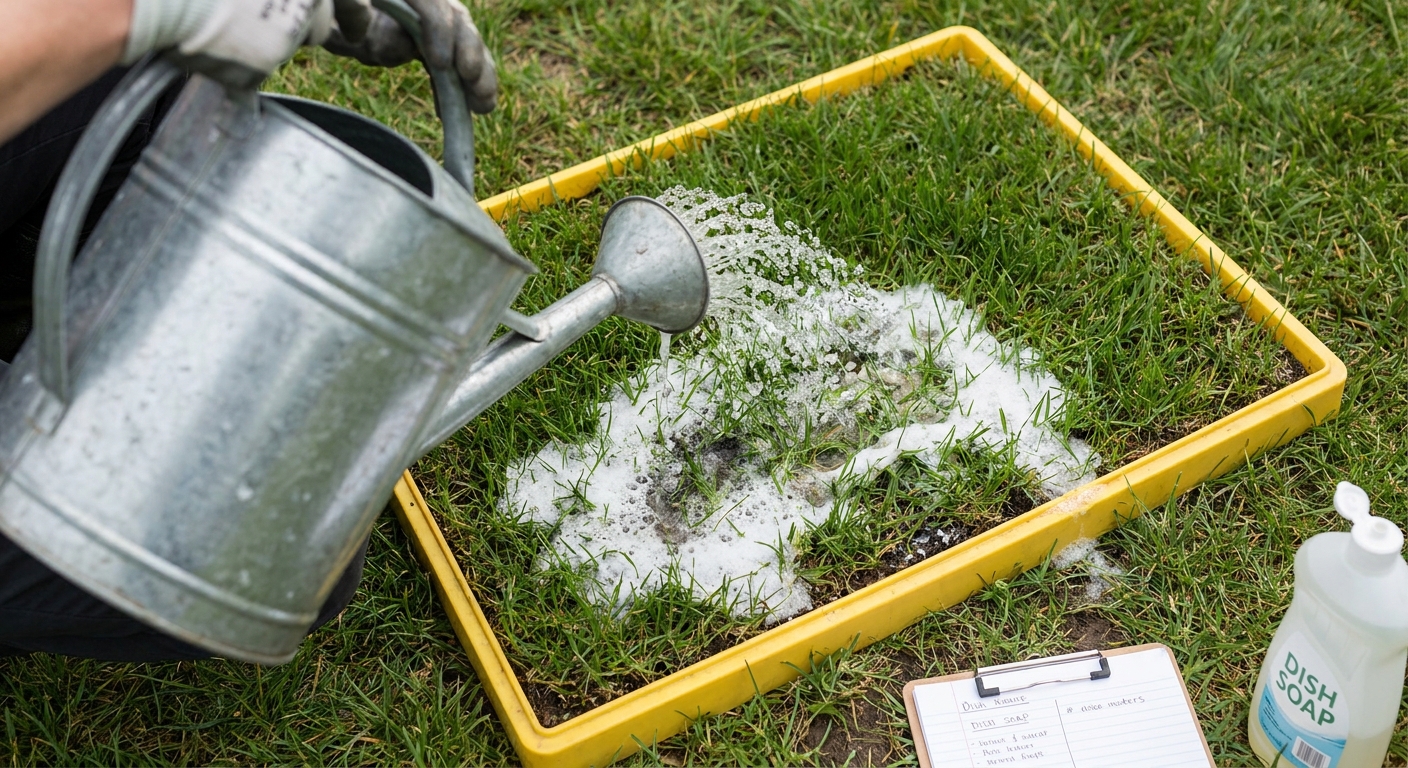
You do not need fancy tools. You are basically irritating the larvae so they crawl to the surface. It works often, but it is not a guarantee if larvae are deep in thatch, it is very hot and dry, or the timing is off.
What you need
- A bucket or watering can
- Water
- Liquid dish soap (plain, no bleach)
- A measuring spoon
Step-by-step
- Pick the right spot: choose the edge of a damaged area where green meets brown.
- Mix your solution: add 1 to 2 teaspoons up to 1 to 2 tablespoons of dish soap to 1 gallon of water (recommendations vary, so treat this as a practical range).
- Drench a small area: slowly pour it over roughly 1 square yard of turf.
- Wait 5 to 10 minutes: watch the surface. Webworm larvae often pop up and wiggle around.
- Count what you see: this is your decision point.
How many is “too many”?
Thresholds vary by grass type, lawn expectations, and region, but a common rule of thumb is:
- 0 to 2 larvae per sq yd: usually monitor and fix the basics (watering, mowing, thatch).
- 3 to 4 larvae per sq yd: borderline. If damage is spreading, treat; if not, re-check in 5 to 7 days.
- 5 to 10+ larvae per sq yd: treatment is usually worth it.
What they look like: small caterpillars, usually greenish, tan, or gray, sometimes with darker spots. They may curl when disturbed, but they are not the thick white C-shaped grubs found in soil.
Fixes that cost almost nothing
Most webworm outbreaks get worse in lawns that are stressed, thatchy, and watered in a way that keeps roots shallow. Before you spray anything, tighten up the basics.
1) Water deeper, not more often
Frequent light watering encourages shallow roots and a fluffy thatch layer where larvae hide. Aim for deep, infrequent irrigation so the top layer dries between waterings.
- Target about 1 inch per week total (rain plus irrigation), adjusted for your grass type and heat.
- Water in the early morning. Night watering can worsen fungal issues and keeps the surface damp longer.
2) Mow correctly
- Follow the one-third rule: do not cut more than one-third of the blade at a time.
- Keep blades sharp. Ragged tips can mimic pest damage and add stress.
- If you have a confirmed outbreak, mowing a little lower within safe limits for your turf can help improve spray coverage and reduce hiding spots. Then return to your normal height.
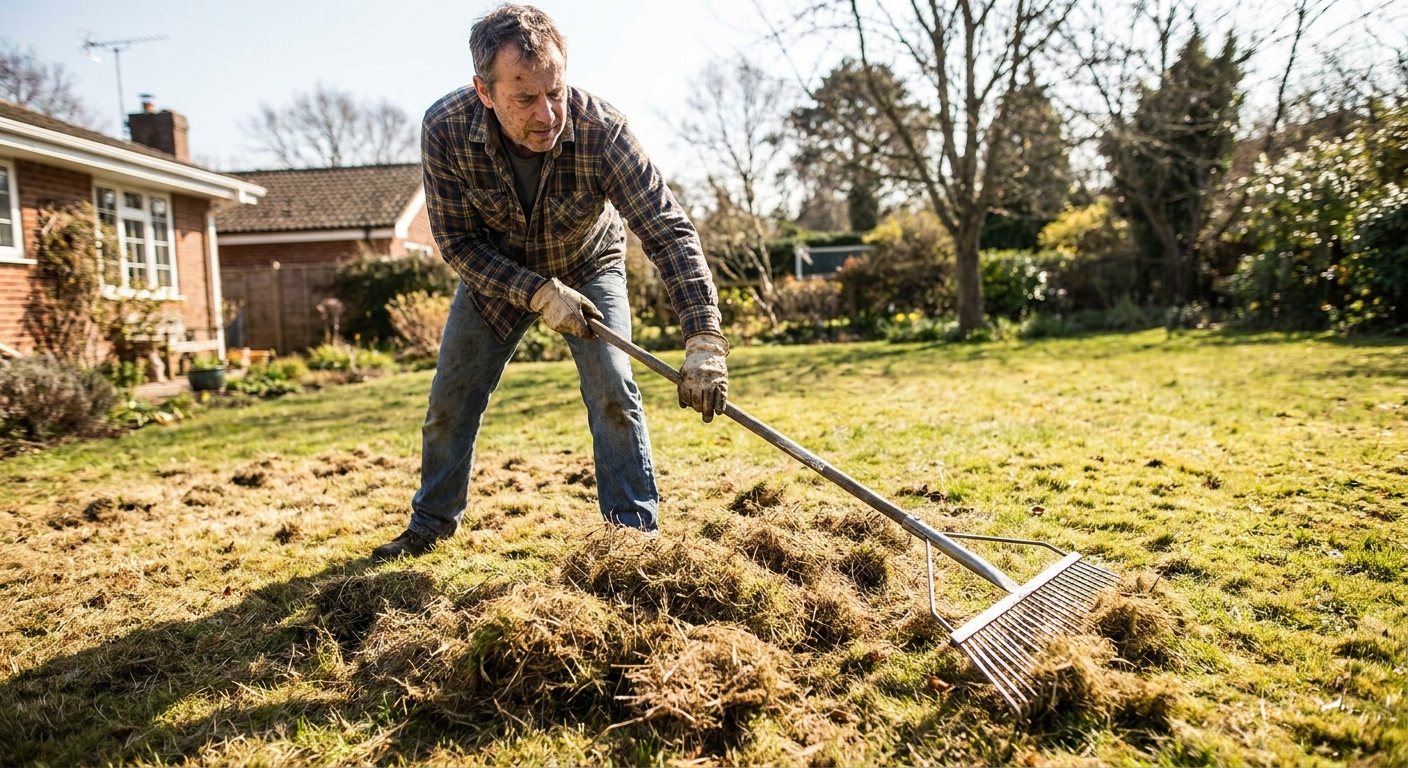
3) Reduce thatch
Thatch is not automatically “bad,” but a thick layer is webworm real estate.
- If thatch is over about 1/2 inch, plan to dethatch when your grass is in its active growth period (not during heat stress).
- Aeration can also help by improving soil conditions that support healthier, less stressed turf.
4) Feed the lawn, but do not overdo nitrogen
Over-fertilizing can push tender growth that attracts more feeding. Stick to a season-appropriate plan for your grass type. If you are unsure, go lighter rather than heavier during peak heat.
When treatment is worth it
If your drench test pulls up multiple larvae and the damage is spreading, targeted treatment can stop the bleeding. Timing matters because small larvae are much easier to control than mature ones hiding deep in thatch.
Best timing
- Treat when larvae are actively feeding and still relatively small. In many places that is mid to late summer, but local timing varies.
- Apply late afternoon or early evening for best contact with night-feeding larvae.
- If you see moths fluttering at dusk, that is a heads-up that egg-laying may be happening and larvae can follow soon. Scout early so you catch the small stages.
Lower-impact option: Bt (Bacillus thuringiensis var. kurstaki)
Bt-k targets caterpillars and is easier on beneficial insects when used correctly. It works best on small larvae that are actively feeding. In turf, results can be mixed if spray does not reach the feeding zone in the canopy and thatch. You may need excellent coverage and a repeat application to catch a hatch window.
Another targeted option: spinosad
Spinosad is effective on many caterpillars. Apply according to label directions and avoid spraying when pollinators are active. Since lawns are not usually flowering, this is often manageable, but watch for clover blooms and mow them off before treating. Late afternoon or early evening is a smart window here too.
Conventional lawn insecticides
Products labeled for sod webworms often include ingredients like bifenthrin, cyfluthrin, lambda-cyhalothrin, or carbaryl (where legal and available). These can work, but they are broader-spectrum. Use them only if you have confirmed larvae and cultural steps are not enough.
Application tips that actually help
- Read the label and confirm sod webworms are listed for your turf type.
- Mow first (if needed): a slightly shorter canopy can improve coverage. Do not scalp a heat-stressed lawn.
- Watering guidance matters: some products need light watering-in to move active ingredient into the thatch zone, while others are applied to dry turf. Follow the specific label.
- Hit the right areas: focus on damaged patches plus a few feet beyond the edges.
- Re-check in 3 to 7 days with another drench test to see if larval numbers dropped.
- Safety basics: keep kids and pets off treated areas until the product has dried and any label re-entry interval has passed.
Thrifty homeowner note: do not “preventively” blanket-spray your whole yard. Confirm first, then treat only where the activity is.
Repairing thin spots
Once feeding stops, turf often recovers if crowns and roots are still healthy. Give it a couple of weeks with good watering and mowing habits.
- Rake lightly to stand up matted grass and remove dead material.
- Overseed in the proper season for your grass type if areas stay thin.
- Seed upgrade: if it fits your lawn, consider endophyte-enhanced cultivars (common in many tall fescues and perennial ryegrasses). Endophytes can help turf naturally resist surface-feeding insects like webworms.
- Topdress lightly with compost if your soil is compacted and tired.

Prevention checklist
You cannot “webworm-proof” a lawn forever, but you can make your yard a lot less inviting.
- Thatch control: dethatch when needed and aerate as part of your normal schedule.
- Water smart: deep and infrequent, early morning.
- Mow for resilience: correct height, sharp blade, avoid scalping.
- Fertilize with restraint in heat: avoid pushing soft growth during peak stress.
- Choose seed wisely when overseeding: endophyte-enhanced blends can add a little built-in defense.
What not to do
- Do not water at night “to cool it off.” It can fuel disease and keep the surface damp.
- Do not apply a grub preventer and expect it to fix webworms. Different pest, different target zone.
- Do not dethatch aggressively in peak heat or drought stress. That can set your lawn back more than the insects did.
Quick FAQ
Will sod webworms kill my lawn?
They can thin it badly, especially during hot weather, but many lawns recover once feeding stops and watering improves. Severe infestations can kill turf in patches.
Do I need to treat the whole yard?
Usually no. Treat confirmed active areas plus a buffer beyond the patch edges. Blanket treatments are expensive and often unnecessary.
When should I call a pro?
If the damage is spreading fast, you cannot confirm the pest, or you have repeated outbreaks despite dethatching and better watering, a local turf pro or extension office can help confirm the cause and dial in timing for your region.
The 30-Second Cheat Sheet
Essential takeaways for: Sod Webworms: Lawn Damage ID and Treatment
Fast ID
- Sod webworm damage: irregular brown patches, chewed or “windowpane” blades, thinning that stays rooted, plus green pellet-like frass and occasional silk in the thatch.
- Drought: larger areas go dull bluish-gray first, footprints linger, improves after consistent deep watering.
- Fungus: spots or lesions on blades, rings or defined patterns (brown patch can show a “smoke ring” early morning), often after humid nights and overwatering.
- Grubs: turf peels up easily like carpet because roots are eaten.
Confirm fast (drench test)
- Mix 1 to 2 tsp up to 1 to 2 tbsp dish soap in 1 gallon of water.
- Pour over about 1 sq yd at the edge of a damaged patch.
- Wait 5 to 10 minutes. Caterpillars surfacing often means active webworms.
Act or wait?
- If you find 5 to 10+ larvae per sq yd (rules vary by region and turf), treatment is usually worth it.
- If you only see 0 to 2 and damage is not spreading, tighten watering and mowing first and re-check in a week.
Fix first (cheap cultural steps)
- Water deep, not daily: about 1 inch per week total, early morning.
- Mow right: one-third rule, sharp blade.
- Reduce thatch: dethatch if over about 1/2 inch; aerate if compacted.
If you need treatment
- Best results when larvae are small and feeding (often mid to late summer, and sometimes more than one generation).
- Apply late afternoon or early evening when larvae are about to feed.
- Targeted options: Bt-k (best on small caterpillars, may need repeats) or spinosad.
- Conventional insecticides can work, but use only after confirming activity and follow label watering directions.
Prevention
- Keep thatch under control.
- Avoid frequent light watering that creates shallow roots and a fluffy hiding layer.
- When overseeding, consider endophyte-enhanced seed (some fescues and perennial ryegrasses) to help deter surface-feeding insects.
- Do not over-fertilize during heat.
💡 Tip: Scroll up to read the full article for detailed, step-by-step instructions.
⬆️ Back to top
About Marcus Vance
Content Creator @ Grit & Home
Marcus Vance is a lifelong DIY enthusiast and self-taught home renovator who has spent the last decade transforming a dilapidated 1970s ranch into his family's dream home. He specializes in budget-friendly carpentry, room-by-room renovations, and demystifying power tools for beginners. Through his writing, Marcus shares practical tutorials and hard-learned lessons to help homeowners tackle their own projects with confidence.