
🚨 In a DIY emergency or rush?
Skip the details and jump straight to our 30-second cheat sheet for the most crucial info.
A squeaky interior door is the kind of “small” problem that can make you feel like you live inside a haunted house. The good news is that most hinge squeaks are fixable in minutes, and the best fix depends on where the noise is coming from.
This guide is explicitly about hinge noise (a squeak, chirp, creak, or clicking at the hinge). If your door sticks, rubs, or scrapes the jamb or floor, that is a different issue. Alignment might still be involved, but the diagnosis and fixes are not the same.
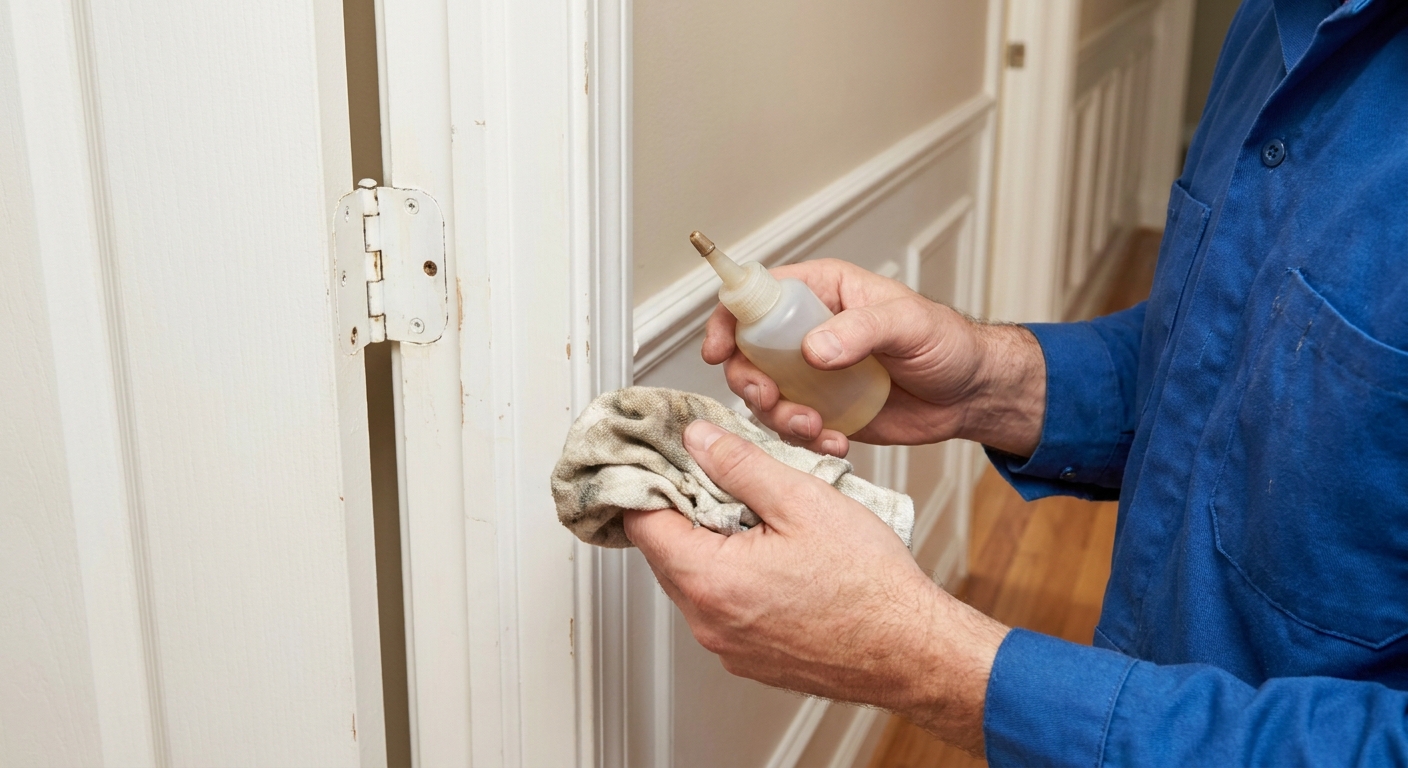
First, confirm it is the hinge
Before you spray anything, take 60 seconds to pinpoint the sound. Otherwise you can “fix” the wrong part and the squeak will come right back.
Quick tests
- The ear test: Put your ear near the top hinge while you slowly swing the door. Then repeat at the middle and bottom hinges. Keep hair, fingers, and hoodie strings clear of pinch points.
- The hand-on-hinge test: Rest your fingers lightly on the hinge knuckle (also called the barrel) as you move the door. You can often feel the vibration in the squeaky hinge. Again, keep fingertips away from the moving seam.
- The latch test: Open the door slightly and lift the handle so the latch bolt retracts. Move the door without the latch contacting the strike plate. If it still squeaks, it is not the latch.
- The paper test: Slip a sheet of paper between the door and the jamb near the latch side. If the sound changes or stops, you might have rubbing, not hinge squeak.
If the sound is a metallic squeal right at the hinge knuckle, keep reading. That is our territory. If it is more of a click or tick, loose screws or tiny hinge leaf movement are common culprits, so do not skip the screw-tightening step.
Why hinges squeak
A hinge squeaks when there is friction between moving metal parts. That friction can come from simple dryness, but it can also come from a pin that is slightly bent, grit inside the knuckles, a hinge that is wearing out, or a door that is pulling the hinge out of alignment.
Common causes
- Dry hinge pin: Lubricant has worn away, or it was never lubricated.
- Paint, dust, or grit in the knuckles: Especially common after painting doors or trim.
- Wear inside the hinge: Standard interior loose-pin butt hinges typically do not have replaceable bushings. Some upgraded hinges (like ball-bearing styles) have bearing surfaces and behave differently, but the everyday painted interior hinge usually just wears at the knuckles and pin.
- Misalignment: The door is sagging slightly, twisting the hinge knuckles so the pin rubs.
- Loose screws: Tiny movement at the leaf can create clicks and creaks that sound like squeaks.
My rule of thumb: Start with the least invasive fix (tighten and lubricate), then move toward pin removal, then replacement or alignment work if the squeak returns quickly.
Fix 1: Tighten and clean
This is the boring step that solves a surprising number of squeaks. A slightly loose hinge leaf can creak and squeak under load.
Tools and supplies
- #2 Phillips screwdriver or drill driver (use low torque)
- Dry rag or paper towels
- Optional: nylon brush or old toothbrush
Steps
- Open the door halfway so it stays put.
- Check every screw on all hinges. Snug them down. Do not over-tighten and strip the wood.
- Wipe the hinge knuckles to remove dust and hair that can wick away lubricant.
- If paint is bridging the knuckles (paint sealing the moving parts), gently break that paint line with a utility knife. Go slow so you do not gouge the door or jamb.
If the squeak is still there, move on to lubrication.
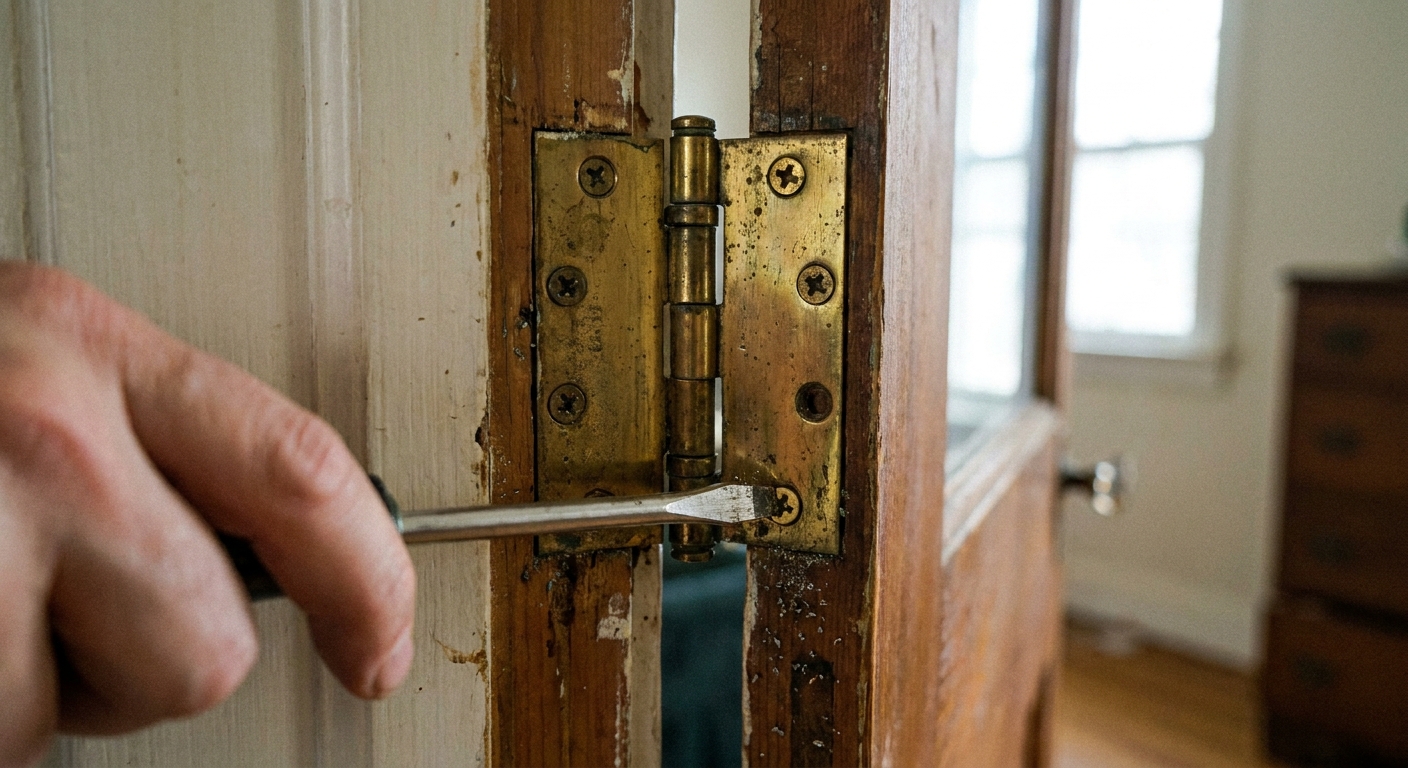
Fix 2: Lubricate (no pin removal)
If you want the quickest win, lubricate the hinge pin area and work it in. This is the method I try first on most interior doors.
Best lubricants for interior hinges
- Silicone spray: Clean, low-mess, good for most homes. Protect nearby paint and floors from overspray. The easiest trick is to spray onto a rag or cotton swab, then wipe it onto the top of the pin and the knuckle seams.
- White lithium grease (spray or tube): Long-lasting, great for persistent squeaks, can be a bit messier.
- 3-in-1 oil or light machine oil: Works well, but can drip and attract dust if you overdo it.
- Graphite (dry lube): It can work, but it is black and messy. I consider it better for locks than hinges unless you are careful and do not mind possible smudges.
What to avoid
- WD-40 as the final answer: WD-40 can act as a light lubricant and it is great at flushing gunk, but on door hinges it is often not long-lasting by itself. If you use it, treat it like a cleaner, wipe the excess, then follow with silicone spray or white lithium grease. If you want to stay in the WD-40 family, look for WD-40 Specialist Silicone or White Lithium.
- Cooking oils: They gum up over time and can stain paint.
Steps
- Protect the floor with a paper towel under the hinge, especially for oil or lithium grease.
- Apply a small amount right at the top of the hinge knuckle where the pin enters, and also at the seams between knuckles if you can.
- Swing the door slowly 10 to 20 times to work the lubricant through.
- Wipe off excess so it does not run down your trim.
If it stays quiet, you are done. If it gets quiet for a day or two then returns, that is a clue the pin and knuckles need a deeper clean and lube.
Fix 3: Pull the pin and grease it
If I could only teach one squeak fix, this would be it. When you remove the pin, you get rid of old grit and dried paint, and you can coat the pin evenly.
Tools and supplies
- Hammer
- Nail set or a sturdy nail (to tap the pin up)
- Pliers (optional)
- Rag
- Lubricant: white lithium grease, silicone spray, or light machine oil
Safety note
For a heavy solid-core door, do one hinge pin at a time and keep the door mostly closed so it is supported. If the door feels like it wants to drop, slide a shim or folded cardboard under the door edge.
Steps
- Close the door most of the way so it is stable.
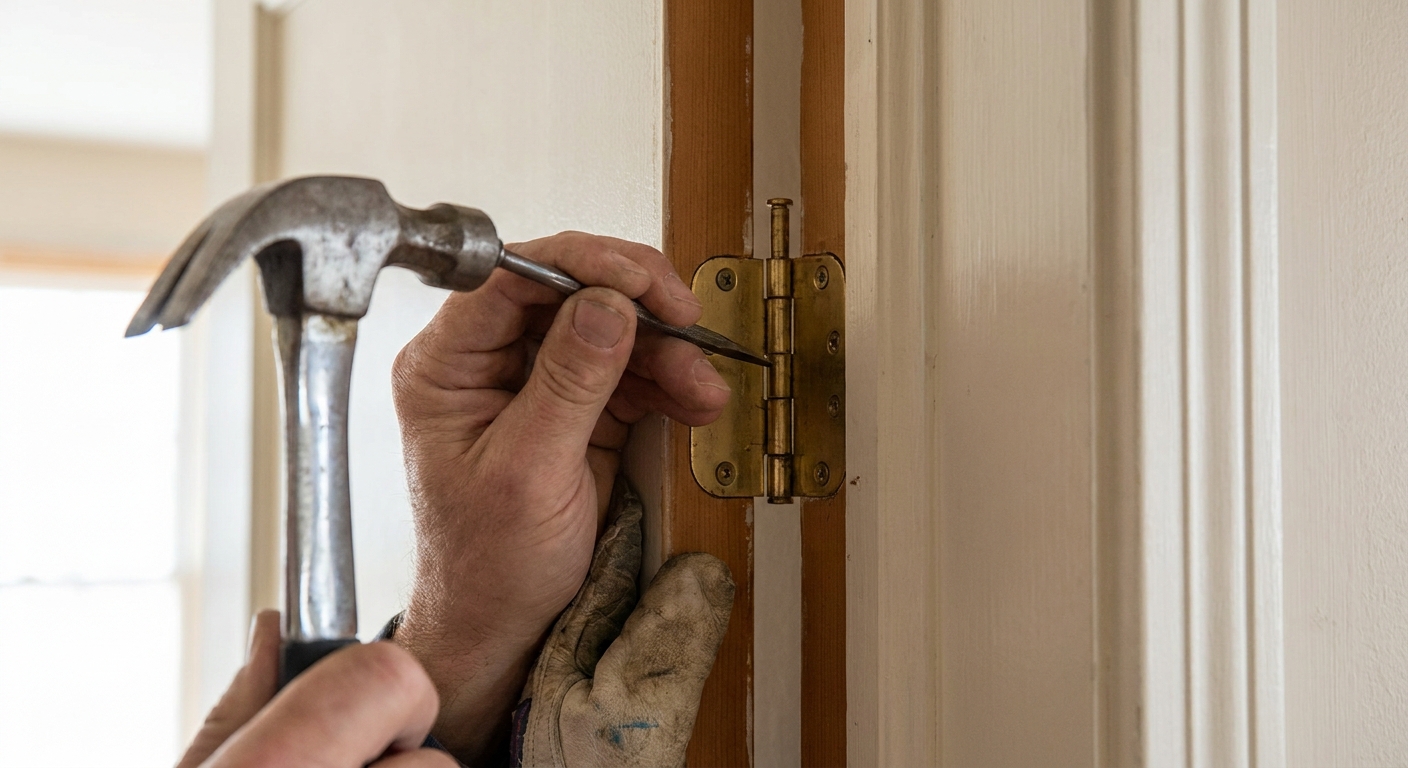
- Tap the hinge pin upward from the bottom using a nail set and hammer. Once it lifts, pull it out by hand or with pliers.
- Wipe the pin clean. If you see black grime or paint flecks, you found the squeak source.
- Lubricate the pin lightly but thoroughly. My go-to is a thin smear of white lithium grease on the pin shaft.
- Reinsert the pin, tap it fully seated, then swing the door several times.
- Repeat one hinge at a time until the noise is gone.
If the pin is stubborn
- Score paint around the hinge knuckle and pin head with a utility knife.
- Use a drop of penetrating oil, wait 5 minutes, then try again.
- If the pin head is decorative and you cannot grab it, tap up a little more, then use pliers on the exposed shaft.
If the pin does not come out
Some hinges have non-removable pins (common on some security and commercial hinges). In that case, focus on lubricating at the knuckle seams from both sides, cycle the door a bunch, and wipe clean. If the squeak persists, replacement is usually the practical move.
When lube is not enough
If you lubricate properly and the squeak comes back quickly, the hinge may be worn. Standard interior loose-pin butt hinges usually wear at the knuckles and pin. Once those holes get sloppy, the hinge can start “singing” when the door moves.
Signs the hinge is worn
- Squeak returns within days even after pin cleaning and lubrication
- Door has side-to-side play at the hinge edge when you gently wiggle it
- You see metal dust or shiny wear spots on the pin
- The hinge knuckles look slightly egg-shaped rather than round
The fix
Replace the hinge (or at least the problem hinge). You can also try replacing just the hinge pin if the pin is visibly scored or bent, but in my experience a worn hinge knuckle will keep making noise until the whole hinge is swapped.
Fix 4: Replace the hinge
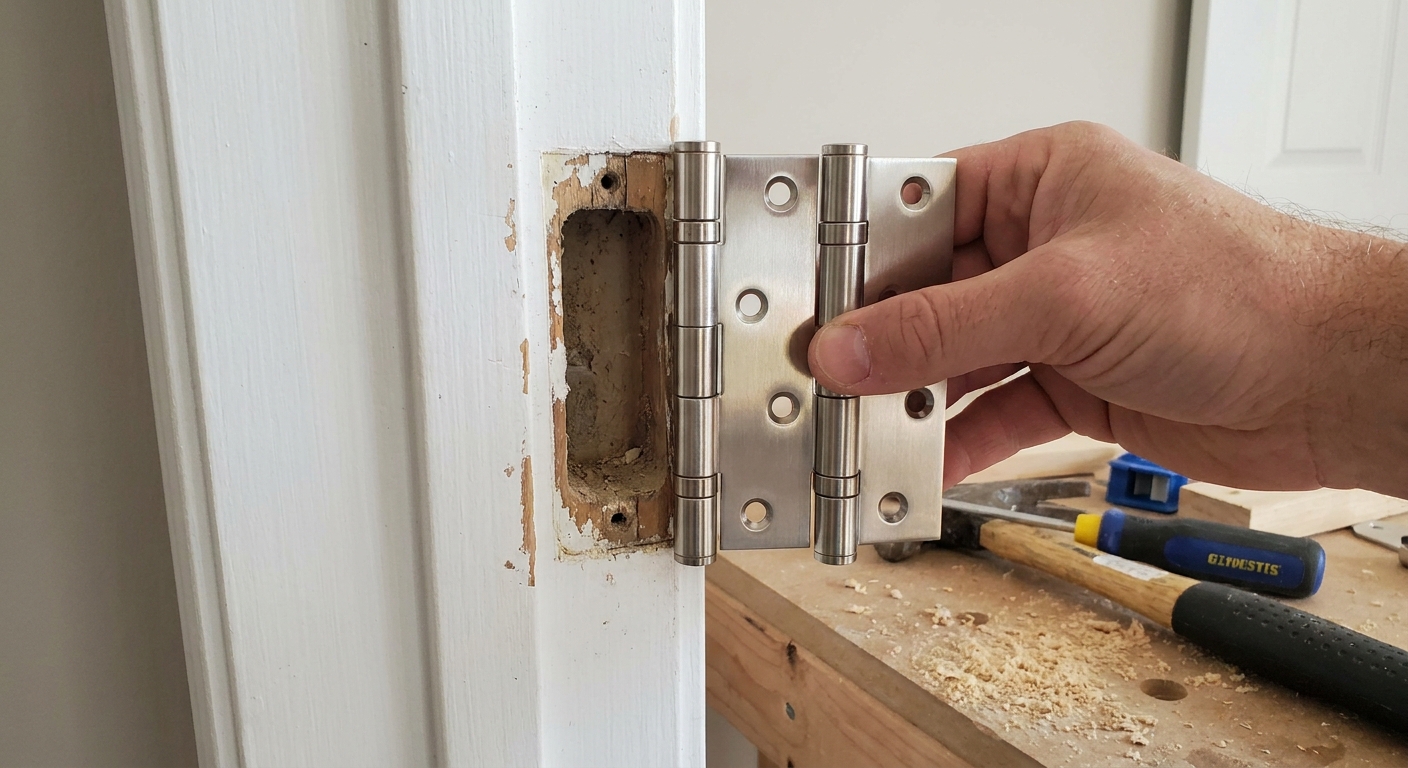
Hinge replacement sounds intimidating, but it is mostly a careful, one-screw-at-a-time job. The key is to match what you already have.
Buy the right hinge
- Size: Most interior doors use 3 1/2 inch or 4 inch hinges. Measure height of the hinge leaf.
- Corner style: Square corner or radius corner. Match it.
- Finish: Satin nickel, brass, bronze, etc. Match for looks.
- Type: Standard interior butt hinge is most common. If you are upgrading to ball-bearing hinges, replace them as a set so everything lines up and feels consistent.
Steps
- Keep the door closed so it is supported.
- Replace one hinge at a time.
- Remove one screw, then replace it with the new hinge screw in the same hole to hold position.
- Swap the rest of the screws, then move to the next hinge.
- Test the door. If it swings smoothly and stays quiet, you are done.
If screws will not tighten
This is common on older doors and it can contribute to noise and sag.
- Quick fix: Replace short screws with longer 2 1/2 inch to 3 inch screws on the jamb side, driven into the framing. Use only one or two, and drive them gently so you do not pull the jamb out of square. If you are in a location where wiring or plumbing could be near the jamb, use caution and choose length accordingly.
- Clean fix: Fill the stripped hole with wood glue and a few toothpicks (or a small wood dowel), let it set, then re-drive the screw.
Fix 5: Alignment and squeaks
Here is the sneaky one. A door can be slightly out of alignment and still not scrape the floor or jamb. Instead, it twists the hinges and makes the pin rub hard inside the knuckle. That can squeak even with decent lubrication.
Clues it is alignment-related
- The door squeaks more when you push or pull on the knob while opening
- The gap (reveal) around the door looks uneven at the top
- The door slowly swings open or closed on its own
- You see one hinge knuckle not lining up straight (knuckles not in a clean vertical line)
Easy moves
- Recheck hinge screws, especially the top hinge on the jamb side. The top hinge carries the most load. (This is the same idea as Fix 1, just targeted where it matters most.)
- Use one longer screw in the top hinge jamb leaf to pull the jamb side tighter to the framing. Tighten slowly so you do not twist the jamb.
- Check for a bent hinge leaf. If one leaf is tweaked, it can bind the pin. Replacement is usually faster than trying to bend it back.
What I do not recommend for beginners
There are advanced tricks like bending hinge knuckles or shimming hinges to change the door position. They can work, but they can also create latch issues or new rubbing. If your door is not sticking or scraping and the goal is purely squeak elimination, I would rather see you clean and grease the pin or replace the hinge than start bending hardware.
Special cases
Painted hinges
Paint inside the knuckles is basically sandpaper plus glue. If your hinges were painted in place, pin removal and cleaning is the best route. Score paint lines first so you do not peel the surrounding trim paint.
Spring hinges
Some spring hinges have adjustment mechanisms and can be noisier. Lubricate per the manufacturer if possible. If the spring mechanism itself squeaks, replacement may be the cleanest fix.
Chirping doors
A high-pitched chirp can happen when two hinge leaves rub slightly because the door is torquing the hinge. That points back to loose screws or alignment more than lubrication.
My quick flow
- Step 1: Confirm it is a hinge, not the latch.
- Step 2: Tighten screws and wipe knuckles.
- Step 3: Lubricate at the top of the pin and work the door.
- Step 4: If it returns, pull the pin, clean it, grease it, reinstall.
- Step 5: If it still returns, replace the squeaky hinge.
- Step 6: If hinge knuckles look twisted, address alignment with targeted tightening and a longer top jamb screw.
Most squeaks die at Step 3 or Step 4. If yours does not, do not feel crazy. Worn hinges are real, and replacement is a perfectly respectable final answer.
FAQ
How long should hinge lubrication last?
Silicone spray might last months in a normal interior setting. White lithium grease can last longer. If it only lasts days, suspect dirt inside the hinge or wear.
Can I use petroleum jelly?
In a pinch, yes, it can quiet a hinge. It also attracts dust and can migrate in warm rooms. I consider it an emergency fix, not a long-term solution.
Why does it squeak more in winter?
Seasonal humidity changes can shift doors slightly and alter hinge load. That extra pressure on the pin can make an existing dry spot suddenly loud.
The 30-Second Cheat Sheet
Essential takeaways for: Squeaky Door Hinges: Fix the Noise for Good
Fastest fix (2 minutes)
- Confirm the squeak is at a hinge knuckle (barrel), not the latch.
- Snug all hinge screws.
- Apply a small amount of silicone spray or white lithium grease at the top of the hinge pin. (To avoid overspray, spray onto a rag first.)
- Swing the door 10 to 20 times. Wipe drips.
Best long-term fix (10 to 20 minutes)
- Do one hinge at a time with the door mostly closed.
- Tap the hinge pin up with a nail set and hammer.
- Wipe the pin clean, then lightly coat it with white lithium grease.
- Reinsert the pin and cycle the door.
When lubrication is not enough
- Squeak returns in days: likely grit, paint, or worn hinge knuckles.
- Door wiggles at hinge edge: hinge wear, replace the hinge.
- Squeak changes when you push or pull the knob: alignment or loose top hinge screws.
Do not confuse squeaks with scraping
If the door sticks, rubs, or scrapes the jamb or floor, that is a different repair. This cheat sheet is for hinge noise only.
What not to rely on
- WD-40 alone: can work as a light lubricant, but on hinges it is often not long-lasting. Use it to flush grime, then follow with silicone spray or white lithium grease. (Or use WD-40 Specialist Silicone or White Lithium products.)
- Cooking oil: can gum up and stain.
💡 Tip: Scroll up to read the full article for detailed, step-by-step instructions.
⬆️ Back to top
About Marcus Vance
Content Creator @ Grit & Home
Marcus Vance is a lifelong DIY enthusiast and self-taught home renovator who has spent the last decade transforming a dilapidated 1970s ranch into his family's dream home. He specializes in budget-friendly carpentry, room-by-room renovations, and demystifying power tools for beginners. Through his writing, Marcus shares practical tutorials and hard-learned lessons to help homeowners tackle their own projects with confidence.