
🚨 In a DIY emergency or rush?
Skip the details and jump straight to our 30-second cheat sheet for the most crucial info.
If your steam radiator is banging like someone dropped a wrench inside it, you are not alone. Older homes are full of steam systems that still heat well, but only if a few small parts are doing their job. The good news is that most noise comes from a handful of predictable causes. The not-so-good news is that steam can burn you quickly, and a couple common “fixes” can make things worse.
In this guide I will help you figure out what kind of system you have, what the noises usually mean, what you can safely adjust yourself, and where the line is for calling a pro.
First: steam vs hot water
This matters because the most common radiator advice online is for hot water systems, not steam. Steam radiators typically do not get “bled” like hot water radiators.
Clues you have steam
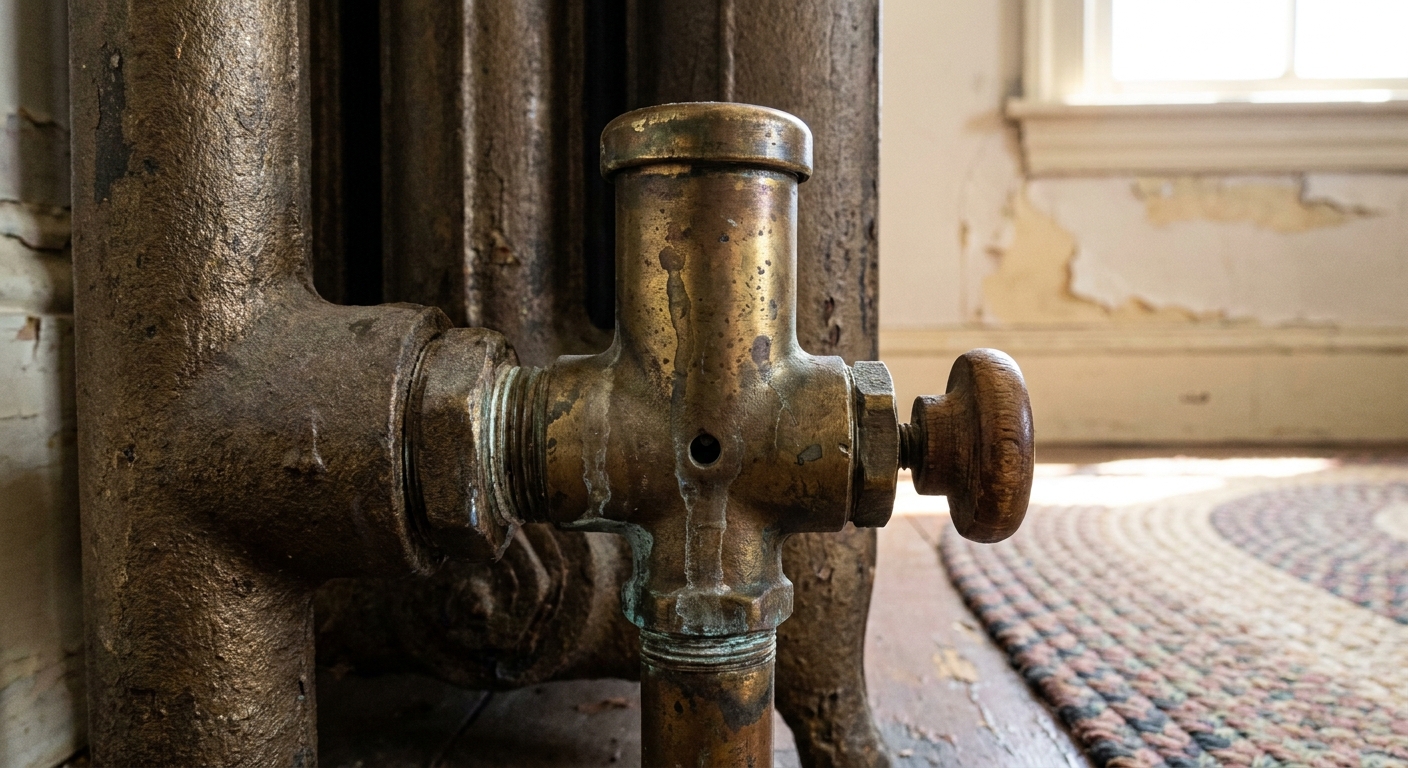
- Radiator has an air vent (a small bullet-shaped or cylinder-shaped fitting). On one-pipe steam it is often near the bottom side, but it can be mid-height or higher on some radiators and convector units.
- One-pipe steam: you see one pipe entering the radiator.
- Boiler often has a sight glass showing water level, and near-boiler piping is usually larger diameter black steel. (Common clue, not a guarantee.)
Clues you have hot water
- Two pipes going to the radiator, often with a bleed screw near the top end.
- More of a gentle “whoosh” of water flow, less of a vent hiss.
If you have steam and you try to “bleed” it, there is a real risk of releasing hot steam or damaging a vent. On steam, air has to leave through vents (or main venting), and the system needs the right pitch and drainage so water does not get trapped.
One-pipe vs two-pipe steam
One-pipe steam
- One pipe does everything: steam goes up, condensate (water) comes back down the same pipe.
- Each radiator usually has one shutoff valve on the pipe and an air vent on the radiator.
- Because steam and water share the same pipe, pitch matters a lot.
Two-pipe steam
- Two pipes: one brings steam in, the other returns condensate.
- Radiators often have a supply valve and a return fitting that may include a steam trap.
- Air venting varies: some two-pipe radiators have vents, but many systems vent air at the mains (via main vents, crossover traps, or other devices). So do not assume “no vent” means “not steam.”
If you have two-pipe steam and the radiator or return line is banging, keep steam traps in the back of your mind. A failed trap is one of the most common reasons two-pipe systems get noisy.
What the noises mean
Banging and clanking
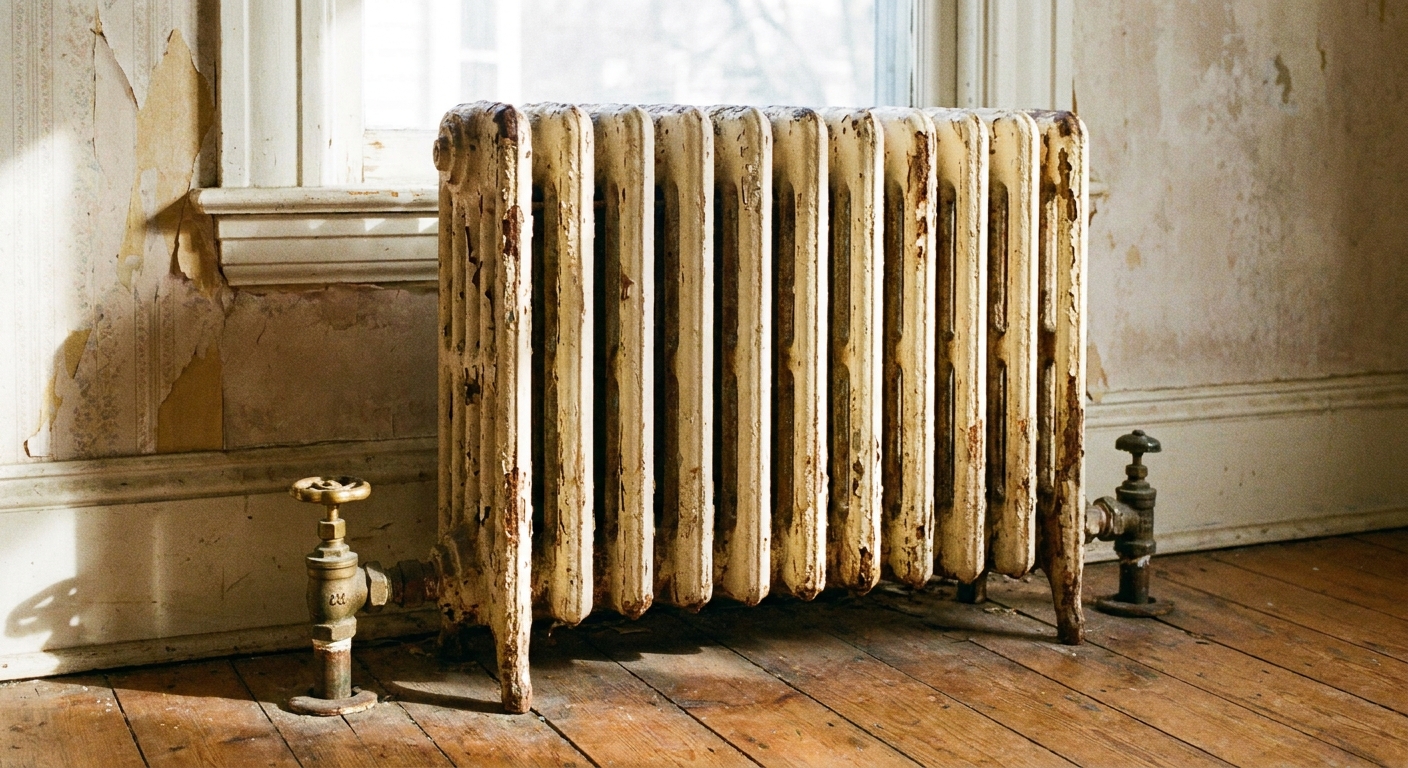
Most “steam radiator banging” is water hammer. That is when steam hits pooled water in a pipe and slams it around like a battering ram. You might hear:
- Sharp bangs when the heat first comes on
- Rhythmic knocking as steam pushes water along
- Clanks near the valve or in the wall or basement piping
Two-pipe note: a failed steam trap can let steam into the return where it does not belong, which can create water hammer in returns and make the whole system sound angry.
Hissing
Some hissing is normal at the start of a heating cycle. That is air leaving so steam can fill the radiator. Hissing becomes a problem when it is:
- Constant (never seems to stop)
- Spitting water along with air
- Loud enough to hear across the room
Gurgling or sloshing
Usually means condensate is trapped where it should be draining. That can lead to banging when steam shows up.
Safety first
- Let the system cool before you touch vents or valves.
- Wear gloves and eye protection if you are working near a vent that may spit.
- Never cap a vent to stop noise. That can prevent air from escaping and can create bigger problems.
- If you smell gas near a boiler, leave the area and call your utility or a pro immediately.
Stop and call a pro
- Any vent or valve actively leaking steam
- Signs of flue gas or backdrafting near the boiler (soot, exhaust smell, headaches, or a draft hood that feels “wrong”)
- Low-water cutoff issues, unusual boiler shutoffs, or a sight glass level that is very low or bouncing wildly
Valve rule (one-pipe)
On most one-pipe steam systems, the radiator shutoff valve should be either:
- All the way open, or
- All the way closed
Half-open is where people get into trouble. Partially closing a one-pipe valve can trap condensate, which invites water hammer and can even warp valve internals over time.
Do not force a stuck valve
If the valve will not turn, do not muscle it until something snaps. Older packing nuts, stems, and handles can break. Leave it for now and skip ahead to the “call a pro” section, or plan a valve service when the system is off.
Check radiator pitch
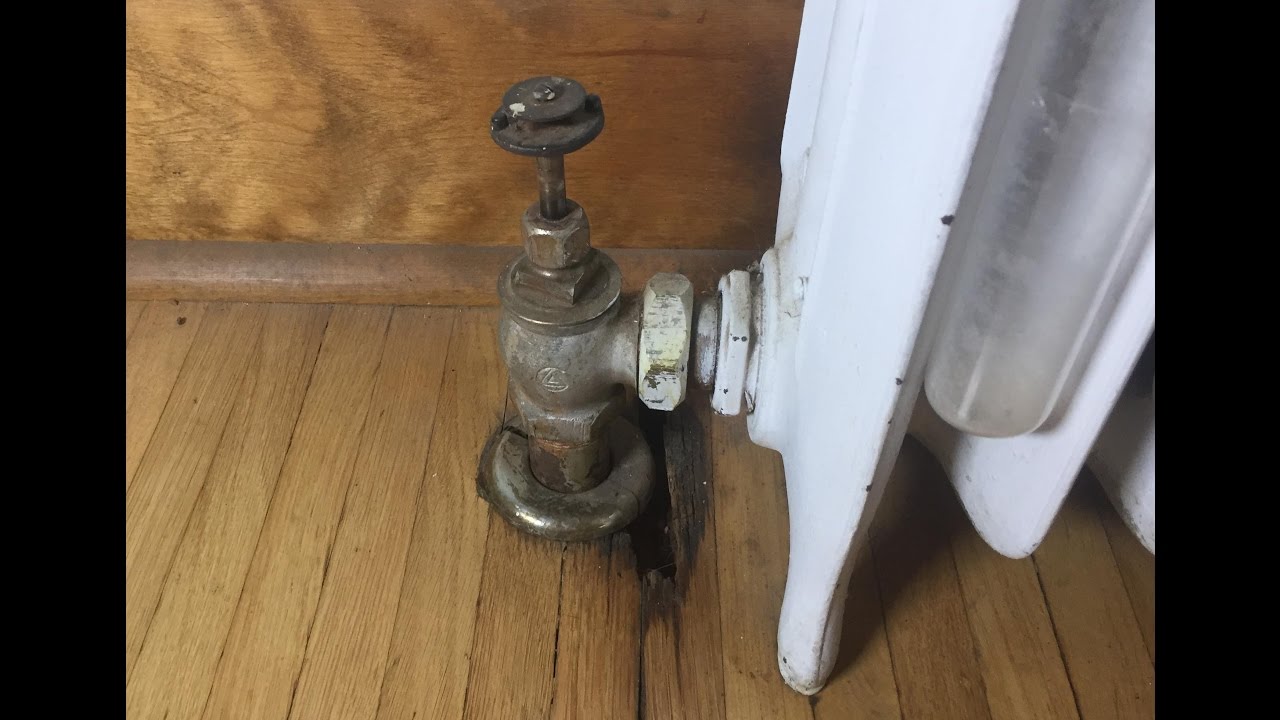
In a one-pipe system, condensate must drain back out of the radiator through the same pipe that brings steam in. That means the radiator should usually slope slightly toward the supply valve.
How to check pitch
- Place a small level on top of the radiator.
- You want a slight tilt, often around 1/8 to 1/4 inch across the radiator, toward the valve side. Another easy way to think about it: just enough that the bubble “kisses” the line.
How to adjust pitch
- Use shims under the feet on the far end (coins, composite shims, or furniture shims work).
- Add shims gradually. Too much tilt can cause its own weird noises and stresses.
My hard-learned lesson: I once “fixed” a noisy radiator by cranking it way off level. It got quieter for two days, then started spitting at the vent. Small adjustments win here.
Air vents
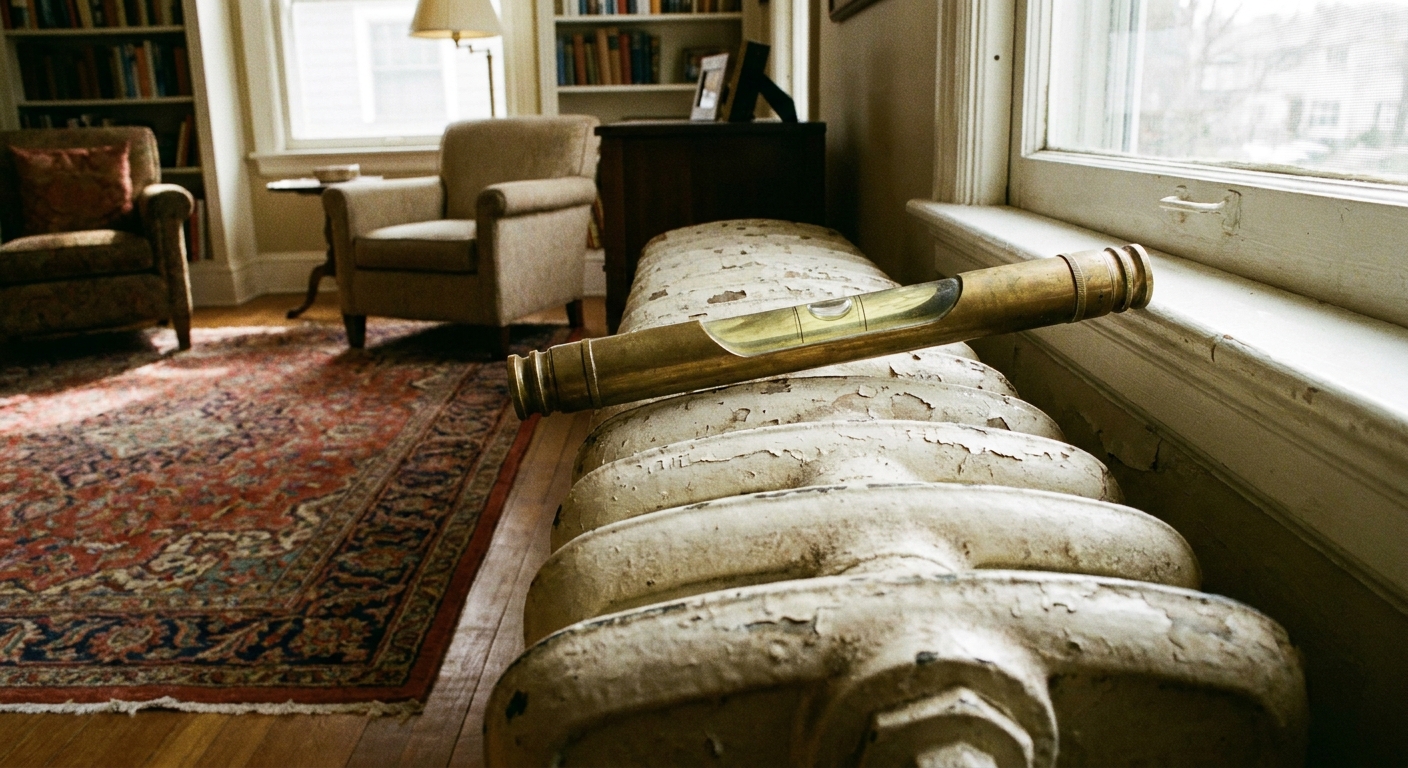
On a one-pipe radiator, the air vent is the traffic cop. It lets air out so steam can enter, then it closes when it gets hot.
Normal vent behavior
- Gentle hiss for a short time at the start of a cycle
- Hiss stops once steam reaches the vent
Signs the vent is failing or mismatched
- Hisses constantly even when the radiator is hot
- Spits water regularly (not just a one-off during an unusually long cycle)
- Radiator heats unevenly and never really fills
Safe DIY vent check
- Turn heat off and let the radiator cool.
- Inspect the vent for mineral crust, corrosion, or signs of water staining.
- If you replace it, match the vent type and size, and use pipe dope or PTFE tape rated for steam on the threads.
If you are hearing hissing at multiple radiators, the issue can be bigger than one vent. Sometimes the system needs balancing or better main venting in the basement.
Main venting (why it matters)
Main vents are usually located near the ends of steam mains in the basement. Their job is to quickly let air out of the big pipes so steam can arrive evenly. When main venting is missing or failed, you can get slow heat, more hissing at radiator vents, and sometimes water hammer because steam distribution gets sloppy.
What you can do
- Look for vents on or near the ends of mains (often on short vertical risers).
- Note any vent that is leaking, corroded, or obviously not there.
- If you are not sure what you are looking at, take a few photos and ask a steam pro. Five minutes of good photos can save a service call from turning into a scavenger hunt.
Pressure and wet steam
Many noisy steam systems are simply running at too high pressure. Residential steam is meant to run low. Lots of systems are happiest under about 2 psi, and some well-tuned systems run in ounces. Higher pressure can make vents louder and can contribute to spitting and banging.
Also, if the boiler is making wet steam (steam carrying water droplets), multiple radiators may hiss loudly or spit water. This can be related to near-boiler piping, water level, oils after repairs, or maintenance issues like skimming. That is usually a pro-level diagnosis.
Important: do not start adjusting boiler pressure controls unless you know exactly what you are changing. If you suspect pressure is high, put it on your “call a pro” list.
Banging in the pipes
If the radiator itself is pitched correctly and the valve is fully open, but you still get loud banging, the noise may be in the basement piping. Common culprits:
- Sags in horizontal piping that trap condensate
- Missing or loose pipe hangers
- Incorrect pipe pitch after past repairs
- Boiler water level issues that contribute to wet steam
Homeowner-friendly step: walk around during a heating cycle and listen. If the banging is clearly below you in a ceiling or basement run, take notes on where it is loudest. That information saves time if you bring in a steam pro.
Common steam mix-ups
Do not bleed steam radiators
Steam radiators need air vents (or main venting) to work. Opening random fittings to “let air out” is not the same thing and can be dangerous.
Do not drain the boiler to stop banging
Steam boilers need the correct water line. Too much water can create wet steam. Too little water can damage the boiler. If the sight glass level is abnormal, that is a “slow down and verify” situation, not a guess-and-drain situation.
Do not throttle a one-pipe valve
On one-pipe steam, controlling room temperature is usually done with venting choices, balancing, or a thermostat strategy, not by half-closing the radiator valve.
Troubleshooting by symptom
If the radiator bangs when heat starts
- Make sure the radiator valve is fully open (one-pipe).
- Confirm the radiator pitches slightly toward the valve (one-pipe).
- Check that the vent is upright and not loose (if your radiator has one).
- If it is a two-pipe radiator and the return line is getting hot fast, suspect a trap issue.
If the radiator hisses for a long time
- Confirm the vent is the correct type for steam and not clogged (one-pipe, or two-pipe if it uses radiator vents).
- Look for steam escaping at the vent threads, which can indicate a bad seal.
- If many radiators hiss, look upstream at main venting and pressure.
If the vent spits water
- Double-check radiator pitch (one-pipe).
- Consider a failing vent.
- If many radiators spit, suspect wet steam from boiler piping, water level, or pressure issues and call a pro.
When to call a pro
I love DIY, but steam is one of those systems where a good tech pays for themselves quickly. Call a steam-experienced HVAC pro if:
- Banging is coming from basement mains and you suspect pipe pitch or hangers need correction.
- Multiple radiators are spitting water or hissing nonstop.
- You suspect a two-pipe steam trap has failed.
- The boiler pressure seems high, the system short cycles, or you suspect control problems.
- You have leaks at vents, valves, unions, or the boiler, or any signs of corrosion or flue issues.
- A valve is stuck and you cannot move it with light pressure.
Pro tip: when you call, say the words “steam heat” and ask if they regularly service one-pipe or two-pipe steam. It is a specialty, and you want someone who does it often.
Quiet steam is possible
Most noisy radiators come down to three things: a valve that is not fully open (one-pipe), a radiator that is not pitched for drainage, or a vent or trap that is failing. Start there, go slow, and respect the heat. When the system is tuned, steam heat is one of the coziest, most even types of warmth you can have in an older home.
The 30-Second Cheat Sheet
Essential takeaways for: Steam Radiator Banging or Hissing? Quiet It Down Safely
Identify your system first
- Steam (one-pipe): one pipe into the radiator plus an air vent on the side (often low, but it can be higher on some radiators or convectors). Do not “bleed” it.
- Steam (two-pipe): two pipes (supply and return). Radiators may have traps. Air vents may be on radiators, but many systems vent air at the mains instead.
- Hot water: often has a bleed screw. Different troubleshooting.
What the noises usually mean
- Banging or clanking: water hammer from trapped condensate or poor pitch. On two-pipe systems, a failed steam trap is a common cause.
- Short hiss at startup: normal air venting.
- Constant loud hissing or water spitting: vent or trap issue, poor pitch, or system problem (wet steam, main venting, pressure).
Fast safe fixes (DIY-friendly)
- On one-pipe steam, keep the radiator shutoff valve fully open (or fully closed). Do not run it half-open.
- Check radiator pitch: it should slope slightly toward the supply valve. Shim the far end if needed.
- Inspect the air vent: replace if it hisses nonstop or spits often.
- If many radiators act up, look for main vents at the ends of basement mains and note anything that is missing, leaking, or obviously corroded.
Do not do this
- Do not bleed a steam radiator like hot water.
- Do not cap or plug a vent to stop noise.
- Do not force a stuck valve.
- Do not drain boiler water as a guess.
- Do not crank boiler pressure up to “push steam faster.”
Call a pro if
- Banging is in basement mains or walls (pipe pitch and hangers may be wrong).
- Many radiators hiss or spit water (possible wet steam, trap failures, main venting, or pressure/control issues).
- You see leaks at vents, valves, boiler piping, or anything around the flue.
- You suspect a two-pipe trap has failed (radiator overheats, return gets hot fast, or banging appears in returns).
💡 Tip: Scroll up to read the full article for detailed, step-by-step instructions.
⬆️ Back to top
About Marcus Vance
Content Creator @ Grit & Home
Marcus Vance is a lifelong DIY enthusiast and self-taught home renovator who has spent the last decade transforming a dilapidated 1970s ranch into his family's dream home. He specializes in budget-friendly carpentry, room-by-room renovations, and demystifying power tools for beginners. Through his writing, Marcus shares practical tutorials and hard-learned lessons to help homeowners tackle their own projects with confidence.