
🚨 In a DIY emergency or rush?
Skip the details and jump straight to our 30-second cheat sheet for the most crucial info.
If your storm door won’t close, won’t latch, or keeps popping back open, you’re not alone. Storm doors live a rough life: sun, wind, rain, kids flying through with backpacks, and that one time you carried in a couch and “gently” nudged the frame (I’ve been there).
The good news is most storm door problems come down to a few simple issues: a closer that’s set wrong, a striker plate that drifted out of alignment, hinges that are binding, seasonal movement, or plain old air pressure fighting the close.
Below is my “fixes to try first” order. Start at the top and you’ll usually solve it in under 30 minutes.
Quick safety and tool check
Before you adjust anything, do two quick things:
- Check for wind: If it’s gusty, the door will fight you. Do adjustments on a calm day or work from inside with the main door open.
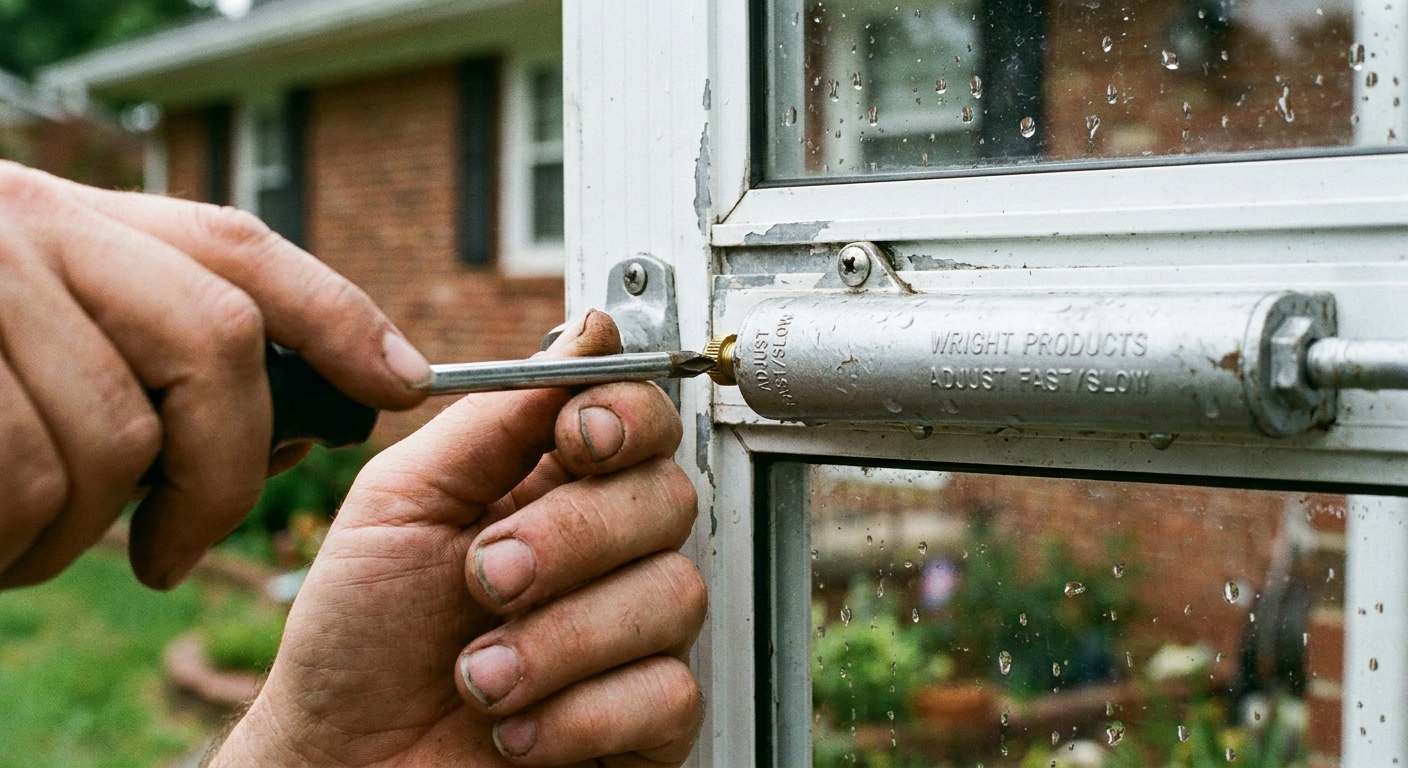
- Snug up loose screws: Grab a screwdriver and tighten hinge screws, closer bracket screws, and handle set screws. Loose hardware is one of the most common causes of “mystery” misalignment.
Tools you might need: Phillips screwdriver, flathead screwdriver, an often 7/16-inch wrench (bracket sizes vary), a small level, pencil, and a business card or thin cardboard for shimming while you test.
Step 1: Diagnose what’s actually happening
Different symptoms point to different fixes. Open the door halfway, then slowly close it by hand and watch where it fails.
- Won’t close all the way: Often the closer speed is set too slow (too much damping), the door is rubbing the frame, the latch side is sagging, or you’re fighting trapped air pressure.
- Closes but won’t latch: Usually striker plate alignment, a sticky latch bolt, or the door is hitting the frame before the latch reaches the striker.
- Latches but won’t stay shut: Often not enough “final pull” from the closer, a worn latch, weatherstripping pushing the door back open, or air pressure popping it open.
- Slams shut: Closer speed is too fast, or the closer is failing internally.
Quick test for the “air pocket” problem
This one is ridiculously common: the storm door closes perfectly when the main interior door is open, but won’t latch when the main door is closed. That’s trapped air pressure pushing back like a cushion.
Test it: Try closing the storm door with the main door open. If it latches easily, but won’t latch when the main door is shut, you’ve found your culprit.
Step 2: Check closer force and the hold-open washer
Most storm doors have a pneumatic or hydraulic closer (that tube with a rod). Some doors also have a second closer near the bottom. If yours has two, adjust them both and keep them reasonably matched.
Adjust the closing force (the door not pulling itself shut)
Look at the closer tube. Many have a force setting controlled by how the closer is mounted:
- Pin position at the door bracket: Moving the pin to a different hole changes leverage. More leverage usually means stronger pull and better latching.
- Frame bracket position: Some brackets slide or have multiple screw holes. Repositioning can increase or decrease closing force.
What to try: If the door dies in the last few inches, increase the closing force one step (different pin hole or bracket position), then test.
Make sure the hold-open isn’t accidentally engaged
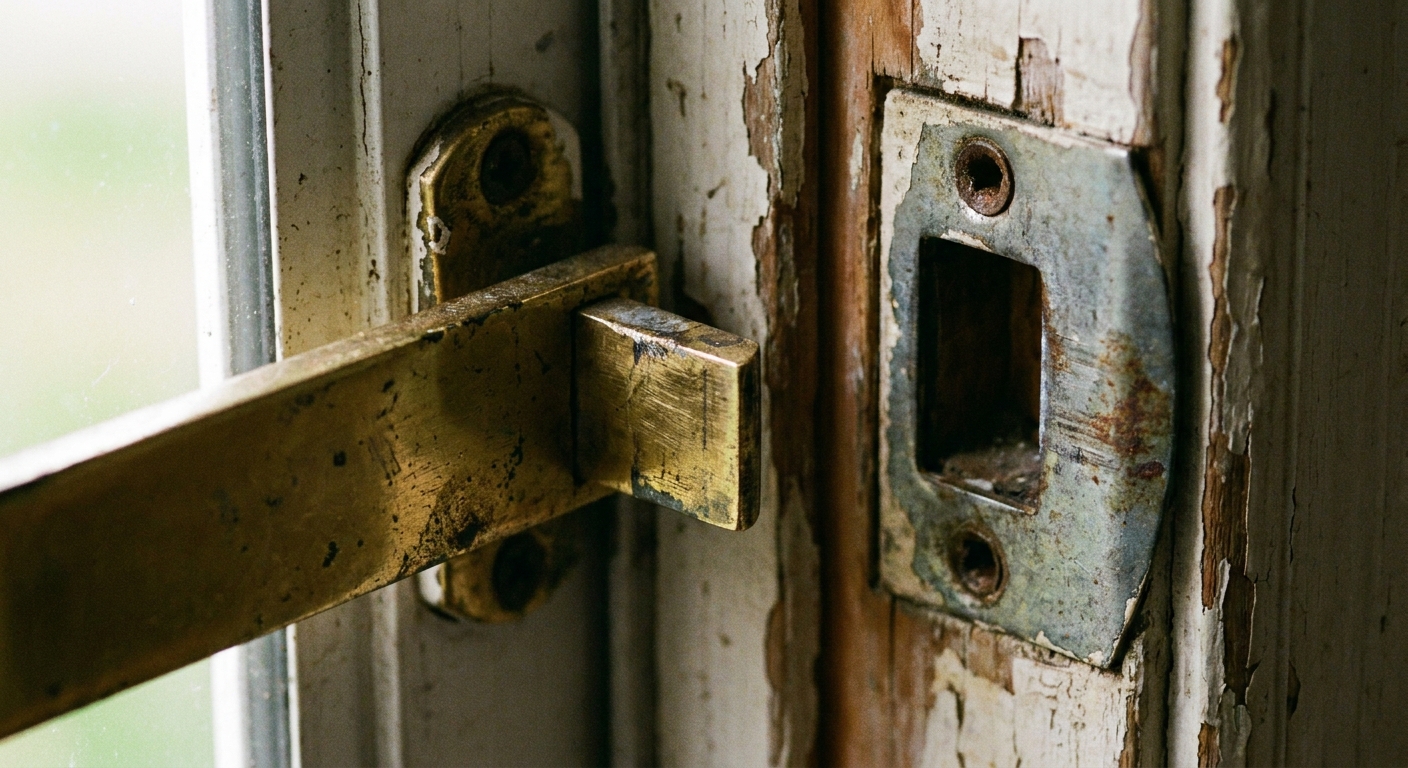
Many closers have a little hold-open washer on the rod. If it’s jammed against the tube, it can keep the door from fully closing.
- Open the door slightly, slide the washer away from the tube, and close the door again.
My mistake to avoid: I once “fixed” a door for 20 minutes before realizing my kid had bumped the hold-open washer into the locked position.
Step 3: Adjust the closer speed
If the door closes too slowly and won’t latch, or it slams, the speed adjustment is usually the fastest win.
Find the adjustment screw
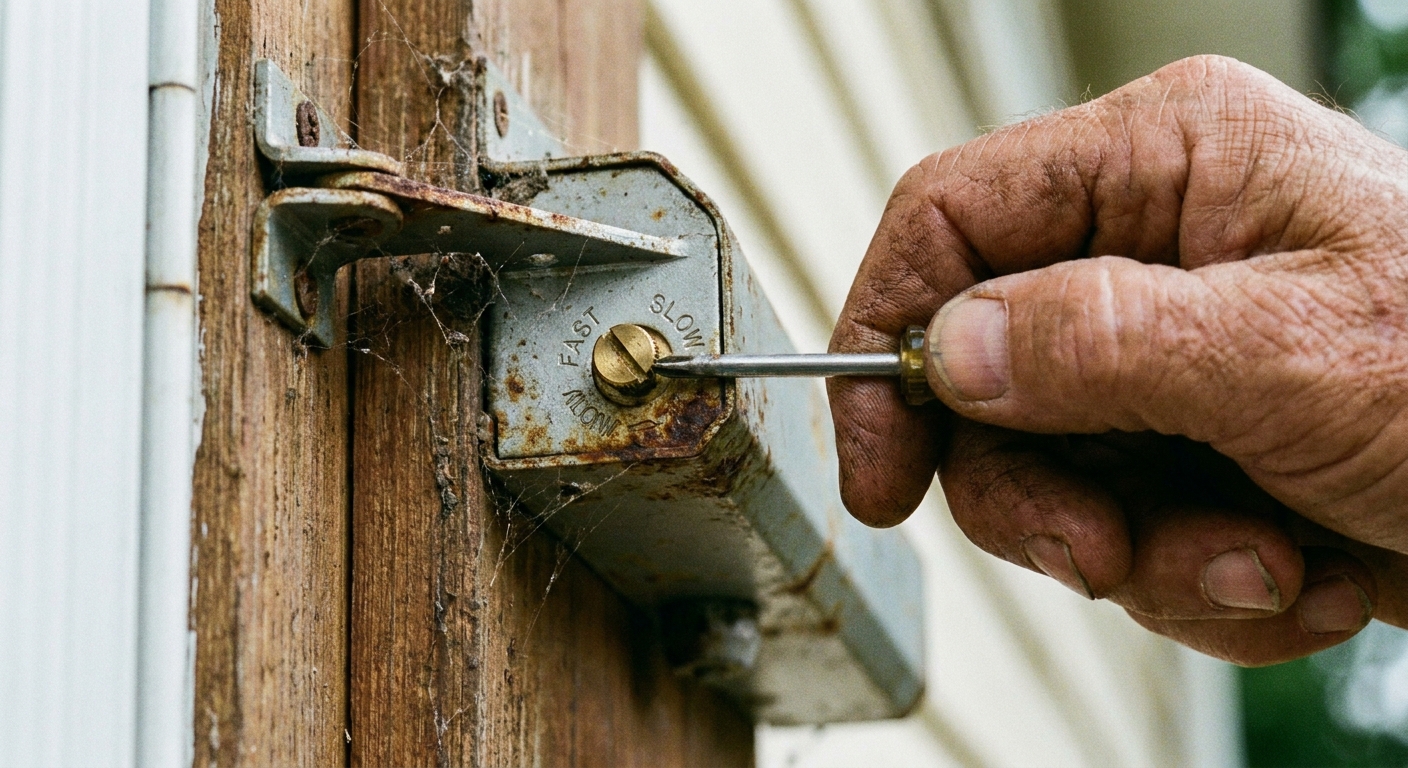
On most closers, there’s a small screw at the end of the tube. This controls how fast the door closes.
- Turn clockwise to slow the closing speed on many models (but check your closer label, because it’s not universal).
- Turn counterclockwise to speed it up on many models.
Important: Make tiny adjustments and never remove or back the screw out too far. On some closers, backing it out too far can release oil or air, ruin the closer, and make a mess.
What you want: A smooth close with a slightly stronger “final pull” in the last few inches so the latch clicks every time.
Go in tiny steps
Adjust in 1/8-turn increments, then test. A little goes a long way.
Step 4: Realign the striker plate
If the door closes but the latch won’t catch, you’re almost always looking at striker alignment. The door or frame shifts a hair over time, and that’s enough to miss.
Do the lipstick test (no joke)
This is an old-school trick that works.
- Rub a little lipstick, chalk, or a marker on the latch bolt.
- Close the door gently until it touches the frame.
- Open it and look for the mark on the striker plate area. That mark tells you where the latch wants to hit.
Adjust the striker
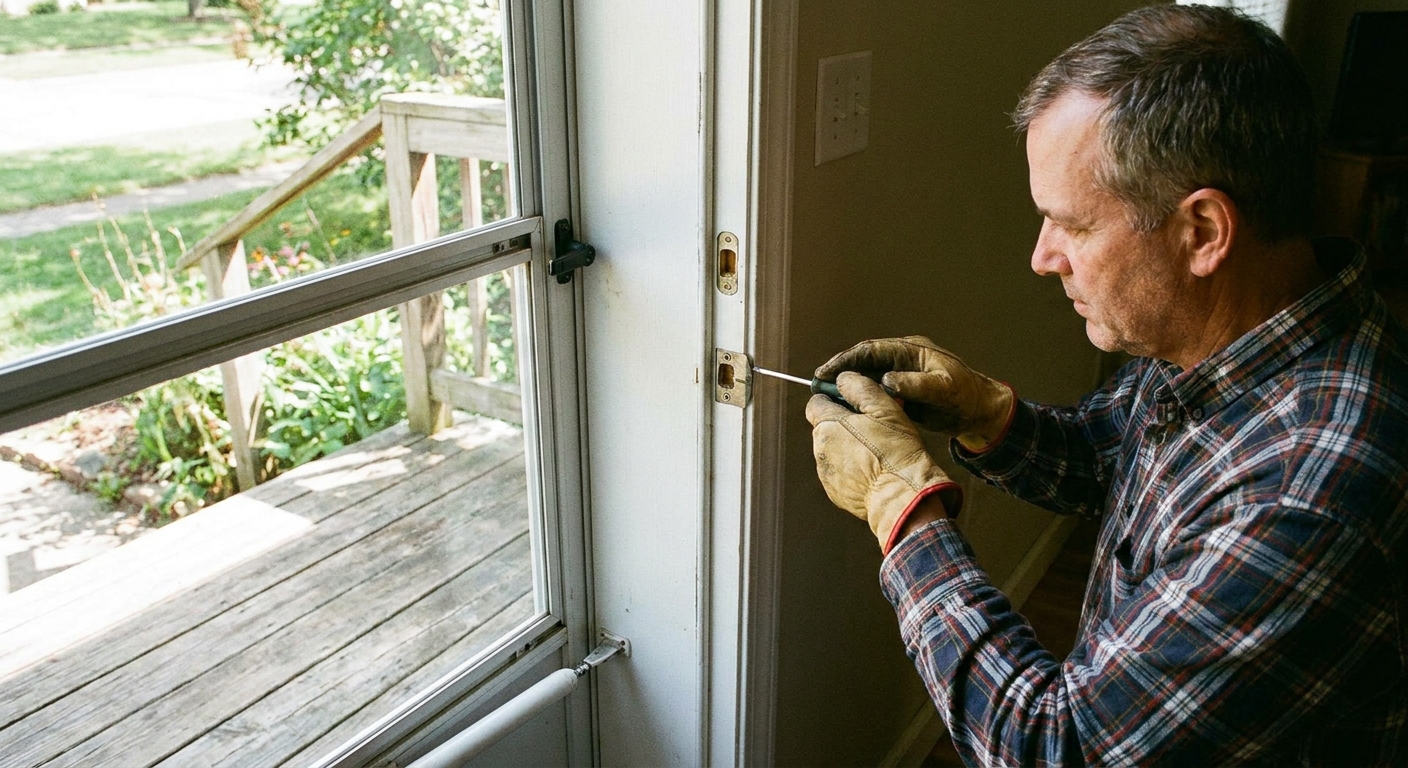
- Loosen, don’t remove the striker screws.
- Shift the striker slightly toward the mark you found.
- Retighten and test.
If you need more movement than the screw holes allow: remove the striker and elongate the holes slightly with a small file, then reinstall.
Pro tip: If the latch is hitting the striker face and bouncing out, bend the striker lip inward slightly with pliers so it guides the latch into the opening. Small bends only. Too much can prevent latching or crack thin metal.
Step 5: Fix hinge binding and sag
When a storm door sags even a little, the latch side drops and everything goes out of alignment. You’ll see rubbing at the top latch corner, or the door will feel like it’s climbing uphill to close.
Look for rub marks
Check the door edge and frame for shiny aluminum spots, scraped paint, or torn weatherstripping. That’s your contact point.
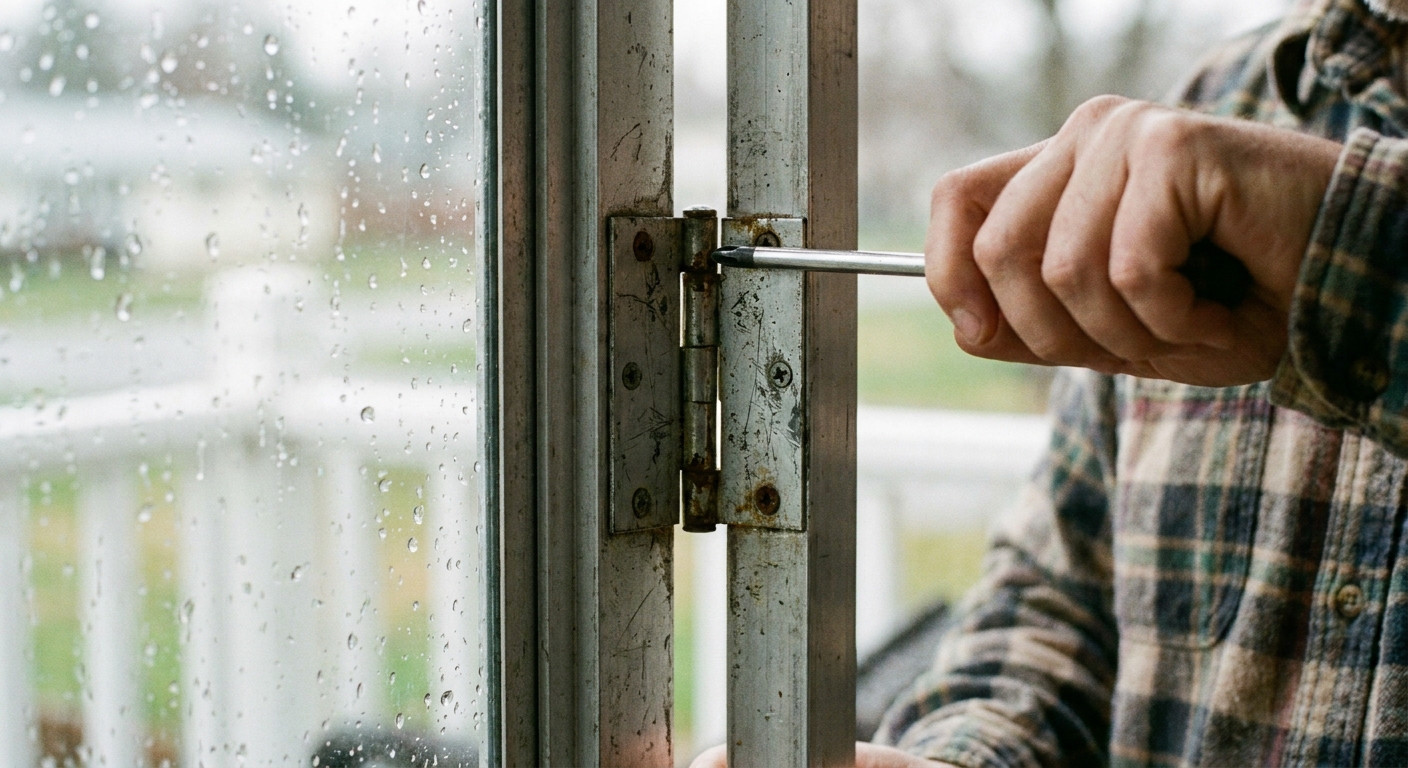
Tighten hinges the right way
- Tighten all hinge screws first.
- If a hinge screw just spins, replace it with a longer screw (often 2 to 2 1/2 inches) so it bites into the framing, not just the thin jamb material.
Check for a bent hinge or loose hinge side frame
On older aluminum storm doors, a hinge can get slightly bent from repeated over-opening.
- If the hinge leaf looks twisted, you may need to replace that hinge (usually inexpensive and straightforward).
- If the hinge side frame is loose, snug the screws and consider adding one longer screw per hinge into solid framing.
Step 6: Seasonal issues and weatherstrip pressure
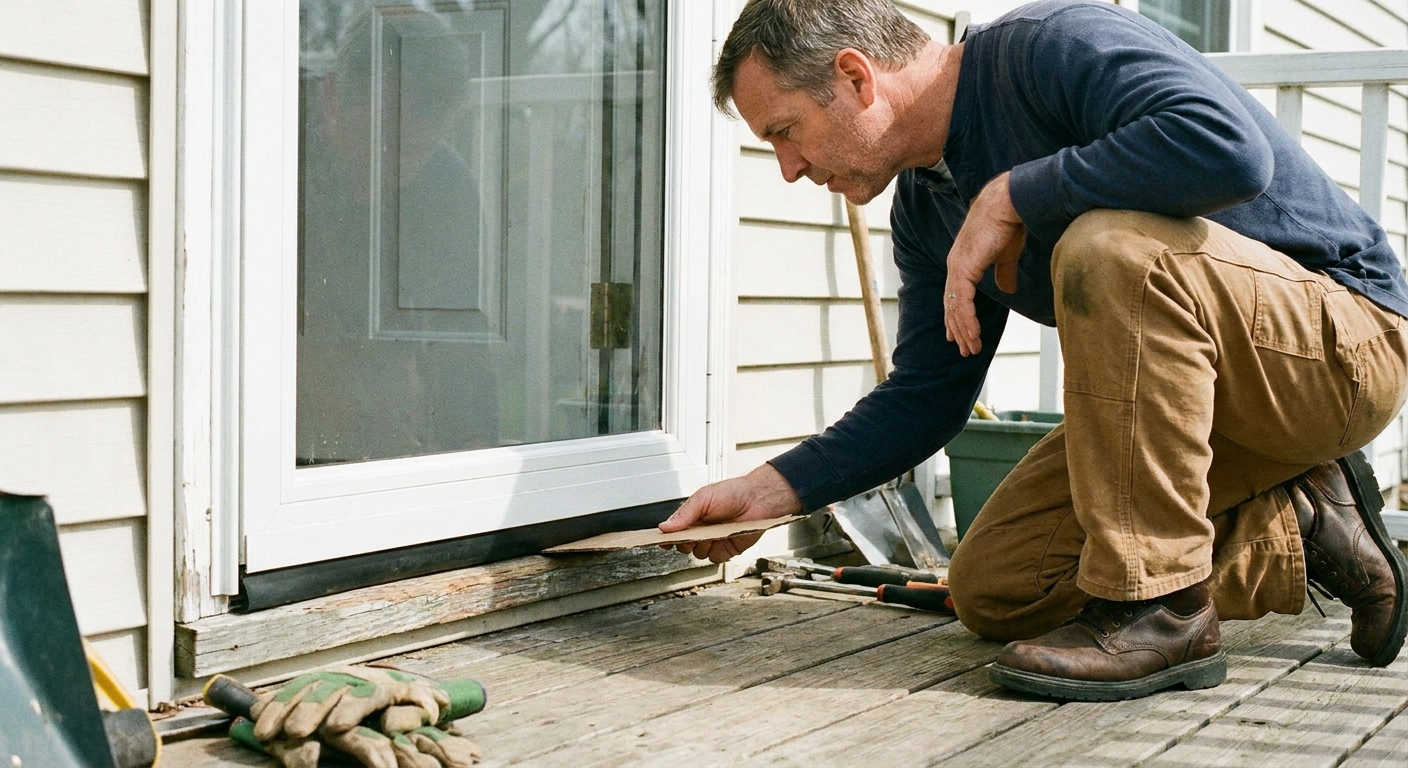
Storm doors are often aluminum, but plenty are wood-core, vinyl, or composite. Either way, seasonal issues show up because the main door frame, house framing, and weatherstripping move with humidity and temperature. In summer, you might suddenly need to “pull” the door shut harder to latch.
Easy seasonal fixes
- Speed up the closer slightly so the door has a bit more momentum at the end. On many closers, that means turning the speed screw counterclockwise, but follow your closer label and go 1/8 turn at a time.
- Check the sweep and weatherstrip: If the bottom sweep is dragging, raise it slightly. If the side weatherstrip is overly tight, folded, or torn, reseat or replace it.
- Clean and lube the latch: Dirt plus humidity makes latches sticky. Blow out debris if needed, then spray a dry lubricant (like silicone) into the latch mechanism and wipe off overspray.
If the door is hitting the frame
If you see hard rubbing, don’t force it all season. That’s how closers get wrecked.
- Confirm the hinges are tight and the door isn’t sagging first.
- If your door has an adjustable expander rail, latch-side “latch guard,” or frame/brickmold adjustment screws (varies by brand), use those to fine-tune the fit before you start bending parts.
- If the frame itself is out of square, you may need to shim behind hinge screws or adjust the storm door frame mounting screws, if your model has them.
Air pressure fix (when the main door is closed)
If Step 1’s air pocket test was positive, try one of these:
- Crack a nearby window for a minute and test the close again.
- If you have a tight house or strong HVAC return, consider adding a little make-up air during problem times (even a small window crack can prove the point).
- Some closers have separate “latch” control near the last few inches. If yours does, reduce damping there a touch so it seats firmly.
Step 7: Latches but won’t stay shut
This one is frustrating because you hear the click, then the door pops open a second later.
Common causes
- Not enough final pull: Increase closer force slightly or increase closing speed a touch so it seats fully.
- Striker plate not deep enough: If the latch barely catches, move the striker inward or bend the lip slightly to guide the latch deeper.
- Worn latch bolt: Rounded or sloppy latch parts can “cam out” under pressure.
- Weatherstripping pushing back: New or thick weatherstrip can spring the door open unless the closer seats it firmly.
- Air pressure: If the door pops open only when the main door is shut, revisit the air pocket section above.
Test the latch engagement
Close the door and gently pull on it without using the handle.
- If it opens with light pressure, the latch is barely engaged. Prioritize striker adjustment and closer force.
- If it holds but pops open in wind, consider adding a second closer (if your door supports it) or replacing a weak closer.
Quick note on retractable screen storm doors: Some models have slightly different latch geometry or a more finicky “last inch” close. The same steps still apply, but pay extra attention to striker alignment and that final pull.
When it’s beyond DIY
I’m all for repairing first, but here are the “stop fiddling and replace hardware” signs:
- Closer is leaking oil or the rod is pitted and gritty. That closer is done.
- Door slams no matter what, or it will not close at all after adjustment. Internal seals may have failed.
- Handle set is cracked, the latch won’t retract smoothly, or the latch has visible wear that keeps slipping.
- Frame is bent from impact and you cannot align striker and latch without extreme gaps.
- Hinge rail is pulling away from the door or frame due to stripped metal. You can sometimes re-rivet or use larger fasteners, but often replacement is the cleaner fix.
Rule of thumb: If you’ve adjusted the closer and striker twice, tightened hinges, and the door still won’t reliably latch, replacing the closer and/or handle set is usually cheaper than the time you’ll keep losing.
My order of operations
- Tighten every screw (hinges, closer brackets, striker, handle).
- Confirm hold-open washer is not engaged.
- Adjust closer speed in 1/8 turns for a consistent latch (never remove the screw).
- Increase closer leverage one step if the door dies in the last few inches.
- Test for air pressure: closes with main door open but not closed.
- Realign striker using the lipstick test.
- Fix sag with longer hinge screws.
- Address sweep drag, debris, and weatherstrip pressure for seasonal issues.
If you want, tell me what your door is doing (won’t close, won’t latch, or won’t stay shut), and whether you have one closer or two. I can help you zero in on the most likely fix.
The 30-Second Cheat Sheet
Essential takeaways for: Storm Door Won’t Close or Latch? Fixes to Try First
Fast diagnosis
- Closes but won’t latch: striker plate alignment is off (most common) or the latch is sticking.
- Stops short of closing: closer speed set too slow, not enough closer force, hinge binding, or the “air pocket” effect (see below).
- Closes fine with main door open, but won’t latch when it’s closed: trapped air pressure (wind cushion) is pushing the storm door back.
- Latches then pops open: not enough final pull, shallow striker, worn latch, weatherstrip pushing it back, or air pressure pushing it open.
- Slams: closer speed too fast or closer is failing.
Fixes to try first (in order)
- Tighten screws on hinges, closer brackets, striker plate, and handle.
- Disengage hold-open washer on the closer rod if it’s jammed against the tube.
- Adjust closer speed (usually the screw on the tube): turn in 1/8 turns and test. Never remove the screw.
- Increase closer leverage by moving the pin to a different hole or repositioning the bracket (if your model allows).
- Check for air pressure: crack a window, open the main door, or add/clear a storm door closer “latch” speed if your closer supports it. Then retest.
- Realign striker plate: use lipstick/marker on the latch bolt, close the door, then move striker toward the mark.
- Fix sag: replace spinning hinge screws with longer screws that bite into framing.
- Seasonal tweaks: raise dragging sweep, reseat weatherstrip, clean debris, spray dry lube into latch.
When to replace parts
- Closer is leaking oil, rod is pitted, or adjustments do nothing.
- Handle or latch is cracked, sloppy, or worn and won’t hold shut.
- Door frame is bent and you can’t align latch to striker without big gaps.
💡 Tip: Scroll up to read the full article for detailed, step-by-step instructions.
⬆️ Back to top
About Marcus Vance
Content Creator @ Grit & Home
Marcus Vance is a lifelong DIY enthusiast and self-taught home renovator who has spent the last decade transforming a dilapidated 1970s ranch into his family's dream home. He specializes in budget-friendly carpentry, room-by-room renovations, and demystifying power tools for beginners. Through his writing, Marcus shares practical tutorials and hard-learned lessons to help homeowners tackle their own projects with confidence.