
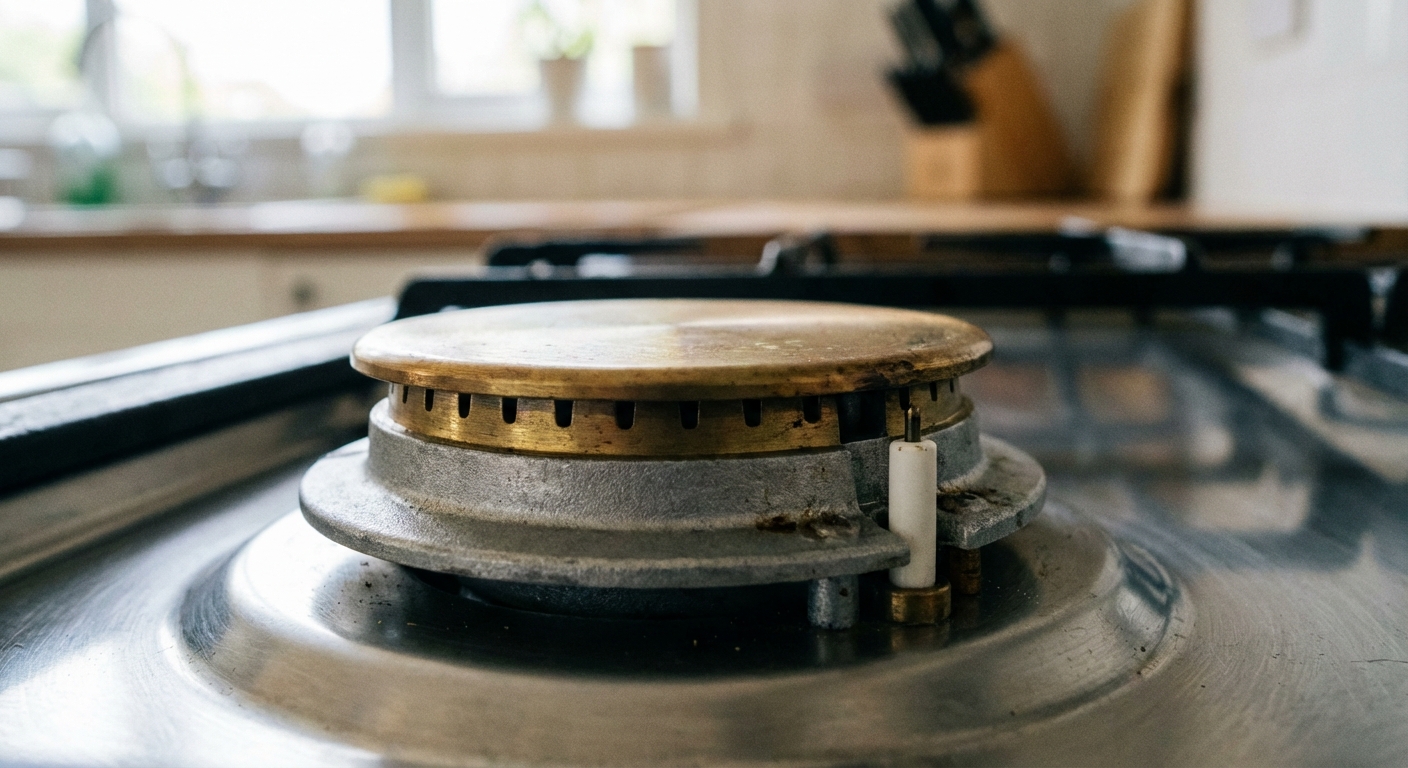
First, a quick safety reset
If a burner won’t light, your goal is simple: stop the gas, get things dry and clean, then test one change at a time. “It clicks but won’t ignite” is very often caused by grease, moisture, or a burner cap that is just a hair out of place.
- If you smell gas: turn all knobs OFF, open a window, and do not spark anything. If the smell is strong or persistent, shut off the stove gas valve and call your gas company or a licensed pro.
- Let unlit gas dissipate: if the burner has been clicking without lighting, wait at least a few minutes (often about 5) before trying again. Follow your appliance manual if it specifies a wait time.
- Power matters: for electronic-ignition ranges, the igniter uses electricity. If you will be cleaning around the igniter or lifting the cooktop, unplug the range or switch off the breaker.
Now, let’s fix it. Pick the symptom that matches what your stove is doing.
Quick check: ignition type
Most modern gas stoves use electronic ignition and you will hear clicking when you turn a knob to “Lite.” If your stove has a standing pilot (a small flame that stays lit), you may not hear clicking at all. In that case, the issue is usually a blown-out pilot, a dirty pilot assembly, or a gas supply problem. Check your manual or model number if you are not sure which system you have.
Quick diagnosis: clicking vs no clicking
If the burner clicks but won’t light
- Igniter is dirty or wet
- Burner ports are clogged or partially blocked
- Burner cap is misaligned
- Igniter tip position is off (gap too wide or electrode bent)
- Gas flow is weak (valve, regulator, supply issue)
If the burner will not click at all
- No power to the range (tripped breaker, unplugged cord)
- Standing pilot model (no clicking is normal)
- Igniter electrode or wire is damaged
- Spark module or switch harness is failing
Fix #1: Clean and dry the igniter
The igniter (that little white ceramic nub) needs a clean, dry path to throw a strong spark to the burner. Boil-overs, spray cleaners, and greasy cooking film can insulate it. Moisture can also cause nonstop clicking or a weak spark that never catches.
What you’ll need
- Dish soap and warm water
- Microfiber cloth or paper towels
- Old toothbrush
- Cotton swabs
Step-by-step
- Turn the burner knob OFF. Let everything cool.
- Remove the grate, burner cap, and burner head (if it lifts off).
- Wipe around the igniter tip and the metal surface nearby with a slightly damp cloth and a drop of dish soap. Do not flood the area.
- Use a toothbrush for stuck-on grease. Avoid soaking the igniter and avoid abrasive pads that can chip ceramic.
- Dry well with a towel, then let it air-dry 15 to 30 minutes before testing.
My hard-learned lesson: I once “cleaned” a cooktop and immediately tried to light it. The igniter clicked like crazy and did nothing because I left moisture pooled near the electrode. Give it time to dry and it often magically behaves.
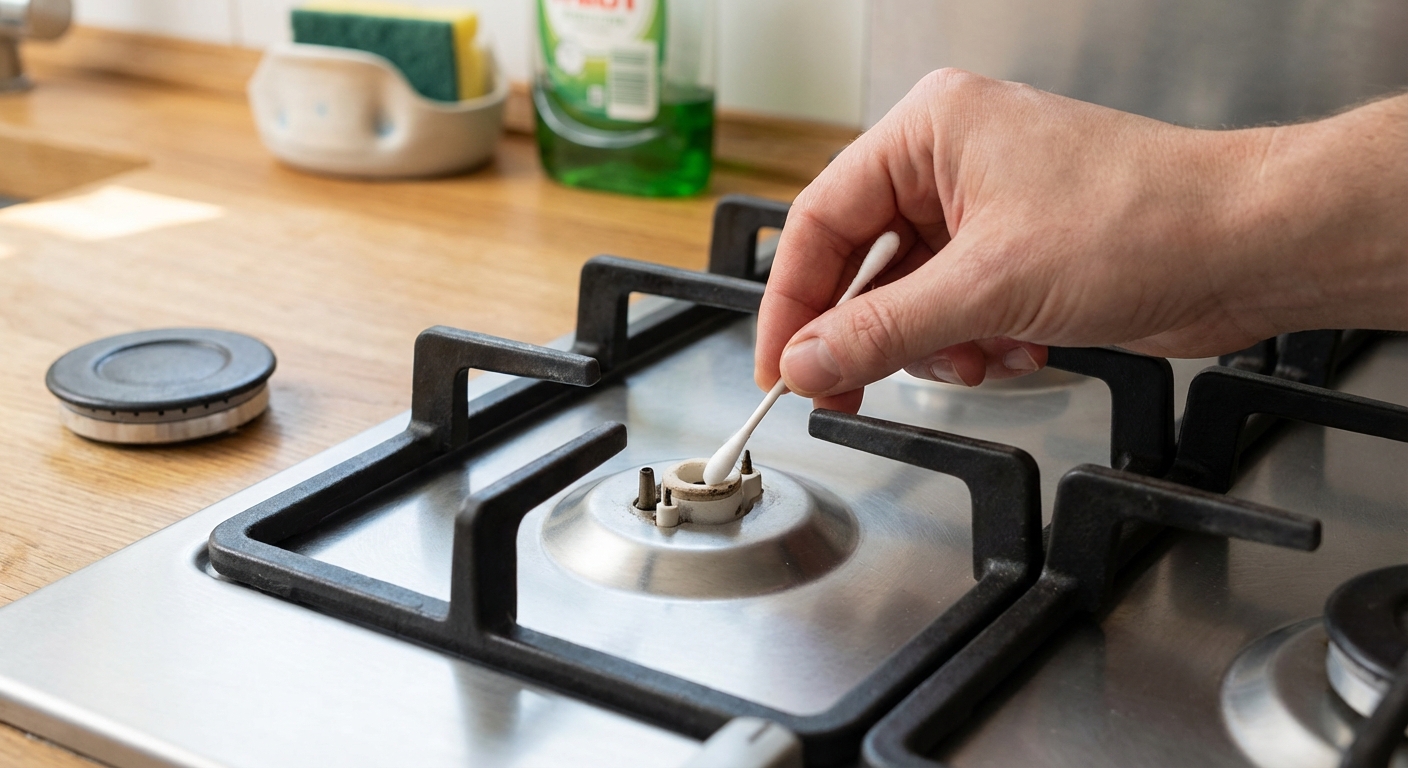
Fix #2: Clear clogged burner ports
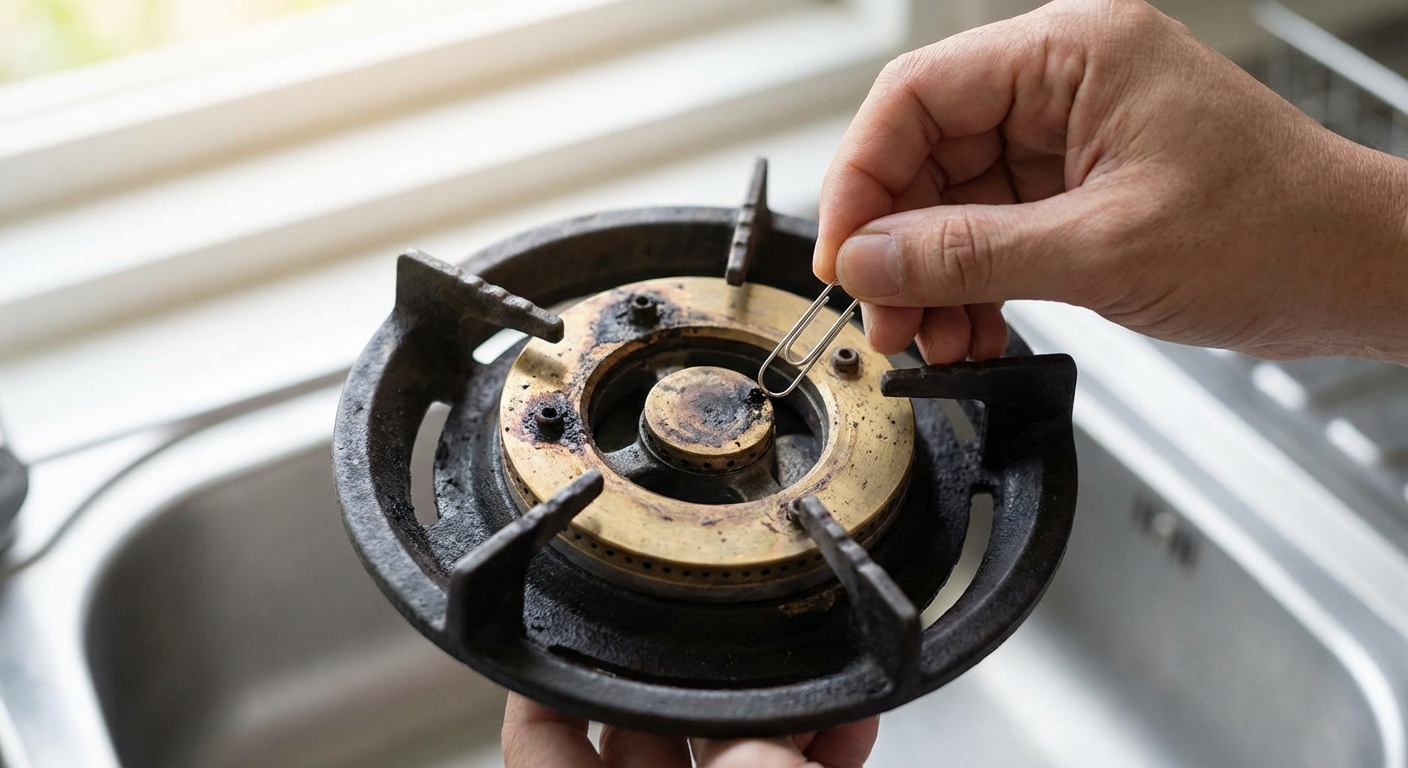
Those tiny holes around the burner head are the ports. If a few are blocked, the gas flow gets uneven. You might see a weak flame on one side, delayed ignition, or no ignition at all because the gas is not reaching the spark area properly.
What you’ll need
- A straightened paper clip or sewing needle
- Toothbrush
- Vacuum with a hose attachment (optional)
Step-by-step
- With the burner head removed, inspect the ports for crusty buildup.
- Gently clear each port to break loose debris. Do not force it, do not pry, and do not enlarge the holes (especially on softer aluminum burner heads).
- Brush off loosened gunk and vacuum it up if you can.
- Wipe everything clean and dry before reassembling.
Tip: If your burner head is removable and heavily soiled, a warm soapy soak can help. Just make sure it is completely dry before you put it back. Water hiding in a port can delay ignition.
Fix #3: Reseat the burner cap
On many gas stoves, the burner cap must sit perfectly centered. If it is rotated wrong or perched on a bit of debris, the gas-air mix will be off and the spark may not catch.
Step-by-step
- Remove the cap and wipe both the underside of the cap and the rim it sits on.
- Place the cap back on and gently rotate it until it “drops” into the correct position.
- If your cap or burner head has tabs, notches, or an obvious “keyed” shape, do not force rotation. Lift it and align it instead.
- Look from the side. The cap should sit level, not tilted.
- Test ignition.
What you’re listening for: When the cap is seated, ignition is usually quick: click-click-whoosh. If you get endless clicking, move on to the next fix.
Fix #4: Check the spark system
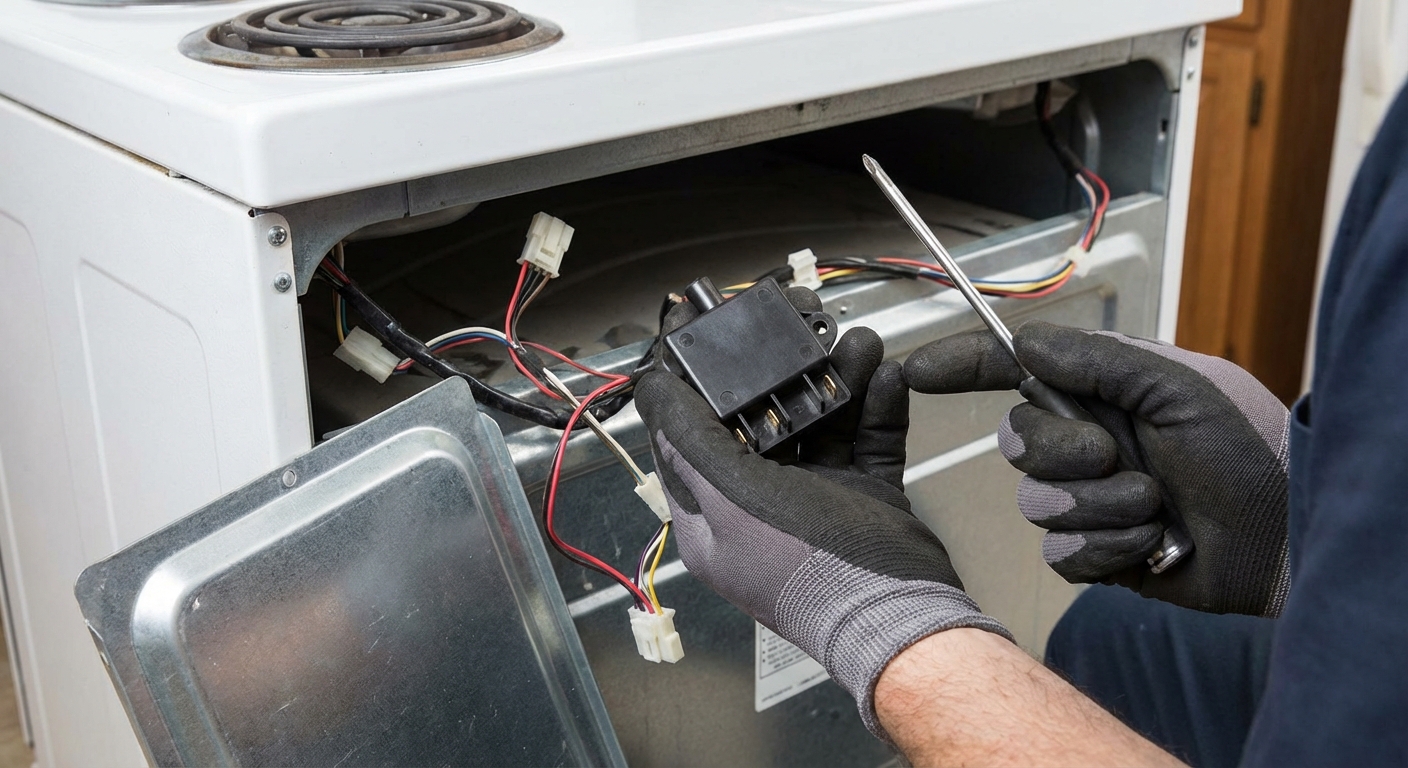
If you turn the knob and get no clicking at all (and you are not on a standing pilot stove), the issue is often electrical, not gas. Many ranges have a spark module that sends high-voltage pulses to each igniter when any burner knob is turned to “Lite.”
Start with the easy checks
- Confirm power: make sure the stove is plugged in and the breaker is not tripped.
- Try another burner: if none click, suspect power, spark module, or the common switch harness.
- If only one burner won’t click: suspect that igniter electrode, wire, or that burner’s switch.
How to check for spark
- Dim the kitchen lights if you can. Sparks are easier to see in low light.
- Keep your hands away from the electrode and metal around it. Watch from a safe distance.
- You are looking for a crisp spark jumping from the igniter tip to the burner metal near it.
Igniter tip position
If the igniter is clean but the spark seems to jump in a weird direction, or the gap looks unusually wide, the electrode may be bent out of position or the burner head may be sitting wrong. Do not start bending parts unless your manual shows an adjustment. If anything looks off, reseat the burner head and cap first, then consider a service call.
What you can do safely
- Unplug the range or switch off the breaker.
- Lift off grates and caps and look for obvious damage: cracked white ceramic, a loose wire, heavy corrosion, or a scorched connector.
- Dry the area fully if you recently cleaned. A wet switch or igniter can cause weird behavior.
When to call a pro
If you suspect a failed spark module or internal wiring, this is a solid phone-a-friend moment. Diagnosis often requires accessing panels and using a multimeter. Ignition components can deliver a painful shock. If you are not comfortable, a service call is cheaper than replacing a whole cooktop because of a wrong guess.
Fix #5: Verify gas supply and flame
If your igniter is clean and the burner is assembled correctly, the remaining culprit can be weak or interrupted gas flow. That can look like clicking with no ignition, delayed ignition, or a flame that lights but is tiny and sputtery.
Checklist
- Is the shutoff valve open? Behind the range, the handle should be parallel with the gas line for ON.
- Did the stove just get moved? A partially kinked flexible gas connector can restrict flow.
- Is it only one burner? If all other burners are normal, gas supply is probably fine and the issue is local to that burner (ports, cap, igniter).
- Are you on propane (LP)? Low tank level or a regulator problem can reduce pressure. If multiple appliances act up, check the tank and regulator.
Important: Do not attempt to adjust a gas regulator unless you are qualified and your manufacturer instructions explicitly cover it. If you suspect a supply issue beyond the shutoff valve position, call a licensed technician.
Common scenarios
It clicks, you smell a little gas, but it never lights
- Dry and clean the igniter area (Fix #1)
- Reseat the burner cap (Fix #3)
- Clear ports near the igniter side of the burner (Fix #2)
It clicks nonstop even when the knob is OFF
- Moisture in the knob switch or around the igniter. Unplug the range, dry thoroughly, and let it sit.
- If your manual allows removing knobs, you can pull them off and dry any spills underneath. Do not spray cleaner into the switches.
- If it continues after drying, a switch harness may be stuck. This is a service call.
No click, no spark, but gas seems fine
- If you have a standing pilot stove, no click can be normal. Check whether the pilot is lit.
- For electronic ignition, confirm power and test other burners (Fix #4).
- If all burners are dead, suspect the spark module or loss of power.
When to stop DIY
I’m all for sweat equity, but gas and ignition systems are not the place to get stubborn. Call a professional if:
- You smell gas that does not go away quickly with everything OFF and the room ventilated
- The flexible gas line looks damaged, kinked, or you suspect a leak
- You have repeated delayed ignition (a “boom” or puff when it finally lights)
- Multiple burners fail and you have already confirmed power and basic cleaning
Tools and supplies
- Microfiber cloths and dish soap
- Old toothbrush and cotton swabs
- Paper clip or sewing needle for ports
- Flashlight or headlamp
- Vacuum hose attachment
If you work through these five fixes in order, you will solve the majority of gas burner ignition problems without buying a single part. And if you do end up calling a pro, you will be able to explain exactly what you tested, which saves time and usually saves money.

About Marcus Vance
Content Creator @ Grit & Home
Marcus Vance is a lifelong DIY enthusiast and self-taught home renovator who has spent the last decade transforming a dilapidated 1970s ranch into his family's dream home. He specializes in budget-friendly carpentry, room-by-room renovations, and demystifying power tools for beginners. Through his writing, Marcus shares practical tutorials and hard-learned lessons to help homeowners tackle their own projects with confidence.