
🚨 In a DIY emergency or rush?
Skip the details and jump straight to our 30-second cheat sheet for the most crucial info.
If your water smells like rotten eggs, you are not imagining it. That odor is often hydrogen sulfide gas (H2S), especially on private wells. It is not the only possibility though. Certain organics, rare contamination events, and even sewer-gas plumbing issues can mimic the smell, so it is worth doing a quick isolation check before you buy anything.
In this guide, I will help you pinpoint where the smell is coming from, run a few basic tests, and choose a treatment that matches your situation, not the sales pitch.

Quick answer box
- Hot water only: usually the water heater (common fix: swap the anode rod).
- Hot and cold: usually the well source or upstream plumbing.
- First draw worst: often dissolved gas or bacterial activity in low-flow areas.
First: Well or water heater?
This is the fork in the road. The fix path is totally different depending on whether the sulfur smell is coming from the well supply itself or being created inside your water heater.
Quick smell check
- Smell only in hot water: Very often a water-heater issue (sulfate-reducing bacteria in the tank, chemistry around the anode rod, or warm water driving off dissolved gas).
- Smell in both hot and cold water: More likely a well or plumbing supply issue (H2S in groundwater, sulfur bacteria in the well, or sometimes upstream contamination).
- Smell strongest at the first draw, then fades: Common with dissolved gas that dissipates after running the tap.
- Smell gets worse when water sits overnight: Can point to bacterial activity in the well, pressure tank, water heater, or household plumbing.
Two simple at-home isolation tests
1) Cold water only test: Use a cold-only faucet (no mixing valve) if possible. Run only cold water at a sink you rarely use. Fill a clean glass, step away for a minute, then smell. If it reeks, the problem is not “just the heater.”
2) Outside spigot test: If you have an outside hose bib that is plumbed before any water treatment equipment, smell there. If the odor is present outside too, you are almost certainly dealing with the well source or something upstream of the house.

What causes sulfur smell?
That rotten egg odor can come from more than one culprit. Here are the big ones I see in the real world.
1) Hydrogen sulfide gas in groundwater
Some aquifers contain dissolved H2S. When you open a faucet, pressure drops and the gas releases, which is why the smell can be strongest right at the tap. It is also why some people notice it more when making coffee, tea, or running hot water.
2) Sulfur bacteria in the well or plumbing
Sulfur bacteria are not usually considered harmful, but they can create slime, worsen odors, and contribute to clogged screens, fouled pumps, and stained fixtures when they team up with iron bacteria.
3) Water heater reactions (even if your well is fine)
If the smell is only hot, the heater is a prime suspect. A common chain reaction is: sulfate in the water + sulfate-reducing bacteria + conditions inside the heater leads to H2S. Magnesium anode rods can make this easier by providing electrons and hydrogen that support the reaction. In other words, the heater often does not “invent” sulfur out of nowhere, but it can be the place where H2S gets produced.
4) Seasonal and environmental changes
Some wells stink worse during certain months. Common reasons include:
- Heavy rain or snowmelt: Changes groundwater flow and can stir up organics that feed bacteria.
- Drought: Concentrates minerals and changes the water table.
- Warmer weather: Helps bacteria grow and makes gases release more readily.
Marcus note: The most expensive mistake I see homeowners make is buying a “one-size-fits-all” sulfur filter before they know whether they have H2S gas, sulfur bacteria, iron, manganese, or a combination. Testing is cheaper than guessing.
Testing basics
To fix sulfur odor correctly, you want to know what else is riding along with it. Hydrogen sulfide can show up solo, but it often travels with iron, manganese, and bacteria that change the treatment strategy.
Minimum recommended tests
- Hydrogen sulfide (H2S): Helps confirm the odor source and size treatment. Note: H2S is volatile, so sampling and timing matter. Some labs do not handle H2S reliably. A reputable field test kit or a lab that specifically supports H2S is your friend.
- Iron and manganese: Important because many sulfur systems also need to handle staining metals.
- pH: Affects how well certain oxidation and filter media work and whether corrosion is part of the story.
- Total coliform and E. coli: Not because it causes the smell, but because it flags sanitary well issues that you should not ignore.
Where to pull the sample
If you can, collect:
- Raw water sample: From a hose bib before any treatment equipment.
- Post-treatment sample: If you already have equipment installed and it is not working.
If your only access is a kitchen faucet, remove the aerator first so you are not sampling gunk trapped in the screen.

DIY troubleshooting first
Before you spend a dime on treatment equipment, do these simple checks. They can save you from treating the wrong problem.
Clean faucet aerators and showerheads
Sulfur and iron bacteria can build slime in aerators. Unscrew the aerator, soak it in vinegar, scrub, and rinse. If the smell improves only at that fixture, you found a localized issue, not a whole-house one.
Check the water heater if hot water is worse
- Confirm the smell is hot-only.
- Flush a few gallons from the tank drain. If you see black sediment or the smell is intense at the drain, the tank is involved.
- Have a plumber evaluate the anode rod and the tank condition, especially on older units.
Inspect your pressure tank area
Odors can feel stronger near the pressure tank if gases are being released there. Make sure the area is dry, the well cap is secure, and there is no obvious contamination risk near the wellhead outside.
Fix hot-water sulfur smell
If the smell is truly only in hot water, you can usually fix it without touching the well.
Most common permanent fix: change the anode
- Swap a magnesium anode rod for a powered titanium anode (very effective for sulfur odors) or a zinc-aluminum rod (often helps).
- This targets the chemistry that lets sulfate-reducing bacteria generate H2S inside the heater.
Also worth doing
- Disinfect and flush the heater: A tank flush and a controlled disinfection can knock back bacteria that fuel the smell. If you are not comfortable doing this safely, hire it out.
- Temperature check: Higher temperatures can discourage bacterial growth, but scalding risk is real. If you adjust temperature, do it carefully and consider anti-scald protection.
Fix well-source sulfur smell
Once you confirm the smell is in cold water too, you are typically choosing between oxidation methods, filtration media, or a combination system.
A rough “how bad is it” guide
Every water supply is different, but as a general rule:
- Low H2S: often handled with aeration or catalytic carbon, depending on iron and manganese.
- Moderate H2S: often needs stronger oxidation plus filtration, especially if iron or manganese are present.
- High H2S: often does best with chemical oxidation (chlorine or peroxide) plus contact time and the right filter.
Use test results and a pro opinion when you are unsure. Guessing is how people end up buying two systems.
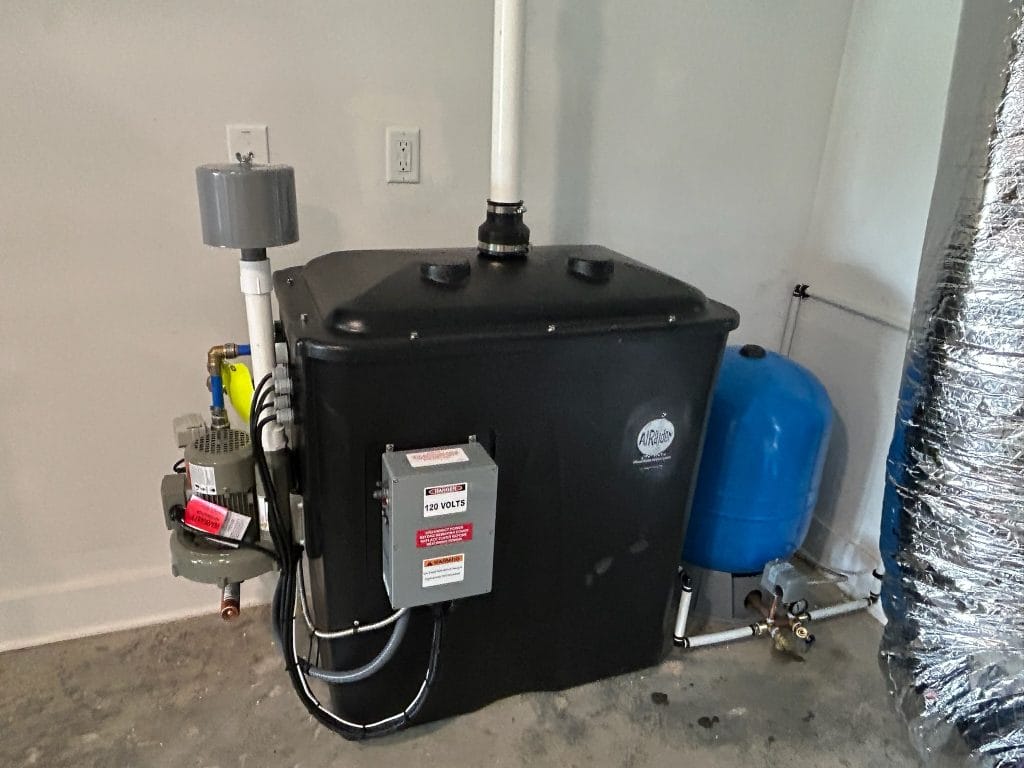
Option 1: Aeration (air-injection)
Aeration systems add air to the water, helping H2S gas escape and oxidizing some sulfur compounds so they can be filtered.
Best for: Dissolved H2S with minimal iron or manganese.
Pros:
- No chemical feed in many setups
- Can be cost-effective long term
Cons:
- May not be enough if sulfur bacteria are the main driver
- Can be tricky if iron and manganese are also high
Option 2: Shock chlorination
Shock chlorination is a one-time, high-dose chlorine treatment for the well and plumbing. It can knock back sulfur bacteria and reduce odor, sometimes for weeks or months, sometimes for only a few days if the underlying conditions stay the same.
Best for: Sulfur bacteria and “it suddenly started smelling” situations, especially after well work or flooding.
Important reality check: Shock chlorination is often a reset button, not a permanent cure.
When it makes sense
- Odor appeared after a pump replacement, pressure tank work, or well servicing
- Odor is accompanied by slimy buildup in toilets or tanks
- Your bacteria test results raise concerns (work with a pro in that case)
Safety notes
- Do not mix chemicals: Never mix bleach with acids, vinegar, or other cleaners. Ventilate well.
- Keep kids and pets away during mixing and flushing.
- Septic caution: High-chlorine flushing can be rough on septic systems. Follow local health department guidance and spread out flushing when possible.
If you are not comfortable calculating chlorine volumes and flushing safely, a well contractor can do this quickly and correctly.
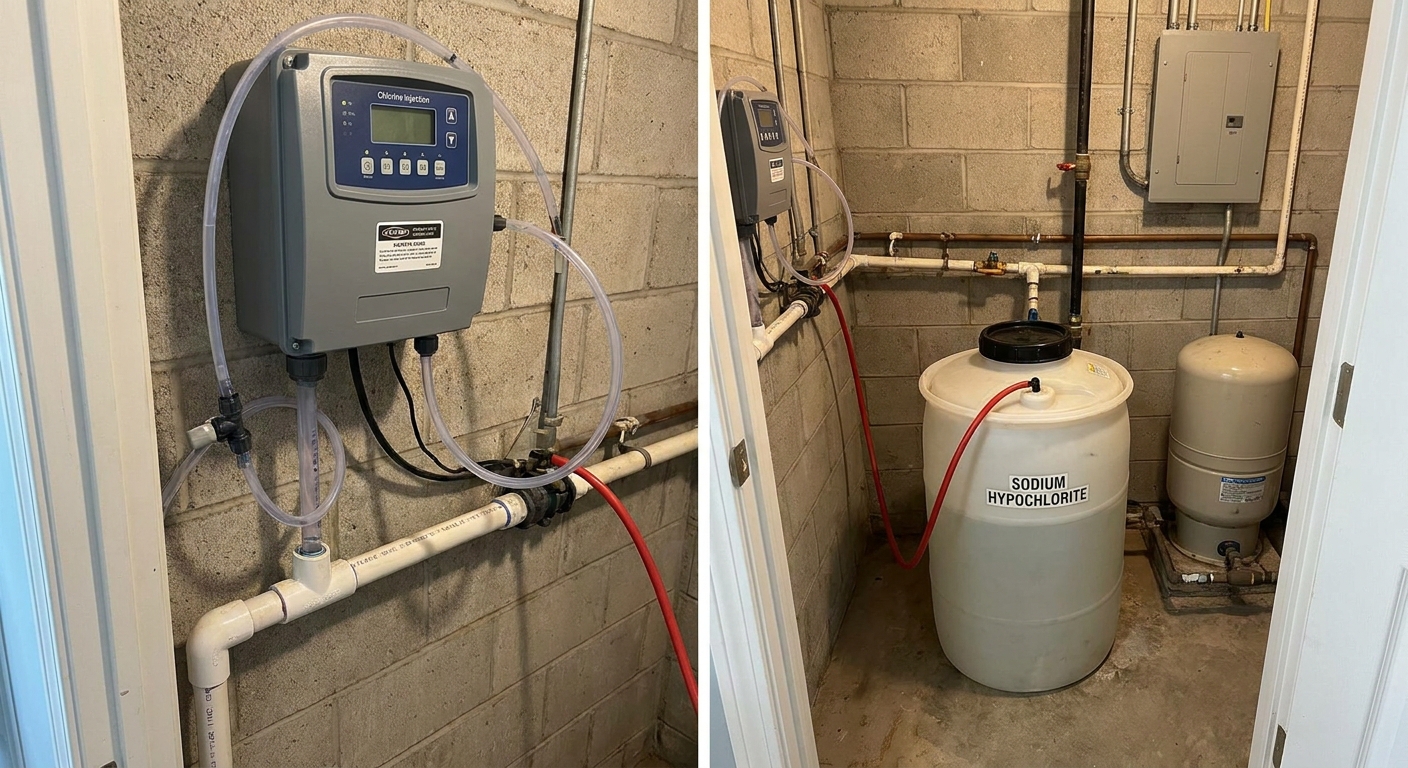
Option 3: Continuous chlorination
If bacteria keep coming back, a continuous chlorination setup is the workhorse solution: a small pump injects diluted chlorine into the water line, usually followed by a contact tank (to give chlorine time to work) and then a carbon filter to remove chlorine taste and odor.
Best for: Persistent sulfur bacteria odors, mixed issues (H2S plus iron), or when you need a strong disinfection barrier.
Pros:
- Very effective for odor and bacteria control
- Can also help with iron and manganese when properly designed with adequate pH, dose, contact time, and the right filtration or backwashing step
Cons:
- More components and maintenance
- You must keep solution mixed and equipment adjusted
Option 4: Hydrogen peroxide injection
Hydrogen peroxide (H2O2) injection is one of the most popular treatments for stubborn H2S odor. It is a strong oxidizer that works fast and does not leave a chlorine taste. In a typical setup, peroxide is injected, given contact time, then filtered (often with catalytic carbon or another appropriate media) to polish the water.
Best for: Moderate to severe H2S, especially when you want fast oxidation and no chlorine residual taste.
Pros:
- Fast reaction time compared with chlorine in many real-world setups
- No chlorine taste and odor when configured correctly
Cons:
- Still requires proper dosing, contact time, and maintenance
- Usually needs follow-up filtration for the best results
Option 5: Oxidizing filters
There are several filter media types marketed for sulfur smells. The right choice depends on your water chemistry and whether iron and manganese are present.
Common media types
- Activated carbon: Great for removing tastes and odors, but plain carbon is usually not enough if you have significant H2S or bacteria driving the smell.
- Catalytic carbon: Often used when you need better performance on H2S and organics than standard carbon. Frequently paired with air-injection or low-level oxidation.
- Manganese dioxide based media: Strong oxidizing media that can handle H2S and iron together in many cases. Requires correct backwashing and adequate flow rates.
One key sizing truth
Backwashing filters are not “set it and forget it” if your well pump cannot supply the flow needed to backwash properly. This is a common reason new systems underperform. If you are unsure of your pump and pressure tank capacity, get help sizing it.
If the smell is seasonal
Seasonal sulfur smell is real. If your water smells fine most of the year and then stinks for a few weeks, that often points to changing groundwater conditions or a temporary bloom of bacteria.
Practical steps
- Track it: Write down when it happens, weather patterns, and whether it is hot-only or hot-and-cold.
- Check the well cap and grading: Make sure surface water drains away from the wellhead.
- Consider a one-time shock chlorination: Especially if the odor began after storms or well servicing.
- Plan for long-term treatment if it keeps returning: Recurring seasonal odor often turns into “most of the year” eventually.
When to call a well contractor
I love DIY, but wells are one of those areas where a good contractor can save you from expensive trial and error.
Call a pro if you have any of these
- Sudden severe odor plus positive coliform or E. coli test results
- Cloudy water, black particles, or heavy sediment that started recently
- Low well yield or your pump short-cycles after installing or considering backwashing equipment
- Odor plus iron bacteria slime that keeps coming back quickly after cleaning fixtures
- Any signs the wellhead could be compromised (cracked casing, missing cap screen, poor drainage)
A contractor can camera-inspect, assess the well condition, calculate volumes for disinfection, and recommend treatment that matches your chemistry and your pump’s capabilities.

FAQ
Is sulfur smell in well water dangerous?
At the concentrations typically found in household well water, hydrogen sulfide is usually more of a nuisance than a health hazard. That said, high concentrations of H2S gas are dangerous, especially in enclosed spaces where it can build up after off-gassing. Very high levels in water can also create serious odor and corrosion complaints. If the smell is suddenly intense, you feel symptoms, or you suspect a confined-space gas issue, bring in a pro.
Also, always test for coliform and E. coli to rule out sanitary contamination, and involve a pro if bacteria tests come back positive.
Why does the smell get worse after the water sits?
Sitting water gives gases time to collect and can encourage bacterial activity in low-flow parts of plumbing. That is why first-draw water in the morning can smell the worst.
Will a water softener remove sulfur smell?
Not reliably. A softener is designed for hardness minerals. Some households see minor improvements depending on their setup, but sulfur odor typically needs oxidation, aeration, or the right filtration media.
Can I just add bleach to my well?
Shock chlorination is a real method, but it has to be done with correct dosing, safe handling, and thorough flushing. If you are unsure, hire it out. Your goal is to disinfect without damaging equipment or leaving residual chlorine problems.
Should I test my well water every year?
Yes. At a minimum, do annual coliform and E. coli testing (or follow local guidance). Retest after any treatment change, flooding, or well servicing.
The 30-Second Cheat Sheet
Essential takeaways for: Sulfur Smell From Well Water: Causes and Fixes
- Fast diagnosis: Smell only in hot water usually points to the water heater. Smell in cold and hot water points to the well source or upstream plumbing.
- Do this first: Smell-test cold water in a glass and at an outside spigot (if it is before treatment). Clean faucet aerators. Use a cold-only tap (no mixing valve) for the test.
- Minimum tests to run: H2S (hydrogen sulfide), iron, manganese, pH, and total coliform/E. coli. Note: H2S is volatile, so use a field kit or a lab that handles H2S samples correctly.
- Best fix matches the cause:
- Dissolved H2S gas: aeration or air-injection plus appropriate filtration.
- Severe H2S: consider hydrogen peroxide (H2O2) injection plus contact time and filtration.
- Sulfur bacteria: shock chlorination as a reset, or continuous chlorination (injection + contact tank) for persistent problems.
- H2S plus iron/manganese: consider oxidizing filter media sized for your pump’s backwash flow.
- Water heater fix: If odor is hot-only, disinfect and flush the tank, then replace the magnesium anode with a powered titanium anode or a zinc-aluminum rod (common permanent fix).
- Seasonal smell: Often tied to rain, drought, or temperature swings. Track timing and check well cap, drainage, and sanitary protection.
- Call a well contractor if: odor starts suddenly and strongly, bacteria tests are positive, the wellhead may be compromised, water turns cloudy or gritty, or you need a backwashing system and are not sure your pump can support it.
💡 Tip: Scroll up to read the full article for detailed, step-by-step instructions.
⬆️ Back to top
About Marcus Vance
Content Creator @ Grit & Home
Marcus Vance is a lifelong DIY enthusiast and self-taught home renovator who has spent the last decade transforming a dilapidated 1970s ranch into his family's dream home. He specializes in budget-friendly carpentry, room-by-room renovations, and demystifying power tools for beginners. Through his writing, Marcus shares practical tutorials and hard-learned lessons to help homeowners tackle their own projects with confidence.