
If your sump pump is running but water isn't making it outside, you aren't dealing with a “pump problem” most of the time. You're dealing with a frozen discharge line. In winter, that can turn into a basement flood shockingly fast because the pump has nowhere to send the water.
I've been there with a half-renovated basement, a cold snap, and that sinking feeling when you hear the pump hum and the pit level keeps rising. The good news is you can usually thaw it without wrecking the pipe, and you can make a few smart changes so you aren't fighting the same battle next time the temperature drops.
First, confirm it's frozen (not a bad pump)
Before you start thawing, do a quick reality check. A frozen discharge acts a lot like a failing pump, but the fixes are very different.
Common signs of a frozen discharge line
- The pump runs but water level in the pit drops very slowly or not at all.
- You hear the pump straining, gurgling, or cycling on and off more than usual.
- No water is coming out at the outside termination, even though the pit is high.
- The line outside has ice at the end, or the outlet is buried in snow.
Quick checks inside (5 minutes)
- Unplug the pump before touching anything in the pit area.
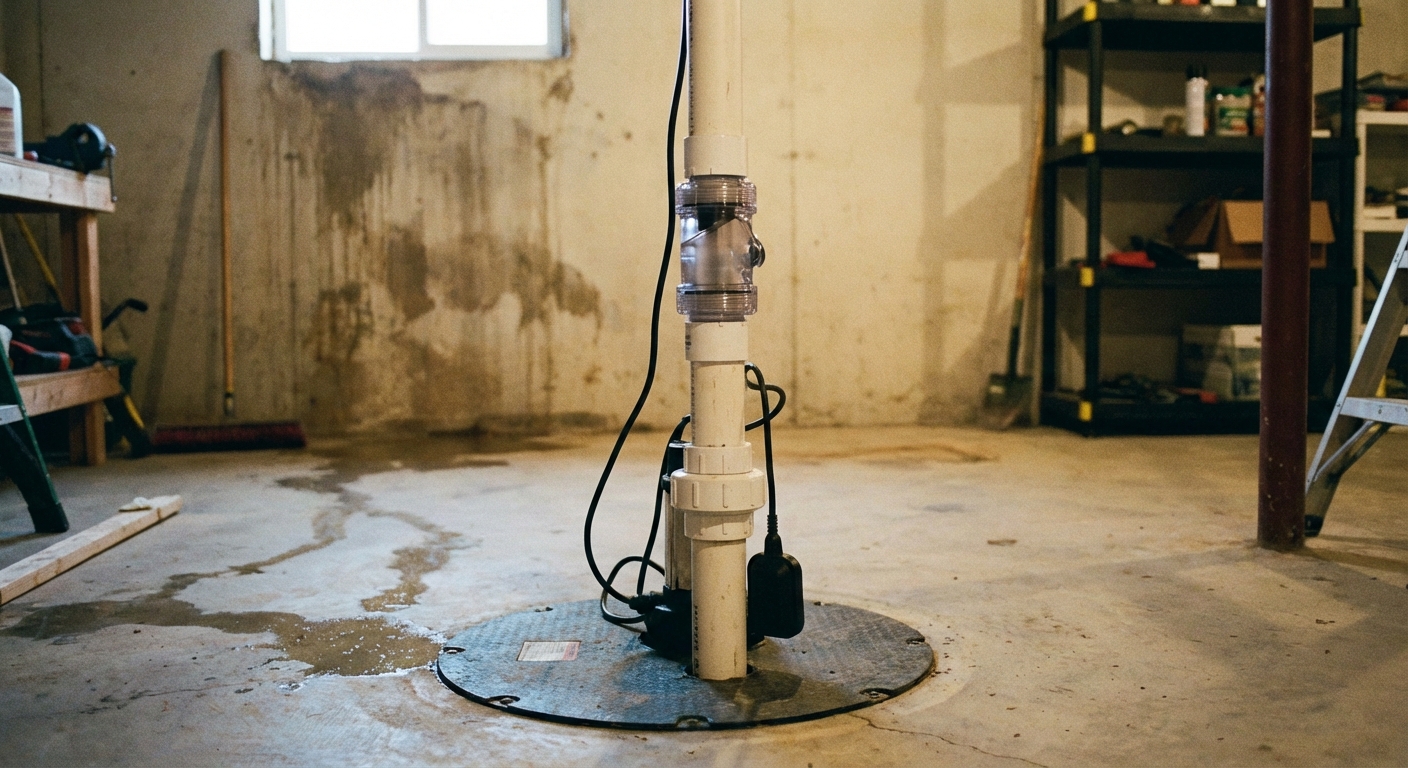
- Look for a check valve on the vertical discharge pipe above the pump. If it's installed backward or stuck, it can mimic a clog.
- Inspect for obvious leaks, a disconnected fitting, or a cracked pipe that's dumping water right back near the pit.
- Make sure the float moves freely and the pit isn't packed with gravel or debris.
If the pump sounds normal and the plumbing looks intact, freezing is the top suspect during a cold spell.
Find the freeze point: inside vs. outside
Where it freezes matters, because the safest thaw method depends on what you can access and what materials you have. Most freezes happen in one of three spots.
Most common freeze locations
- At the termination: The outlet is buried in snow or sitting in a puddle that refreezes.
- Near the foundation wall: Cold air hits the first stretch of pipe outside, or the line is pitched wrong and holds water.
- In an unheated space: A crawlspace, rim joist area, or garage wall where the pipe is exposed to freezing air.
A simple way to narrow it down
- If the pipe is frozen only outside, the section inside the basement often feels room temperature, and you may hear water hitting the blockage.
- If it's frozen inside an unheated zone, you may see frost on the pipe or feel an icy section along the run.
- If you have an accessible union or a small section you can disconnect safely, you can check whether water is moving up to that point. If you aren't comfortable doing this, skip it and thaw from the outside end first.
How to thaw a frozen discharge pipe safely
The goal is to melt the ice without damaging PVC, loosening fittings, or creating an electrical hazard. Avoid anything that feels like “brute force.” Most sump discharge lines are PVC, and it doesn't like open flame.
Safety rules I follow every time
- Don't use a torch on PVC. It can warp, split, or fail later when you aren't watching.
- Keep electricity and water separated. If you use a hair dryer or heat gun, plug into a GFCI outlet and keep the cord and tool away from standing water.
- Watch the sump pit level. If water is rising toward the slab, start a backup plan immediately (more on that below).
Method 1: Clear the termination first
If the outlet is buried, start with a shovel and your hands. Clear snow and ice away from the last 2 to 3 feet of pipe and the discharge area. Many “frozen lines” are really just a frozen outlet cap of ice.
- Remove any pop-up emitter cover that's stuck in ice.
- Pour warm, not boiling water over the outlet area to open a path.
- Once you get a trickle, keep the area clear so it doesn't refreeze immediately.
Method 2: Gentle external heat along the pipe
Work your way from the outlet back toward the house. That gives melted water somewhere to go.
- Hair dryer: Slow but safe. Hold it a few inches off the pipe and keep it moving.
- Heat gun: Use the lowest setting and keep it moving. PVC softens faster than most people think.
- Heating pad: Wrap it around the suspected frozen spot and secure it with a towel or bungee. This is my favorite “set it and watch it” option.
- Hot towels: Soak towels in hot water, wrap the pipe, and refresh as they cool.
Method 3: Warm water flush (only if you control the water)
If you can safely disconnect the line at an accessible union indoors, you can sometimes pour warm water into the discharge line and melt the plug. Only do this if you have a plan for where the water will come back out. It may surge.
- Use warm water and a funnel.
- Go slowly. You're trying to melt, not pressurize.
- Reconnect tightly and test.
Methods to avoid
- Open flame (torch, propane heater pointed at the pipe) on PVC.
- Striking the pipe to “break the ice.” It's a great way to crack fittings at the foundation.
- Rock salt inside the pipe. You don't want corrosive slurry moving through a pump system or dumping near your foundation.
If the pit is rising: prevent a flood
During a freeze, you may be fighting time. If the sump pit is close to overflowing, you need a temporary way to move water while you thaw the discharge.
Options that can buy you time
- Temporary indoor discharge: Disconnect after the check valve and run a hose to a floor drain, utility sink, or a safe exterior exit. Only do this if local rules allow and your drain can handle the flow. Never dump into a septic system.
- Use a spare utility pump: A small submersible utility pump and a garden hose can move water while you work on the main line.
- Reduce incoming water: If a thaw is underway, avoid running lots of water that could add to the groundwater load, and keep roof melt away from the foundation if possible.
If you can't get control of the water level, call a plumber. A flooded finished basement costs far more than an emergency service call.
Why discharge lines freeze (and why it keeps happening)
Freezing is almost always a design or routing problem, not “bad luck.” Water is being left sitting in the pipe, then it turns into an ice plug.
The usual culprits
- No slope or back pitch: The line holds water after each pump cycle.
- Termination too low: The end gets buried by snow or sits in a low spot that ices over.
- Long horizontal run in cold air: Especially along an exterior wall.
- Small diameter pipe: A 1-1/4 inch line can freeze easier than a 1-1/2 inch line, depending on flow and layout.
- Confusing “weep holes” with freeze relief: A true weep hole is typically a small hole drilled in the discharge pipe inside the sump pit (or just above the pump) to prevent airlock and help the pump prime. That's different from an outdoor freeze relief device, which is designed to let water escape safely if the exterior line ices up.
Prevention that works
Once you're thawed and stable, spend an hour making changes that prevent a repeat. The right fix depends on your climate and how your discharge is run.
1) Terminate above the snow line
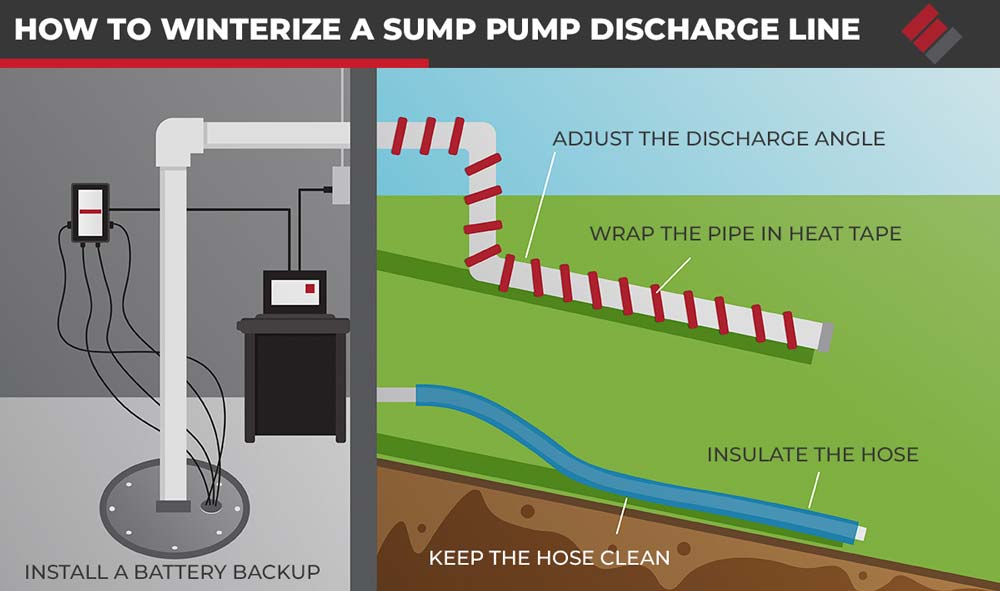
If your outlet is at ground level, it's begging to be buried. A simple change is to bring the discharge up and out so it exits higher, then angles down to drain away.
- Keep the end of the pipe higher than typical snow depth for your yard.
- Avoid pointing it where it will create an icy walkway.
- Make sure water still discharges away from the foundation.
2) Make sure the line drains after each cycle
This is the big one. Any section that traps water will freeze.
- Check the outdoor run for sags. Re-support with proper pipe straps.
- Confirm the pipe has a continuous slope to the outlet so it empties.
- If your layout forces a low spot, consider rerouting or shortening the horizontal run.
3) Add a freeze guard (air gap) fitting
If you deal with hard freezes, this is one of the most practical upgrades you can make. A freeze guard, sometimes called an air gap fitting (for example, an IceGuard-style fitting), is a slotted PVC accessory installed just outside the foundation. If the exterior line freezes, water can discharge through the slots instead of backing up into your basement.
- Install it on the exterior section near the foundation, per the manufacturer's orientation instructions.
- Plan where the overflow water will go so it doesn't ice up a walkway or run right back to the foundation.
- Think of it as a safety valve, not a substitute for proper slope and routing.
4) Insulate the right sections (no miracles)
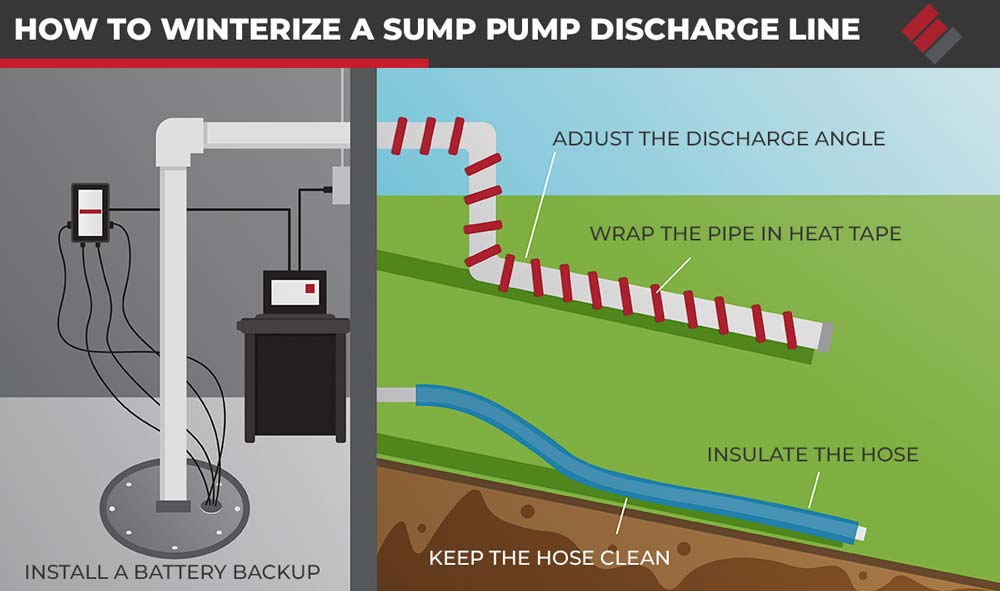
Foam pipe insulation can help slow freezing, especially on short exterior sections, rim joist runs, or crawlspaces. But insulation doesn't create heat. If water sits in the pipe long enough, it can still freeze.
- Insulate exposed pipe in unheated areas.
- Seal air leaks at the rim joist where the pipe passes through.
- Don't insulate over fittings you may need to service unless you can remove it easily.
5) Heat cable cautions (read this first)
Heat cable can work when installed correctly, but it's not a slap-it-on-and-forget-it product. Misuse can damage pipe or create a fire risk.
- Use a UL-listed heat cable rated for pipes and for the material you have (often plastic).
- Follow the manufacturer wrap spacing and attachment method. Don't use random tape.
- Protect the electrical connection from moisture and plug into a GFCI.
- Don't overlap heat cable unless the instructions say it's allowed.
- If your discharge is buried or runs through a sealed chase, heat cable may not be appropriate.
If you're unsure, this is a good place to call an electrician or plumber. A safe install beats a risky one every time.
6) Consider a better discharge strategy
Some homes do best with a different approach, especially in deep-freeze climates.
- Shorter exterior run: Get water away from the house quickly, then let it disperse where it won't refreeze on the line.
- Dry well: In some soils and jurisdictions, a dry well can reduce icing at the termination. Confirm local rules first.
- Professional reroute: If your current line runs along a north wall in full shade, moving it can be the simplest long-term fix.
Backup pump basics for winter
When temperatures drop, power outages and frozen discharge issues tend to show up at the same time. A backup doesn't fix a frozen pipe, but it can keep you afloat long enough to thaw or reroute safely.
Common backup options
- Battery backup sump pump: Helps during outages and when the main pump can't keep up. Plan to maintain and replace the battery on schedule.
- Water-powered backup: Works without electricity but needs adequate water pressure and may not be allowed everywhere.
- Spare utility pump: Not automatic, but affordable and extremely handy in emergencies.
Whatever backup you choose, test it before winter. The night you need it is the worst time to learn the float is stuck.
After you thaw: quick checks
Once water is flowing again, do a quick check so you don't get surprised tomorrow morning.
- Verify strong discharge outside for several pump cycles.
- Listen for the check valve to close cleanly after the pump shuts off.
- Inspect the foundation penetration and fittings for leaks that could have opened up during freezing.
- Clear snow away from the outlet area and make a habit of checking it after storms.
When to call a pro
I'm all for DIY, but a frozen discharge can turn into a structural or mold problem if you gamble and lose. Get help if:
- The pit is close to overflowing and you can't safely reroute discharge temporarily.
- You suspect a cracked pipe inside a wall, crawlspace, or finished area.
- Your discharge appears tied into a line it shouldn't be (like a sanitary drain) and you aren't sure what's allowed in your area.
- The pump is tripping breakers or making unusual grinding noises.
If you remember only one thing: thawing gets you through tonight, but making sure the line drains and terminates above the snow line is what keeps you from doing this again next week.

About Marcus Vance
Content Creator @ Grit & Home
Marcus Vance is a lifelong DIY enthusiast and self-taught home renovator who has spent the last decade transforming a dilapidated 1970s ranch into his family's dream home. He specializes in budget-friendly carpentry, room-by-room renovations, and demystifying power tools for beginners. Through his writing, Marcus shares practical tutorials and hard-learned lessons to help homeowners tackle their own projects with confidence.