
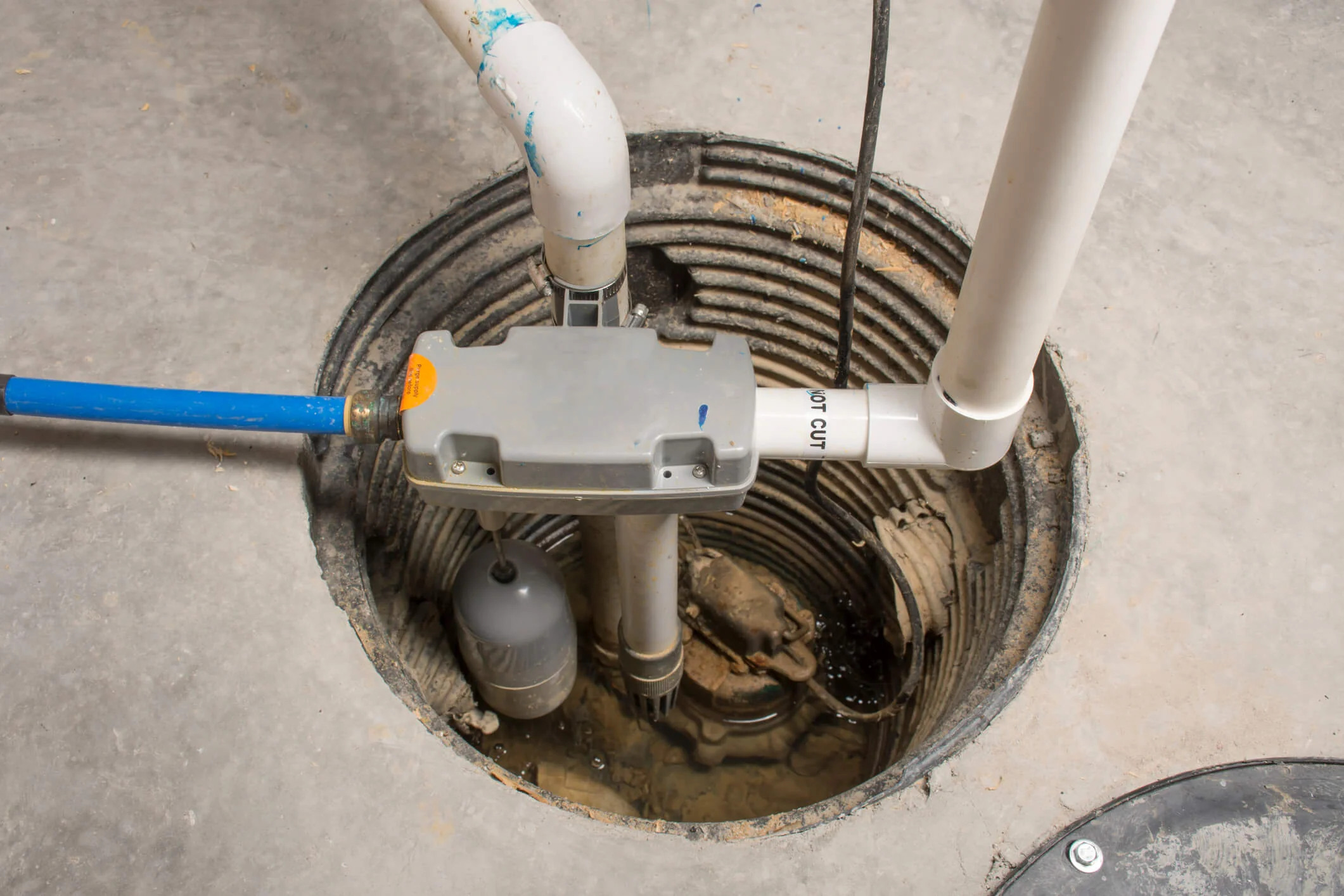
When a sump pump quits, it rarely quits politely. It usually happens during a heavy rain, when you are already carrying towels and thinking about everything stored on the floor.
The good news is that most sump pump failures fall into a handful of common, fixable problems. Below are six fixes I have used in my own 1970s ranch, written for real homeowners who want clear steps and straight talk.
Safety first (seriously, do this)
- If the basement floor is wet and you cannot confirm the power is off, do not enter. Shock is the real emergency. Shut off power to the area from a dry location and call a pro.
- Unplug the pump before you put hands in the pit. If it is hardwired, turn off the breaker.
- Water and electricity do not mix. If water is up near outlets, cords, or a junction box, shut off power to the area and call a pro.
- Wear gloves. Sump pits are not clean water.
- If your basement is actively flooding and you cannot stop it fast, start a wet/dry vac or a backup pump, then troubleshoot.
Tools you may need
- Work gloves
- Flashlight or headlamp
- Bucket (or small container for bailing)
- Towels or rags
- Screwdriver or nut driver (for hose clamps on a check valve)
- Garden hose (for rinsing the pump outside)
Quick diagnosis: what is it doing?
- Won’t turn on: no sound, no vibration, water level rising.
- Runs continuously: motor runs for a long time or never shuts off.
- Cycles too frequently: turns on for a few seconds, shuts off, then repeats.
Now we can aim at the most likely causes.
Fix #1: Unstick or replace the float switch
If your sump pump will not turn on or it runs nonstop, the float switch is the first thing I check. The float is the “on/off” trigger. When it sticks, the pump either never starts or never stops.
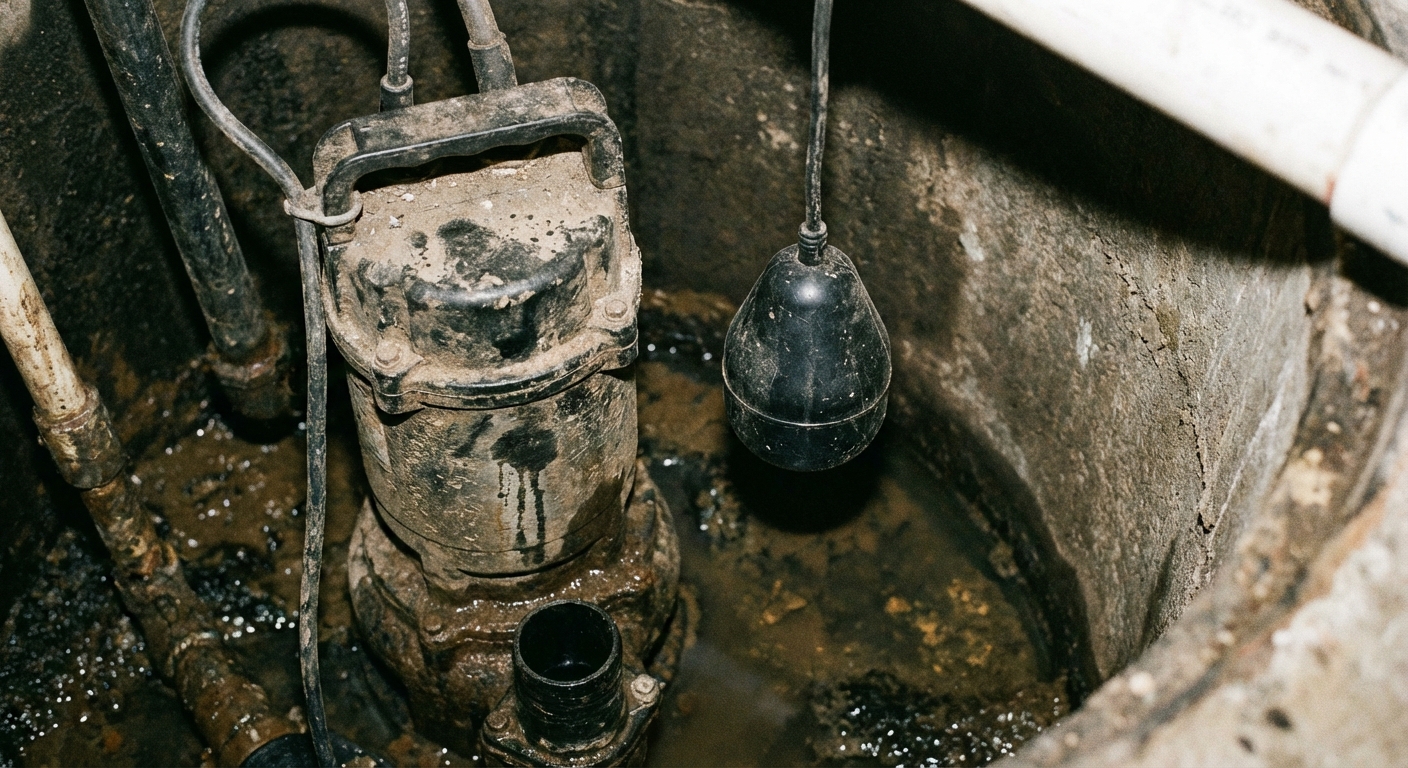
Common signs
- Pump is silent even though the pit is full.
- Pump runs even when the water is low.
- Float is jammed against the pit wall, cord, or discharge pipe.
What to do
- Power off: unplug the pump or shut off the breaker.
- Reach in and move the float up and down. It should travel freely without rubbing the basin.
- Clear debris like gravel, sludge, zip ties, or a loose cord that is trapping the float.
- If you have a tethered float, check that the tether length is not too short. A float that cannot rise far enough will not trigger.
- Test it: restore power and lift the float by hand. The pump should start.
If it still misbehaves: float switches do fail. Many pumps let you replace only the switch. If yours is built-in and failing, you may be looking at a pump replacement.
Fix #2: Clear a clogged intake or discharge line
A sump pump can “run” and still not move water if the intake screen is packed with sludge or the discharge line is clogged. That leads to long run times, overheating, and eventually a burned-out motor.
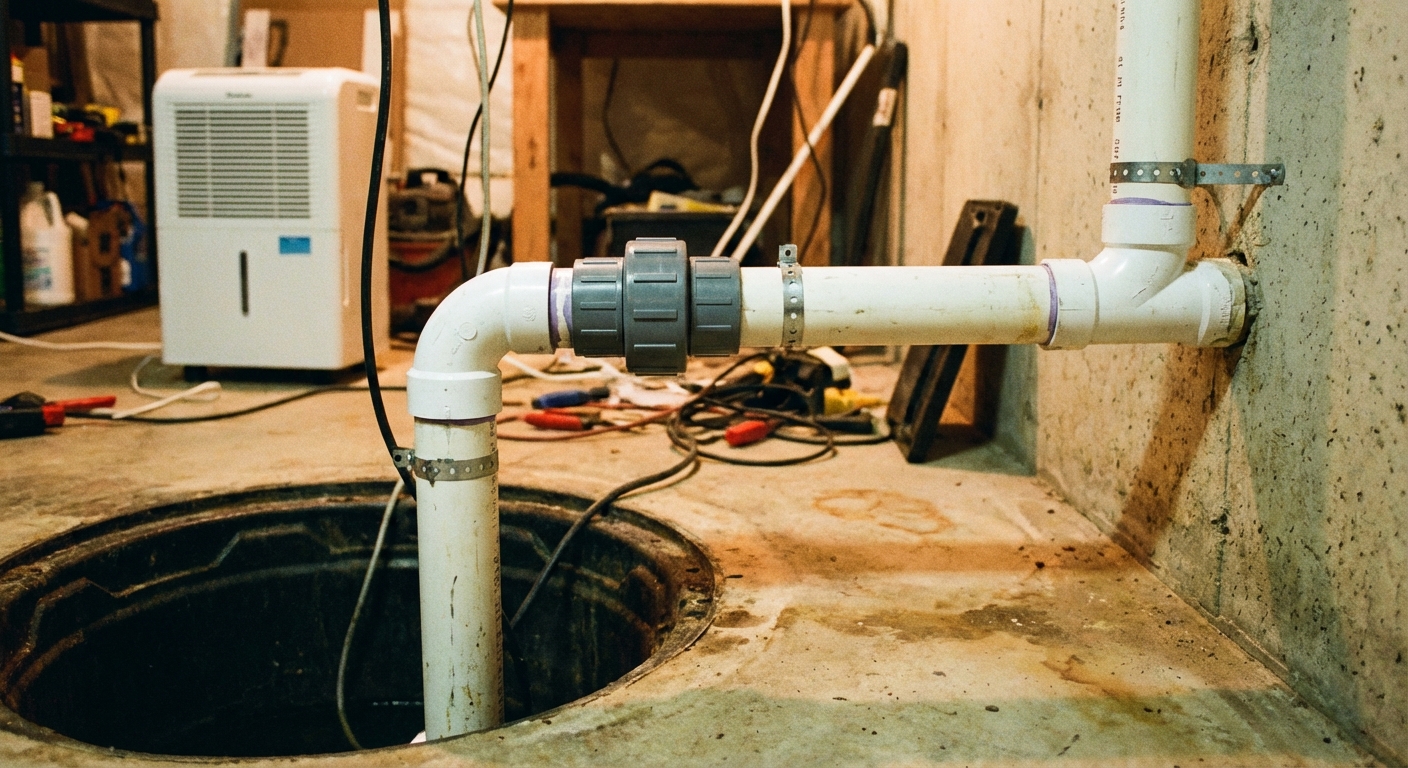
Where clogs happen
- Intake screen at the bottom of the pump.
- Discharge pipe just above the pump, especially at elbows.
- Outside termination where the pipe exits the home, sometimes buried or blocked by mulch, ice, or a critter nest.
What to do
- Power off: unplug the pump or shut off the breaker. If the pit is full, bail some water out so you can work.
- Pull the pump and rinse the intake screen somewhere that will not wash more grit back into the pit (outside is ideal).
- If you have a union or rubber coupler on the discharge, loosen it and check for blockage right at the outlet.
- Check the pipe where it exits the house and the outdoor end. Remove mud, leaves, or anything pinching the flow.
Thrifty tip: if you do not have a union in the discharge line, add one the next time you work on it. Future you will thank you when it is 2 a.m. during a storm.
Fix #3: Check the breaker, GFCI, and power
I have lost count of how many “dead pump” calls were really “dead outlet.” If your pump will not turn on, confirm it has power before you buy parts.
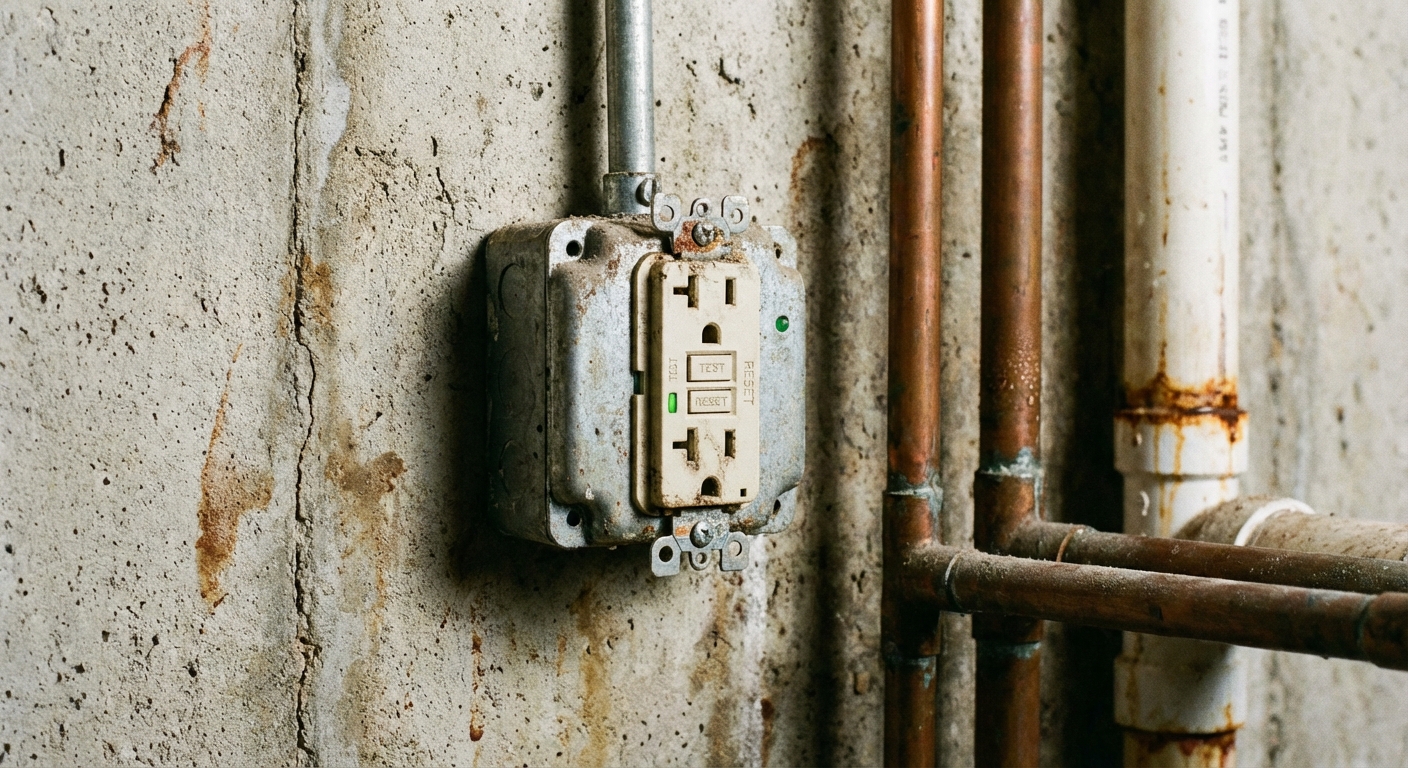
What to check
- Tripped breaker in the main panel.
- Tripped GFCI outlet (either the sump outlet itself or an upstream outlet that feeds it).
- Loose plug or damaged cord.
What to do
- Only if the area is dry and safe: plug a lamp or phone charger into the sump outlet to confirm it is live. If there is standing water on the floor or you are unsure, shut off power and call a pro.
- Reset the GFCI by pressing Reset.
- Flip the breaker fully off then back on to reset it.
- If the breaker trips again quickly, stop and call an electrician or plumber. A pump motor can short, and that is not a DIY guessing game.
One mistake I made early on: I had the sump pump plugged into the same circuit as a dehumidifier. When both kicked on, it popped the breaker at the worst possible time. A dedicated circuit helps because motors draw extra current at startup, and sharing that circuit is asking for nuisance trips.
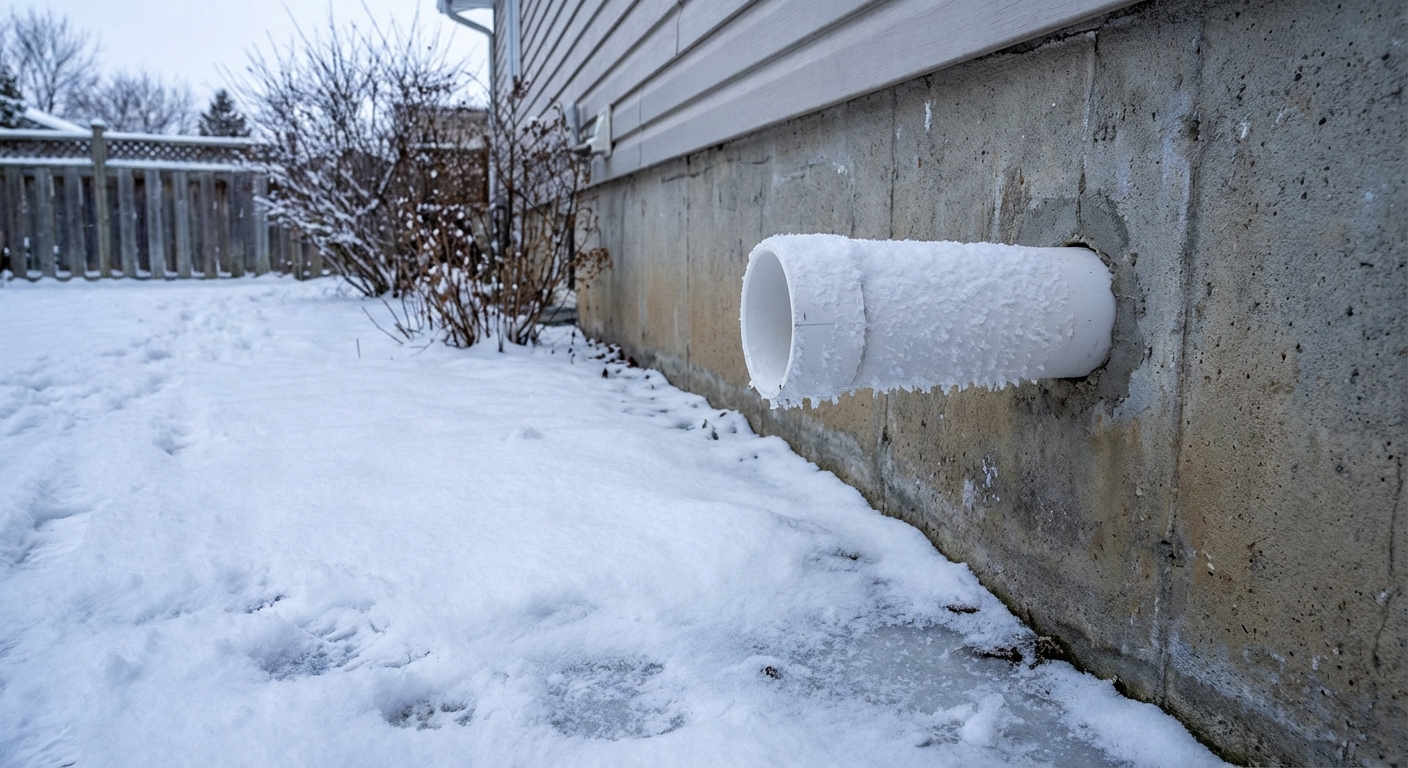
Fix #4: Thaw a frozen discharge
If your pump runs but the water level will not drop, and it is cold outside, you may have a frozen discharge line. The pump cannot push water through an ice plug, so it just churns and overheats.
Clues it is frozen
- Freezing temps recently, especially after a thaw and refreeze.
- Pump is running, but the pit stays full.
- No water is coming out at the outside discharge point.
What to do
- Power off and give the pump a break so it does not burn out.
- Check the discharge where it exits outdoors. If accessible, remove snow or ice around the outlet.
- Warm the pipe gradually using a hair dryer or heat gun on a low setting. Keep the tool moving and never focus heat in one spot long enough to soften PVC.
- If you open a union or check valve to thaw from indoors, go slow. Use warm (not boiling) water, protect the area from spills, and do not force fittings. If you are not comfortable, stop and call a pro. Cracked PVC at the wrong time is a bad trade.
Prevent it next time: make sure the outside discharge has a slight downhill pitch, is not buried, and drains out after each cycle. In some setups, rerouting, upsizing, or adding an approved heat cable can help (where allowed). The goal is simple: no standing water in the line to freeze.
Fix #5: Replace a bad check valve
If your pump turns on, runs for a few seconds, shuts off, then turns right back on again, that is classic short cycling. In plain English, it means the pump is starting and stopping too often instead of running a normal cycle.
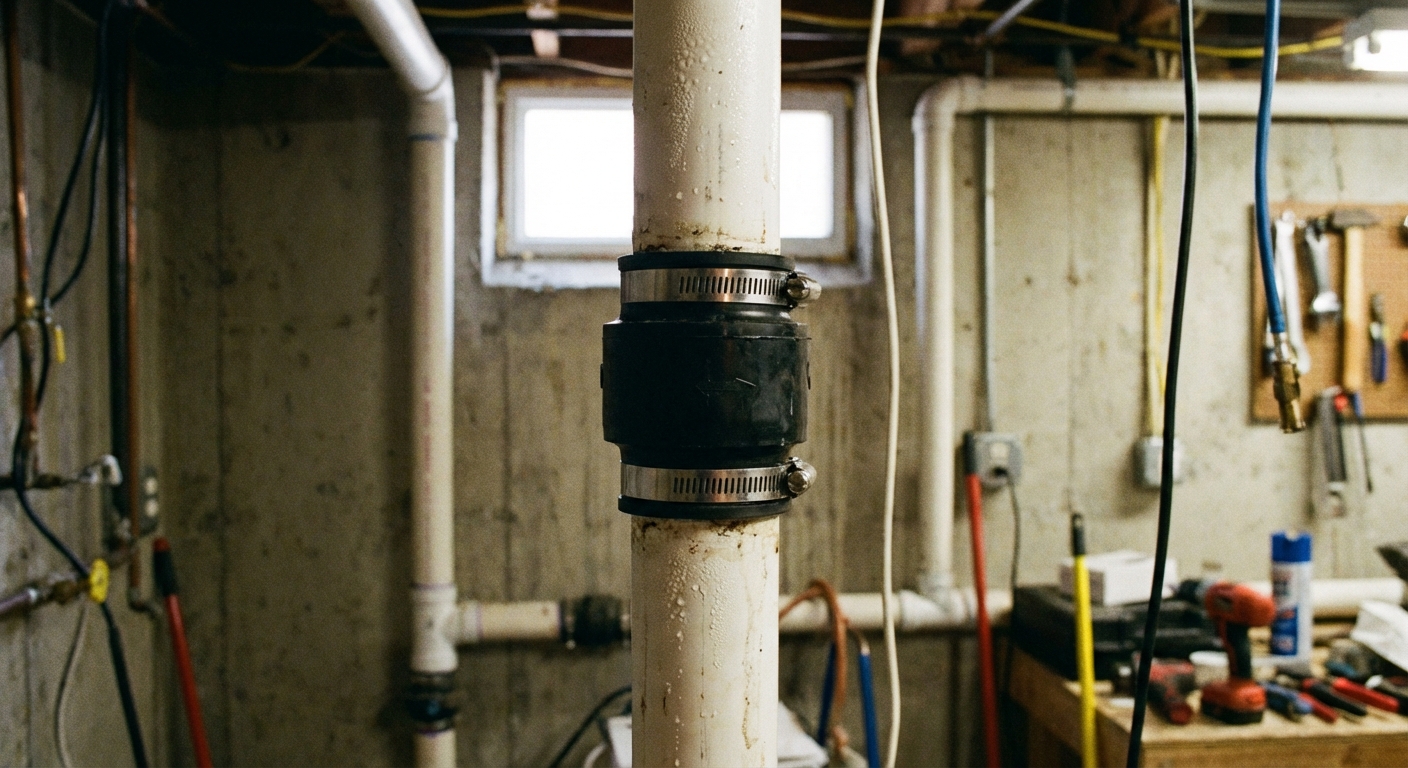
One of the most common causes is a bad or missing check valve. The check valve is a one-way door in the discharge pipe. It keeps the water that is already in the pipe from dumping back into the pit when the pump stops.
How to spot the problem
- You hear a rush of water falling back into the pit right after the pump shuts off.
- The pump cycles every 20 to 60 seconds even with modest water coming in.
- The check valve is installed backward (arrow pointing the wrong way).
What to do
- Power off: unplug the pump or shut off the breaker.
- Locate the check valve on the discharge line, typically a short distance above the pump.
- Verify the flow arrow points away from the pump and toward the exit.
- If it is stuck or leaking, replace it. Many are rubber “no-hub” style with hose clamps, which is a very DIY-friendly swap.
- After replacement, test by filling the pit. The pump should run longer per cycle, then stay off longer.
Note: some “thump” noise is normal when a pump stops, but constant rapid cycling is not. Short cycling is hard on motors and will shorten the life of your pump.
Fix #6: Deal with impeller or motor failure
Sometimes the truth is simple: the pump is done. If you have power, the float moves freely, the discharge is clear, and it still will not pump, the impeller may be jammed or the motor may be failing.
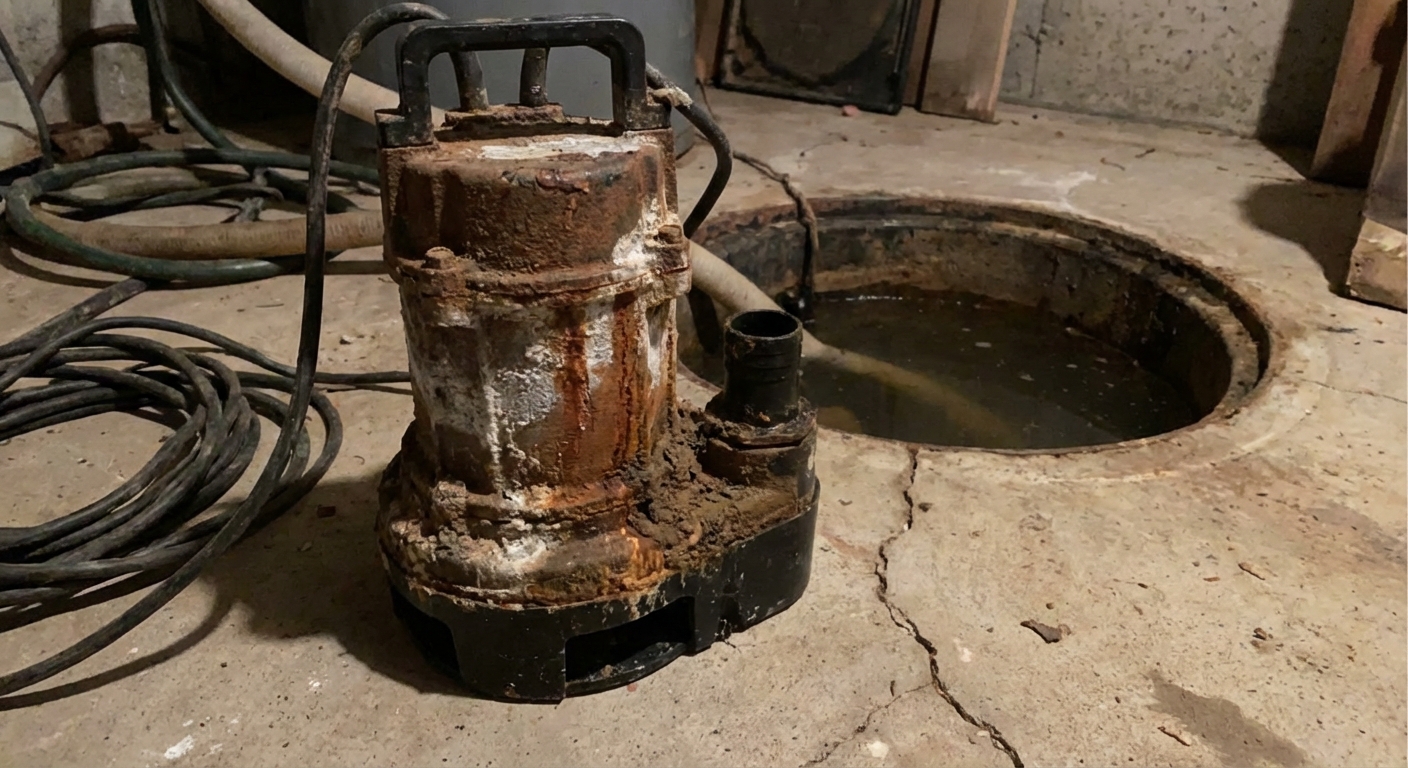
Signs the pump is failing
- Hums but does not pump (could be a jammed impeller or seized motor).
- Trips the breaker repeatedly.
- Runs but moves very little water, even with a clear discharge.
- It is older (often around 7 to 10 years), especially if it has seen frequent cycling. Some last longer, some do not.
What to do
- Power off and pull it from the pit.
- Check the impeller area for gravel or debris if your model allows access. Some are serviceable, many are not.
- Make sure the pump is sitting level and the intake is actually submerged. A shifted pump or too-low water level can cause weird performance.
- If it smells burnt, is heavily corroded, or repeatedly trips power, replace the pump.
My rule of thumb: if you are standing in a wet basement during a storm, reliability beats heroics. Swapping in a new pump is often cheaper than replacing wet drywall, carpet, or stored items.
Two quick “less common, but real” issues: An air lock can cause a pump to run without moving water in some setups, and an undersized pump (or simply massive inflow during a big storm) can look like failure when the pump is actually working flat-out. If your pump runs continuously during heavy rain but the water level is holding steady, you may be at the limit of the system, not dealing with a dead pump.
When to stop DIY and call a pro
- You see wiring damage, scorched plugs, or the breaker will not stay on.
- There is standing water on the basement floor and you cannot confirm power is off.
- The discharge line disappears under concrete and you suspect a hidden clog.
- The pit is overflowing and you need emergency pumping, drain work, or foundation drainage help.
- You have a finished basement and water is already under flooring or behind walls.
Fast troubleshooting checklist
If you just need a quick order of operations, here is the sequence I use:
- Confirm power at the outlet, GFCI, and breaker (only test outlets if dry and safe).
- Lift the float by hand and watch for a start.
- Check intake screen and pit debris.
- Check discharge line for clogs or a frozen section.
- Listen for backflow and inspect the check valve direction and function.
- If everything checks out, suspect impeller or motor failure and replace the pump.
Preventive checks (10 minutes)
- Quarterly test: pour water into the pit until the float triggers and confirm it pumps down and shuts off normally.
- Clean the pit: remove sludge and debris that can jam the float or impeller.
- Look outside: make sure the discharge termination is clear and draining away from the foundation.
- Listen for changes: new grinding, humming, or rapid cycling is your early warning.
A quick word on backups
If your home relies on a sump pump, consider a backup system for the next failure. Battery backups and water-powered backups both have a place, depending on your setup.
Quick caveat: water-powered backups need reliable municipal water pressure, are generally not for well systems or low-pressure setups, and some areas restrict them. Check local code before you buy one. Whatever route you choose, the goal is the same: do not let your only pump be a single point of failure.
One last routing reminder
Make sure your discharge sends water away from the foundation and stays clear year-round. Also, do not tie a sump discharge into a sanitary sewer where it is prohibited (which is many places). If you are unsure, a quick call to your local building department can save a lot of grief later.

About Marcus Vance
Content Creator @ Grit & Home
Marcus Vance is a lifelong DIY enthusiast and self-taught home renovator who has spent the last decade transforming a dilapidated 1970s ranch into his family's dream home. He specializes in budget-friendly carpentry, room-by-room renovations, and demystifying power tools for beginners. Through his writing, Marcus shares practical tutorials and hard-learned lessons to help homeowners tackle their own projects with confidence.