
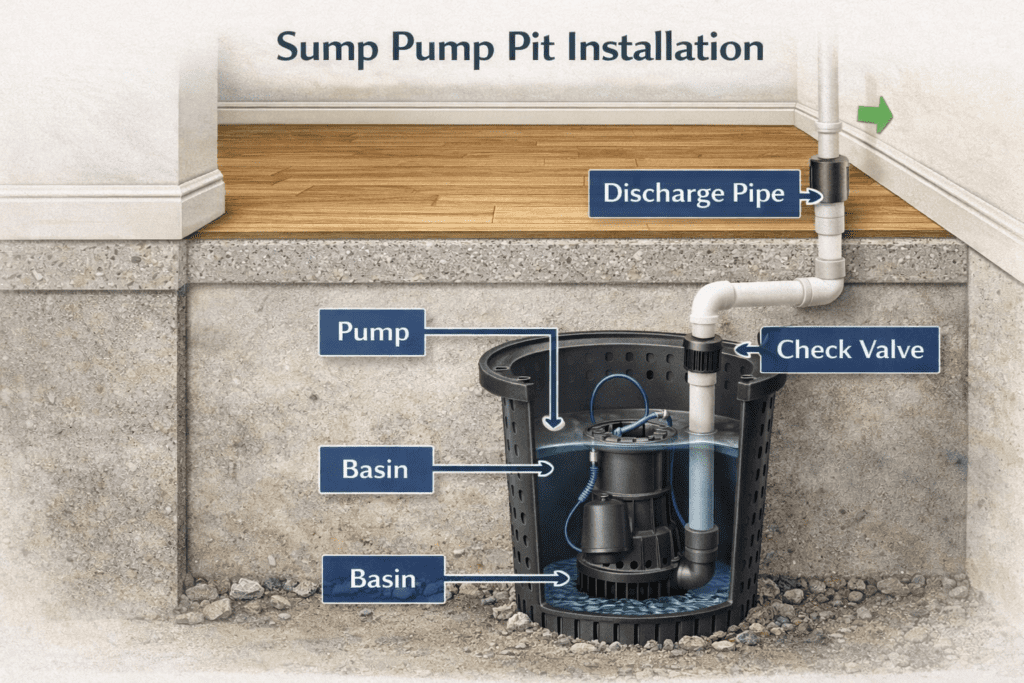
A sump pump that runs constantly is not the same problem as a pump that won’t run at all. A pump that never shuts off is usually trying to tell you one of three things: water is coming in faster than it can keep up, something is preventing it from reaching the shutoff point, or it is short cycling due to a control or plumbing issue.
I’ve been there, standing in my half-finished basement listening to that motor hum for hours and wondering if I should unplug it. Sometimes you can fix this in 15 minutes. Other times, constant running is your early warning that a failure is coming, and a failure can mean a wet basement fast.
What “constant running” means
- Runs nonstop: motor never shuts off, water level may stay high or only drop a little.
- Runs nearly all the time: it shuts off briefly, then kicks right back on because the pit refills quickly.
- Short cycles: it turns on and off every few seconds or minutes. This is hard on the pump and is a different diagnosis than a steady run.
Quick note: Some pumps will run continuously during extreme rain or rapid snowmelt. That can be normal for your site. The key is whether it can eventually catch up and shut off, and whether the water level in the pit is staying under control.
Safety and quick tools
Before you touch anything
- Keep your hands out of water if you see any cords, outlets, or extension connections near moisture.
- Use the right outlet protection: Many areas and manufacturers require a GFCI for sump pumps, but nuisance trips can happen. Follow your pump manual and local code. If a GFCI trips repeatedly, fix the cause rather than bypassing it.
- Do not unplug a constantly running pump if the pit water is high and rising. Unplugging can invite a flood.
- If the pit is low or empty and the pump still runs, shut off power and address the switch problem. Running dry can quickly damage many pumps.
Helpful items
- Flashlight or headlamp
- Work gloves
- Bucket and old towels
- Adjustable pliers or screwdriver (for check valve clamps, depending on your setup)
- Small level or tape measure (handy for float clearance checks)
Fast diagnostic: 7 checks
If you want the quickest path, do these in order. Each check narrows the cause without creating a bigger mess.
1) Watch the water level
- If the water level is dropping but never reaches “off”: float or switch issue, or the pump is not sitting correctly.
- If the water level barely drops: discharge problem, airlock, jammed impeller, undersized pump, worn impeller, or too much incoming water.
- If it shuts off then restarts quickly: most often water is draining back, usually check valve related.
2) Check the float for snags
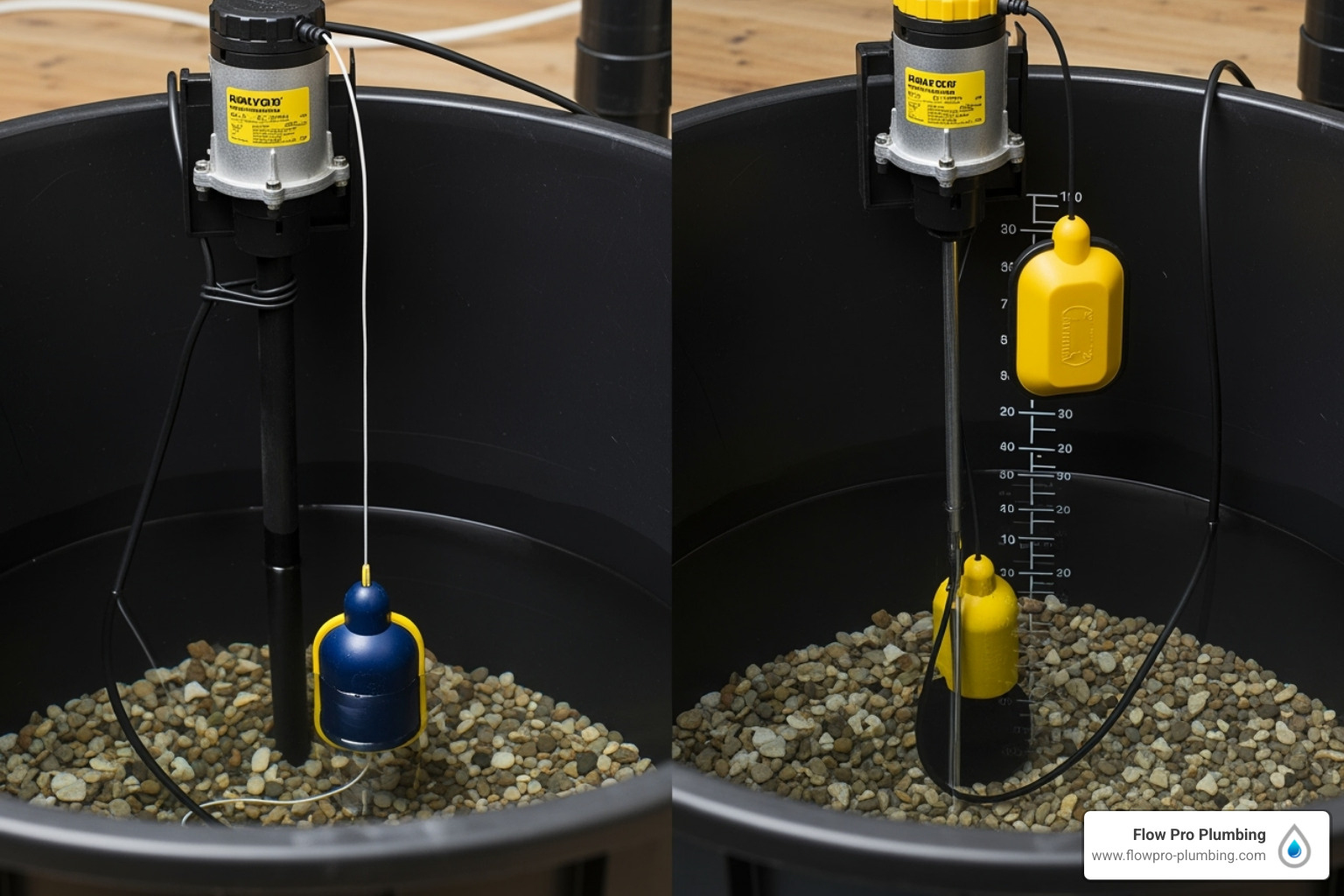
A stuck float is one of the most common reasons a sump pump won’t shut off. In older pits especially, the float can get pinned against the pit wall, tangled in the power cord, or jammed by debris.
- Make sure the float can move freely through its full range.
- Check that the pump is sitting level and not wedged at an angle.
- Ensure cords are not looping around the float arm.
3) Test for a failed switch (stuck “on”)
Sometimes the float moves freely but the switch itself fails and stays closed. The giveaway is a pump that keeps running even when the float is clearly down and the water is low.
- If the pit is low, shut off power and inspect the switch and wiring for damage.
- On many pumps, a stuck or failing switch means replacement of the switch or the whole pump, depending on the design.
4) Listen for strain or a hum
If the pump suddenly sounds different, like it is straining or whining, that can point to a partial blockage in the discharge line or a worn impeller.
If you hear a steady hum but see little or no movement of water, think jammed impeller or an airlock. Either one can overheat a motor quickly.
5) Confirm water is leaving the house
Go outside and find the discharge point. You should see a steady stream or pulsing flow depending on the pump type. If you see nothing, the most likely causes are a blockage, a frozen line, or a check valve that is stuck closed or installed backwards.
6) Check for backflow and short cycling
If it is cycling rapidly, watch for a quick surge in the pit right after it shuts off. That often means water is draining back through the discharge line, usually because the check valve is leaking, missing, or installed wrong.
7) Smell for overheating
If you smell hot plastic or a burnt electrical odor, treat that as urgent. Constant running can overheat motors, especially if the pump is not rated for continuous duty, is running dry, or is pushing against a restriction. At that point, your priority is preventing flooding while avoiding an electrical hazard.
Common causes and fixes
Stuck or misadjusted float
What you’ll notice: Pump runs even when water is low, or it runs until the pit is nearly empty and still doesn’t shut off.
Why it happens: The float is snagged on the pit wall, tangled in cords, blocked by debris, or the tether length is wrong.
- Unplug the pump only if the pit water level is safely low and stable.
- Remove debris and reposition the pump so the float has clearance on all sides.
- For tethered floats: adjust the tether so the float can drop enough to shut off. Too short can cause rapid cycling, too long can cause the pump to run too long.
- Test by slowly filling the pit with water and watching the on and off points.
My hard-learned mistake: I once zip-tied cords neatly to the discharge pipe and accidentally created the perfect little loop to catch the float. Neat is good, but floats need space more than they need tidy cords.
Failed switch stuck on
What you’ll notice: The float is down and moving freely, but the pump keeps running anyway. Sometimes the pit is nearly empty and the pump is still going.
Why it happens: The switch contacts can fail closed, wiring can short, or the switch mechanism can fail internally.
- Shut off power if the water is low and the pump is not needed for immediate flood control.
- Replace the switch if it is a serviceable part, or replace the pump if the switch is integral.
- Do not ignore this one. Running dry is how pumps die early.
Bad check valve (backflow)
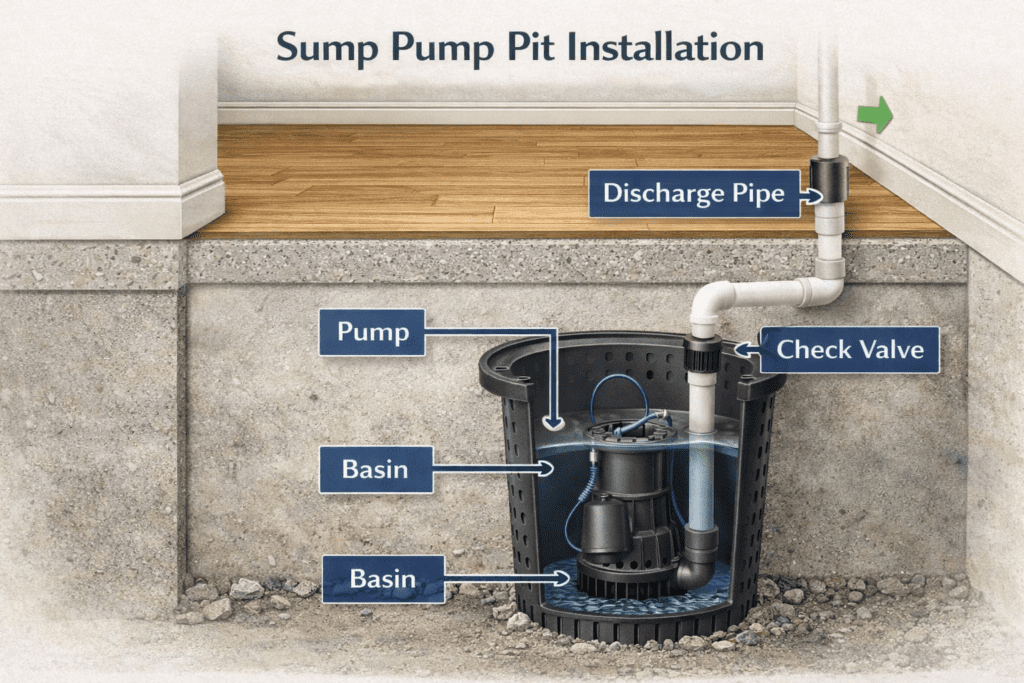
What you’ll notice: Pump shuts off, then turns back on soon after because water rushes back into the pit. In some setups it can also feel like it runs constantly because it never gets ahead.
Why it happens: The check valve is stuck open, installed backwards, leaking, or not present. Without a working check valve, water in the vertical discharge line falls back into the pit after each cycle.
- Locate the check valve on the discharge pipe above the pump.
- Check for an arrow on the valve body. It should point in the direction of flow away from the pump.
- If it is a rubber coupling style, look for leaks or a bulge indicating failure.
- Replace the valve if it is suspect. They are relatively inexpensive and often worth swapping rather than gambling.
Note: A check valve usually causes backflow and short cycling. Total no-flow is more often a clog or freezing, unless the valve is stuck closed or installed backwards.
Airlock or clogged weep hole
What you’ll notice: The motor runs (sometimes with a smooth hum), but the water level barely drops and you get weak or no discharge outside.
Why it happens: Some setups rely on a small relief hole (often called a weep hole) in the discharge pipe between the pump and the check valve to prevent an airlock. If that hole is missing when your pump requires it, or it gets clogged with silt, the pump can spin without moving water.
- Look for manufacturer instructions for your pump model. Not every pump uses or needs a weep hole.
- If you already have one, make sure it is not clogged. A small stream or spray into the pit during operation is often normal when a weep hole is present.
- If you do not have one, do not drill your pipe as a default fix. Follow the manual or call a plumber, since placement matters and mistakes can cause leaks or unwanted cycling.
Discharge line blockage or freezing
What you’ll notice: Pump runs, but water level barely drops. Outside discharge may be weak or nonexistent.
Why it happens: Ice in the discharge line, a clogged exterior pipe, crushed flexible hose, a blocked pop-up emitter, or a buried line that has filled with silt.
- In winter: check for a frozen section near where the line exits the house or near the surface outdoors.
- Inspect the exterior end for mud, leaves, or animal nests.
- Make sure the hose is not kinked and the pipe has a continuous downhill run away from the house where required.
Fix options: Clear the exterior blockage, thaw the frozen section carefully, and consider a freeze-resistant routing plan for next winter. Some homeowners re-route to reduce exposed horizontal sections that freeze.
Jammed impeller (pebble or debris)
What you’ll notice: The pump runs or hums, but moves little to no water. It may sound rough, or it may sound almost normal while doing nothing. The motor can get hot fast.
Why it happens: A small stone, chunk of sludge, or debris gets into the volute and jams the impeller.
- If the water level is safe, shut off power and pull the pump.
- Check the intake screen and impeller area for a pebble or debris. Clean it out.
- If the impeller is damaged or the pump still struggles after cleaning, replacement is often the smarter move.
High inflow (pump is working hard)
What you’ll notice: During storms or wet seasons, the pump runs for long stretches and the water level stays relatively high but controlled.
Why it happens: Groundwater pressure around your foundation is high, and the basin is receiving a constant supply from drain tile or seepage.
- Check gutters, downspouts, and grading first. These are cheap fixes that reduce water at the foundation.
- Extend downspouts farther from the house and confirm they drain away, not into the same saturated zone.
- If the pump keeps up and the basement stays dry, it may be normal for your lot during certain months.
If the pump runs constantly even in dry weather, that is when I start suspecting a plumbing leak, a stuck switch, an airlock, or a discharge issue, not just groundwater.
Undersized or worn pump
What you’ll notice: Water level stays high, the pump runs nonstop during moderate rain, or it used to shut off and now it never seems to catch up.
Why it happens: The pump is too small for your inflow rate, the vertical lift is higher than the pump is rated for, the impeller is worn, or the pump is near end-of-life.
- Check the pump’s performance curve and look for the gallons per hour rating at your actual head height, not just the big number on the box.
- Head height is primarily the vertical lift from the pump to the discharge point, and long pipe runs and fittings can add additional loss.
- If the pump is older, noisy, corroded, or struggling, replacement is often the safest fix.
Short cycling
What you’ll notice: The pump turns on, runs briefly, shuts off, then turns back on soon after. This is a common reason people describe a pump as “always running” because it never gets a break.
Likely causes:
- Bad or missing check valve (backflow)
- Float tether too short
- Basin too small for the pump output
- Pump too powerful for the basin size, causing rapid drawdown
Fix: Start with the check valve, then adjust the float, then consider a larger basin or different switch setup if short cycling continues.
When it’s an emergency
Here’s when I stop troubleshooting and start thinking flood prevention first.
- Water level is rising in the pit while the pump is running.
- No water is exiting at the discharge point after a reasonable check for freezing or a clog.
- The pump is very hot, smells burnt, or trips the breaker.
- You have finished basement space and a failure would damage flooring, drywall, or electrical.
If you have a battery backup pump, verify it is ready. If you do not have one and your area is prone to outages during storms, a constantly running pump is a strong hint to consider adding backup before the next big weather event.
Repair or replace
- Repair makes sense when it is clearly a float snag, a clogged discharge, a bad check valve, or a dirty pit and the pump otherwise sounds healthy.
- Replace is usually smarter when the pump has overheated, has repeated cycling issues you cannot tame, shows heavy corrosion, keeps tripping protection, or is older and struggling to keep up.
- If you are unsure, look up your model’s duty rating and protections, then compare that to what your basement is demanding right now. When in doubt, I would rather replace a questionable pump than replace carpet and drywall.
Maintenance checklist
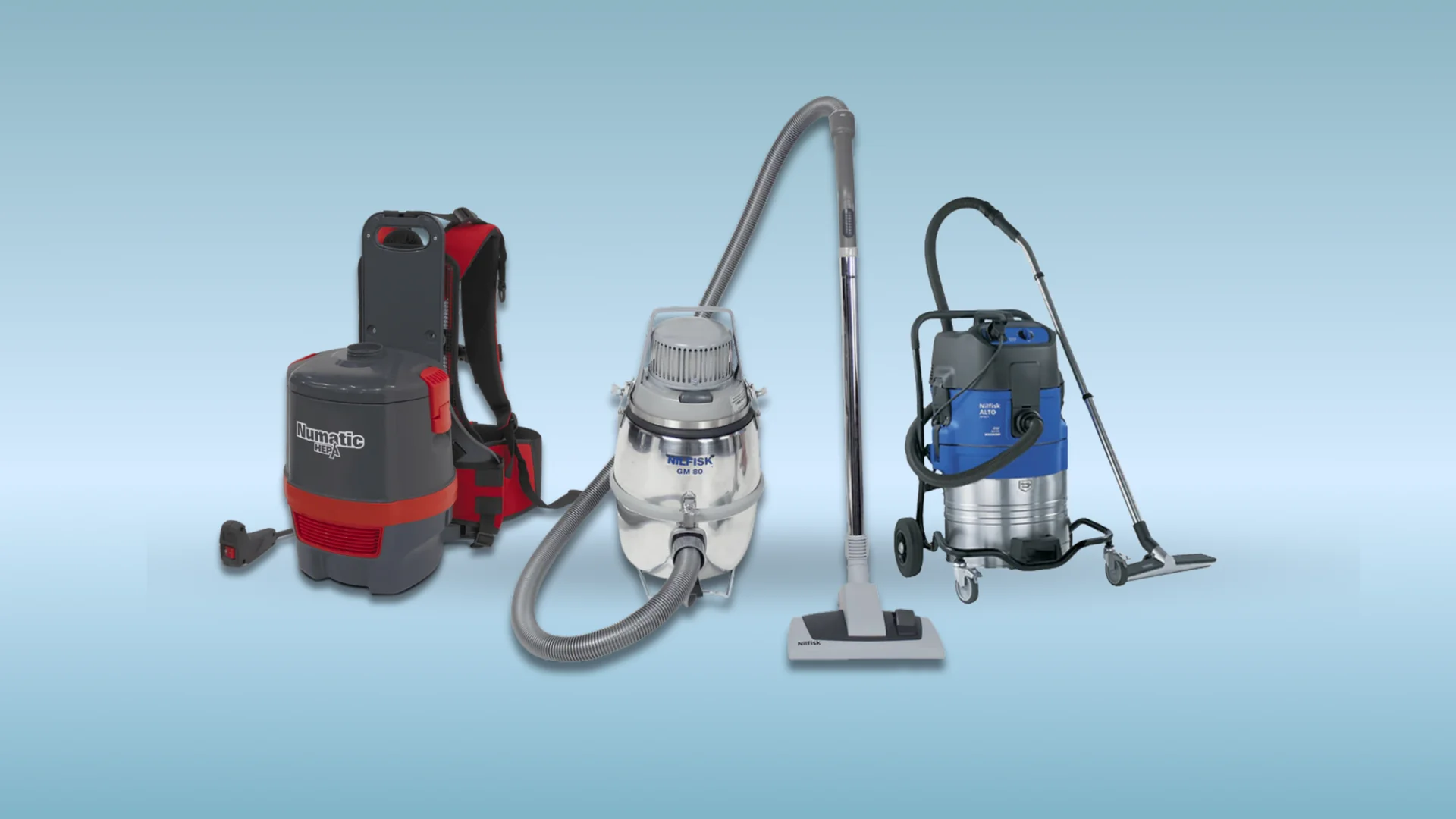
- Quarterly: Pour a bucket of water into the pit to confirm the pump turns on, discharges, and shuts off cleanly.
- Quarterly: Lift the float gently to verify it moves freely and is not rubbing the pit wall.
- Twice a year: Clean out silt, gravel, and sludge from the bottom of the basin.
- Twice a year: Inspect the check valve and discharge connections for leaks.
- Before winter: Confirm the discharge route is protected from freezing and the outside outlet is clear.
- Anytime: Make sure the pump is plugged directly into an appropriate outlet per code and the manufacturer, not into a cheap extension cord.
DIY or call a pro
Usually DIY-friendly
- Clearing debris and repositioning the pump to free a float
- Adjusting a tethered float
- Clearing an exterior discharge blockage
- Replacing a check valve if you are comfortable with basic plumbing connections
- Cleaning the pit and clearing an intake screen
Call a pro if
- The pump is running but the water level keeps rising
- You suspect a failed underground discharge line or buried blockage
- You see electrical issues, frequent breaker trips, or burning smell
- You need drain tile, grading, or groundwater mitigation beyond basic downspout work
- You suspect an airlock and you are unsure what your pump requires (manuals vary)
Quick FAQ
Is it okay for a sump pump to run all day?
It can happen during major storms or peak groundwater season. Some pumps are rated for continuous duty, but many are not, and restrictions or running dry make overheating more likely. If it is running all day in normal weather, something is likely wrong or the system is undersized.
What’s the biggest risk of constant running?
Premature failure. Heat, wear, and repeated cycling can take out a motor fast, and the worst time for a sump pump to die is when groundwater is at its highest.
Can a bad check valve cause nonstop running?
Yes. If water drains back into the pit after every cycle, the pump can kick on repeatedly and feel like it never stops. It also increases wear because the pump has to move the same water again and again.
Bottom line
A sump pump that runs constantly is usually telling you something specific: the float cannot shut it off, the switch has failed on, water is draining back, the discharge cannot move water out, there’s an airlock, the impeller is jammed, or the pump simply can’t keep up with the conditions. Start with the simple checks in the pit, verify water is actually leaving the house, then move to the check valve and discharge line. If the water level is rising or you smell overheating, treat it as urgent and get help before you’re mopping up a flooded basement.

About Marcus Vance
Content Creator @ Grit & Home
Marcus Vance is a lifelong DIY enthusiast and self-taught home renovator who has spent the last decade transforming a dilapidated 1970s ranch into his family's dream home. He specializes in budget-friendly carpentry, room-by-room renovations, and demystifying power tools for beginners. Through his writing, Marcus shares practical tutorials and hard-learned lessons to help homeowners tackle their own projects with confidence.