
🚨 In a DIY emergency or rush?
Skip the details and jump straight to our 30-second cheat sheet for the most crucial info.
Small courier. Big home questions.
If your thermostat says HEAT but you hear the outdoor air conditioner kick on, that is not your system being quirky. That is your system being told to cool during a heat call, and your wallet is about to get drafted.
This guide is for a conventional setup: a furnace (gas, oil, or electric) plus a separate central air conditioner with an outdoor condenser. If the condenser runs when you are calling for heat, the most common causes are a wrong setting, a wrong thermostat equipment configuration, or swapped control wires.
First, confirm what is running
Before you start pulling a thermostat off the wall, confirm what is actually turning on.
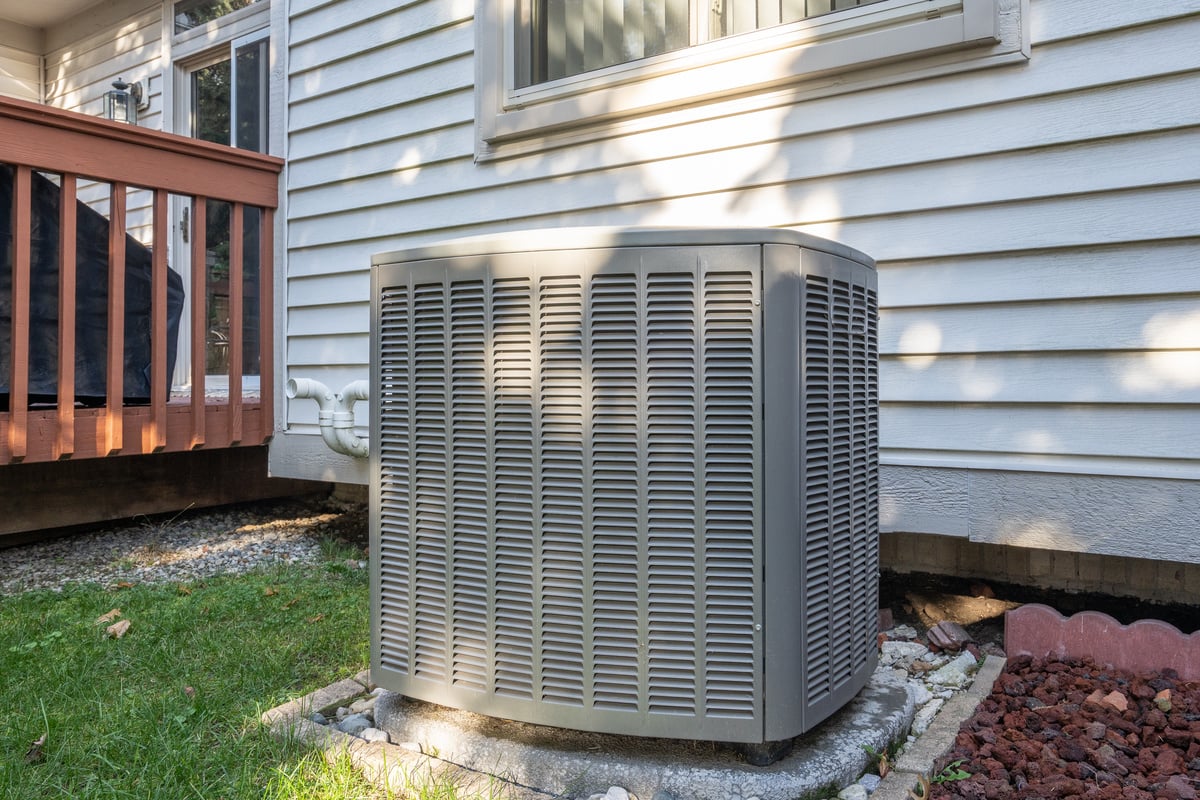
- Outdoor condenser running: you will hear a steady hum and feel air blowing upward from the top fan grille. This is the part that should not run during furnace heat.
- Indoor furnace blower running: this is normal during heat, even though it can feel like “AC” at first if the ducts are cold.
- Heat pump confusion: if you have a heat pump, the outdoor unit normally runs in both heating and cooling. This article is not for that situation.
If you are sure the outdoor AC condenser is running while the thermostat is calling for heat, move on.
Quick heat pump check
Because this issue is so often misdiagnosed, here is a fast way to sanity-check whether you actually have a heat pump or a hybrid system (heat pump plus furnace).
- Your thermostat shows AUX, EM HEAT, or emergency heat: strong hint you have a heat pump.
- You have an O or B wire/terminal (reversing valve) on the thermostat base or air handler board: strong hint you have a heat pump.
- The outdoor unit runs in heat mode on purpose and you still get warm air inside: that is often normal for heat pumps.
- Dual-fuel/hybrid clue: you have both an outdoor unit and a furnace, and the system switches between them depending on outdoor temperature. In that case, the outdoor unit running while set to HEAT can be normal.
If you confirm you have a heat pump or a hybrid setup, stop here and follow heat pump specific troubleshooting. The rest of this guide assumes a furnace plus straight-cool AC.
Shut it down when needed
I know, I know. Everyone wants to “try one more setting.” Here are the moments to stop and power down to prevent damage or a nasty surprise.
- You smell burning plastic, see smoke, or hear buzzing or arcing at the furnace or thermostat.
- The outdoor unit is running nonstop even when you switch the thermostat to OFF.
- The furnace is short cycling (starting and stopping rapidly) or making loud banging sounds.
- You see ice forming on the refrigerant lines or outdoor unit while it is cold out. If you later discover you have a heat pump, some frost can be normal during defrost cycles, but that is not what we are troubleshooting here.
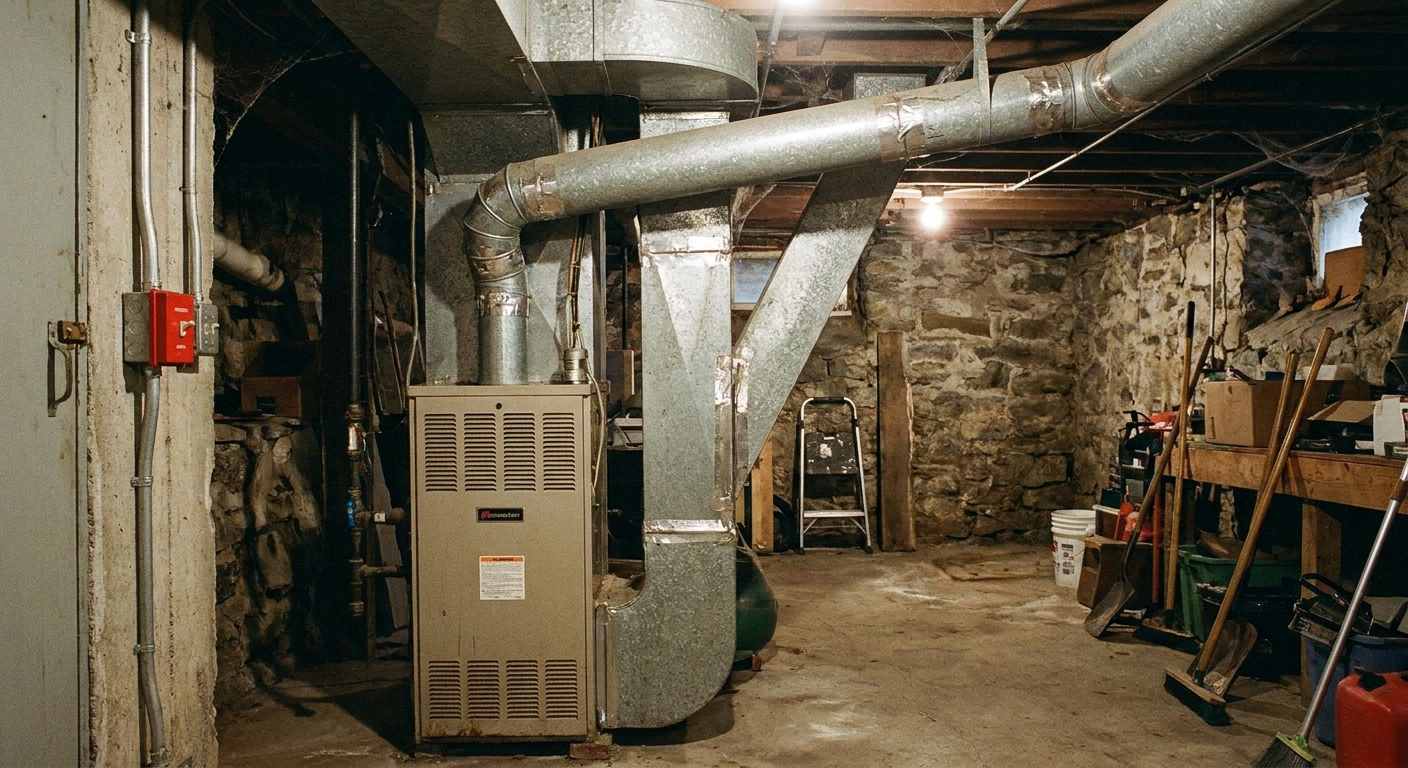
What to do: Set the thermostat to OFF. Then turn off power to the HVAC equipment at the appropriate switch or breaker. For many homes that means the furnace/air handler switch (often near the unit) and the AC condenser disconnect or breaker. If you are not sure, shut off the HVAC breakers in your main panel and call for service.
Step 1: Check thermostat settings
This sounds too simple, but it catches real problems, especially after guests, kids, power outages, or thermostat updates.
Set the mode intentionally
- Set System to HEAT (not AUTO).
- Set your temperature several degrees above room temperature to force a heat call.
Set the fan to AUTO
Put the Fan setting on AUTO, not ON. Fan ON will not start the outdoor condenser by itself in normal conventional wiring, but it can make the air feel cool and send you chasing the wrong culprit.
If you have a button for COOL or a touch slider, double check you did not accidentally choose cooling. Some thermostats bury mode choices behind a menu.
Step 2: Watch for thermostat options
On a conventional furnace plus AC system, a heat call should energize W (heat). Depending on the system and thermostat settings, it may also energize G (fan), although many furnaces control the blower themselves in heating. It should not energize Y (cooling compressor contactor).
A few thermostat options can confuse things:
- Auto changeover: In AUTO, the thermostat decides heat vs cool based on setpoints. If your cool setpoint is too close to room temp, it might call for cooling even when you think you are “heating.” Switch out of AUTO and choose HEAT only while troubleshooting.
- Schedule overrides: Some thermostats snap back to a programmed schedule and change mode or setpoints. Disable scheduling temporarily or set a “hold” if available.
- Humidity accessories: Advanced thermostats can control humidifiers, dehumidifiers, or ventilators. Those should not start the outdoor condenser, but a misconfigured system type can make accessory terminals act strangely.
If everything looks normal and the condenser still runs on a heat call, it is time to suspect configuration or wiring.
Step 3: Check equipment configuration
Many modern thermostats have an equipment setup menu that asks what type of system you have. If the thermostat is told the wrong system type, it can energize the wrong terminals.
For a furnace plus AC system, you generally want settings like:
- Heating type: furnace (gas/oil/electric furnace), not heat pump
- Cooling type: central air / 1-stage cool (for most homes)
- Fan control in heat: typically “equipment controls fan” for a furnace
Clue you are in the wrong system type: the thermostat keeps mentioning a reversing valve (O/B) or heat pump staging when you do not have a heat pump.
If you recently replaced the thermostat, this step matters a lot. A thermostat can be wired correctly and still behave wrong if the setup wizard was answered incorrectly.
Step 4: Check Y and W wiring
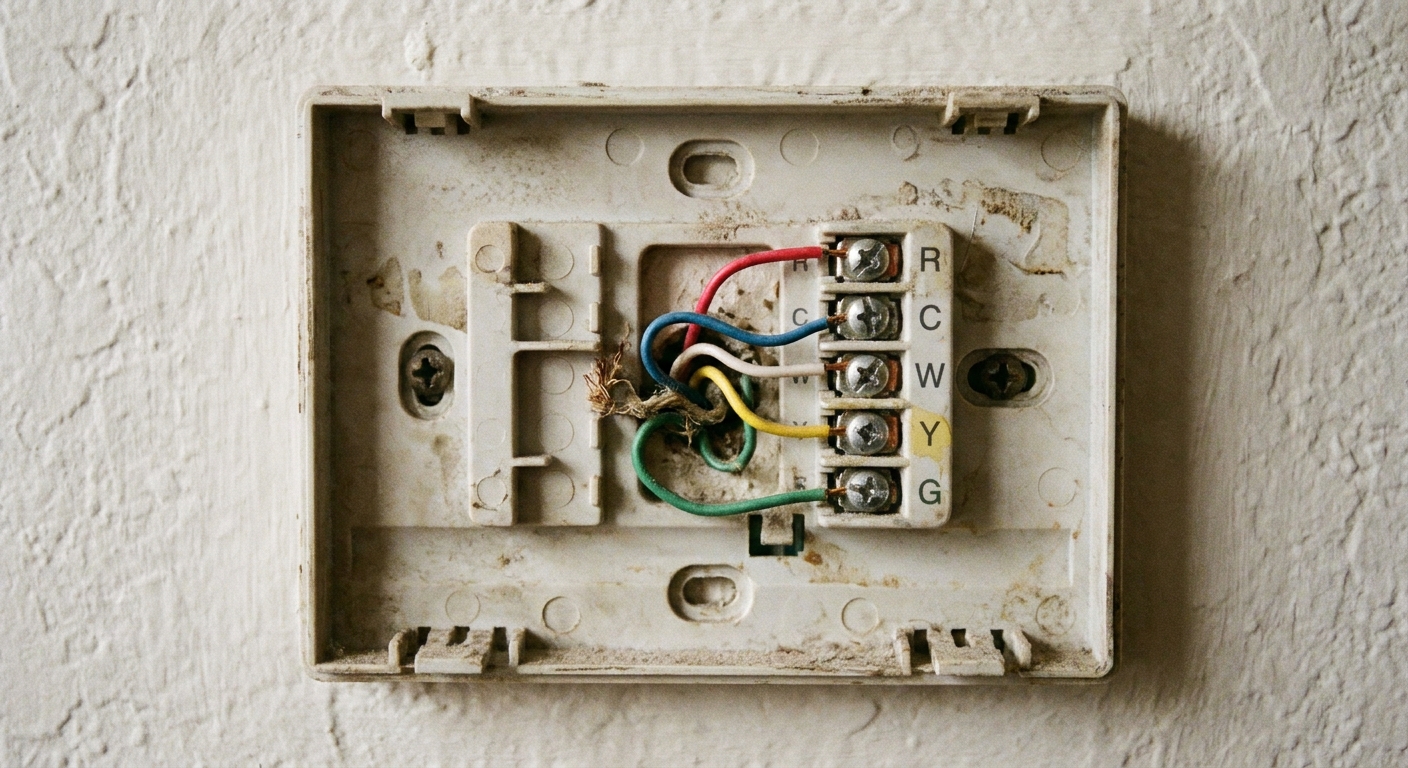
Here is the classic scenario: a new thermostat (or new furnace control board) gets installed, and the Y (cooling) and W (heating) control wires end up swapped at the thermostat. Result: when the thermostat calls for heat, it energizes what it thinks is W, but it is actually connected to Y, and the outdoor condenser starts.
On most thermostat bases:
- R or Rh/Rc = power (usually red wire)
- W or W1 = heat call (often white wire)
- Y or Y1 = cooling call to the condenser (often yellow wire)
- G = fan (often green wire)
- C = common (often blue or brown wire)
Important: wire colors are common, not law. The only thing that matters is what terminal the wire lands on at both ends.
Safe way to inspect the thermostat wiring
- Turn system power off to the furnace/air handler at the switch or breaker. This prevents blown fuses on the control board.
- Remove the thermostat faceplate to expose the wiring terminals.
- Take a clear photo before touching anything.
- Check that the wire on W is truly the heat call wire, and the wire on Y is truly the cooling call wire.
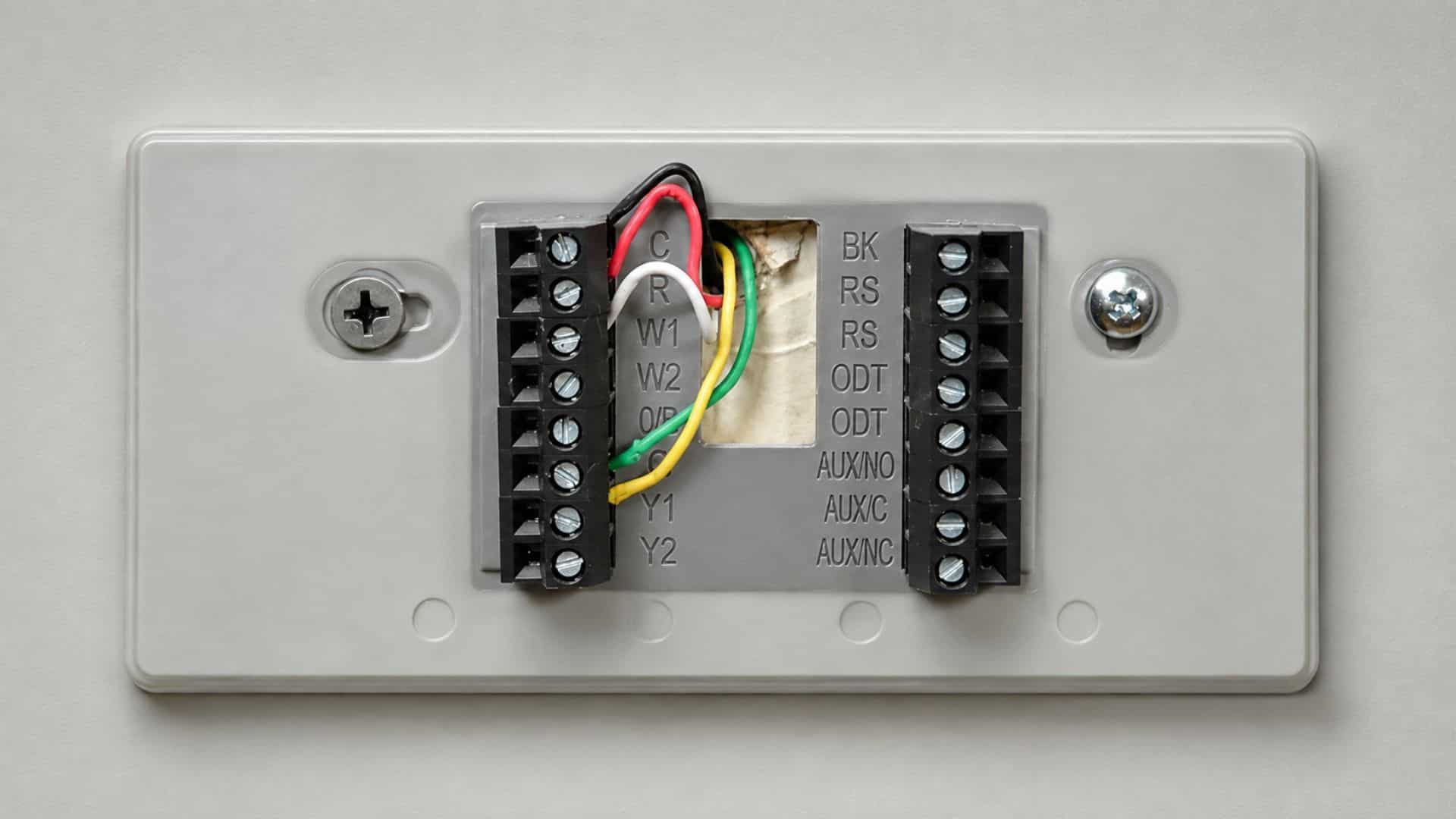
If you find that Y and W are swapped, correcting them can solve the issue immediately. If you are not confident, stop at the photo and hand it to an HVAC tech. One good photo can save you a service call hour.
Step 5: Check the furnace control board
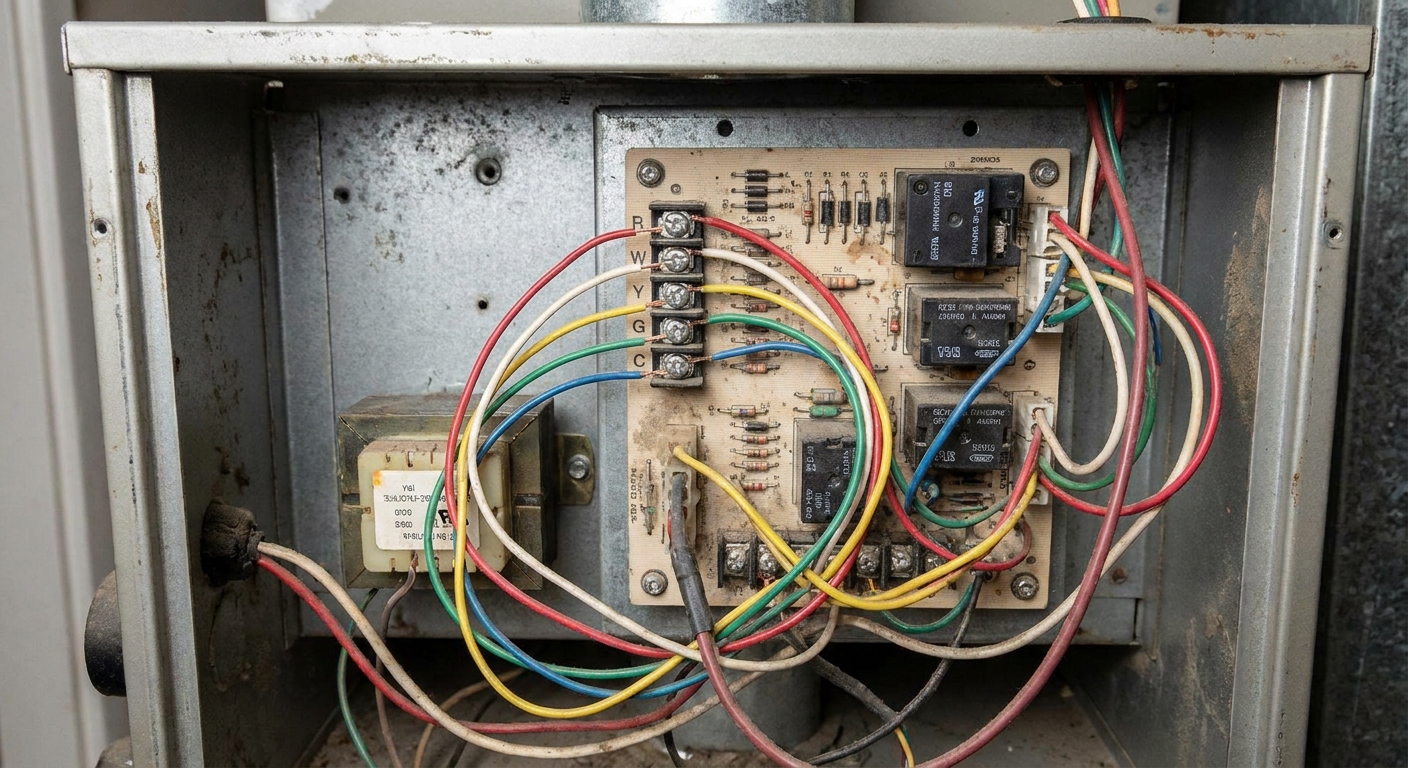
Sometimes the thermostat wiring is fine, but the swap happened at the other end, inside the furnace or air handler where the thermostat wires land on a control board.
In many systems, the furnace control board has low-voltage terminals labeled R, C, W, Y, G. If the thermostat cable was re-terminated during an install, Y and W can get crossed there too.
What you can do safely
- Turn off power to the furnace at the switch or breaker.
- Remove the furnace access panel (usually a couple of screws).
- Look for the thermostat wire bundle landing on labeled terminals.
- Take a photo and compare to the thermostat end.
If you see obvious mis-landing (the same conductor that is on W at the thermostat is on Y at the board), that is a strong lead.
Important: when you are done, put the panel back on correctly. Many furnaces have a door switch and will not run safely with the panel loose or missing.
Stop and call a pro if you see damaged insulation, loose wire strands, signs of overheating, or you are unsure which cable is the thermostat cable versus the outdoor unit cable.
Step 6: Check the condenser control wires
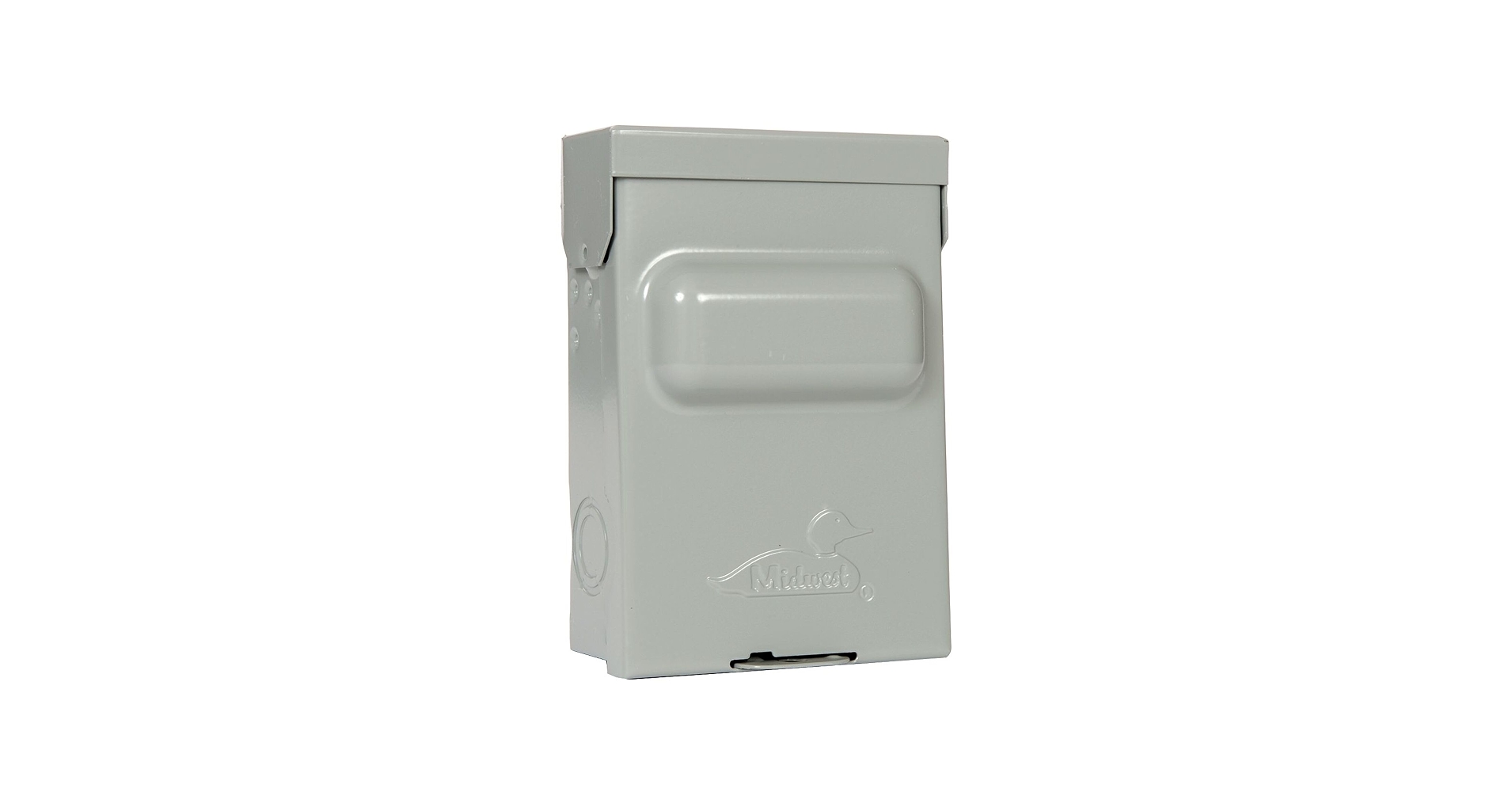
On a conventional system, the outdoor condenser is typically controlled by a 2-wire low-voltage cable that delivers 24 volts to the contactor when there is a cooling call. Most commonly, that control circuit is between Y and C at the furnace control board.
- If the condenser control cable is landed on W and C instead of Y and C, the condenser can start whenever there is a heat call. In plain English: you have accidentally made W behave like Y for the outdoor unit.
- If the condenser runs regardless of thermostat calls, you could be dealing with a wiring short or a mechanically stuck contactor. That is a shut-it-down situation.
This is a good “photo and call” point. The outdoor unit involves high voltage and a service disconnect. You do not need to open the condenser to confirm whether the control wires are on the right terminals inside your furnace.
Quick troubleshooting order
- Set thermostat to HEAT, fan to AUTO, disable AUTO changeover.
- Confirm the outdoor condenser is the thing running.
- Confirm you do not have a heat pump or hybrid system.
- Check thermostat equipment type is set to furnace plus AC, not heat pump.
- Inspect thermostat wiring for Y and W swapped.
- Inspect furnace control board terminals for Y and W swapped or mis-landed condenser wires.
- If the condenser runs even with thermostat OFF, suspect stuck contactor or wiring fault and shut down.
What not to do
- Do not keep running it “to see what happens.” Running cooling when you want heat can create icing risks and unnecessary compressor wear, especially in cold weather.
- Do not randomly move wires without photos and without shutting off power. A slipped strand can short R to C and pop a low-voltage fuse.
- Do not assume color equals function. Treat terminal labels as the truth, and trace the conductor if needed.
When to call a tech
Call for service if any of these are true:
- You corrected obvious settings and the condenser still runs during a heat call.
- You cannot confidently identify the thermostat cable and terminals at the furnace board.
- The condenser runs even when the thermostat is OFF, suggesting a stuck contactor or wiring fault.
- You find burnt wiring, melted insulation, or repeated blown fuses.
When you call, tell them: “Condenser starts on a heat call. Conventional furnace plus AC. Suspect Y and W swapped or misconfigured thermostat.” That sentence is worth at least one fewer diagnostic lap.
FAQ
Why is my AC blowing cold air when the thermostat is on heat?
Two common reasons: (1) the indoor blower is running but the heat is not, so the air feels cool, or (2) the outdoor condenser is actually running because the thermostat is energizing cooling (often due to swapped Y and W wires or wrong thermostat configuration).
My thermostat says “heat,” but the outside unit is running. Is that always wrong?
For a conventional furnace plus AC, yes, it is wrong for the outside AC condenser to run during furnace heating. If you have a heat pump (or a hybrid system), the outside unit may run in heat mode, but that is a different setup.
Could this be a bad thermostat?
It can happen, but it is less common than a configuration mistake or wiring issue after an install. Start with mode settings, equipment configuration, and wire landing checks before replacing anything.
The 30-Second Cheat Sheet
Essential takeaways for: Thermostat on Heat but AC Turns On: What to Check
What it usually means
If your thermostat is set to HEAT but the outdoor AC condenser turns on, your system is being told to energize Y (cooling) during a heat call. On a conventional furnace plus AC setup, that is usually a misconfiguration or swapped wires, most commonly Y and W crossed.
Do this first (fast, safe checks)
- Set thermostat System = HEAT (not AUTO).
- Set Fan = AUTO.
- Raise the set temp 3 to 5 degrees to force a heat call.
- Confirm it is truly the outdoor condenser running, not just the indoor blower.
Most likely fix
- Turn off power to the furnace/air handler.
- Check thermostat wiring: make sure W = heat and Y = cooling.
- If thermostat wiring looks right, check the same terminals at the furnace control board for a Y/W swap or the condenser wires landed on the wrong terminals.
Shut it down if any of these happen
- Outdoor unit runs even with thermostat set to OFF.
- Burning smell, buzzing, smoke, or visible wire damage.
- Ice forming on refrigerant lines or the outdoor unit.
Set thermostat to OFF and turn off HVAC power at the switch/breaker. Call for service.
What to tell the HVAC tech
“Condenser starts on a heat call. Conventional furnace plus AC. Suspect thermostat setup or Y and W swapped.”
💡 Tip: Scroll up to read the full article for detailed, step-by-step instructions.
⬆️ Back to top
About Grit
Content Creator @ Grit & Home
Grit is Grit & Home’s little blue clay courier, delivering big questions about the place you call home. Expect practical ideas, a raised eyebrow, and a satchel full of curiosity.