
🚨 In a DIY emergency or rush?
Skip the details and jump straight to our 30-second cheat sheet for the most crucial info.
If your toilet flushes, refills, and then flushes again on its own, you are not imagining it. That “double-flush behavior” is a very specific symptom, and the good news is it is usually a quick fix inside the tank.
In plain DIY terms, a toilet double flushes when the bowl gets a second, unexpected push of water, or when the tank “burps” and keeps routing water into the bowl after the main flush. That second push is usually not the handle magically re-triggering. It is almost always extra water sneaking to the bowl during refill, or a flapper or seal that does not close cleanly the first time.
Common causes are a flapper (or canister seal) that is not sealing, a tank water level that is set too high, a refill tube that is routed wrong, or a siphon jet that is partially blocked.
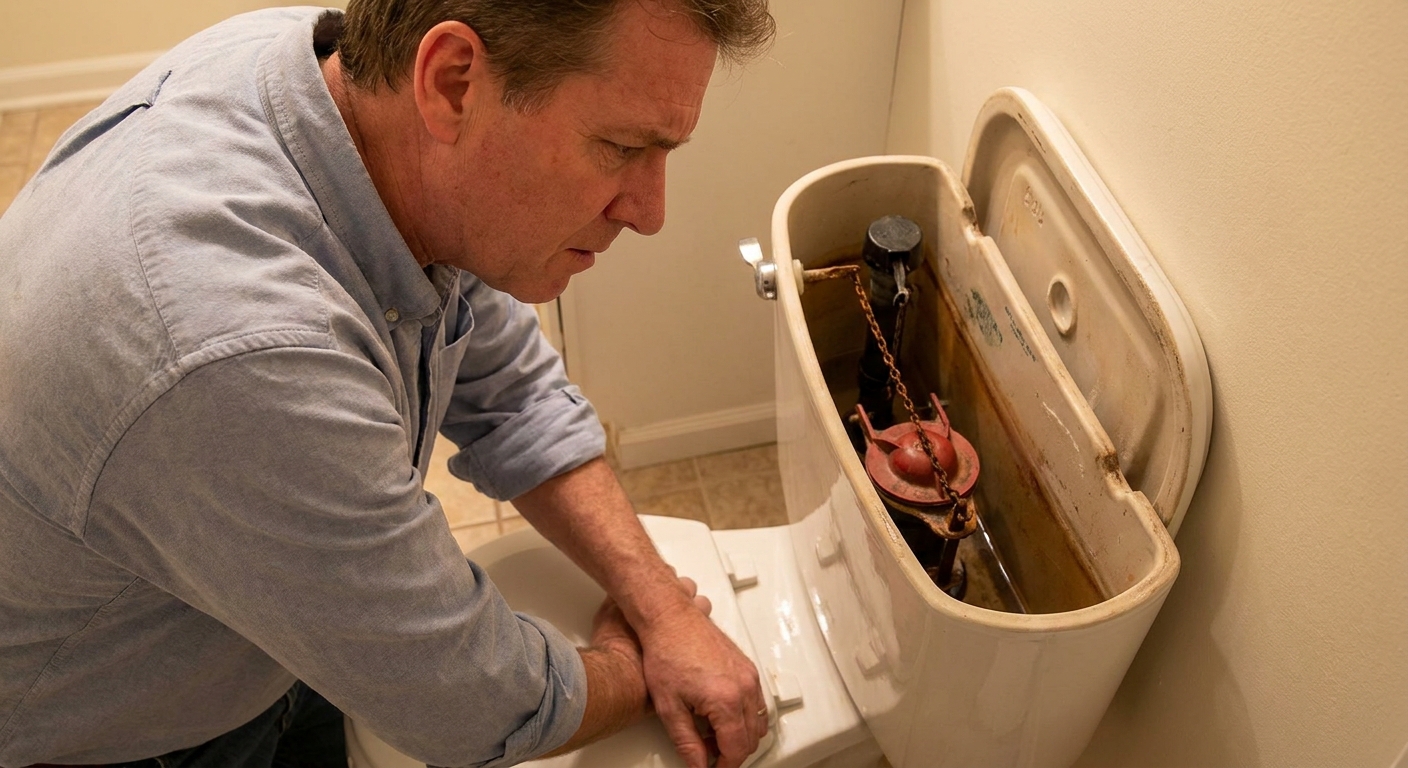
Double flush vs. running toilet vs. weak flush
Before you start swapping parts, it helps to name what you are seeing. These three problems get mixed up a lot in search results.
- Double flush: One handle press, one flush, then a second flush or partial flush happens a few seconds later without touching anything.
- Running toilet: You hear water hissing into the tank on and off, or the toilet refills randomly. The tank is losing water somewhere, so it keeps topping off.
- Weak flush: The toilet flushes once, but it does not clear well. That is usually a clog, low tank level, rim holes, siphon jet, or venting issue. It does not typically create a delayed second surge after the fact.
This article is focused on the first one: that delayed second flush or “whoosh” after the refill starts.
How it flushes twice
Inside the tank you have:
- Flush valve and flapper (or a canister seal): releases tank water into the bowl.
- Fill valve: refills the tank after the flush.
- Refill tube: a small tube that sends some water into the overflow tube to refill the bowl.
- Overflow tube: prevents overfilling and directs that refill water to the bowl.
A double flush happens when extra water keeps going to the bowl after the main flush, or when the flapper or seal behavior creates a second surge.
Safety and prep
- Remove the tank lid and set it somewhere safe on a towel.
- Wear disposable gloves if you are putting hands in the tank.
- If you need hands in the tank, close the shutoff valve behind the toilet (turn clockwise) and flush once to drop the water level.
- Have a small cup or sponge handy for the last inch of water if you need a dry surface.
Cause #1: Flapper or seal not sealing
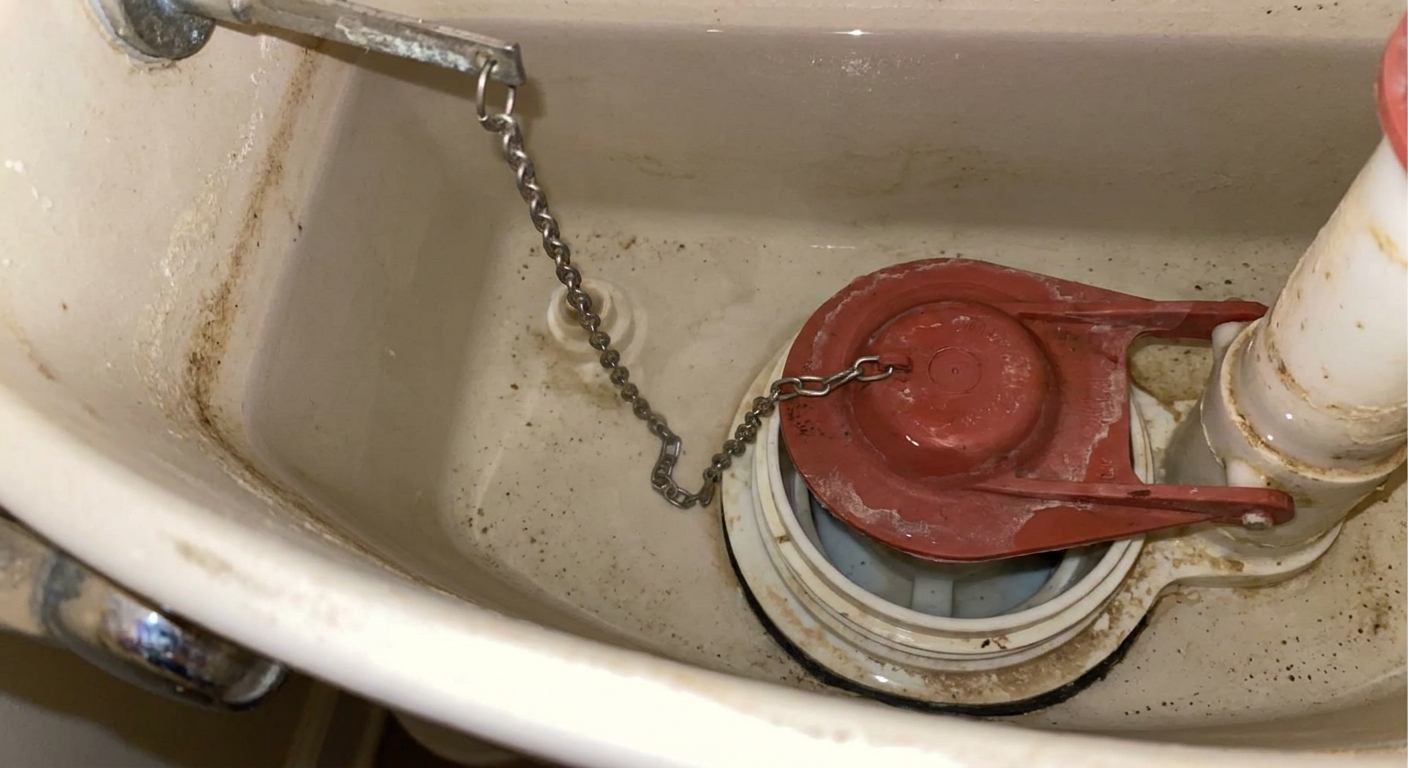
This is the most common reason I see for a true double flush. The flapper drops, but it lands slightly crooked, or it gets nudged by the chain, or the flush valve seat is gunked up. The tank can release a little extra water, then the flapper finally seals. That extra release can trigger a second siphon action in the bowl.
If you have a canister-style flush valve (common on some toilets), the same idea applies. A dirty, twisted, or worn canister seal can “dribble” extra water long enough to create that second surge.
What to look for
- The flapper looks warped, stiff, slimy, or cracked.
- The chain is too tight and holds the flapper up a hair.
- The handle or lever sticks and holds the flapper open slightly.
- The flapper closes too slowly because it is extra buoyant or set for too much water per flush.
- Mineral buildup or debris on the flush valve seat (the ring the flapper seals against) or on a canister seal surface.
Fix: clean, adjust, then replace
- Check chain slack. You want a little slack (roughly 1/4 to 1/2 inch) when the flapper is closed. The goal is simple: the flapper must fully close without the chain holding it up, and the chain must not bind.
- Check for chain or lever interference. Make sure the chain is not rubbing the overflow tube, getting caught under the flapper edge, or routed in a way that pulls sideways.
- Make sure the handle is not sticking. A handle that does not spring back can hold the flapper open just long enough to create a second surge.
- Clean the sealing surface. Wipe the flush valve seat with a rag. If you have mineral buildup, a gentle scrub pad works. Avoid gouging plastic. For canister valves, wipe the seal and the sealing surface it presses against.
- Fix a flapper that “floats too long.” If your flapper stays up a little too long and the toilet acts like it wants a second flush, try an adjustable flapper (or adjust the dial, if yours has one). Dialing down the closing time can stop the extra water dump.
- Replace the flapper or canister seal if it is stiff, deformed, or leaving black residue on your fingers. Match the style (2-inch vs 3-inch, and ears type) and bring the old part to the store.
Marcus note: The first time I chased a “double flush,” I replaced the fill valve because the internet said so. The real culprit was a chain that was one link too tight and kept the flapper from sealing immediately.
Cause #2: Water level too high
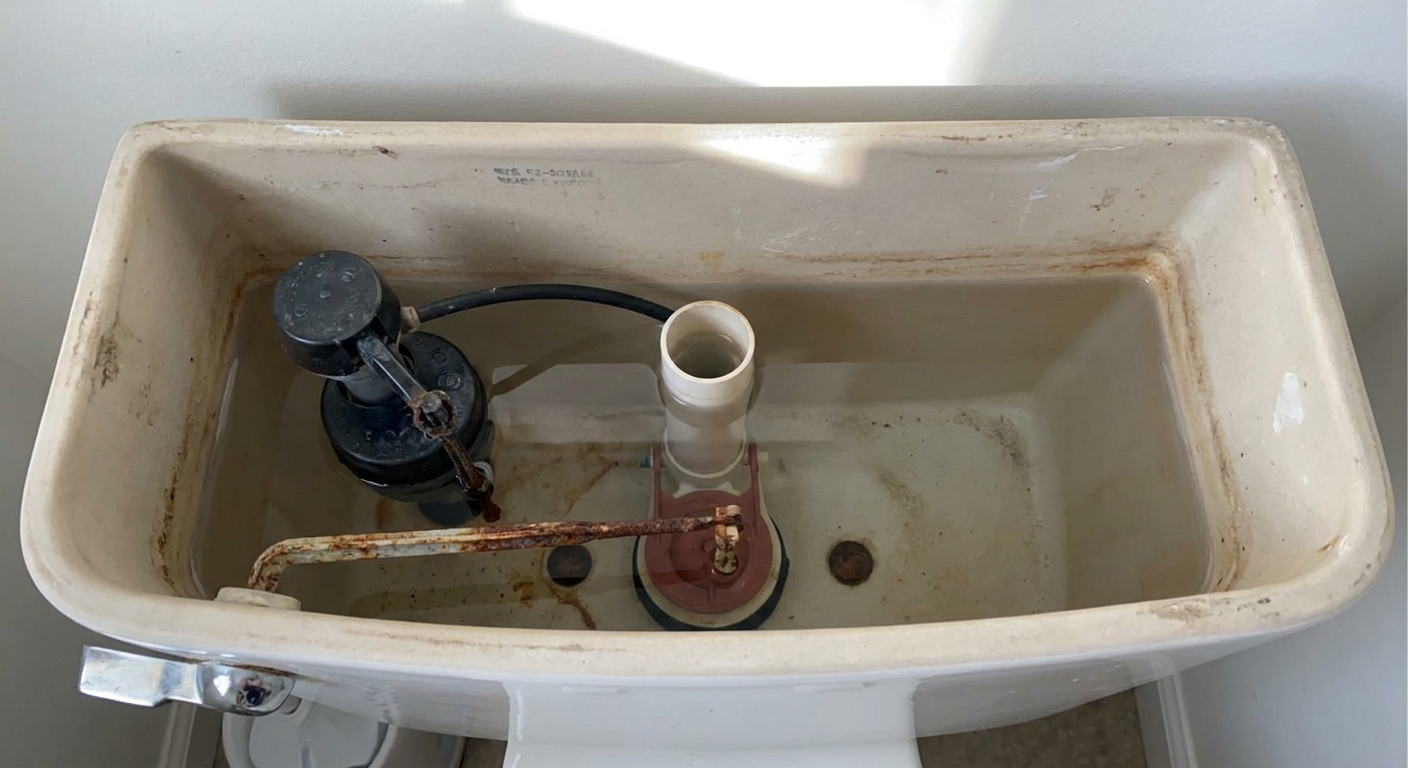
If the tank water level is set too high, the tank can send extra water down the overflow tube during refill. That extra water goes straight into the bowl, and on some toilets it is enough to start a secondary siphon and create a delayed second flush or surge.
What to look for
- Water line is at or above the top of the overflow tube.
- You see water trickling into the overflow tube when the tank is “done” filling.
- The toilet flushes, then as it refills, you get a second surge in the bowl.
Fix: lower the tank water level
The goal is simple: set the water line to about 1 inch below the top of the overflow tube, or to the manufacturer mark on the inside of the tank if there is one.
- Find your fill valve adjustment. Most modern fill valves have a screw on top or a clip that adjusts the float.
- Turn the adjustment to lower the level. Do small changes, then flush to retest.
- If the overflow tube is unusually short or looks altered, do not try to “extend” it with random parts. The overflow tube is part of the flush valve assembly. If it has been cut down, the real fix is typically replacing the flush valve (or the entire overflow/flush valve assembly).
Cause #3: Refill tube pushed too far in
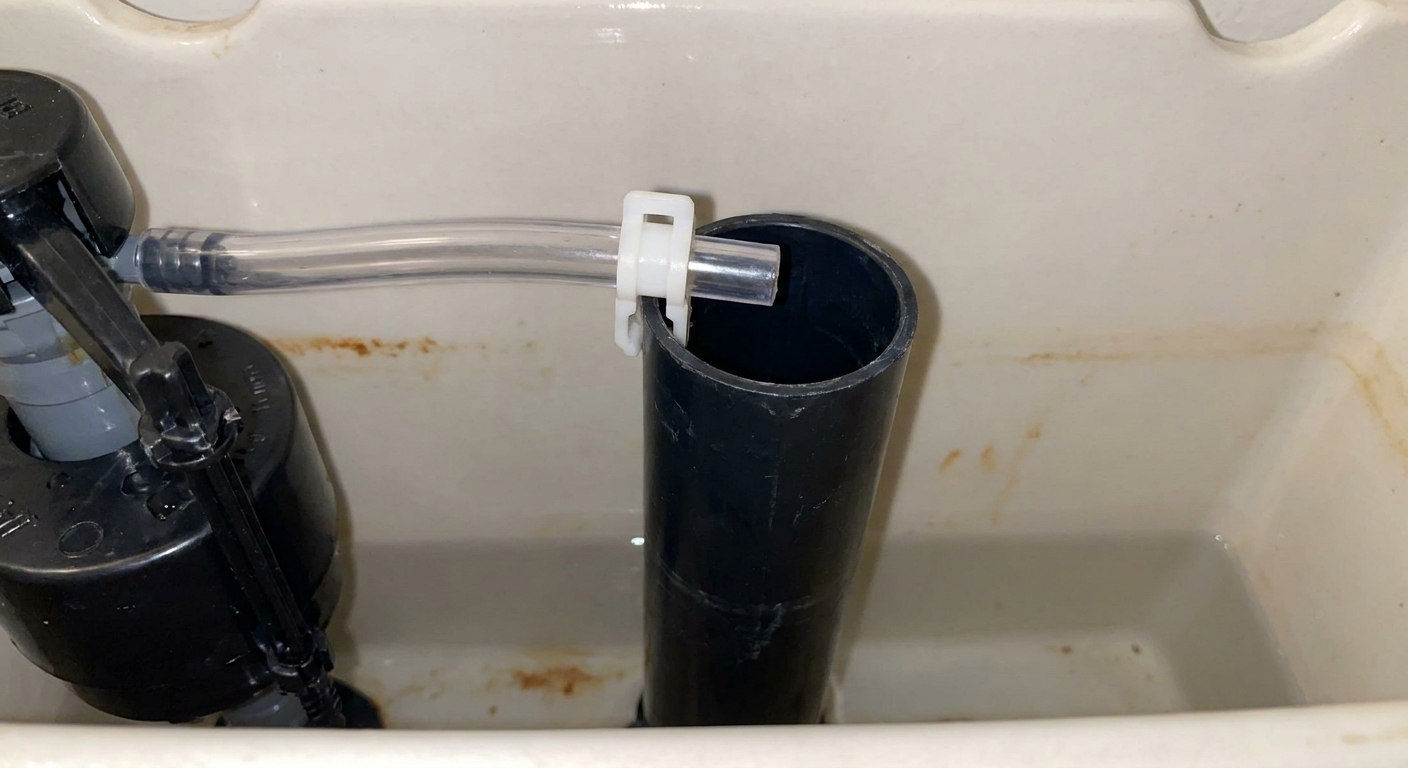
This one is sneaky and incredibly common after a DIY repair. The small refill tube should send water into the overflow tube, but it should not form a seal inside it. If the refill tube is pushed down into the overflow tube, it can create a siphon effect and keep pulling water into the bowl. That can trigger a second surge, bowl overfill, or a delayed partial flush.
What to look for
- Refill tube is inserted deep into the overflow tube.
- No refill clip is present, or the tube is zip-tied in a way that seals the opening.
- Bowl water rises higher than normal after each flush.
Fix: clip it and keep an air gap
- Turn off water if needed so you are not working with active flow.
- Pull the refill tube up so it ends above the overflow tube opening.
- Install a refill tube clip (cheap at any hardware store) so the tube is aimed into the overflow without being submerged.
- Flush and watch. You should see a steady stream into the overflow during refill, then it should stop once the fill valve shuts off.
Cause #4: Siphon jet buildup
This is less common than the tank-side causes above, and it is usually paired with weak-flush symptoms. Still, it can create a “catch twice” effect. Many toilets have a siphon jet opening at the bottom of the bowl that helps start the siphon. If that jet is partially blocked with mineral deposits, the first flush may be weak to start. Then, as extra water arrives during refill, the siphon finally kicks in and you get a delayed second flush.
What to look for
- First flush is weak or slow, then a second whoosh happens soon after.
- Mineral buildup is visible around bowl openings, especially in hard water areas.
- The toilet has been getting worse slowly over months.
Fix: clean the siphon jet and rim holes
- Start with a bowl cleaning pass. Shut off water, flush to lower bowl level if needed.
- Inspect the siphon jet opening at the bottom of the bowl. If you see crusty buildup, gently scrub with a nylon brush.
- Soak for mineral removal if hard water is the issue. A vinegar soak can help on mild buildup. For heavier scale, use a descaler made for toilets and follow the label. Ventilate and avoid mixing chemicals.
- Clear rim holes under the bowl rim using a small brush or a piece of wire carefully.
If the siphon jet is badly restricted, the toilet can act unpredictable. Cleaning often restores a consistent, single flush.
Troubleshooting order
If you want the fastest path without overthinking it, do these checks in order. Each one takes just a minute.
- Watch one flush with the tank lid off. You are looking for water going into the overflow tube when it should not, or a flapper that does not close cleanly.
- Check refill tube position. Clip it high. Do not insert it down the overflow tube.
- Check tank water level. Adjust to about 1 inch below overflow tube top.
- Check flapper seating, canister seal, and chain slack. Clean the seat, set slack, confirm the handle is not sticking, replace worn parts.
- Only then think bowl-side. If the first flush is weak and the second finishes the job, clean siphon jet and rim holes.
What you will need
- Disposable gloves
- Rag or paper towels
- Sponge or small cup
- Refill tube clip (if missing)
- Replacement flapper or canister seal (if needed)
- Adjustable pliers (optional)
When to replace parts
Most double-flush problems are adjustments, not major repairs. But if you see any of the following, replacement is usually the thriftier choice long-term.
- Flapper or canister seal is stiff, warped, or leaving black residue on your fingers.
- Fill valve will not shut off cleanly even after adjusting the float.
- Cracked overflow tube or flush valve (rare, but it happens).
Parts are inexpensive. The key is matching what you have. A 2-inch flapper will not seal a 3-inch flush valve, and that alone can create all sorts of weird behavior.
Common DIY mistakes
- Refill tube jammed down the overflow tube after replacing the fill valve.
- Chain too tight after installing a new flapper.
- Water level cranked too high trying to “improve” flush power.
- Using a universal flapper that does not match your toilet, leading to slow seating or incomplete sealing.
Call a pro
- Water leaking at the base of the toilet, rocking toilet, or soft floor around it.
- Repeated clogs and gurgling in nearby drains, which can point to a venting or main line issue.
- Cracks in the tank or bowl (replace the toilet, do not patch).
The 30-Second Cheat Sheet
Essential takeaways for: Toilet Flushes Twice? Causes and Fixes
Fast diagnosis
- True double flush: You flush once, then a second flush or surge happens a few seconds later with no second handle press.
- Most common causes: flapper or canister seal not sealing cleanly, water level too high, refill tube pushed too far into overflow tube (creates a siphon), or a partially blocked siphon jet.
Fix it in this order (fastest wins first)
- Refill tube: Make sure the small refill tube is clipped at the top of the overflow tube and not shoved down inside. Keep an air gap.
- Tank water level: Adjust the fill valve so the water line stops about 1 inch below the top of the overflow tube.
- Flapper or canister seal + chain: Ensure the chain has a little slack (about 1/4 to 1/2 inch) and the flapper sits flat. Clean the flush valve seat. Replace the flapper or canister seal if it is stiff, warped, or cracked. If your flapper closes too late, try an adjustable flapper and dial it in.
- Siphon jet: If the first flush is weak and the second finishes the job, clean mineral buildup from the siphon jet opening and rim holes.
What it is not
- Running toilet: hissing or random refills. That is a leak past the flapper/seal or a fill valve that will not shut off.
- Weak flush only: usually a clog, rim holes, siphon jet, or venting issue without the delayed second surge.
One rule that prevents half of double-flush calls
Never stick the refill tube down into the overflow tube. Clip it so it sprays into the overflow without sealing it.
💡 Tip: Scroll up to read the full article for detailed, step-by-step instructions.
⬆️ Back to top
About Marcus Vance
Content Creator @ Grit & Home
Marcus Vance is a lifelong DIY enthusiast and self-taught home renovator who has spent the last decade transforming a dilapidated 1970s ranch into his family's dream home. He specializes in budget-friendly carpentry, room-by-room renovations, and demystifying power tools for beginners. Through his writing, Marcus shares practical tutorials and hard-learned lessons to help homeowners tackle their own projects with confidence.