
🚨 In a DIY emergency or rush?
Skip the details and jump straight to our 30-second cheat sheet for the most crucial info.
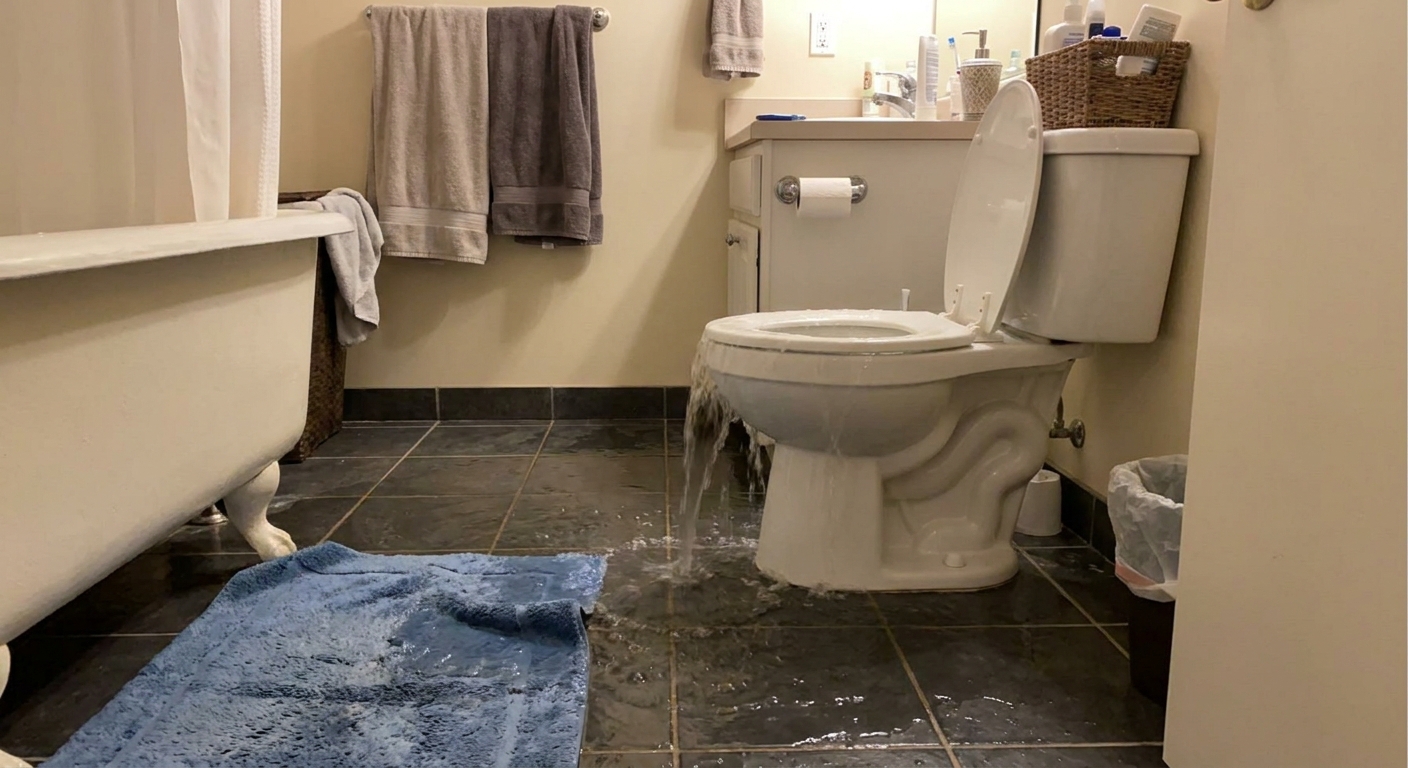
A toilet overflow feels like chaos because it is fast, loud, and always happens at the worst time. The good news is you can stop the water in under a minute, even if you have never opened a tank before.
Below is the exact order I use in my own house: stop the incoming water, stop the tank from refilling, then deal with the clog and cleanup once the flooding is under control.
First: stop the water in 10 to 30 seconds
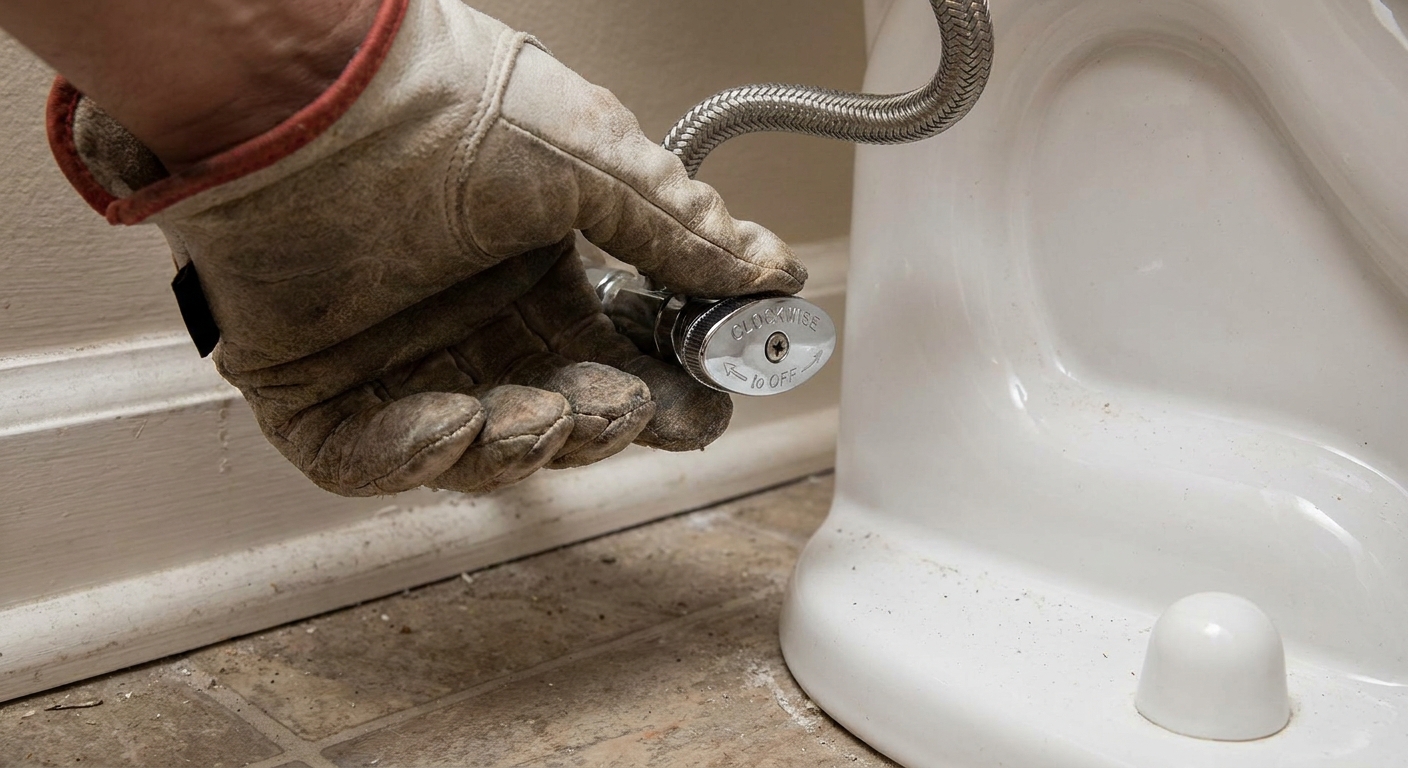
1) Close the toilet shutoff valve (fastest fix)
Look behind the toilet near the floor. You will see a small valve with an oval knob (or sometimes a lever) connected to a flexible supply line.
- Turn the knob clockwise until it stops. This shuts off water going into the tank.
- Lift the tank lid and watch: the water level should stop rising and the refill sound should fade out.
If it is hard to turn, do not force it like you are tightening lug nuts. Old valves can snap. Use steady pressure. If it will not budge, jump to the “valve is stuck” section below.
2) If the tank is still filling, lift the float to stop the refill
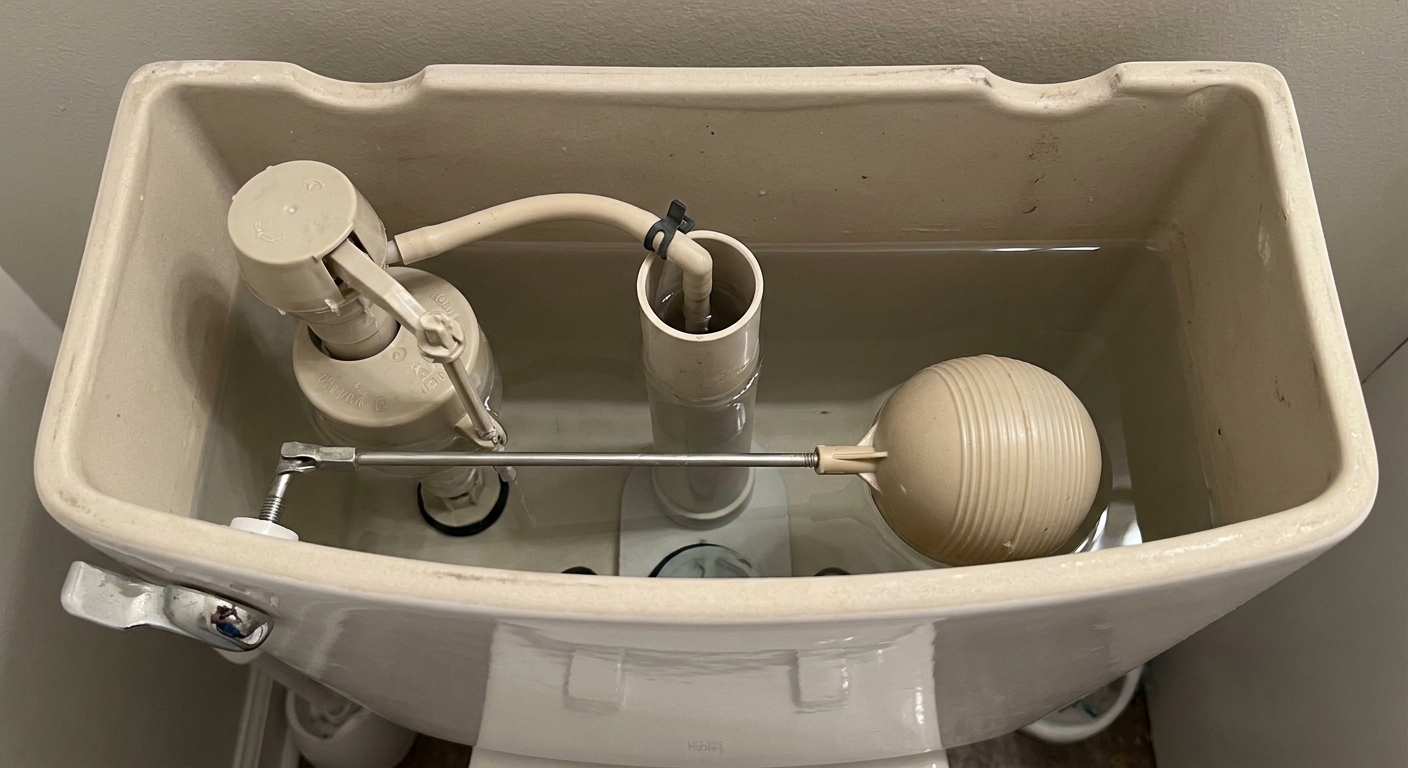
Pop the tank lid off and set it somewhere safe. Inside you will see a float that controls the fill valve.
- On a cup-style float (a cylinder that rides up and down on a vertical shaft), lift it gently upward.
- On an older ball float (a ball on a metal arm), lift the arm up.
Holding the float up tells the fill valve to stop. This is a great stopgap while someone else turns the shutoff valve or you locate the main water shutoff.
3) If water is pouring from the bowl, remove water from the bowl fast
If the bowl is already close to the rim, buy yourself time.
- Bail into a bucket with a small container, cup, or plastic food tub.
- Soak up water on the floor with towels to keep it from spreading into hallways or under cabinets.
Do not keep flushing. Each flush adds more water and can turn a manageable spill into a saturated subfloor.
If the shutoff valve is stuck or missing
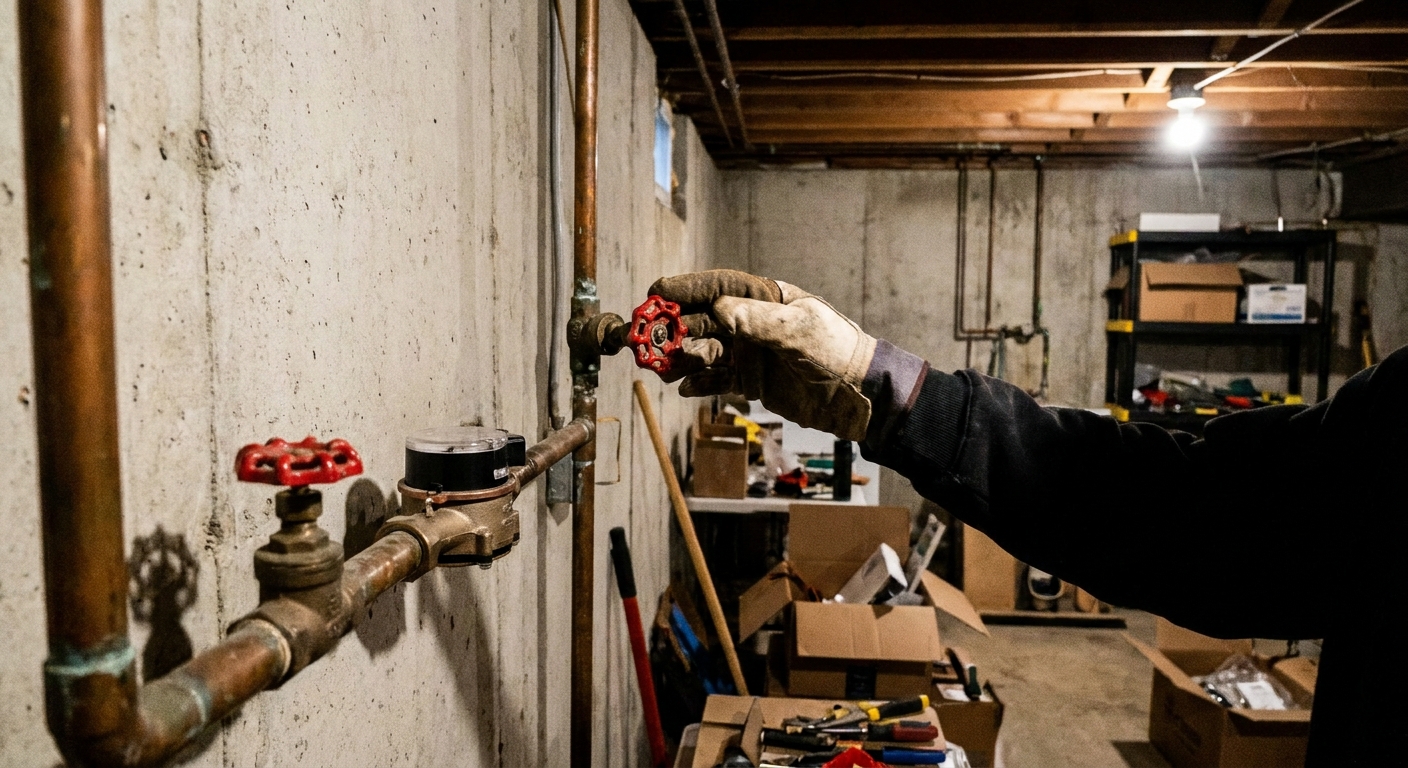
Option A: Shut off the main water to the house
If the toilet valve will not turn, go to your home’s main shutoff. Common spots:
- Basement near where the water line enters
- Crawl space near the front foundation wall
- Garage utility wall
- Outdoor meter box near the street (sometimes for the whole-house shutoff)
Turn it clockwise to close. Then open a faucet briefly to confirm water pressure is dropping.
Option B: Keep the float lifted as your stopgap
If you cannot reach the main quickly and the toilet shutoff valve is stuck, keep the tank float lifted to stop the refill. Most overflows get dramatically calmer once the tank is not feeding the bowl.
If you are alone, you can also remove the tank lid and close the flapper by hand if it is stuck open, then hold the float up until you can shut water off at the toilet valve or the main.
Option C: Replace the shutoff valve after the emergency
A sticky, seized, or corroded shutoff valve is a warning. Once things are dry, plan to replace it so the next “toilet moment” is a non-event.
Once the water is stopped: figure out why it overflowed
Most overflows come from one of two situations:
- The bowl could not drain fast enough because of a clog in the toilet or downstream line.
- The tank kept sending water because something in the tank did not stop when it should.
Cause #1: A clog in the toilet trap (most common)
Symptoms: You flush, the bowl rises quickly, then it either creeps down slowly or not at all.
What to do:
- Wait 10 minutes. Sometimes water level drops as a partial blockage clears.
- Use a toilet plunger (the kind with a flange). Make sure the rubber is submerged and seals the hole.
- Plunge with steady, controlled pushes for 15 to 20 seconds, then pull away to see if it drains.
Avoid chemical drain cleaners in toilets. They can damage seals and make the next step much nastier if you have to pull the toilet.
Cause #2: A downstream clog (toilet drains, then gurgles or backs up later)
Symptoms: Toilet water rises and drains slowly, you hear gurgling in nearby drains, or another fixture backs up when the toilet is used.
This can point to a partial main line blockage. You can try a closet auger (toilet snake) first, but if multiple fixtures are affected, skip to the plumber section.
Cause #3: The tank is overfilling (fill valve or float issue)
Symptoms: Water level in the tank climbs above the normal fill line or you hear constant refilling.
What to check with the tank lid off:
- Float stuck: Make sure it moves freely and is not rubbing the tank wall.
- Fill valve failing: If lifting the float does not stop water, the fill valve likely needs replacement.
- Water level too high: Adjust the float so the water stops about 1 inch below the top of the overflow tube.
Cause #4: The flapper did not reseat (tank keeps dumping water)
Symptoms: You flush, the flapper stays up, and the tank keeps draining into the bowl. If the bowl cannot drain fast enough, it can overflow even without the tank “overfilling.”
What to check:
- Make sure the chain has a little slack. Too tight can hold the flapper open.
- Wiggle the handle. A sticky handle can keep tension on the chain.
- Inspect the flapper for warping or buildup. A $10 flapper is one of the best cheap fixes in plumbing.
Clean up safely (and avoid long-term damage)
Overflow water is treated as contaminated, especially if the toilet was recently used. Protect yourself and protect the room.
Quick cleanup steps
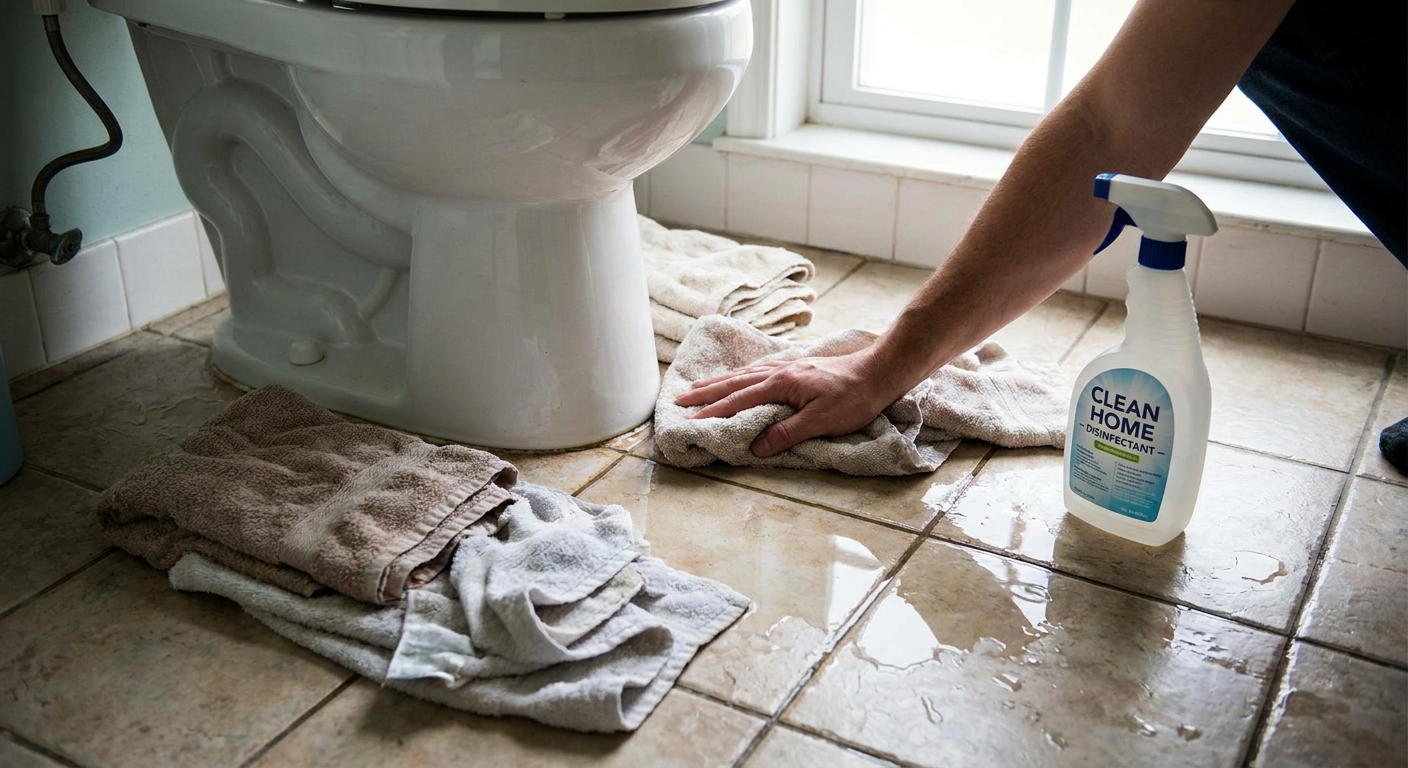
- Put on gloves. If you have them, wear eye protection.
- Pick up solids with paper towels and discard in a sealed bag.
- Soak up standing water with towels, then mop with hot water and a disinfectant cleaner.
- Run the bathroom fan and, if possible, a box fan in the doorway to dry the floor faster.
What to do about wet materials
- Bath mats and towels: Wash hot, dry high.
- Vinyl or tile: Dry thoroughly around the toilet base and along edges.
- Laminate, wood, or MDF trim: Dry immediately. These swell fast. If water got under the flooring, you may need a dehumidifier.
If the leak reached a ceiling below the bathroom, poking a small drain hole in the lowest sagging spot is not a DIY move I recommend without planning. That is “call for help” territory because it can spread contamination and damage.
Reset the toilet and test it without re-flooding
Once you have plunged or snaked and the bowl level is back to normal, do a controlled test:
- Turn the shutoff valve back on slowly (counterclockwise).
- Let the tank fill.
- Do a half flush: hold the handle down for just one second, then release. This sends less water than a full flush.
- Watch the bowl. If it rises quickly again, stop and shut the valve off.
This cautious test has saved me from a second mess more than once.
When to call a plumber
Some toilet overflows are simple. Some are your house warning you about a bigger drain problem. Call a plumber if:
- The toilet overflows and plunging does nothing after several attempts with a proper flange plunger.
- More than one fixture is acting up, like tub or shower backing up or drains gurgling.
- You suspect a main sewer line clog or tree root intrusion.
- The shutoff valve is seized, leaking, or you cannot stop the flow safely.
- Water leaked into a room below, or you have swelling flooring that suggests water got underneath.
If you are on a septic system and you have repeated backups, mention that when you call. It changes what they will check first.
A simple overflow-prevention checklist
- Locate and test your toilet shutoff valve twice a year. If it is stiff, plan to replace it.
- Keep a flange toilet plunger in every bathroom.
- Replace an old flapper before it fails. If it is chalky, warped, or slimy, it is living on borrowed time.
- Set tank water level about 1 inch below the overflow tube top.
- If you have kids, remind them: one flush, then wait. Repeated flushing is how small clogs become floods.
My “dad flashlight” lesson still holds up: the best emergency fix is the one you can do calmly. Shut off the water first. Everything else is just a repair.
The 30-Second Cheat Sheet
Essential takeaways for: Toilet Overflowing? Stop the Water Fast
Do this first (30 seconds)
- Turn off the toilet shutoff valve behind the toilet (turn clockwise).
- Lift the float inside the tank to stop refilling if the valve is slow or stuck.
- Bail water from the bowl into a bucket if it is near the rim.
- Do not flush again.
If the shutoff valve will not turn
- Shut off the main water to the house, then confirm pressure drops at a faucet.
After the crisis
- Plunge with a flange plunger if it was a clog.
- Check tank parts: float moves freely, fill valve stops, flapper reseats, chain has slack.
- Clean up with gloves and disinfect, then dry the floor fast.
Call a plumber if
- Plunging does nothing, or multiple fixtures gurgle or back up.
- You suspect a main line or septic issue.
- You cannot stop the water safely, or the shutoff valve leaks.
💡 Tip: Scroll up to read the full article for detailed, step-by-step instructions.
⬆️ Back to top
About Marcus Vance
Content Creator @ Grit & Home
Marcus Vance is a lifelong DIY enthusiast and self-taught home renovator who has spent the last decade transforming a dilapidated 1970s ranch into his family's dream home. He specializes in budget-friendly carpentry, room-by-room renovations, and demystifying power tools for beginners. Through his writing, Marcus shares practical tutorials and hard-learned lessons to help homeowners tackle their own projects with confidence.