
🚨 In a DIY emergency or rush?
Skip the details and jump straight to our 30-second cheat sheet for the most crucial info.
If your toilet goes quiet, then 10 minutes later you hear a quick shhh like it is topping off the tank, you are not imagining things. That is a phantom flush, and it means the tank level is changing when nobody used it.
This is different from a toilet that runs constantly, where you hear steady water movement and the tank never fully “rests.” Phantom refills are intermittent. The toilet behaves normally, then randomly refills for a few seconds, then stops again.
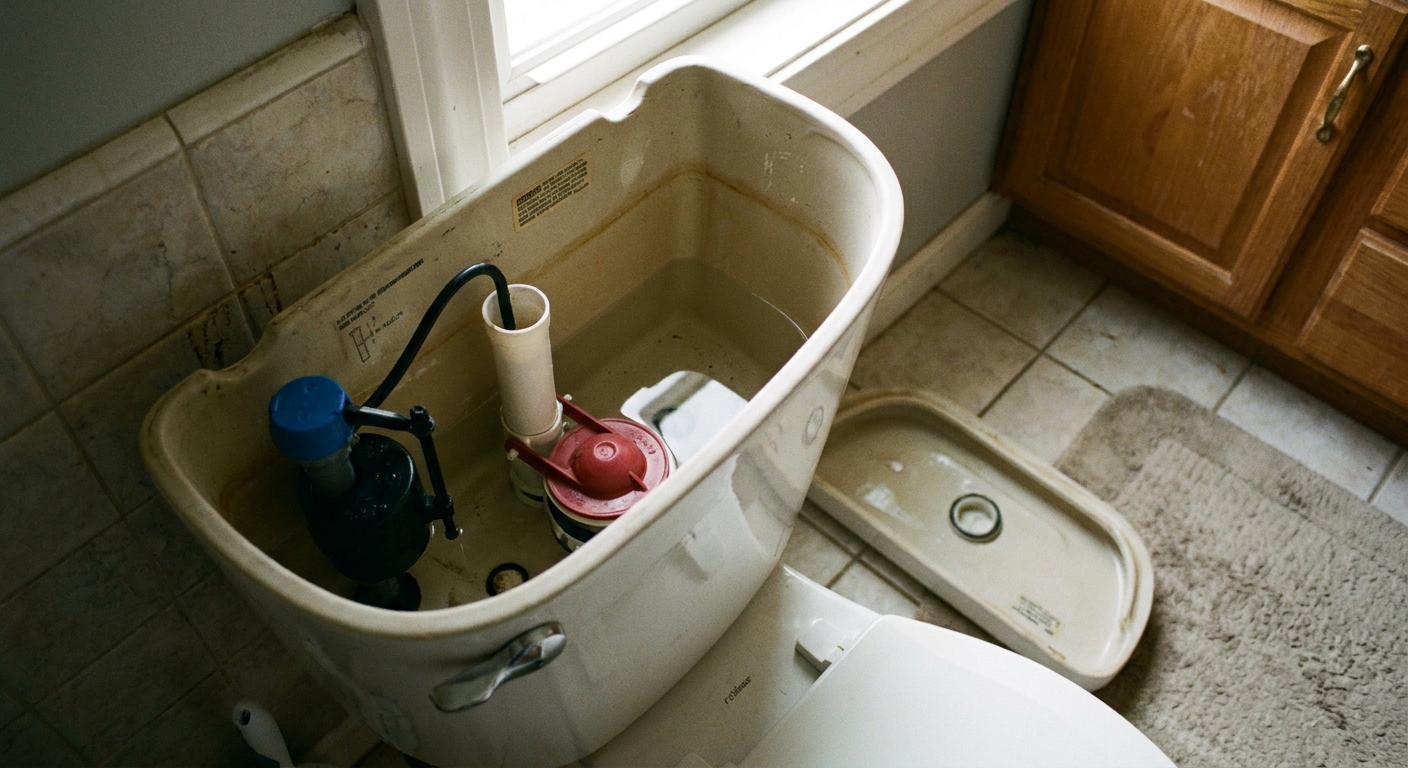
Phantom refills vs. constant running
Random refill (phantom flush)
- You hear a short refill burst every so often.
- The bowl water level usually looks normal.
- The tank level changes between refills.
- Most often caused by a flapper or flush valve seat leak, or a fill valve that occasionally overfills into the overflow.
Constant running
- You hear water continuously, or the tank never stops filling.
- Often caused by a misadjusted or failing fill valve or water going down the overflow tube.
- Can also be a flapper issue, but it is usually more obvious.
Rule of thumb: If it is quiet for long stretches, you are chasing a slow leak or a slow overfill. If it never really shuts up, you are chasing an overflow or a fill valve that cannot reach its shutoff point.
Before you start
- Pop the tank lid off and set it somewhere safe. Those things chip easier than you would think.
- Do not use in-tank drop-in cleaners while troubleshooting. Some of them swell or degrade rubber parts and can skew what you are seeing.
- Know your parts: flapper (rubber seal), chain (connects handle to flapper), flush valve seat (the plastic ring the flapper seals against), fill valve (refill mechanism), overflow tube (vertical tube in the middle).
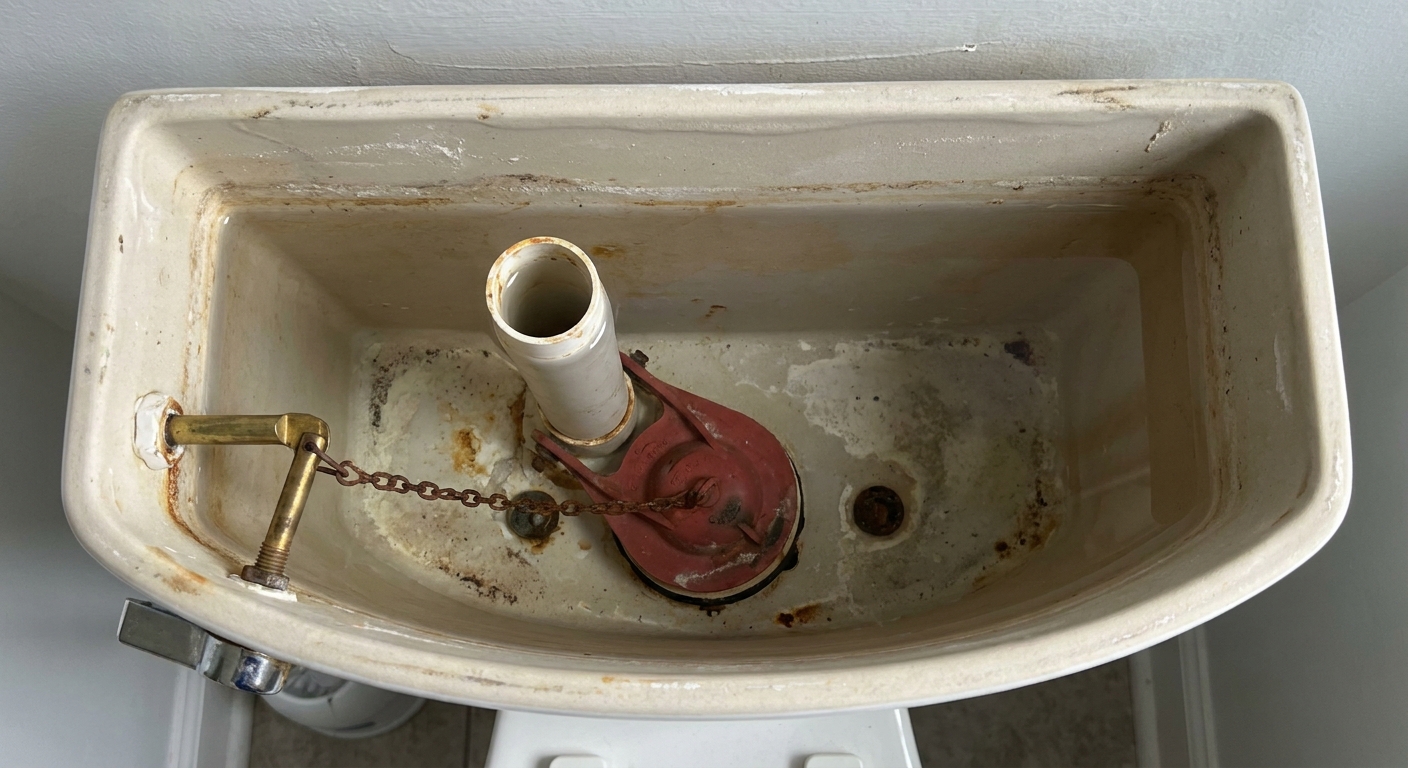
The fastest test: dye check
This is my go-to because it answers one question fast: is tank water escaping into the bowl, or is water leaving the system somewhere else?
What you need
- Food coloring or a dye tablet made for toilets
- 10 to 15 minutes of patience
Steps
- Make sure the tank is full and the toilet is not actively filling.
- Add 8 to 12 drops of food coloring to the tank water (not the bowl).
- Do not flush. Wait 10 to 15 minutes.
- Look in the bowl.
Read the results
- Dye shows up in the bowl: dyed tank water is getting into the bowl. That can happen two ways:
- Tank-to-bowl leak: flapper not sealing, chain holding it open, dirty or damaged flush valve seat, or a crack in the flush valve or overflow tube.
- Overfill into overflow: the fill valve does not shut off cleanly (or the float is set too high), the tank level rises, and the extra water spills down the overflow tube into the bowl. Because that path ends in the bowl, the bowl will tint.
- No dye in the bowl: dyed tank water is not reaching the bowl. If the tank level is still changing or you are still hearing refills, you are now in external leak territory. Think tank bolts, tank-to-bowl gasket, supply connection, fill valve shank gasket, or even the shutoff valve.
My mistake to save you: If you added dye and then absent-mindedly flushed, you just reset the test. Ask me how I know.
Test 1: flapper fit
The flapper is the number one cause of phantom refills. It is just a rubber seal, and rubber does not last forever in chlorinated water.
What to check
- Warped or stiff rubber: if it feels hard, cracked, or misshapen, it is not sealing reliably.
- Gunk on the sealing surface: mineral buildup or slime can create tiny leak paths.
- Wrong style flapper: some toilets need a specific flapper (especially older or specialty models). A “universal” flapper can be close, but not perfect.
Quick check
- With the tank full, press down gently on the flapper with one finger.
- Listen. If the intermittent refill problem stops for a while after you do this, your flapper is not sealing well.
Fix
- Clean the underside of the flapper and the flush valve seat with a non-scratch pad.
- If it is stiff, cracked, or deformed, replace the flapper. It is usually a 5 to 15 minute job.
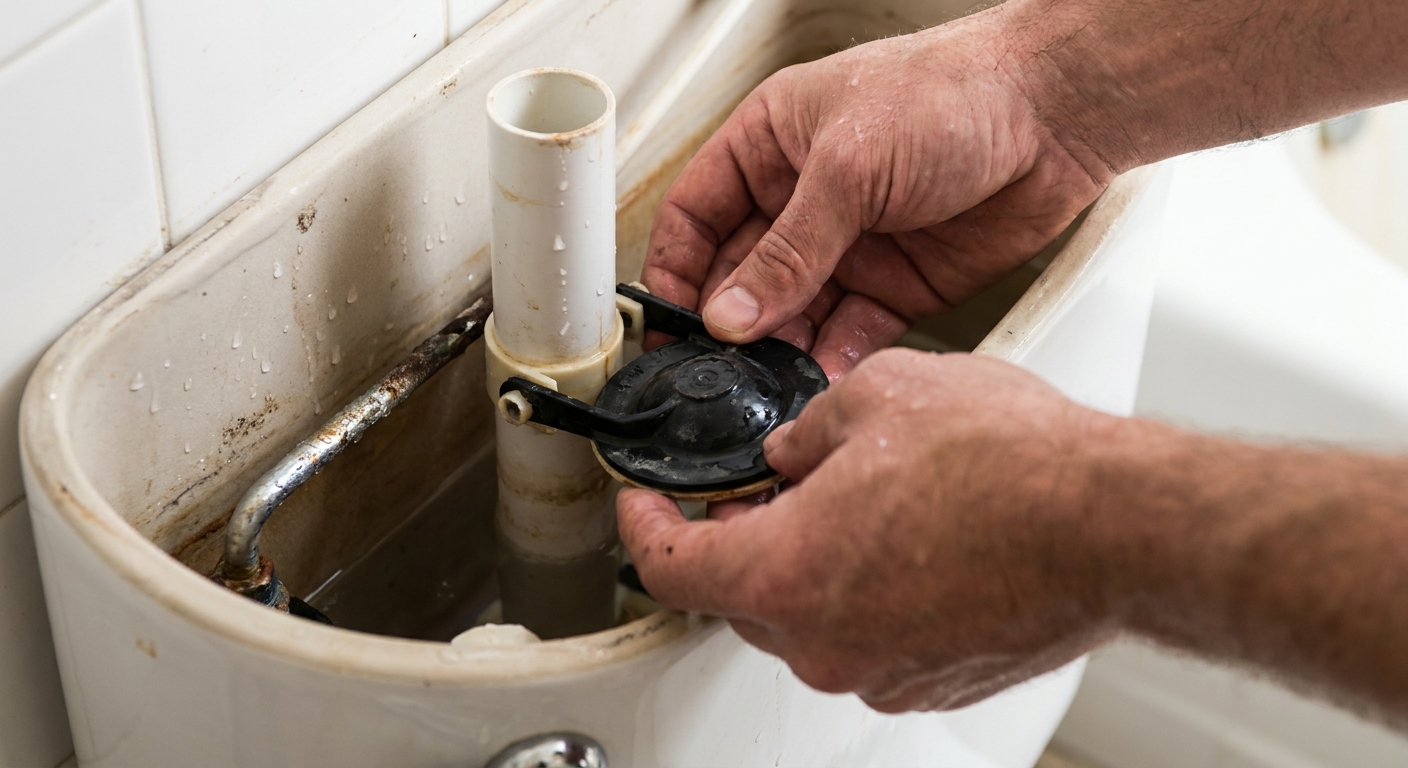
Test 2: chain and handle
A chain that is too tight can hold the flapper open just a hair, which is all it takes for a slow leak. A chain that is too loose can get caught under the flapper and do the same thing.
What to look for
- Proper slack: aim for about 1/2 inch of slack when the flapper is closed.
- Chain rubbing or snagging: make sure it cannot slip under the flapper edge.
- Handle sticking: if the handle does not spring back cleanly, it can keep slight tension on the chain.
Quick fix
- Move the chain hook to a different link to adjust slack.
- If the handle sticks, tighten the handle nut inside the tank (it is often a reverse thread) and make sure the arm is not hitting the lid or tank wall.
Test 3: flush valve seat
If the dye test showed a tank-to-bowl leak but a new flapper did not fix it, the next suspect is the flush valve seat, the ring the flapper seals against.
Why it leaks
- Mineral buildup creates a bumpy sealing surface.
- Nicks or scratches let water sneak by.
- On some toilets, the seat is part of the flush valve and can warp or degrade over time.
Seat check
- Turn off the water at the shutoff valve.
- Flush and hold the handle down to drain most of the tank.
- Inspect and feel the seat with your fingertip. It should feel smooth and even.
Fix options
- Clean mineral buildup carefully with a non-scratch pad.
- If the seat is damaged or warped, you may need a flush valve replacement. This is more involved because it requires removing the tank, but it is still a DIY-friendly Saturday project for many homeowners.
Test 4: overflow and fill valve
Here is the plumbing physics that clears up a lot of confusion: if the fill valve is the problem, the tank level usually does not mysteriously drop. It usually creeps up because the valve does not shut off cleanly, and then the extra water goes down the overflow tube and into the bowl.
That is why an overflow or fill valve overfill issue belongs in the dye-in-bowl bucket. If the tank water is dyed and it goes down the overflow, the bowl will tint.
Overflow creep check
- Let the toilet finish filling and get quiet.
- Remove the tank lid and watch for a minute.
- Look for a slow trickle into the overflow tube, or a waterline that slowly climbs higher than the normal shutoff point.
What it means
- Water level rises and spills into the overflow: the fill valve is not shutting off reliably, or the float is set too high. This can sound like intermittent refills if it only happens occasionally.
- You hear refills but the dye test stayed clear: stop and hunt for an external seep at the tank bolts, tank-to-bowl gasket, supply connection, fill valve shank gasket, or shutoff valve.
Fix
- Adjust the float or fill valve so the water stops about 1 inch below the top of the overflow tube.
- If the valve will not shut off cleanly, or it is old and crusty, replace the fill valve. Most modern ones are replaced, not rebuilt.
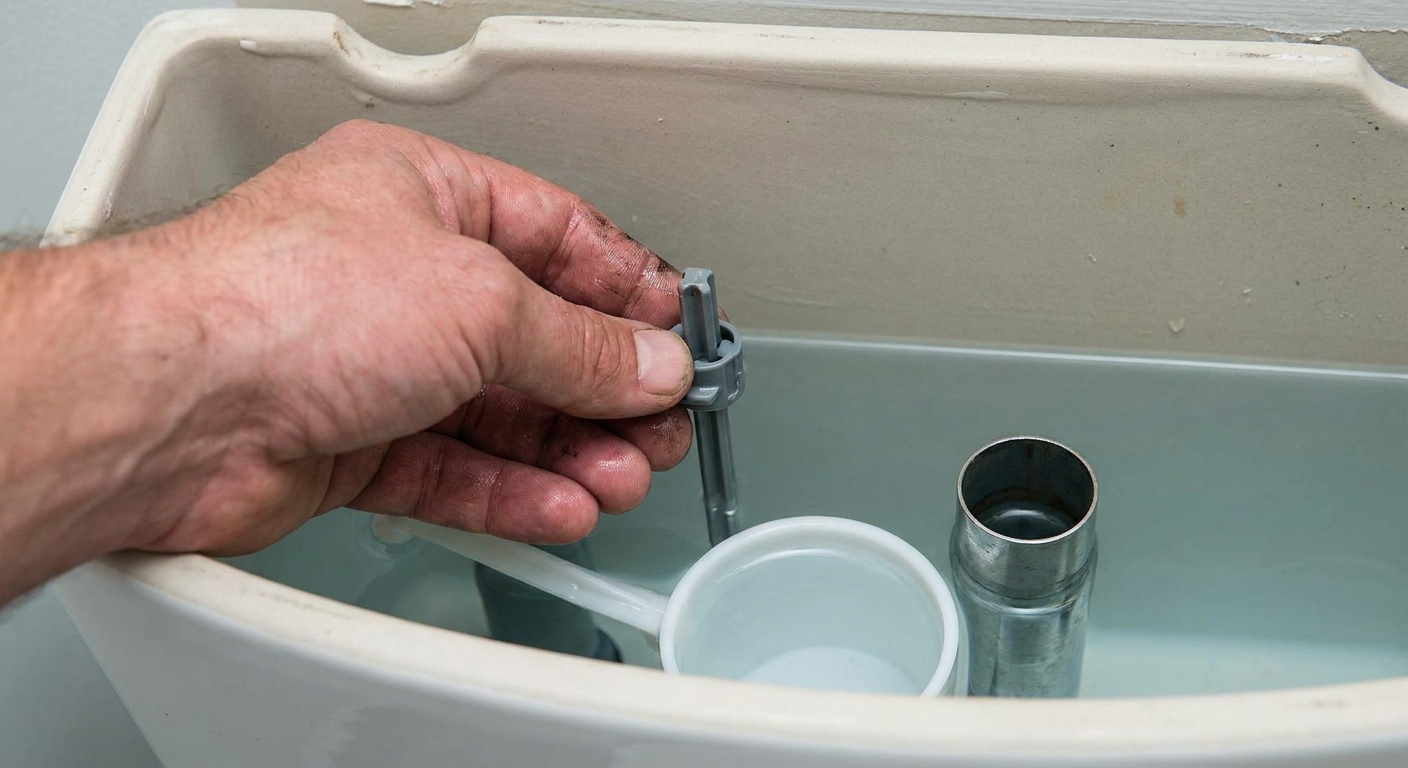
Also check the refill tube
This one is sneaky. The refill tube should discharge into the overflow tube from above. If it is shoved down inside the overflow tube, it can siphon water out of the tank after the fill cycle, which can trigger refills.
How to spot it
- The small refill tube is pushed down into the overflow tube instead of clipped at the top.
Fix
- Clip the refill tube so it pours into the overflow tube from above the opening.
When overflow tube or gaskets fail
Most phantom refills are flapper-related, but there are a couple less common failures that are worth knowing so you do not keep throwing parts at the wrong problem.
Cracked overflow tube
On many toilets, the overflow tube is part of the flush valve assembly. If it is cracked (especially near its base), the tank can leak into the bowl without an obvious stream.
- Clue: Dye shows in the bowl, flapper looks good, chain is fine, seat is clean.
- Fix: Replace the flush valve assembly (overflow tube included).
Tank-to-bowl gasket leak
This gasket seals where the flush valve passes through the tank and mates to the bowl. If it is failing, you might see water outside the toilet, but sometimes it is subtle and evaporates fast.
- Clue: Water around the base of the tank or dampness that comes and goes, especially after a refill cycle.
- Fix: Remove the tank and replace the tank-to-bowl gasket and bolt washers.
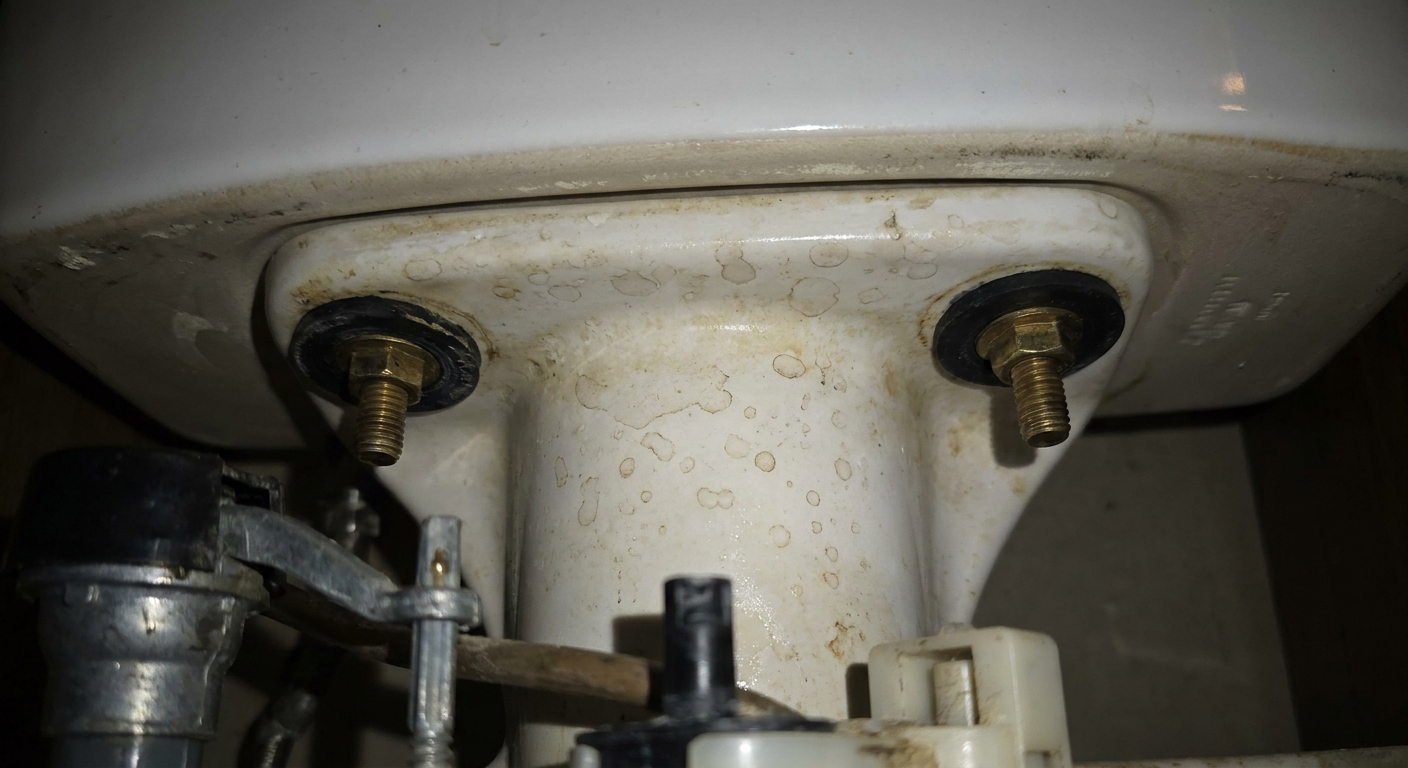
Tank bolts and washers
Rubber washers under tank bolts can degrade, letting water seep during refills.
- Clue: Rust stains or wet bolt heads under the tank.
- Fix: Replace bolt set and washers. Do not overtighten. Porcelain cracks are an expensive lesson.
What I replace first
If you want the cheapest, most likely fix first, here is my usual sequence:
- Flapper (and clean the seat)
- Chain adjustment and handle check
- Fill valve (especially if it sometimes will not shut off, or the float action feels gritty)
- Flush valve assembly (seat or overflow tube issues)
- Tank-to-bowl gasket and bolts if you see external moisture
Most homeowners are done by step 1 or 3.
When to call a plumber
- You see cracks in porcelain (tank or bowl).
- The shutoff valve will not fully turn off, or it leaks when you touch it.
- You replaced the flapper and fill valve and the toilet still refills randomly.
- You are not comfortable removing the tank to replace a flush valve or gasket.
Quick money saver: If you do call, tell them you have intermittent refills and that you already ran a dye test. That one sentence can cut down on diagnostic time.
The 30-Second Cheat Sheet
Essential takeaways for: Toilet Randomly Refills? Fix Phantom Flushes Fast
Fast diagnosis
- Phantom refill: toilet is quiet, then refills for a few seconds later. Usually a slow tank-to-bowl leak or a fill valve that occasionally overfills into the overflow.
- Constant running: water keeps moving or going into the overflow. Usually fill level too high or a fill valve that will not shut off.
30-second dye test
- Add food coloring to the tank.
- Wait 10 to 15 minutes without flushing.
- Dye in bowl = tank water is going somewhere (flapper/seat leak, overflow tube crack, or fill valve overfilling into the overflow).
- No dye in bowl = external leak (tank bolts, tank-to-bowl gasket, supply connection, or shutoff valve).
Most common fixes
- Replace the flapper and clean the flush valve seat.
- Set chain slack to about 1/2 inch and make sure it cannot snag under the flapper.
- Adjust fill level to stop about 1 inch below the top of the overflow tube.
- Replace the fill valve if it will not shut off cleanly or it is old and crusty.
When it is not the flapper
- Fill valve overfilling into overflow: tank level rises, then spills into the overflow. Dye will show in the bowl during the test.
- Cracked overflow tube (part of flush valve): dye in bowl even with a good flapper and clean seat.
- Tank-to-bowl gasket or tank bolts: intermittent dampness around the tank or bolt rust stains. Dye test usually stays clear.
Stop the water while you shop for parts
Turn the shutoff valve clockwise until it stops. If the phantom refills stop, you confirmed it is a toilet-side issue, not a supply line mystery.
💡 Tip: Scroll up to read the full article for detailed, step-by-step instructions.
⬆️ Back to top
About Marcus Vance
Content Creator @ Grit & Home
Marcus Vance is a lifelong DIY enthusiast and self-taught home renovator who has spent the last decade transforming a dilapidated 1970s ranch into his family's dream home. He specializes in budget-friendly carpentry, room-by-room renovations, and demystifying power tools for beginners. Through his writing, Marcus shares practical tutorials and hard-learned lessons to help homeowners tackle their own projects with confidence.