
🚨 In a DIY emergency or rush?
Skip the details and jump straight to our 30-second cheat sheet for the most crucial info.
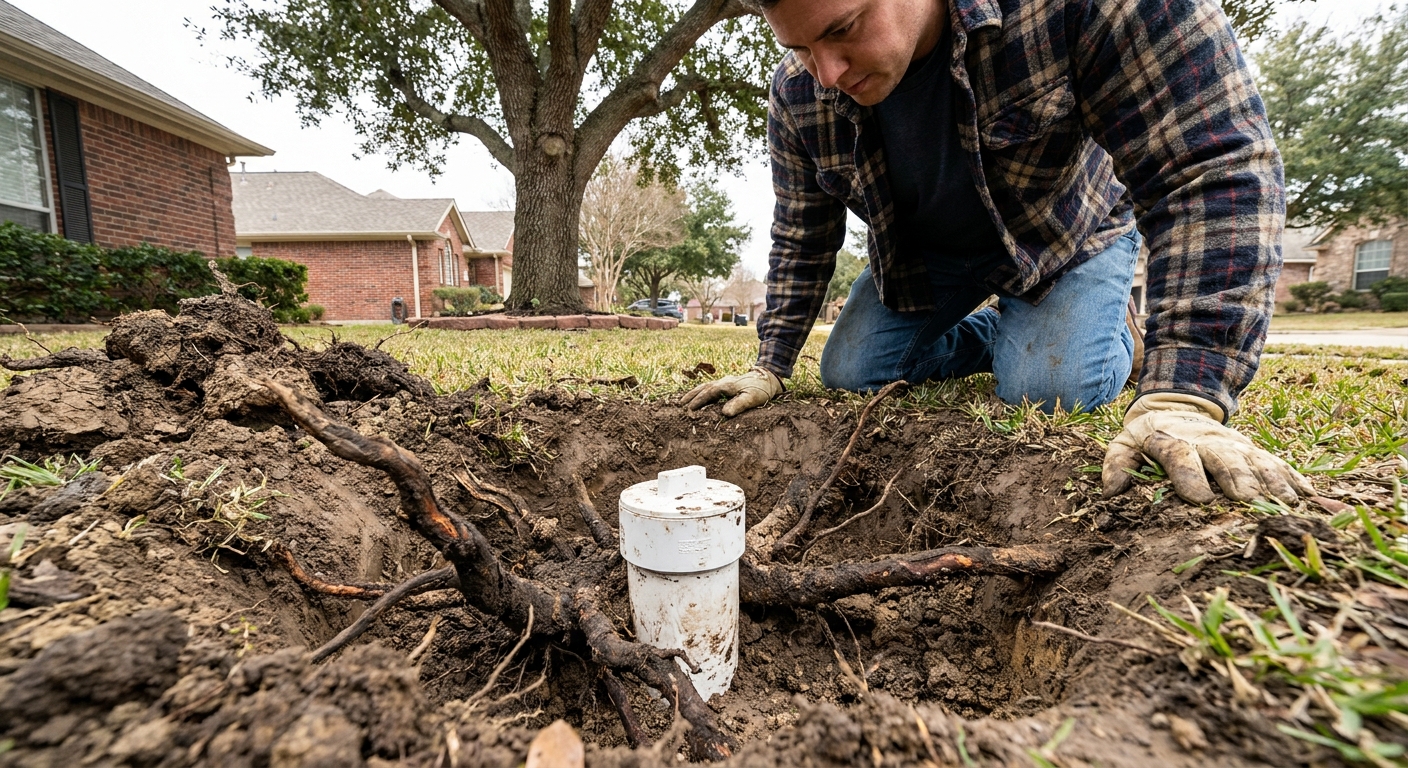
If you have one slow drain, it is usually a local clog. But when multiple fixtures start acting up, especially on the lowest level of the house, my mind goes straight to the main sewer line. And one of the most common, sneaky causes is tree roots.
Roots usually do not crush an intact pipe like a cartoon. Most of the time, they find a tiny opening first, then exploit it. (In rare cases, expanding roots can worsen an already weak joint or crack.) Once they are inside, they catch toilet paper and debris like a fishing net until the line starts choking down.
Quick note: This guide applies whether you are on a city sewer or a septic system. Roots can cause trouble in both. The main difference is where the pipe leads and who is responsible for repairs.
Fast way to tell if this is roots
A generic “main sewer backup” checklist will mention slow drains, gurgling, and standing water. That is correct, but it does not tell you why. Root intrusion has a few patterns that show up over and over.
One important caveat: these symptoms can also come from a collapsed pipe, a belly holding water, heavy grease buildup, or even a municipal sewer surcharge during storms. That is why the camera matters.
Clues that point to roots
- Recurring clogs that come back weeks or months after you clear them.
- Problems that worsen slowly over time, not suddenly overnight.
- Backups after heavy rain or during spring growth. Roots and groundwater can be part of it, but rain-related backups can also be a sign of municipal surcharge or inflow issues.
- Gurgling in a toilet when a nearby sink or tub drains, caused by restricted flow and disrupted air movement in the drainage system.
- A suspiciously lush strip of grass or greener patch over the sewer route, fed by leaking nutrient-rich water.
- Large trees or shrubs near the suspected pipe path, especially older properties with clay tile, cast iron, Orangeburg, or poorly sealed PVC joints.
Clues that point away from roots
- Only one fixture is slow and the rest of the house is fine.
- You recently flushed wipes, paper towels, feminine products, or kids’ toys and the issue started right after.
- A brand-new home with newer PVC and no trees near the trench line has an abrupt blockage.
Why roots get into sewer lines
Roots are always hunting for moisture, oxygen, and nutrients. Sewer lines offer all three. Most of the time, the pipe had a “welcome mat” already in place.
- Old clay tile joints: Common in mid-century neighborhoods. Joints can separate and weep water.
- Cast iron corrosion: Over decades, cast iron can pit and scale inside, then crack.
- Shifting soil: Freeze-thaw cycles, drought, or poor compaction can nudge pipes out of alignment.
- Previous repairs: A patch that was not properly bedded or sealed can become the weak point.
Once a hair-thin root makes it in, it grows thicker, branches, and starts trapping debris. You are no longer dealing with “a clog.” You are dealing with a structural entry point plus a clog.
Warning signs to take seriously
Here are the symptoms that usually mean you should stop experimenting with chemical drain cleaners and start diagnosing.
Inside the house
- Multiple slow drains in different rooms.
- Toilet bubbles when the tub or washer drains.
- Sewage smell near a basement floor drain or first-floor bathroom.
- Water in a tub or shower after flushing the toilet (a classic shared-line sign).
- Backups at the lowest point first: basement shower, floor drain, or first-floor tub.
Outside the house
- Overflow at the cleanout cap in the yard.
- Soggy soil or a spongy strip over the pipe path.
- Unusually green growth in a narrow line that follows the trench route.
What to do next
Step 1: Confirm it is the main
If more than one drain is affected, check the lowest drain in the home and look for water rising there when you run a higher fixture. If the basement floor drain burps when you drain a sink upstairs, odds are strong the main is restricted.
Step 2: Find the cleanout
Many homes have a cleanout outside or in the basement. If you are comfortable and it is safe, you can carefully open it to see if the line is holding water. Use gloves and eye protection. Open it slowly, stand to the side, and be ready for a mess. If you are already close to overflow, call a plumber first.
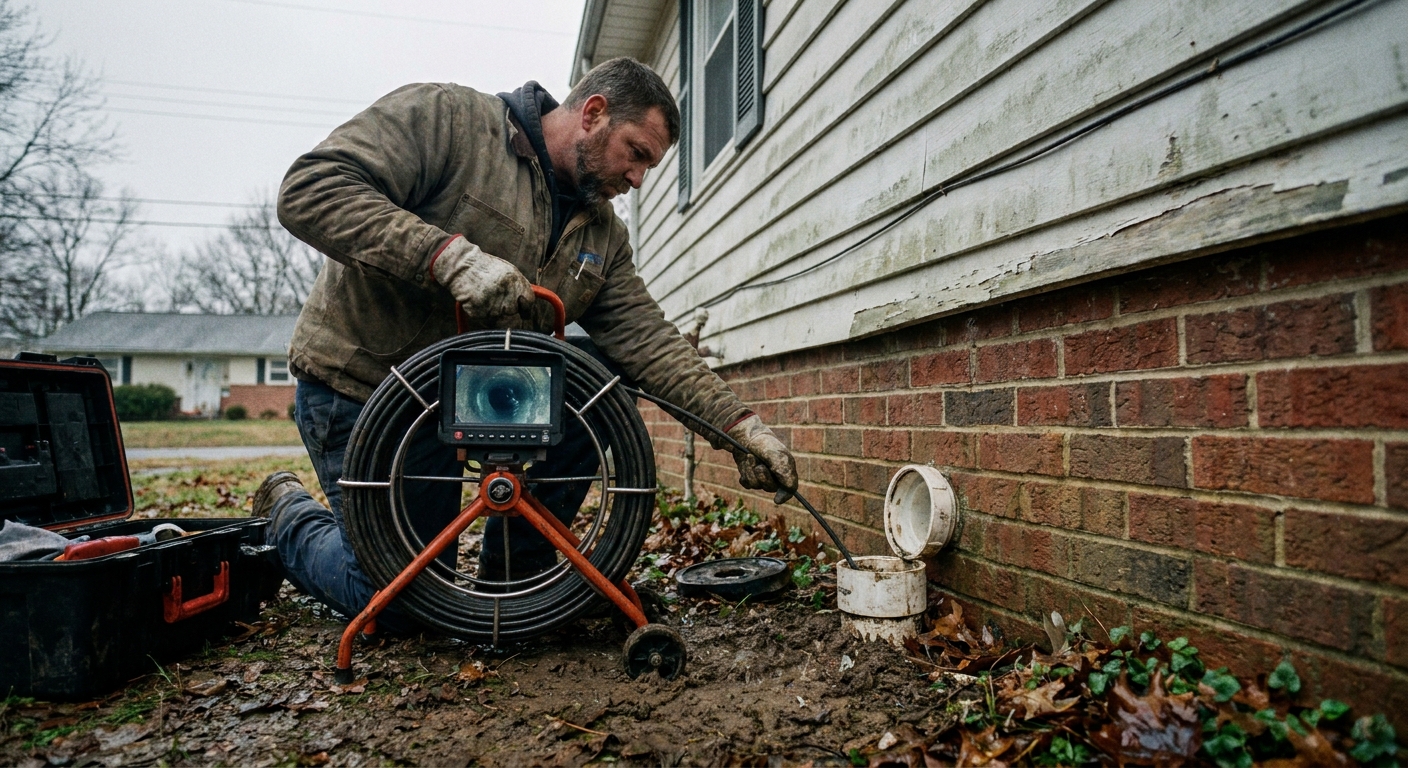
Step 3: Get a camera inspection
A camera inspection is the difference between guessing and knowing. It shows:
- Where the roots are entering
- How severe the blockage is
- What type of pipe you have
- If there are cracks, bellies (low spots), offsets, or collapses
Ask for a recording or at least photos, plus a distance reading from the cleanout. If you need to excavate, ask whether they can locate and mark the line from the camera head, or if you will need a separate locating step.
How plumbers clear roots
Here is the honest truth: cutting roots is not the same as fixing the pipe. Cutting restores flow. Repair prevents return.
Mechanical root cutting
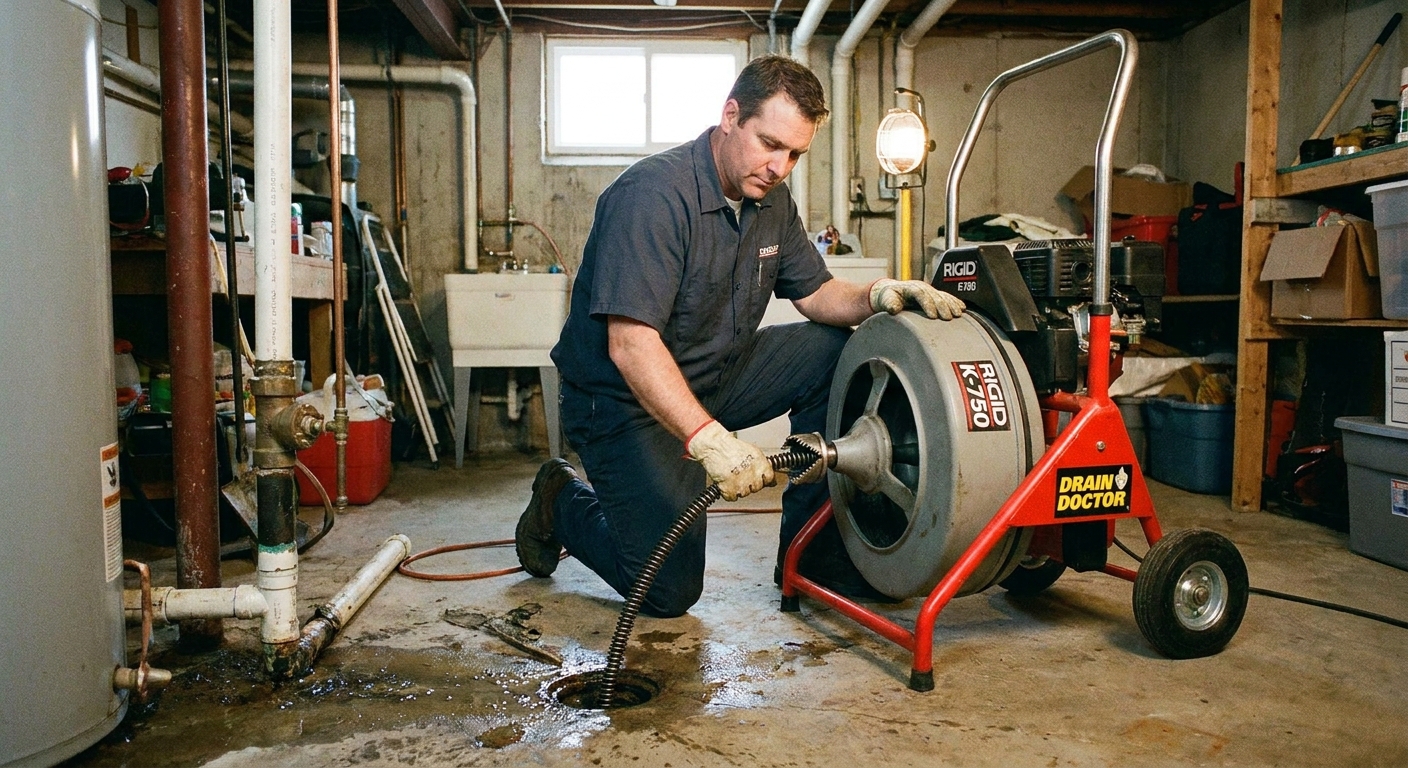
This is the most common first fix. A rotating blade cuts and chews roots, then the line is flushed.
- Best for: Restoring flow quickly when the pipe is still mostly intact.
- Pros: Fast, widely available, usually affordable.
- Cons: Roots often grow back because the entry point remains.
Hydro jetting
A high-pressure water jet scours the inside of the pipe. It can remove sludge and help break up lighter root masses.
- Best for: Grease, heavy buildup, and finishing after mechanical cutting.
- Pros: Cleans pipe walls better than a basic snake.
- Cons: Not ideal for fragile clay tile or severely broken pipe. It can worsen an already failing line or dislodge heavy cast iron scale, so pressure and technique should match what the camera shows.
Foaming root control
These products are designed to slow regrowth by killing fine root hairs inside the pipe. They are not instant, and they do not dissolve a big blockage on contact.
- Best for: Maintenance after the line is open and flowing.
- Pros: Easy, can extend time between cleanings.
- Cons: Does not repair the joint or crack. Overuse is not a substitute for fixing the pipe.
Trenchless liner
A liner is inserted and cured inside the existing pipe, creating a new sealed pipe within the old one.
- Best for: Pipes with root intrusion from joints or cracks, where the pipe is not collapsed.
- Pros: Seals entry points with minimal digging.
- Cons: Not every layout is a good candidate, and it costs more than cleaning. Pricing varies widely by access, length, and pipe condition.
Spot repair or replacement
If the camera shows a collapsed section, severe offset, or a belly holding water, replacement may be the only real fix.
- Best for: Structural failures.
- Pros: True long-term solution.
- Cons: More disruption, especially if the line runs under a driveway or mature landscaping.
What you can do yourself
I am all for DIY. But I am also a big believer in not turning a bad Saturday into an expensive Monday.
DIY that makes sense
- Confirm the scope: Check whether it is one fixture or the whole house.
- Start local: If only one sink is slow, work that branch line before you assume roots.
- Maintenance root treatment: Only after the line is flowing and you have confirmed roots on camera.
What I would avoid
- Caustic chemical drain openers in a suspected main-line restriction. They often do not reach the blockage, and they can be risky for older or compromised lines. They also make the job more hazardous for anyone who has to service the pipe.
- Guessing and digging without a camera and a location measurement. If excavation is on the table, call 811 before you dig.
- Renting a big drain machine if you have never used one. They can hurt you if the cable binds. If you go this route, read the manual, keep gloves tight-fitting, and do not force the cable.
How to keep roots from coming back
If you only cut roots, plan on seeing them again. Prevention is about reducing regrowth and sealing the entry point.
A practical prevention plan
- Camera inspection after cleaning to confirm what the pipe actually looks like.
- Fix the entry point with a liner or spot repair if the pipe is cracked, offset, or separated.
- Maintenance schedule if you choose not to repair right away. Many homeowners do a cleaning every 12 to 24 months, but it depends heavily on root type, pipe material, and how bad the intrusion is.
- Be mindful of plantings: avoid trees with aggressive roots near the sewer route. If you do not know where the pipe runs, a camera with a locator can usually mark it.
My thrifty homeowner take: if you have confirmed roots and the pipe is damaged, money spent on repeated cleanouts adds up fast. At some point, a targeted repair becomes the budget-friendly option.
When to call a pro now
Do not wait if any of these are happening:
- Sewage backing up into a tub, shower, or floor drain
- Toilets overflowing or bubbling with every flush
- Overflow at the cleanout in the yard
- Backups after storms or heavy laundry day (could be roots, but could also be a failing line or municipal surcharge)
- Older pipe materials and a history of recurring clogs
A plumber can clear the line, then use a camera to show you what failed and where. That second part is what turns a one-time emergency into a long-term fix.
Disclosure: I am not your plumber on site. Local codes, pipe materials, and conditions vary, so use this as a practical guide and confirm with a camera and a qualified pro when needed.
Questions to ask at the camera
- What pipe material is it and what condition is it in?
- How far from the cleanout is the root intrusion?
- Is the issue roots only, or is there an offset, crack, belly, or collapse?
- After cutting, did you confirm full flow with the camera?
- Am I a candidate for a liner, or do I need a spot repair?
- Can you locate and mark it from the camera, or do I need a separate locate?
- Can I get the video file and a written summary?
The 30-Second Cheat Sheet
Essential takeaways for: Tree Roots in Your Sewer Line? Warning Signs and What to Do Next
Most common signs of tree roots in a sewer line
- Multiple drains slowing down at once
- Gurgling toilet when sinks, tubs, or washer drain
- Recurring main-line clogs that return after “clearing”
- Backups that get worse after heavy rain
- Greener, faster-growing grass in a strip across the yard
What to do first (in order)
- Stop using water if you are close to a backup.
- Check if it is whole-house (more than one fixture affected).
- Locate the cleanout and watch for overflow outside.
- Book a camera inspection to confirm roots and find the exact location.
Fix options, simplified
- Mechanical cutting: restores flow fast, but roots usually return if the pipe is still open at the joint or crack.
- Hydro jetting: deep cleans buildup, often used after cutting. Pressure should match pipe condition.
- Foaming root control: maintenance only after the line is open, slows regrowth.
- Liner or repair: seals the entry point. This is the long-term solution if the pipe is damaged.
Do not do this
- Do not rely on caustic drain cleaners for a main-line restriction.
- Do not dig without camera location measurements and calling 811 first.
- Do not keep paying for repeated cleanouts if the camera shows a damaged pipe that needs sealing or replacement.
Call a plumber immediately if
- Sewage is backing up into a tub, shower, or floor drain
- The cleanout is overflowing outside
- You have repeated backups after storms or heavy water use
💡 Tip: Scroll up to read the full article for detailed, step-by-step instructions.
⬆️ Back to top
About Marcus Vance
Content Creator @ Grit & Home
Marcus Vance is a lifelong DIY enthusiast and self-taught home renovator who has spent the last decade transforming a dilapidated 1970s ranch into his family's dream home. He specializes in budget-friendly carpentry, room-by-room renovations, and demystifying power tools for beginners. Through his writing, Marcus shares practical tutorials and hard-learned lessons to help homeowners tackle their own projects with confidence.