
When the furnace quits on a cold night, it feels personal. I have been there, standing in the hallway with a flashlight, wondering if I just bought myself an expensive lesson. The good news is a lot of “dead furnace” problems are actually small, fixable issues: a clogged filter, a bumped thermostat setting, a tripped switch, or a safety sensor doing its job.
This walkthrough is for beginners. We are going to cover 7 common fixes that cost little to nothing, plus a clear line in the sand for when it is time to stop and call a pro.

Safety first (please do this)
Furnaces mix electricity, fuel, flame, and carbon monoxide. That is not the time to be brave. Do these quick safety steps before any troubleshooting:
- If you smell gas: leave the house, do not flip switches, and call your gas utility or emergency services.
- If anyone has headaches, nausea, or dizziness: get fresh air immediately and treat it as a possible carbon monoxide issue. If you have a CO alarm going off, leave and call for help.
- Turn power off at the furnace switch or breaker before opening panels.
- Let the unit cool if it has been running and short cycling.
Tools that help: flashlight, a fresh furnace filter, a small vacuum, a flathead screwdriver, and your phone camera for taking pictures of wiring and settings.
Before the 7 fixes: what is your furnace doing?
Your troubleshooting path goes faster if you notice what the furnace is actually doing.
- No heat and no sound: likely power, thermostat, or a safety switch.
- Blower runs but air is cool: could be thermostat wiring, gas or ignition issue, or a limit switch tripping from poor airflow.
- Furnace starts then stops quickly (short cycling): commonly a dirty filter, blocked vents, or a flame sensor issue.
- Clicking but no fire: ignition or gas supply issue.
- Water around a high-efficiency furnace: condensate drain may be clogged.

Fix #1: Replace the air filter (my number one culprit)
If I could only check one thing before calling anyone, it would be the filter. A clogged filter chokes airflow, overheats the furnace, and can trip a safety limit switch. That can look like “the furnace is broken” when it is really “the furnace is protecting itself.”
What to do
- Turn the thermostat to Off.
- Turn the furnace power switch Off.
- Pull the filter and note the size printed on the frame (example: 16x25x1).
- Install the new filter with the airflow arrow pointing toward the furnace (toward the blower).
- Turn power back on and set the thermostat to Heat.
Beginner tips
- If you use a 1-inch filter, avoid the super high-MERV “maximum allergy” ones unless your system is designed for them. Too restrictive can reduce airflow.
- Write the install date on the filter frame with a marker.

Fix #2: Check the thermostat settings and batteries
I once chased a “furnace problem” for 20 minutes that turned out to be a thermostat set to Cool. It happens. Also, some thermostats use batteries even if the screen is on.
What to check
- Set mode to Heat.
- Set the temperature 5 degrees above room temp to force a call for heat.
- Set fan to Auto (not On) for normal operation.
- Replace batteries if your thermostat has them.
If it is a smart thermostat
- Confirm it has power and is connected to Wi-Fi if needed.
- Look for alerts like “no power to Rh” or similar, which can point back to a tripped safety switch or the furnace control board.
Fix #3: Confirm power to the furnace (switch, breaker, door interlock)
Furnaces usually have more than one “off” point, and any one of them can stop the system.
What to check
- Furnace switch: many basements have a light-switch-style disconnect on or near the unit. Make sure it is On.
- Circuit breaker: find the furnace breaker in your panel. If tripped, reset it once.
- Service door switch: most furnaces have a safety interlock switch that must be pressed by the access panel. If the panel is not seated correctly, the furnace will appear dead.
Important
- If the breaker trips again immediately, stop and call a pro. That can indicate a short, failing motor, or control issue.

Fix #4: Check the gas supply and the pilot light (older furnaces)
Not all furnaces have a standing pilot. Newer units use electronic ignition, but plenty of homes still have older equipment.
Gas supply basics
- Make sure other gas appliances (like a stove) work. If not, it may be a supply issue.
- Check the gas shutoff valve near the furnace. The handle should typically be parallel with the pipe when open.
If you have a standing pilot
- Follow the lighting instructions on the furnace panel exactly.
- Use a flashlight to look for a small steady flame at the pilot assembly.
When to stop
- If you cannot light the pilot after following the instructions, or it will not stay lit, call a technician. The issue could be a thermocouple, gas valve, or safety control.

Fix #5: If it is a high-efficiency furnace, check the condensate drain
High-efficiency (condensing) furnaces produce water as they run. That water must drain through a small tube. If it clogs, the furnace may shut down to prevent water damage.
What to look for
- Water pooling near the furnace.
- A plastic drain tube that looks gunked up.
- A condensate pump that is full or not running (if your system uses one).
What you can do
- Turn power off.
- Check the drain hose for kinks and obvious clogs.
- If you have a condensate pump, make sure the outlet tube is not blocked and the pump has power.
If you are not sure where the drain path is, do not start disconnecting random tubing. Take a photo, look up your model number, and keep it simple.

Fix #6: Open vents and returns, then reset airflow
Furnaces need to breathe. Closed supply registers, blocked returns, and packed-in furniture can reduce airflow enough to overheat the heat exchanger. Then the furnace trips a limit switch and cycles off.
Quick airflow checklist
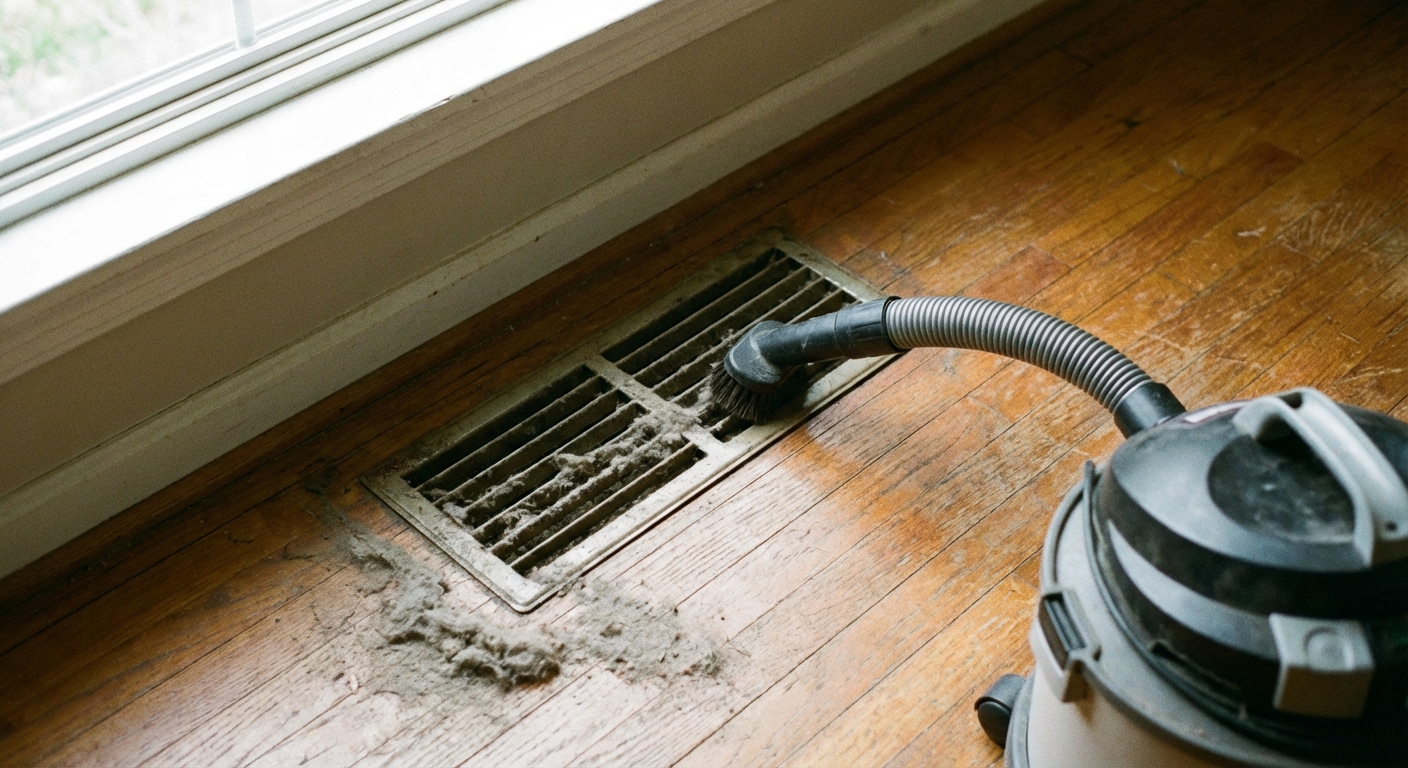
- Make sure return grilles are not blocked by rugs, boxes, or furniture.
- Open at least 80 percent of supply registers. Closing too many is a common comfort “hack” that backfires.
- Vacuum dust from return grilles.
- If you recently had work done, check that no one left a register covered with plastic.
After improving airflow, replace the filter if needed and try another heat call at the thermostat.
Fix #7: Check the furnace error code (it is trying to tell you what is wrong)
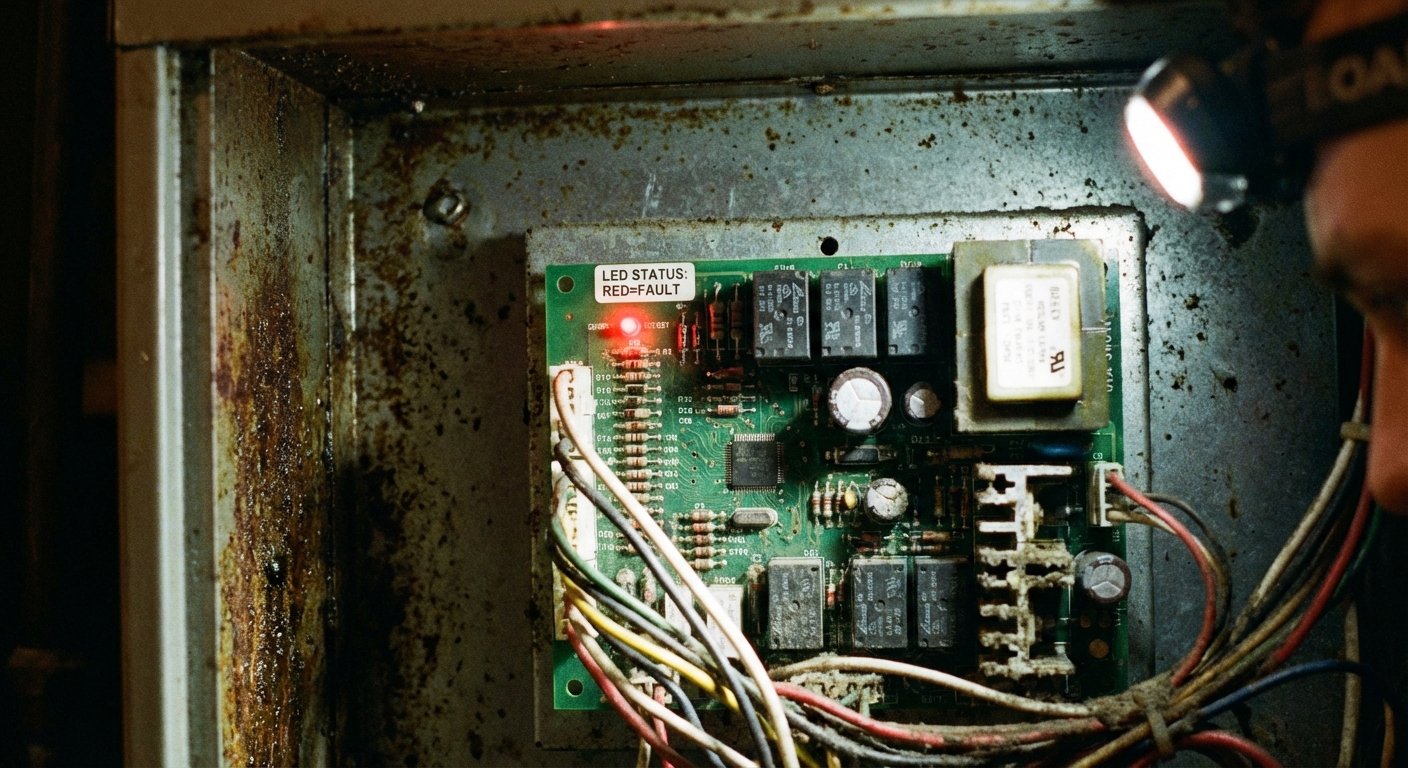
Most modern furnaces have a control board with a small LED light that blinks in a pattern. That pattern is an error code. This is one of the most homeowner-friendly features ever, once you know it exists.
Do this first
- Look for the LED without turning the power off. Many furnaces have a sight glass or peep hole on the blower door. Use a flashlight and watch the blinking light through that window.
- Count the blinks and pauses. Example: two blinks, pause, two blinks.
- Take a quick video on your phone. It is easier than recounting when your hands are cold.
- Find the code legend. It is often on the inside of the panel, or you can search your furnace model number plus “blink code.”
If you need to remove a panel
- Know that the furnace door has a safety interlock switch. When the panel comes off, the furnace may shut down and the LED may stop. Also, cycling power can clear some active faults.
- If you are comfortable proceeding: turn power off, remove the panel, then re-seat it properly before expecting normal operation again.
- If you are not comfortable, stop here and call a pro. Give them the blink pattern you saw (or send the video).
What codes often point to
- Limit switch open: frequently airflow related (filter, vents, blower).
- Pressure switch stuck open: can be venting, intake, or condensate related.
- Ignition failure: could be gas, igniter, or flame sensing.
Even if you end up calling a pro, giving them the code can save you time and money.
When to call a pro (no shame in it)
DIY is about smart confidence, not stubbornness. Call a qualified HVAC tech if:
- You smell gas, see soot, or suspect carbon monoxide issues.
- The breaker trips repeatedly.
- The furnace ignites but the flame looks unstable, rolls out, or shuts off immediately.
- You see error codes related to pressure switch, rollout switch, or repeated ignition failures and basic checks did not resolve it.
- You are uncomfortable removing panels or working near gas lines and combustion components.
A simple order to try
If you want the quickest path, here is the order I use:
- Thermostat settings and batteries
- Filter replacement
- Power switch, breaker, and door panel seated
- Vents and returns open and clear
- High-efficiency condensate drain check (if applicable)
- Gas shutoff position and pilot status (older units)
- Read the blink code and decide: DIY-safe next step or call a pro
Most of the time, one of these knocks it loose. And when it does, you get that quiet little win that makes homeownership feel a lot less intimidating.
Quick FAQ
Why is my furnace blowing air but not heating?
Often it is a thermostat setting issue, an ignition problem, or the furnace is cycling off on a limit switch due to low airflow (dirty filter, blocked vents, or return restriction).
Is it safe to keep resetting my furnace?
Resetting once after a simple fix (like replacing a filter) is fine. Repeated resets without solving the cause can make things worse. If it keeps locking out, grab the error code and call for service.
How often should I replace my filter?
For most homes using 1-inch filters, every 1 to 3 months is a solid rule. Pets, renovations, and allergies can push you toward monthly changes.

About Marcus Vance
Content Creator @ Grit & Home
Marcus Vance is a lifelong DIY enthusiast and self-taught home renovator who has spent the last decade transforming a dilapidated 1970s ranch into his family's dream home. He specializes in budget-friendly carpentry, room-by-room renovations, and demystifying power tools for beginners. Through his writing, Marcus shares practical tutorials and hard-learned lessons to help homeowners tackle their own projects with confidence.