
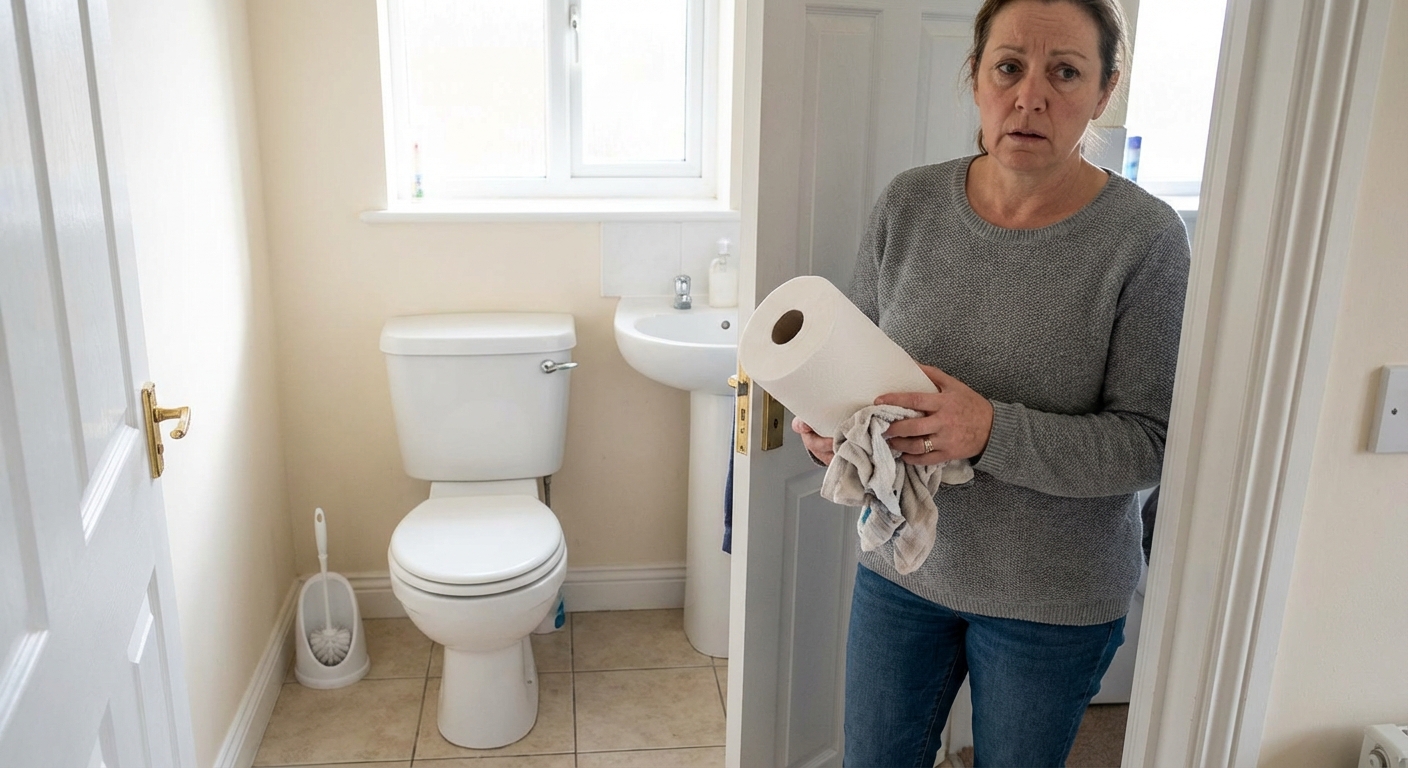
There are few household problems that trigger instant panic like a toilet that will not flush. I have been there. You do not have a plunger, guests are over, and your brain starts doing math about how fast water can rise.
The good news is most toilet clogs are soft clogs. Think toilet paper, “flushable” wipes (not actually flushable), or a little too much of everything at once. With a few common items, you can usually break the clog loose without taking anything apart.
First: stop an overflow in 10 seconds
Before you try any method, protect your floor.
- Turn off the water at the toilet shutoff valve behind the bowl. Turn it clockwise until it stops.
- Remove the tank lid and lift the float up to stop the fill valve if water is still running.
- Do not keep flushing. One extra flush is how a manageable clog becomes a messy cleanup.
- Put towels down around the base if the water is already high.
Quick reality check: If the bowl is near the rim, wait 10 to 15 minutes. Sometimes the water level drops on its own as the clog slowly lets go.
What not to do (so you do not make it worse)
- Skip chemical drain cleaners. Many are not made for toilets and can damage seals and glazes. Worse, if you end up needing to snake the toilet, you are now working over caustic chemicals.
- Do not use boiling water. A toilet bowl is porcelain, but it can still crack from thermal shock. Hot is good. Boiling is risky.
- Do not jab with a hard stick. You can scratch the porcelain or push the clog deeper into the trap.
Method 1: hot water and dish soap (best first try)
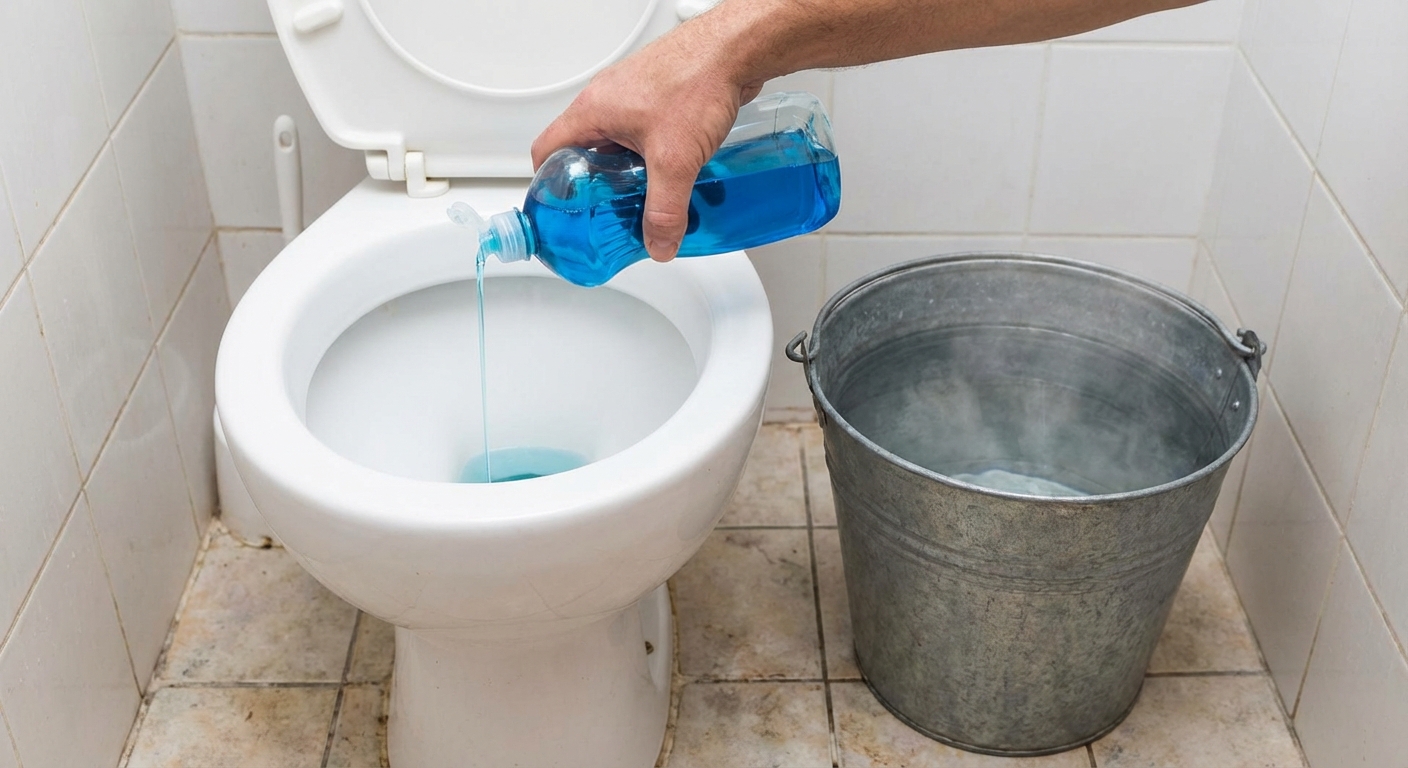
This is my go-to when there is no plunger because it is safe, simple, and works surprisingly often. Dish soap helps lubricate the clog so it can slide through the trap.
What you need
- Dish soap
- Hot tap water in a bucket or large pot (not boiling)
Steps
- Add about 1/2 cup dish soap to the bowl.
- Wait 10 minutes so the soap can work into the clog.
- Check the water level first. If the bowl is already high, do not pour from height. Either wait for it to drop, or remove a little water so you have safe room.
- Pour hot water into the bowl. If the water level is low and you have room, you can pour from about waist height for extra force. If the bowl is still high, pour slow and close to the water surface to reduce splash risk.
- Wait another 10 minutes, then try a gentle flush. If the water rises, stop and wait again.
If it almost works: Repeat once more. Many clogs give up on round two.
Method 2: baking soda and vinegar (good for soft clogs)
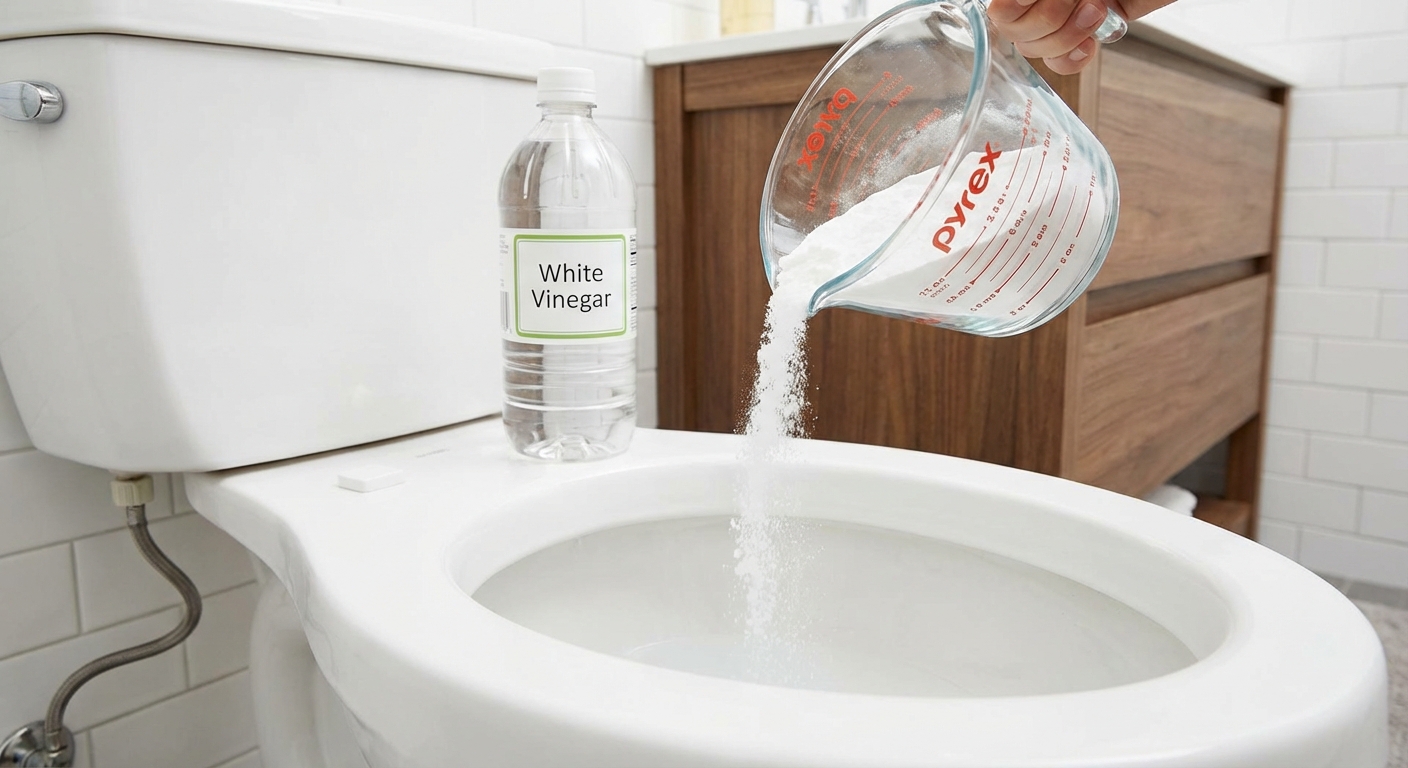
This is not magic. The fizz can help break apart soft material and move water through the trap, especially when the clog is toilet paper heavy.
What you need
- 1 cup baking soda
- 2 cups white vinegar
- Hot tap water (optional)
Steps
- If the bowl is very full, remove some water into a bucket so it will not overflow when it bubbles.
- Where to put that bucket water: If the toilet is clogged, do not dump it into another sink or tub. The safest move is to carefully pour it into a working toilet (another bathroom) or a utility sink that you know drains well, then rinse the bucket with hot soapy water. If neither option exists, hold it aside until the toilet is working again, then pour it back in and flush.
- Pour in 1 cup baking soda.
- Slowly add 2 cups vinegar. Expect fizzing.
- Wait 20 to 30 minutes.
- Add a bucket of hot tap water, wait 5 minutes, then test with a flush.
Do not mix this with other cleaners (especially bleach). If you already added something to the bowl, flush with clean water first if possible and let it dilute before trying a new method.
Method 3: wire hanger “mini snake” (for clogs you can feel)
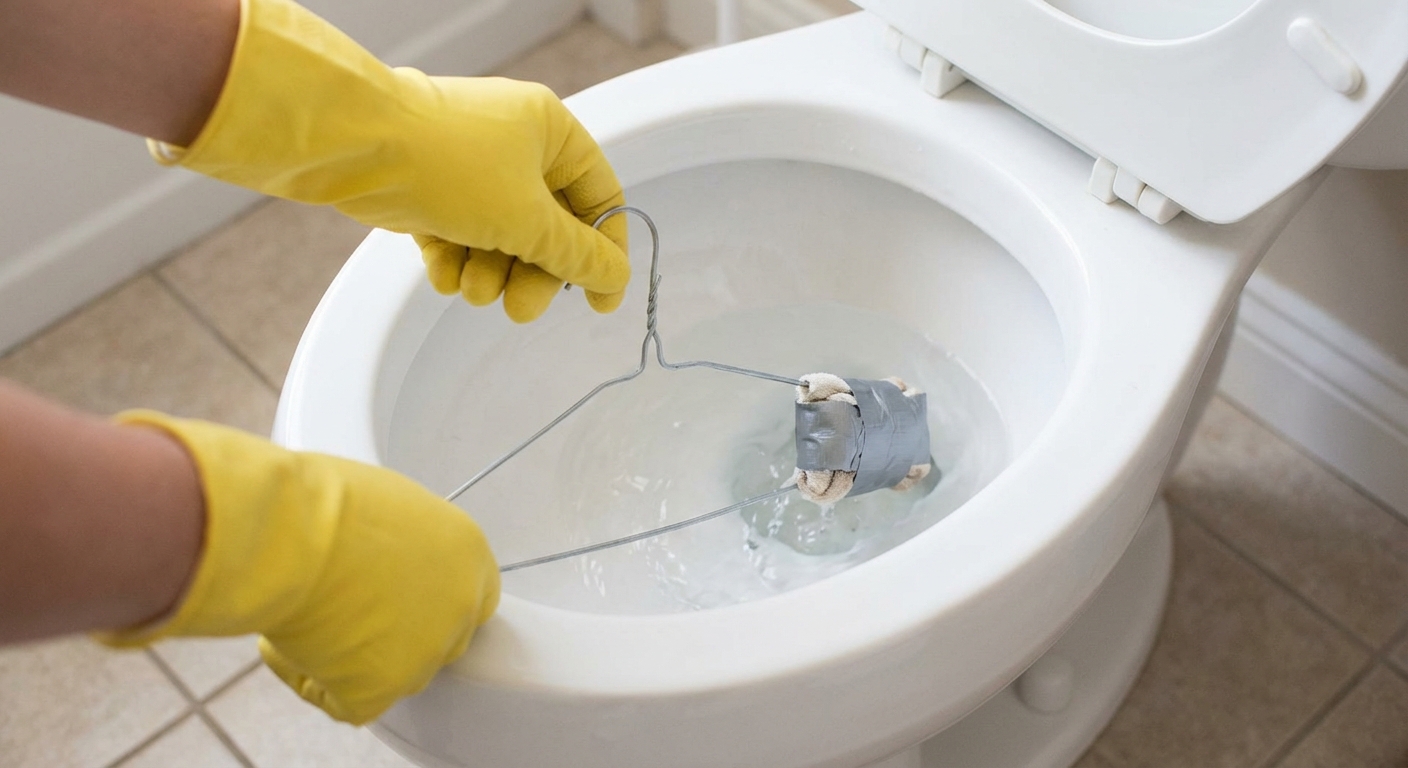
This is the budget version of a toilet auger. It can hook and pull material back or poke through a soft blockage. It is also the easiest way to retrieve something that should never have been flushed.
What you need
- A wire coat hanger
- Electrical tape or duct tape
- A rag (optional but helpful)
- Rubber gloves
Steps
- Straighten the hanger, leaving a small hook at one end.
- Wrap the hook with a rag and tape it up. This helps prevent scratching the porcelain.
- Gently feed the taped end into the toilet, aiming toward the drain opening.
- When you feel resistance, work it slowly: push, wiggle, twist, then pull back a bit.
- If you hook paper or a wipe, pull it out and dispose of it in the trash. Then test flush.
Marcus mistake I made once: I got impatient and pushed too hard, which packed the clog tighter. Slow and steady wins here.
Method 4: plastic wrap trick (creates plunger-like pressure)
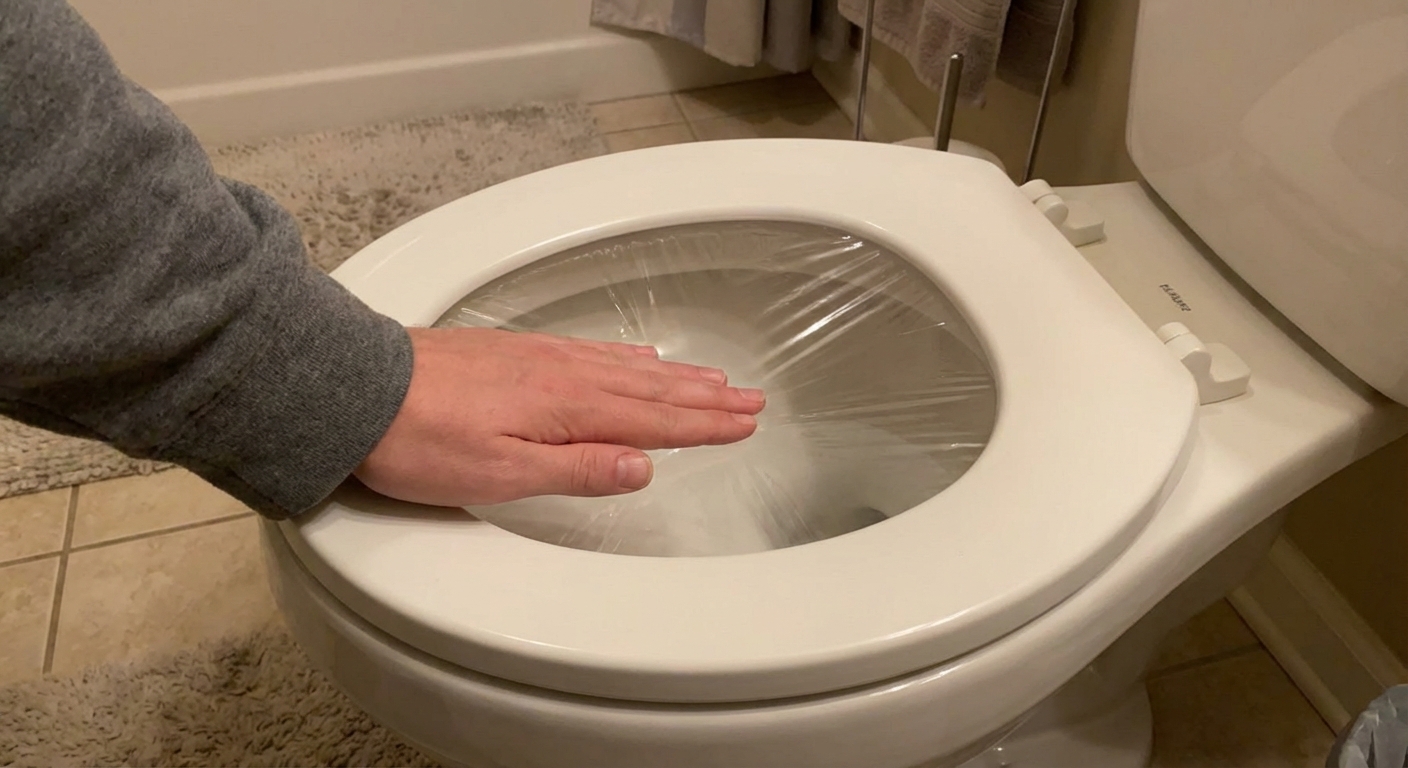
This one looks goofy, but it can work when you need pressure and do not have a plunger. The idea is to seal the bowl opening so you can push air pressure down through the drain.
What you need
- Plastic wrap (wide kitchen roll works best)
- A towel to dry the rim
Steps
- Dry the toilet rim so the plastic wrap can seal.
- Wrap the bowl opening tightly with multiple layers, overlapping as you go. You want an airtight seal.
- Close the toilet seat to help hold the wrap in place.
- Important: Do not flush to “inflate” the plastic if the toilet is clogged. That is how you get an instant overflow if the seal is imperfect (and real life seals are often imperfect).
- Instead, press down gently with both hands to flex the plastic and force air pressure into the drain. Release and press again in short pulses.
- If the clog releases, the bowl will start to drain normally. Once the water level is clearly dropping and you have room in the bowl, you can do a careful test flush.
Safety note: If the seal is not tight, you can splash. Keep your face back and press slowly.
Method 5: the “toilet brush plunge” (last-ditch, but often works)
If you have a sturdy toilet brush, you can mimic a plunger by sealing the brush head in a plastic bag and pushing water back and forth.
What you need
- Toilet brush
- A plastic grocery bag or small trash bag
- Gloves
Steps
- Put the brush head inside the bag and tie it tight around the handle.
- Place the bagged brush into the drain opening.
- Push down and pull up with short strokes to move water through the trap.
- Test flush, then discard the bag.
When to call a plumber
Sometimes the right move is knowing when to stop. Call a plumber if any of these are true:
- The toilet repeatedly clogs even after you clear it.
- Multiple drains are backing up (toilet plus tub or sink). That points to a main line issue.
- Water rises fast and will not drop, even after shutting off the supply and waiting.
- You suspect an object (toy, toothbrush, large wipe wad) is stuck in the trap.
- You see sewage coming up in a shower or tub. That is not a DIY moment.
Pro tip: If you have tried two methods and things are not improving, a basic toilet auger is usually the next step. If you do not have one and cannot borrow one, that is a solid point to call for help.
How to prevent toilet clogs
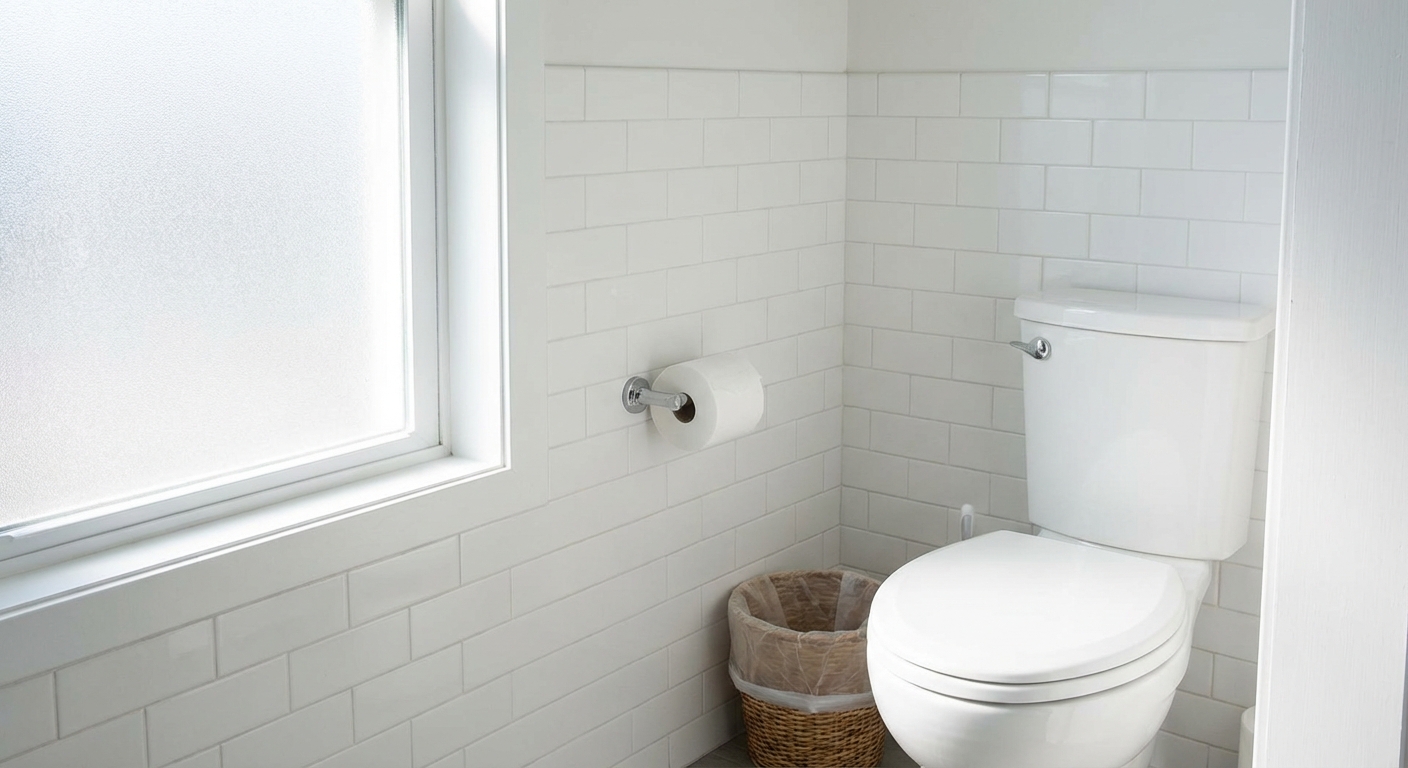
- Only flush pee, poop, and toilet paper. Wipes, even “flushable,” are clog magnets.
- Use less paper per flush. Teach kids the “flush once, then wipe more” rule if needed.
- Keep a small trash can with a liner in every bathroom so people have a place for non-flush items.
- Watch slow flushing. If your toilet is getting sluggish, address it early before it becomes an emergency.
- Consider a toilet auger for the house. It is inexpensive, clean to use, and made for the bowl shape.
Quick troubleshooting: what the symptoms usually mean
- Bowl fills, then slowly drains: soft clog in the trap. Start with dish soap and hot water.
- Bowl fills and stays high: tougher clog. Try the wire hanger or plastic wrap trick.
- Gurgling in other drains: possible venting or main line issue. Consider calling a plumber.
- Toilet overflows easily: partial blockage or weak flush. Stop flushing and investigate.
If you want my honest “do this first” order
When I am standing in the bathroom without a plunger, I go like this:
- Dish soap + hot water (lowest risk, highest success rate)
- Plastic wrap trick (adds pressure like a plunger, without flushing)
- Wire hanger (for stubborn clogs or suspected wipes)
- Baking soda + vinegar (good if you have time and it is a soft clog)
If none of those make progress, I stop before I turn a clog into a spill and either grab a toilet auger or call in a pro.

About Marcus Vance
Content Creator @ Grit & Home
Marcus Vance is a lifelong DIY enthusiast and self-taught home renovator who has spent the last decade transforming a dilapidated 1970s ranch into his family's dream home. He specializes in budget-friendly carpentry, room-by-room renovations, and demystifying power tools for beginners. Through his writing, Marcus shares practical tutorials and hard-learned lessons to help homeowners tackle their own projects with confidence.