
First, confirm it’s actually soap residue
I’ve learned the hard way that “white stuff on clothes” can mean a few different problems. The fix depends on what you’re really seeing. Use these quick checks before you start taking panels off your washer.
What soap residue usually looks and feels like
- White streaks or patches that look chalky or powdery, especially on dark clothes.
- Stiff or crunchy fabric after drying.
- Gritty feel when you rub the spot between your fingers.
- Spot fades or dissolves if you re-wet it with warm water and rub.
What it might be instead
- Grease or oil transfer: looks darker or “wet” and can smell like food oil or mechanic grime. It can come from greasy rags, fabric softener buildup, or a dirty outer tub.
- Bleach marks or color loss: looks like a lighter, permanently faded area. It won’t rinse out.
- Hard-water mineral film: can look like residue, but often shows up as dullness on many fabrics or a scratchy feel. It can be worse with certain detergents and sometimes with hotter washes, depending on your water and products.
- Lint or tissue: fuzzy and fibrous, usually from a forgotten pocket item.
Simple test: Dab the spot with warm water and rub. If it turns slippery or disappears, it’s likely detergent. If it doesn’t really dissolve but the film shifts or powders off, minerals may be involved. If it stays put like a stain, you’re likely dealing with oil, dye loss, or something that needs stain treatment.
One more clue: If residue shows up on only one or two items, check for a pod that didn’t fully dissolve, detergent clumps stuck in a pocket, or a dispenser that dumped directly onto a single garment.
The most common cause: too much HE detergent
Modern washers use less water. That’s great for your utility bill, but it also means there’s less water available to rinse excess detergent away. A lot of us are simply overdosing, especially with concentrated formulas.
How much detergent is usually enough
- HE liquid: for many concentrated HE detergents, 1 to 2 tablespoons is often enough for a regular load. If your bottle’s dose chart calls for more, follow the label, then step down if you’re seeing suds or residue.
- HE powder: start small. Powder is easy to overdo and can be harder to dissolve in cold washes. If you wash cold, consider dissolving the powder in a cup of warm water first or switching to a liquid designed for cold water.
- Pods: 1 pod for most loads. If you’re getting residue, pods can be too much for small loads or cold cycles, and they can also get trapped in folds and not dissolve fully.
If your detergent cap has lines up to “4” or “5,” those are often meant for very large, very dirty loads or hard water. They’re not necessarily the everyday setting most households need.
What to do today
- Cut your detergent dose back for the next 3 to 5 loads.
- Choose an extra rinse while you’re dialing in your new dose.
- Don’t stack products unless you truly need them. Detergent plus booster plus softener adds up fast.
Oversudsing: when it can’t rinse clean
Too many suds can trap soil and detergent in the fabric instead of letting it rinse away. Some washers detect oversudsing and add time, but they still may not fully recover.
Signs you’re oversudsing
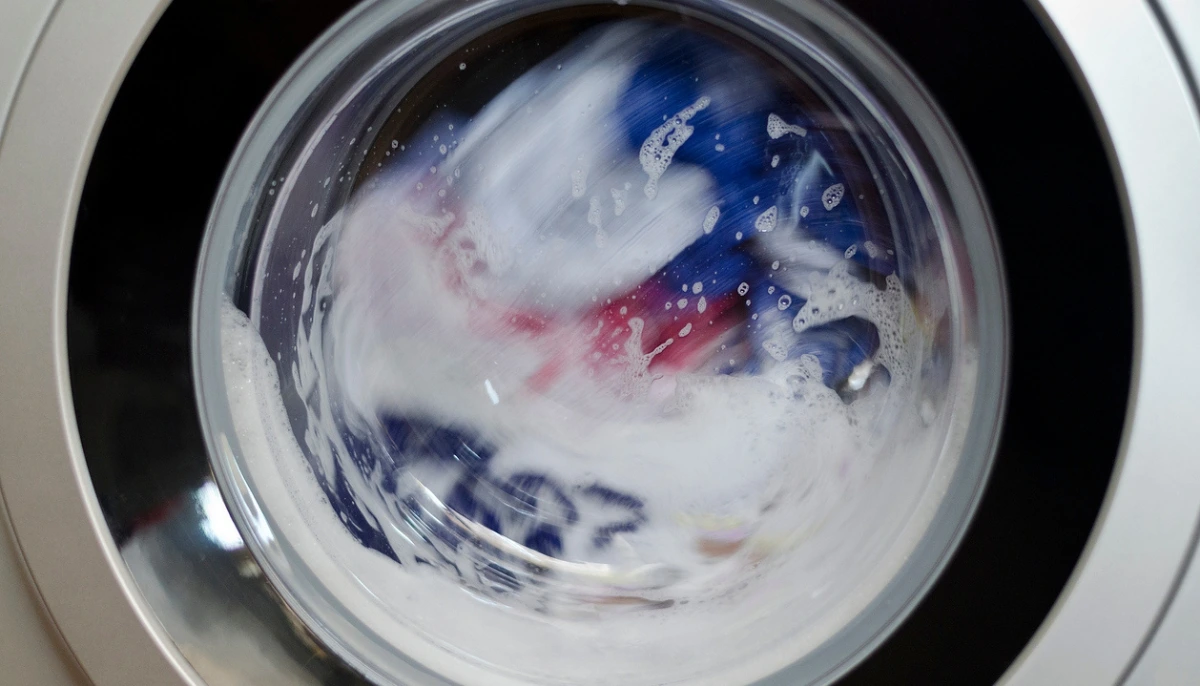
- Lots of foam visible through the front-load door or at the top of a top-load tub.
- Clothes feel slippery after the cycle.
- Washer seems to pause or extends cycle time.
- Residue is worse on towels, athleisure, and synthetic fabrics.
Fix oversudsing without making it worse
- Run a rinse and spin with no detergent.
- If your washer has it, use Drain and Spin first, then run a rinse.
- Reduce detergent going forward and skip the “more soap for more clean” idea. In low-water machines, it usually backfires.
- Don’t add dish soap (or anything not made for laundry) to “break suds.” It can create a foam disaster and may damage the machine.
Cold-water washing has limits
I love cold water for saving energy and protecting colors, but cold water can struggle to dissolve certain detergents and oily soils. That can leave behind film that looks like soap, especially on dark clothes.
When cold water is most likely to leave residue
- Powder detergent in cold cycles.
- Quick wash cycles that use less agitation and shorter rinse time.
- Heavy fabrics like hoodies, towels, and jeans.
- Greasy soils like body oils, lotions, and kitchen splatter.
Better settings that still stay gentle
- Switch to warm for weekly towels, sheets, and work clothes.
- Use extra rinse (and deep water if your washer offers it).
- If you prefer cold, consider an HE liquid formulated for cold water.
- While troubleshooting, avoid Quick Wash and consider a longer cycle like Normal, Whites, or Heavy Duty since they often rinse better. Also consider turning off ultra-eco options temporarily if they reduce rinse performance.
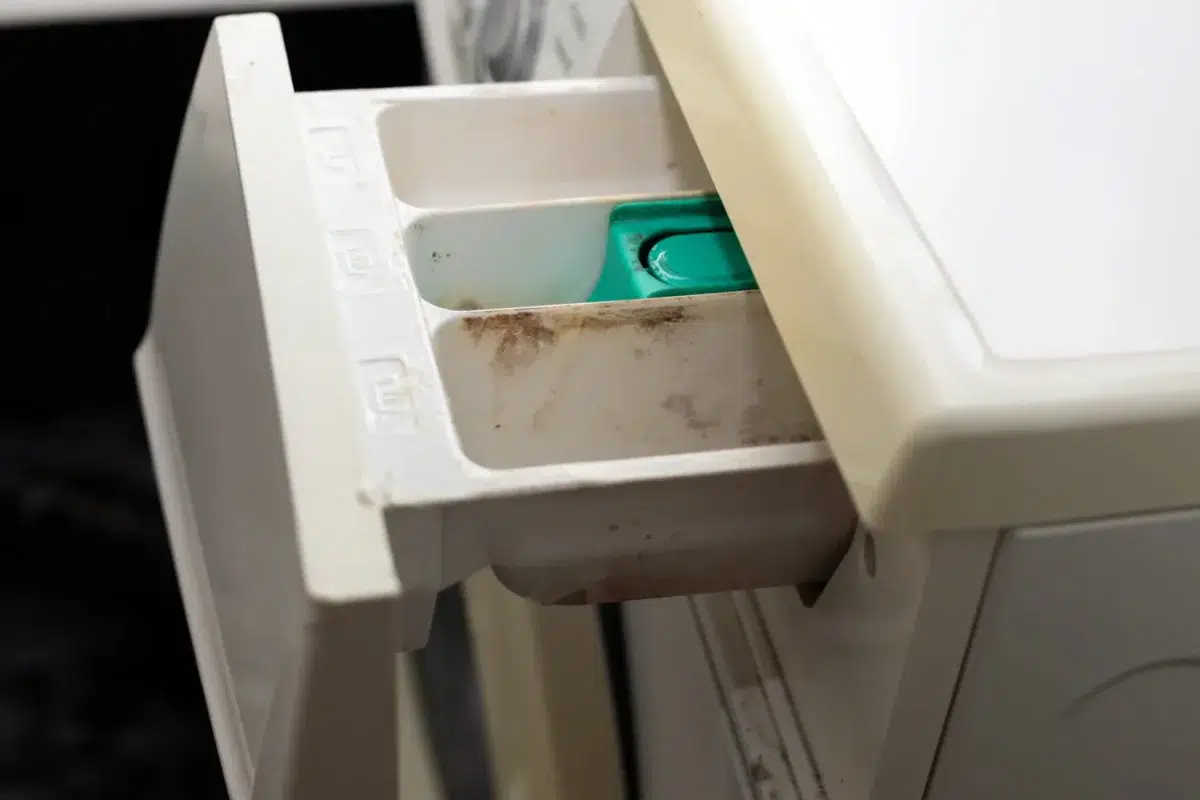
Detergent drawer and dispenser buildup
In many washers, detergent and softener travel through small channels before they ever hit the drum. If those channels get slimy or crusty, detergent might not flush correctly. The result can be detergent that dumps late, sticks to clothing, or never fully dissolves.
Quick dispenser cleaning
- Remove the detergent drawer and rinse it under hot water.
- Scrub corners with an old toothbrush.
- Wipe inside the drawer cavity with a rag and a non-scratch tool (like a plastic spatula) so you don’t gouge plastic or tear rubber.
- Reinstall and run a warm rinse cycle.
Dirty drum and outer tub buildup
If you’ve been overdosing detergent for months, the washer can build up a paste of detergent, lint, body oils, and minerals. When that breaks loose, it can redeposit on clothes and look like residue or streaking.
How to clean the drum the right way
- Run the washer’s Tub Clean or Clean Washer cycle if it has one.
- Use a washer cleaning tablet, or use chlorine bleach only if your manufacturer allows it.
- Run it empty on the hottest setting available.
- After the cycle, wipe the drum, door glass, and gasket area.
My rule of thumb: If you’re seeing residue on clothes, do one tub-clean cycle now. If the next few loads still show flakes or film, a second tub-clean cycle 1 to 2 weeks later can help. If your manual calls for a different schedule, follow that.
Don’t forget the door gasket
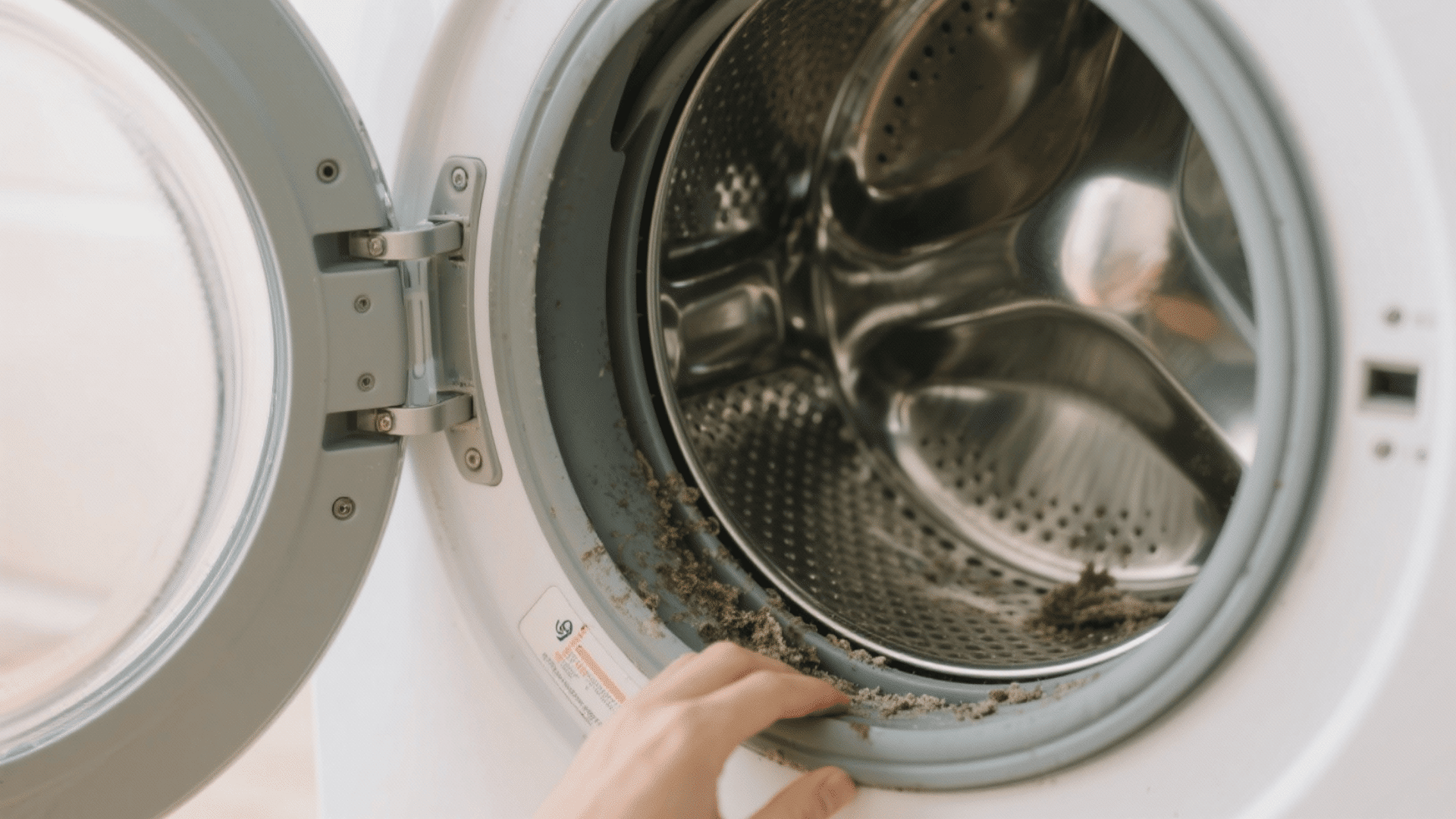
That rubber gasket is a lint trap and soap scum collector. Pull it back gently and wipe out slime, hair, and detergent film.

Vinegar and baking soda
A lot of people ask about vinegar or baking soda. They’re not a reliable fix for detergent film and they’re not a substitute for correct dosing and a proper washer-clean cycle. Some manufacturers also discourage them because they can affect seals or parts over time. If you use anything, stick to manufacturer-approved cleaners and instructions.
Check the drain filter and drainage
If the washer can’t drain well, it can’t rinse well. Poor drainage can leave dirty water in the drum longer, which can redeposit detergent and soil onto fabric.
What to look for
- Standing water after a cycle.
- Slow draining, gurgling, or a “wet dog” smell.
- Residue plus random lint clumps stuck to clothes.
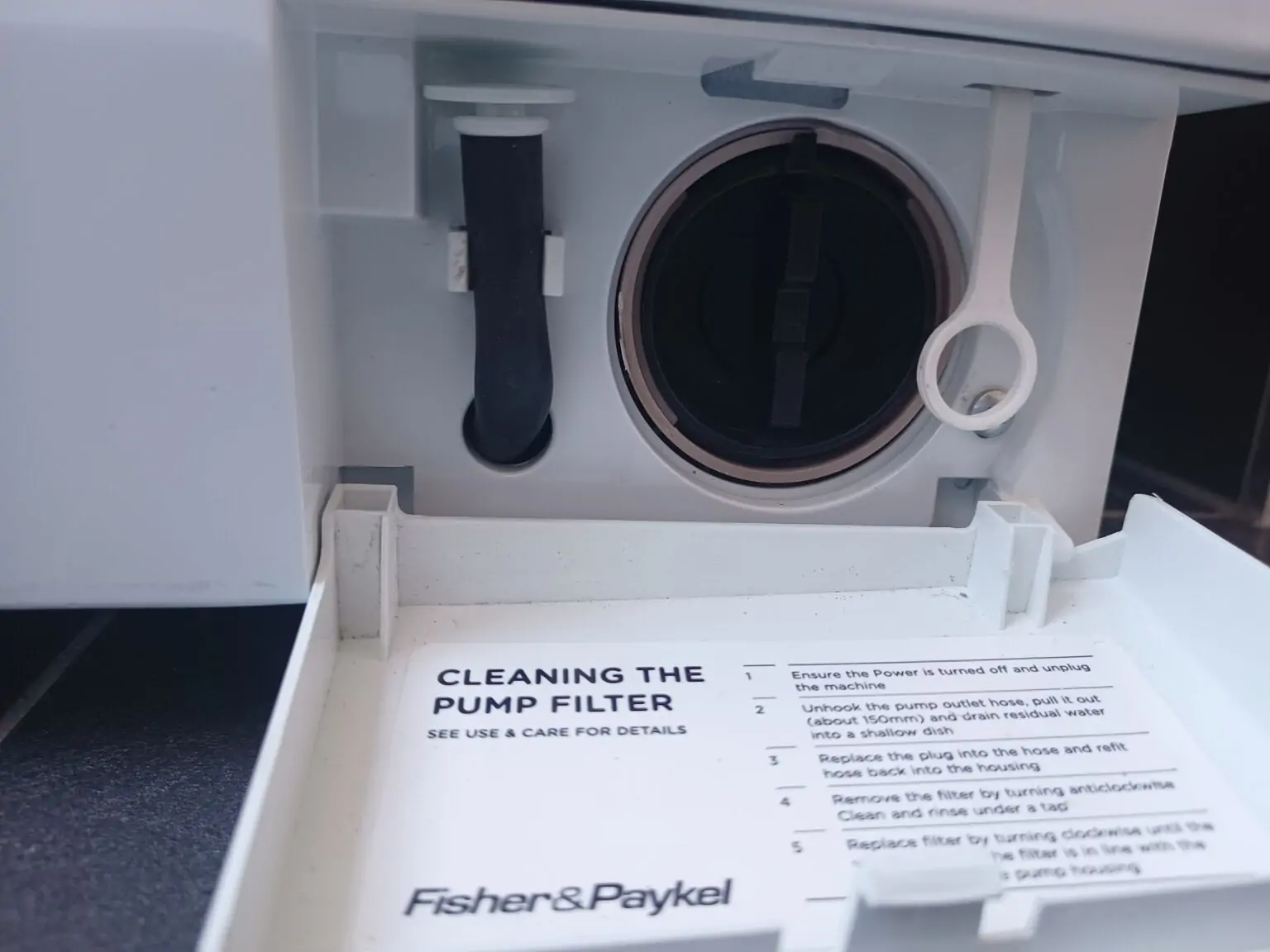
Basic front-load filter check
- Unplug the washer.
- Locate the small access panel near the bottom front.
- Place a shallow pan and towels down.
- Open the small drain hose if present, then unscrew the filter and remove debris.
- Reinstall the filter snugly and run a rinse cycle.
If you’ve got a top-loader with no user-accessible filter, focus on the drain hose for kinks and make sure the standpipe isn’t backing up.
Hard water and softeners
Water hardness changes how detergent behaves. In hard water, minerals can bind with detergent ingredients and form a chalky film that clings to fabric. With a water softener, the opposite can happen: detergent becomes more effective and it’s easier to overdose.
If you have hard water
- Use an HE detergent that mentions hard water performance.
- Consider a laundry booster designed for hard water, used sparingly and as directed.
- Don’t try to fix hard water by dumping in extra detergent. That often makes residue worse.
If you have a water softener
- Use less detergent. Soft water needs less.
- Watch for oversudsing even at “normal” doses.
- If you recently installed or serviced a softener and residue started, your old detergent habit is probably the culprit.
Tip: If you’re not sure about your water, check your city water quality report or use an inexpensive hardness test strip. Knowing this one number saves a lot of trial-and-error.
Load size and how you pack the drum
Washers need room for clothes to tumble and rinse. If the drum is packed tight, detergent can get trapped in folds and seams, especially on hoodies, jeans, and bedding.
Easy loading rules
- Front-loaders: fill loosely to about 3/4 full. You should still be able to see the back of the drum at the top.
- Top-loaders: don’t pack clothes down. Drop items in loosely around the agitator or wash plate.
- Wash heavy items (towels, blankets) in smaller batches and use an extra rinse.
Step-by-step: my residue reset routine
If you want a simple plan that fixes most residue issues without guessing, do this in order.
- Rinse the problem load again with warm water and no detergent. Add extra rinse if available.
- Lower your dose for the next few loads. For many concentrated HE liquids, that’s often 1 to 2 tablespoons, but use the label as your starting point and adjust down if you’re seeing residue.
- Pause softener for a couple of weeks while you troubleshoot.
- Clean the detergent drawer and wipe the dispenser cavity with a non-scratch tool.
- Run a tub clean cycle on hot, empty, using a manufacturer-approved cleaner.
- Check and clean the drain filter (front-loaders) and confirm the drain hose isn’t kinked.
- Adjust for your water: less detergent for soft water, targeted help for hard water.
When to call for service
Most residue problems are dosing, buildup, or water chemistry. But sometimes there’s a mechanical issue.
- Washer isn’t draining fully or throws drain-related error codes repeatedly.
- You smell hot plastic or hear grinding during drain or spin.
- Dispenser never flushes or leaks consistently.
- Residue persists after you’ve reduced detergent, improved rinse settings, and completed a clean-washer cycle (or two if needed).
Quick FAQ
Why is residue worse on dark clothes?
Dark fabrics make white detergent or mineral film stand out. Synthetics also often hold onto oils and film more than cotton can, which makes the problem easier to see.
Is fabric softener causing the residue?
It can. Softener buildup can trap detergent and soil, then smear onto clothes. If you’re troubleshooting, pause softener for a couple weeks and see if residue improves.
Should I switch detergents?
Sometimes, yes. But try lowering the dose first. Switching brands while still overdosing often keeps the same problem in place.

About Marcus Vance
Content Creator @ Grit & Home
Marcus Vance is a lifelong DIY enthusiast and self-taught home renovator who has spent the last decade transforming a dilapidated 1970s ranch into his family's dream home. He specializes in budget-friendly carpentry, room-by-room renovations, and demystifying power tools for beginners. Through his writing, Marcus shares practical tutorials and hard-learned lessons to help homeowners tackle their own projects with confidence.