
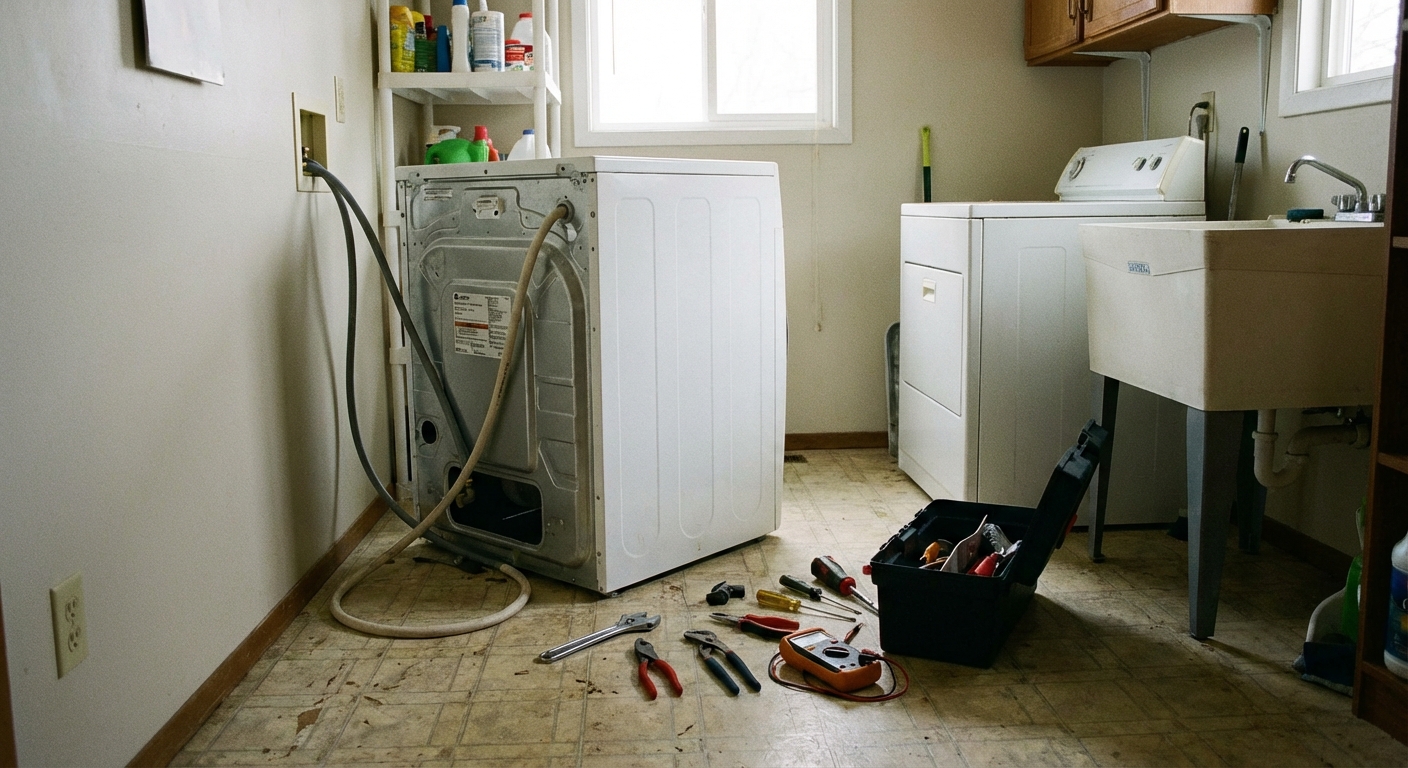
If your washing machine suddenly sounds like it is trying to take off across the laundry room, you are not alone. The good news is that most loud washer noises come from a small list of usual suspects. Some are quick, free fixes. Others are a sign a part is wearing out.
I will walk you through diagnosing the noise by what it sounds like, then give you practical, step-by-step fixes. Start with the Fast checks section, then jump to the fix that matches your noise.
Quick glossary: On a front-load washer, you have an inner drum that spins inside an outer tub. On a top-load washer, the inner spinning part is usually called the basket (and some models have an agitator or wash plate).
Safety first
- Unplug the washer before removing any panels.
- Turn off water supply valves if you will move the machine or work near hoses.
- Wear gloves for sharp sheet-metal edges and surprise screws.
- Do not run a washer with panels off unless your service manual specifically allows a test mode. Exposed rotating parts and live wiring are a real hazard.
If you smell burning, see smoke, hear a loud electrical buzzing, or see water under the machine, stop and call a pro. Those are not “keep testing” situations.
Diagnose by noise
Answer three questions before you grab tools:
- When does it happen? Fill, wash/agitate, drain, or spin.
- Does it change with speed? Louder as it spins faster often points to bearings, a belt, a pulley, or an unbalanced load.
- Is it constant or intermittent? Intermittent noises usually mean something is hitting, rubbing, or rattling.
Banging or thumping
- Most common: unbalanced load or washer not level.
- Also common: shipping bolts left in place on a front-loader, a loose counterweight, or worn shocks/struts or suspension rods.
Grinding or rumbling
- Most common: objects caught between the inner drum/basket and outer tub (coins, bra wires, screws).
- Also common: drain pump impeller noise during drain, or worn drum bearings (often loudest on high-speed spin).
Squealing or chirping
- Most common: loose or glazed drive belt (belt-driven units).
- Also common: pulley issues, or certain top-load direct-drive platforms that use a motor coupling.
Clicking or rattling
- Most common: small items in the drum (zippers, buttons) or debris in the drain pump filter (many front-loaders have a cleanout).
- Also common: loose screws, a hose or cord tapping the cabinet, or a vibrating panel.
Fast checks
1) Rule out an unbalanced load
This is the cheapest fix, and it causes the most chaos. A single heavy item can clump to one side and make the tub slam around during spin.
- Pause the cycle and wait for the tub to stop.
- Redistribute items evenly. Add 1 to 2 towels if it is a single bulky item (like a bath mat) to help balance.
- Run spin only (or restart) and listen.
2) Check leveling and floor contact
A washer that rocks will amplify every normal movement into a bang.
- With the washer empty, push on the corners. If it rocks, adjust the feet.
- Use a bubble level front-to-back and side-to-side.
- Tighten the locknuts on adjustable feet so they do not walk loose.
Tip: On older vinyl or uneven concrete, a thick rubber anti-vibration mat can help, but it will not fix a true mechanical issue.
3) Check for obvious trapped objects
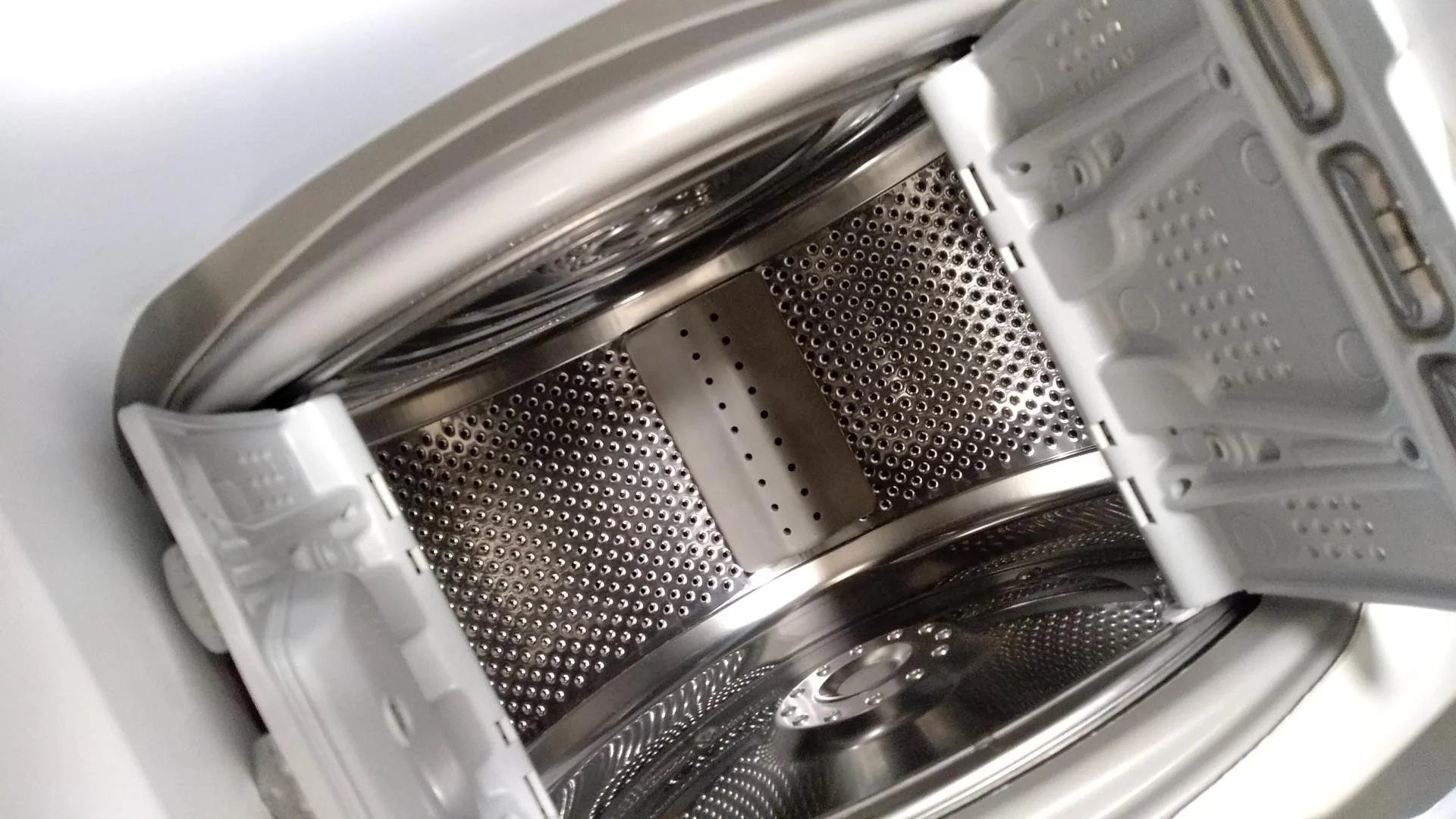
- Check pockets and the drum/basket for coins, screws, and small metal pieces.
- Front-load: run your fingers around the rubber door boot folds and remove anything you find.
- If you hear a scrape once per rotation, suspect something between the inner drum and outer tub.
4) If the noise started after moving or installing
- Re-check leveling and that all feet are firmly planted.
- Front-load: confirm shipping bolts were removed (see the dedicated section below).
- Make sure hoses or the power cord are not tapping the cabinet during spin.
Fix: Shipping bolts
This one is worth a callout because it can be shockingly loud. Many front-load washers ship with long bolts that lock the tub for transport. If they are left in place, the washer can bang violently and “walk” during spin.
- Check your installation guide for the exact location, usually on the rear panel.
- Remove all shipping bolts and spacers, then install the hole plugs (often included).
- If you do not have the manual, look up your model number and download the installation instructions from the manufacturer site.
Fix: Objects caught in the tub
Coins and bra wires are classic culprits. They can slip through holes in the inner drum and ride along the outer tub. Left alone, they can chew up the tub, tear the door boot, or puncture a hose.
What you will hear
- Grinding or scraping during wash or spin
- A repeating tick that matches the drum rotation
Front-load steps
- Unplug the washer.
- Check the door boot folds for hard objects.
- Look under the machine. If you see water, stop and address the leak before doing further testing.
- Clean the drain pump filter (if your model has one). Place a shallow pan and towels, then slowly open the filter cap to drain water and remove debris.
- Inspect the tub gap with a flashlight. Slowly rotate the drum by hand and listen for contact.
- If the noise persists, the object may be in a spot you cannot reach from the door. Depending on the model, access may be through the heater opening (on some washers that have a tub heater), the sump hose (tub to pump hose), or occasionally by removing a drum baffle/paddle. If you are not comfortable with that level of disassembly, this is a good handoff point to an appliance tech.
Top-load steps
- Unplug the washer.
- Inspect the basket for loose items (especially under the wash plate area).
- Remove the agitator if your machine has one (usually a cap and a bolt underneath) and check for foreign objects.
- If you still hear grinding, the item may be between tubs or near the pump path, which can require more disassembly.
DIY reality check: I have pulled out a bra wire that acted like a tiny saw blade. If you are seeing metal dust, gouges, or any leaks, stop running the machine until it is resolved.
Fix: Unbalanced load and suspension
If the washer is level and loads are balanced, but it still bangs hard on spin, your suspension may not be controlling the tub like it should.
Quick tests
- Front-load: Open the door and push down on the drum. It should move and rebound smoothly, not bounce freely.
- Top-load: Push down on the basket edge. It should spring back with control, not wobble excessively.
Common fixes
- Tighten loose counterweight bolts (front-loaders often have concrete weights). A loose weight can thump loudly.
- Replace worn shocks/struts (front-load) or suspension rods (top-load) if the tub bounces too freely.
Suspension replacement is very model-specific. If you are tackling it yourself, look up your model number and pull the service manual or a reputable parts diagram so you know which access panel comes off first and what the correct part names are.
Fix: Noisy drain pump
If the noise happens mainly during drain, the pump is a top suspect. A coin, hair pin, small sock, or debris can rattle in the pump housing or jam the impeller.
What you will hear
- Rattling or grinding during drain
- A loud hum with poor draining (possible blockage)
Steps
- Unplug the washer.
- Front-load: Open the pump filter cleanout (if equipped) and remove debris. Expect water, so use towels and a shallow pan.
- Top-load (many models): Pump access is usually from the bottom or rear. Check the tub to pump hose and pump inlet for obstructions.
- Inspect the impeller if you can safely see it. It should spin with a little resistance, not feel broken or wobble.
- If the pump still screams, leaks, or will not drain reliably, it may need replacement.
Fix: Drive belt and pulleys
Many washers use a rubber belt to drive the drum or transmission. Many front-loaders are belt-driven, and some top-loaders are too. Other top-load designs are direct drive and do not have a belt. When a belt gets loose, glazed, or contaminated, it slips. That slip is the squeal.
What you will hear
- Squeal when the spin starts or when the load is heavy
- Chirping that changes with speed
Steps (belt-driven units)
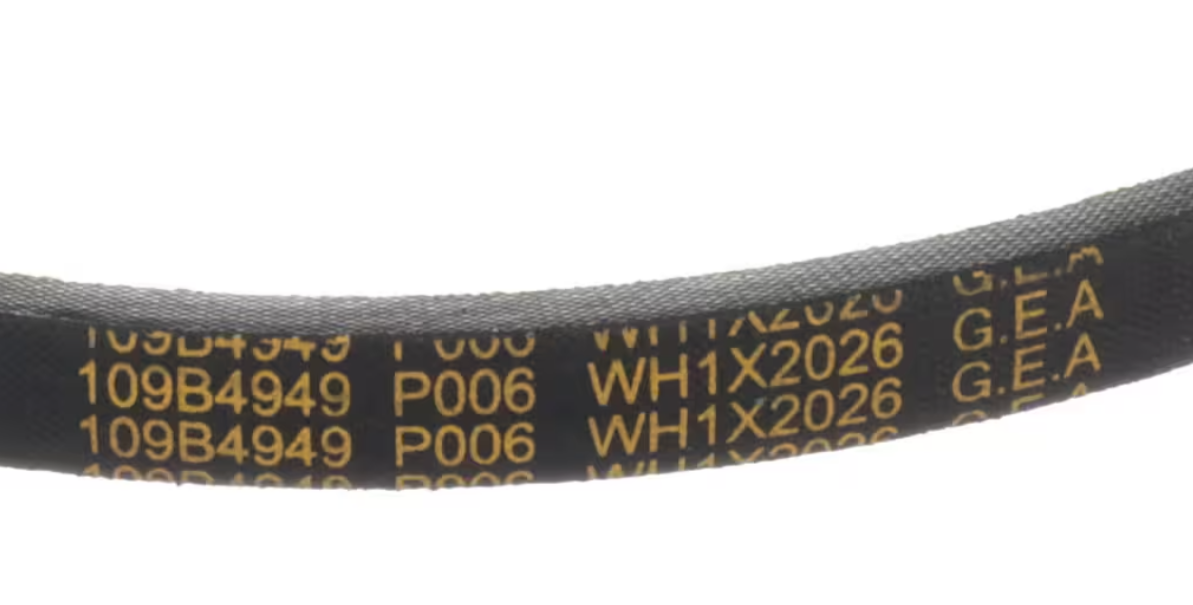
- Unplug the washer and pull it away from the wall.
- Access the belt by removing the back panel or lower access panel (varies by model).
- Inspect the belt for cracks, fraying, glazing (shiny surface), or missing ribs.
- Check pulleys for wobble, a loose bolt, or a worn bearing. A bad pulley can mimic a belt squeal.
- Check tension. A belt that is very loose or deflects easily may slip.
- Clean the pulleys if they are dusty. If you see oil or grease, address the leak first or the new belt will fail early.
- Replace the belt if worn. Belts are usually inexpensive and model-specific.
- Reassemble, then run a small test load and listen during spin-up.
Thrifty tip: Skip belt dressing sprays on a washer. If the belt is slipping, it is typically worn or contaminated, and sprays can attract more dust and make things worse.
Fix: Motor coupling
This applies to specific older top-load direct-drive platforms (commonly older Whirlpool and Kenmore-style designs) that use a motor coupling between the motor and transmission. Many newer “direct drive” washers use different systems and will not have this part.
When a coupling cracks or strips out, you can get loud clunks, grinding, or a washer that drains but will not spin or agitate correctly.
What you will notice
- Clunking during agitation or spin
- Washer may fill and drain, but struggles to agitate or spin
- Rubber or plastic debris under the machine in some cases
Steps (general overview)
- Unplug the washer and turn off water.
- Confirm your design by checking a parts diagram for your model number. If you do not see a coupling listed, do not keep digging for one.
- Access the motor area (often through the front or rear cabinet, depending on model).
- Remove the pump from the motor shaft (usually held with clips). You often do not need to disconnect hoses if you can swing it aside.
- Remove the motor mounting clips or bolts and set the motor down carefully.
- Inspect the coupling for cracked plastic ears, worn splines, or a shredded rubber isolator.
- Replace the coupling with the correct part for your model, then reassemble in reverse order.
This repair is very doable for a patient DIYer, but it can be awkward the first time. Take photos as you go so every clip and connector goes back where it started.
Fix: Drum bearings and spider
If your washer sounds like a jet engine during high-speed spin, drum bearings jump to the top of the list. Bearings support the spinning drum. When they wear out, they get noisy fast, and they can eventually damage the tub and shaft.
On some front-loaders, a failing tub spider (also called the drum cross) can also cause grinding, wobble, or play. It can look like a bearing problem at first.
What you will hear
- Low rumble that gets louder as the drum speeds up
- Grinding on spin
Quick confirmation tests
- Spin by hand: With the washer off, rotate the drum by hand. A rough, sandy feel is a red flag.
- Play test (front-load): Grab the inner drum at the top and try to lift it. Noticeable play can indicate bearing wear, a spider/cross issue, or sometimes a loose pulley bolt at the rear.
What the fix involves
Bearing replacement often means major disassembly, and on many modern washers it can involve splitting the tub. Some models sell a bearing kit. Others effectively require a tub assembly, which can change the math fast.
- If the washer is under warranty, stop troubleshooting and contact the manufacturer.
- If the washer is older, compare parts cost plus your time against replacement.
- If you have leaks from the rear seal area, do not keep running it. Water and bearings do not mix.
My honest take: I love DIY, but bearings and spider jobs are among the few washer repairs I only recommend when you are confident, have space to lay parts out, and your model has good parts availability.
Noise map
- Banging on spin: unbalanced load, leveling, shipping bolts, suspension, counterweight. Start by redistributing the load and leveling the feet.
- Grinding once per rotation: object trapped in tub gap or a drum baffle issue. Start with the door boot, drum inspection, and pump filter cleanout.
- Rattling during drain: debris in drain pump or filter. Clean the filter and inspect hoses to the pump.
- Roaring that builds with speed: bearings or spider/cross. Do the spin-by-hand and play checks.
- Squeal at start of spin: loose belt or pulley. Inspect belt, pulleys, and mounting bolts.
- Clunking with weak agitation (some older top-load direct-drive designs): motor coupling. Confirm via parts diagram, then inspect.
When to call a pro
Get service if any of these are true:
- The machine is leaking and making noise.
- You suspect bearings or a spider and your model requires a full tub replacement or major tear-down.
- You smell burning or see damaged wiring.
- The washer is newer and under warranty. Opening panels can complicate coverage.
If you want to keep it DIY, find your model number (often on the door frame for front-loaders, or under the lid rim for top-loaders) and look up the service manual or parts diagram online. That will tell you which access panels to remove and what parts your exact design uses.
FAQ
Why is my washer loud only during spin?
Spin is the highest-speed part of the cycle, so small problems become obvious. The top causes are unbalanced loads, belt or pulley issues, drain pump issues that show up during drain-to-spin transitions, and worn bearings (or a spider/cross on some front-loaders).
Is it safe to keep using a loud washing machine?
For a one-off unbalanced load, yes, once you rebalance it. For grinding, rumbling, repeated banging, or any leaking, I would stop and troubleshoot. Continued use can damage the tub, suspension, pump, or bearings, turning a manageable repair into a replacement.
What if the noise is a rattling during drain?
That often points to debris in the drain pump or pump filter. Clean the filter (many front-loaders have one) and check for coins, hair pins, and small socks.

About Marcus Vance
Content Creator @ Grit & Home
Marcus Vance is a lifelong DIY enthusiast and self-taught home renovator who has spent the last decade transforming a dilapidated 1970s ranch into his family's dream home. He specializes in budget-friendly carpentry, room-by-room renovations, and demystifying power tools for beginners. Through his writing, Marcus shares practical tutorials and hard-learned lessons to help homeowners tackle their own projects with confidence.