
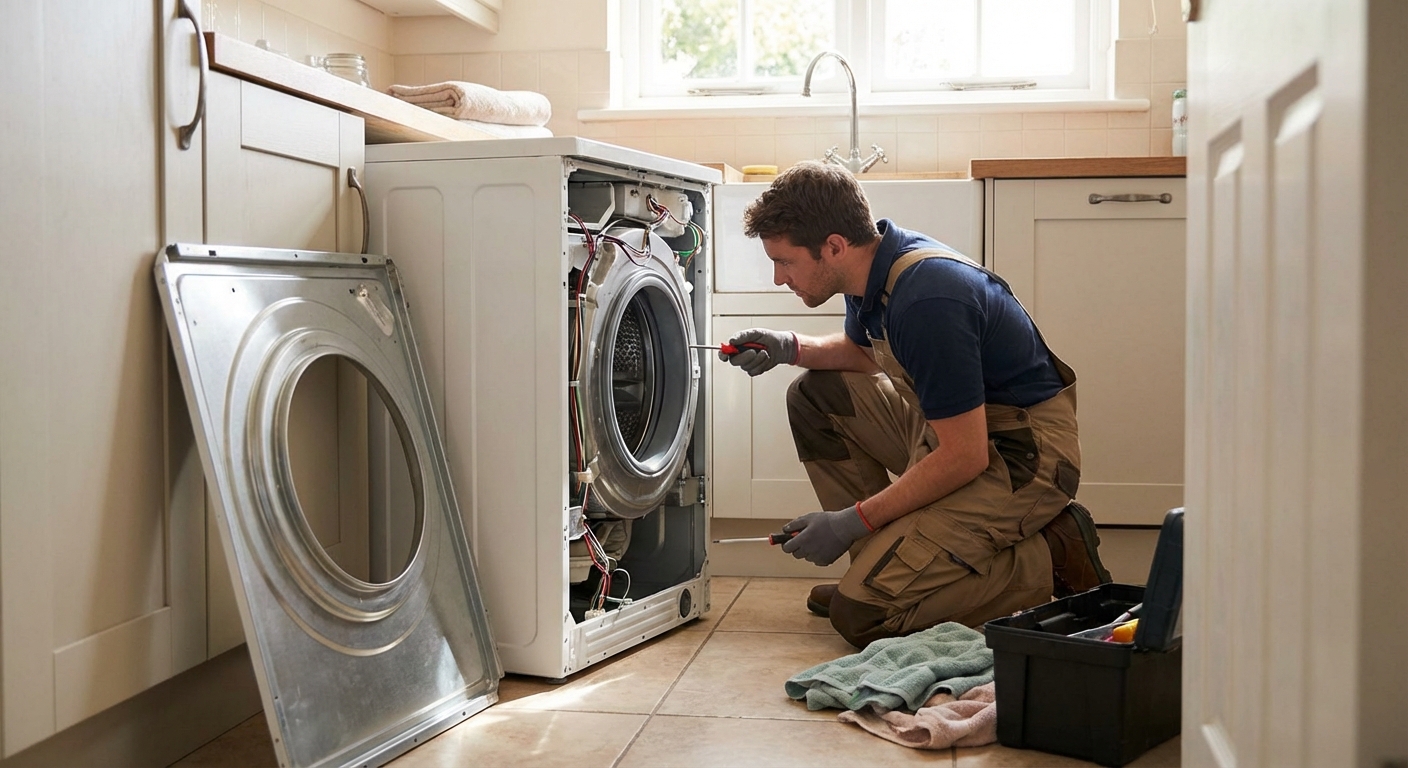
If your washing machine fills with water, swishes around a bit, and then just sits there like it’s on strike, you’re not alone. A washer that won’t spin (and sometimes won’t agitate either) is one of the most common laundry room headaches. The good news: a lot of the causes are simple, and you can check them without a service call.
Below are five fixes I recommend trying in order. They go from easiest and most likely to still quick, but more hands-on. I’ll also point out the “stop and call a pro” moments, because saving money is great, but not if you turn a small problem into a flooded laundry room.
Before you start: 3 safety steps
- Unplug the washer before removing panels or reaching underneath.
- Turn off the water valves if you’ll be moving the machine or disconnecting hoses.
- Have towels and a shallow pan ready. Even when “not draining” isn’t the main issue, a little water almost always shows up.
Tools that cover most checks: Phillips screwdriver, 1/4-inch nut driver, flashlight, adjustable wrench, a small bucket, and a basic multimeter (handy for the lid switch test).
Quick check: spin, agitate, or both?
This helps you aim your effort. Also, a lot of “won’t spin” complaints are actually “won’t drain,” so if there’s standing water left in the tub, jump ahead to Fix #5.
- No spin only: The washer agitates or tumbles during wash, but the tub won’t ramp up to spin speed. Suspects: unbalanced load, lid switch or door lock, slow drain, belt, clutch, or control issues.
- No agitate and no spin: The washer fills, but nothing moves. Suspects: lid switch or door lock (varies by model), motor coupling (common on many top-load direct-drive models), belt, motor, or control.
- Hums but won’t move: Suspects: jammed pump, seized tub, worn coupling, or a belt that slipped off.
Fix #1: Correct an unbalanced load
This one sounds too simple, but it’s one of the most common reasons a washer “won’t spin.” Modern machines will slow down or stop spinning if they detect heavy shaking. Older machines might try to spin, bang around, then quit.
What to look for
- One heavy item (bath mat, blanket, hoodie) stuck on one side of the tub
- Washer walking or thumping during the spin attempt
- Error codes related to “UB,” “UL,” “UE,” or “unbalanced” (varies a lot by brand and model, so check your manual for your exact code)
Steps
- Pause the cycle and open the lid or door.
- Redistribute the load so items are evenly spaced. If you’ve got one heavy item, add a couple towels to balance it.
- Check the washer is level. Adjust the leveling feet so the machine doesn’t rock when you push on opposite corners.
- Run a spin-only cycle.
Marcus tip: I used to overload our machine to “save time.” What I really did was grind the suspension and waste time re-running cycles. Medium loads spin better, dry faster, and are easier on the washer.
Fix #2: Check the lid switch or door lock
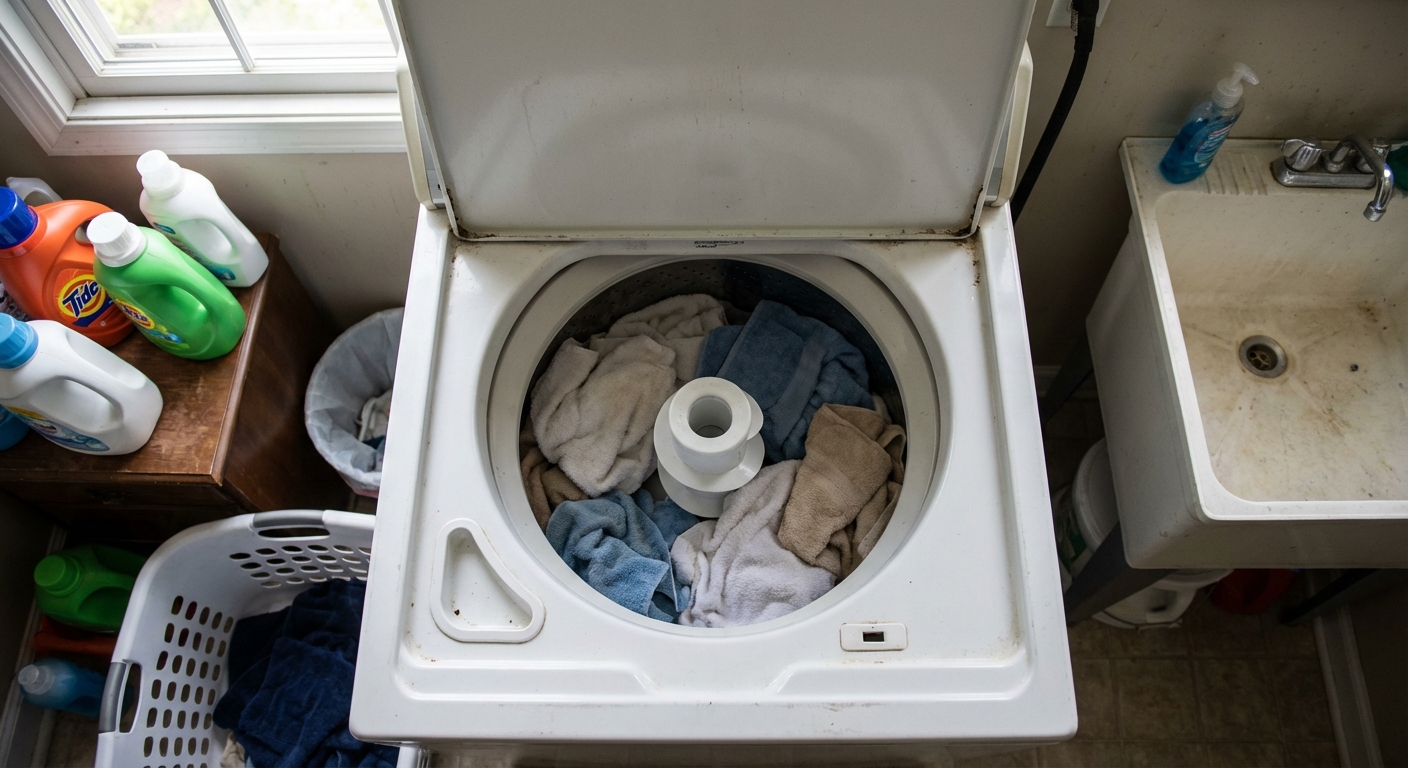
Most washers won’t spin with the lid open. On a top-load washer, a small switch senses that the lid is closed. On many front-load washers, a door lock confirms the door is latched. If that sensor fails, your washer may wash but refuse to spin, or it may do nothing at all. Behavior varies by model.
Symptoms
- It fills, but won’t agitate or spin
- You don’t hear a click when closing the lid (top-load)
- The door lock light flashes or the door won’t lock (front-load)
Top-load lid switch steps
- Unplug the washer.
- Find the lid switch location. It’s usually under the top panel near the lid opening or under the control housing depending on the design.
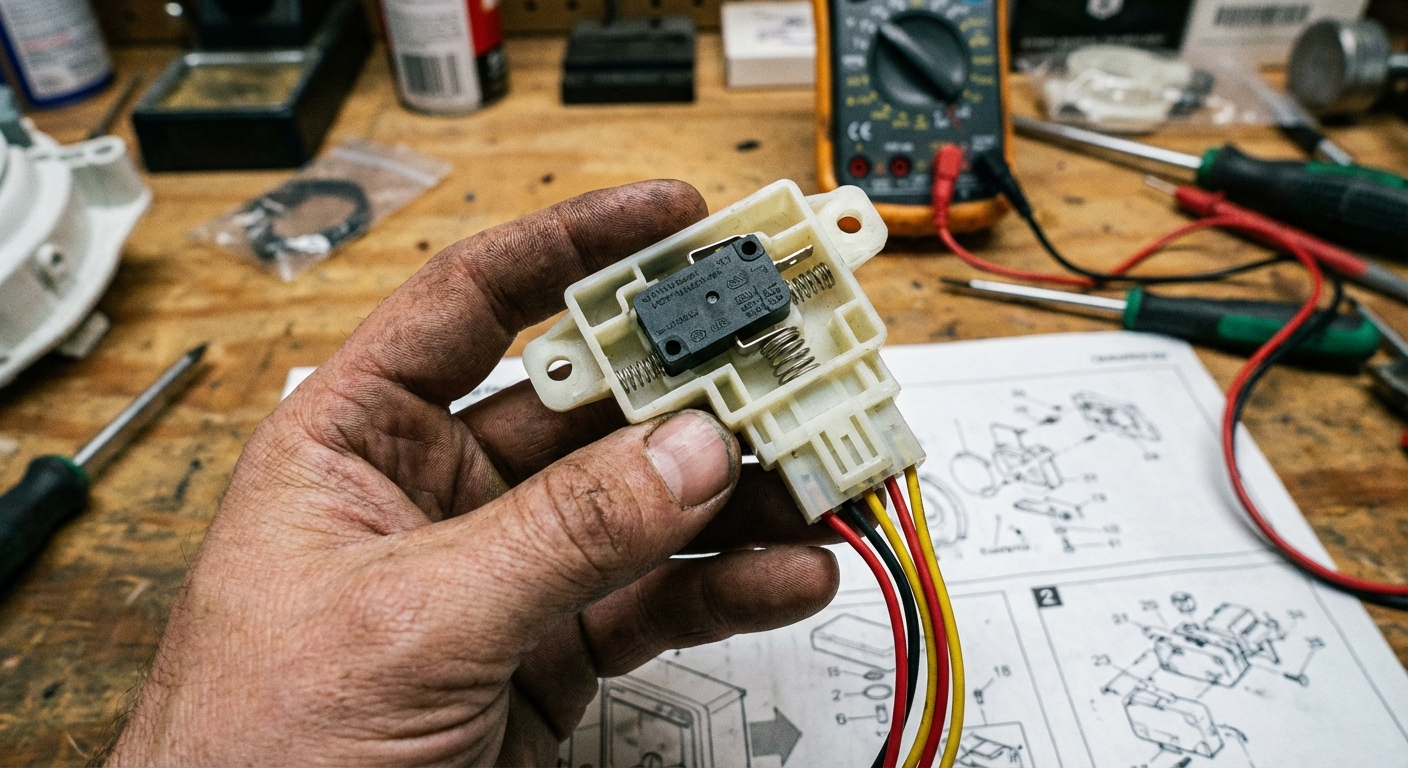
- Inspect the lid strike (the little plastic tab on the lid that presses the switch). If it’s cracked or missing, the switch never gets pressed.
- Remove the switch connector and check for loose wiring or corrosion.
- If you’ve got a multimeter, disconnect the switch from the harness (so you’re not reading through the rest of the circuit), then do a basic continuity test. With the switch pressed (lid closed position), it should show continuity. No continuity usually means the switch is bad.
- Replace the lid switch if it fails the test or looks damaged. Use your model number to order the exact part.
Front-load door lock steps
- Confirm the door closes smoothly and nothing is caught in the gasket.
- Try a power reset: unplug for 2 minutes, then plug back in.
- If the lock keeps clicking, flashing, or failing to latch, you likely need a replacement door lock assembly.
Don’t bypass the lid switch as a permanent “fix.” The spin cycle is no joke, and the switch is a real safety feature.
Fix #3: Inspect the drive belt
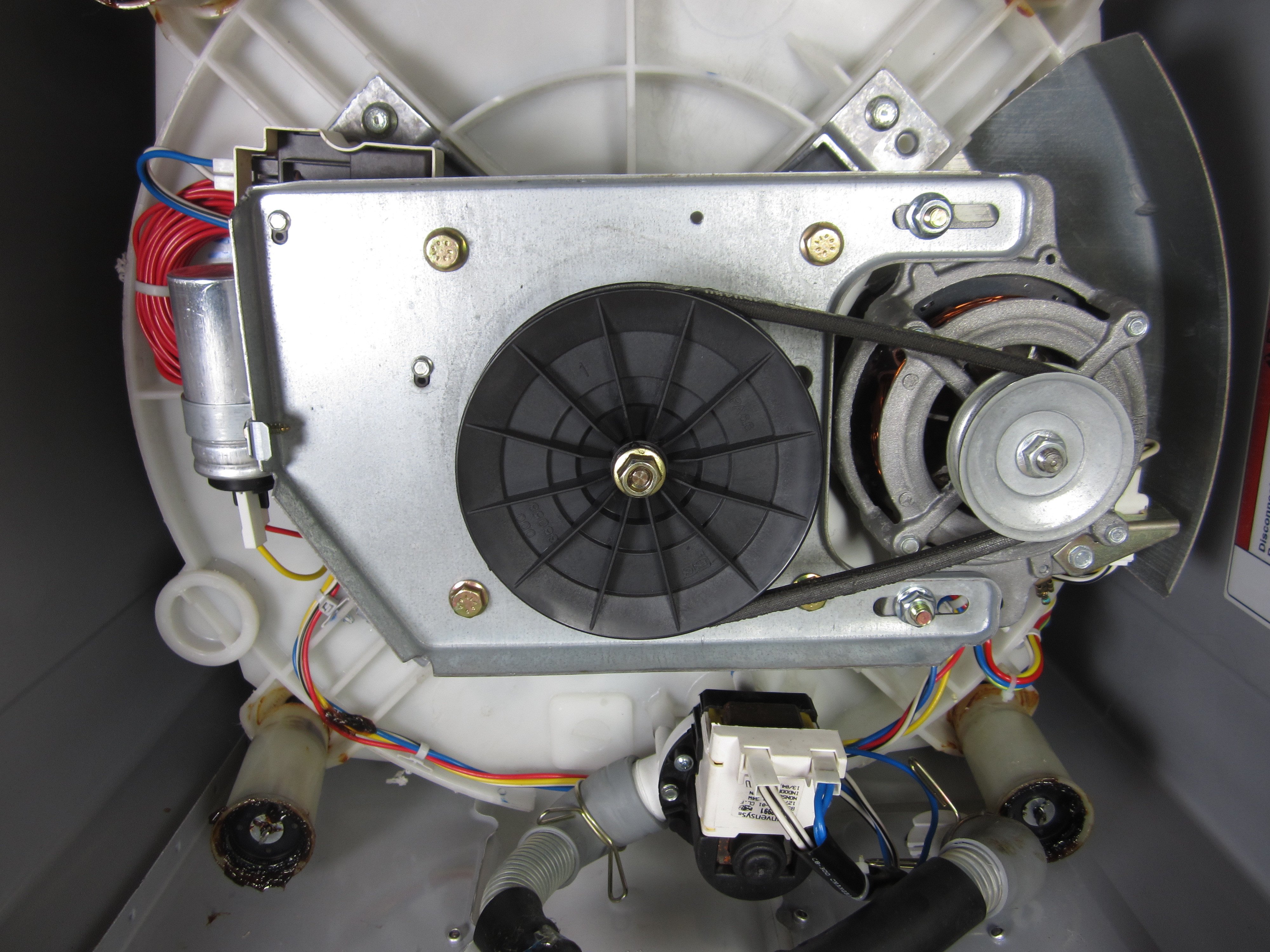
If your washer uses a belt, it drives the tub and sometimes the agitator. If the belt is broken, stretched, glazed, or slipped off the pulley, the motor may run but the tub won’t spin.
Symptoms
- You hear the motor running, but the tub doesn’t move
- Burnt rubber smell
- Black dust under the machine
Steps
- Unplug the washer and pull it forward for access.
- Remove the lower access panel or tip the washer back carefully (follow your manual, protect the floor, and use a helper if it’s heavy or feels unstable).
- Locate the belt on the motor pulley and drive pulley.
- Check for:
- Cracks, fraying, or missing chunks
- Shiny glazed spots (slipping)
- A belt that rides off-center
- If the belt is damaged, replace it. Route it exactly like the old one and ensure proper tension (some are spring-tensioned, some rely on motor position).
- Spin the pulley by hand (with the machine unplugged) to confirm it turns smoothly before reassembling.
Budget note: A belt is often a $15 to $40 part. If yours is shredded, clean out the rubber dust so it doesn’t chew up the new one.
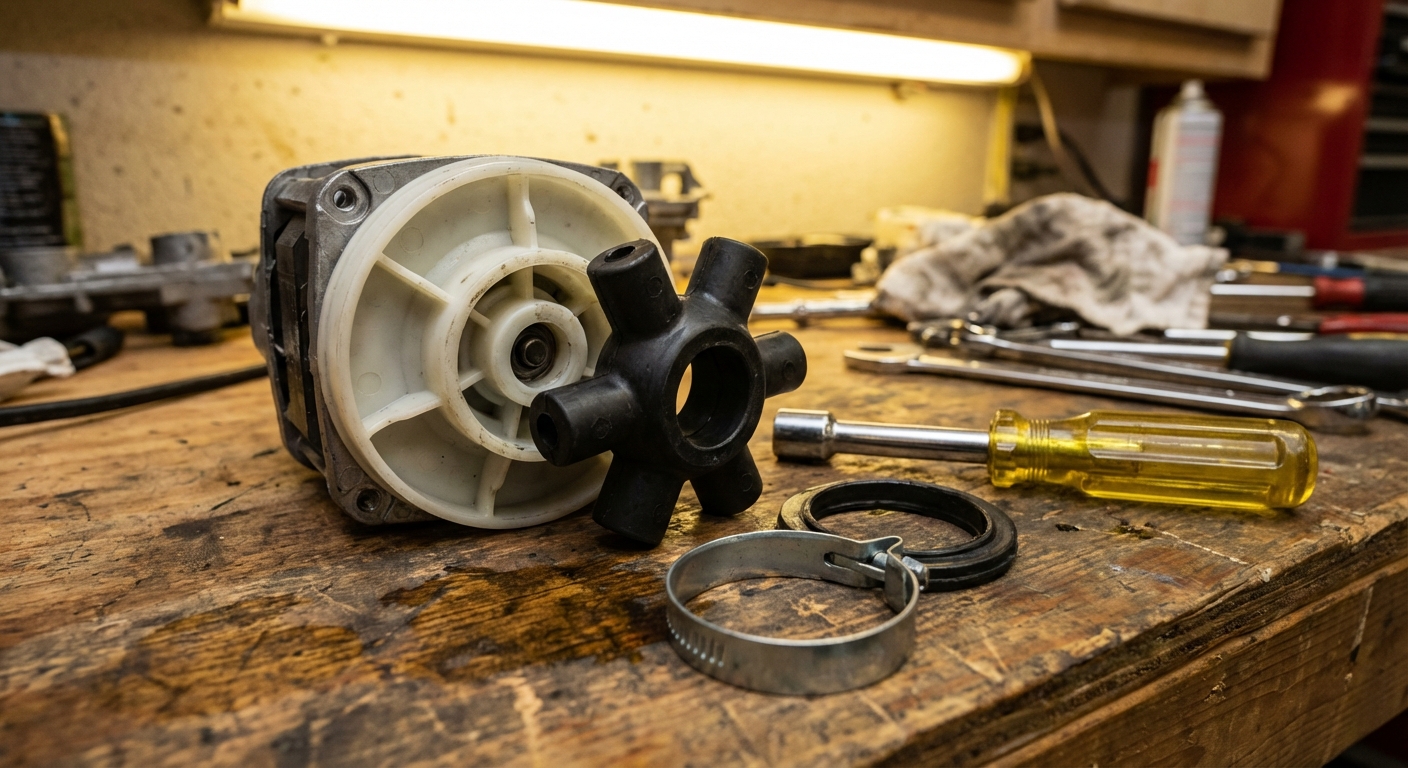
Fix #4: Check the motor coupling
On many older-style top-load washers (especially Whirlpool and Kenmore-style direct-drive designs), the motor doesn’t use a belt. Instead, it uses a small motor coupling that connects the motor to the transmission. It’s designed to fail first if the machine jams. That’s great for protecting expensive parts, but it means you can lose both agitation and spin at the same time.
Symptoms
- No agitation and no spin, but the motor may still hum
- Plastic shavings or broken plastic pieces under the machine
- Tub drains but won’t move
Steps (high level, model-dependent)
- Unplug the washer and turn off water if you need to move it.
- Access the motor area. This often involves removing the cabinet or rear panel depending on the brand and era.
- Remove the pump (usually clips) and set it aside without disconnecting hoses if possible.
- Remove the motor mounting bolts or clips and pull the motor off.
- Inspect the coupling pieces. A failed coupling is typically cracked, stripped, or broken.
- Install the new coupling kit, reassemble, and run a test cycle.
Marcus confession: The first time I replaced a coupling, I rushed reassembly and pinched a wire. Take phone photos as you go. Five extra minutes now beats an hour of “where does this connector go?” later.
Fix #5: Clear a drain pump clog
Even if your washer technically drains, a partially clogged pump or filter can keep it from draining fast enough. Many machines won’t spin until they sense the water level is low. So you get a washer that looks like it “won’t spin,” when it’s really stuck in a drain problem. Some models may still attempt a low-speed spin, but a slow drain often blocks a normal high-speed spin.
Symptoms
- Wet clothes and standing water at the end of the cycle
- Slow draining or gurgling sounds
- Washer stops right before spin or keeps trying to drain
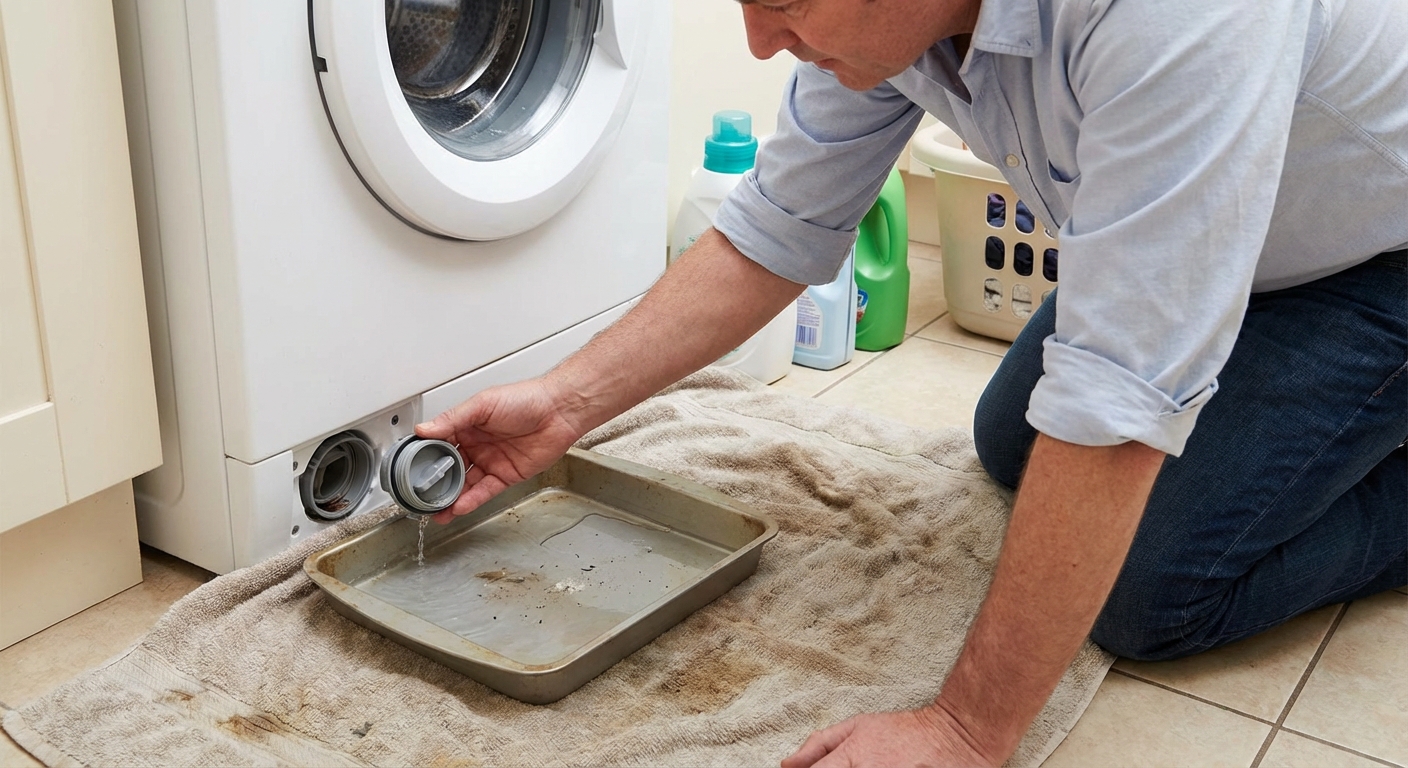
Front-load pump filter steps
- Unplug the washer.
- Locate the small access door at the bottom front.
- Put a shallow pan and towels down.
- Open the drain tube (if present) and drain water slowly into a container.
- Unscrew the filter cap and pull the filter out.
- Remove lint, coins, hair, and anything else. Check the pump impeller behind the filter for free movement.
- Reinstall the filter snugly, close the access door, and run a rinse and spin.
Top-load pump check steps
- Access the pump area (front or rear depending on design).
- Look for socks, coins, or debris in the pump inlet and outlet hoses.
- Check the pump pulley or impeller (design varies) for smooth rotation.
Heads up: If you smell burning and the pump is hot, stop. A jammed pump can overheat. Clearing the clog may fix it, but a damaged pump may need replacement.
Also common: too many suds
This one shows up a lot on front-load washers and modern high-efficiency machines. If there are mountains of suds in the drum, the washer may extend the cycle, keep trying to drain, or delay the spin for balance and water-level reasons.
- If you used non-HE detergent (or too much of any detergent), run a rinse and spin with no soap.
- Next time, cut detergent way back. With HE machines, more soap usually means more problems, not cleaner clothes.
If it still won’t spin
If you worked through the five fixes above and the washer still won’t spin, you’re likely in “part-specific” territory. These are common culprits, but the right diagnosis depends heavily on model and whether it’s a top-load or front-load washer:
- Worn clutch or mode shifter (some top-load designs)
- Shift actuator (common on some Whirlpool VMW-style top-load washers)
- Bad capacitor (motor struggles to start, may hum)
- Control board or timer issue (cycle logic fails, intermittent behavior)
- Worn tub bearings (loud roar during spin attempts, stiff tub)
- Stator or rotor issue (some direct-drive or inverter models)
At this point, grab your model number (usually under the lid, around the door opening, or on the back panel) and look up the service manual or a parts diagram. It turns a guessing game into a checklist.
When to call a pro
- You see smoke, sparking, or melted wiring
- The breaker trips repeatedly when the washer tries to spin
- You suspect a major transmission, bearing, or control board failure and the machine is newer or still under warranty
- You can’t safely move the washer, or the laundry area is tight and you can’t access panels without risking damage
There’s no shame in tapping out. The win is knowing you eliminated the easy stuff first, which often saves real diagnostic time and money.
5-fix checklist
- Balance the load and level the washer
- Test the lid switch or door lock
- Inspect and replace a worn drive belt
- Replace a broken motor coupling (top-load direct-drive)
- Clear the drain pump filter or pump clog
If you want, tell me your washer type (top-load or front-load) and the model number, plus whether it agitates at all. I can help you narrow down which of the five is most likely before you pull a single screw.

About Marcus Vance
Content Creator @ Grit & Home
Marcus Vance is a lifelong DIY enthusiast and self-taught home renovator who has spent the last decade transforming a dilapidated 1970s ranch into his family's dream home. He specializes in budget-friendly carpentry, room-by-room renovations, and demystifying power tools for beginners. Through his writing, Marcus shares practical tutorials and hard-learned lessons to help homeowners tackle their own projects with confidence.