
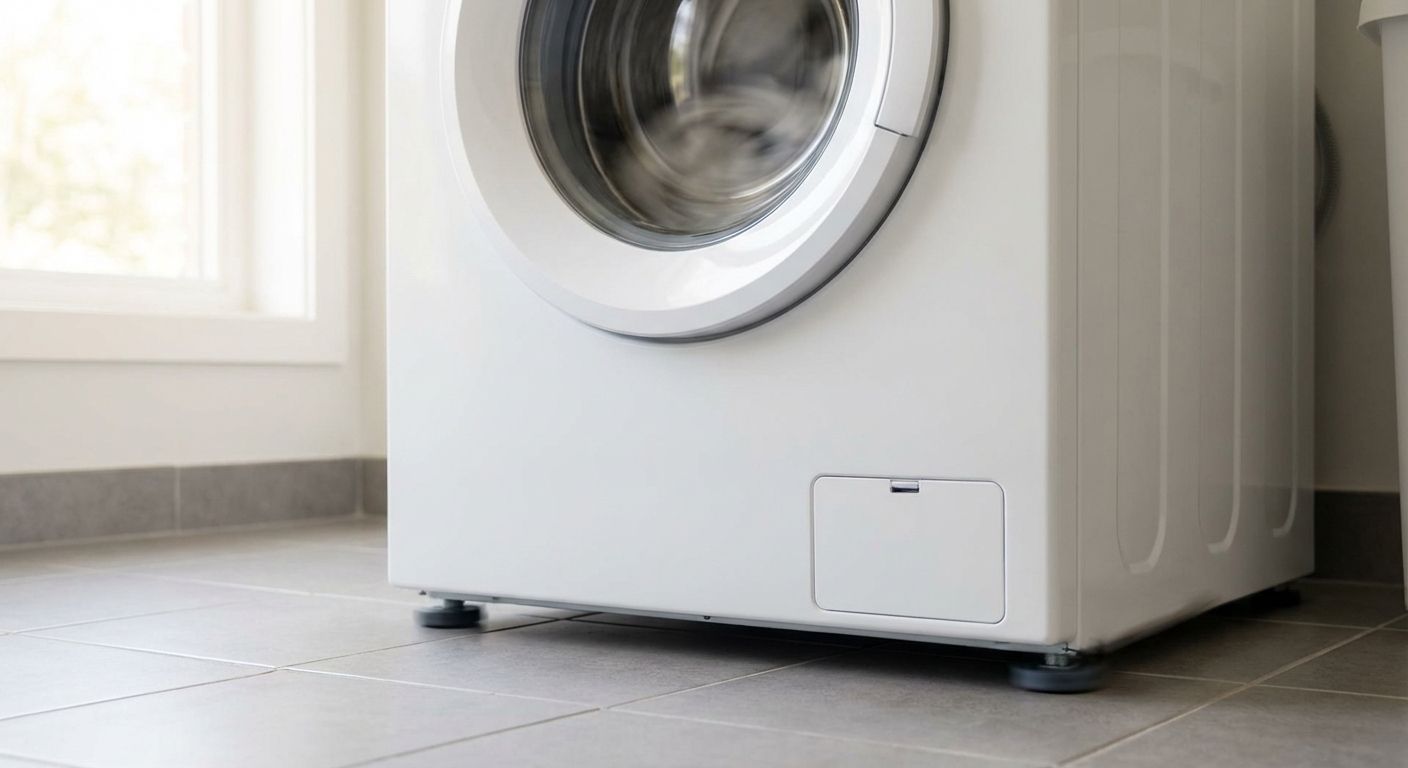
If your washing machine turns into a drum solo during the spin cycle, you are not alone. A little vibration is normal, but violent shaking, loud thumping, or a washer that slowly "walks" forward is your machine telling you something is off.
The good news: most causes are fixable with basic tools and a bit of patience. I have chased this exact problem in my own laundry room, and the fix was not expensive. It just took a calm, step-by-step approach.
Quick expectations: load and leveling fixes take minutes and cost $0. Suspension parts are a moderate DIY repair. Bearing or tub-related issues can be a bigger job and sometimes the point where repair vs replacement becomes the real decision.
Safety first (quick checklist)
- Stop the cycle if the washer is banging hard. Let the drum come to a complete stop.
- Unplug the washer before you put hands near moving parts or remove panels.
- Turn off water supply valves if you plan to pull the washer out.
- Get help moving it if you have a front loader. They are heavier than they look.
Tools you will want
- Bubble level
- Adjustable wrench or the correct open-end wrench for the leveling feet
- Socket set (for shipping bolts and some panels)
- Pliers (helpful for clamps and clips)
- Anti-vibration pads (optional)
- 3/4 inch plywood (optional, for bouncy floors)
- Cardboard or a furniture slider to protect the floor when pulling the washer forward
Fast diagnosis: what does it feel and sound like?
Before you start replacing parts, use the symptom to narrow the cause.
- Thump-thump-thump that comes and goes: usually an unbalanced load.
- Constant vibration that gets worse in spin: often an unlevel machine, floor flex, or the washer sitting partly on an uneven surface.
- Washer "walking" forward: typically leveling/feet or a slippery floor, sometimes a worn suspension.
- Metallic roaring or growling in spin: can point to drum bearings or drive components.
- Brand new washer shaking like crazy: check for shipping bolts or transit hardware left installed (very common).
- Sharp banging like a hammer inside the cabinet: sometimes a loose counterweight (common on front-loaders).

Fix #1: Rebalance the load
This is the most common cause, and it is the cheapest fix because it costs exactly $0.
Why it happens
When heavy items clump to one side, the drum spins like a lopsided wheel. The washer tries to correct it, but if it cannot, you get the classic banging and shaking.
Signs it is the load
- The shaking is intermittent, often worst right as the washer ramps up to high spin.
- You are washing one bulky item (blanket, comforter, bath mat) or a few heavy items (towels, jeans).
- You open the door and see laundry packed on one side.
How to fix it
- Pause the cycle and wait for the drum to stop.
- Redistribute the load by hand. Spread items evenly around the drum.
- If you have one bulky item, add a couple of similar-weight items (often towels) to help balance the mass, as long as you do not exceed your washer's capacity.
- Run a Spin or Drain and Spin cycle and listen.
Top-load note
If you have a top-loader (agitator or impeller), avoid tossing everything on one side. Try to place items evenly around the basket so the tub stays centered during spin.
Marcus tip
Overloading is an easy mistake. I used to pack the drum to "save a load," and the washer punished me every time. A good rule: leave about a hand's width of space at the top of the drum so clothes can tumble instead of forming a brick.
Fix #2: Level the washer and lock the feet
If the washer is even slightly out of level, it can rock during spin. That rocking turns into vibration, noise, and sometimes the machine creeping forward.
Why it happens
Most washers sit on four adjustable feet. If one foot is not firmly on the floor, the washer teeters like a wobbly table.
Signs it is not stable
- With the washer empty and off, push gently on the front corners. If it rocks, it is not stable.
- Vibration is consistent even with normal loads.
- The washer has moved from its original spot.
How to fix it (step by step)
- Pull the washer forward a few inches so you can reach the feet. Protect the floor with cardboard or a slider, and do not yank hard on the hoses or power cord.
- Confirm the washer is sitting fully on a solid, flat surface. Make sure it is not partially perched on a tile edge, floor drain lip, or an uneven transition strip.
- Place a bubble level on top of the washer, left-to-right and front-to-back.
- Adjust the feet:
- Turning a foot clockwise typically lowers that corner, and counterclockwise typically raises it, but designs vary. The safest move is to watch the bubble and confirm the cabinet height changes as you turn.
- Get all four feet firmly planted, then fine-tune until level.
- Tighten the locknuts on the feet (if your washer has them) so they do not back off over time.
- Run a spin cycle and re-check for movement.
If your floor is the problem
Old laundry rooms sometimes have springy subfloors. If the washer is level but the whole area flexes, try:
- A vibration pad designed for washers
- A 3/4 inch plywood platform screwed into joists (best long-term fix)
Fix #3: Remove shipping bolts
If your washer is new, recently moved, or "installed" by someone in a hurry, check this before anything else.
Why it happens
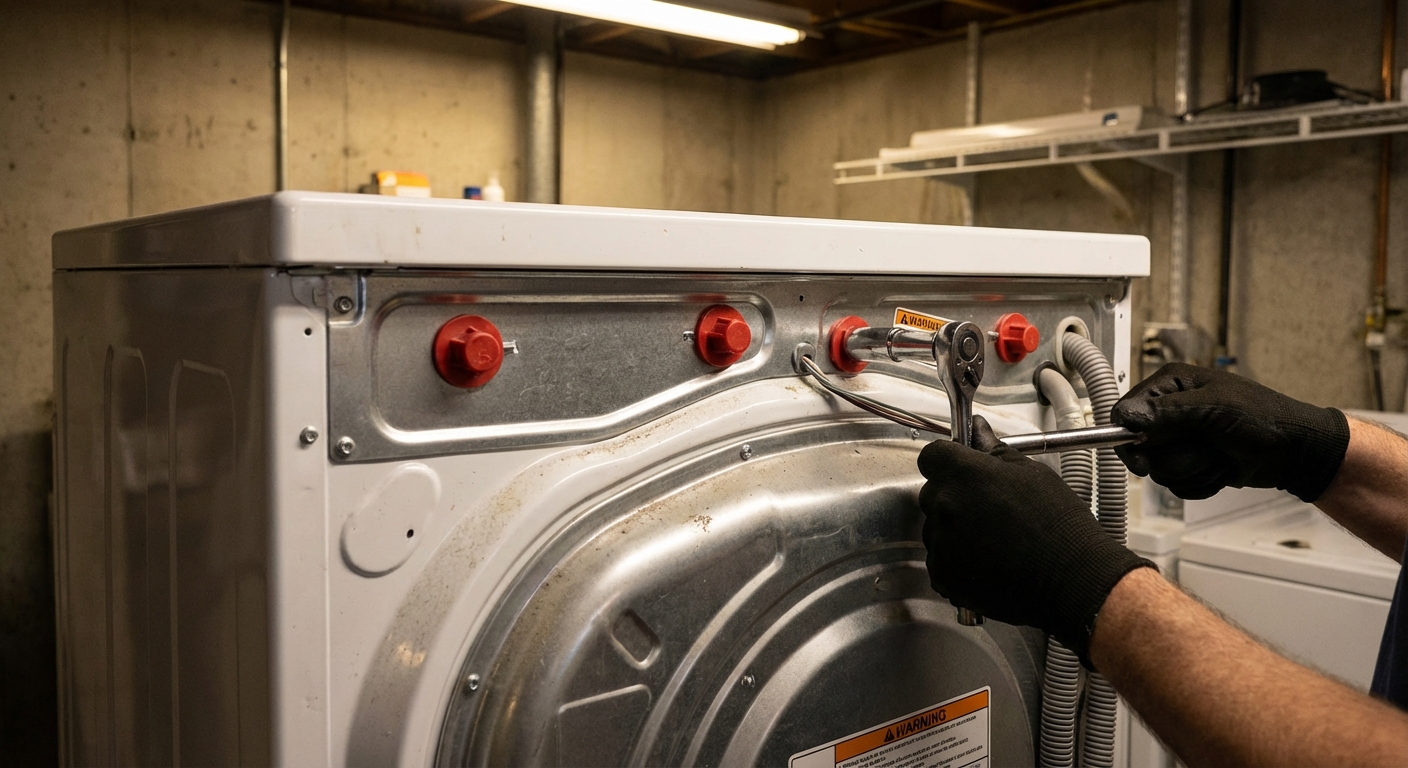
Many front-load washers ship with shipping bolts (transit bolts) or transit braces that lock the drum in place so it does not bounce during transport. If they are left installed, the washer can shake violently and potentially damage itself.
Signs it is transit hardware
- The washer is brand new or was moved from another house.
- Shaking is severe from the first load.
- You hear harsh banging even with small loads.
How to fix it
- Unplug the washer.
- Look at the back panel for large bolts with spacers or brackets. There are typically 3 to 6, but it varies by model. Your manual will show the exact locations.
- Use the correct socket or wrench to remove them.
- Install the provided plastic hole caps (often included in the bag of paperwork).
- Keep the bolts in a labeled bag. If you move again, you will want them.
Fix #4: Check suspension parts
If your washer is level and loads are balanced, but it still shakes hard, the suspension system may be tired. This is especially common in machines that have done years of heavy towel loads.
What wears out
- Front-load machines often use shock absorbers (dampers) to control drum movement.
- Top-load machines often use suspension rods (spring and rod assemblies) to keep the tub centered.
When these wear out, the drum can bounce and slam the cabinet during spin.
How to check
- With the washer off, press down on the drum or tub and release. It should rebound and settle quickly. If it bounces repeatedly, suspect suspension.
- You hear banging even with balanced loads.
- On some models, you may see the tub sitting slightly off-center.
How to fix it
This is a moderate DIY job. If you are comfortable removing panels and taking photos as you go, you can usually handle it.
- Find your model number (often inside the door frame or under the lid) and order the correct suspension parts.
- Unplug the washer and shut off water.
- Access the components:
- Front-load: remove the front or rear panel depending on model.
- Top-load: remove the top panel or open the cabinet per service instructions.
- Replace in sets when recommended:
- Replace both shocks on a front loader (or all that your model uses).
- Replace all suspension rods on a top loader for even support.
- Reassemble, level the washer again, and test with a medium load.
Marcus tip
Take a quick photo before removing any springs, clips, or rod positions. Suspension parts love to look obvious until you are holding one in your hand wondering which way the hook faced.
Fix #5: Check drum bearings
If the washer shakes and makes a deep roaring noise during spin, you may be dealing with worn drum bearings. This is one of the more expensive repairs, but diagnosing it correctly can save you from throwing parts at the problem.
Why it happens
Bearings allow the drum to spin smoothly. Over time, water intrusion, heavy use, or a failing seal can cause bearings to wear. When they do, the drum can develop play and wobble at speed.
How to check
- Sound: a rumbling, grinding, or roaring that gets louder as the spin speed increases.
- Spin by hand: rotate the drum. If it feels rough or sounds gritty, that is a clue.
- Play test (front-load): with the machine off, grab the inner drum at the top and gently lift and push. You are looking for noticeable looseness, knocking, or clunking. A tiny amount of movement can be normal on some designs, so use this as a clue, not a final verdict.
What to do next
- Check your warranty status first. Bearing jobs can be covered on some brands for longer than you would expect.
- Look up your model and see if it uses a replaceable bearing or a rear tub assembly. Some designs require replacing a large, expensive assembly.
- If the repair cost is high, compare it to the age of the washer. If your unit is older and has other issues, replacement may be the smarter money move.
If you are hearing that classic bearing roar, it is worth getting a professional diagnosis unless you are already comfortable with major tear-down repairs.
Other culprits to check
- Loose counterweights (front-load): many front-loaders have concrete counterweights bolted to the tub. If a bolt loosens or a weight cracks, you can get violent banging. This is a good "stop and inspect" moment.
- Drive parts and pulleys: a loose pulley, worn belt, or failing motor coupling can create thumping or roaring that people confuse with bearings.
- Washer feet pads missing: some feet have rubber pads. If one is missing, vibration increases.
- Drain hose or inlet hoses tapping the wall: vibration can make hoses slap and sound like internal banging.
- Out-of-balance error codes: if your display shows UE, UB, or similar, your manual may have brand-specific balancing steps.
When to call for service
DIY is about confidence, not stubbornness. Call a pro if:
- The washer is still under warranty and opening panels could void coverage.
- You see signs of leaking around the tub or hear grinding that suggests bearing damage.
- The drum appears to be contacting the cabinet or you smell electrical burning.
- You suspect a loose counterweight and you cannot safely access or verify it.
Quick recap
- Unbalanced load: redistribute items and avoid overstuffing.
- Unlevel washer: adjust feet, tighten locknuts, stabilize the floor if needed.
- Shipping bolts: remove them after installation or moving.
- Worn shocks or suspension rods: replace the set to control tub movement.
- Bad bearings: diagnose by roaring or grinding noise plus noticeable looseness, then decide repair vs replacement.
Still stuck? Leave a comment with your washer type (top-load or front-load), about how old it is, and what the noise sounds like (thump, rattle, roar). I will help you narrow it down.

About Marcus Vance
Content Creator @ Grit & Home
Marcus Vance is a lifelong DIY enthusiast and self-taught home renovator who has spent the last decade transforming a dilapidated 1970s ranch into his family's dream home. He specializes in budget-friendly carpentry, room-by-room renovations, and demystifying power tools for beginners. Through his writing, Marcus shares practical tutorials and hard-learned lessons to help homeowners tackle their own projects with confidence.