
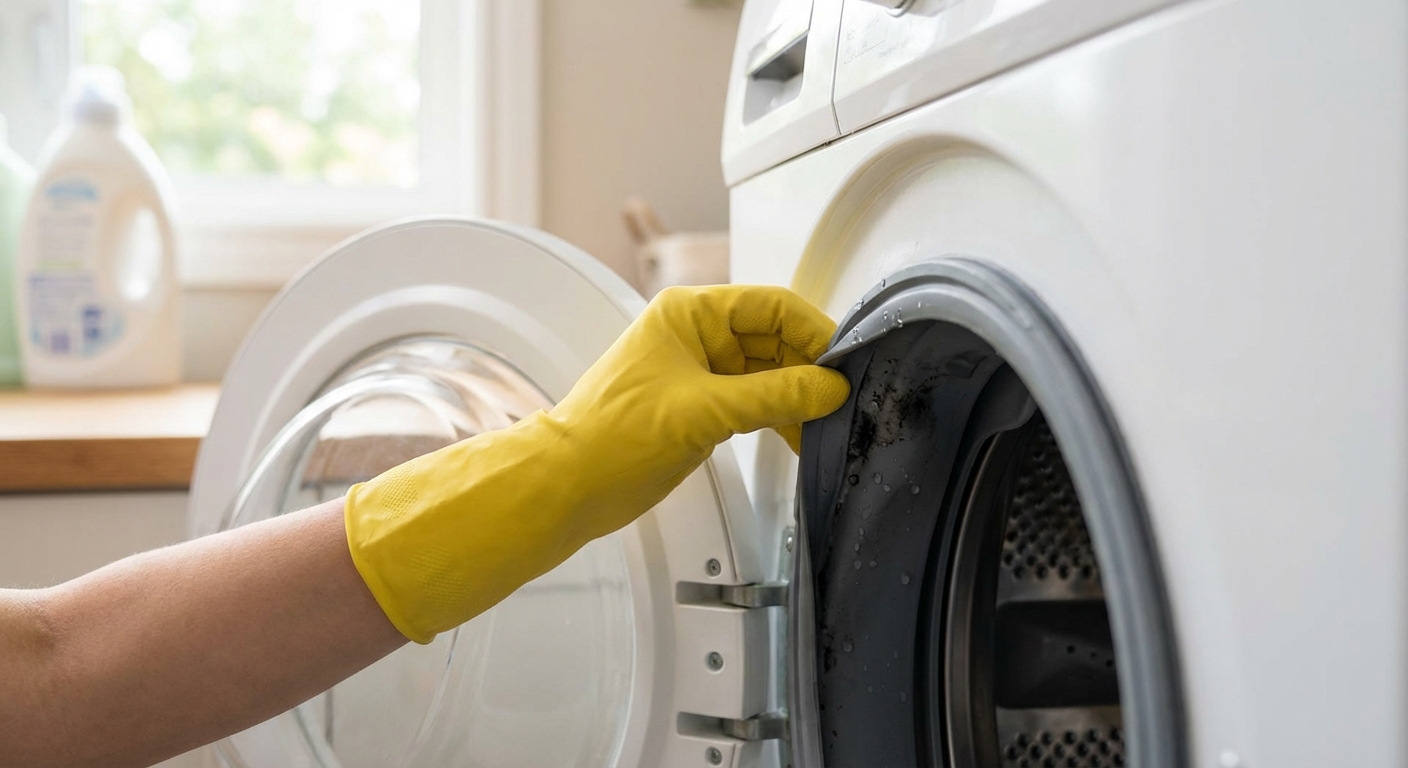
That funky washer smell is usually not “mystery odor” at all. It is most often trapped moisture, leftover detergent, and gunk hiding in places you do not see. The good news is you can fix it in an hour or two with basic supplies, and you do not need to be a repair tech.
I have been there. Early on, I thought more soap meant cleaner clothes. All I did was feed mildew and turn my washer into a swampy science project. Let’s get your machine back to neutral-smelling.
Quick check: what does the smell tell you?
- Musty or mildew smell: Moisture trapped in the drum, gasket, detergent drawer, or drain pump filter (also called a filter trap). Most common in front-loaders.
- Sour, dirty-sock smell: Biofilm buildup from too much detergent, too many cold washes, or not enough airflow.
- Rotten egg or sulfur smell: Often tied to hydrogen sulfide in well water, certain water-heater reactions, or sewer and drain odors (especially if a trap is dry). It can also show up when a washer has heavy buildup and poor drainage.
If the smell is strongest right after a wash, suspect the washer itself. If it is strongest near a sink, standpipe, or floor drain, you may be smelling a drain or vent issue that the washer is stirring up.
Before you start: supplies and safety
What you need
- White vinegar
- Baking soda
- Microfiber rags or old towels
- An old toothbrush or small nylon brush
- Dish soap
- Rubber gloves
- A shallow pan or baking tray (for front-load drain pump filter draining)
Rules to follow
- Do not mix bleach with vinegar or any other cleaner. Dangerous fumes can result.
- Do not combine vinegar and baking soda in the same cycle. They neutralize each other. Run them as separate steps.
- Run cleaning cycles empty. No clothes during deodorizing cycles.
- Ventilation helps. Open a window or run the fan if you can.
Step 1: Clean the gasket and door (front-load)
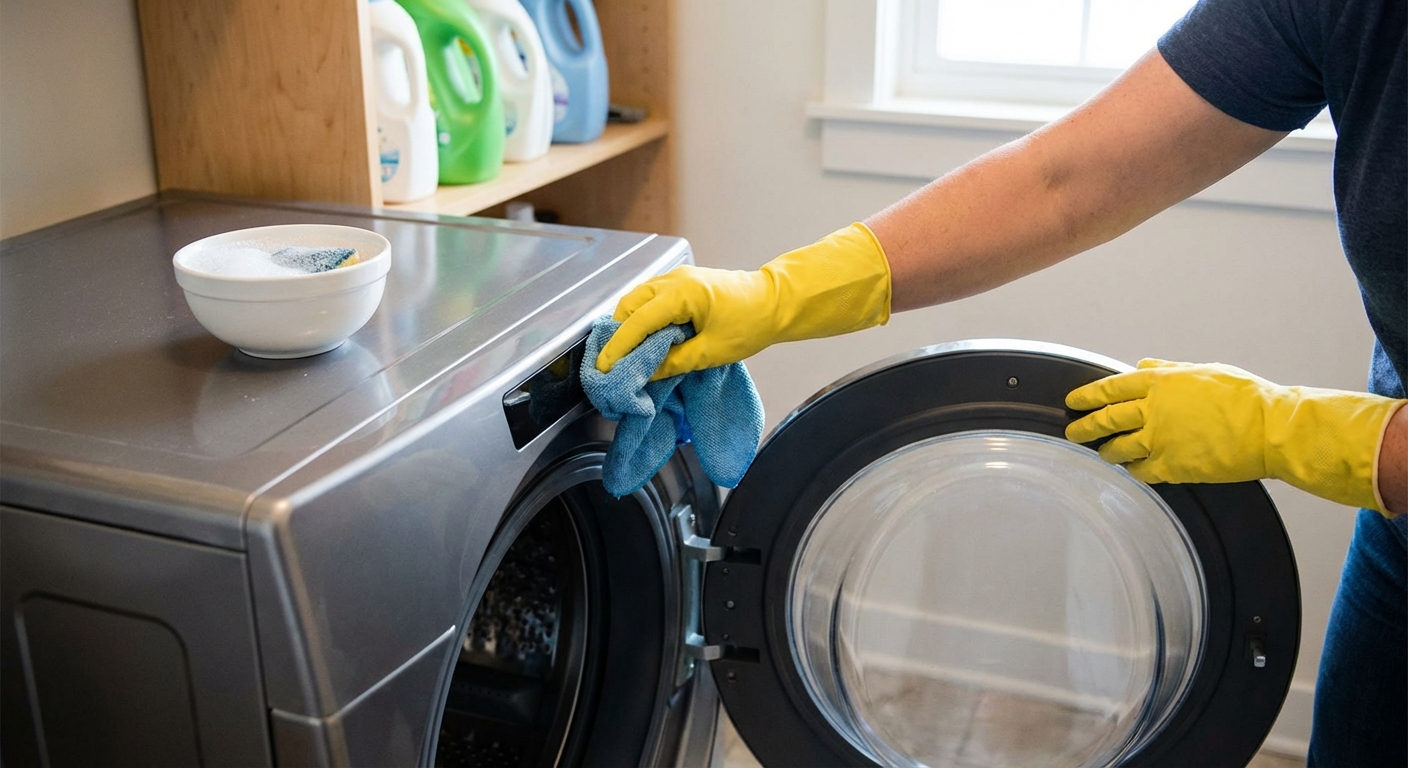
The rubber door gasket is ground zero for mildew smells. Water sits in the folds, lint sticks, and detergent residue turns into slime.
How to do it
- Unplug the washer or turn it off at the breaker if you will be reaching around the door latch area.
- Pull back the gasket folds and wipe every crevice with hot, soapy water.
- Use a toothbrush to scrub stubborn spots. Wipe again with a clean damp rag.
- Dry the gasket with a towel, especially the bottom fold.
Thrifty tip: If you see black mildew staining that will not wipe off, you can use a dedicated washing machine cleaner tablet later. Stains do not always mean active mildew, but odor usually means active buildup somewhere else too.
Step 2: Clean the detergent drawer
Even if your drum looks clean, the detergent drawer can be a hidden stink factory. Fabric softener residue is especially guilty.
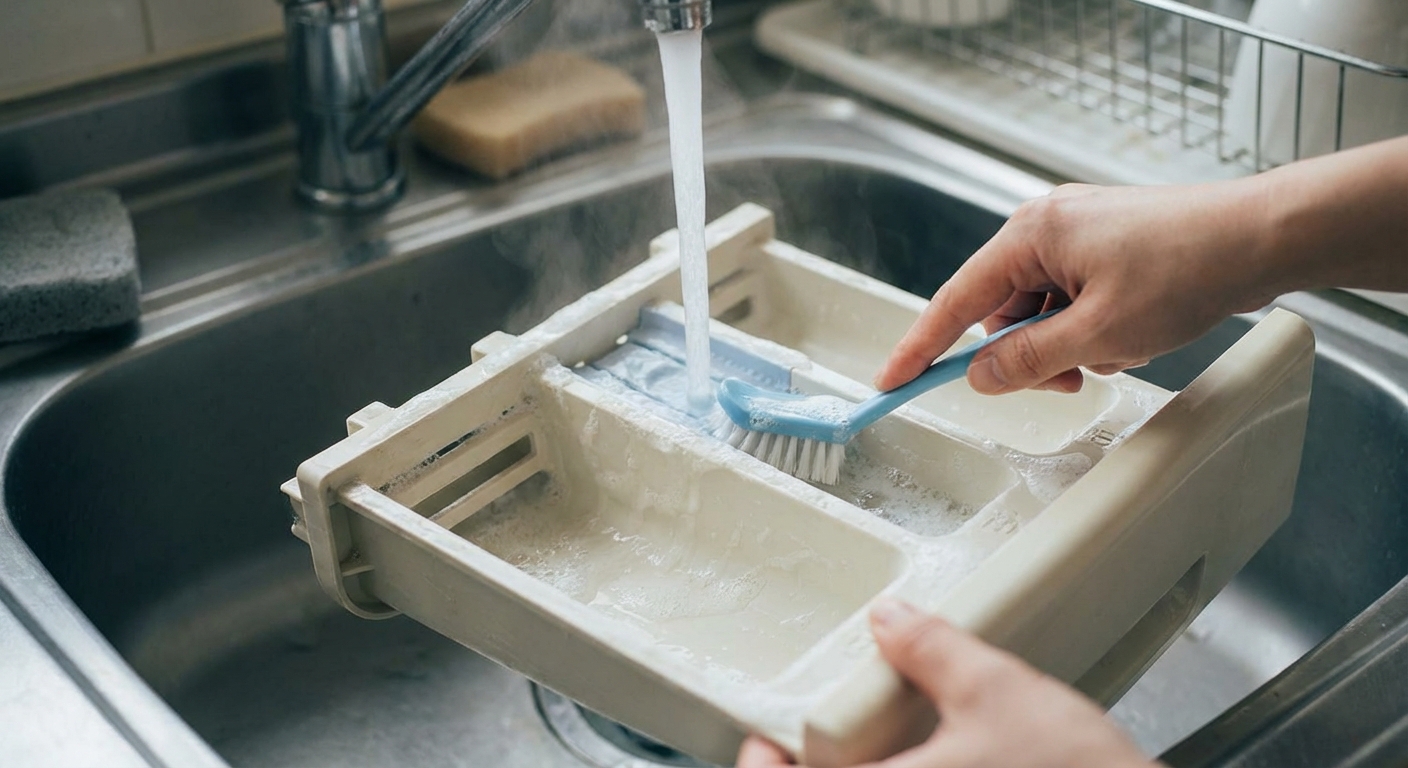
- Remove the drawer (most have a small tab you press to release).
- Soak in hot water with a few drops of dish soap for 10 minutes.
- Scrub all compartments and rinse well.
- Wipe the drawer cavity inside the washer with a damp rag.
If your model allows it, leave the drawer slightly open between laundry days so it can dry out.
Step 3: Run a deep-clean cycle
This is the deodorizing workhorse. Vinegar can help cut mineral buildup and soap residue. Baking soda can help neutralize odors. Results vary by machine and buildup level, so if your manual recommends a cleaner tablet instead, follow that.
Front-load washers
- Select the washer’s Clean Washer cycle if it has one. If not, choose the hottest, longest cycle available.
- Add about 2 cups of white vinegar to the detergent dispenser, or into the drum if your manufacturer recommends it.
- Run the cycle.
- When it finishes, sprinkle about 1/2 cup baking soda directly into the drum and run a second hot cycle (shorter is fine).
Top-load washers
- Set water to hot and choose the longest cycle, or use the tub-clean cycle if your washer has one.
- Fill, then add about 2 cups of white vinegar directly into the water.
- Let it agitate for a minute, then pause and soak for 30 to 60 minutes.
- Resume and finish the cycle.
- Run a second hot cycle with about 1/2 cup baking soda added to the water.
Note: Some manufacturers discourage vinegar use on certain rubber parts over the long haul. Using it occasionally for odor issues is common, but if your manual warns against it, use a washer cleaner tablet instead and follow the package directions.
Step 4: Clean the drain pump filter
If your washer smells like a pond, the drain pump filter (also called a filter trap) is a prime suspect. It catches lint, coins, hairpins, and sometimes… things you wish you never found.
Front-load: how to do it
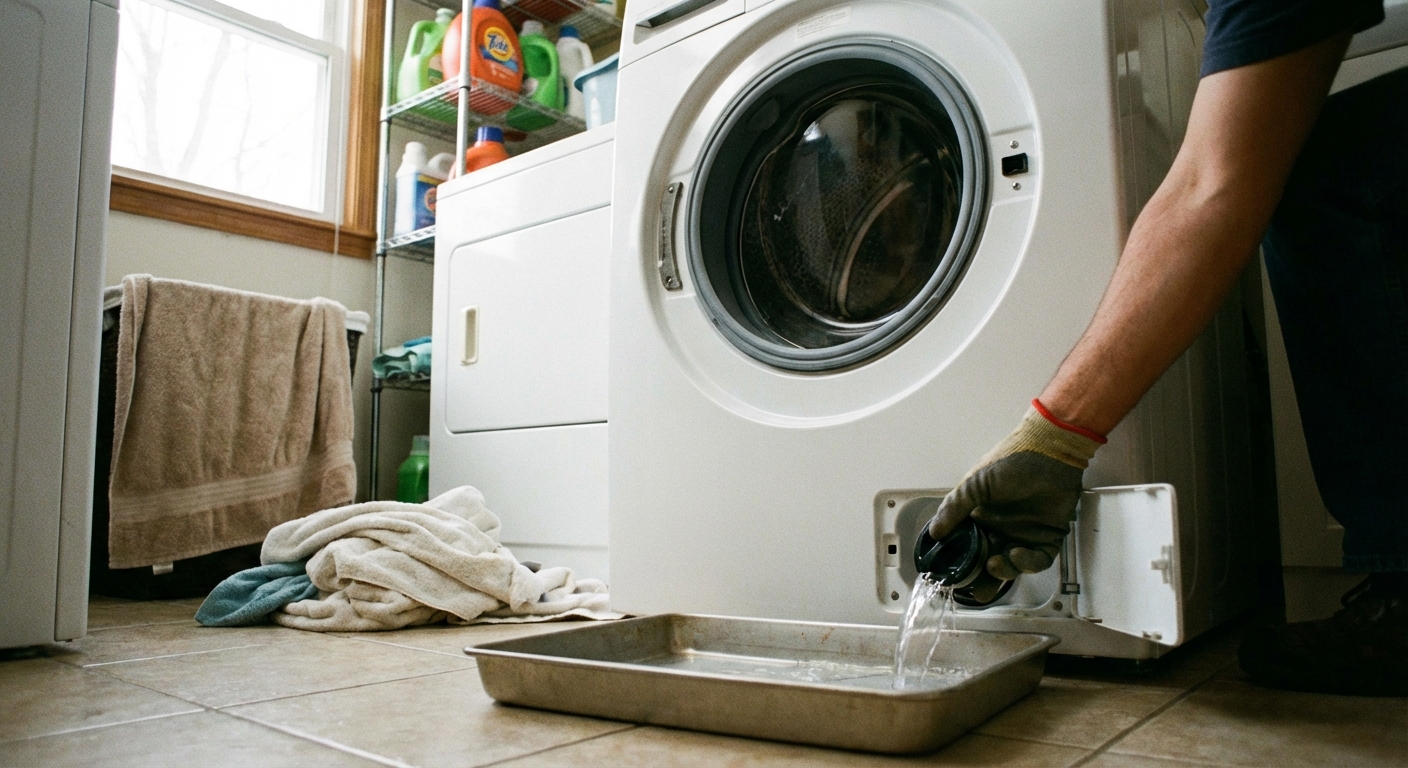
- Look for a small access door at the bottom front of the washer.
- Place towels and a shallow pan underneath.
- If your model has a small drain hose, pull it out and drain into the pan first.
- Unscrew the filter slowly. Let water drain.
- Remove debris, rinse the filter, and wipe the filter housing inside the washer.
- Reinstall the filter snugly and close the access panel.
Top-load: what to check
Many top-load machines do not have an easy front filter. Odor sources are usually the tub ring area, residue under the rim, or around and under the agitator (if yours has one). If your top-loader has a removable agitator or filter screen, check your manual and clean those parts with hot soapy water.
Step 5: Wipe the drum and splash zones
After the deep-clean cycles, take 3 minutes to wipe down what the cycles do not reach well.
- Wipe the inside of the drum with a clean rag.
- Wipe the glass door, door hinge area, and around the latch.
- For top-loaders, wipe under the lid and around the rim where moisture hangs out.
Bonus: check the drain hose and standpipe
This is the often-missed piece. If you have recurring funk, take a look where the drain hose empties into the standpipe. That area can collect slime and gunk too.
- Wipe the outside end of the drain hose and the standpipe opening if you can reach it safely.
- If you suspect drain odor, run water in a nearby sink for a minute to make sure the P-trap is filled.
- Avoid pouring boiling water into plastic plumbing. Use hot tap water instead.
If it smells like sulfur
Sulfur smells can be washer buildup, a drain smell, or your water supply (often hydrogen sulfide in well water). Here is how I tackle it without guessing too much.
Try this in order
- Run Step 3 (vinegar cycle, then baking soda cycle). Do not combine them in the same cycle.
- Clean the drain pump filter and remove trapped debris.
- Check for drain smells around the standpipe and any nearby floor drain. A dry trap can mimic a washer problem.
If your whole home’s hot water smells like sulfur, the source may be the water heater (including anode rod issues) or well water. In that case, the washer is only the messenger.
Prevention: keep it from coming back
Once you get the stink out, prevention is mostly about drying and detergent discipline. This is the part that saves you from repeating the whole project next month.
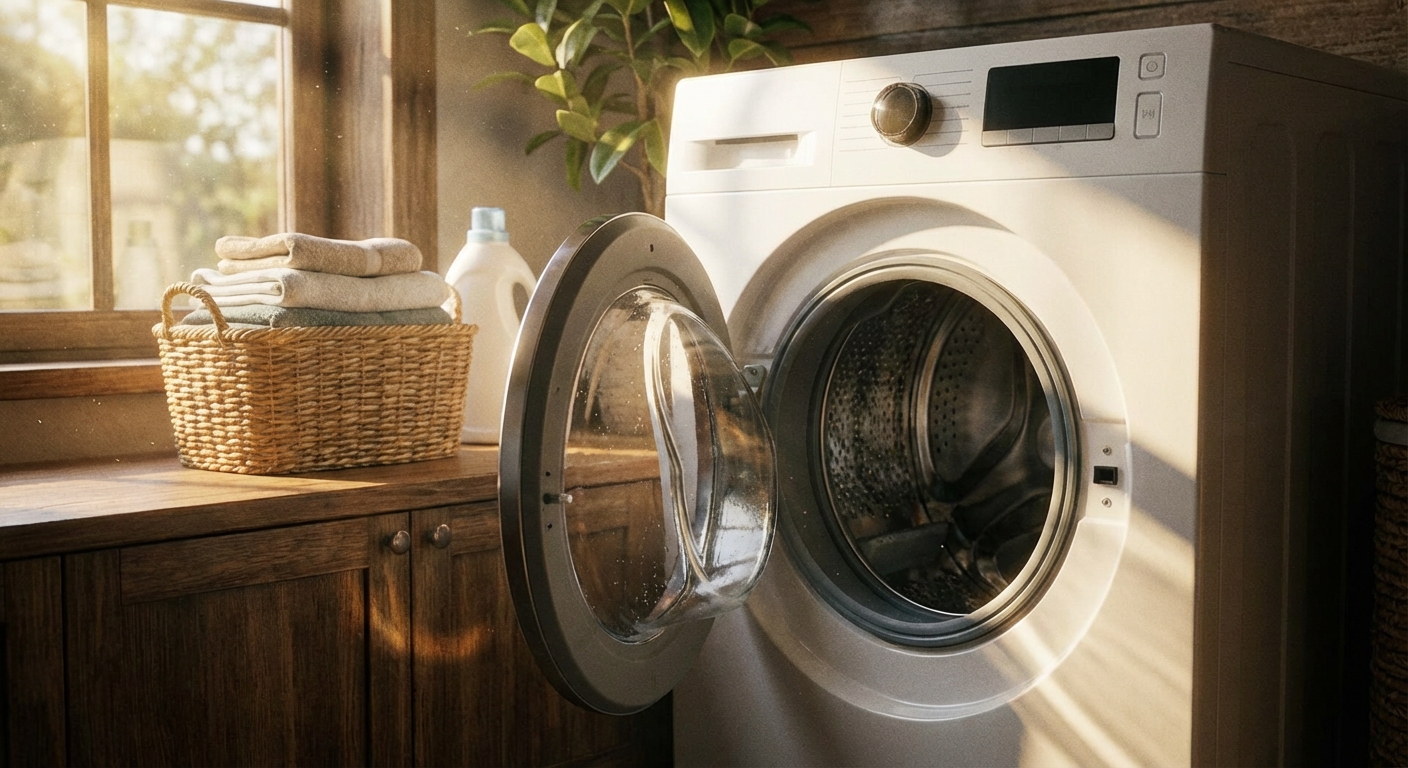
- Leave the door open (front-load) or lid cracked (top-load) for a few hours after laundry day.
- Use HE detergent if your washer requires it, and use less than you think you need. More soap usually means more residue.
- Watch for excess suds. If you see lots of suds during a normal cycle, you are likely using too much.
- Skip fabric softener occasionally or switch to dryer balls. Softener leaves residue that loves to stink.
- Run a monthly cleaning cycle with a washer cleaner tablet, or the vinegar and baking soda routine if your manual allows it.
- Pull wet clothes out fast. Even a couple hours in a closed drum can start a musty smell.
- Wash hot sometimes. If you do all cold cycles, run a hot towel load now and then to help break down buildup.
When not to DIY
- Burning or electrical smell: Stop using the washer and call for service.
- Strong sewer gas smell that persists: You may have a plumbing or venting issue. A plumber can help.
- Standing water that keeps returning: Could be a clog, hose issue, or pump problem that needs repair.
- Visible mold beyond easy-to-clean areas: If it is widespread or you cannot access it safely, bring in a pro.
Troubleshooting: if it still smells
Common reasons cleaning fails
- You cleaned the drum but not the gasket or drain pump filter. Those are the usual odor hotspots.
- There is standing water. A partial clog or drain pump issue can leave stale water in the system. If the washer drains slowly or leaves water behind, check the drain pump filter again and inspect the drain hose for kinks.
- The laundry room drain smells. Sometimes the odor is from the standpipe or a nearby floor drain, not the washer.
If you have done all steps above and the washer still smells strongly within a day or two, it may be time for a professional service call. A tech can check for hidden buildup in hoses or a drainage problem that is keeping water from fully evacuating.
My simple routine
- After the last load: wipe the gasket bottom fold and leave the door open.
- Once a month: clean washer cycle with a tablet.
- Every few months: pop the drain pump filter, clear lint and loose change, then rinse it clean.
It is not glamorous, but it beats re-washing a load of towels that came out smelling worse than they went in.

About Marcus Vance
Content Creator @ Grit & Home
Marcus Vance is a lifelong DIY enthusiast and self-taught home renovator who has spent the last decade transforming a dilapidated 1970s ranch into his family's dream home. He specializes in budget-friendly carpentry, room-by-room renovations, and demystifying power tools for beginners. Through his writing, Marcus shares practical tutorials and hard-learned lessons to help homeowners tackle their own projects with confidence.