
🚨 In a DIY emergency or rush?
Skip the details and jump straight to our 30-second cheat sheet for the most crucial info.
If your washing machine suddenly smells like burning rubber or an electrical burn, this is not a “finish the load and deal with it later” situation. I love DIY, but I love not starting house fires even more.
The goal of this guide is simple: help you stop safely, figure out whether you are dealing with rubber friction or an electrical/overheating smell, and check the most common culprits that homeowners can inspect without getting in over their heads.
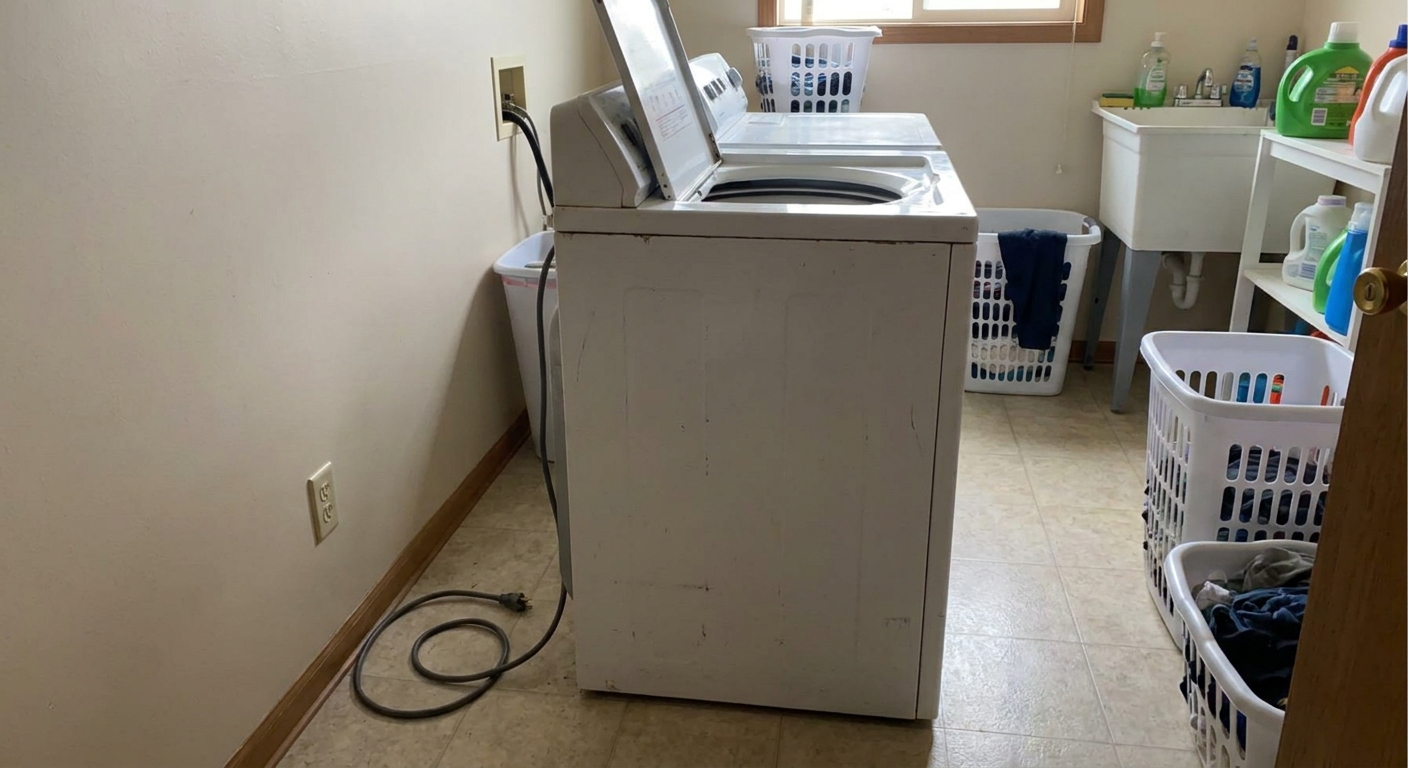
Stop first: the 60-second safety routine
Before you do any close-up smell-checking, do these steps in order:
- Press Pause/Cancel and stop the cycle.
- Unplug the washer from the wall outlet. If you cannot reach the plug safely, turn off the laundry circuit breaker.
- If you see smoke, sparking, or a visible glowing component: keep the door or lid closed, back away, and call for help. If needed, call your local emergency number.
- Do not restart “just to see if it happens again.” That is how small failures become big ones.
- Let it cool for 10 to 15 minutes before touching anything near the motor area.
If the smell is strong enough that it lingers in the room after you unplug, treat it like a serious warning until you identify the source.
Quick decision rule: If it smells electrical and the breaker tripped or you see heat damage, stop troubleshooting and call service.
Rubber smell vs electrical smell
Half the battle is identifying the type of odor. Here is a practical way to sort it out.
Burning rubber smell
- Often smells like a hot tire, melted sneaker sole, or a heated rubber band.
- Most commonly tied to belt slip (on belt-driven washers), pulley drag, or friction where something is rubbing that should not be.
- Often shows up during spin or when the tub is trying to start moving.
Hot plastic or hot motor smell
- Can smell like hot plastic, hot varnish, or warm “appliance” odor.
- This is a common result of a motor straining, including when a drain pump is jammed and the system is working harder than it should.
Electrical burn smell
- Often smells sharp, bitter, or ozone-like, sometimes like hot electronics.
- Can be caused by overheated wiring, a failing motor capacitor (on models that use an induction motor and capacitor), a control board issue, or a motor overheating under load.
- May come with symptoms like dead washer, stopping mid-cycle, humming, or tripping a breaker.
Either way, keep the washer unplugged while you inspect.
Quick checks that solve a lot of calls
These are the spots I check first because they are common, they are visual, and they often give you a clear yes or no. One global reminder before you start: leave it unplugged for all inspections below.
1) Belt and pulley friction
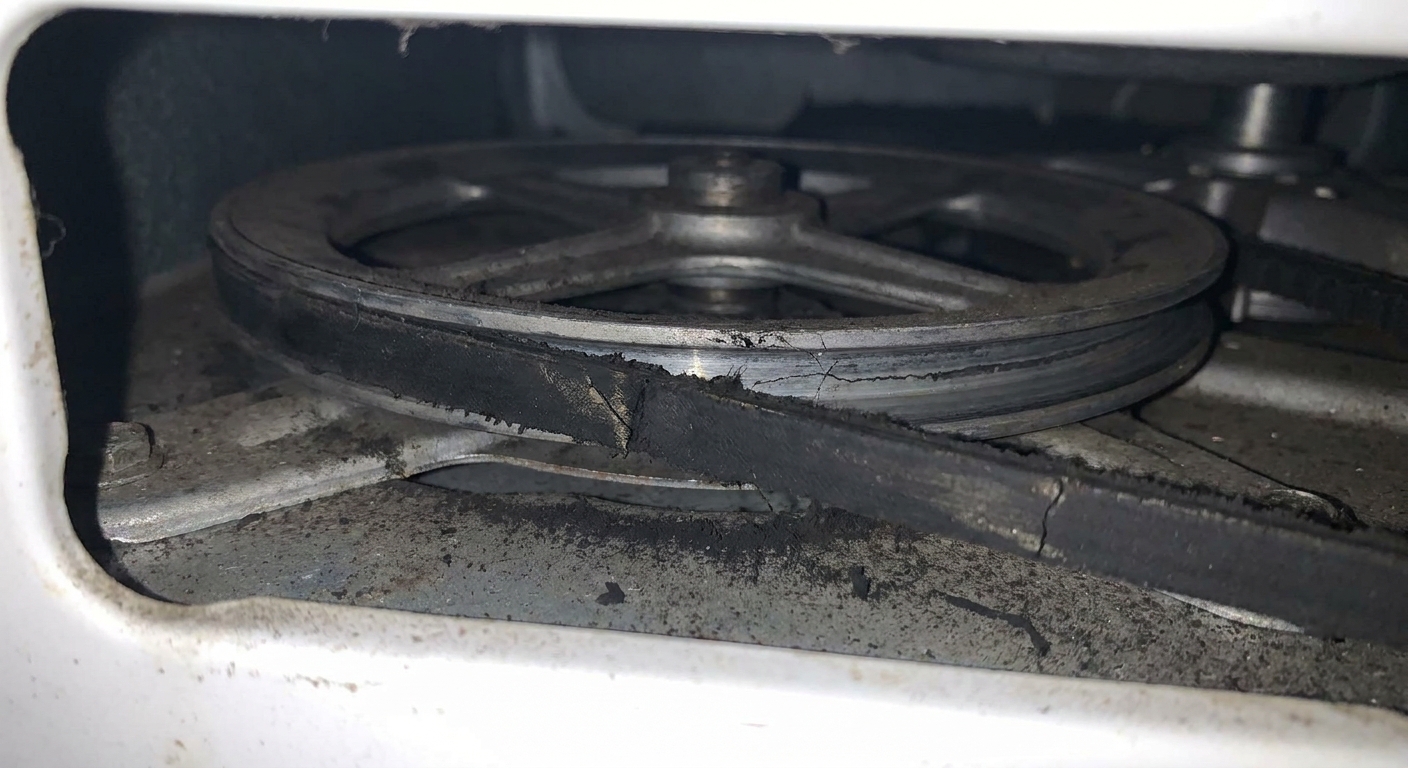
If you have a belt-driven washer, belt slip can create a strong burning rubber odor fast.
Direct-drive note (important): Many modern washers are direct-drive and do not use a traditional belt. If you open the service area and there is no belt, do not assume you are missing something. Skip this check and focus on the pump, wiring, and anything that sounds like rubbing or binding.
What you are looking for:
- Black rubber dust under the machine or on the base pan.
- A belt that looks glazed, shiny, cracked, frayed, or has melted spots.
- A pulley that is hard to turn by hand.
- Squealing during spin, slow-to-start drum movement, or a thumping belt sound.
Safe inspection steps:
- Remove the lower rear panel if your model has one (or tip the unit back slightly with help) to view the belt area.
- Check belt condition and tension. If it is loose and shiny, it likely slipped and overheated.
- Rotate the pulley by hand. It should move smoothly, not feel gritty or locked.
When to stop and call a pro: If the pulley is hard to rotate, you might have a seized bearing, a seized pump, or a drivetrain issue. Replacing a belt without addressing drag usually means the new belt will burn too.
2) Drain pump obstruction
A clogged drain pump can make the system strain and overheat. Depending on your washer, the smell might read as hot plastic, hot motor varnish, or sometimes a rubbery odor if something is slipping while the motor struggles.
Coins, hair pins, bra wires, small socks, and lint clumps are usual suspects.
Clues it is the pump:
- Washer stops mid-cycle during drain.
- Humming sound but little or no draining.
- Water left in the tub and a hot smell near the lower front (front-loaders) or lower back (some top-loaders).
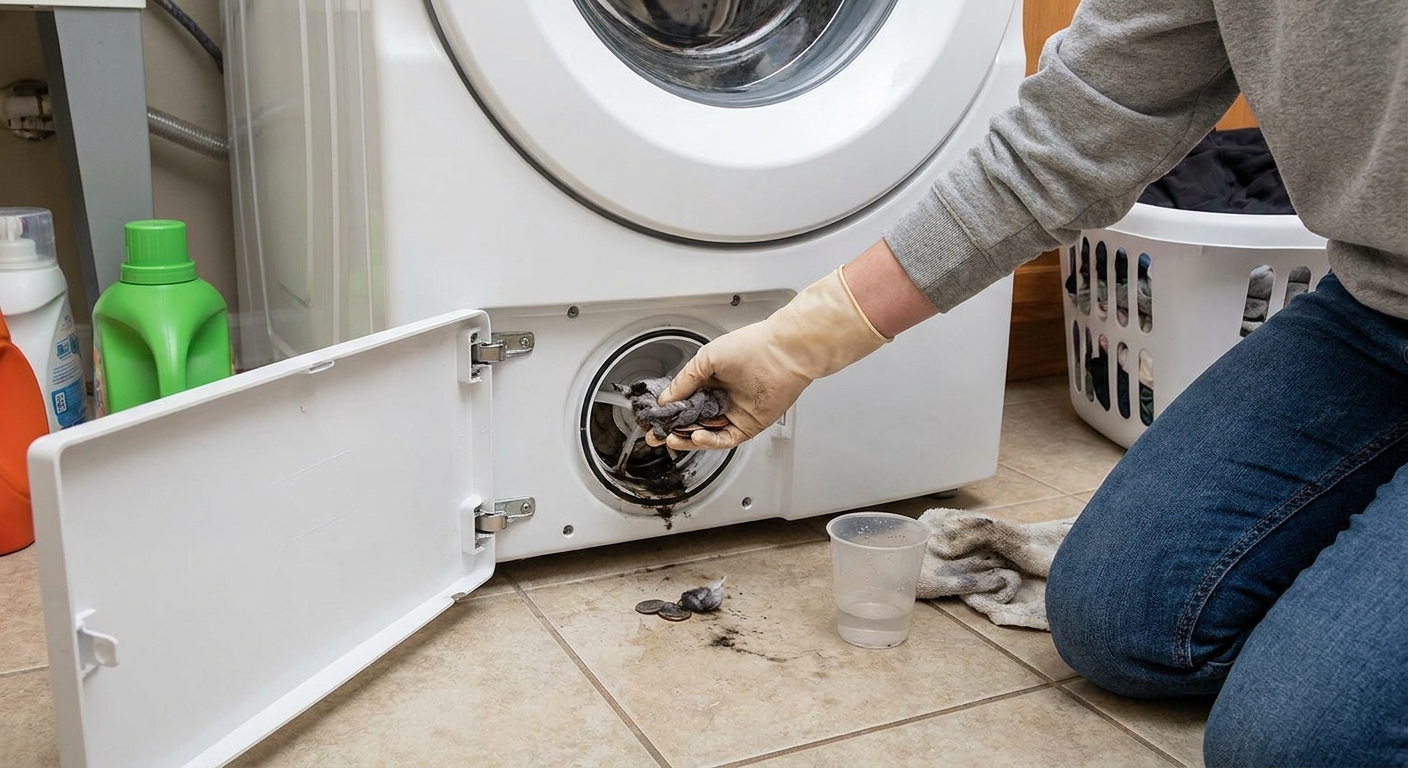
What to do (front-loaders, general approach):
- Locate the pump filter access door at the lower front, if your model has one.
- Put down towels and a shallow pan.
- Slowly open the filter and remove debris.
- Inspect the filter housing for a sock or hair wad wrapped around the impeller.
Two reality checks: Some pump filters are not meant to be homeowner-accessible, and some washers require panel removal to reach the pump. If your model does not have an access door, do not force panels you are not comfortable resealing. A small leak now is a big headache later.
Important: If you smell a strong electrical burn, skip water-adjacent troubleshooting and move to wiring checks, or call service. Water plus damaged wiring is not a hobby project.
3) Motor capacitor overheating (some models)
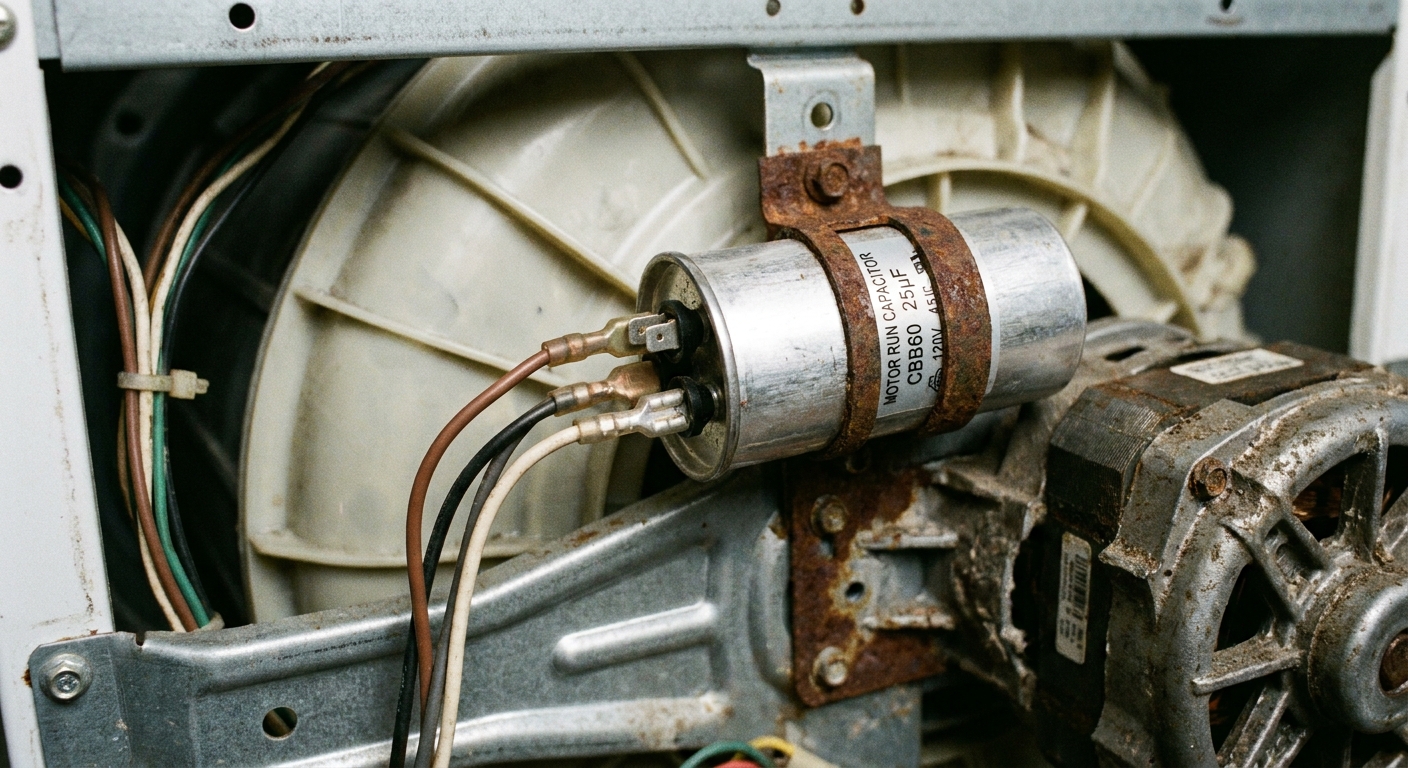
Some washers use a start or run capacitor to help the motor get moving. When a capacitor is failing, it can overheat and smell electrical, and the washer may struggle to start agitation or spin.
Direct-drive and inverter note: Many modern direct-drive and inverter motor designs do not use a traditional start capacitor like older induction-motor setups. If your washer is in that camp, this section may not apply, and the diagnosis shifts more toward the motor drive system, wiring, or the control board.
Clues you might have a capacitor issue:
- The washer hums but the tub does not start moving.
- It starts only if you redistribute the load or restart repeatedly.
- It shuts down mid-cycle and smells hot near the motor area.
- No obvious belt slip signs, but you still get an overheating odor.
Safety warning: Capacitors can hold a charge even when unplugged. If you do not know how to discharge and test one safely, this is a good stopping point for a technician.
What a homeowner can do safely: With the washer unplugged and cooled, look for obvious signs like a bulged capacitor casing, leaking residue, or scorched nearby plastic. Do not poke it with metal tools.
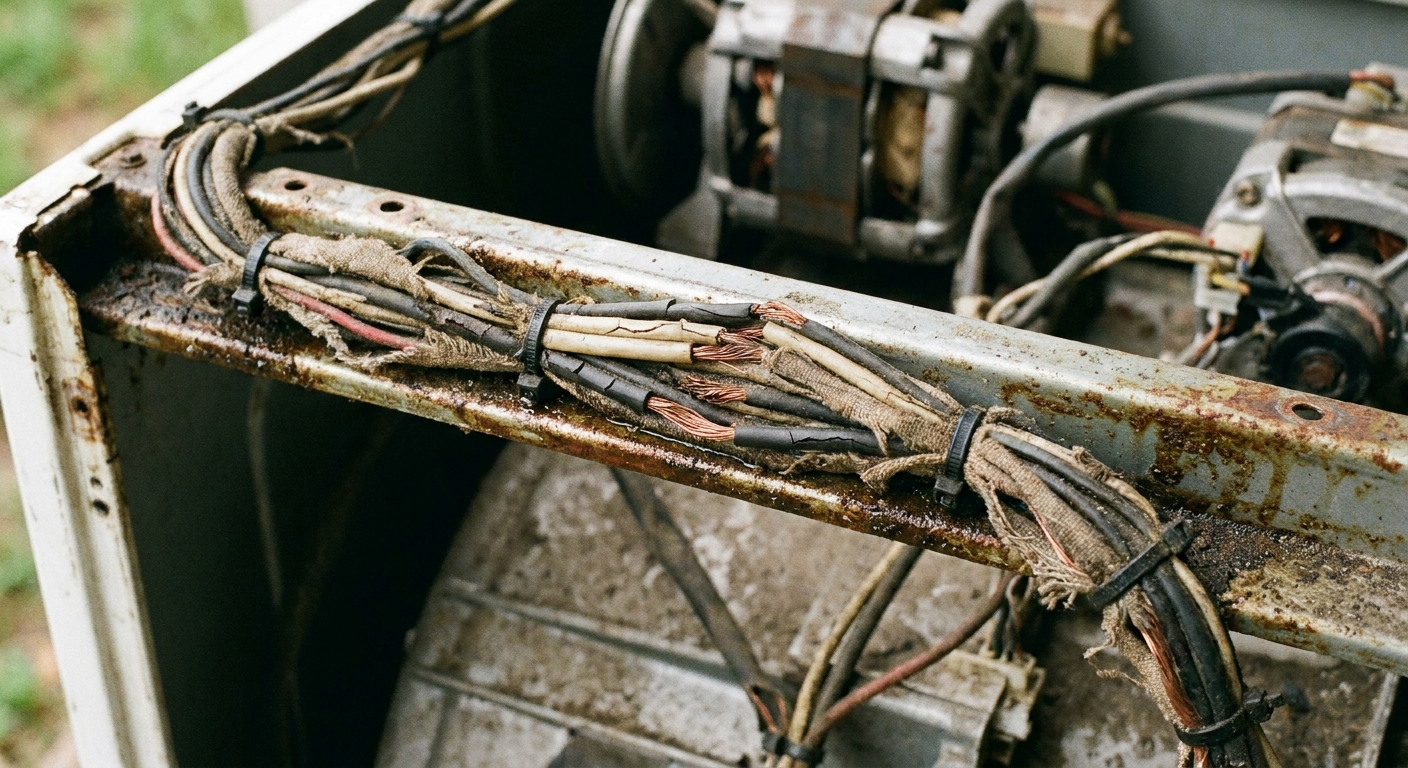
4) Wiring harness pinch points
One of the sneakiest causes of an electrical smell is a wire harness that has been rubbing on the cabinet or pinched during a past repair or move. Vibration does the rest, and eventually you get hot insulation or arcing.
High-risk locations to inspect:
- Where wires pass through metal openings or along sharp cabinet edges.
- Near the motor and pump where vibration is highest.
- At the lid switch or door lock area where the harness flexes.
- Anywhere a zip tie broke and the bundle is now loose.
What you are looking for:
- Melted or shiny insulation.
- Brown scorch marks on connectors.
- A connector that looks partially backed out.
- A wire bundle that is flattened like it got caught between panels.
Do not do this: Do not wrap damaged wiring with random tape and call it done. If copper is exposed or a connector is burned, the correct fix is replacing the damaged section or harness with the right part and securing it properly.
5) Outlet, cord, and plug
Sometimes the washer is innocent and the problem is at the wall.
Check this with the washer unplugged:
- Is the plug prong discolored or pitted?
- Is the cord jacket melted, nicked, or brittle?
- Does the outlet look brown, warped, or smell burnt?
- Is anyone running the washer on an extension cord or power strip? Do not.
If you see heat damage: Stop using that outlet immediately and have it replaced by a qualified electrician. Loose outlet contacts can heat up under load and create a burning smell that seems like it is coming from the washer.
If it smells during spin
Spin is one of the hardest-working moments for a washer, especially during acceleration and imbalance corrections. If the smell shows up mostly then, prioritize these:
- Belt slip or a dragging pulley (belt-drive models).
- Overloaded drum making the motor strain and heat up.
- Failing bearings causing drag and heat (often also loud roaring or grinding).
- Drain problems that keep water in the tub, increasing load during acceleration.
- Something rubbing that should not, like a foreign object between the inner and outer tub or under a wash plate or agitator.
Try this simple reality check after you fix the root issue: run an empty rinse and spin cycle and stand nearby. If the smell returns, shut it down and stop troubleshooting blind.
Other quick causes
Foreign object rub
If you hear scraping and get a hot plastic or burning smell, a small item may be rubbing somewhere it does not belong (under the wash plate, near the tub, or between tubs). If you are not sure how your model comes apart, this is a good place to pause and get service, because forcing parts can crack plastic or create leaks.
Internal heater smells (some models)
Some front-loaders have internal water heaters. A failing heater, scaled element, or overheated wiring can create hot electrical smells. If the odor seems strongest during heated cycles, move “call a tech” higher on your list.
What you should not do
- Do not bypass the lid switch or door lock “just to test it.” Those exist to keep you safe.
- Do not keep resetting a tripped breaker and rerunning cycles.
- Do not spray cleaners into the lower cabinet if you suspect electrical overheating.
- Do not run the washer with panels removed unless you know your model’s safe service procedure. Moving parts and exposed wiring are a bad mix.
When to call a technician
I am all for sweat equity, but these are the red lines where I would bring in a pro:
- The smell is distinctly electrical and strong, especially if it happened suddenly.
- You see melted connectors, scorch marks, or exposed copper.
- The washer trips the breaker or blows a fuse.
- You suspect a control board issue (burnt electronics smell near the top console).
- There is any smoke, sparking, or repeated overheating.
What to do while you wait: Keep it unplugged. Leave the door or lid open to vent odor. Take a couple photos of anything that looks scorched and make a quick note of when the smell happens (fill, agitate, drain, spin). That little bit of documentation can save you time and money when you talk to a technician.
Tools and supplies
- Flashlight or headlamp
- Work gloves
- Nut driver set or screwdriver set (common sizes: 1/4 in and 5/16 in hex)
- Shop towels and a shallow pan (for pump filter checks)
- Phone camera (take photos before unplugging connectors)
My thrift-minded takeaway
Burning smells are one of the few washer symptoms where I stop being “try it and see” Marcus. A worn belt, clogged pump, or pinched wire can be a relatively affordable fix. But if you keep running the machine while it is overheating, you can turn a small parts problem into a motor, board, or harness replacement.
Unplug first, smell second, inspect third. Your future self will thank you.
The 30-Second Cheat Sheet
Essential takeaways for: Washing Machine Smells Like Burning? Stop and Check These First
Do this immediately
- Stop the cycle and unplug the washer. If you cannot reach the plug, turn off the breaker.
- If you smell a strong electrical burn, see smoke, or notice sparking/visible glowing, do not restart. Call for service.
Identify the smell
- Burning rubber (hot tire or melted shoe): often belt slip (on belt-drive models), pulley drag, or friction from a moving part that is not moving freely.
- Hot plastic/varnish (hot motor or heated insulation): can happen when a pump is jammed, the motor is straining, or wiring/connectors are overheating.
- Electrical burn (sharp, hot electronics): often wiring/connectors, a motor capacitor (on models that use one), control board, or motor overheating.
Fast checks that catch most problems
- Drive system: If your washer is belt-drive, look for rubber dust, a shiny or cracked belt, and squealing during spin. If it is direct-drive, you will not find a belt, so focus on pump, wiring, and any rubbing or dragging noises instead.
- Drain pump/filter: if it hums but does not drain, check for coins, socks, or lint clogs (if your model has an accessible filter).
- Capacitor clues (some models): humming with no start, hot smell near motor, visible bulging or leaking on the capacitor. Capacitors can hold a charge, so call a pro if unsure.
- Wiring harness pinch points: look for rubbed insulation, melted connectors, scorch marks near motor, pump, door lock, lid switch, or control area.
- Outlet and plug: check for browned outlet face, melted cord, hot plug prongs, and do not use extension cords. A bad outlet can mimic a washer failure.
Call a pro if
- The washer trips the breaker, you see melted wiring, or the smell is strongly electrical.
- There is smoke, sparking, or repeated overheating after you reset anything.
💡 Tip: Scroll up to read the full article for detailed, step-by-step instructions.
⬆️ Back to top
About Marcus Vance
Content Creator @ Grit & Home
Marcus Vance is a lifelong DIY enthusiast and self-taught home renovator who has spent the last decade transforming a dilapidated 1970s ranch into his family's dream home. He specializes in budget-friendly carpentry, room-by-room renovations, and demystifying power tools for beginners. Through his writing, Marcus shares practical tutorials and hard-learned lessons to help homeowners tackle their own projects with confidence.