
First, what “stops mid-cycle” really means
When a washer quits in the middle of a wash, rinse, or spin, it is usually doing one of three things:
- Pausing on purpose (load sensing, soaking, or trying to balance the load).
- Stopping for safety (lid or door not locked, motor overheating).
- Stopping due to a fault (cannot drain, lost water supply, control problem).
The good news is that you can rule out the common, cheap stuff in about 10 minutes before you ever think about parts.
Safety and quick reset
Before you poke around
- If you will touch wiring or open panels, unplug the washer.
- Turn off both water valves if you are moving hoses.
- Keep a few towels and a shallow pan nearby. Drain troubleshooting often involves surprise water.
- Watch for sharp metal edges inside panels, and avoid tipping a washer by yourself.
Do a simple reset
Unplug the washer for 1 to 5 minutes, plug it back in, and try a Rinse and Spin or Drain and Spin cycle. If it completes, you likely had a temporary lock, balance, or control hiccup. If it stops again, use the checklist below.
Note: Some brands have a specific reset or diagnostic button sequence. If your washer has a tech sheet (often tucked behind the control panel or inside a cabinet edge), it is worth a quick look.
10-minute checklist (quick checks first)
0) Power and outlet basics
It sounds too simple, but power hiccups cause a lot of “random” mid-cycle stops.
- Make sure the plug is fully seated and the cord is not loose or damaged.
- Reset any GFCI outlet and check the breaker.
- Avoid extension cords and power strips. Plug the washer directly into the wall outlet.
1) Lid or door not locking (most common stop)
Washers are strict about this for a reason: if the lid or door is not locked, many models will stop immediately, or they will fill and agitate but refuse to spin.
Top-load symptoms
- Stops and beeps when the lid is lifted or bumped.
- Fills, then pauses, or agitates, then refuses to spin.
- Lid lock light blinking, or an error code related to lid or lock status. Common examples include dL, lid, Lo, or similar, but codes vary a lot by brand, so confirm using your model’s tech sheet or manual.
Front-load symptoms
- Stops mid-cycle with the door locked and will not resume (this can also happen with drain, water level, or heating faults, so treat this as a clue, not a verdict).
- Error like dE, door, F/dL or similar, depending on brand and platform.
Fixes to try:
- Press the lid or door firmly and resume the cycle. If your model uses press-and-hold to restart, hold Start for 3 to 5 seconds.
- Check for a sock or garment edge caught between the gasket and door (front-load) or under the lid lip (top-load).
- Clean the contact area. A little detergent gunk can keep a latch from seating.
- Listen for the lock “click.” No click usually means a misaligned strike or failing lock assembly.
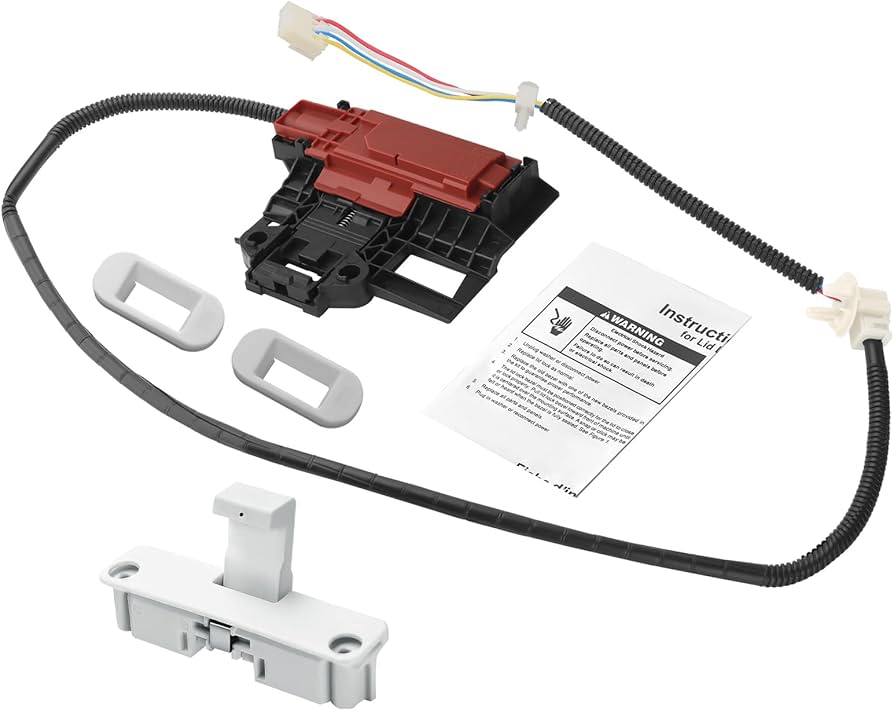
If it repeatedly fails to lock even when you push it closed, the lid lock or door lock is a common replacement part and often DIY-friendly.
2) The washer cannot drain fast enough
A washer that cannot drain will often stop mid-cycle right before rinse or spin. It is basically saying, “I cannot move forward with a tub full of water.”
Fast checks:
- Look behind the washer for a kinked drain hose.
- Make sure the hose is not shoved too far down the standpipe. Some units will siphon or choke.
- Check that the standpipe or laundry sink is not backing up.
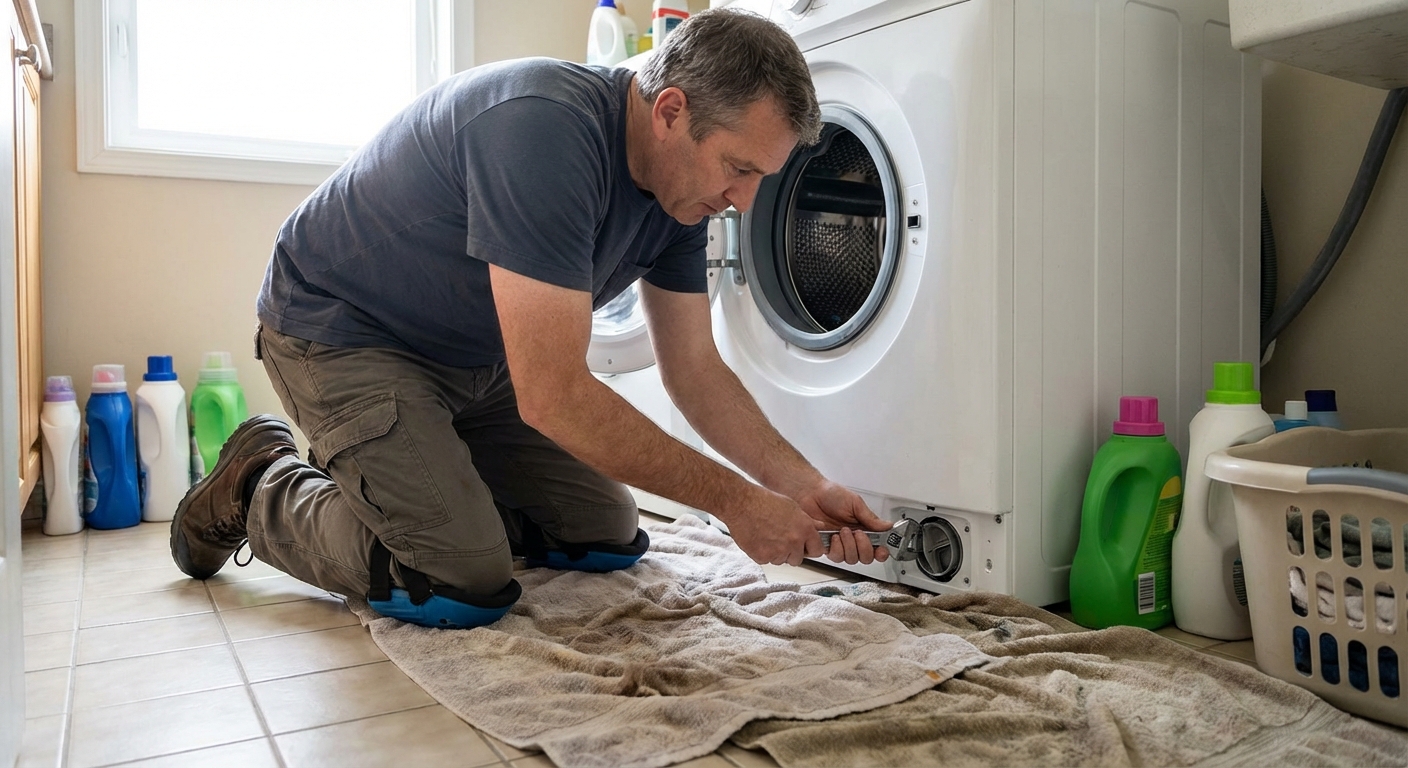
Front-load bonus check: Many (not all) front-loaders have a little access door low on the front. Inside is a pump filter. If it is packed with lint, coins, and hair ties, the washer may stop mid-cycle or throw a drain error.
How to clean a front-load pump filter (quick version):
- Unplug the washer.
- Put towels down and a shallow pan under the access area.
- Open the access door, drain any small hose if your model has it, then slowly unscrew the filter.
- Remove debris, rinse the filter, reinstall snugly.
Top-load note: Many top-loaders do not have an easy front filter. A clogged pump or a jammed impeller can still happen, but you may need to access the pump from the bottom or back depending on model.
3) Uneven or overloaded drum
This one gets people because it looks like a “failure,” but it is often the machine protecting itself. If a load is lopsided, many washers will pause, tumble slowly, or stop and try to rebalance before spinning.
Clues:
- Stops right when it should ramp up to spin.
- Repeated slow tumbles, then a pause.
- Load is one heavy item like a bath rug, hoodie, or comforter.
- An out-of-balance code or light. Common examples include uL, Ub, UE, or similar, but again, confirm with your model’s chart.
Fix: Pause the cycle, open the lid or door, and redistribute the load. Add a couple towels to balance one heavy item. If the drum is packed tight, remove a few pieces and run a second load. Overloading is a fast way to trip balance protection and also a slow way to wear out bearings and shocks.
4) Water supply interruption or slow fill
If the washer is filling and suddenly pauses, it may not be getting water fast enough. Many modern machines time the fill and stop if they cannot reach the target level.
Quick checks:
- Make sure the water valves are fully open. Some models may fault if one valve is closed (even on cold cycles), so open both unless your manual says you can run with one off.
- Check for a kinked inlet hose.
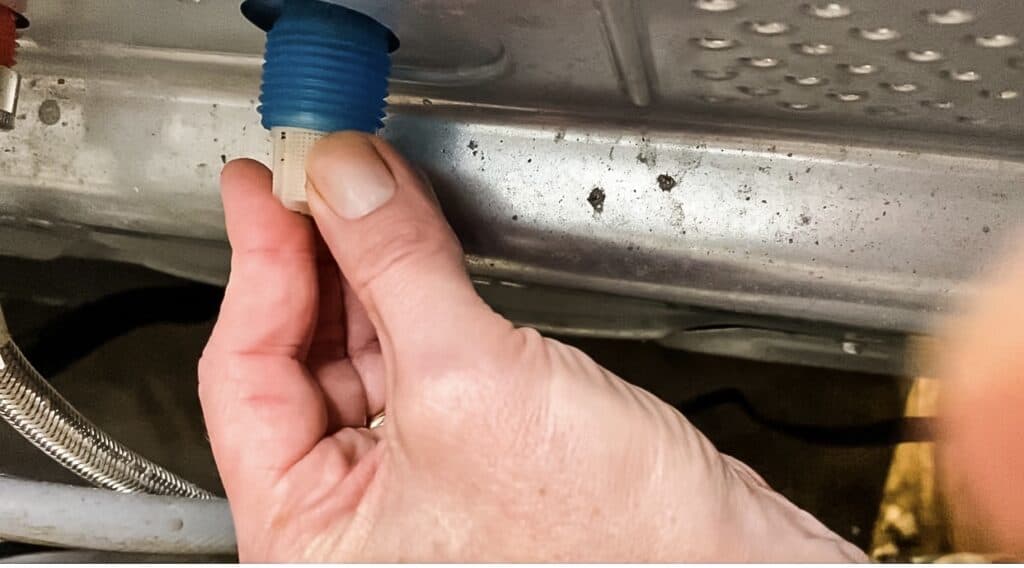
- If you recently moved the washer, the hose screens may be packed with sediment.
Clean inlet screens: Turn off water, remove hoses at the washer, and gently pick sediment from the tiny screens in the inlet ports. If your home has older plumbing, this can be a repeat offender.
If the quick checks did not fix it
5) Drain pump fault (motor runs, hums, or stops)
If the washer stops at drain or spin and you hear a humming or a weak attempt to pump, the pump may be jammed or failing.
- Jam signs: Hums but no water movement. Often a coin, hair pin, or small sock.
- Failing pump signs: Drains sometimes, then quits. Gets louder over weeks.
DIY reality check: Accessing the pump ranges from easy to annoying depending on brand and whether you have to tip the washer. If you are not comfortable moving appliances, this is a good place to call for service.
6) Overheating motor or thermal protection trip
Washers have thermal protection. If a motor is working too hard, it can shut down mid-cycle, then work again after it cools. The first time this happened to me years ago, I thought I had a haunted washer. It was just an overloaded drum and a tired belt.
Common causes:
- Repeated overloading.
- Dragging pump or stuck drum.
- Worn belt (some top-load and older designs).
- Bad bearings causing heavy drag and rumbling noise.
What to do: Let the washer cool for 30 minutes, then try a small load on a short cycle. If small loads work but normal loads stop, you are likely dealing with strain or friction, not a random control glitch.
7) Timer, control board, or user interface issues
If the washer stops at the same point every time, and you have ruled out water, load, and drain, the control system is next on the suspect list.
- Older top-loaders with a mechanical timer: A worn timer can stall and never advance.
- Newer machines: A control board, wiring harness, or keypad can glitch.
Clues you are in control-board territory:
- Random lights, unresponsive buttons, or the display resets mid-cycle.
- It stops at different points with no pattern.
- You smell hot electronics or see a faint scorch mark after opening a panel.
At this stage, pull the model number and look up brand-specific error codes. If you can enter a diagnostic mode, write the codes down before you unplug it again.
8) Water level sensing problems (and suds)
If the washer fills a little, stops, fills again, then stops, it may not be reading water level correctly.
- Some washers use a pressure switch and a small air tube. If the tube is loose, kinked, or clogged, the washer can behave unpredictably.
- Others use electronic sensing and can be thrown off by excessive suds.
Easy win: If you recently switched detergents, double-check you are using HE detergent and not over-pouring. Too many suds can cause long pauses and mid-cycle stops while the washer tries to correct.
If you suspect a suds lock: Run a Rinse and Spin with no detergent, or rinse again until the foam is gone. Follow your manual if it recommends a specific anti-suds step. Next load, use less detergent. Most people need far less than the cap suggests.
Top-load vs front-load: normal pausing
Top-load washers
- Often pause during sensing and load balancing.
- Lid lock behavior is strict. Many will lock and unlock multiple times as the cycle changes.
- “Stops before spin” is commonly lid lock, drain, or balance related.
Front-load washers
- Long pauses can happen during heating (on models with internal heaters) or while correcting suds.
- Drain pump filters are a frequent culprit for mid-cycle stops on models that have them.
- Door stays locked for safety until water level and temperature allow unlocking.
When to stop DIY and call for service
Call a pro or the manufacturer if any of these are true:
- You see water leaking near the motor area, or the breaker trips.
- You smell burning, or the unit makes grinding or metal-on-metal sounds.
- The drum does not turn by hand (with the unit unplugged), or it feels rough and crunchy.
- You have repeated error codes that point to a control board, motor, or inverter.
Money-saving tip: Before you schedule service, write down the full model number and any error code, plus exactly when it stops (during fill, wash, drain, or spin). That one minute of homework often saves a paid “diagnostic fishing trip.”
Fast FAQ
Why does my washer stop and start again?
Often it is load sensing or balancing. If it eventually finishes, it may be normal. If it keeps stopping at the same point, suspect drain, lock, or water supply problems.
Can a washer stop mid-cycle because of low water pressure?
Yes. Slow fill can trigger a fill timeout. Check valves, hose kinks, and inlet screens.
Is it safe to unplug a washer mid-cycle?
Yes, for troubleshooting. Just know that a front-load door may stay locked until it is safe to unlock. If the tub is full, focus on drain troubleshooting first.
A simple troubleshooting order
- Check power, outlet, and breaker, then try a reset.
- Try Drain and Spin.
- Confirm lid or door locks and nothing is caught.
- Check drain hose and front-load pump filter (if equipped).
- Rebalance or reduce the load.
- Confirm water valves, hoses, and inlet screens.
- Then move to pump, overheating, and control issues.
If you work that list top to bottom, you will fix the majority of mid-cycle stops without buying a single part. And if you do end up calling for service, you will be able to say, confidently, what you have already ruled out.

About Marcus Vance
Content Creator @ Grit & Home
Marcus Vance is a lifelong DIY enthusiast and self-taught home renovator who has spent the last decade transforming a dilapidated 1970s ranch into his family's dream home. He specializes in budget-friendly carpentry, room-by-room renovations, and demystifying power tools for beginners. Through his writing, Marcus shares practical tutorials and hard-learned lessons to help homeowners tackle their own projects with confidence.