
If your washing machine fills with water, and maybe even drains fine, but the clothes just sit there like a wet lump, you are dealing with an agitation failure. It is one of those problems that sounds expensive, but a lot of the common causes are simple safety switches, loose parts, or a worn drive component you can diagnose without feeling like an appliance tech.
I am going to walk you through the fastest checks first, then the more involved ones. The goal is to avoid buying parts on a guess and to know when a repair is worth it versus when it is time to call a pro.
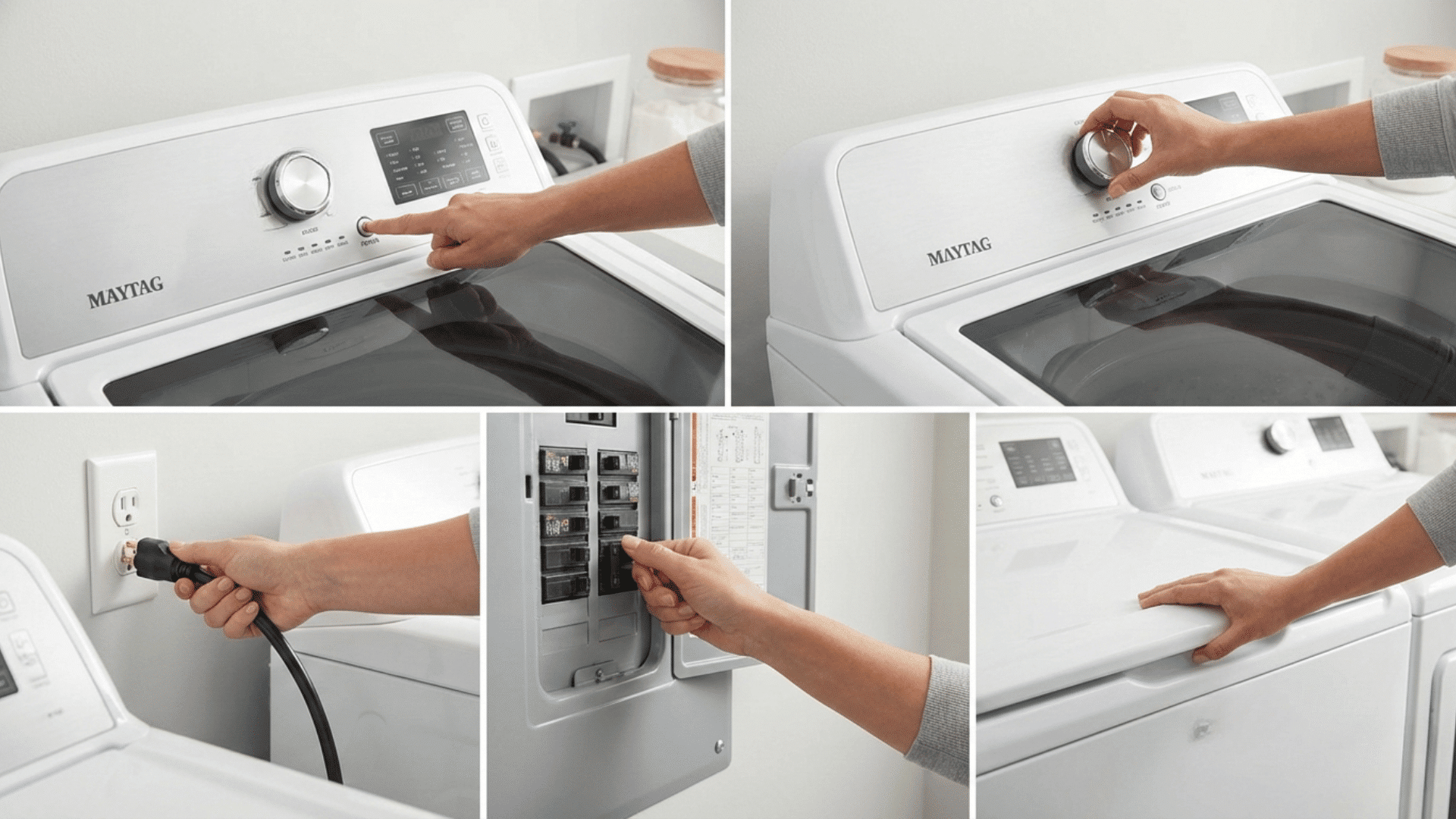
Safety first (do this every time)
- Unplug the washer before removing panels, reaching under the lid, or touching wiring.
- Turn off both water valves if you plan to pull the washer out or tilt it back.
- If you smell burning, see smoke, or the breaker trips, stop and call a pro.
- If you must test with power on (rare), keep hands clear of moving parts. A non-contact voltage tester can be a helpful extra safety check, but it can be unreliable, so still unplug before touching wiring. If any of this feels out of your comfort zone, stop and call a pro.
- Watch for sharp edges inside cabinets and under the rim of the top panel.
Grab this before you start
- Phillips and flathead screwdrivers
- 1/4-inch and 5/16-inch nut drivers (common for appliance panels)
- Pliers
- Flashlight or headlamp
- Shop towel and a shallow pan (for a little water)
- Non-contact voltage tester (quick safety check)
Quick symptom checklist (pick your lane)
Match what your washer is doing
- It fills, then nothing happens and it hums: often means the motor is being energized but cannot start or cannot turn. Common causes include a jammed wash plate or agitator, a slipping or broken belt, a stripped coupler, a seized transmission, a stuck pump, or a failed motor start capacitor. A lid switch or lid lock issue can also stop the cycle, although it often prevents the motor from running at all on many machines.
- It fills and you hear the motor, but the agitator or plate does not move: worn coupler (many Whirlpool-built direct-drive top loaders), a broken or slipping belt (many belt-driven machines), a stripped wash plate hub or splines (common on impeller style top loaders), or a gearcase issue. If you have a two-piece agitator, worn dogs usually cause weak one-direction action in the upper agitator rather than total no-motion.
- Agitates sometimes, then quits mid-cycle: lid lock getting flaky, shift actuator failing to change modes, motor overheating and cutting out, or control or timer contacts failing when warm.
- It spins but will not agitate: shift actuator or mode shifter (common on newer top loaders), wash plate hub splines stripped, or a control issue.
- It agitates but weakly (clothes barely move): worn dogs (upper agitator), loose agitator bolt, stripped wash plate splines, slipping belt, out-of-balance sensing behavior, or an overloaded tub.
Keep this in mind: agitation and spin share some parts, but not all. That is why “won’t spin” and “won’t agitate” often trace to different culprits.
Fixes to try first (fast checks)
1) Confirm the basics: settings, load, and water level
- Cycle selection: Make sure you are not on a “Rinse and Spin” or “Drain and Spin” type cycle.
- Load size: Too few items can confuse some HE washers, and too many can prevent the agitator or wash plate from moving clothes. If the machine keeps pausing and “thinking,” try a medium load.
- Water level: Extremely low water can make agitation look dead because clothes are not floating and shifting. On HE machines, this is less obvious.
2) Lid switch or lid lock (top-loaders)
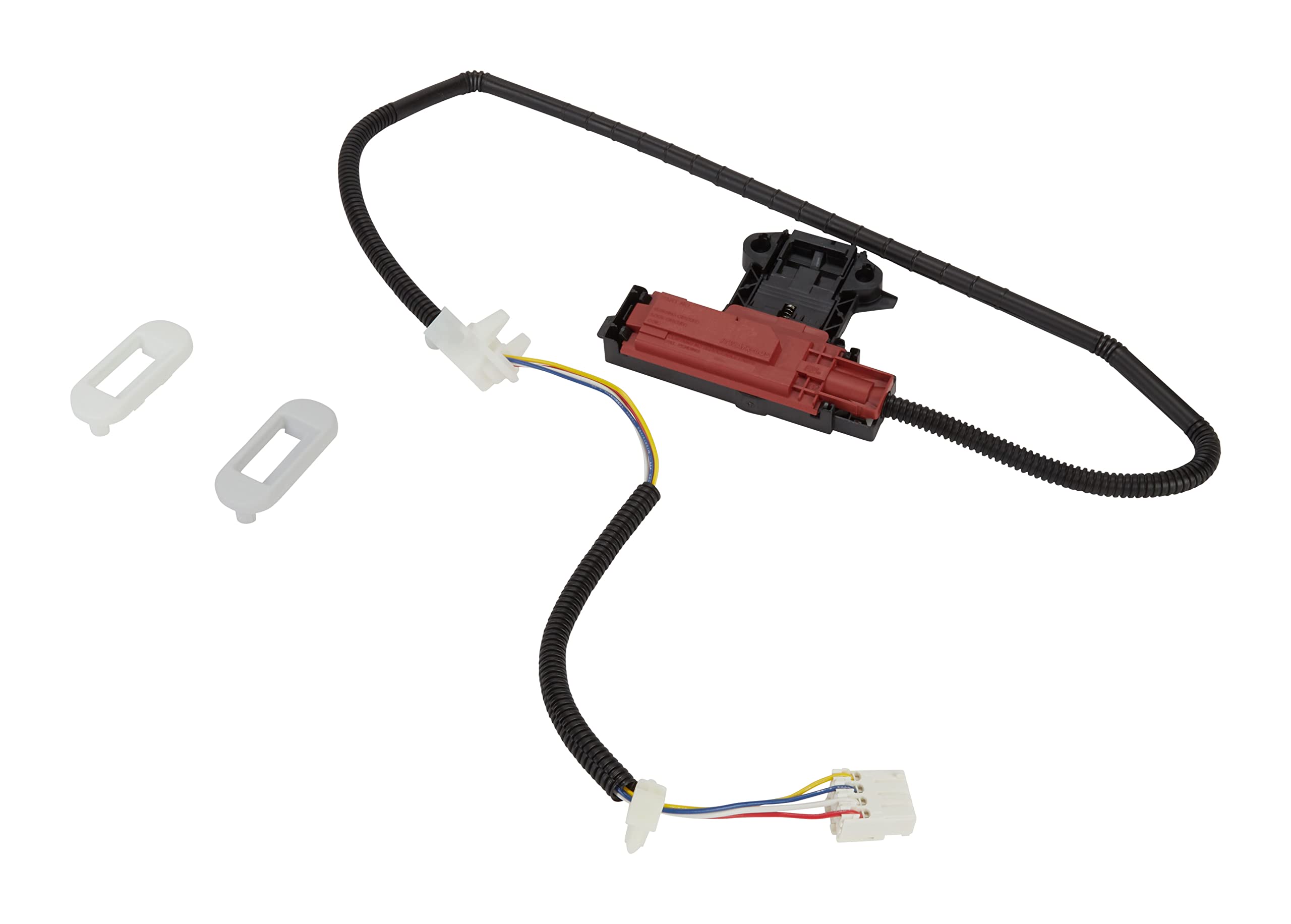
On many top-load machines, the washer will not agitate if it thinks the lid is open. Some older models may still agitate with the lid open but will not spin, so treat this as a strong clue, not a universal rule.
- What you might notice: no agitation, sometimes no spin, lid lock light flashing, or the washer pauses right when it should start washing.
- Quick check: Close the lid firmly. Listen for a click (switch) or a stronger clunk (lock). If you can lift the lid during what should be wash agitation, the washer may not be seeing “lid closed,” depending on model.
- Look for physical issues: cracked lid strike, loose hinge, or the plastic tab that hits the switch missing.
Worth it? Usually yes. Lid switches and lid locks are often in the $20 to $100+ range depending on the model, and are typically DIY-friendly if you can remove a top panel or console.
3) Jammed agitator or wash plate
Socks, strings, and small items can wedge under a wash plate (common on many newer top loaders) or around an agitator base. If the motor tries to turn and cannot, you may hear a hum or a brief attempt, then nothing.
- Quick check: With the washer unplugged, try to rotate the agitator or wash plate by hand. Some resistance is normal, but it should not feel locked solid.
- What to do: Remove the fabric softener cap or center cap, check the retaining bolt, and inspect for debris under the agitator or plate.
- Do not miss this: On impeller or wash plate models, the plate can look fine but the hub or splines can strip. The motor shaft can turn while the plate barely moves. If the plate lifts off easily or you see rounded plastic teeth, you likely need a hub kit or a new wash plate.
My real-world note: The first time I pulled a wash plate, I expected a neat little cavity. Nope. It was a linty swamp with a toddler sock wrapped around the hub. Not glamorous, but very fixable.
4) If it hums, check the motor start capacitor (if equipped)
Some washers use a start capacitor to help the motor begin turning. When it fails, the motor can hum without starting, especially under load.
- Clues: loud hum, tub does not move, sometimes it will start if you restart the cycle, and sometimes the motor is warm.
- Worth it? Often yes. Capacitors are usually inexpensive and fairly quick to swap, but confirm your model actually has one and discharge it safely before handling.
Common causes by machine type
Top-load: drive coupler (direct-drive models)
Many Whirlpool-built top loaders (and some Kenmore models) use a rubber and plastic motor-to-transmission coupler instead of a belt. When it cracks or strips, the motor can run but the transmission does not get power, so agitation stops.
- Typical symptoms: motor sound but no agitation and often no spin, burning rubber smell in some cases, or intermittent “works then slips.”
- How you confirm: Requires opening the cabinet and looking at the coupler between motor and gearcase.
- DIY difficulty: Medium. Not hard, but you will be moving the motor and dealing with tight spaces.
Worth it? Almost always. The part is usually inexpensive, and replacing it can bring an older washer back to life.
Top-load: agitator dogs (weak upper agitation)
If you have a traditional two-piece agitator with an upper section that ratchets, small plastic pawls called agitator dogs can wear out. When they do, the upper agitator may slip or only “grab” in one direction, so clothes do not roll over properly.
- Typical symptoms: clothes barely circulate, upper portion slips, agitation feels lazy, lower agitator may still move.
- DIY difficulty: Easy. Basic hand tools, usually under 30 minutes.
Worth it? Yes. This is one of the cheapest satisfaction-per-dollar repairs out there.
Front-load: belt (if your model has one)
Many front-loaders tumble using a belt, but plenty of modern machines are direct-drive inverter and have no belt. Before you plan this repair, confirm your model type.
- Typical symptoms (belt models): motor runs but drum does not turn, burning smell, or rubber dust under the machine.
- How you confirm: Remove rear access panel and inspect belt condition and tension.
Worth it? Often yes, especially if the machine is otherwise healthy and the belt is accessible. If the belt is shredded, also inspect pulleys and drum bearings for the reason it failed.
Modern top-load: shift actuator (agitate vs spin)
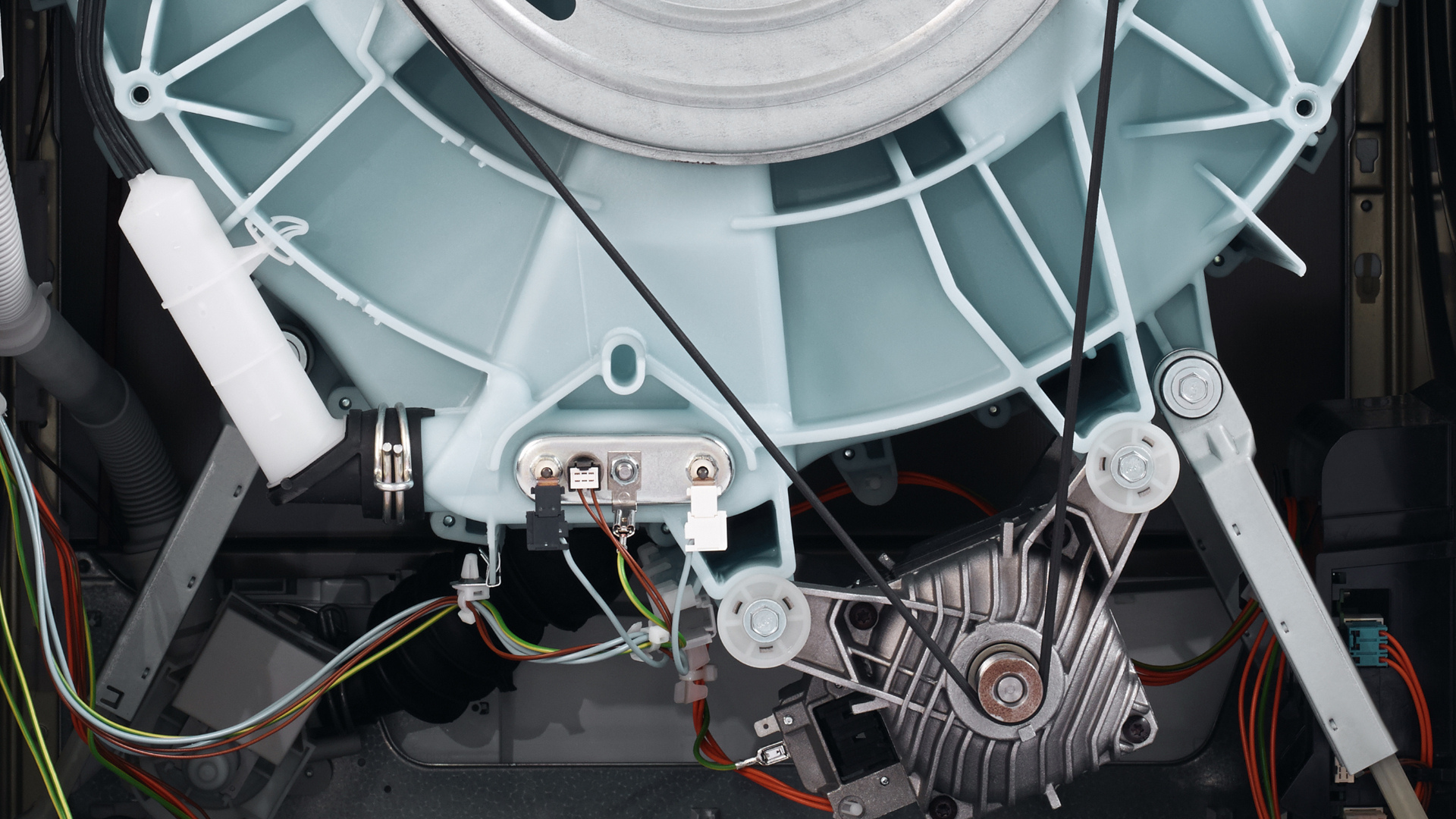
Many newer top-loaders use a shift actuator to change between agitation and spin modes. If it fails, you can end up with a washer that spins but will not agitate, or vice versa.
- Typical symptoms: clicking under the machine, mode change failures, agitation missing but spin works, error codes related to shifter or position sensing.
- How you confirm: You may be able to see the actuator under the washer and check the linkage. Proper diagnosis often involves service mode tests depending on the brand.
- DIY difficulty: Medium. You will likely need to tilt the machine back and work underneath.
Worth it? Often yes if the part is reasonably priced. If your washer is older and also has bearing noise, leaks, or rust, you may be throwing good money after bad.
HE top-load: pressure switch or pressure hose
If the washer does not sense the correct water level, it may never start the wash action or it may pause and retry. A kinked or clogged pressure hose, or a failing pressure sensor, can cause weird “fills forever,” “fills then stops,” or “fills then drains” behavior that looks like a no-agitate problem.
Worth it? Usually worth checking before you buy bigger parts. A pinched hose or gunk at the air dome can be the whole problem.
Direct-drive inverter models: rotor or sensor issues
Some washers use a direct-drive motor system with a rotor, stator, and a position sensor. If the motor “twitches,” clicks, or tries to start and then stops, you may be in this territory. This is real, but it is less DIY-friendly than a lid lock or hub kit.
Timer and control clues (before you buy parts)
It is common to suspect the control board because it feels mysterious, but I treat control problems like a last stop after mechanical checks. Here are clues that point more toward the timer or main control.
Timer clues (older machines)
- The knob advances inconsistently or gets stuck at the wash portion.
- Jiggling the timer makes the washer start agitating temporarily.
- You hear internal ticking, but the washer does not power the motor in the wash segment.
Control board clues (newer machines)
- Random behavior, flashing lights, or multiple unrelated symptoms.
- Agitation fails after a power outage or surge.
- Error codes persist even after basic resets and checks.
Two safe things to try
- Hard reset: Unplug for 5 minutes, then plug back in and try a normal cycle.
- Check connectors: With power unplugged, inspect harness plugs on the control and at the motor area for corrosion, loose fit, or a backed-out pin.
Worth it? Boards can be pricey. If a board is over 40 to 50 percent of the cost of a comparable new washer, I pause and do the math, especially if the machine is past mid-life.
Diagnostic order (the practical way)
If you want a clean, organized sequence, this is the order I would follow in my own laundry room:
- Confirm cycle and load (no tools).
- Listen and observe: does it fill, then hum, click, or go silent?
- Top-load: lid switch or lid lock check (strike, click, lock engagement).
- Check for jams: agitator or wash plate movement by hand, look for trapped items.
- If it hums: consider a stuck pump or a failed motor start capacitor (if equipped).
- If belt-driven: inspect belt condition, pulleys, and tension.
- If direct-drive top-load: inspect motor coupler.
- If impeller style top-load: inspect the wash plate hub and splines.
- If modern mode-shifting: inspect and test shift actuator and linkage.
- Check fill sensing: pressure hose or pressure sensor clues if the wash never really starts.
- Only after mechanical checks: timer or control board diagnosis.
When a repair is worth it
Usually worth DIY
- Lid switch or lid lock
- Agitator dogs or a loose agitator bolt
- Wash plate hub kit or wash plate (stripped splines)
- Drive belt (when access is straightforward and pulleys look healthy)
- Motor coupler
- Shift actuator (if the machine is otherwise in good shape)
- Motor start capacitor (if equipped and accessible)
Proceed carefully or call a pro
- Gearcase or transmission problems: often labor-heavy and may not be cost-effective.
- Drum bearing issues (front-load): if you also hear roaring or grinding, agitation issues may be a symptom of bigger mechanical wear.
- Control board replacement: expensive, sometimes non-returnable, and misdiagnosis is common without proper testing.
- Direct-drive motor or sensor repairs: rotor or stator work can be straightforward for a tech, but is more error-prone for DIY.
A simple rule I use: if the fix is under $150 in parts, under two hours of work, and the washer is not showing other major symptoms (leaks, rusted tub, bearing noise), it is usually worth doing.
What to tell a pro
If you decide to call a technician, give them specific observations. It can shorten the visit and sometimes lowers the total cost.
- Brand and model number (from the lid frame or door area)
- Whether it fills, drains, and spins
- What you hear when it should agitate (hum, click, silence)
- Any error codes or flashing light patterns
- Whether you can open the lid during “wash” (top-load clue)
- Whether the wash plate or agitator turns by hand with power unplugged
FAQ
Can a washer drain and spin but not agitate?
Yes. That often points to a shift actuator or mode-shifting problem on modern top-loaders, or an agitation-specific issue like a stripped wash plate hub or worn dogs on a two-piece agitator.
My washer hums but nothing moves. Is it the motor?
Sometimes, but do not start with the motor. A hum often means the motor is energized but stalled. That can be a jammed wash plate, stuck pump, slipping belt, stripped coupler, or a failed motor start capacitor (if equipped).
Is it safe to bypass a lid switch to test?
I do not recommend it for homeowners. The lid switch is there to keep hands safe around moving parts. Use safer diagnostic steps first, and call a pro if the next step would require bypassing safety devices.

About Marcus Vance
Content Creator @ Grit & Home
Marcus Vance is a lifelong DIY enthusiast and self-taught home renovator who has spent the last decade transforming a dilapidated 1970s ranch into his family's dream home. He specializes in budget-friendly carpentry, room-by-room renovations, and demystifying power tools for beginners. Through his writing, Marcus shares practical tutorials and hard-learned lessons to help homeowners tackle their own projects with confidence.