
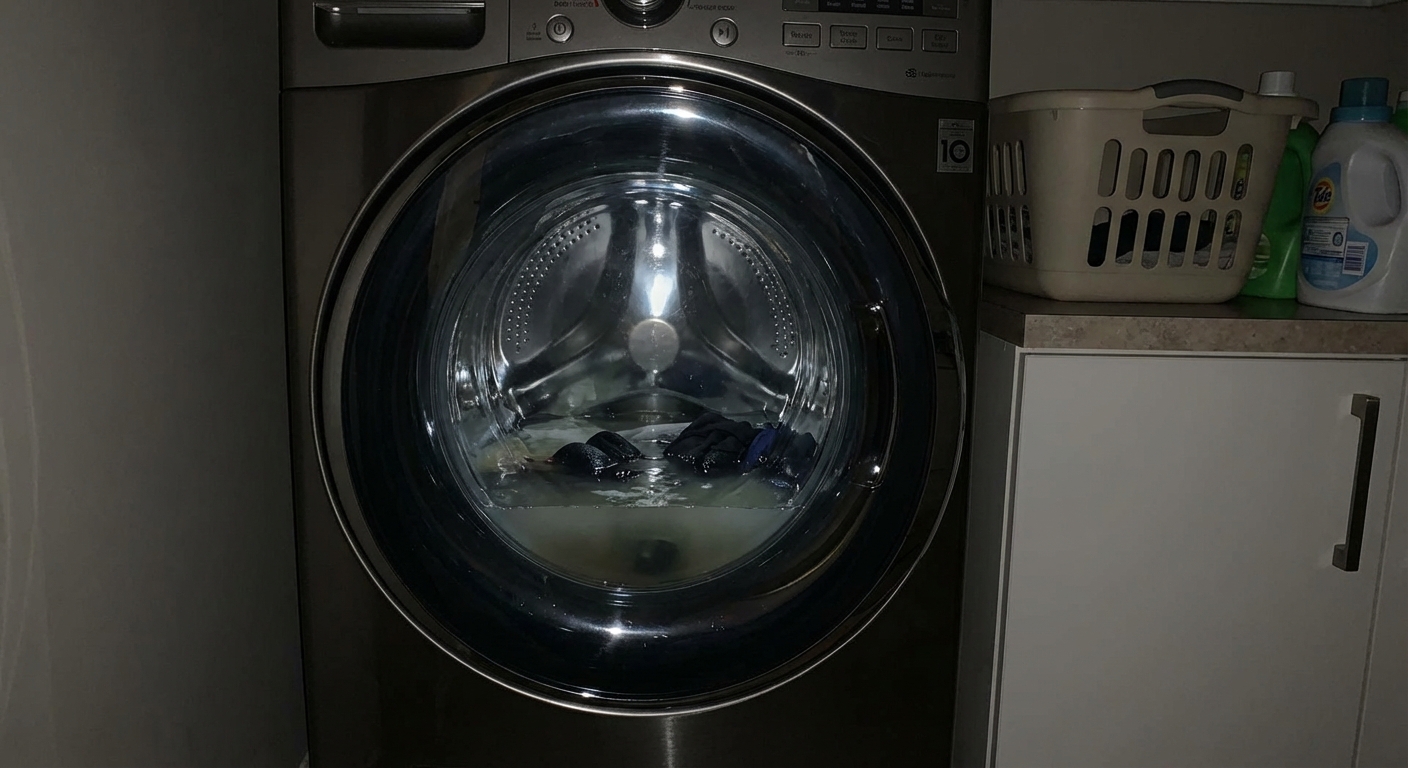
If your washing machine won’t drain, it usually looks like one of three things: the tub is still full of water, the cycle stops mid-drain, or your clothes come out dripping like you just pulled them from a bucket.
The good news is that most drain problems are basic blockage or safety-switch issues, not a total washer death sentence. The key is troubleshooting in a smart order so you don’t create a bigger mess or replace a part you didn’t need.
Safety first: Unplug the washer before you put hands near the pump, filter, or wiring. Turn off the water supply if you plan to pull the machine out or remove hoses. Keep a shallow pan, towels, and a shop vac nearby if you’ve got one.
Quick decision tree (start here)
Use this quick flow to pick the most likely fix before you start taking things apart.
- Washer is full of suds or smells like too much detergent? Go to Fix #4: Excess suds.
- Drain hose looks pinched, kinked, or shoved too far into the standpipe? Go to Fix #1: Kinked or misrouted drain hose.
- Water drains slowly, or you hear the pump hum but nothing moves? Go to Fix #2: Clogged drain hose and Fix #3: Blocked pump filter.
- Top-loader fills and agitates but won’t drain or spin, and the lid feels “fine” but nothing happens? Go to Fix #5: Lid switch or door lock issue.
- Washer tries to drain but is loud and grinding, or the pump is silent and you still have water? Go to Fix #6: Failed drain pump.
If you’re not sure, start with Fix #1 and work down. It’s the least messy route.
Before you troubleshoot: 5-minute checks
- Confirm the cycle: Make sure you’re not on a “Rinse Hold” or “No Spin” setting.
- Try a Drain and Spin: If it drains on that mode, your main cycle choice or load balance may be the issue.
- Listen: During the drain portion, do you hear a hum (pump trying) or nothing (lock/switch/control issue)?
- Check the load: A heavy, unbalanced load can stop some machines from spinning out properly. That usually leaves wet clothes, but not a tub completely full of water.
- Look for obvious clogs: Socks, coins, and hairpins are repeat offenders.
If the tub is full: drain it safely
If the tub is full of water, deal with that first so you’re not wrestling a mini swimming pool.
- Check for an emergency drain: Many front-loaders have a small drain tube behind the lower access door near the pump filter.
- Use a shop vac (if you’ve got one): It’s fast and way less dramatic than towels alone.
- Bail it out: A small cup and a bucket works in a pinch. Slow, but safe.
Tip: Don’t tilt or move a washer that’s full of water unless you absolutely have to.
Fix #1: Kinked, pinched, or misrouted drain hose
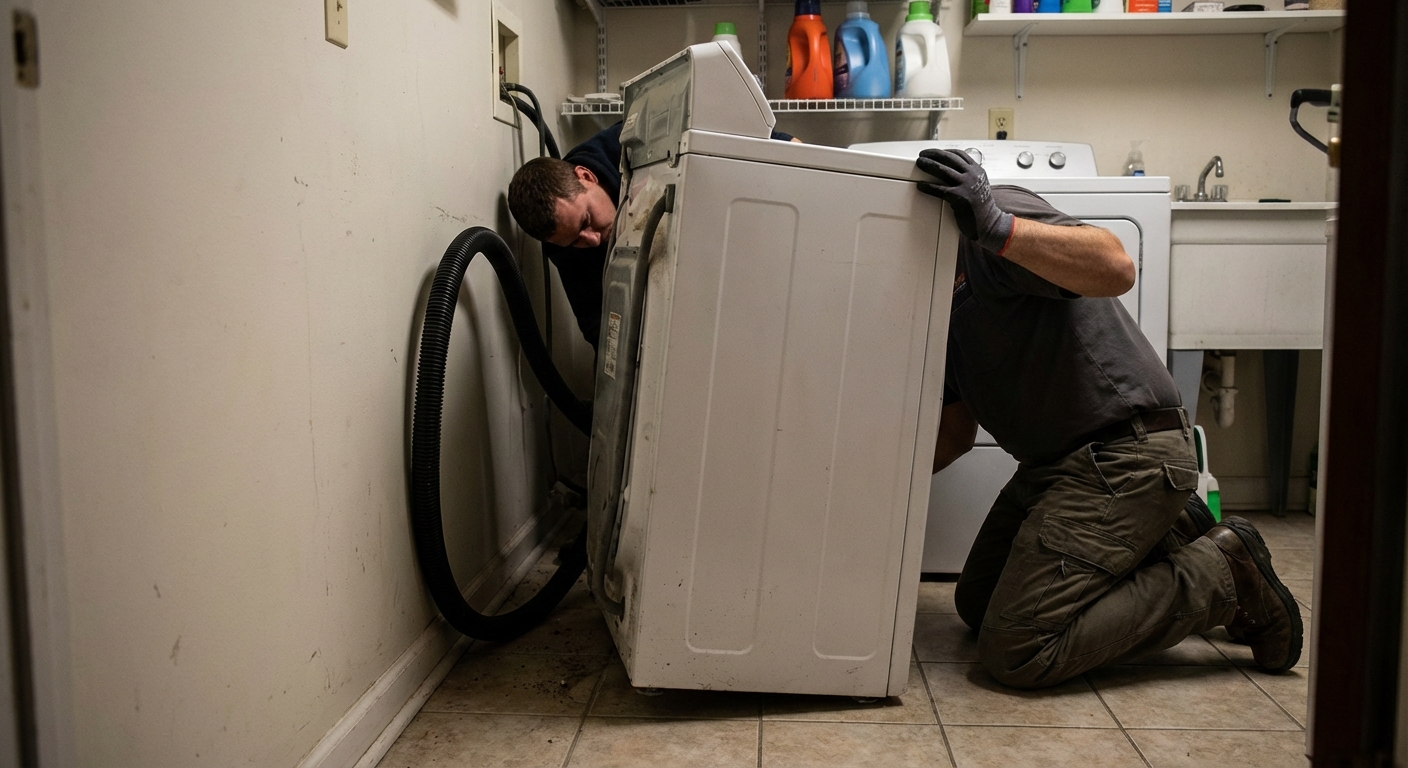
What it looks like
- The washer stops with water in the tub.
- You recently pushed the washer back after cleaning or painting.
- The drain hose is bent sharply behind the machine.
Why it happens
The pump can only push water if the hose is open. A kink is like stepping on a garden hose.
If the drain hose is shoved too far down the standpipe (or sealed tightly), it can cause siphoning, poor drain performance, or weird fill and drain behavior. It can also restrict airflow, which some setups need to drain smoothly.
What to do (DIY)
- Unplug the washer.
- Gently pull the machine forward and look for pinched spots.
- Make a smooth curve in the hose, not a hard bend.
- Check the standpipe setup: you typically want the hose only a few inches into the pipe, with an air gap. Many installs land in the 4 to 6 inches range, but check your manual and don’t jam it to the bottom.
- Make sure the standpipe is tall enough for your washer type and the hose is secured so it can’t pop out.
DIY or technician? DIY.
Fix #2: Clogged drain hose (lint, coins, tiny socks)
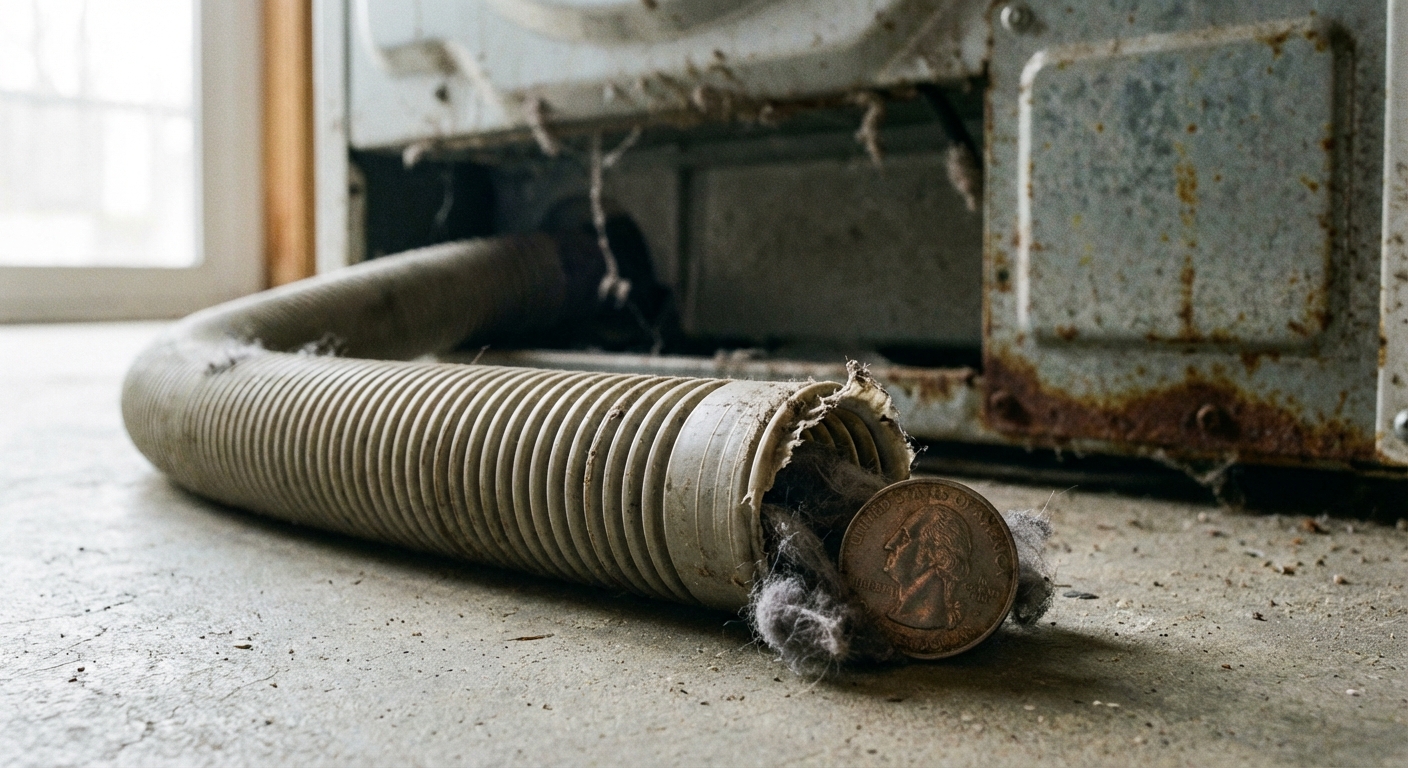
What it looks like
- Water drains very slowly.
- You hear the pump running, but the standpipe is barely receiving water.
- The problem started after washing small items without a mesh bag.
Why it happens
Even if your washer has a pump filter, stuff still makes its way into the hose. Lint can mat up inside bends. A single stray sock can create a surprisingly solid plug.
What to do (DIY, slightly messy)
- Unplug the washer and turn off water valves.
- Put a shallow pan and towels under the hose connection.
- Remove the drain hose from the washer outlet (spring clamp or screw clamp).
- Check both ends for blockages you can pull out with needle-nose pliers.
- Flush the hose in a bathtub or outside with a garden hose. If it’s stubborn, a plumber’s snake can help.
- Reattach tightly, making sure the clamp is seated where it was originally.
Don’t skip this: If your washer is pumping but the standpipe backs up or overflows, the clog might be in the house drain (the standpipe or trap), not the washer. If you suspect that, stop and clear the plumbing or call a plumber.
DIY or technician? DIY if you’re comfortable with minor water spill risk. Call a technician if you can’t access the hose safely or your washer is stacked in a tight closet.
Fix #3: Blocked pump filter (common on front-loaders)
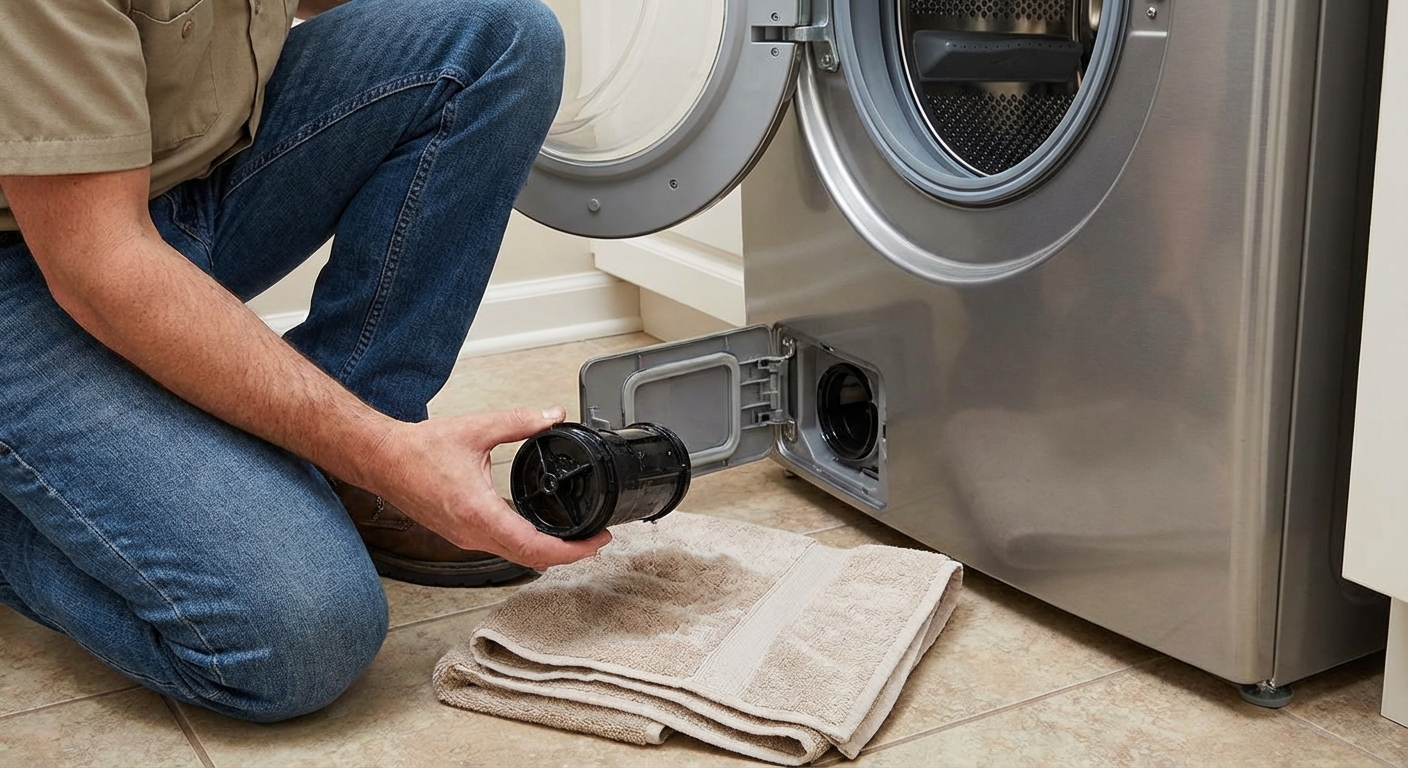
What it looks like
- The washer won’t drain, or it drains but very slowly.
- You may get an error code related to draining (varies by brand).
- You hear a hum or a strained sound during drain.
Why it happens
The pump filter is a “last chance” trap for coins, buttons, hair ties, pet hair, and lint. When it fills up, the pump can’t move water. In my house, this is the fix more often than I want to admit.
What to do (DIY, plan for water)
- Unplug the washer.
- Find the pump filter access door, usually at the bottom front.
- Lay down towels and use a shallow pan. If there’s a small drain tube, empty it first.
- Slowly unscrew the filter cap. Let water trickle out in a controlled way.
- Clean debris from the filter and the filter housing.
- Check the pump impeller inside the opening. It should spin with gentle finger pressure and not feel jammed.
- Reinstall the filter snugly. Don’t cross-thread it.
- Run a Drain and Spin test, then check around the cap for drips for the first minute or two.
DIY or technician? DIY for most homeowners. Call a technician if the filter housing is cracked, the cap won’t seal, or the impeller is damaged.
Fix #4: Excess suds (HE detergent issues)
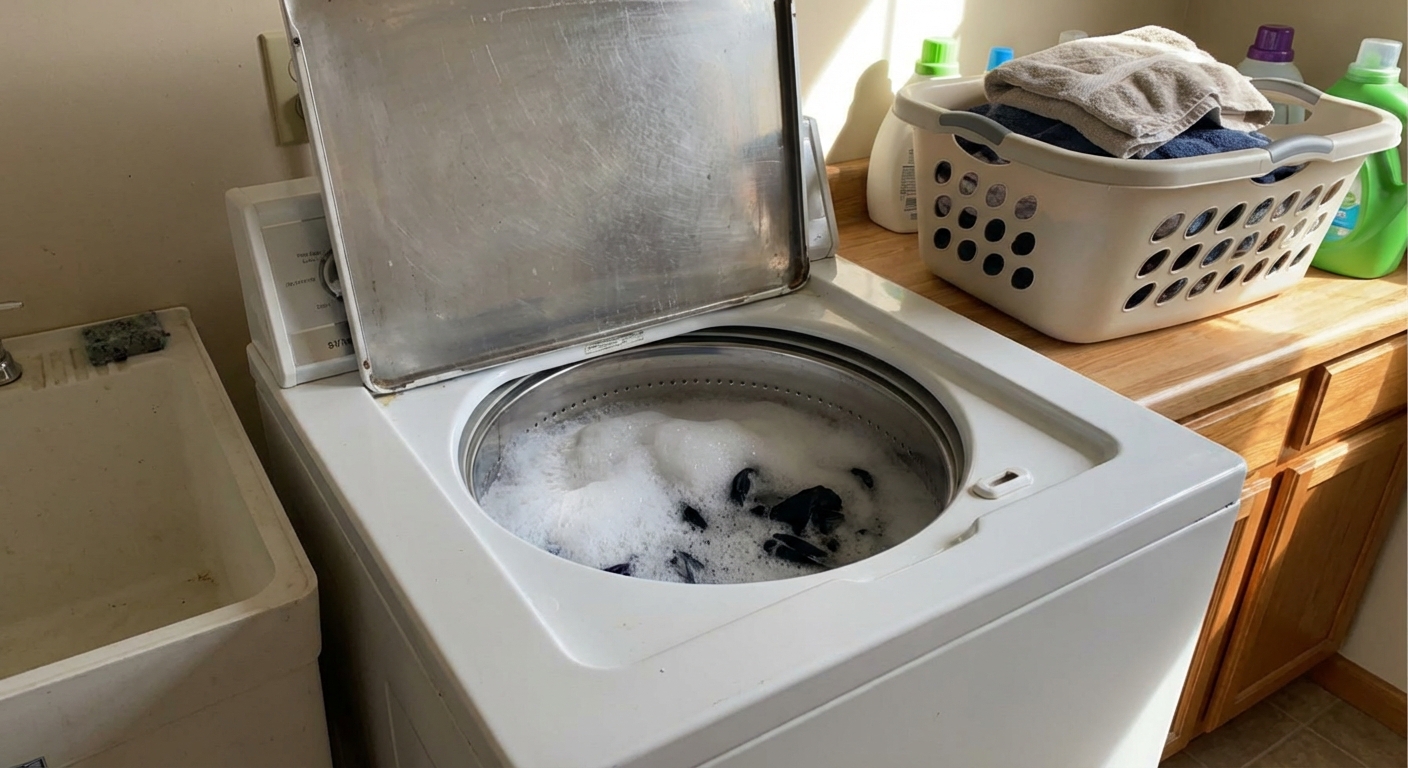
What it looks like
- The tub has lots of foam, sometimes even after the cycle ends.
- Washer drains poorly or throws a “suds” or “oversuds” warning (on some models).
- Clothes feel slippery or have detergent residue.
Why it happens
Too much detergent, or non-HE detergent in an HE machine, creates foam that the pump struggles to move. Suds can also throw off sensing on some models, so the washer may pause, extend the cycle, or run a suds routine. Either way, draining can be sluggish.
What to do (DIY)
- Pause the cycle. Let suds settle for 30 to 60 minutes.
- Run a Rinse and Spin with no detergent.
- If suds are extreme, run another rinse. Use cold water for the rinse to reduce foam.
- Going forward: use HE detergent, and cut the amount. It’s often far less than the cap line. Many people can start around 1 to 2 tablespoons for typical loads with HE liquid, then adjust based on the detergent label and your water hardness.
DIY or technician? DIY. If oversudsing keeps happening, it’s almost always a measuring and detergent-type issue, not a part failure.
Fix #5: Lid switch (top-load) or door lock (front-load)
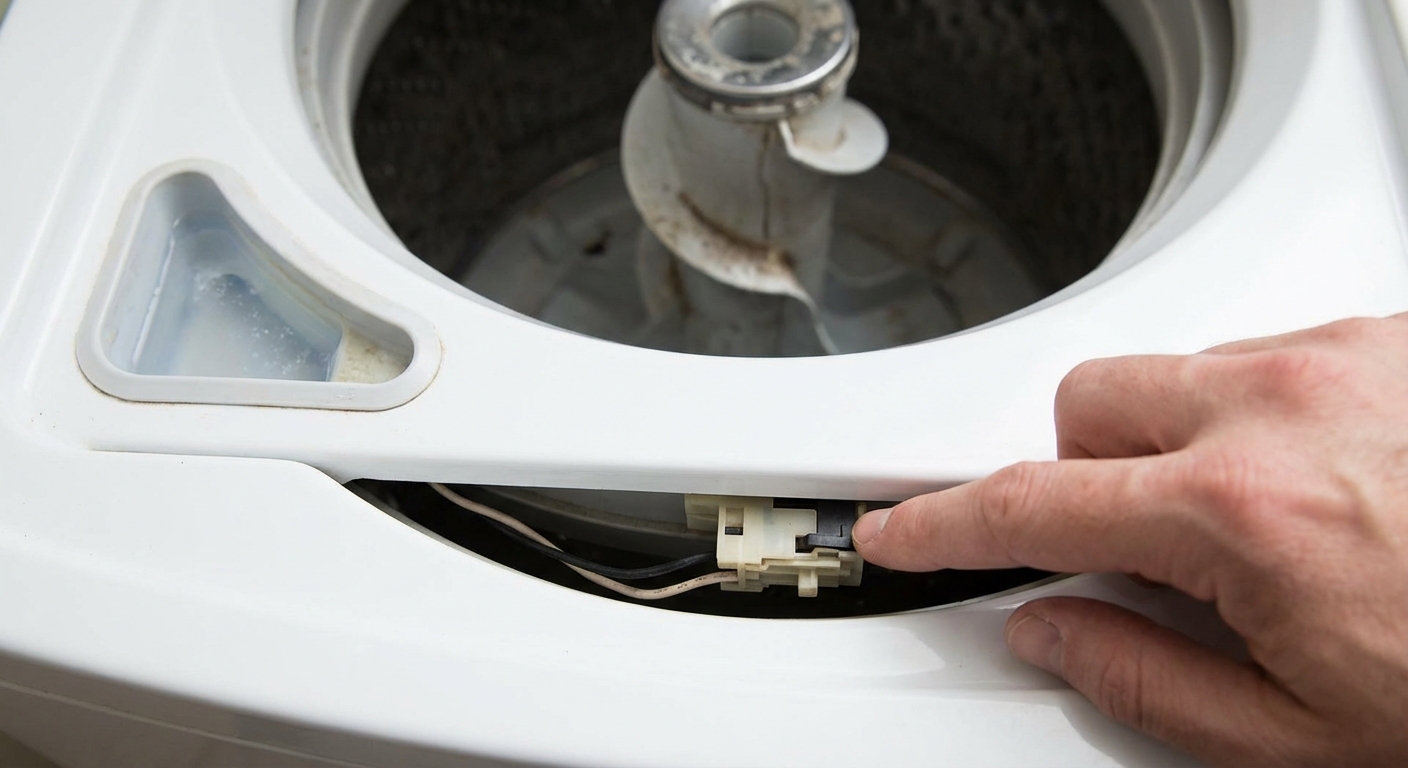
What it looks like
- Top-load washer fills and agitates, but won’t drain or spin.
- You don’t hear the drain pump attempt at all.
- Lid doesn’t “click” the way it used to, or the latch feels loose.
Why it happens
Washers are designed not to spin unless the lid or door is locked. Depending on the design, some models also won’t drain if they don’t sense a locked lid or door. If the switch or lock is faulty, the washer thinks the lid is open even when it’s shut.
What to do (DIY checks first)
- Unplug the washer.
- Inspect the lid strike and latch area for cracks, missing pieces, or heavy detergent buildup.
- Close the lid firmly and try a Drain and Spin cycle.
- If you’ve got a model with diagnostic mode, check for lid or lock related codes (your manual or manufacturer site will list them).
Repair options
- DIY for handy homeowners: Lid switch assemblies and door lock latches are often replaceable with basic tools, but access varies wildly by brand and model.
- Call a technician if: You’re dealing with a stacked unit, you smell electrical burning, you see melted plastic, or the repair requires major disassembly.
DIY or technician? DIY if you can access the part easily and you’re comfortable following a model-specific guide. Otherwise, technician.
Fix #6: Failed drain pump
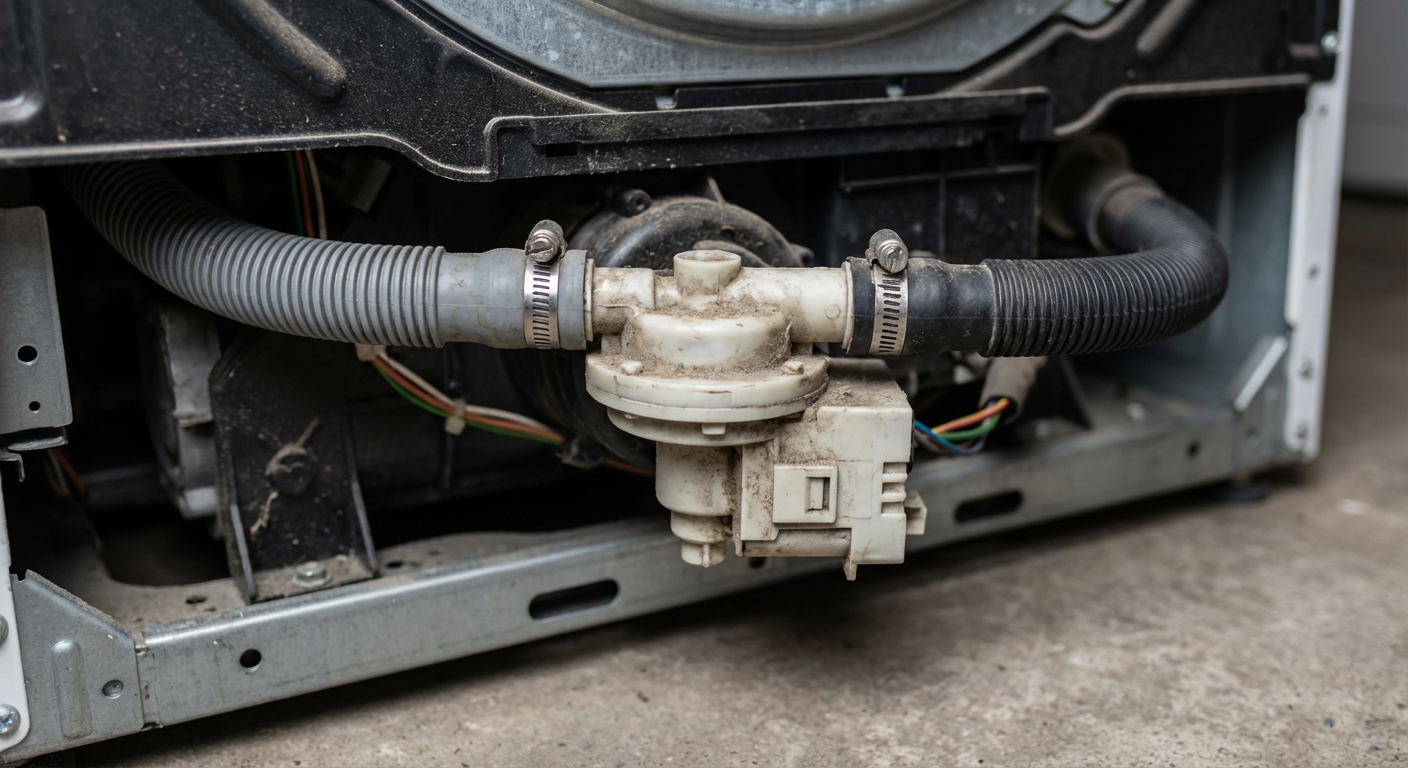
What it looks like
- Washer won’t drain even after clearing filter and hose.
- You hear grinding, rattling, or a loud hum during drain.
- No pump sound at all, but the washer otherwise powers on normally.
Why it happens
Pumps wear out. They can also fail early if they repeatedly ingest debris or run dry. Sometimes the impeller breaks. Sometimes the motor burns out. Either way, water isn’t getting pushed out of the tub.
What to do (best next steps)
- First, confirm you’ve already done Fix #2 and Fix #3. A clogged filter can mimic a bad pump.
- If you’re comfortable with multimeter testing, you can check whether the pump is receiving power during the drain command (model-specific and only if you know safe testing practices).
- If the pump is getting power but not moving water, replacement is likely.
Also possible: If there’s no pump sound and you’re confident the lid switch or door lock is working, you may be looking at wiring, a control board, or a broken connection. That’s usually technician territory.
DIY or technician? Often DIY for confident homeowners with access to the pump and the ability to manage water spills. Technician recommended if the washer must be fully tipped, disassembled heavily, or if you’re unsure about electrical diagnostics.
When to call a technician
I love DIY, but I also like knowing when I’m about to turn a one-hour fix into a weekend of regret. Call for service if any of these apply:
- You smell burning, see smoke, or the breaker trips when the washer tries to drain.
- Water is leaking from the bottom of the washer during the drain attempt.
- You cleared the hose and filter and the washer still won’t drain.
- The machine shows multiple error codes, or the control panel behaves erratically.
- You’ve got a stacked unit or tight built-in laundry closet where pulling the machine risks damaging plumbing, drywall, or flooring.
My drain kit
- Old towels and a shallow baking pan
- Slip-joint pliers or clamp pliers
- Flashlight or headlamp
- Small bucket
- Shop vac (optional, but it makes pump filter cleanouts way less dramatic)
FAQ
Can I just bail the water out and keep using the washer?
You can remove water to get clothes out, but don’t keep running cycles without fixing the drain issue. A struggling pump can overheat, and standing water can lead to odors and mold fast.
Is a washer that won’t drain always the pump?
No. In my experience, the most common causes are a kinked hose, a clogged pump filter, oversudsing, or a blocked house standpipe. The pump is real, but it’s not the automatic culprit.
What if my washer drains but won’t spin?
That’s a different fork in the road. Look for load balance issues, lid switch or door lock problems, or a drive belt and motor control issue depending on the machine style.
Next step: run one test
After each fix, run a Drain and Spin with the washer empty. It’s the fastest way to confirm you solved the actual problem before you put another load of towels in and cross your fingers.

About Marcus Vance
Content Creator @ Grit & Home
Marcus Vance is a lifelong DIY enthusiast and self-taught home renovator who has spent the last decade transforming a dilapidated 1970s ranch into his family's dream home. He specializes in budget-friendly carpentry, room-by-room renovations, and demystifying power tools for beginners. Through his writing, Marcus shares practical tutorials and hard-learned lessons to help homeowners tackle their own projects with confidence.