
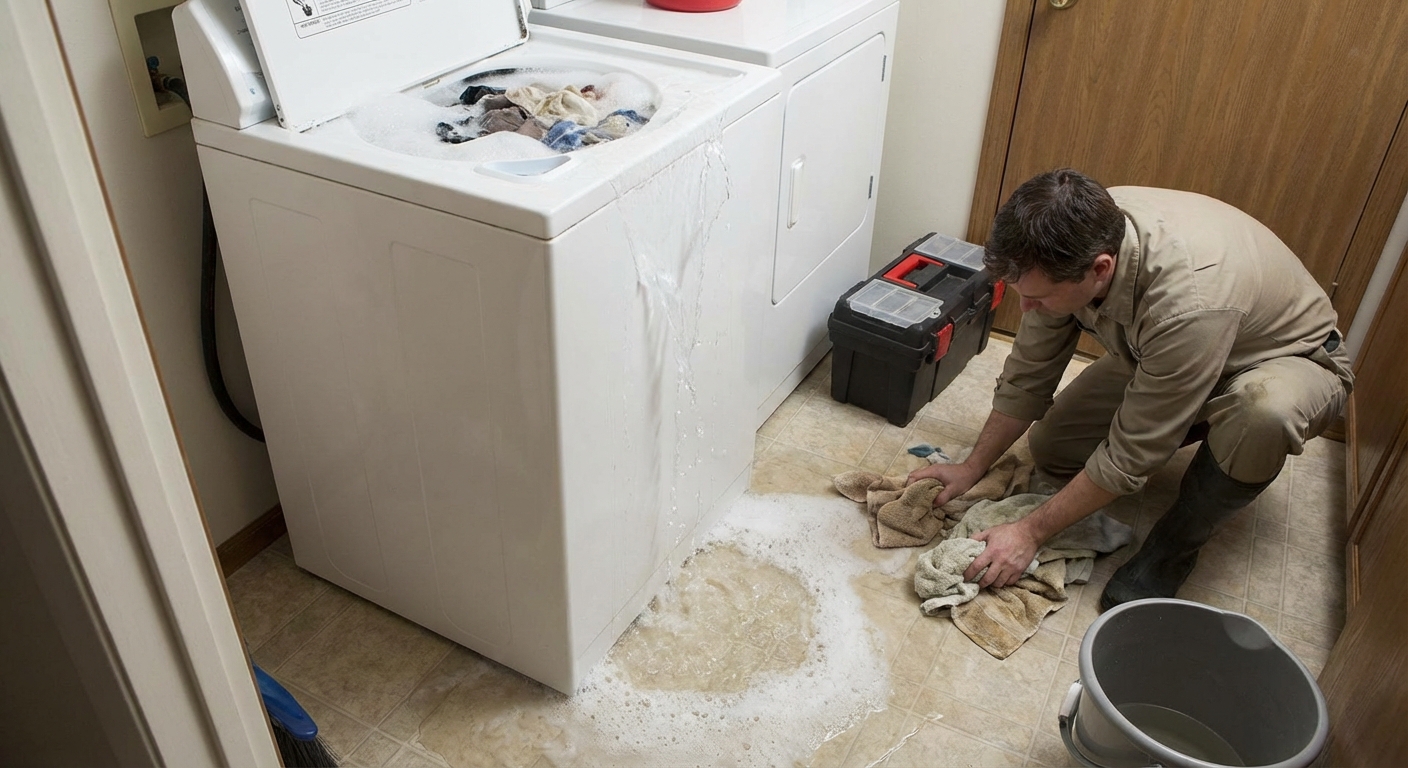
A washing machine that won’t stop filling is one of those problems that goes from annoying to expensive in a hurry. The good news is that the causes are usually pretty predictable, and you can narrow it down with a few safe checks.
I’m going to walk you through two things:
- How to stop the fill right now (even if the washer is acting possessed).
- How to troubleshoot the usual suspects: a stuck water inlet valve, a water level sensing problem (switch or sensor), a kinked or clogged pressure hose, or a control issue.
First: stop the water
If the tub is rising fast or you already have water on the floor, don’t overthink it. Do this in order.
1) Hit Pause, Cancel, or Power
On many washers, Pause/Cancel will stop filling. On others, the behavior varies by model and cycle and you may need Cancel/Drain or Power. If the water level is still climbing after 10 to 15 seconds, move on.
2) Unplug the washer
Unplugging removes the control board from the equation. Here is the key diagnostic clue:
- If the washer keeps filling even when unplugged, you almost certainly have a mechanically stuck or leaking water inlet valve.
- If it stops filling when unplugged, the valve is probably capable of closing, and the issue is more likely a sensing or control problem (water level system, hose/air dome, or control board).
3) Shut off the water supply valves
Behind the washer you should see two shutoff valves, one for hot and one for cold. Turn them clockwise until they stop. If you only shut off one and the tub still fills, shut off the other too.
If the valves are stuck, don’t force them hard enough to snap a stem. If you cannot close them, jump to “When to call a pro” below.
4) Start damage control
- Keep the washer unplugged.
- Scoop water out with a cup and bucket, then use towels.
- If you have a wet/dry vac, this is its moment.
False alarm check
Before you chase an overfill, confirm what the water level is actually doing.
- If the washer sounds like it is filling but the water level never rises, you may have a continuous drain or siphoning issue, not an overfill. This can happen if the drain hose is shoved too far down the standpipe, the standpipe is too low, or the hose has no air gap.
- If the water level rises past normal and keeps going, you are in the right article. Keep going.
Why washers overfill
Washers stop filling in two basic ways:
- The inlet valve closes when the machine tells it to.
- The machine knows when to tell it because a water level system says “that’s enough.”
When a washer won’t stop filling, either the valve is physically stuck open, or the washer is not getting the correct “water level reached” signal, or it is not processing that signal correctly.
Quick note on newer machines: Many traditional washers use a click-type pressure switch. Many newer models use an electronic pressure sensor (pressure transducer) or may combine pressure sensing with other inputs. The troubleshooting logic is similar, but the exact test steps can differ by model.
Safety and tools
You can troubleshoot most of this with basic tools. Before you open anything up:
- Unplug the washer.
- Turn off both water supply valves.
- Have towels ready. You will likely spill some water when you move hoses.
Safety note: Do not run the machine with panels open or test live voltage unless you are trained and using the correct procedure for your model.
Helpful tools
- Slip joint pliers (for hose fittings)
- Phillips and flat screwdriver
- Flashlight
- Small bucket or shallow pan
- Optional: multimeter (for electrical testing)
Fix 1: Stuck inlet valve
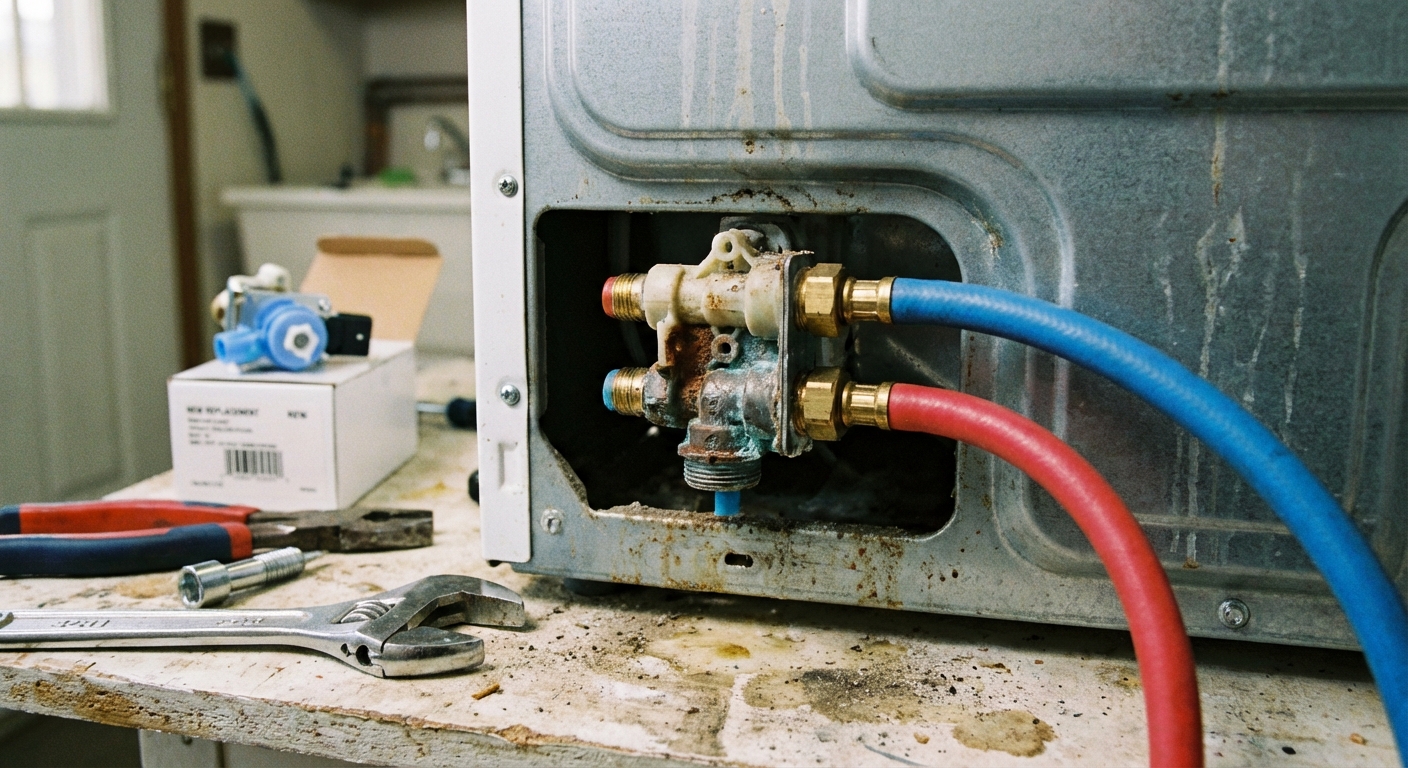
The water inlet valve is the part the hoses connect to on the back of your washer. Inside are solenoids and rubber seals. If debris gets in there or the valve wears out, it can stick open or fail to seal fully.
Quick test: does it fill when unplugged?
This is the fastest way to call it:
- Still filling while unplugged = inlet valve stuck open mechanically or leaking through.
- Stops filling when unplugged = keep troubleshooting below.
What to do
- Turn off the water at the wall and leave it off until repaired.
- In most cases, the fix is replacing the inlet valve. They are usually not worth rebuilding.
Replacement overview
- Unplug washer and shut off hot and cold valves.
- Remove the fill hoses from the back of the washer (have a bucket ready).
- Access the valve from the back panel or top console area depending on washer style.
- Take a photo of wire connectors and hose routing before disconnecting anything.
- Swap the valve and reattach wires and internal hoses.
- Reinstall panels, reconnect fill hoses, and slowly turn water back on while checking for leaks.
Worth doing while you are there: Check the little inlet screen filters where the hoses connect. Clogged screens usually cause slow fill, but debris can also contribute to valve sealing problems. Clean gently if they are packed with grit.
Thrifty tip: When you buy the replacement valve, match your model number exactly. “Close enough” parts are how you end up doing the job twice, ask me how I know.
Fix 2: Water level switch or sensor
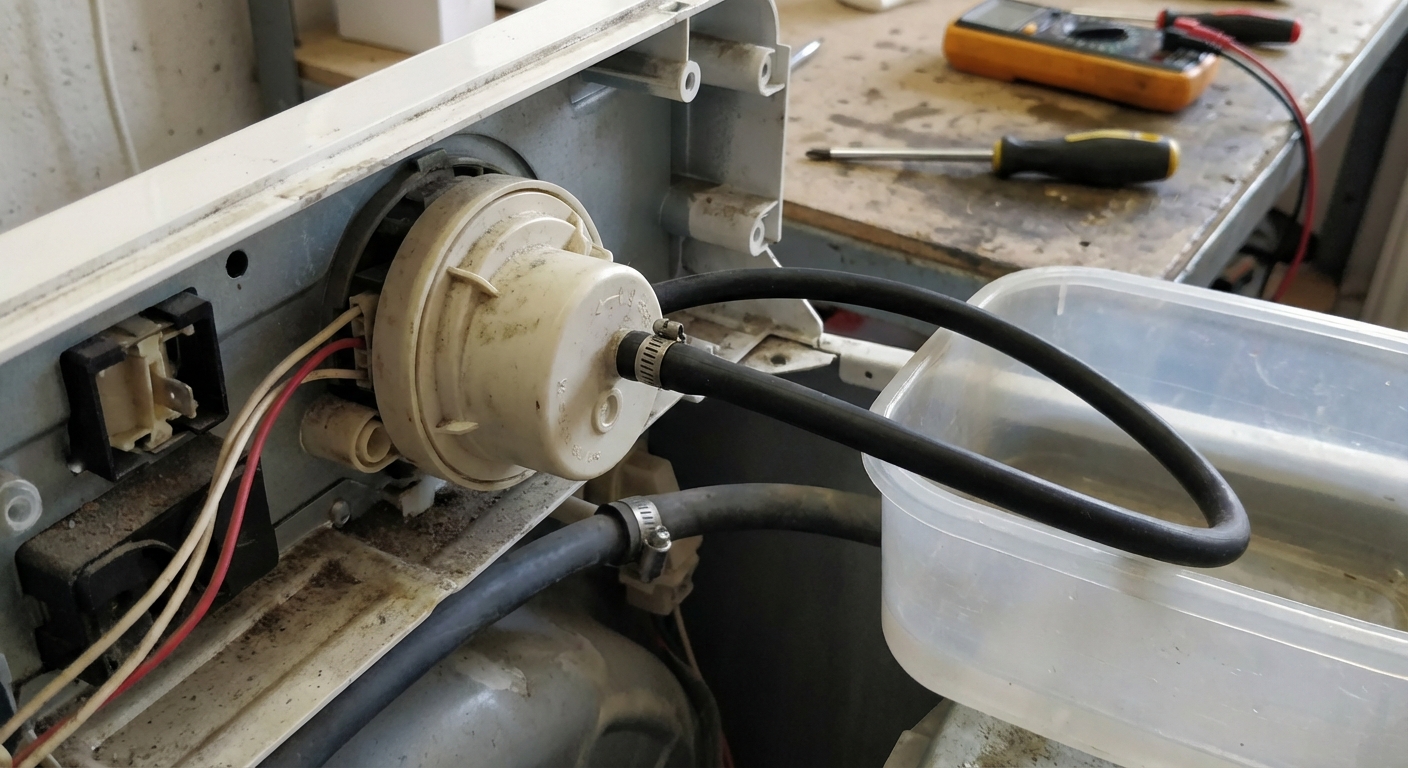
Many washers use a pressure based water level system to detect fill level. As the tub fills, air pressure in a small hose increases and the washer decides when to stop filling.
- On many machines this is a mechanical pressure switch that clicks.
- On many newer machines it is an electronic pressure sensor (transducer) that sends a changing signal to the control board.
Signs this is the problem
- Washer fills past the normal level and may overflow.
- Unplugging the washer does stop the water (meaning the valve can close).
- You may notice odd level behavior, like it always “chooses” too much water regardless of setting.
Safe checks
- Check the connector: With power unplugged, make sure the wiring connector is seated firmly.
- Do not blow into the switch or sensor: Blowing into a modern pressure transducer can rupture the diaphragm and destroy a good part.
- If you need to test airflow, blow into the disconnected hose only: Disconnect the small pressure hose from the switch or sensor and gently blow through the hose to confirm it is clear. This helps you diagnose the hose and tub air dome, not the switch itself.
If the pressure hose and air dome are clear (next section) and the washer still overfills, the switch or sensor becomes a strong suspect. Model specific testing varies, so this is a good moment to reference a service manual if you have one.
Fix 3: Pressure hose or air dome
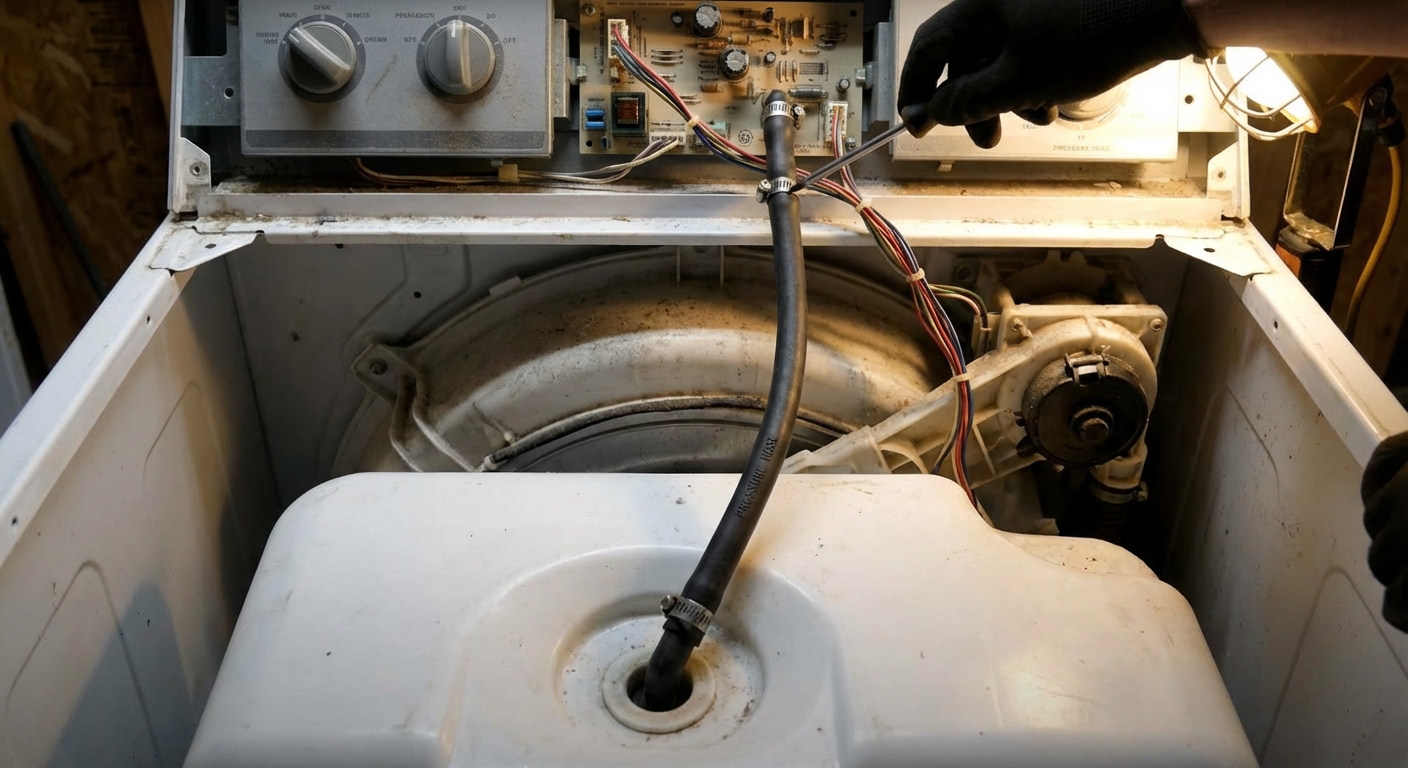
This is the sneaky one. If the small air hose that runs from the tub to the water level device is kinked, pinched, cracked, or clogged with gunk, the washer never gets an accurate pressure signal. The washer keeps filling because it thinks the tub is still empty.
Where it is
- Top load: Often runs from the tub area up to the console.
- Front load: Often runs to a sensor mounted higher up, with the air trap or hose routing accessible from the top, back, or lower front panel depending on the model.
What to look for
- A hose that is flattened behind a panel or pinched under the top.
- A hose that has slipped off its nipple at the tub air dome or at the switch or sensor.
- Cracks or a brittle section that leaks air.
- Soap scum or residue at the tub air dome connection (common on older machines and heavy detergent use).
What to do
- Unplug washer and shut off water.
- Find the small hose at the switch or sensor and disconnect it.
- Trace the hose down as far as you can and look for kinks, rub spots, and loose connections.
- Gently blow through the hose. It should be clear. If it feels blocked, clean the air dome or replace the hose.
My mistake worth sharing: I once replaced a pressure switch that did not need replacing because the hose had simply popped loose. Always check the hose first. It is the cheapest “part” in this whole story.
Fix 4: Control board or timer
If the inlet valve closes properly, the water level system checks out, and the washer still overfills, the problem may be in the control system.
Common scenarios
- Electronic control board is sending power to the inlet valve when it should not.
- Stuck relay on the board keeps the valve energized.
- Mechanical timer (on older washers) fails and does not advance correctly.
How to narrow it down
- If the washer only fills when plugged in and seems to ignore the water level, suspect the water level system or control.
- If the washer fills at weird times, like when it is off but plugged in, suspect a control board issue or a valve that is leaking through.
Control boards can be pricey. Before replacing one, verify the model specific diagnostic steps in your service manual, or call an appliance tech if you are not comfortable with electrical testing.
Quick cheat sheet
- Fills even when unplugged: water inlet valve stuck open or leaking through.
- Stops filling when unplugged but overfills when running: pressure hose kinked or clogged, air dome issue, water level switch or sensor issue, or control logic issue.
- Overfills only on one temperature setting: the hot or cold side of the inlet valve may be failing on that side. On some models, a control, thermistor, or mixing logic issue can also contribute.
- Intermittent slow fill when off: inlet valve may be seeping and should be replaced.
- Sounds like it fills but level never rises: drain siphoning or continuous drain, check drain hose placement.
When to call a pro
I’m all for DIY, but I’m also all for not turning a washer problem into a flooded laundry room plus an electrical hazard. Bring in help if:
- You cannot shut off the water supply valves, or the shutoff valves leak after you touch them.
- Water reached outlets, power strips, or the washer’s electrical connections.
- Your washer is stacked in a tight closet and you cannot access it safely.
- You suspect a control board issue and are not comfortable with electrical testing.
After the fix
- Know where your shutoffs are and make sure you can turn them. If they are frozen, plan a weekend to replace them before an emergency forces the issue.
- Use the right amount of detergent. Too much can contribute to residue buildup that messes with sensing systems.
- Check hoses yearly for bulges, cracks, and corroded fittings.
- If you travel often, consider turning the washer supply valves off while you are away.
FAQ
Why does my washer keep filling when it is off?
If it is truly off and especially if it is unplugged, the most common cause is a leaking or stuck water inlet valve letting water seep through.
Can I keep using the washer if it sometimes overfills?
I would not. Overfilling can cause leaks, floor damage, and in some cases can stress the drain system. Shut the water off between uses at minimum, and schedule the repair.
Is an overfilling washer the same issue as a washer that won’t fill?
They are basically opposites. A washer that won’t fill is often a blocked screen, a bad valve that will not open, or a water supply problem. A washer that won’t stop filling is often a valve that will not close or a water level sensing problem.

About Marcus Vance
Content Creator @ Grit & Home
Marcus Vance is a lifelong DIY enthusiast and self-taught home renovator who has spent the last decade transforming a dilapidated 1970s ranch into his family's dream home. He specializes in budget-friendly carpentry, room-by-room renovations, and demystifying power tools for beginners. Through his writing, Marcus shares practical tutorials and hard-learned lessons to help homeowners tackle their own projects with confidence.