
🚨 In a DIY emergency or rush?
Skip the details and jump straight to our 30-second cheat sheet for the most crucial info.
A water bill that suddenly jumps can feel like your house is quietly pranking you. I have been there. One month at our 1970s ranch, the bill doubled and I immediately pictured a broken main under the slab and a five-figure repair.
Most of the time, the culprit is much less dramatic. A running toilet, a stuck irrigation valve, a softener regeneration glitch, or a tiny leak you never notice because it drains somewhere you never look.
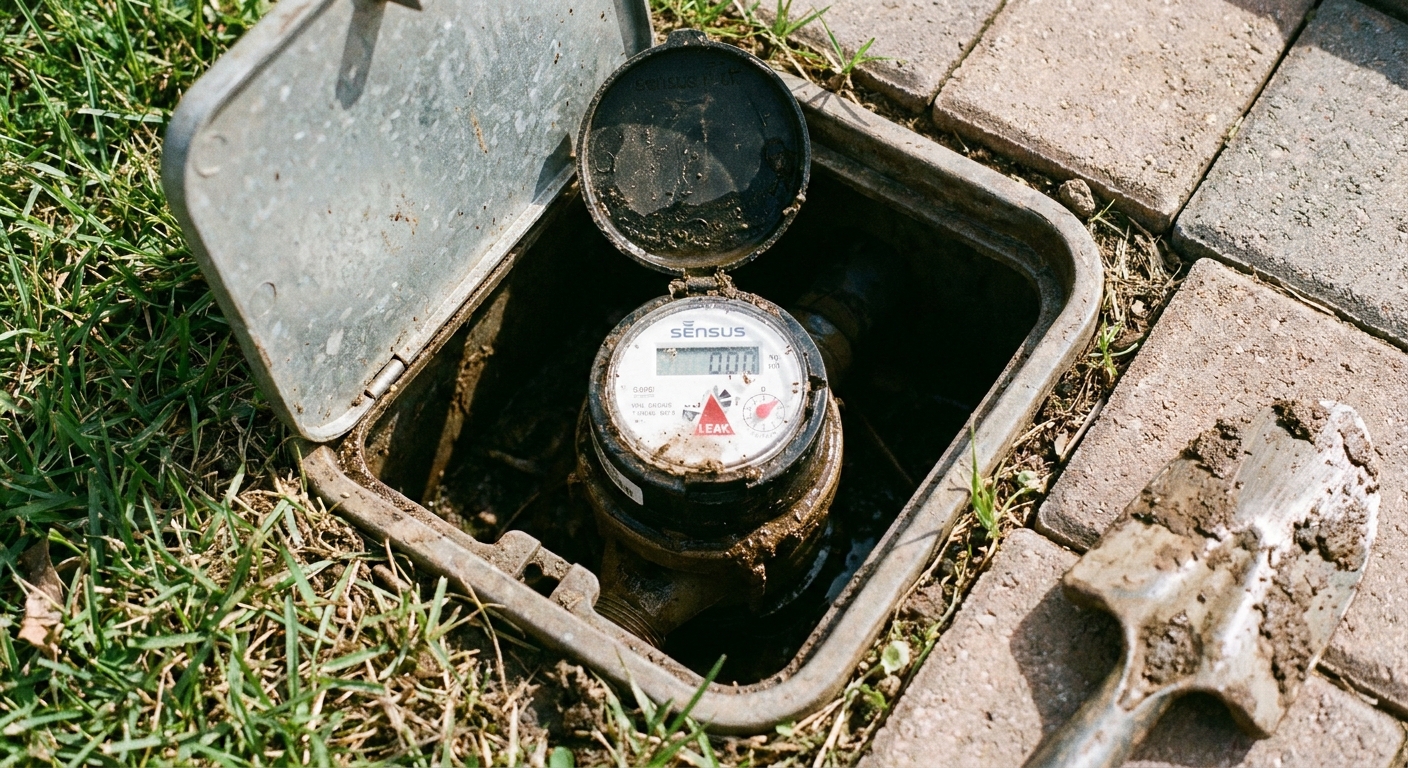
This walkthrough is designed for that anxious moment when you need answers fast. We will start with the utility meter because it tells you, in plain terms, whether water is moving when it should not be.
First, rule out billing quirks
Before you start crawling around with a flashlight, take two minutes to rule out the simple stuff. It keeps you from chasing ghosts.
- Check the billing period dates. Sometimes a “high” bill covers more days than usual.
- Look for estimated reads. If your utility estimated last month and corrected this month, you can see a jump that is not a leak.
- Think about unusual usage. Guests, filling a pool, pressure washing, new sod, or a teen discovering 30-minute showers.
- Compare gallons, not dollars. Rate changes happen. The “usage” or “gallons” line is what matters.
- Check your utility portal if you have one. Many utilities now show daily or hourly usage, and some will even flag “continuous flow” as a possible leak.
If gallons are way up and nothing obvious changed, move on to the meter test.
The fastest truth teller: the meter test
If your home is on city water, your meter can tell you whether water is flowing right now, even if every faucet looks off.
What you need
- A phone camera (helpful for “before” and “after” photos)
- A flashlight
- 10 to 20 minutes of no water use in the house (longer if you suspect a tiny leak)
Step-by-step
- Turn off everything that uses water. No faucets, no laundry, no dishwasher. Pause ice makers and avoid flushing. If you have an evaporative cooler, humidifier, whole-house humidifier, or any device that auto-feeds water, turn it off for the test.
- Find the meter. Usually near the street in a small ground box.
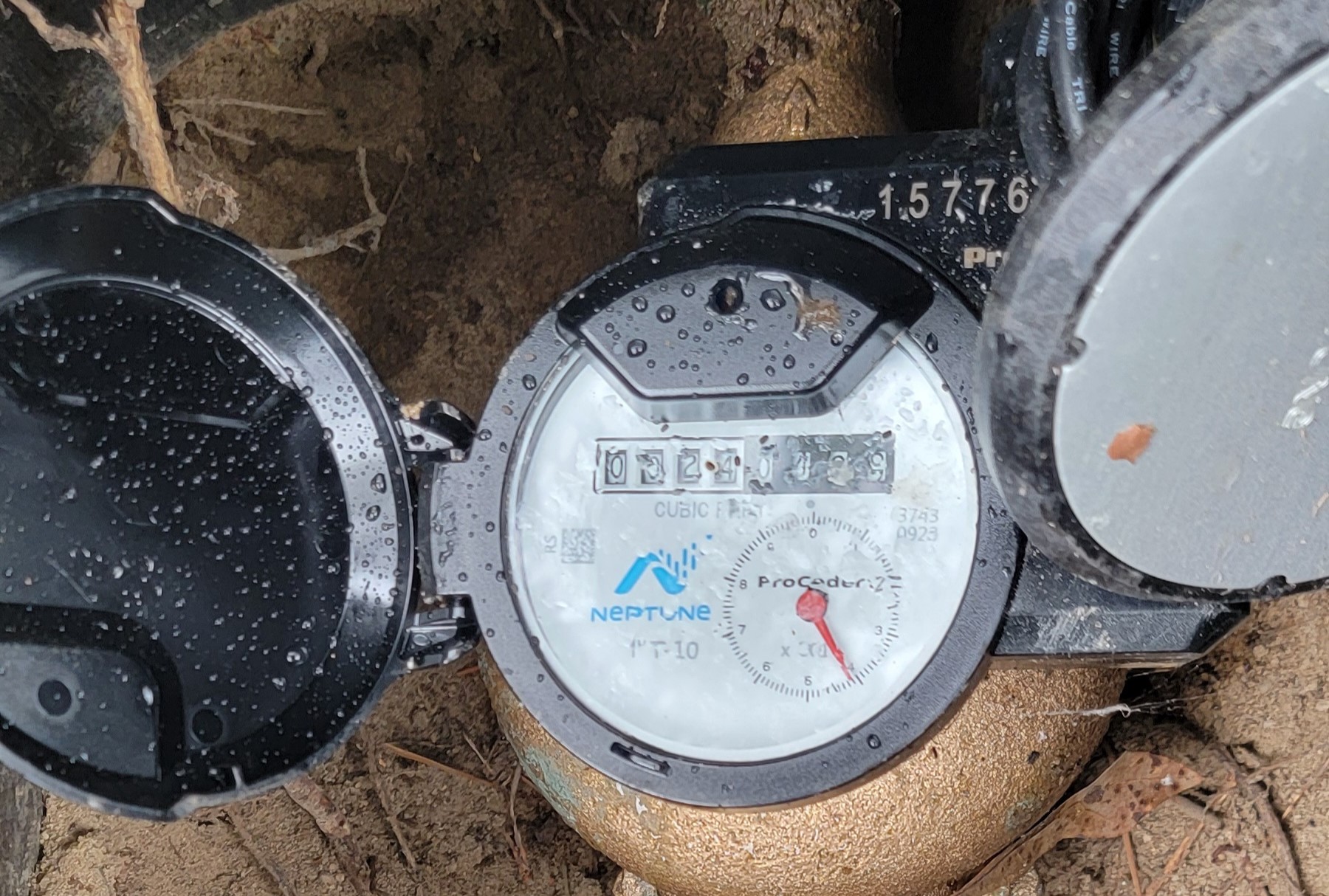
- Find the leak indicator or flow display. Many older meters have a small triangle, star, or tiny dial that spins with even a trickle. Some newer digital or smart meters show a flow rate, a flashing icon, or a “leak” indicator on the screen instead of a spinning dial.
- Take a photo (or screenshot) of the reading. Capture whatever your meter uses to show flow: dial, triangle, or digital display.
- Wait 10 to 20 minutes with zero water use. If you suspect a very small leak, stretch this to 30 to 60 minutes.
- Check again and compare.
How to read the result
- If the indicator is moving, the display shows flow, or a leak icon flashes: Water is moving somewhere. That is usually a leak, but it can also be a device that legitimately draws water (humidifiers, some water-powered backup systems, and certain treatment setups). The next sections help you sort out which.
- If nothing changes: You likely do not have a constant leak. Your spike could be intermittent (a toilet that runs sometimes, irrigation overnight) or a one-time high-use event.
Neighborly advice: If you see continuous flow, do not panic and do not start digging. You can narrow the “where” quickly with a couple of targeted checks.
Toilets: the most common silent waster
Toilets are one of the most common silent water wasters. They can leak enough to spike a bill without ever making a dramatic running sound. Flappers warp. Fill valves hang up. Chains get stuck. And because the water goes straight into the bowl, you rarely notice.
The 10 to 15 minute dye test
This is my go-to because it is cheap and definitive.
- Remove the tank lid.
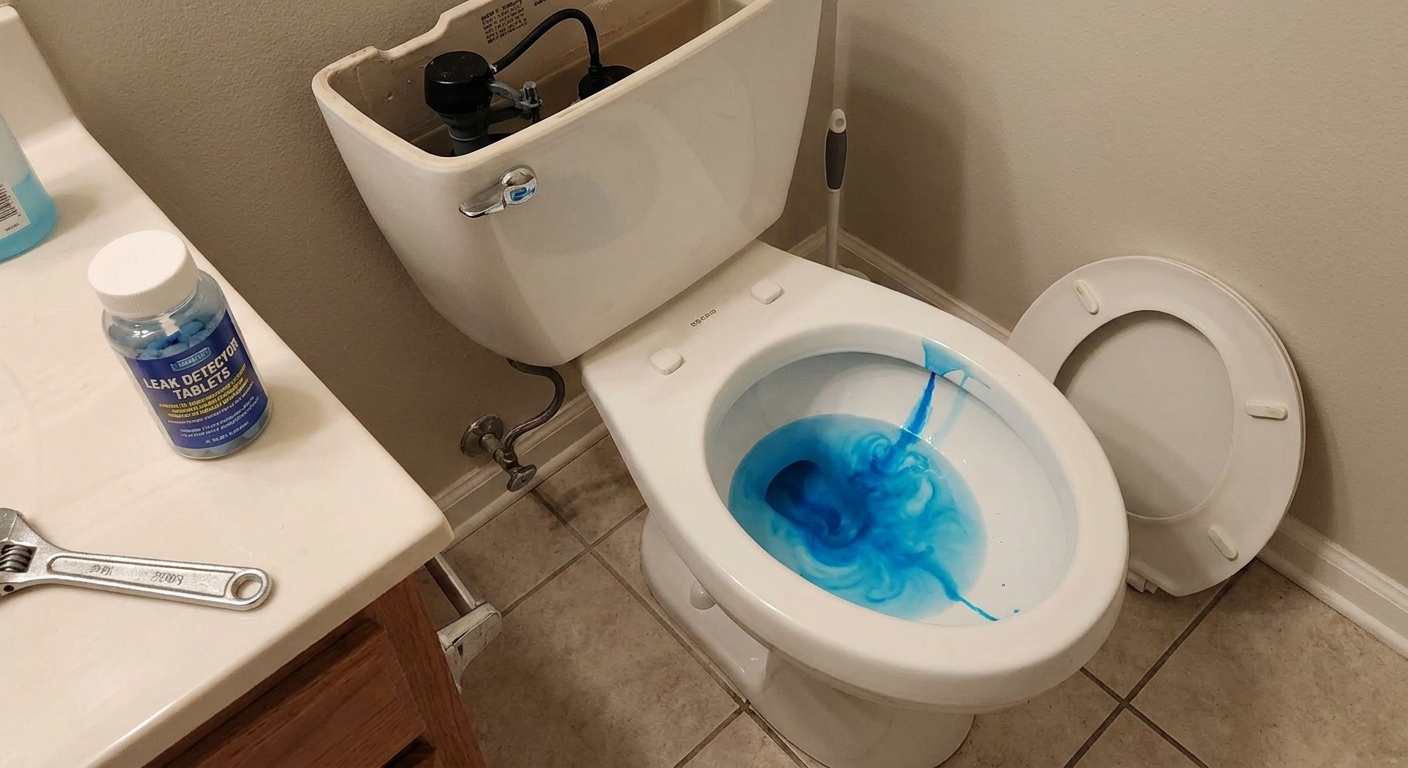
- Add dye. Use a few drops of food coloring, or a dye tablet made for leak tests.
- Do not flush. Wait 10 to 15 minutes.
- Check the bowl water. If you see color in the bowl, water is leaking from tank to bowl.
Quick fixes you can try
- Replace the flapper. This is often the whole problem and costs very little.
- Check the chain. Too tight can hold the flapper open. Too loose can get caught under the flapper.
- Adjust the water level. The tank water should sit below the overflow tube. If it is pouring into the overflow, your fill valve needs adjustment or replacement.
Do this for every toilet in the house. In my experience, the “guest bath nobody uses” is where the leak lives, because nobody hears it.
Irrigation and outdoor water checks
Outdoor leaks are also very common, and they can be extra sneaky because they may only run at night, soak into soil, or drain into a landscape bed where you never step.
Start with the obvious
- Walk the perimeter and look for wet spots. Especially near hose bibs, foundation corners, and along irrigation lines.
- Check hose spigots for drips. A drip every second adds up fast over a month.
- Look at hoses and timers. Cracked hoses, loose fittings, and timer leaks are common.
- If you have a pool, check the auto-fill. A stuck float or leaking fill line can create a massive, silent leak because it never “looks” like a leak, it just keeps topping off.
Sprinkler system checks
- Turn irrigation off for 24 hours. If your meter stops showing flow when irrigation is disabled, you have narrowed it down.
- Run each zone manually and watch. Look for geysers, sputtering heads, or a zone that never shuts off.
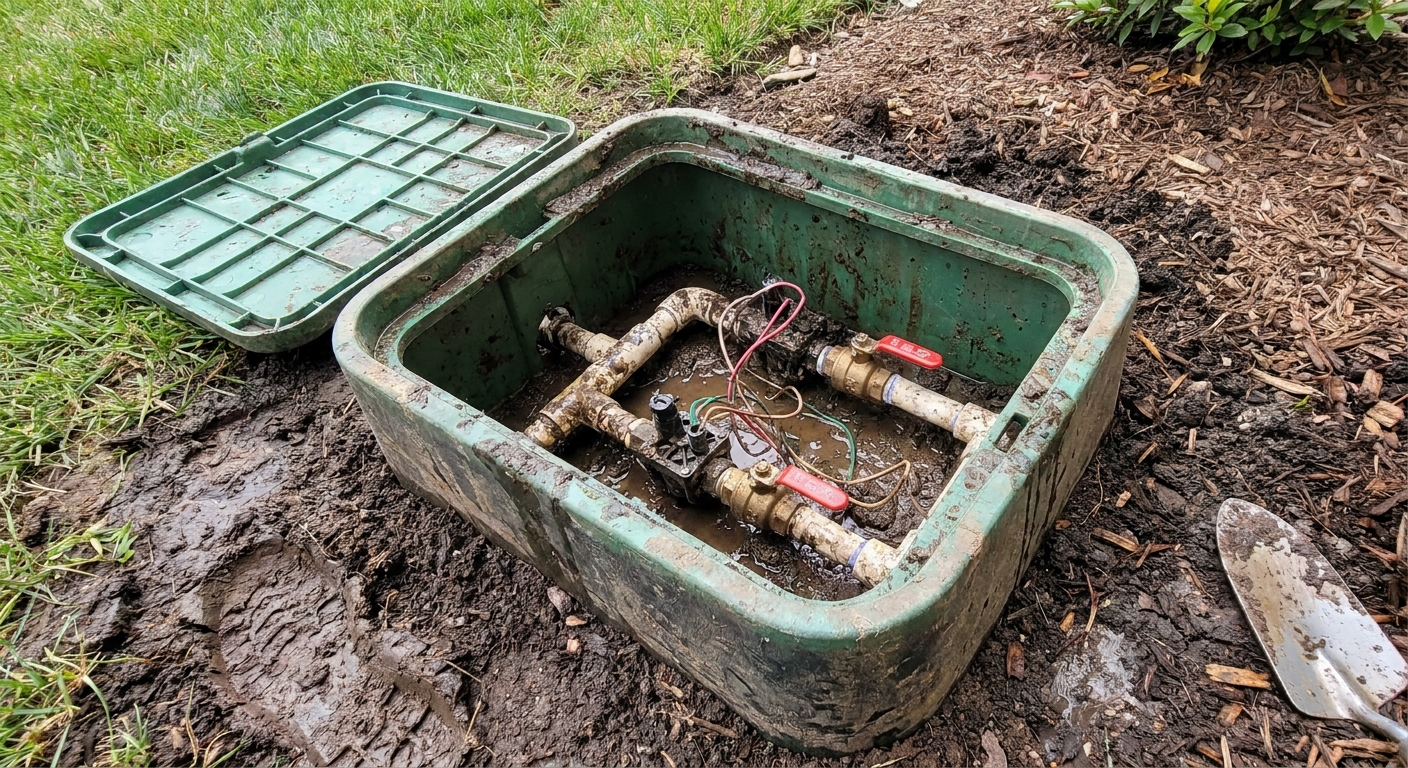
- Check for a stuck valve. A valve that is stuck partially open can run water continuously, even when the controller says “off.”
Signs of an irrigation leak: one strip of grass greener than everything else, a soggy spot near a valve box, or a sudden low-pressure sprinkler zone.
Sneaky indoor water users
Not every “leak” looks like water on the floor. Some devices send water straight to a drain, and you will never see it unless you know where to look.
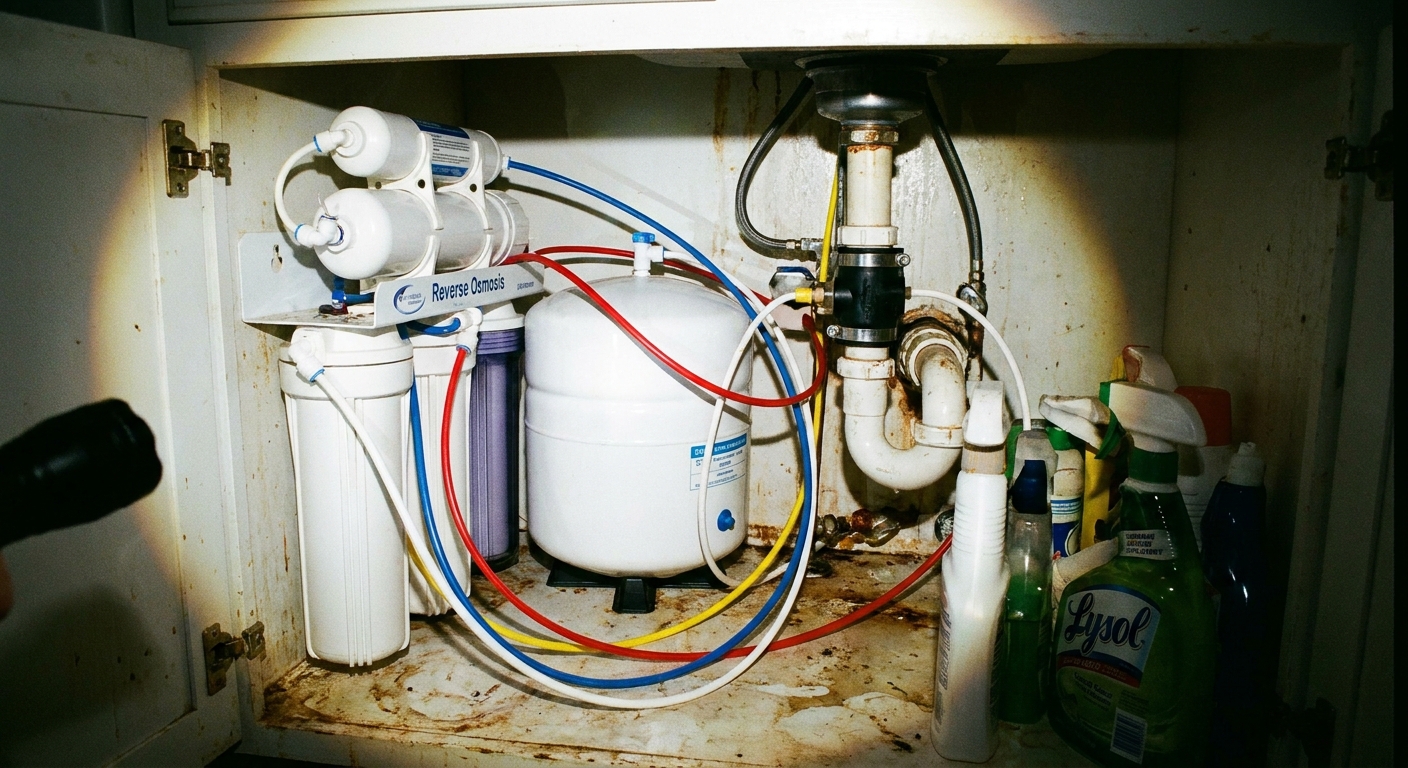
Reverse osmosis (RO) systems
Many under-sink RO systems have a drain line. If a fitting is loose or the system is malfunctioning, it can send a constant trickle to the drain.
- Listen for hissing or steady water sound under the sink when nothing is being used.
- Check the drain saddle area for moisture and mineral buildup.
- Look for a continuously running line into the drain with a flashlight.
Whole-house humidifiers and evaporative coolers
These can quietly use a lot of water. A stuck float valve or misadjusted feed can run nonstop.
- Inspect the drain line and the area below the unit for constant flow.
- Turn the unit off for the meter test and see if the leak indicator stops.
Water softeners
Softener regeneration uses water by design, but a control head problem or frequent regeneration setting can drive usage way up.
- Check the settings for regeneration frequency and time.
- Look at the discharge line during times it should be idle.
- Inspect for a constantly running drain near the softener.
Appliances and small fixtures
- Water heater T&P relief valve: A failing valve or high pressure can cause intermittent dumping. Look for water at the discharge pipe end. Do not cap or plug a T&P line. If it is dripping, call a pro, because it can signal unsafe pressure or overheating.
- Fridge ice maker supply line: Check for slow drips behind the fridge and at the shutoff valve.
- Faucets and shower valves: A slow drip can add up, especially hot-side drips that also waste energy.
If you have a basement or crawlspace, this is also a good moment to take a quick look for drips on exposed supply lines, especially around hose bib penetrations and any areas that might have frozen in winter.
Hidden supply leaks: what to watch for
If you did the meter test and confirmed water is moving, but the toilets and obvious fixtures check out, your mind goes to worst-case scenarios. I did the same thing, and my next step was simply getting very systematic: isolate, listen, and look for patterns before I assumed “slab leak.”
Possible warning signs
- Warm spots on the floor in slab homes, especially if the leak is on a hot water line.
- Unexplained damp or musty smell near walls or flooring.
- Cracks, lifting, or new stains in flooring that show up alongside the bill spike.
- Sound of running water when everything is off, especially near a bathroom wall or mechanical area.
- Pressure changes like sudden low pressure or sputtering.
- Hot water clues like the water heater running more than usual, or hot water taking longer to arrive, can also point toward a hot-side issue.
- Foundation or exterior seepage with no clear rain-related cause.
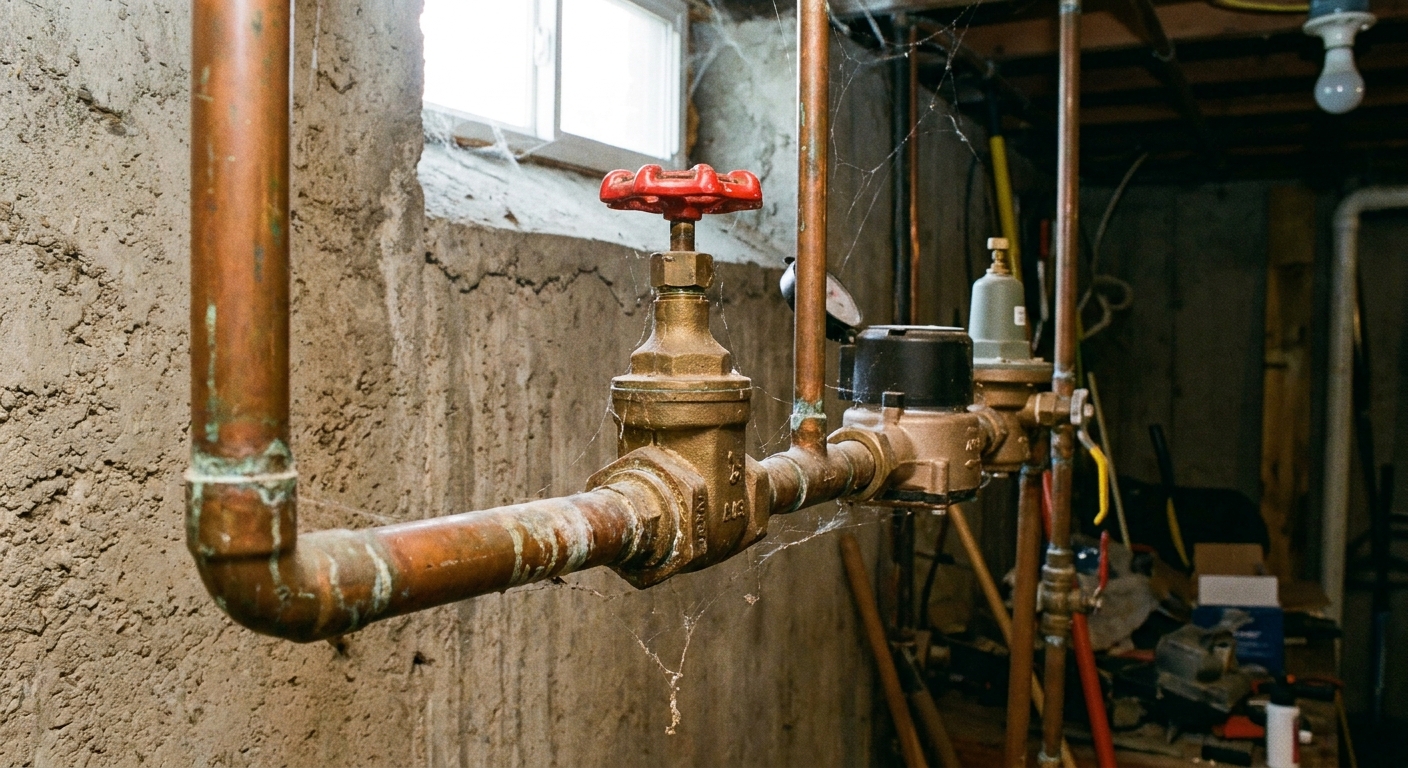
Main shutoff isolation test
This helps you figure out whether the leak is inside the house or between the meter and the house.
- Find your main shutoff valve where the water line enters the house.
- Turn it off. Make sure no one uses water while it is off.
- Check the meter. Watch the indicator or the digital flow display.
- If the meter still shows flow with the main shut off: The leak is likely between the meter and the house, or at the meter assembly. That is usually a call to the utility or a plumber.
- If the meter stops (or nearly stops): The leak is inside the house plumbing or a running device.
Small caveat: Older gate-style shutoff valves do not always close 100%. If the meter movement slows down a lot but does not fully stop, you may be seeing a valve that is not sealing perfectly, not necessarily a leak outside the home.
Also: Some homes have irrigation tapped before the house shutoff. If your irrigation stays pressurized when the main is off, you may need to shut off irrigation separately to fully isolate.
When to call a plumber or the utility
I am all for DIY, but water damage is one of those “a day of delay can cost a month of repairs” situations. Call for help if any of these are true:
- Your meter shows continuous flow and you cannot find the source within an hour or two.
- You suspect a slab leak based on warm floors, damp spots, or flooring changes.
- You see water at the water heater T&P discharge or pooling around the base. Do not cap the T&P line.
- The leak appears to be between the meter and the home. In many areas, the utility owns the meter and sometimes part of the line. Call and ask what they cover.
- You have no water pressure, severe pressure swings, or signs of water near electrical equipment.
What to tell them: Share your meter test results, the type of meter you have (dial vs digital), whether the meter changes with the main shutoff closed, and which fixtures you already tested. That can shorten the visit and save diagnostic time.
If you are on a well: You may not have a city meter. A quick clue is the pump cycling when no water is being used. If your pressure tank gauge drops or the pump kicks on by itself, treat it like “continuous flow” and start with toilets and any outdoor lines, then call for help if you cannot pin it down.
A simple plan for tonight
If you are reading this with that “what is happening” feeling in your stomach, here is the order I would do it in, start to finish.
- Confirm gallons used and the billing dates (and check the utility portal if you have one).
- Run the meter test.
- Dye test every toilet.
- Turn off irrigation for 24 hours and re-check the meter.
- Check pool auto-fill if you have one.
- Check RO, humidifier, softener, and water heater discharge.
- Do the main shutoff isolation test.
- Call the utility or a plumber with your results if the meter still shows flow and you cannot pinpoint it.
You do not need fancy tools to get real answers. You just need a simple process and a few minutes where nobody runs the dishwasher.
The 30-Second Cheat Sheet
Essential takeaways for: Water Bill Suddenly High? Leak Checks You Can Do at Home
Do this first (5 minutes)
- Check the bill for “gallons used”, not just dollars.
- Look for estimated reads or a longer billing cycle.
- Check your utility portal for daily or hourly usage spikes, if available.
Quick meter test (10 to 20 minutes)
- Turn off all water inside and outside (no toilets, ice makers, irrigation, humidifiers).
- Check your water meter indicator (triangle/dial) or digital flow/leak icon and take a photo or screenshot.
- Wait 10 to 20 minutes with zero water use. For tiny suspected leaks, wait 30 to 60 minutes.
- If the indicator moves, a leak icon flashes, or the reading changes, you have continuous flow (or a device that is drawing water).
Most common fix: toilet dye test (10 to 15 minutes)
- Add food coloring to the toilet tank.
- Wait 10 to 15 minutes without flushing.
- Color in the bowl = leaking flapper (replace flapper, check chain, adjust fill level).
Outdoor and irrigation checks
- Turn irrigation off for 24 hours and re-check the meter.
- Look for soggy patches, extra-green strips, or a zone that will not shut off (stuck valve).
- Check hose spigots and hoses for drips.
- If you have a pool, check the auto-fill valve (a stuck float can waste a shocking amount of water).
Sneaky water users to inspect
- RO system: constant trickle to drain, wet fittings under sink.
- Whole-house humidifier or evap cooler: stuck float, steady drain flow.
- Water softener: too-frequent regeneration or discharge running when it should not.
- Water heater: water at the T&P discharge pipe end.
Isolate the leak location (main shutoff test)
- Shut off the main valve at the house (older gate valves may not close 100%).
- Meter still shows flow: likely leak between meter and house (call utility or plumber).
- Meter stops (or nearly stops): leak is inside the house or a running device.
Call a pro now if
- Continuous meter movement and you cannot find the source quickly
- Warm floor spots, persistent damp smell, or flooring changes (possible slab leak)
- Water near electrical equipment or major pressure loss
- Dripping from the water heater T&P valve (do not cap it)
💡 Tip: Scroll up to read the full article for detailed, step-by-step instructions.
⬆️ Back to top
About Marcus Vance
Content Creator @ Grit & Home
Marcus Vance is a lifelong DIY enthusiast and self-taught home renovator who has spent the last decade transforming a dilapidated 1970s ranch into his family's dream home. He specializes in budget-friendly carpentry, room-by-room renovations, and demystifying power tools for beginners. Through his writing, Marcus shares practical tutorials and hard-learned lessons to help homeowners tackle their own projects with confidence.