
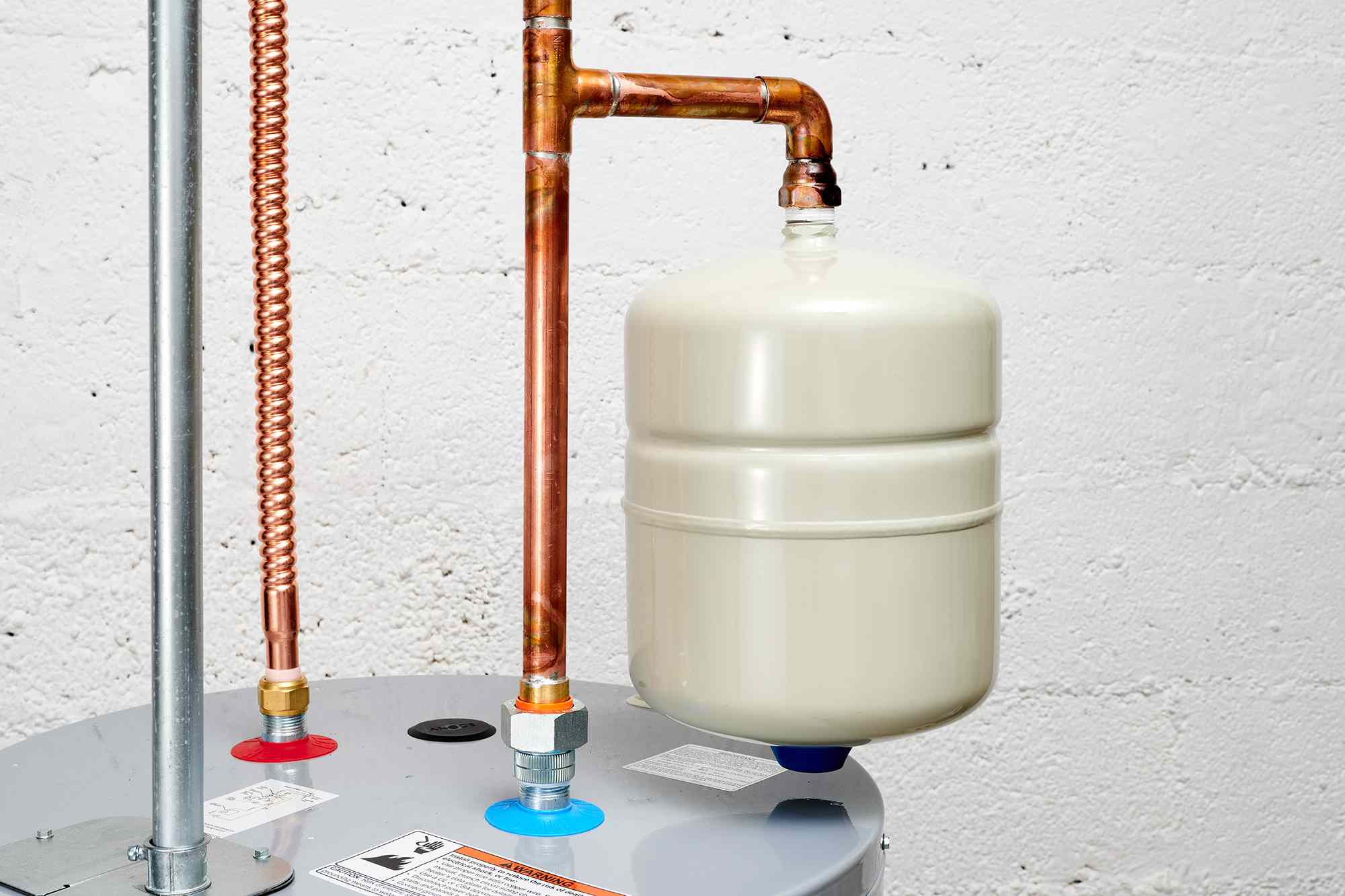
What the expansion tank does and why it matters
An expansion tank is a small metal tank connected to your cold water line near the water heater. Inside most modern units is a rubber diaphragm (or bladder) that separates air from water. The air side acts like a cushion.
When your water heater runs, the water expands as it heats up. In an open plumbing system, that extra volume may be able to push backward toward the supply. In a closed system, it cannot, so pressure spikes. That is where the expansion tank earns its keep.
Why many homes are “closed” now
- A pressure reducing valve (PRV) on the main water line. Some PRVs include an integral check feature or create enough backpressure that the home effectively behaves like a closed system.
- A check valve or backflow preventer installed near the water meter. Many utilities require some form of backflow protection, so even homes without a PRV can still be “closed.”
- Whole-house filtration or water softener setups if they include check valves or backflow devices.
If you have one of these and no functioning expansion tank, your water heater often falls back on the temperature and pressure relief valve (T&P valve) to dump pressure. That is not what you want long-term.
Leaking vs. waterlogged
Homeowners often say “my expansion tank is leaking,” but there are two different problems that can look similar.
1) True external leak
- Water seeping from the threaded connection where the tank screws into a tee or fitting.
- Moisture at a corroded weld seam or pinhole in the tank.
- Water drips that start after someone bumped the tank and stressed the fitting. If your tank is horizontal or hanging, proper support (strap or bracket) helps prevent this.
2) Waterlogged tank (failed diaphragm or lost air charge)
A waterlogged tank is one where the air cushion is gone. The tank fills with water and becomes basically useless. You may not see a constant drip from the tank itself, but you will see symptoms around the system.
- T&P valve drips intermittently, especially after a long hot shower or laundry cycle.
- Water heater pan is wet even though the tank body is dry.
- Pressure swings and sometimes “hammer” or banging when valves close.
- The expansion tank feels unusually heavy and sounds “solid” when tapped.
Thermal expansion vs. other problems
A helpful clue is timing. Thermal expansion issues tend to show up during or shortly after heating cycles. A constant drip from the T&P valve, or dripping when the heater has not run, can also point to debris on the valve seat, a failing valve, or an overall high-pressure problem.
Quick safety check
Even simple diagnostics can turn into a mess fast if you skip the basics.
- Electric water heater: switch off the breaker.
- Gas water heater: set the control to “pilot” or follow the manufacturer shutdown instructions.
- Let hot water cool a bit if you can. Scalding water is no joke.
- If you see active spraying, severe corrosion, or water near electrical components, stop and call a pro.
- Local codes vary. If you are changing piping, adding a PRV, or installing a new expansion tank, check permit and backflow requirements in your area.
Tools and supplies
- Tire pressure gauge (for the Schrader valve)
- Water pressure gauge (hose bibb style)
- Bike pump or small air compressor
- Bucket and towels
- Thread sealant rated for potable water (PTFE tape and or pipe dope, as appropriate)
- Basic hand tools and a way to support piping (strap or bracket if needed)
How to test with a tire gauge
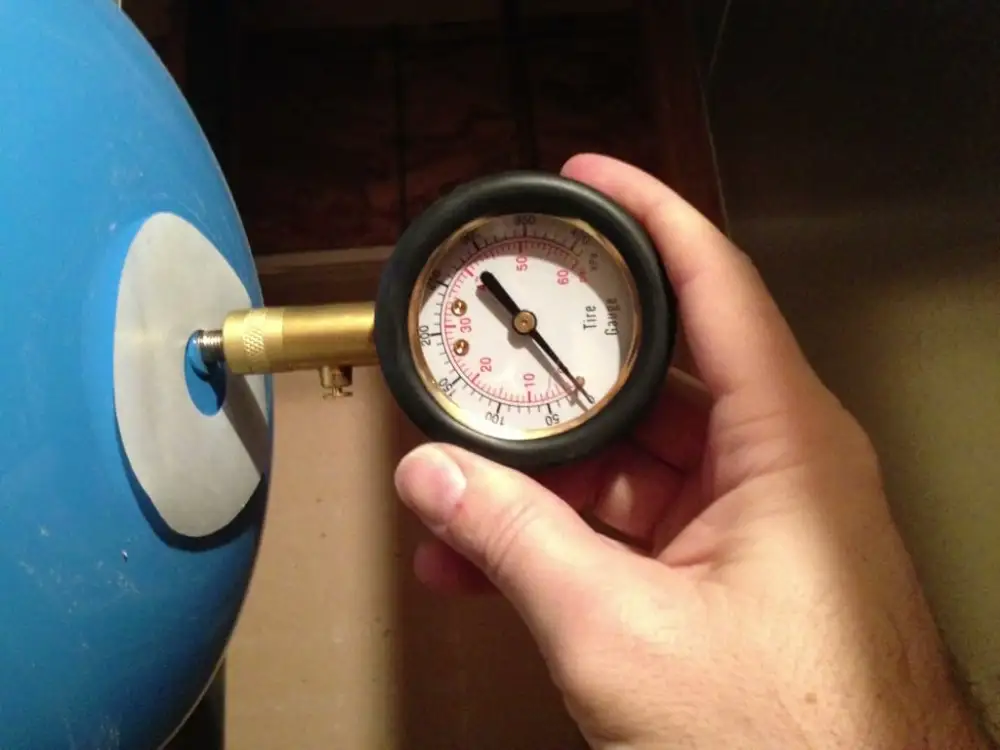
This is the most helpful homeowner test I know. Expansion tanks have a Schrader valve (looks like a bicycle tire valve) on the air side. You are checking the air precharge at that valve, and the plumbing must be depressurized for a meaningful reading.
Step 1: Know your target pressure
What you want is to match your home’s static water pressure (pressure when no water is running). Many expansion tanks ship precharged around 40 psi, but your house might be 55 psi, 65 psi, or something else.
Step 2: Measure static pressure
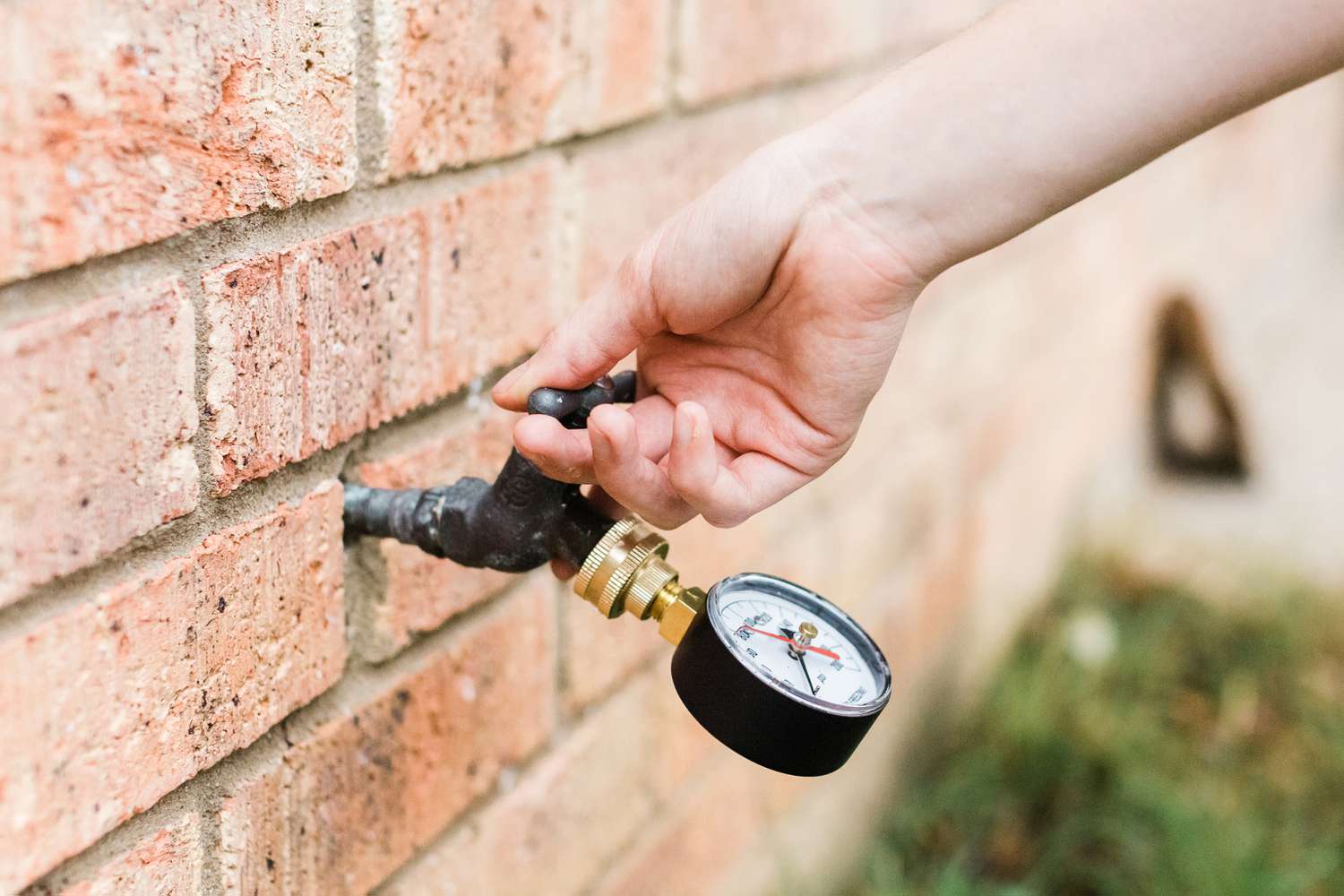
The easiest way is with a water pressure gauge that screws onto a hose bibb, laundry sink faucet with threads, or a boiler drain. Typical residential pressure is often in the 40 to 80 psi range. Many plumbers like 50 to 60 psi for comfort and reduced stress on fixtures, but there is no single magic number. What matters here is knowing your static pressure.
Step 3: Isolate and depressurize
Here is the mistake I made early on: I checked the tank while the plumbing was still pressurized and got a misleading number.
- Close the cold water supply to the water heater (or the main, if needed).
- Open a hot water faucet in the house to relieve pressure until flow slows.
- Optional: Briefly lifting the T&P valve lever can relieve pressure faster, but be careful. On older valves, the lever test can cause the valve to not reseat and then you have a constant drip. Many homeowners skip the lever test and simply use a faucet to depressurize. If a T&P valve will not reseat, it should be replaced by a qualified person.
Step 4: Check the Schrader valve
- Remove the cap and press your tire gauge on the Schrader valve.
- If water comes out of the Schrader valve: the diaphragm has failed. The tank is done. Replace it.
- If air comes out: note the reading and compare it to your target static pressure.
- If the reading is very low or zero: the tank may simply need recharging, or it may be waterlogged.
Recharge vs. replace
Recharge
If no water comes out of the Schrader valve, you can often recharge the air side.
- With the tank isolated and the plumbing depressurized, attach a bike pump or small air compressor.
- Add air until the tank matches your static supply pressure.
- Restore water supply and power, then watch for T&P dripping and pressure swings during heating cycles.
Thrifty homeowner tip: If the tank was just a little low, recharging may buy you years. If it drops again quickly, the diaphragm may be on its way out.
Replace
- Water at the Schrader valve, even a little.
- Visible rust at seams, bulging, or persistent external sweating that does not wipe away.
- Tank is old and has been waterlogged for a while.
- You recharge it, but symptoms return within days or weeks.
Expansion tanks are relatively affordable compared to the damage caused by chronic overpressure. If you are on the fence, replacement is usually the clean, reliable solution.
Set the tank to your pressure
This is where a lot of installs go sideways. The tank is not “set it and forget it” if your home pressure differs from the factory precharge.
Match precharge to static pressure
Example: If your static pressure at a hose bibb is 60 psi, set the expansion tank precharge to 60 psi, measured with the plumbing depressurized.
Why it matters
- Precharge too low: the tank can accept water too early, can become waterlogged faster, and may not cushion expansion as designed.
- Precharge too high: the tank resists accepting water, so pressure spikes still happen during heating.
PRV and high pressure
If your pressure is consistently high, an expansion tank is not the whole story. It handles thermal expansion, not a house that is being fed at 90 psi all day long.
Signs your PRV may be failing or misadjusted
- Static pressure is above 80 psi (a common code threshold in many areas).
- Pressure starts normal but creeps upward over time.
- Frequent fixture leaks, toilet fill valve noise, or washing machine hose issues.
If you have a PRV, check your pressure before and after any expansion tank work. A bad PRV can chew through expansion tanks and relief valves.
Fixes for common “leaks”
Leak at the threaded connection
- Turn off water to the heater and relieve pressure.
- Support the piping so you are not twisting the line in the wall.
- Remove the tank and inspect the fitting.
- Reinstall using appropriate thread sealant for potable water, and do not overtighten.
If the tee or nipple is badly rusted, replace that section too. A fresh tank on a rotten fitting is a short-term win at best.
Tank leaking from the body
Replace the tank. Once the shell is compromised, it only gets worse.
Intermittent dripping from the T&P valve
- Confirm the tank precharge matches your static pressure.
- Confirm static water pressure is reasonable and the PRV is working (if you have one).
- If the relief valve has been dripping for a long time, it may be fouled with mineral buildup or damaged. Replacement is often the right move, but it is a safety device, so use a qualified person if you are unsure.
Choosing a replacement tank
Two things matter most: pressure rating and capacity.
- Pressure rating: choose a tank rated for your system pressure. Many are 150 psi max working pressure, which is typical.
- Capacity: size depends on your water heater gallons, incoming pressure, temperature rise, and whether the system is truly closed. When in doubt, consult the manufacturer sizing chart for your tank brand and model.
- Mounting: if it is installed horizontally or hanging, use proper support. A waterlogged tank is heavy, and even a healthy one should not hang off a thin pipe unsupported.
If your current tank was undersized and you have high pressure or a larger heater, stepping up one size is often cheap insurance.
When to call a plumber
- You cannot safely shut off water or the shutoff valve will not close fully.
- Your PRV appears to be failing, pressure is over 80 psi, or pressure keeps creeping.
- Any gas water heater work that makes you uneasy.
- Corrosion is severe, piping is brittle, or you see signs of ongoing water damage.
Troubleshooting checklist
- Water at Schrader valve: replace the expansion tank.
- Low air charge, no water at valve: recharge to match static pressure (with plumbing depressurized).
- T&P valve drips after heating: suspect waterlogged tank, incorrect precharge, or a closed system without enough expansion capacity.
- Static pressure above 80 psi: address PRV and overall system pressure.
- Leak at threads: reseal or replace fitting, support piping, then retest.
If you take one thing from this page, let it be this: a correctly charged expansion tank protects your water heater, your fixtures, and your sanity. It is a small part that prevents big, expensive problems.

About Marcus Vance
Content Creator @ Grit & Home
Marcus Vance is a lifelong DIY enthusiast and self-taught home renovator who has spent the last decade transforming a dilapidated 1970s ranch into his family's dream home. He specializes in budget-friendly carpentry, room-by-room renovations, and demystifying power tools for beginners. Through his writing, Marcus shares practical tutorials and hard-learned lessons to help homeowners tackle their own projects with confidence.