
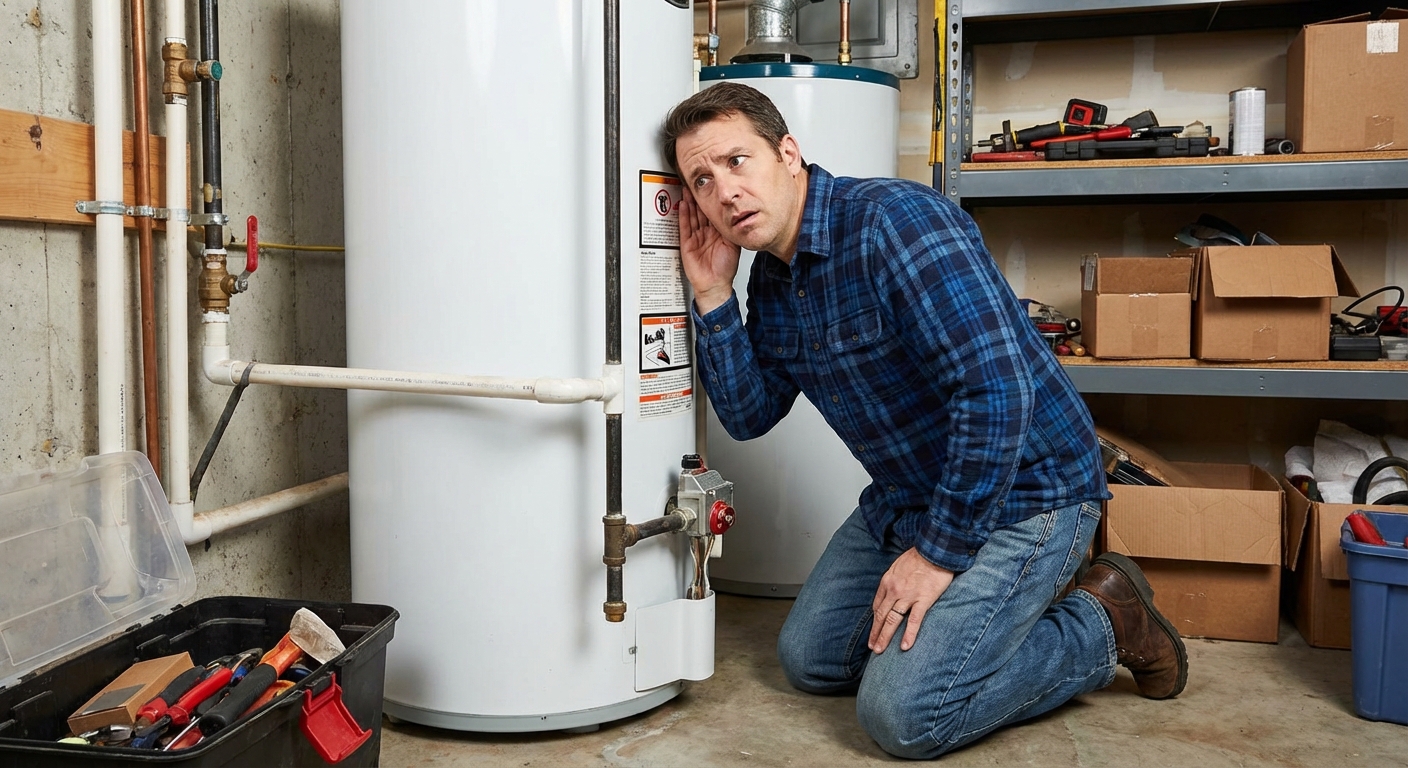
If your water heater just started sounding like a popcorn maker, a distant drum, or a tea kettle that won’t quit, you’re not imagining things. Water heaters are usually quiet. When they get noisy, it’s often a clue that something has changed inside the tank or in the plumbing around it.
This guide is set up like a quick diagnostic: find the sound that matches what you’re hearing, learn the most likely cause, and walk through the safest DIY checks and fixes. I’ll also tell you plainly when the noise is a “keep an eye on it” situation and when it’s a “shut it down and call a pro” situation.
Safety first (60 seconds)
- If you smell gas near a gas water heater: do not try to diagnose. Leave the area and contact your gas utility or a licensed plumber.
- If you see active leaking from the tank body or water pooling: turn off the water supply valve above the heater and shut off power or gas.
- Before you open panels or touch wiring on an electric unit: turn off the breaker.
- Before you drain or flush any unit: expect hot water. Let it cool if possible, and use gloves and eye protection.
- After any draining on an electric unit: make sure the tank is completely full (hot faucet runs steady with no sputter) before turning the breaker back on. This helps prevent dry-firing elements.
Quick ID tip: Electric heaters often make element-related sizzling or crackling noises. Gas heaters often produce light “whoosh” burner sounds. Both can pop and rumble when sediment builds up.
Fast sound checklist
- Popping or crackling: usually sediment in the tank or scale on an element.
- Rumbling or deep growling: heavier sediment buildup or overheating under sediment.
- Whistling or high-pitched squeal: pressure, a restriction, or a partially closed valve.
- Banging or hammering: water hammer, loose pipes, or expanding and contracting plumbing.
- Sizzling or hissing: condensation on a burner, water on a hot surface, or a small leak dripping onto something hot.
- Ticking or clicking: normal expansion, thermostat cycling, or minor pipe movement.
- Chirping or beeping: usually not the tank itself. Often an alarm, sensor, or nearby detector.
- Rattling or vibrating vent noise: often a power-vent blower, loose venting, or a draft issue.
Popping or crackling
What it usually means: Mineral sediment (common in hard-water areas) has collected in the bottom of the tank. As the heater warms, that layer can create localized boiling and steam bubbles that pop as they escape. On electric models, scale can also bake onto the heating element and crackle as it heats.
What to check
- Does the noise get louder during heating cycles (right after someone showers or the dishwasher runs)?
- Are you seeing cloudy water or tiny grit in the hot water? (Sediment can stir up.)
- How old is the heater? After 6 to 10 years, sediment-related noise becomes much more common.
DIY fix: flush the tank
This is the most budget-friendly first move, and it’s where I start on my own heater.
- Turn off power at the breaker (electric) or set the gas control to OFF (or PILOT per manufacturer instructions).
- Close the cold water supply valve above the heater.
- Attach a garden hose to the drain valve at the bottom and run the other end to a safe drain location.
- Open a nearby hot water faucet to relieve pressure.
- Open the drain valve and drain several gallons until the flow runs clearer. For a fuller flush, drain more and briefly open the cold supply valve to stir and push sediment out, then drain again.
- Close drain valve, remove hose, open cold supply to refill, keep hot faucet open until air is purged, then restore power or gas.
Old-tank reality check: If your heater is very old and has never been flushed, go slowly. A crusty drain valve can clog, leak, or fail when disturbed. Have a plan for what you’ll do if it won’t reseal (and do not force it).
When to call a pro
- The drain valve won’t open or is clogged and you can’t get flow.
- Flushing helps for a week, then the popping comes right back (heavy sediment or a failing component).
- You suspect the tank is overheating (very hot water, scalding risk, or pressure relief valve discharge).
My honest lesson: The first time I tried flushing, I expected “clean water” quickly. Hard water laughed at me. It can take multiple short flushes over a weekend to make a real dent without stirring everything up at once.
Rumbling or deep growling
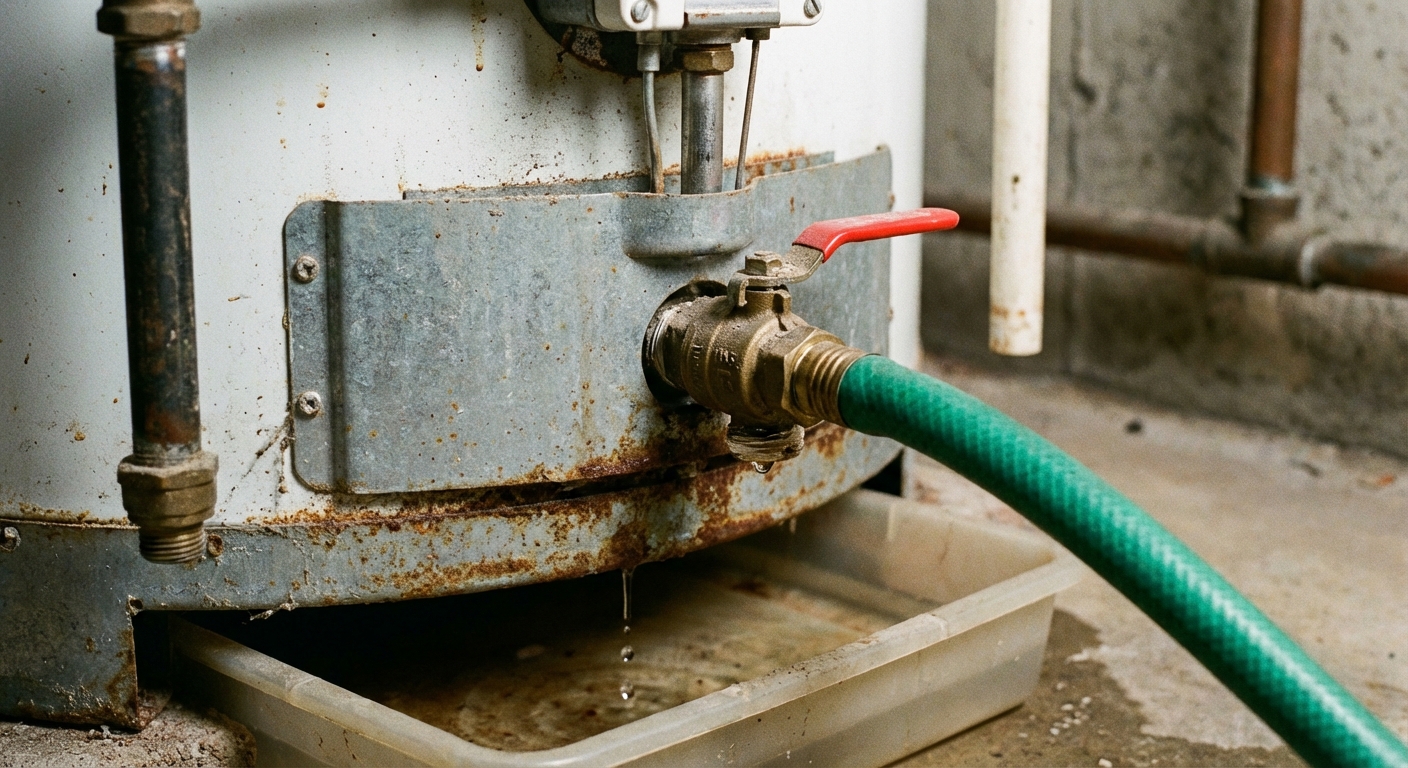
What it usually means: This is often the next level after popping. A thicker sediment layer creates hot spots. On gas units, the burner heats the bottom of the tank and the sediment acts like an insulating blanket, so the heater works harder and makes more dramatic noises.
What to check
- Is your hot water running out faster than it used to? Sediment steals capacity.
- Is your gas bill or electric usage up without a clear reason?
- Do you get temperature swings in the shower?
DIY fix: more thorough flush
- Perform the flush steps above, but plan on draining more volume.
- If you have hard water, consider a yearly flush (or more frequent short flushes) and a scale-reduction option. Even a simple whole-house filter can help in some homes.
When to call a pro
- The heater is very old and rumbling is severe. At a certain point, you’re fighting a losing battle and stressing the tank.
- The temperature and pressure relief (TPR) valve is dripping or discharging. That can indicate dangerous pressure or overheating.
- You suspect the gas burner needs service (sooty residue, unreliable ignition, or unusual flame behavior).
Whistling or squealing
What it usually means: Whistling tends to be water moving through a restriction or a pressure-related issue. Think of it like air through a pinched balloon neck, except it’s water through a partially closed valve, a worn valve part, or pressure that has nowhere to go.
Common causes
- Partially closed cold water supply valve above the heater.
- Worn or failing valve (house shutoff, stop valves, or a problematic PRV).
- High water pressure (often paired with banging noises elsewhere).
- Thermal expansion in a closed plumbing system, especially if an expansion tank is missing, waterlogged, or failing.
DIY checks
- Confirm valves are fully open: Gate valves and some older multi-turn valves can whistle when left partially open. Ball valves should generally be fully open or fully closed (handle parallel to the pipe is open).
- Listen at nearby fixtures: If the whistle happens when you run hot water at a sink, the restriction could be at the shutoff valve or the faucet itself, not the heater.
- Check water pressure if you can: Use a hose-bib pressure gauge. Many homes run around 40 to 60 psi as a comfortable target. Sustained readings above about 80 psi are typically considered too high in many areas (local guidance varies).
- Take a look at your expansion tank: If you have one above the heater, check for obvious leaks and corrosion. If the whistling happens during heating and you also get TPR dripping, a failing or undersized expansion tank is a common culprit in closed systems.
When to call a pro
- Whistling is coming directly from the TPR valve area or you see moisture there.
- You measure high pressure and do not have a pressure reducing valve (PRV), or you suspect it has failed.
- You have a closed system and suspect an expansion tank issue (waterlogged tank, frequent TPR weeping, pressure spikes).
- Any valve is leaking after you touch it.
Banging or hammering
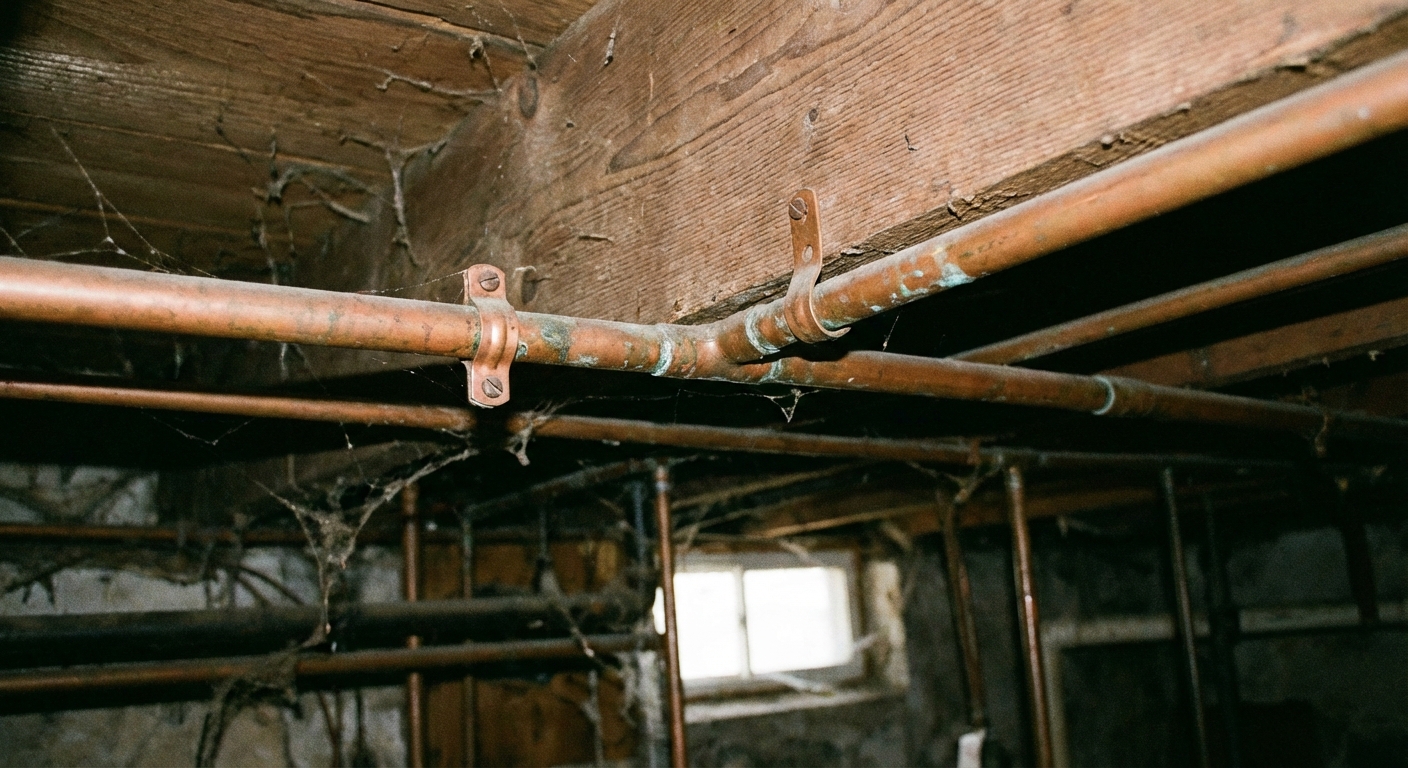
What it usually means: Not all “water heater banging” is actually inside the heater. Often it’s water hammer or pipe movement. When a valve closes quickly (washing machine, dishwasher, some faucets), the sudden stop makes a pressure wave and the pipes thump against framing.
What to check
- Does the bang happen when a fixture shuts off fast (washer solenoid, dishwasher fill)?
- Can you recreate it by turning a faucet on and snapping it off?
- Do you have loose pipe straps or long unsupported pipe runs near the heater?
DIY fixes
- Secure loose pipes: Add or tighten pipe straps so pipes cannot jump when water stops. Use appropriate cushioning to avoid rubbing.
- Drain air chambers (older homes): Some older plumbing used vertical stubs to cushion water hammer. They can waterlog. Turning off the main, draining the system, then refilling can restore the air cushion temporarily.
- Install hammer arrestors: If the problem is clearly tied to a washing machine or dishwasher, hammer arrestors are often a targeted fix.
When to call a pro
- The banging is accompanied by very high pressure readings or TPR discharge.
- You cannot locate the source and it’s strong enough to shake the heater or pipes.
- You have an older system where adding arrestors or adjusting pressure should be done with a broader assessment.
Sizzling or hissing
What it usually means: Sizzling can be harmless or serious. Sometimes it’s just condensation dripping onto a hot burner area on a gas unit. Other times it’s water from a leak hitting a hot surface, or steam venting where it shouldn’t.
What to check right away
- Look for visible leaks: Check fittings at the top, the hot and cold connections, the TPR valve discharge pipe, and the drain valve.
- Check the burner area (gas): If you see moisture and hear sizzling during operation, it could be condensation. If you see rust streaks or consistent dripping, treat it like a leak.
- On electric units: If you hear hissing behind an access panel, shut off the breaker and look for signs of water intrusion around the heater. Do not remove covers unless you’re comfortable working safely around electrical components.
DIY steps (only if there is no gas smell and no heavy leaking)
- Tighten a loose connection slightly if you can see a slow weep at a threaded fitting. Do not overtighten.
- Replace a failing hose washer on a drain-hose connection if that is the source (common during flushing).
- Dry the area and re-check after a heating cycle to confirm the exact source.
When to call a pro
- Hissing or sizzling is paired with visible steam, hot water spray, or TPR valve discharge.
- You see corrosion around the tank seams or water appears to be coming from the tank body.
- Any suspicion of gas issues.
Ticking or clicking
What it usually means: Light ticking can be normal expansion and contraction of metal as hot water flows through copper or PEX transitions and framing. Some heaters also click as thermostats cycle.
DIY “is this normal?” test
- If the sound is light, brief, and happens right as hot water starts or stops, it’s often normal.
- If ticking is constant, gets louder, or becomes banging, treat it as a pipe support issue and secure the run.
Electric heater noises
If you have an electric water heater and the noise seems to come from behind the access panels, here are two common culprits.
Crackling plus lukewarm water
- What it indicates: A scale-covered or failing heating element can struggle to transfer heat efficiently, sometimes getting noisy in the process.
- Safe first step: Confirm the symptom pattern. Does the noise spike only during heating, and are you also getting less hot water than usual?
- Next step: Element and thermostat testing involves electrical work. If you are not comfortable using a multimeter and following manufacturer instructions, this is a good “call a pro” moment.
Buzzing or humming
- What it indicates: Some elements hum as they heat, especially if they are scaled up, slightly loose, or nearing the end of life.
- DIY check (no panel removal): Note whether the hum lines up with heating cycles and stops when the unit stops heating. If it is loud, new, or paired with performance issues, schedule service.
Chirping or beeping
What it usually means: This is the one people swear is “the water heater,” but it’s often something nearby.
- Check for a CO alarm or smoke detector in the same room (low batteries are infamous for sounding like they are coming from the heater).
- Look for a leak detector near the drain pan or on the floor.
- Check the heater’s control display (on many newer gas and hybrid units). Error codes can beep or flash.
If you cannot quickly identify the source, do not ignore it. A persistent alarm is worth tracking down.
Power-vent rattling or vibration
What it usually means: If you have a power-vented gas water heater (with a fan and plastic vent pipe), some noise is normal. New rattling, buzzing, or vibration can mean a loose vent connection, a failing blower, or airflow issues.
What to check
- Does the noise start when the blower starts and stop when it shuts off?
- Is the vent pipe securely fastened and not touching framing where it can buzz?
When to call a pro
- The venting looks loose, damaged, or improperly sloped.
- You notice soot, exhaust smell, or signs of backdrafting.
- The blower is unusually loud or the heater struggles to run a normal cycle.
When noise is an emergency
Most water heater noises are annoying, not dangerous. But a few combinations should push you into “stop and get help” mode.
- TPR valve discharging (water coming out of the discharge pipe) along with loud rumbling or whistling.
- Water leaking from the tank body (not a fitting) or rust trails down the sides.
- Any gas smell or signs of improper combustion (soot, scorch marks, melting).
- Scalding hot water or sudden temperature swings that suggest thermostat or control issues.
Simple maintenance
- Flush periodically: In many homes, once a year is a good target. Hard-water homes may benefit from more frequent short flushes.
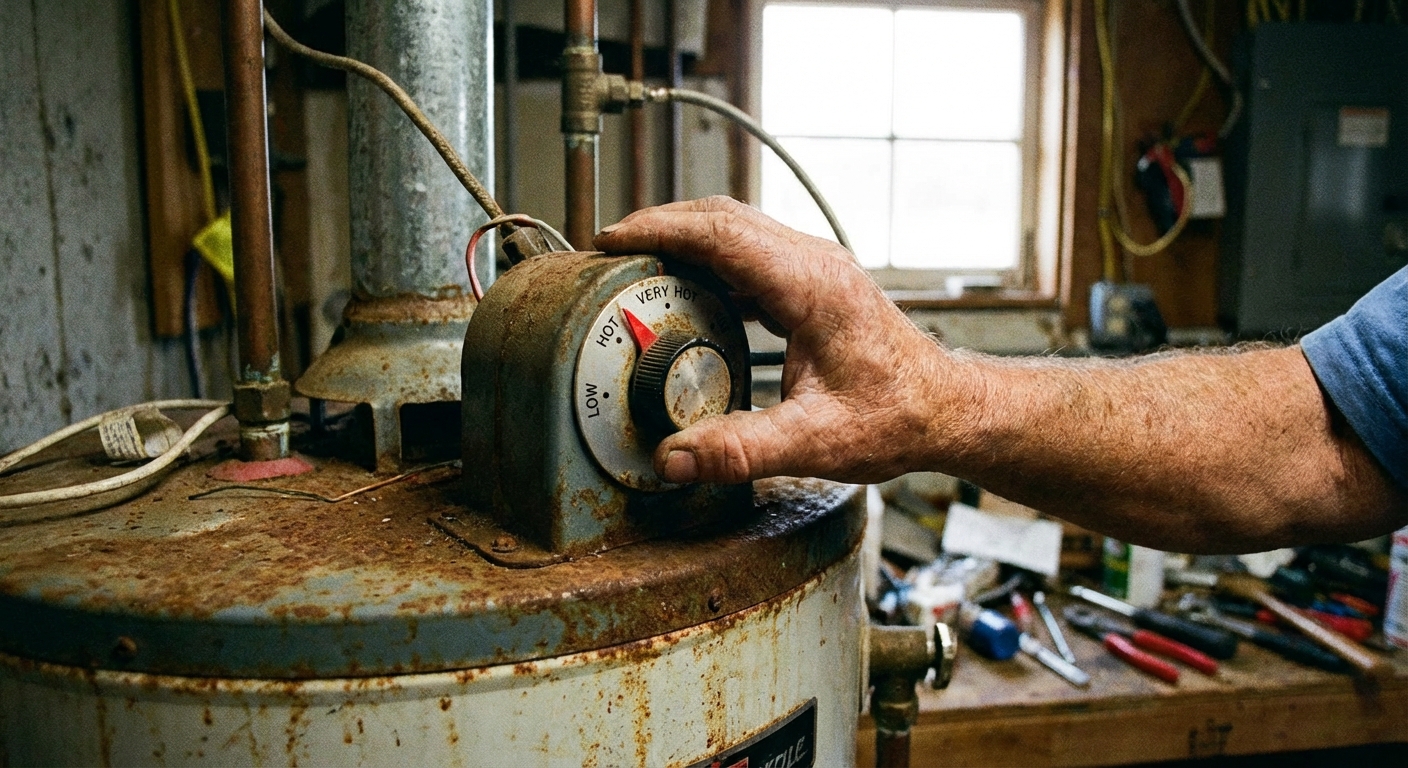
- Set a safe temperature: Many households do well around 120°F for comfort and efficiency while reducing scald risk.
- Check the anode rod (advanced DIY): A healthy anode helps prevent tank corrosion, which extends heater life. If you’re comfortable with tools and have clearance above the unit, this can be a money-saver.
- Watch pressure and expansion: If you have a PRV or check valve (closed system), a healthy thermal expansion tank helps prevent pressure spikes, TPR weeping, and some pressure-related noises.
- Listen for changes: The earlier you catch sediment buildup, the easier it is to flush out.
Quick sound-to-fix summary
- Popping: sediment or scale. Try flushing.
- Rumbling: heavy sediment or overheating under sediment. Flush, then evaluate age and performance.
- Whistling: restriction, pressure, or expansion. Ensure valves fully open, check pressure and expansion tank, call a pro if TPR is involved.
- Hammering: water hammer or loose pipes. Secure pipes and consider arrestors.
- Sizzling: condensation or leak on hot surface. Inspect carefully, shut down if leaking is confirmed.
- Chirping: often an alarm or control code. Check nearby detectors and the unit’s display.
- Vent vibration: power-vent blower or venting issue. Inspect visually and call a pro if it is new or severe.
If you want one clean takeaway: match the noise to the moment it happens (heating cycle, hot water use, or random) and you’ll usually narrow the cause fast. When in doubt, especially with pressure relief discharge, leaks from the tank body, or any gas concerns, shut it down and bring in a licensed pro.

About Marcus Vance
Content Creator @ Grit & Home
Marcus Vance is a lifelong DIY enthusiast and self-taught home renovator who has spent the last decade transforming a dilapidated 1970s ranch into his family's dream home. He specializes in budget-friendly carpentry, room-by-room renovations, and demystifying power tools for beginners. Through his writing, Marcus shares practical tutorials and hard-learned lessons to help homeowners tackle their own projects with confidence.