
🚨 In a DIY emergency or rush?
Skip the details and jump straight to our 30-second cheat sheet for the most crucial info.
The first time this happened in our 1970s ranch, I did what a lot of DIYers do. I marched right up to the water heater and bumped the thermostat up, convinced the heater was getting lazy. The tank got hotter, our energy use went up, and every faucet in the house was still lukewarm.
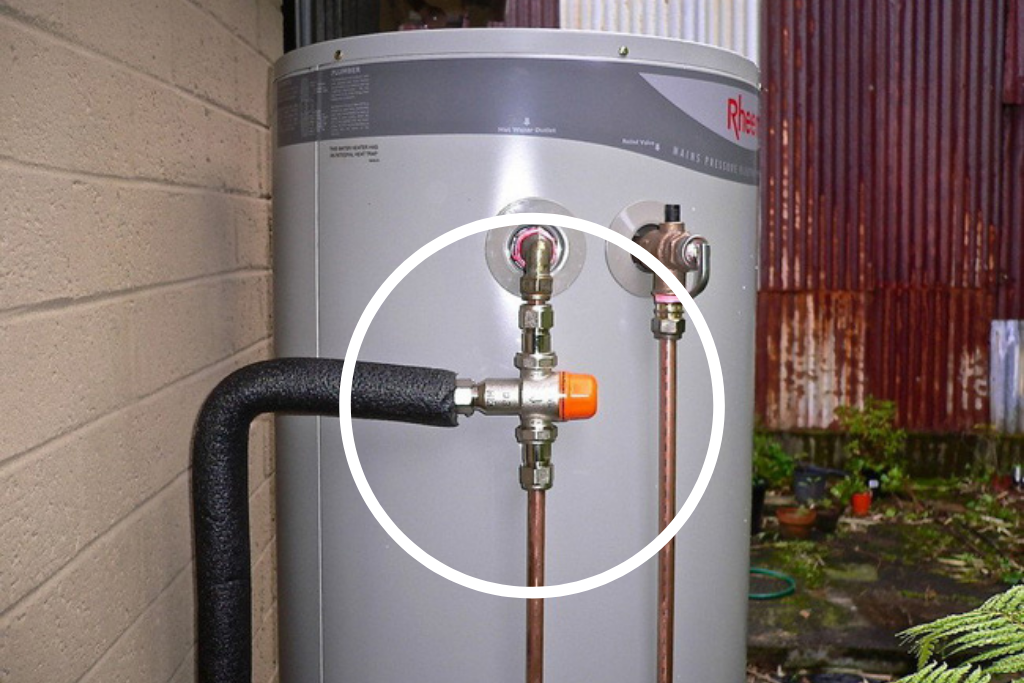
If your water heater is making every faucet lukewarm, there is a good chance your heater is actually doing its job and something downstream is blending in cold water. The most common “quiet” culprit is a tempering valve, also called a mixing valve.
The symptom pattern
Mixing valve problems have a very particular feel:
- The tank is hot, but every faucet only gets lukewarm.
- Lukewarm is consistent across bathrooms, kitchen, laundry, and tubs.
- It does not matter if you run just one faucet or several.
- You may notice shorter hot-water duration than normal, especially in showers, because hot water is being diluted before it ever reaches the house.
This is different from:
- No hot water at all (usually a heater issue like power, gas, elements, thermostat, pilot, or breaker).
- One fixture acting weird (often a shower valve cartridge, anti-scald setting, or a crossover at that fixture).
- Hot then quickly cold (can be a dip tube, but not always).
The 5-minute test
This is my favorite “separate the tank from the plumbing” test because it tells you whether the water heater is actually producing real hot water. It is not perfect, but it is fast and usually points you in the right direction.
What you need
- A bucket
- Garden hose (optional but cleaner)
- Instant-read thermometer or cooking thermometer (recommended)
- Work gloves
Safety first
Water at the tank drain can be very hot. Keep kids and pets out of the area. Point the hose into a bucket or floor drain and keep your hands clear of the stream.
Step 1: Pull a hot sample from the tank drain
- For an electric water heater, turn power off at the breaker if you will be working around wiring or access panels. For a gas unit, follow the label on the heater and use the manufacturer’s recommended setting (often Off or Vacation). Some modern units do not have a traditional “Pilot” setting.
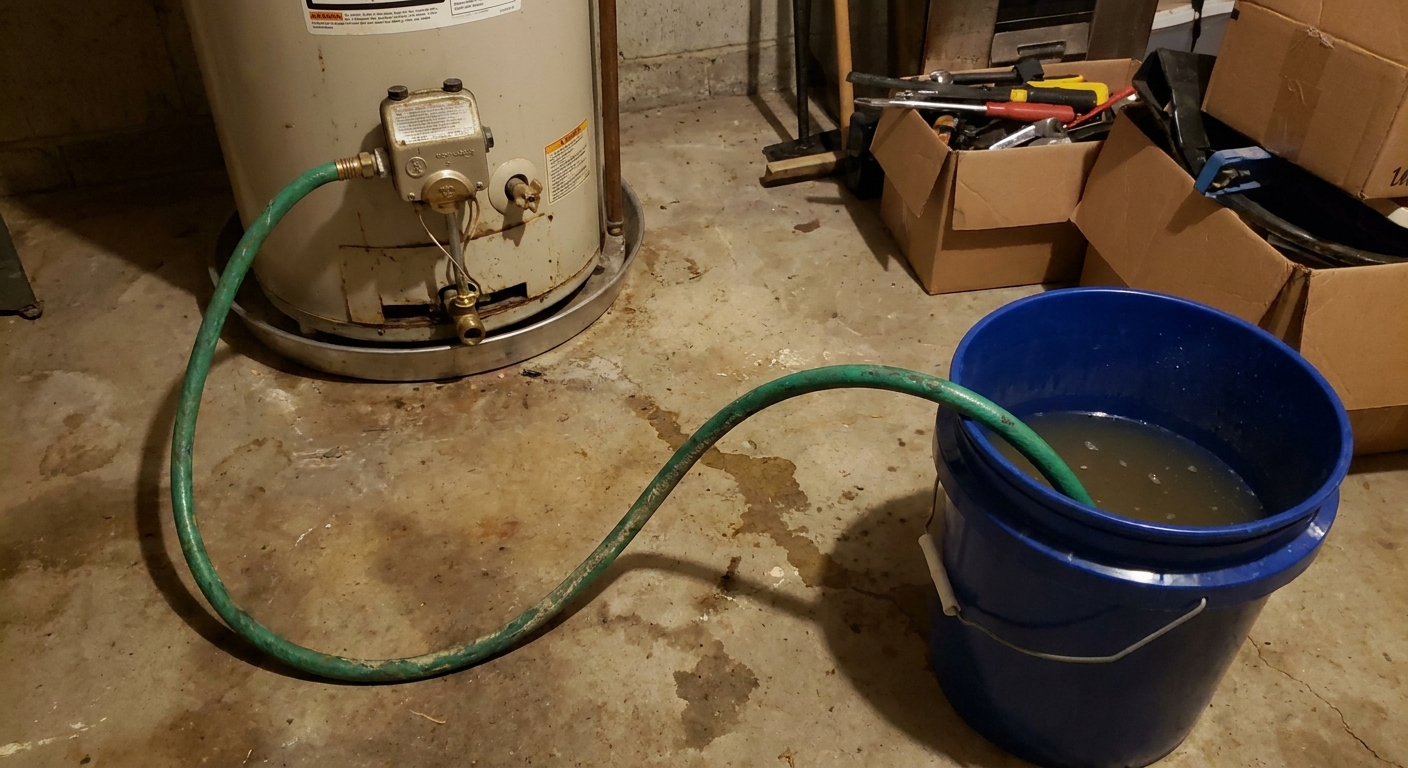
- Attach a hose to the drain spigot at the bottom of the tank and run it to a bucket or drain.
- Open a nearby hot faucet briefly to relieve pressure, then leave it slightly open while you drain so the tank does not “glug” and slow down.
- Open the tank drain and let it run. If it sputters or runs dirty at first, keep going until the flow steadies and the temperature reading stabilizes. That might be 30 seconds, or it might be a minute or two if there is sediment.
- Measure the water temperature coming out of the drain.
What it means:
- If the drain water is properly hot (often 120 to 140°F depending on your setting), the heater is heating water.
- If the drain water is lukewarm, you have a true heater-side problem, not just a mixing valve.
Confirm at a faucet
Now go to a nearby sink and run only hot water for a minute. Take a temperature reading.
- Hot at the drain, lukewarm at the faucet strongly points to a mixing valve overmixing cold into the hot line, or a hot and cold crossover somewhere in the house.
- Lukewarm at the drain, lukewarm at the faucet points back to the heater or the cold supply into the heater.
Important note about the drain test: Drain valves can be partially clogged with sediment, and tanks can stratify when they have been sitting. That is why I like to run the drain sample until flow and temperature settle before I trust the reading.
Important note about dip tubes: A broken dip tube can cause early cooling at the tap because incoming cold water mixes near the top of the tank. But it does not usually make the tank drain sample read fully hot while every faucet is lukewarm. This is why the “hot drain, lukewarm faucet” mismatch still points downstream most of the time.
Where the mixing valve is
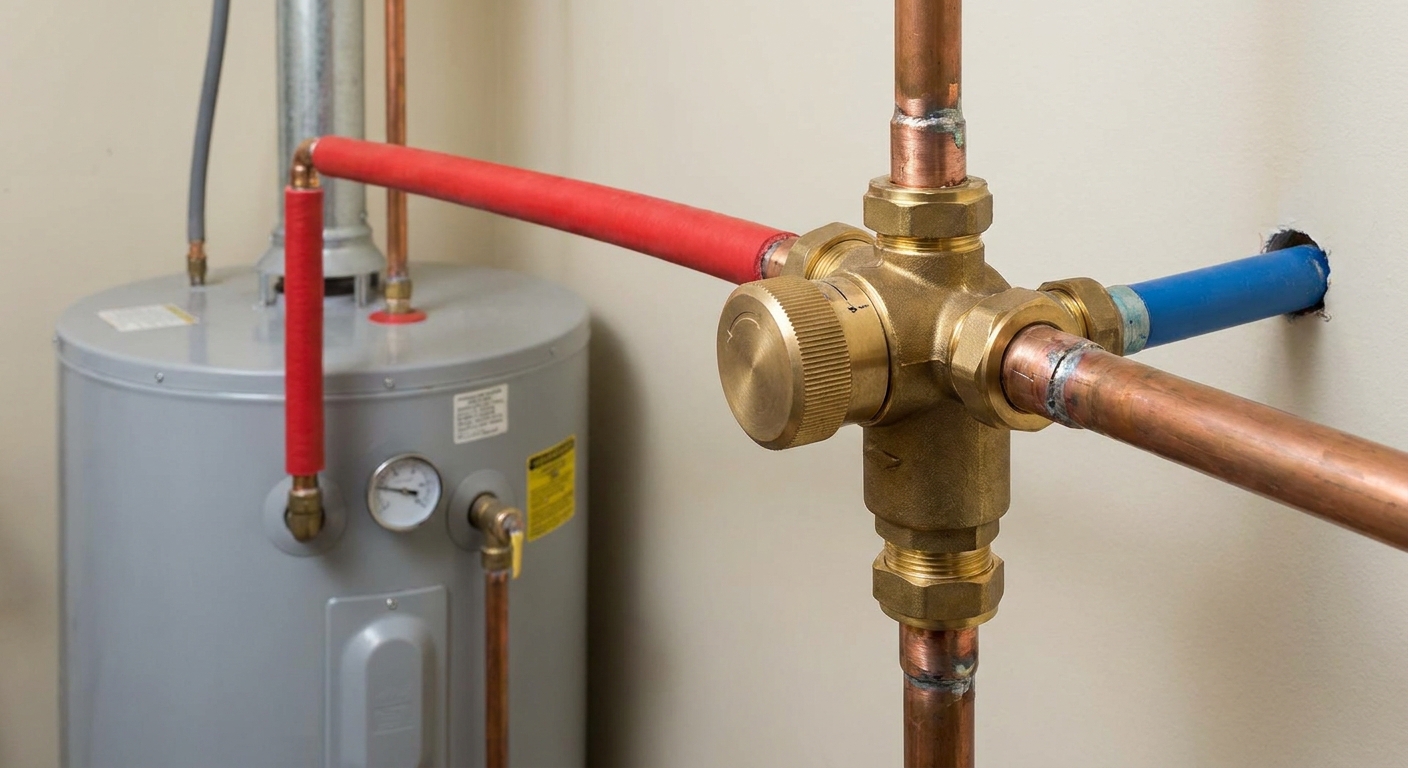
A tempering valve is typically a brass valve installed:
- Right on top of the water heater on the hot outlet, or
- Very close to the heater, tying together hot out, cold in, and a mixed outlet that feeds the house.
Its job is to prevent scalding by mixing cold water with hot water to deliver a safer set temperature to your fixtures. Great idea when it is working. When it is not, it can overmix and deliver lukewarm water everywhere.
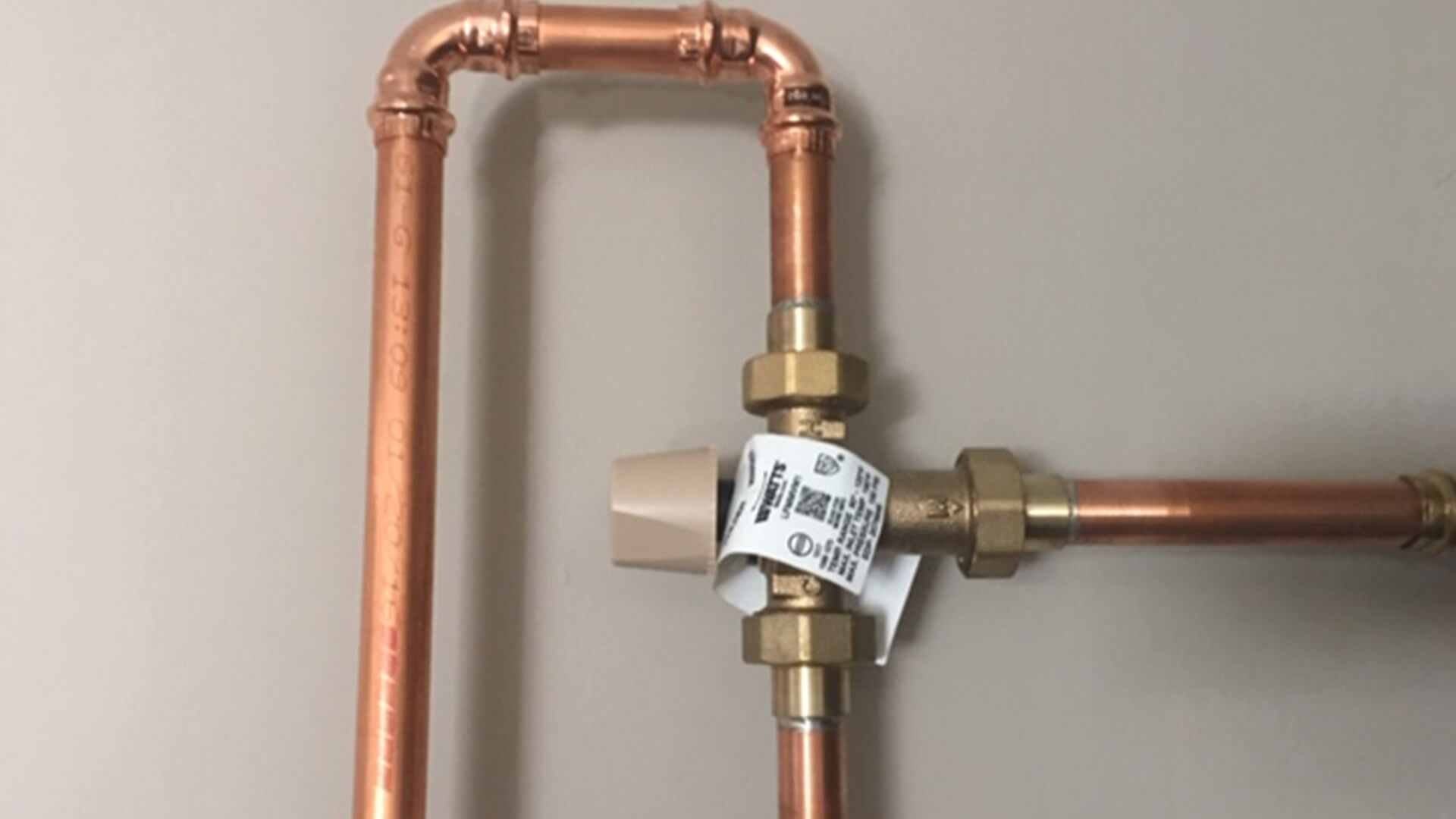
Quick identification tip: A true mixing valve usually has three ports (hot, cold, and mixed). A heat trap or check valve assembly is typically inline with one pipe and does not intentionally connect hot to cold.
Why it goes lukewarm
1) The valve is set too low
Some valves have a numbered dial, others have a cap you loosen and rotate, and some use a small set screw. If someone turned it down, you will get warm water everywhere no matter how hot the tank is.
What to do: Adjust the mixing valve, not the tank thermostat, first.
2) Scald protection is doing its job
People hear “scald protection” and assume that means the water heater itself is limited. But the mixing valve is often the device doing the limiting. If it is set for 110 to 115°F, the house will feel lukewarm, especially in winter when incoming water is colder.
Rule of thumb: Many homes are comfortable around 120°F at the tap, but local codes and household needs vary. Also, some setups intentionally store water hotter (for example 140°F) and mix it down at the valve. Follow local guidance and verify with a thermometer.
3) The cartridge is stuck or failed
Inside most tempering valves is a thermostatic element or cartridge that moves to balance hot and cold. Mineral buildup, debris, or age can cause it to stick. A stuck-open cold side will make everything lukewarm.
Clue: The problem can be sudden, like one day you wake up and the whole house is warm-only.
How to adjust it
Before you touch anything, grab a thermometer and get a baseline at a faucet. Your goal is not “as hot as possible.” Your goal is “hot enough, consistently, without scald risk.”
Step-by-step
- Run a hot tap for 60 seconds and measure the temperature.
- Locate the mixing valve near the heater and find the adjustment point (dial, cap, or screw).
- Make a small adjustment toward hotter. Think 1/8 turn, not full spins.
- Wait a few minutes, then re-test at a faucet.
- Repeat until you hit the temperature you want.
Do not solve this by cranking the tank thermostat way up. That can increase scald risk, increase energy use, and hide the real problem if the valve is failing.
Crossover check
Sometimes the issue is not just the valve setting. It is a crossover where cold water is bleeding into the hot plumbing. A failed mixing valve can cause that, and so can certain single-handle fixtures.
A simple at-home check
- If you have a hot-water recirculation pump, turn the pump off. If you have valves on the recirc line, close them. Recirc loops can keep flow going and confuse this test.
- Turn off the cold supply to the water heater (the shutoff valve on the cold inlet above the tank).
- Open a hot faucet.
- You should get a short burst of hot water, then it should slow to a stop as pressure drops.
If hot water keeps flowing steadily with the heater cold supply off (and recirc disabled), cold water is likely crossing over into the hot side somewhere. A tempering valve is a prime suspect because it directly connects cold to hot by design.
Other “quiet mixers” that can affect the whole house
If you do not have a mixing valve, or you do and it checks out, a crossover can still make the whole system feel lukewarm. Common offenders include:
- A failed single-handle shower valve cartridge
- A bidet seat or bidet mixing tee with a check valve failure
- A thermostatic shower column or panel
- A washing machine valve that lets hot and cold communicate
How I would isolate it: Shut off hot and cold stops to one suspect fixture at a time (or shut off the washer valves), then re-test hot water at a faucet. When the lukewarm problem suddenly disappears, you just found the crossover source.
Service or replace?
Some mixing valves can be serviced by replacing an internal cartridge or thermostatic element. Others are cheaper and more sensible to replace as a whole.
When service might work
- The valve is accessible and has isolation valves on the hot and cold lines.
- You can find a model number and a replacement cartridge is readily available.
- The valve body is in good shape and not weeping or corroded.
When replacement is smarter
- The valve is older, crusty, or has signs of leakage.
- You cannot identify the model, or parts cost nearly as much as a new valve.
- Adjustments do almost nothing, or the output temperature drifts wildly.
- The valve is stuck delivering lukewarm no matter how you set it.
In my house, hard water turned one tempering valve into a “set it and forget it” liar. It would adjust fine for a day, then drift back to lukewarm. Replacing the valve solved it permanently, and it was cheaper than the time I was wasting messing with it.
Do not crank the thermostat
I know the temptation. It feels like the direct fix. But if the mixing valve is stuck or mis-set, raising the tank temperature mostly does this:
- Makes the water heater run hotter than necessary.
- Increases scald risk if the valve suddenly frees up or someone bypasses it later.
- Can increase mineral scaling inside the tank.
- Does not reliably change the lukewarm-at-every-faucet symptom.
Adjust or replace the tempering valve first. Then, if needed, set the heater to a normal, safe temperature for your household and local requirements.
When to call a plumber
I am all for DIY, but I also like sleeping at night without worrying about a slow leak behind drywall.
- If you do not have shutoffs that isolate the valve, a plumber can add them.
- If the valve is tied into more complex piping, like a recirculation loop.
- If you suspect a crossover but cannot locate it.
- If you have a gas heater and you are not comfortable working around the burner compartment and venting.
A tempering valve replacement is usually straightforward for a pro, and it is cheaper than water damage from a rushed DIY solder joint.
FAQ
Why is every faucet lukewarm but the water heater is hot?
The most common reason is a tempering or mixing valve that is set too low or failing internally. Another common whole-house cause is a hot and cold crossover at a fixture (like a shower cartridge) that bleeds cold into the hot plumbing.
How do I know if I have a mixing valve?
Look above the water heater (or nearby on the wall) for a brass valve with three connections: hot in, cold in, and mixed out. Many have an adjustment cap or dial.
Can a mixing valve fail and cause only warm water?
Yes. When the thermostatic element sticks or wears out, it can allow too much cold water into the mixed outlet, making the entire house lukewarm.
Should I remove or bypass the mixing valve?
I do not recommend it. The valve is there to reduce scald risk. If it is causing problems, repair or replace it and then verify safe tap temperatures with a thermometer.
Could this still be a dip tube?
A broken dip tube can cause hot water to fade fast, but the clearest sign for a mixing valve or crossover is hot water at the tank drain paired with lukewarm at every faucet. That mismatch points downstream of the tank most of the time.
The 30-Second Cheat Sheet
Essential takeaways for: Water Heater Mixing Valve Making Every Faucet Lukewarm?
Fast diagnosis
- Hot at the tank drain, lukewarm at every faucet usually means a tempering (mixing) valve is overmixing cold water, or there is a hot/cold crossover somewhere downstream.
- Lukewarm at the tank drain points to an actual water-heater problem, not just a mixing valve.
The 5-minute test
- Run water from the tank drain into a bucket and check temperature with a thermometer.
- Let it run long enough for temperature to stabilize, especially if the drain sputters or runs dirty at first.
- Then run a hot faucet for 60 seconds and check temperature.
- Hot drain + lukewarm faucet equals mixing valve or crossover issue.
What to do next
- Adjust the mixing valve in small increments and re-test at a faucet.
- If adjustments barely change temperature or it drifts back to warm, the cartridge is likely stuck or failed.
- Replace the valve if it is old, leaking, corroded, or unserviceable.
What not to do
- Do not “fix” lukewarm taps by cranking the tank thermostat way up. It raises scald risk and often does not solve the real problem.
- Do not bypass or remove the valve if it is installed for scald protection. Repair or replace instead.
Call a plumber if
- You cannot isolate the valve with shutoffs, the piping is complex (recirc loop), or you suspect a crossover you cannot locate.
💡 Tip: Scroll up to read the full article for detailed, step-by-step instructions.
⬆️ Back to top
About Grit
Content Creator @ Grit & Home
Grit is Grit & Home’s little blue clay courier, delivering big questions about the place you call home. Expect practical ideas, a raised eyebrow, and a satchel full of curiosity.